Showing posts with label Plymouth. Show all posts

Friday, August 17, 2012

Car Of The Day: August 17, 2012


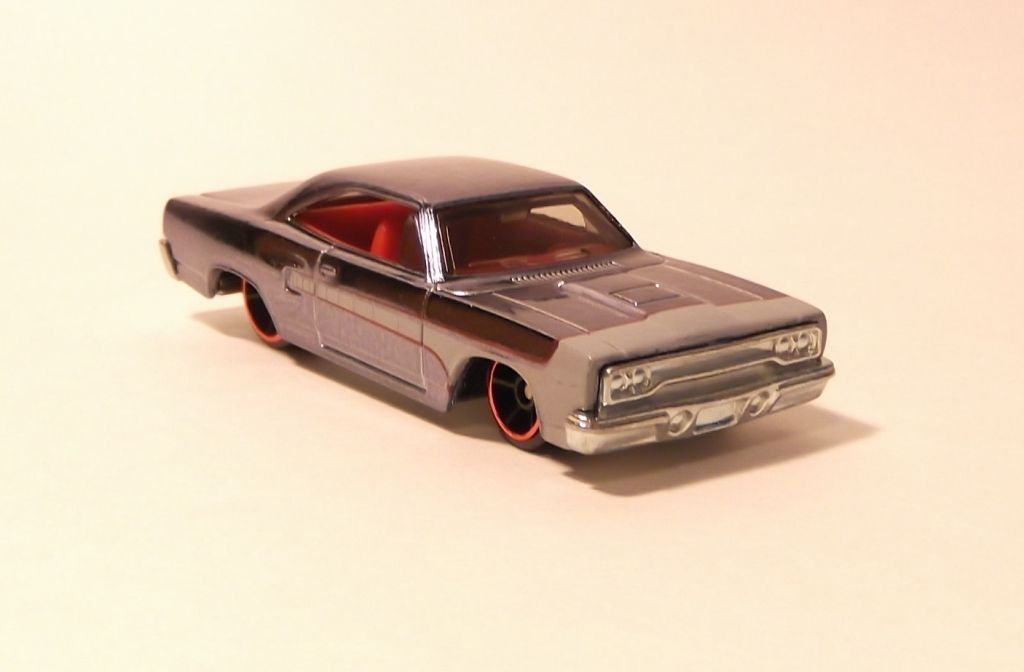
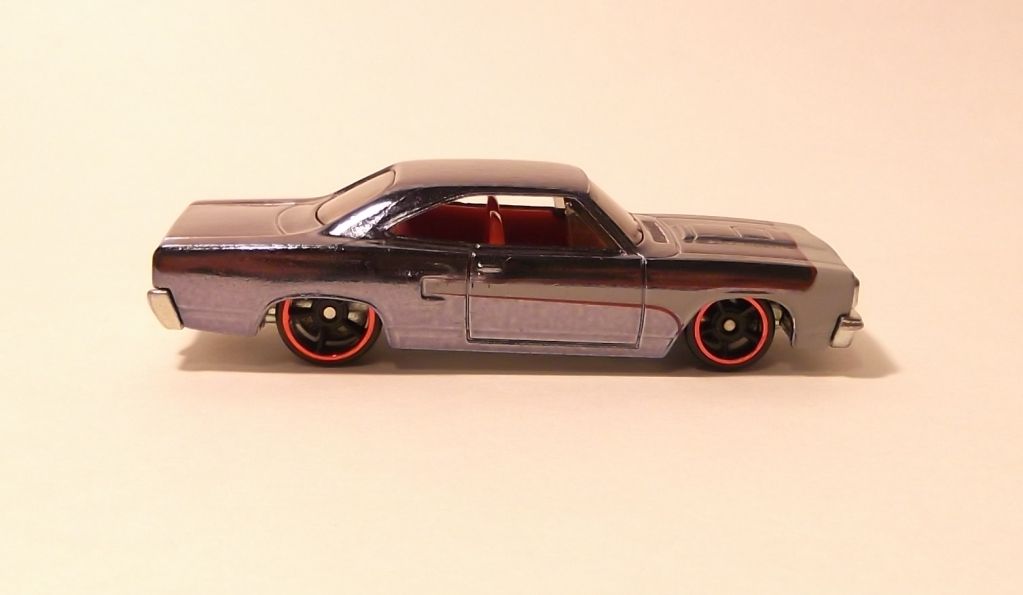
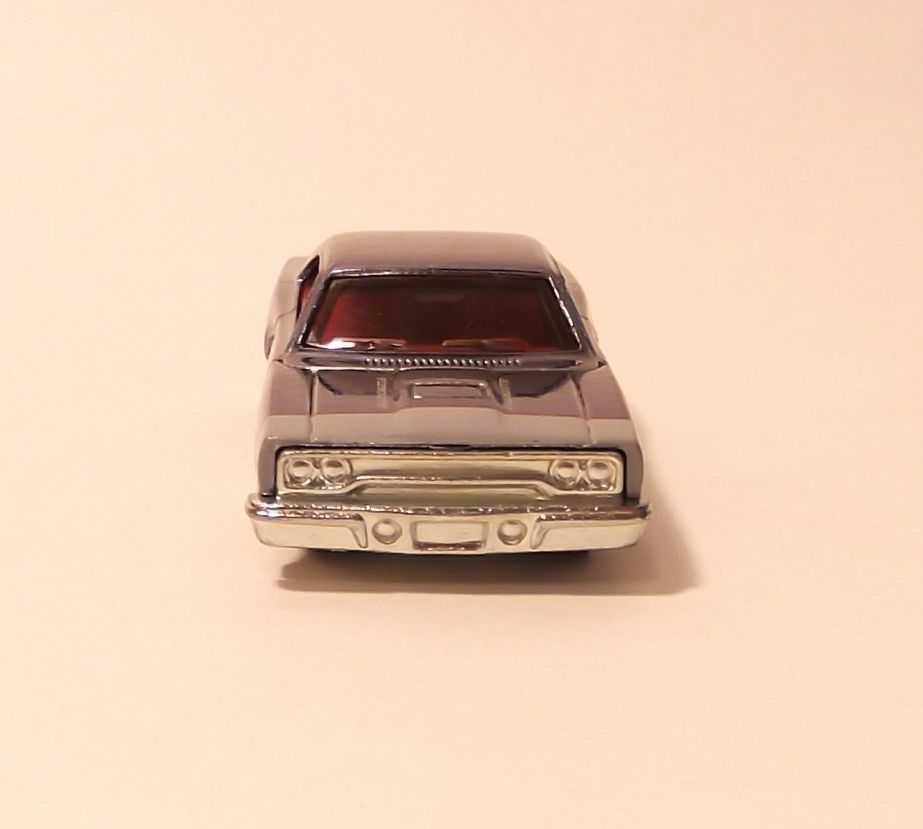
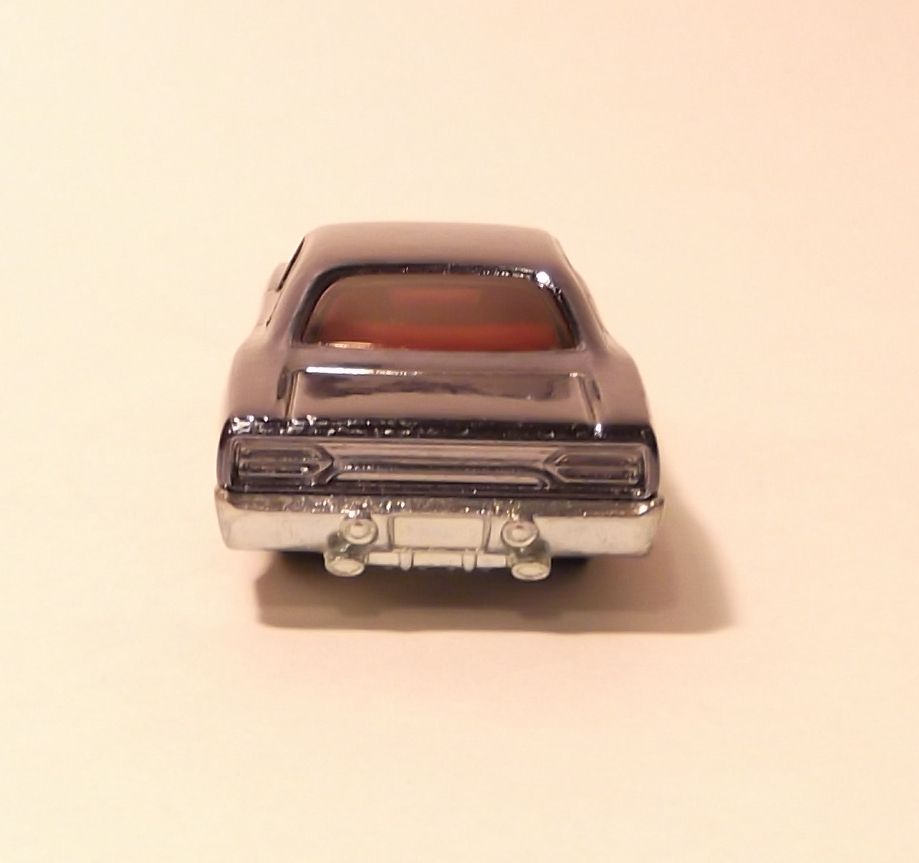
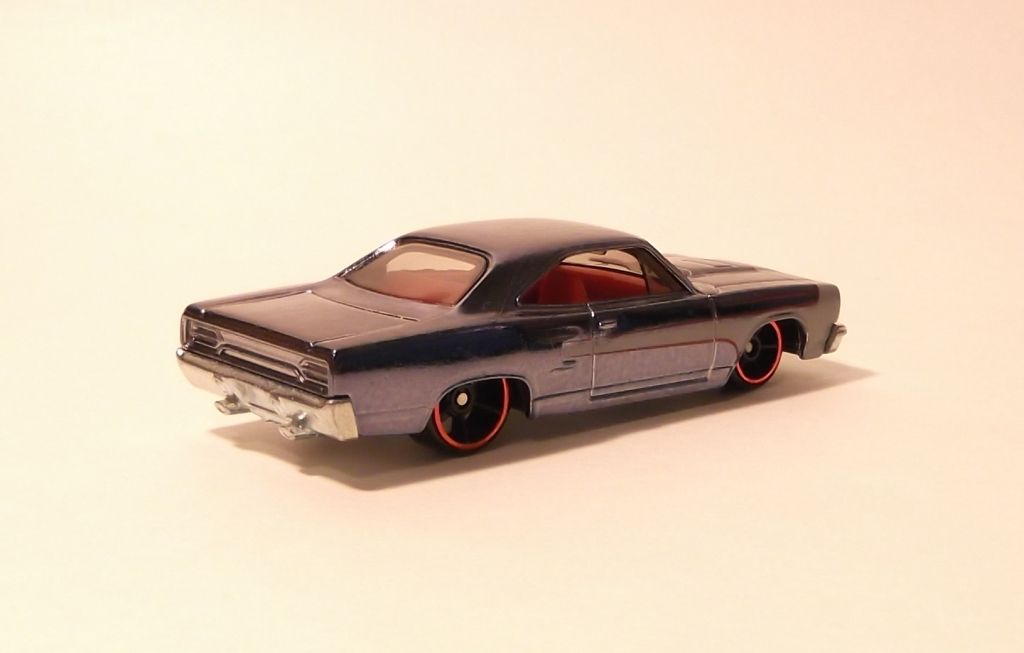
Today's car of the day comes from juantoo3's collection and is Johnny Lightning's 1970 Plymouth Barracuda.


The Plymouth Barracuda is a two-door car that was manufactured by the Plymouth division of the Chrysler Corporation from 1964–1974.

The first-generation Barracuda, a fastback A-body coupe based on the Plymouth Valiant, had a distinctive wraparound back glass and was available from 1964–1966.

The second-generation 1967–1969 Barracuda, though still Valiant-based, was heavily redesigned. Second-generation A-body cars were available in fastback, notchback, and convertible versions.

The 1970–1974 E-body Barracuda, no longer Valiant-based, was available as a coupe and a convertible, both of which were very different from the previous models. The final model year for the Barracuda was 1974.


For more information and pictures of the real car please visit: Plymouth Barracuda


Since Paul had a bunch of Christmas issues offered, I just assumed this one was another. Well, you know what they say about not assuming anything...

What a pleasant surprise to find out this is a MoPar Muscle First Shot! And I asked for it just because it had a drop dead gorgeous candy apple chrome paint! I've always liked the old B body Mopars, even if I like the Challenger just a bit better, I sure wouldn't look away from a 'Cuda! -Wes (juantoo3)


The redesign for the 1970 Barracuda removed all its previous commonality with the Valiant. The original fastback design was deleted from the line and the Barracuda now consisted of coupe and convertible models. The all-new model, styled by John E. Herlitz, was built on a shorter, wider version of Chrysler's existing B platform, called the E-body. Sharing this platform was also the newly launched Dodge Challenger; however, no sheet metal interchanged between the two cars and the Challenger, at 110 inches, had a 2 in (51 mm) longer wheelbase than the Barracuda, at 108 inches.

The E-body Barracuda was now "able to shake the stigma of 'economy car'." Three versions were offered for 1970 and 1971: the base Barracuda (BH), the luxury oriented Gran Coupe (BP), and the sport model 'Cuda (BS). In 1971 only, there also was a low-end model called the Barracuda Coupe, which (like other Coupe series Chrysler Corp. had in 1971) had a fixed rear passenger window and minor B pillar instead of roll-down rear passenger windows. The high-performance models were marketed as 'Cuda deriving from the 1969 option. The E-body's engine bay was larger than that of the previous A-body, facilitating the release of Chrysler's 426 cu in (7.0 L) Hemi for the regular retail market.

For 1970 and 1971, the Barracuda and Barracuda Gran Coupe had two six-cylinder engines available — a new 198 cu in (3.2 L) version of the slant-6, and the 225 — as well as three different V8s: the 318ci, the 383ci with 2-barrel carburetor and single exhaust, and the 383ci with 4-barrel carburetor and dual exhaust 330 hp (250 kW) SAE gross. The Cuda had the 383ci 335 hp (250 kW) SAE gross (same as Dodge's 383 Magnum) as the standard engine. It also had the 440ci 4-barrel Super Commando, the 440ci 6-barrel Super Commando Six Pak, and the 426ci Hemi. The 440- and Hemi-equipped cars received upgraded suspension components and structural reinforcements to help transfer the power to the road.

Other Barracuda options included decal sets, hood modifications, and some unusual "high impact" colors such as "Vitamin C", "In-Violet", "Sassy Grass Green" and "Moulin Rouge".

Swede Savage and Dan Gurney raced identical factory-sponsored AAR (All American Racers) 'Cudas in the 1970 Trans-Am Series. The cars qualified for three pole positions but did not win any Trans-Am races; the highest finish was 2nd at Road America.

A street version of the AAR 'Cuda was produced, powered by the 340 cu in (5.6 L) "Six Pack" (three two-barrel carburetors) engine.

The Barracuda was changed slightly for 1971, with a new grille and taillights, seat, and trim differences. This would be the only year that the Barracuda would have four headlights, and also the only year of the fender "gills" on the 'Cuda model.

The 1971 Barracuda engine options would remain the same as that of the 1970 model, except the 4-barrel carbureted 440 V8 engine was not available; all 440-powered Barracudas had a six-barrel carburetor setup instead.

Thus, in 1970 the big-block power options offered to the customer were 1) approximately 270 hp (200 kW) SAE net in the high performance 383-4V, 2) approximately 310 hp (230 kW) SAE net in the 440-4V and 3) approximately 335 hp (250 kW) SAE net in the 440-6V. In 1971 the big-block power options offered to the customer were 1) 250 hp (190 kW) SAE net in the 383-4V and 2) 330 hp (250 kW) SAE net in the 440-6V.

The 426 Hemi remained available with 350 hp (260 kW) SAE net, and the 1971 HemiCuda convertible is now considered one of the most valuable collectible muscle cars. Only eleven were built, seven of which were sold domestically, and examples of these cars have sold for US$2 million.

In 1970 and 1971, the shaker hood and the Spicer-built Dana 60 rear axle were available. The shaker hood was available with 340, 383, 440 4-barrel and 440 6-barrel, and 426 Hemi engines. The heavy-duty (and heavy) Dana 60, with a 9.75 in (248 mm) ring gear, was standard equipment with manual transmissions and 440 6-barrel and 426 Hemi engines, and was optional on those with the automatic transmission.
With a new grille and single headlights (very similar to the 1970 model) and four circular taillights for 1972, the Barracuda would remain basically unchanged through 1974, with new body side stripes, and minor changes to the bumpers to conform with federal impact standards being the only significant variations. Big Block engines (383, 440, & 426 Hemi), heavy duty suspensions and rear axles, and large (15" x 7") tires and wheels were no longer offered. Additionally; convenience/comfort items such as power seats, power windows, and interior upgrade (leather seats and plush carpeting) options were dropped, though a sun roof could still be ordered. For 1972 only, three engine choices were offered: a 225 six, the 318 (base engine for both 'Cuda and Barracuda) and a detuned to meet emission standards 340. For 1973 the 225 six was dropped, with the 318 and 340 V-8's being the only engine choices. For 1974 a slightly more powerful 360 V-8 replaced the 340, and the only real performance options retained were the 4-speed manual transmission (equipped with a Hurst shifter) mated to a performance ratio (3.55 to 1) rear axle for the 340 and 360 engine, giving the car a respectable (for the time) 0-60 time of 8.2 seconds.

As with other American vehicles of the time, there was a progressive decrease in the Barracuda's performance. To meet increasingly stringent safety and exhaust emission regulations, big-block engine options were discontinued. The remaining engines were detuned year by year to reduce exhaust emissions, which also reduced their power output. There was also an increase in weight as bumpers became larger, and starting in 1970, all E body doors were equipped with heavy steel side-impact protection beams. Higher fuel prices and performance-car insurance surcharges deterred many buyers as the interest in high performance cars waned. Sales had dropped dramatically after 1970, and while 1973 showed a sales uptick, Barracuda production ended 1 April 1974, 10 years to the day after it had begun.

Wednesday, May 30, 2012

Car Of The Day: May 30, 2012


Today's car of the day comes from Firehawk73's collection and is Hot Wheels' 1963 Plymouth Belvedere 426 Max Wedge.


The Plymouth Belvedere is an American automobile model which was produced by Plymouth from 1954 to 1970.


For more information and pictures of the real car please visit: Plymouth Belvedere


Starting with the 1962 model year, all full-size Plymouths were "downsized", with more compact outside dimensions. Despite the "common sense" that such an idea makes, American car buyers at the time were in the thought mode of "Bigger is Better," and sales of these models suffered. However, the big block V8-engined (426) Belvederes proved to be a terror on the track, and became a desirable drag race car due to its lightweight body.

1963 and 1964 models used the same unibody platform as the '62s, but were restyled to look longer and wider.

The 1964 Belvedere (and corresponding Fury hardtop coupes) featured a new "slant-back" roofline that proved to be popular, and sales improved significantly over '62 and '63.

The 1964 Belvedere is also notable for being the car used to introduce the 426 Chrysler Hemi engine, which used a canted large-valve arrangement. This was such a significant high-RPM breathing improvement that Hemi-equipped Plymouth Belvederes won 1st, 2nd, and 3rd at NASCAR's 1964 Daytona race. One of the winning drivers was the famous Richard Petty.

Thursday, April 19, 2012

Car Of The Day: April 19, 2012


Today's car of the day comes from Firehawk73's collection and is Hot Whee;s' 1970 Plymouth Road Runner.


The Plymouth Road Runner was a muscle car built by the Plymouth division of the Chrysler Corporation in the United States between 1968 and 1980. In 1968, the first muscle cars were, in the opinion of many, moving away from their roots as relatively cheap, fast cars as they gained options. Although Plymouth already had a performance car in the GTX, designers decided to go back to the drawing board and reincarnate the original muscle car concept. Plymouth wanted a car able to run 14-second times in the quarter mile (402 m) and sell for less than US$3000. Both goals were met, and the low-cost muscle car hit the street. The success of the Road Runner would far outpace the upscale and lower volume GTX, with which it was often confused.


For more information and pictures of the real car please visit: Plymouth Road Runner


1970 brought new front and rear end looks to the basic 1968 body, and it would prove to be another success. Updates included a new grille, leather seats, hood, front fenders, quarter panels, single-piston Kelsey-Hayes disc brakes (improved from the rather small-rotor Bendix 4 piston calipers of '68 - '69 ), and even non-functional scoops in the rear quarters. The design and functionality of the Air Grabber option was changed this year to increase both efficiency and the "intimidation factor". A switch below the dash actuated a vacuum servo to slowly raise the forward-facing scoop, exposing shark-like teeth on either side. "High Impact" colors, with names like In-Violet, Moulin Rouge, and Vitamin C, were options available for that year. The 1970 Road Runner and GTX continued to be attractive and popular cars. The engine lineup was left unchanged although a heavy-duty three-speed manual became the standard transmission, relegating the four-speed to the option list along with the TorqueFlite automatic. This was to be the second and last year of the Road Runner convertible, with only 834 made. These cars are considered more valuable than the 1969 version due to a better dash, high impact colors and more options including the new high-back bucket seats shared with other Chrysler products which featured built-in headrests.

The relatively popular 440 Six Barrel was relegated to option status for 1970. The 1969 "M" Code Edelbrock aluminum intake was replaced by a factory-produced cast iron piece; however, due to a porous casting, there was a recall early in the iron intake-equipped 440+6 run, and these were supposed to be replaced with the more-desirable Edelbrock intake from the year prior.

Sales of the '70 Road Runner dropped by more than 50 percent over the previous year to around 41,000 units (about 1,000 ahead of Pontiac's GTO but still about 13,000 units behind Chevy's Chevelle SS-396/454). This would also be the last year of the road runner convertible with 834 total production. Only 3 hemi (R) code road runner convertibles were built. The declining sales of Road Runner and other muscle cars were the result of a move by insurance companies to add surcharges for muscle car policies - making insurance premiums for high-performance vehicles a very expensive proposition. Also, Plymouth introduced another bargain-basement muscle car for 1970, the compact Duster 340 which was powered by a 275-horsepower 340 Magnum V8 which in the lighter-weight compact A-body could perform as well if not better than a 383 Road Runner. Furthermore, the Duster 340 was priced even lower than the Road Runner and its smaller engine qualified it for much lower insurance rates.

Sunday, February 26, 2012

Car Of The Day: February 26, 2012


Today's car of the day comes from Firehawk73's collection and is Racing Champions' 1971 Plymouth GTX


The Plymouth GTX was introduced as the Belvedere GTX in 1967 by the Plymouth division to be a "gentleman's" muscle car.

It's most notable appearance in modern popular culture is in the television series Angel, in which the title character drove a black 1967 model.


For more information and pictures of the real car please visit: Plymouth GTX


Though completely redesigned for 1971, this was the final year for the GTX as a stand-alone model with only a manual transmission. Engine choices were 440 four-barrel, 440 with three two-barrels (Six Barrel) , and 426 Hemi. Emission restrictions such as lower compression ratios and faster-acting choke operation lowered the base 440 output by 5 hp (3.7 kW), to 370 hp (280 kW). The 440 Six Barrel was down to 385 hp (287 kW), but the Hemi was still rated at 425 hp (317 kW). Due partly to rising insurance rates on muscle cars, sales were low. There were less than 3000 units produced in '71. For 1972 through 1974 the GTX became an option package on the Road Runner.

Sunday, November 13, 2011

Car Of The Day: November 13, 2011


Today's car of the day is Hot Wheels' 1971 Plymouth Road Runner.


The Plymouth Road Runner was a muscle car built by the Plymouth division of the Chrysler Corporation in the United States between 1968 and 1980. In 1968, the first muscle cars were, in the opinion of many, moving away from their roots as relatively cheap, fast cars as they gained options. Although Plymouth already had a performance car in the GTX, designers decided to go back to the drawing board and reincarnate the original muscle car concept. Plymouth wanted a car able to run 14-second times in the quarter mile (402 m) and sell for less than US$3000. Both goals were met, and the low-cost muscle car hit the street. The success of the Road Runner would far outpace the upscale and lower volume GTX, with which it was often confused.


For more information and pictures of the real car please visit: Plymouth Road Runner


A new for 2012 issue, Hot Wheels proves once again they can still manage to find classic muscle cars they haven't covered (well) previously.  I love the real car, I love this new casting, I love the color, and it's going to be hard for Hot Wheels to top this one in the 2012 Mainline.


In 1971, the coupe bodywork was completely changed to a more rounded "fuselage" design in keeping with then-current Chrysler styling trends, including a steeply raked windshield, hidden cowl, and deeply inset grille and headlights. In a departure from previous thinking, the B-Body two-door bodies shared little if any sheet metal, glass, or trim with the four-door bodies. The convertible was canceled. 1971 was a high-water year for ride and handling for the Road Runner. The overall length was decreased, but the wheelbase was increased, and a rear sway bar was used in place of staggered rear leaf springs, resulting in better handling and cornering without the stiff ride. It also saw the introduction of the 340-4bbl option, and a detuned 383 "Road Runner" engine with 8.7 compression, hardened exhaust valve seats, and power dropping to 300 HP. In return, Road Runners with the 340 and 383 engine received a standard insurance rating without the costly premiums normally tacked on to muscle cars. The 383 would now run on regular gas. Aerodynamics were much improved over the first generation Road Runners, resulting in much-improved high-speed handling. 1972 saw new emission regulations drive power down and 1/4 mile times up.
The 1972 model was nearly identical to the 1971 with a few minor changes. The grille design was cleaned up, and the tail lights were changed to match the new aerodynamic look of the grille. Side marker lights changed from the attractive, stylish, flush-to-the-body surface side markers to the cheap, protruding, smaller "Chrysler Corporate Generic" tack-ons for the 1972 model year. The optional bumper guards for 1972 included a rubber strip surrounding the tail lights and a rubber strip below the grille. The big differences came in the suspension, rear axle ratios, tire sizes, and lastly (and most noticeably), the engines, with the big-block 383 being replaced by a larger-bore (and lower performance) 400 CID version. A 440 CID engine with a 4-barrel carburetor was available. All of the engines suffered a drop in compression ratios to allow use of low-lead/no-lead gas, as well as to meet the first round of emissions regulations. The 280 hp 440 engine was the basis for the "GTX" package (as the GTX was no longer available as a separate model) that was available on Road Runners from 1972 to 1974.

Power ratings on all engines looked much lower on paper due to the new SAE net measurement system. The famed 426 Hemi was gone for 1972, and only five 440 Six Barrel equipped cars were produced before the engine option was dropped (it was determined the 440 six-pack could not meet the stricter 1972 emissions regulations) in the fall of 1971. The 1973-74 models received completely new sheet metal and had more conventional squared-up front-end styling and changes to the rear that more closely resembled the four-door models than the 71-72s. The restyling helped sales which were up 40% over the 1972 models. In testing 1/4 mile times were getting close to the 16s, top speeds had dropped to barely over 120 mph (190 km/h), and the car moved further away from "musclecar" status. The base engine for the 1973-74 models had dropped down to Chrysler's workaday 318 CID V8; however, dual exhaust (which bumped the power up to 170 hp) was still standard. After 1972, no 440 with four speed manual cars were built. The 400 was the biggest engine Plymouth offered with the four speed, which could also be had with the 340 (1973) and 360 (1974) engines. The 440 was still available for 1973 and 1974, but only mated to the 727 TorqueFlite automatic.
The 1975 model was based on the newly restyled, more formal-looking B-body which was now called the Fury (the former full-sized Fury being called "Gran Fury"). The Road Runner came with a blacked out grille and a special stripe treatment to distinguish it from the Fury. As before the 318 was the standard engine, but it was now just with a single exhaust. The 360 (220 hp) and the now largest engine was the 400 (though still with a four barrel and dual exhausts, the horsepower was down to 230) were also available. In Car and Driver magazine testing of a 1975 car with the 400 engine; 0-60 happened in 8.1 seconds and quarter-mile times were solidly in the 16-second range. While just a shadow of the 1970 figures, this performance was at least respectable for the times. Plymouth's most powerful engine, the 440, was restricted to police models, though it has been rumoured that a few were built (via special factory order) with the 240 hp (180 kW) police spec 440, and the police spec suspension and wider rims. 7,183 Road Runners were built in 1975, and most (over 50%) had just the 318 engine.

Though the name of the car the Road Runner was based on changed from Belvedere to Satellite to Fury, the Road Runner remained a B-body through 1975. While the Road Runner name was planned to be on a B-body in Plymouth's published literature for the 1976 model year, the name was transferred to an optional appearance package for the all-new Volare.