Showing posts with label Kyosho. Show all posts

Monday, October 29, 2012

Car Of The Day: October 29, 2012


Today's car of the day is from Firehawk73's collection, and is Kyosho's 2002 Ferrari Enzo GT Concept.


The Enzo Ferrari is a 12 cylinder mid-engine berlinetta named after the company's founder, Enzo Ferrari. It was built in 2002 using Formula One technology, such as a carbon-fibre body, F1-style electrohydraulic shift transmission, and Carbon fibre-reinforced Silicon Carbide ceramic composite disc brakes. Also used are technologies not allowed in F1 such as active aerodynamics and traction control. After a downforce of 1700lb is reached at 186 mph the rear wing is actuated by computer to maintain that downforce.


For more information and pictures of the real car please visit: Ferrari Enzo


The Enzo's V12 engine is the first of a new generation for Ferrari. It is based on the architecture of the V8 found in sister-company Maserati's Quattroporte, using the same basic architecture and 104 mm (4.1 in) bore spacing. This design will replace the former architectures seen in V12 and V8 engines used in most other contemporary Ferraris.


The Enzo was designed by Ken Okuyama, the Japanese former Pininfarina head designer, and initially announced at the 2002 Paris Motor Show with a limited production run of 349 and at US $659,330. The company sent invitations to existing customers, specifically, those who had previously bought the F40 and F50. All 349 cars were sold in this way before production began. Later, after numerous requests, Ferrari decided to build 50 more Enzos, bringing the total to 399. Before being unveiled at the Paris Motor show, the Enzo (that was used in the show) was flown from Italy to California to be filmed in Charlie's Angels: Full Throttle. It was driven on a beach by actress Demi Moore. After filming was complete, the Enzo was flown to France to be in the Motor Show. Enzos are listed as being built in 2003. In 2004 a 400th Ferrari Enzo was built and donated to the Vatican for charity, which was later sold at a Sotheby's auction for $1.1 million.


Thursday, October 11, 2012

Car of the Day:October 12, 2012

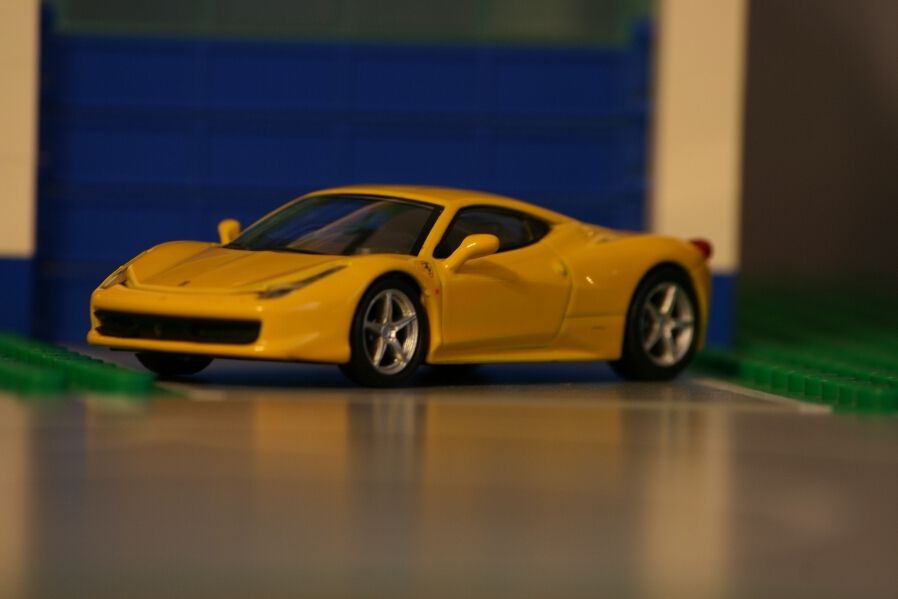
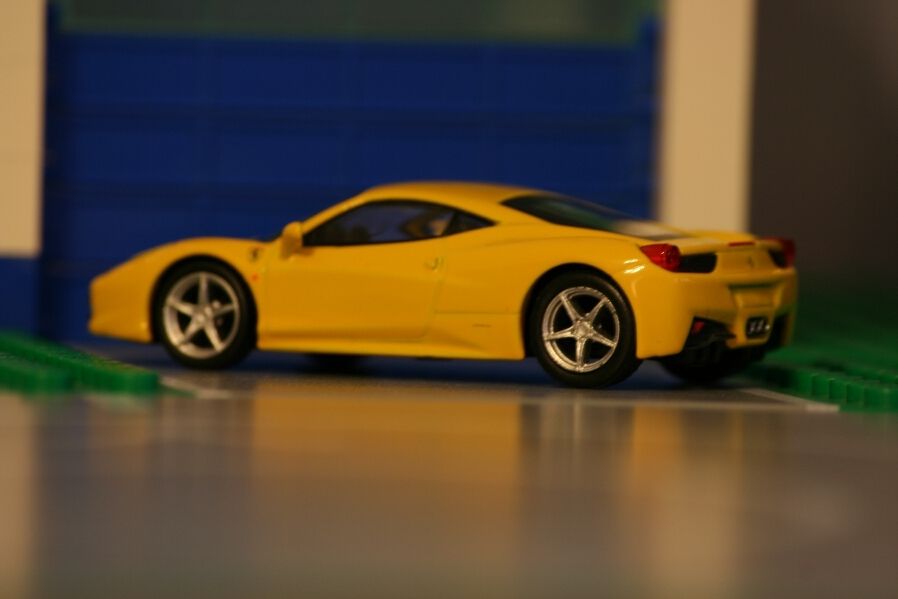
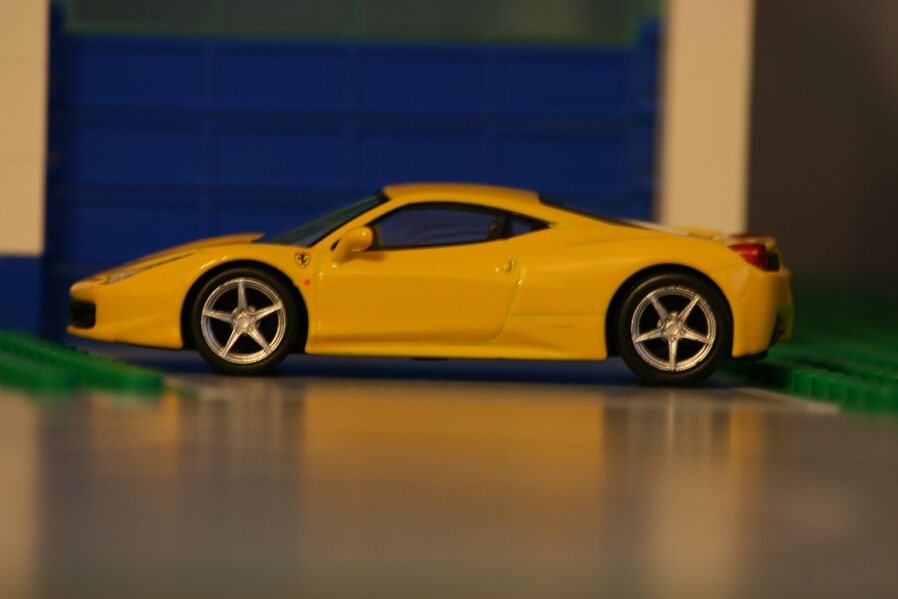
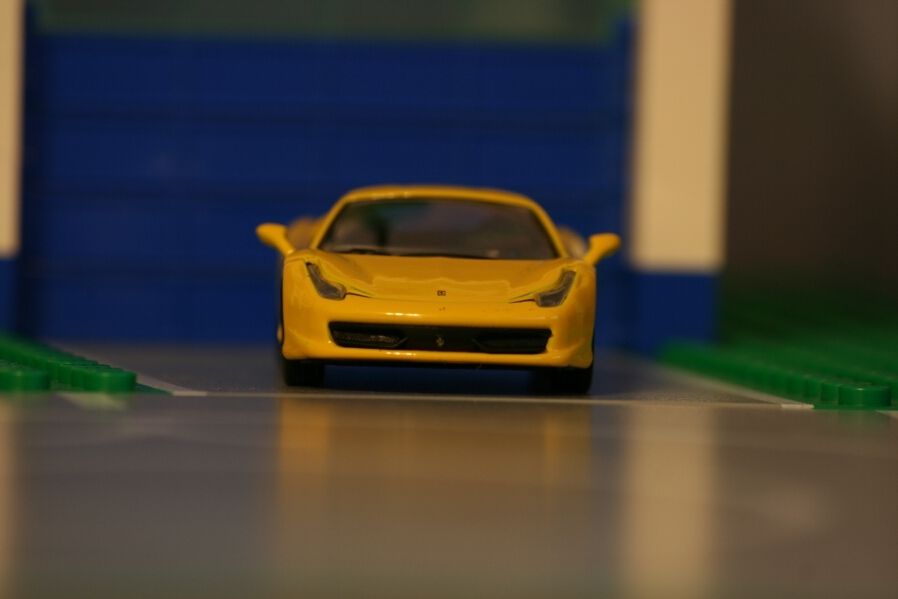
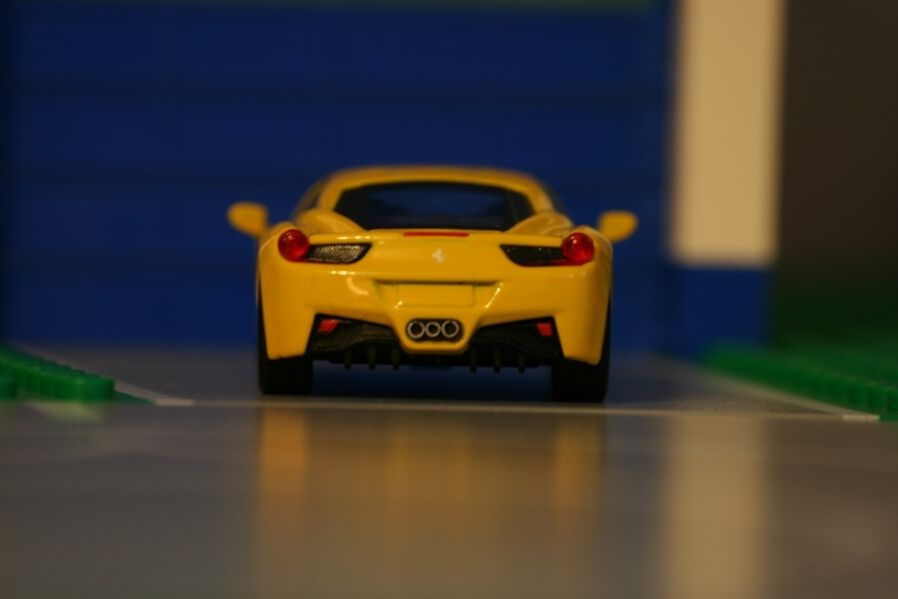
Today's Car of the Day is from Jedimario's collection and is the Kyosho Ferrari 458.
Wikipedia.com The body was designed by Pininfarina, as with all recent Ferrari models. The car’s exterior styling and features were designed for aerodynamic efficiency, producing a downforce of 140 kg (309 lb) at 124 miles per hour (200 km/h). In particular, the front grille features deformable winglets that lower at high speeds, in order to offer reduced drag.[11] The car's interior was designed using input from former Ferrari Formula 1 driver Michael Schumacher, including a new steering wheel design which incorporates many features and controls as opposed to their being on the dashboard, similar to racing car designs.
For more info on the real car,visit http://en.wikipedia.org/wiki/Ferrari_458
A non-Hot Wheels Ferrari die-cast from the last decade? Kyosho has gotten around the exclusive licensing in the same manner that Maisto did. While this car was marketed and even packaged like Kyosho's normal line, the car arrived partially disassembled and included a small screwdriver. You had to set the seats in the interior, the wheels and interior in the base, and then screw the base to the body to get the product you see here. All in all, perfectly fine, as the end result is just as professional looking as your typical high quality die-cast. When I first saw pictures of this car, I was shocked. It looked like a spaceship. I've now gotten used to seeing it (if you can ever get used to seeing such a thing) and the effect has worn off, but it's still a radical design. Check out those exhaust tips! Very glad to have it in yellow, the other Ferrari color. It suits the car quite nicely and isn't red like most of them are.

Thursday, May 17, 2012

Car Of The Day: May 17, 2012


Today's car of the day is Kyosho's 1997 Nissan Skyline GT-R.


The Nissan Skyline GT-R is a Japanese sports car based on the Nissan Skyline range.
The first GT-Rs were produced from 1969–1973. After a 16 year hiatus since the KPGC110 in 1972, the GT-R name was revived in 1989 with the Skyline R32. This car was nicknamed "Godzilla" by the Australian motoring publication Wheels in its July 1989 edition. The R32 GT-R dominated the motorsport in Japan, winning 29 straight victories out of 29 races. The GT-R proceeded to win the JGTC Group A series championship 4 years in a row, and also had success in the Australian Touring Car Championship winning from 1990–1992, until a regulation change excluded the GT-R in 1993. The Skyline GT-R (R33) was also the first production car to lap the legendary Nürburgring in under eight minutes.

The Skyline GT-R became the flagship of Nissan performance, showcasing many advanced technologies including the ATTESA-ETS 4WD system and the Super-HICAS four-wheel steering. The GT-Rs remained inexpensive compared to its European rivals, with a list-price of ¥4,500,000 (US$31,000). Today, the car is popular for import Drag Racing, Circuit Track, Time Attack and events hosted by tuning magazines. The GT-R is the winner in the 2007 Tsukuba Time Attack held in Japan—the M-Speed GT-R (9 out of the top 15 cars consists of GT-Rs). Production of the Skyline GT-R ended in August 2002. The car was replaced by the GT-R, an independent vehicle not sold as a Skyline.

The Skyline GT-R was never manufactured outside of Japan, and the sole export markets were Hong Kong, Australia and New Zealand, in 1991, and the UK (in 1997, thanks to the Single Vehicle Approval scheme) as used Japanese imports. Despite this the car has become an iconic sports car, including in countries from the Western World (mainly the United Kingdom, Australia, New Zealand, Ireland and Canada). It has become notable through pop culture such as cinema and video games like The Fast and the Furious series, Initial D, Shakotan Boogie, Wangan Midnight, and Gran Turismo.

The car was named by BBC's Top Gear as the only true Japanese contribution in the line of supercars, and by Jeremy Clarkson as one of the best cars in the world.


For more information and pictures of the real car please visit: Nissan Skyline GT-R


When Kyosho announced a series of Skylines I yawned.  Boring.  Everyone else has done them to death.  But then they went and included sedans, which have definitely not been done to death.  So about half the series came home with me after all.


The E-BCNR33 (R33) was developed in 1995 as a successor to the venerable R32 model. The engine in the R33 was nearly identical to the R32. It used the same turbochargers and the same specification for the manual gearbox, although the syncros were made to be stronger. The engine corrected the R32's weak oil pump drive collar, which tended to fail in higher power applications, with a wider collar. The base model R33 GT-R weighs 1,540 kg (3,400 lb).

The R33 GT-R launched in January 1995 with the base model GT-R and the V-spec model. The V-spec model weighed in 10 kg (22 lb) heavier, and had sportier suspension resulting in lower ground clearance. The V-spec also featured the newer ATTESA E-TS Pro all wheel drive system, which included an Active Limited Slip differential. The V-spec model also included a four wheel independent channel anti-lock braking system.

At the same time as the release of the R33 GT-R and GT-R V-spec, Nissan released the R33 GT-R V-spec N1 model. Changes made in the R33 N1 are similar to those in the R32 N1. The car was made lighter by removing the ABS, air conditioning, sound system, rear wiper and trunk carpet. The R33 GT-R V-spec N1 received the slightly revised R33 N1 engine.

Tuesday, January 3, 2012

Car Of The Day: January 3, 2012


Today's car of the day is Kyosho's 1974 Honda Civic.


Honda began selling the 1169 cc (70 in³) transversely mounted inline four-cylinder Civic for about US$2,200. The car produced roughly 50 hp (37 kW) and included power front disc brakes, vinyl seating, reclining bucket seats, and a woodgrain-accented dashboard. The hatchback version added a fold-down rear seat, an AM radio, and cloth upholstery. The car had front and rear independent suspension. A four-speed manual transmission was standard. Options for the Civic were kept to a minimum, consisting of air conditioning, an automatic transmission called the Hondamatic, radial tires, and a rear wiper for the hatchback. The car could achieve 40 mpg-US (5.9 L/100 km; 48 mpg-imp) on the highway, and with a small 86.6-inch (2,200 mm) wheelbase and 139.8-inch (3,550 mm) overall length, the vehicle weighed 1,500 pounds (680 kg).

The four-door sedan version of this bodystyle was not available in the USA, and the sedan was not a hatchback until 1978, just before the introduction of the second generation. In the USA, the advertising campaign used to introduce the Civic was, "Honda, we make it simple."


For more information and pictures of the real car please visit: Honda Civic


This is the car that put Honda on the radar of most American car buyers.  Previous efforts were mostly ignored in the USA; but this model was the perfect car at the perfect time.


The Civic's features allowed it to outperform American competitors such as the Chevrolet Vega and Ford Pinto. When the 1973 oil crisis struck, many Americans turned to economy cars. Reviews of American economy car quality were poor and getting worse due to spiraling costs for manufacturers. Japanese culture had a long-standing tradition of demanding high-quality economy cars, and the growing American desire in the 1970s for well-made cars that had good fuel mileage benefited the standing of the Honda Civic, Toyota Corolla and Datsun B210 in the lucrative U.S. market.

For 1974, the Civic's engine size grew slightly, to 1237 cc and power went up to 52 hp (39 kW). In order to meet the new 5 mph (8 km/h) bumper impact standard, the Civic's bumpers grew 7.1 inches (18 cm), increasing overall length to 146.9 inches (373 cm). The CVCC (Compound Vortex Controlled Combustion) engine debuted in 1975 and was offered alongside the standard Civic engine. The optional 53 hp (40 kW) CVCC engine displaced 1488 cc and had a head design that promoted cleaner, more efficient combustion. The CVCC design eliminated the need for catalytic converters or unleaded fuel to meet changing emissions standards, unlike nearly every other U.S. market car. Due to California's stricter emissions standards, only the CVCC powered Civic was available in that state. This created a sales advantage in Honda's favor in that CVCC equipped Honda products afforded the buyer the ability to choose any type of fuel the buyer wanted, and due to emissions equipment not being damaged by using leaded fuel, the buyer could use any gasoline products available. This was also an advantage due to some regions of North America having to ration available gasoline supplies due to periodic shortages at the time. TV commercial for CVCC Civic. A five-speed manual transmission became available in 1974, as did a Civic station wagon (only with the CVCC engine), which had a wheelbase of 89.9 inches (228 cm) and an overall length of 160 inches (406 cm). Civic sales also increased and topped 100,000 units for this year.
1978 brought slight cosmetic changes: the grille was black; the rear-facing hood vents replaced the sideways vents; and turn indicators were mounted in the bumper instead of in the grille. The CVCC engine was now rated at 60 hp (45 kW).

The first generation Honda Civics were notorious for rusting in less than three years from purchase where salt was used in the winter. The U.S. importer, American Honda Motor Company, signed a final consent decree with the Federal Trade Commission that provided owners of 1975-1978 Civics with rusted fenders the right to receive replacements or cash reimbursements. In the end, almost 1 million Honda owners were notified that their fenders could be repaired or replaced by the automaker at no charge. About 10% of all Hondas sold were to be inspected by a dealer, and the automaker had 180 days to replace front fenders and supporting parts that showed rust within the first three years of use.

The Hondas were so vulnerable to corrosion that the National Highway Traffic Safety Administration (NHTSA) also issued a safety recall . This was because the car's lateral suspension arms, front crossbeam, and strut coil spring lower supports could weaken with exposure to salt. A total of 936,774 vehicles built between 9-1-1972 and 8-1-1979 were subject to extensive repairs since Honda had to replace the suspension components, or the automaker bought back entire cars with serious body corrosion.

At the time, Honda's rust recall was the largest safety action among all the brands imported into the U.S. Civics became known for their "typical Honda rust" in the used car market.


What's wrong with the above picture?  Could it be the two subcompacts that are exactly the same length of the full-size models in their respective lineups?  Why yes!  Yes it can be.  Since these are generally designed as toys, the cars are designed to fit the blisterpack for a multitude of cost-saving reasons.  They don't require new, smaller wheels to be made specifically for this one casting.  They don't require a special blisterpack to compensate for their small size.  And supposedly they appeal to people looking for cars because they don't feel like they're getting ripped off on a tiny car when the rest of the models are twice the size.


Now if you know me, you know I'm a true scale enthusiast.  I like my big cars big and my tiny cars tiny.  Which leads us to these pictures.  These were all marketed as adult collectibles as opposed to toys.  So we get a giant SUV and a tiny subcompact.  Just the way it should be on the toy end but can't be for the reasons stated earlier.


Surprisingly, even though we've dealt with three different diecast manufacturers so far this year (GreenLight, Hot Wheels 100%, and today's Kyosho) and three very different types of car (classic muscle, gargantuan SUV, and subcompact) all three have one thing in common- they are true to scale with one another.


Yes, you can even pack up the Civic and take it along as a spare in case the Hummer breaks down....or more likely runs out of gas in the middle of nowhere.

Tuesday, December 13, 2011

Car Of The Day: December 13, 2011


Today's car of the day is Kyosho's 1970 Mercedes-Benz 280SL.


The Mercedes-Benz W 113 roadsters, designed by Paul Bracq, were produced from 1963 through 1971. Their distinctive "pagoda" hardtop roof, designed by Béla Barényi, gave them their contemporary nickname. The W 113 SL replaced both the legendary 300 SL (W 198) and the 190 SL (W121 BII), and it was in turn replaced by the R107 SL.

All models feature an inline-six cylinder engine with multi-port fuel injection using a mechanical pump system adapted from the diesel motors. All are rear-wheel drive, but are also equipped with independent rear suspension, a feature that greatly improved road handling. While the SLs are relatively heavy compared to other similar roadsters, weight was reduced in part by the use of aluminum panels for the trunk lid, front hood, tonneau cover and door skins.

These SLs were typically sold with a soft top and an optional removable hard top, the so-called "Coupe/Roadster" configuration. A 2+2 was introduced with the 250 SL "California Coupe", which had a rear bench seat instead of the soft-top.


For more information and pictures of the real car please visit: Mercedes-Benz 280SL


A recent addition from diecastdingo (thanks Patrick!).


The 2.8 liter 280 SL was introduced in December 1967 and continued in production through 23 February 1971, when the W 113 was replaced by its successor, the entirely new and substantially heavier 350 SL (R107). Over the years, the W 113 evolved from a sports car into a comfortable grand tourer, and US models were by then usually equipped with an automatic transmission and air condition. Manual transmission cars came with either a 4-speed, or the desirable ZF 5-speed. In Europe, manual transmission cars without air condition were still predominant. Of the 23,885 280 SLs produced, more than half were sold in the US.

The main change was the use of the 2778 cc M130 engine with 170 PS (130 kW; 170 hp) maximum power and 180 lb·ft (244 N·m) maximum torque, which finally gave the W 113 adequate power. The performance improvement was achieved by increasing bore by 4.5 mm (0.2 in), which stretched the limits of the M180 block, and required pairwise cylinder casts without cooling water passages. This mandated an oil-cooler, which was fitted vertically next to the radiator. The M130 marked the final evolution of the venerable SOHC M180 inline-six, before it was superseded by the entirely new DOHC M110 inline-six introduced with 1974 European 280 SL (R107) models.

North American models have a number of subtle differences, the most obvious one being the distinctive 'sealed beam' bulb headlamps required in the US versus the 'fishbowl' headlamps for the rest of the world. 1970 US models also acquired amber turn-signal lenses on the rear lights, later than in many other countries.
Other differences of the North American models include imperial gauges, chrome bumper guards, side reflectors (illuminated from 1970), lower rear-axle ratios for faster acceleration yet lower top speeds, and no 'single-side' parking lights. US market 280 SL engines required emission control modifications that included 'softer' valve timings, a reduced compression ratio and a modified injection pump, which reduced power from 170 PS (130 kW; 170 hp) to 160 PS (120 kW; 160 hp). In the US, automatic transmission, air condition and white wall tires were much more popular than elsewhere.

European cars were popular as US gray-market imports: those vehicles were brought to the US some years after their original delivery in Europe. Early European imports had aftermarket hazard lights and safety belts fitted, US safety requirements that were adopted in Europe only in later production years.
Tuesday, November 23, 2010

Car Of The Day: November 23, 2010


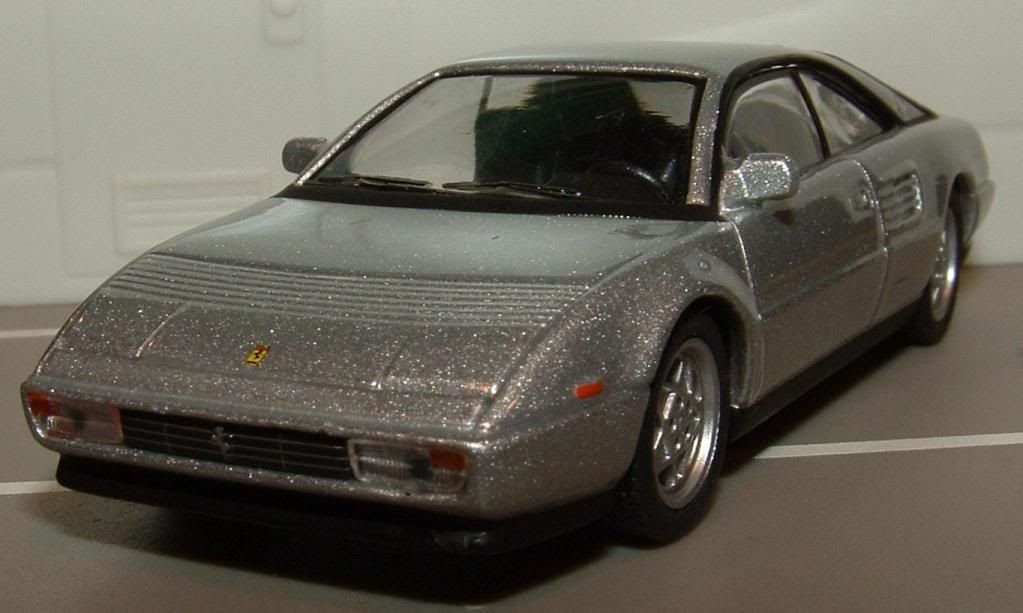
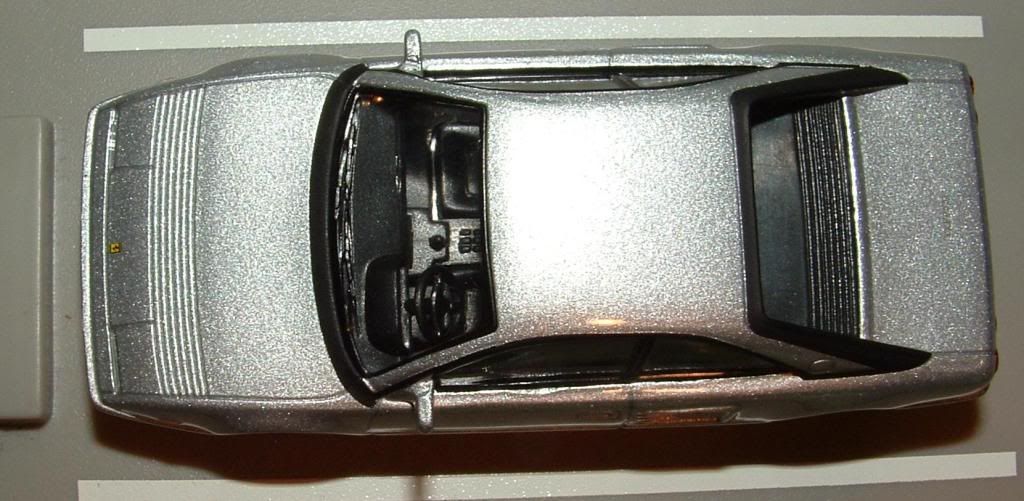
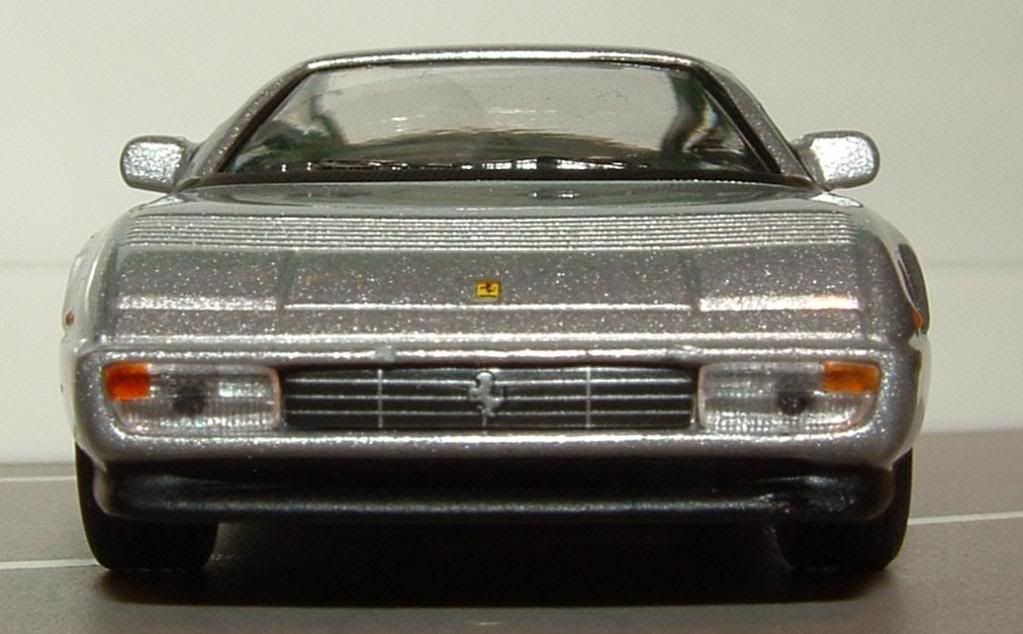
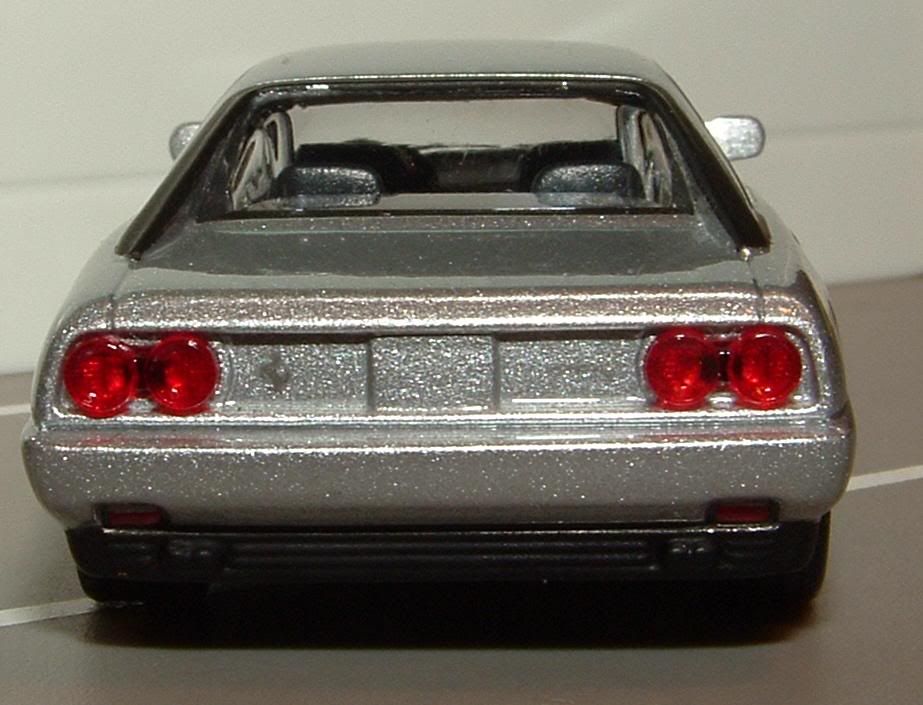
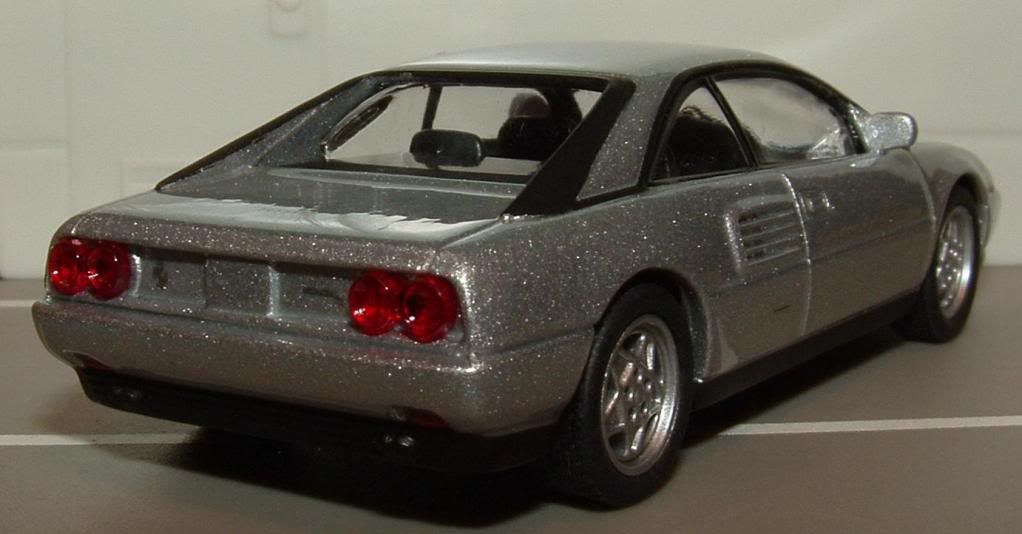
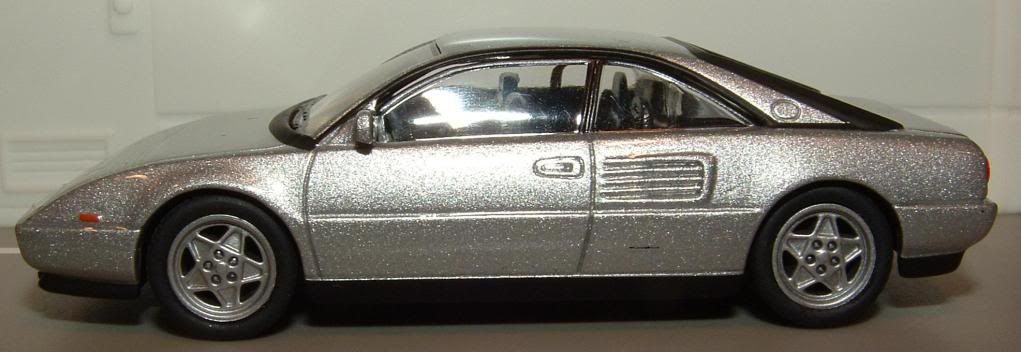
Today's car of the day is Kyosho's 1989 Ferrari Mondial t.


The Ferrari Mondial is a 2+2 coupe automobile produced by Ferrari from 1980 through 1993. It replaced the angular 208/308 GT4. The "Mondial" name came from Ferrari's history — the famed 500 Mondial race car of the early 1950s. Despite its predecessor being Bertone styled, the Mondial saw Ferrari return to Pininfarina for styling. It was sold as a mid-sized coupe and, eventually, a cabriolet. The Mondial was conceived as a 'usable' model, offering the practicality of four seats and the performance of a Ferrari. The car had a slightly higher roofline than its stablemates, with a single long door either side, offering easy access and good interior space, reasonable rear legroom, while allround visibility was excellent.
The Mondial was produced in fairly high numbers for a Ferrari, with more than 6,800 produced in its 13-year run, and was one of Ferrari's most commercially successful models. The car body was not built as a monocoque in the same way as a conventional car; the steel outer body was produced by the famous Italian coachbuilder Carrozzeria Scaglietti, just down the road in nearby Modena, built over a lightweight steel box-section space frame. The engine cover and rear luggage compartment lids are in light alloy. The seats and interior were trimmed in Connolly hide, contrasting with the body color. Most cars were painted rosso red, but some were black or silver, and a few were dark blue.

The Mondial was the first Ferrari car where the entire engine/gearbox/rear suspension assembly was mounted on a detachable steel subframe, making engine removal for a major rebuild or cylinder head removal much easier than it was on previous models. Unusually, the handbrake is situated between the driver's seat and the inner sill. Once the handbrake is set it drops down so as not to impede egress and ingress. Instead of the normal "H shift pattern, the pattern has 1st gear in a "dog leg" to the left and back, behind reverse. This puts 5th gear to the right and back behind 4th, making shifts between 4th to 5th much more straightforward.


For more information and pictures of the real car please visit: Ferrari Mondial


An interesting addition to Kyosho's Ferrari collection.  Kyosho seems determined to make a replica of every Ferrari ever produced, leading us to replicas of cars that never would have received this attention otherwise.  The Mondial may have been a strong seller for Ferrari, but it is not iconic like the 308, Testarossa, or F-40.


The final Mondial evolution was 1989's Mondial t (Coupe and Cabriolet). It was a substantially changed model, "spearhead of a new generation of V8 Ferraris", according to Road & Track magazine. It was visually different from preceding Mondial models, the most recognisable being the redesign of the air intakes to a smaller, neater rectangular shape. The door-handles were of a visually different design and, along with the bumpers, became body coloured, whilst a painted black band was added around the bottom of the body.

The 't' called attention to the car's new engine/transmission layout: the previously-transverse engine was now mounted longitudinally whilst the gearbox remained transverse, thus forming a 't'. By adopting this layout, a longer engine could be mounted lower in the chassis, improving handling dramatically. The 't' configuration was used by Ferrari's Formula One cars of the 1980s, and would be the standard for the marque's future mid-engined V8 cars, beginning with the 348, introduced later in the year. The transverse gearbox was fitted with a Limited Slip Differential with a twin-plate clutch design with beveled gears driving the wheels. Later in production, a Semi-automatic transmission termed "Valeo" was available as an option; while shifting was by means of a traditional gear lever, the clutch was actuated automatically without a clutch pedal. The engine was up to 3.4 L (3405 cc) and 300 hp (224 kW). The engine was now controlled by Bosch Motronic DME 2.5 (later DME 2.7) electronic engine management that integrated EFI and ignition control into a single computer unit. Two of these were used in the car: one for each bank of the engine. Engine lubrication was upgraded to a dry-sump system.

The Mondial's chassis would underpin a new generation of 2-seat Ferraris, right up to the 360, but the 2+2 Mondial would end production just four and a half years later in 1993. However, the "t" layout of the engine and transaxle, adapted from Ferrari's Formula One cars, continues to be used in mid-engined V8 model Ferraris to date, albeit with a more sophisticated chassis. The new layout saw the engine and transmission mounted on a removable subframe; the assembly could be removed through the underside of the vehicle for maintenance. This is necessary for timing belt replacement, making this a costly procedure for the owner who does not have a lift. On the other hand, the clutch was now located at the very rear of the drive train. This makes clutch replacement and service a simple, inexpensive, and readily owner-doable proposition.
The "t" was home to other Ferrari firsts: It used power assisted steering for the first time, and had a 3-position electronically controlled suspension for a variable trade off between ride quality and road holding. It also had standard ABS.

The Mondial t represented the most substantial upgrade to the Mondial model line in performance and handling since its introduction in 1980. Previous Mondials had rarely justified their price premium over the competition in terms of bare performance statistics, which led to some poor press coverage. The "t" offered greater performance whilst retaining a mid-engined layout and a practical packaging layout, and was more favorably received. It also had the advantage of two usable rear seats.

Despite over a decade in production, with consistent updates throughout, the Mondial's final models weighed less than its earlier models; typically, updates to a long production run add significant mass to a particular model. The company has not produced a mid-engined 2+2 car since, in fact front-engined V12s such as the 456 and the current 612 Scaglietti, were the company's only 4-seat vehicle offerings until 2009's V8 "California". However, the California is front engined, leaving the Mondial t as the most modern 4-seat, mid-engined, Ferrari yet produced.