Showing posts with label Tomica Limited. Show all posts

Thursday, October 4, 2012

Car Of The Day: October 4, 2012


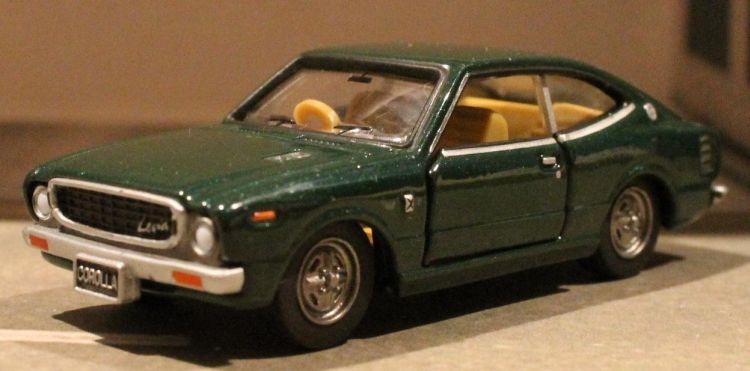
Today's car of the day is Tomica Limited's 1974 Toyota Corolla Levin.


The Toyota Corolla is one of a line of subcompact and compact cars manufactured by the Japanese automaker Toyota, which has become very popular throughout the world since the nameplate was first introduced in 1966. In 1997, the Corolla became the best selling nameplate in the world, surpassing the Volkswagen Beetle. Over 39 million Corollas have been sold as of 2012. The series has undergone several major redesigns.

The name Corolla is part of Toyota's naming tradition of using the name Crown for primary models: the Corona, for example, gets its name from the Latin for crown; Corolla is Latin for small crown; and Camry is an Anglicized pronunciation of the Japanese for crown, kanmuri. The Corolla has always been exclusive in Japan to Toyota Corolla Store locations, and manufactured in Japan with a twin, called the Toyota Sprinter, sold at a specific Japanese Toyota dealership called Toyota Auto Store, then renamed Toyota Vista Store in 1980.

Corollas are manufactured in Japan and in Brazil (Indaiatuba, São Paulo), Canada (Cambridge, Ontario), China (Tianjin), India (Bangalore), Indonesia, Malaysia, Pakistan, Philippines, South Africa (Durban), Taiwan, Thailand, Turkey and Venezuela. Production has previously been made in Australia (Victoria) and the United Kingdom (Derbyshire). Production in the United States (at NUMMI in Fremont, California) ended in March 2010.

The Corolla's chassis designation code is "E", as described in Toyota's chassis and engine codes.

Early models were mostly rear-wheel drive, later models were mostly front-wheel drive and some models were four-wheel drive. Its traditional competitor almost from the very beginning has been the Nissan Sunny also introduced the same year as the Corolla in Japan.


For more information and pictures of the real car please visit: Toyota Corolla Levin


Another Hershey show find, I couldn't leave this one behind.


The Corolla E30 was the third generation of cars sold by Toyota under the Corolla nameplate. It was built from August 1974 to July 1981 and marked Toyota's greatest growth in the United States in the wake of the fuel crisis. In addition to its sister model, the Sprinter, there was a redesigned-body version built by Toyota affiliate Daihatsu, called the Daihatsu Charmant. While there were certain fourth-generation models with a longer model life, this generation, when considered as a whole, was the longest-lived one, possibly due to the worldwide recession in the 1970s. A large range of cars were built using this chassis, including Corollas, Sprinters, Daihatsu, and the sporty Levin and Trueno models with the DOHC motor, with a fuel injection upgrade added to Japanese Levin models in January 1977.

The 3K engine was used in certain markets and later the 4K, while most Japanese and American models had the bigger 2T engine. A "Toyoglide" 2/3-speed automatic transmission was added as well as a four-speed and five-speed manual transmission, driving to the rear wheels. A three-door "liftback" (E50) and sports coupé (E51) was added in 1976. The E40 and E60 series were assigned to the Sprinter variants.
Even though the E30 and E50 series were replaced by the E70 series in August 1979 in most markets, the original E30 series and the facelifted E50 series both continued production until July 1981.


Road & Track was critical of the 1975 Corolla, calling it "large and heavy" and "expensive" compared to the Honda Civic and Datsun B210. They also criticized the "relatively crude rear suspension", lack of interior space, and poor fuel economy when compared to the VW Rabbit. The base model cost US$2,711 in 1975, but only the $2989 "deluxe" model had features comparable to the contemporary pack.

Emissions became a problem further into the 1970s especially with the 3K engine, which became popular because of its low fuel consumption. Its replacement, the 4K engine, came with emissions equipment but only produced 60 hp (45 kW), despite a greater 1290 cc displacement.

The E30 series 2T-C engines outmatched rival Datsun B210's engine output.

Monday, October 24, 2011

Car Of The Day: October 24, 2011


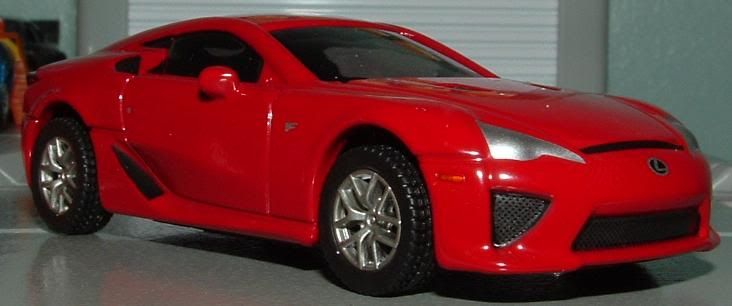
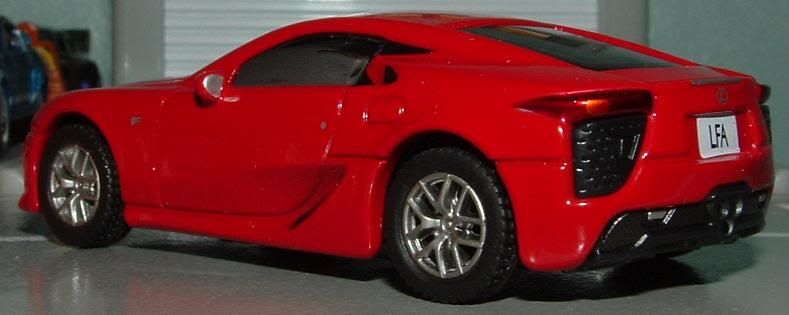
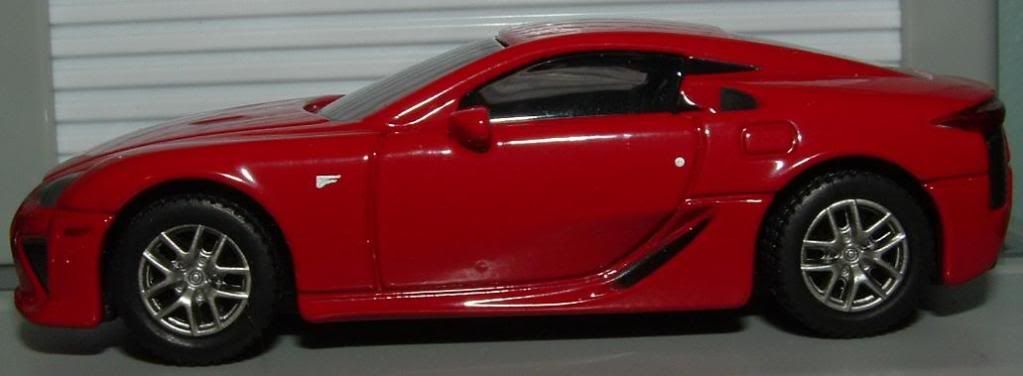
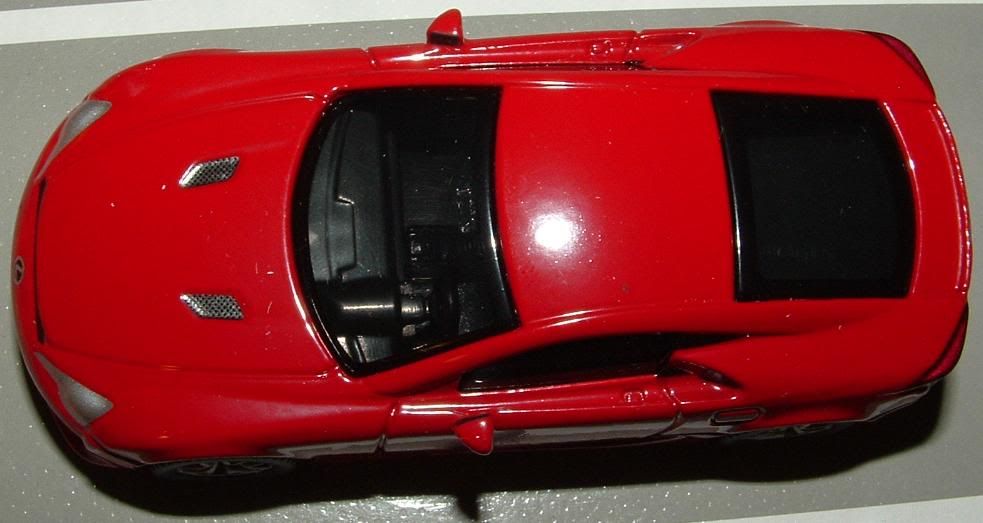
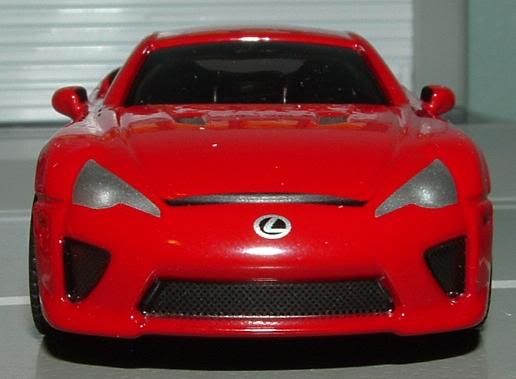
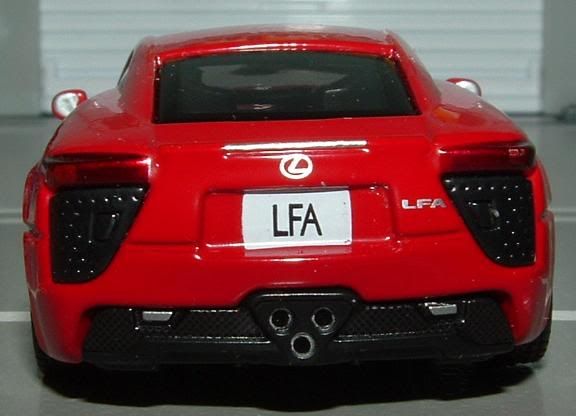
Today's car of the day is Tomica Limited's 2010 Lexus LFA.


The Lexus LFA is a 2-seat exotic sports coupe produced by Lexus as a concept car, "halo" vehicle, racing prototype, and production model. It is the second model in the F marque line of performance vehicles from Lexus, following the IS F. Three concept versions have been shown, each debuting at the North American International Auto Show with the LF-A designation as part of the LF Series concept line. The first LF-A concept premiered in 2005, followed in 2007 by a second LF-A with a more completely furnished interior and exterior. The third version of the LF-A, a roadster model, premiered in 2008. The production model, trademarked LFA, was shown at the Tokyo Motor Show in October 2009.
The production Lexus LFA features a new V10 engine and a carbon fiber-reinforced polymer (CFRP) body. CFRP materials account for 65 percent of the LFA's body composition by mass. The LFA went into production in late 2010, with a projected run of 500 vehicles at the base price of US$375,000. A circuit-tuned variant is scheduled for 2012.


For more information and pictures of the real car please visit: Lexus LFA


As always, anything from Tomica that has "Limited" or "Vintage" on the packaging is a winner, and this one is no exception.  The real car does nothing for me but it's nice to have a model.


Lexus began taking orders for the LFA supercar on October 23, 2009. Buyers will be selectively chosen by Lexus in the second quarter of 2010. Production will begin in December 2010 as a 2011 model. Only 500 total LFA models will be made worldwide, with only 20 produced each month. Each car will be custom ordered to the customer's specifications, and will cost an estimated US$375,000, depending on options and customization. Following the LFA's release at the Tokyo Motor Show, Lexus unveiled a website with a 'LFA configurator' which allowed users to select exterior and interior colors, brake caliper colors, seats, steering wheel leather, and other interior designs. In total, there are over 30 billion possible configurations. Each LFA will be hand-built by a dedicated production team of engineers and specialists at Toyota's Motomatchi plant in Aichi, Japan.

Production LFAs, lined up in YokohamaIn the North American market 150 LFAs will be initially sold through a two year lease program much like the Ferrari F50. This is to prevent owners from reselling the vehicle for a profit. Racing driver Scott Pruett was hired to give test drives to interested buyers, demonstrating the vehicle's capabilities at Auto Club Speedway. The Lexus division of Toyota Motor USA will stop taking orders at the end of 2009, in which they will talk about a purchase plan for the lessees. Lexus later changed their stance and allowed outright purchase, but only on the condition that they sign an agreement giving the dealer first right of refusal to buy back the LFA if the owner wants to sell it within the first two years. The dealer will have the option to buy back the used LFA for either fair market value or the original sticker price, whichever is lower. In the European market buyers order their LFA through a single Lexus dealer located in Park Lane, London where it is purchased outright.

During LFA production, each vehicle will receive a plaque which is individually numbered, indicating the unit's place in the production run. Each LFA V10 engine will also bear the signature of the specialist who assembled it. With 20 units produced monthly, production of the entire LFA run will last for 25 months, from December 2010 to December 2012.

Sunday, November 28, 2010

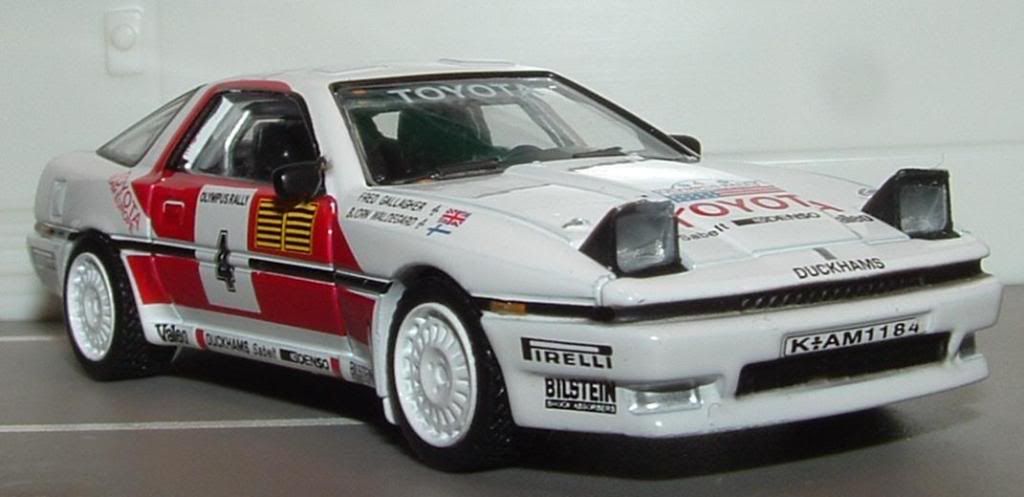
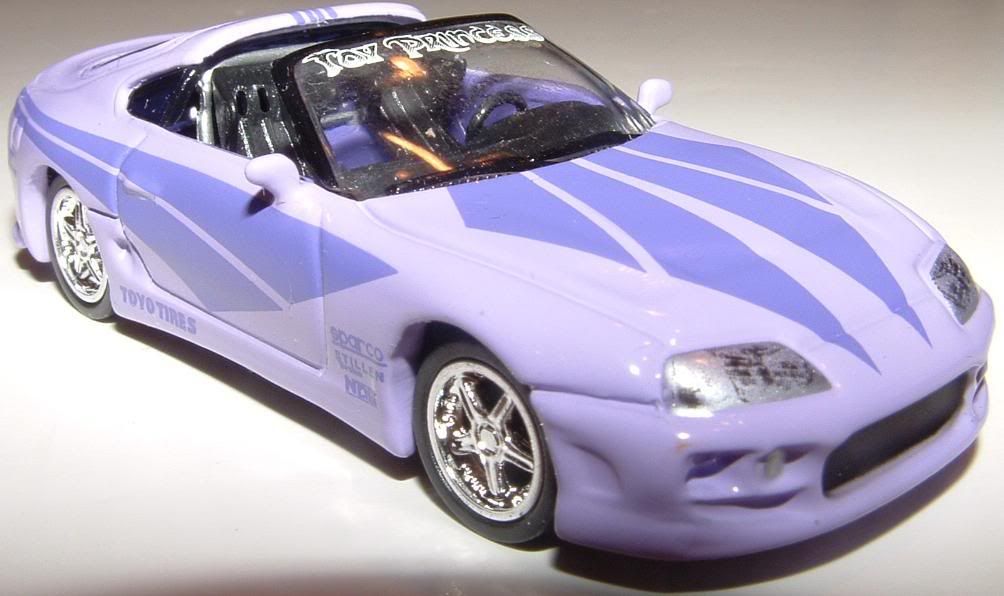
Super Celica To Wing Car: Toyota Supras In Small Scale

In 1979 Toyota added an inline six cylinder to the Celica and named it the Celica Supra (or Celica XX in Japan).  The Supra went through four generations before being discontinued in 2002.

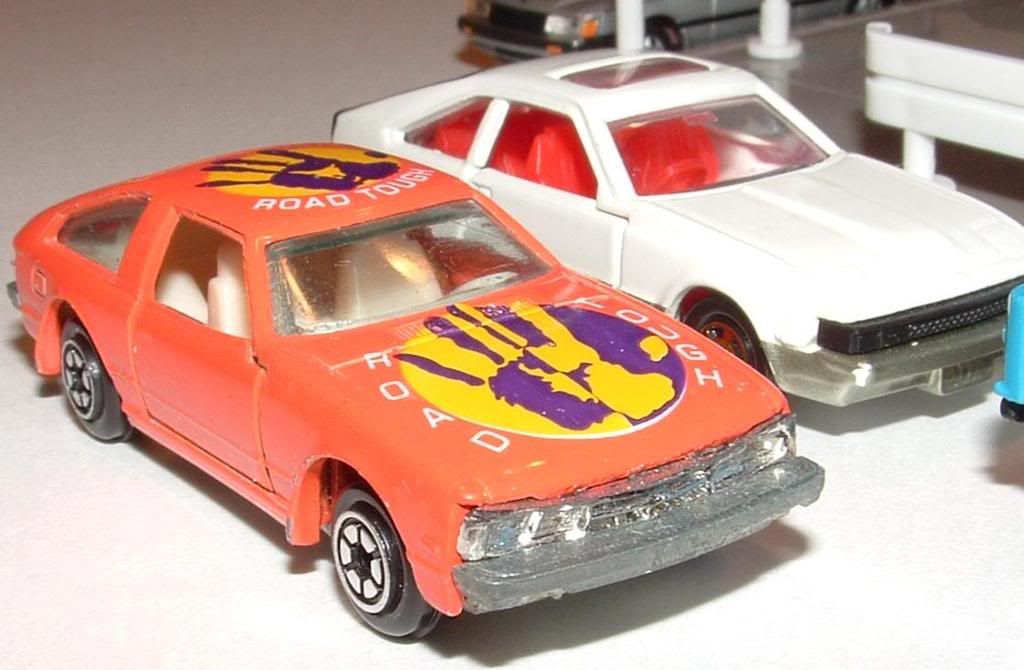
The first generation was from 1979-1981 and visually the cars were very similar to the Celica.  The car was lengthened about 5 inches to accommodate the larger engine and there were a few other minor differences to tell them apart.  This generation Supra was offered by Matchbox (as an XX) and Yat Ming.  Tomica added a “Supra” sticker to their existing Celica casting, but this did not a Supra make.


Yat Ming MK I (in orange) & Tomica MK II (in white)


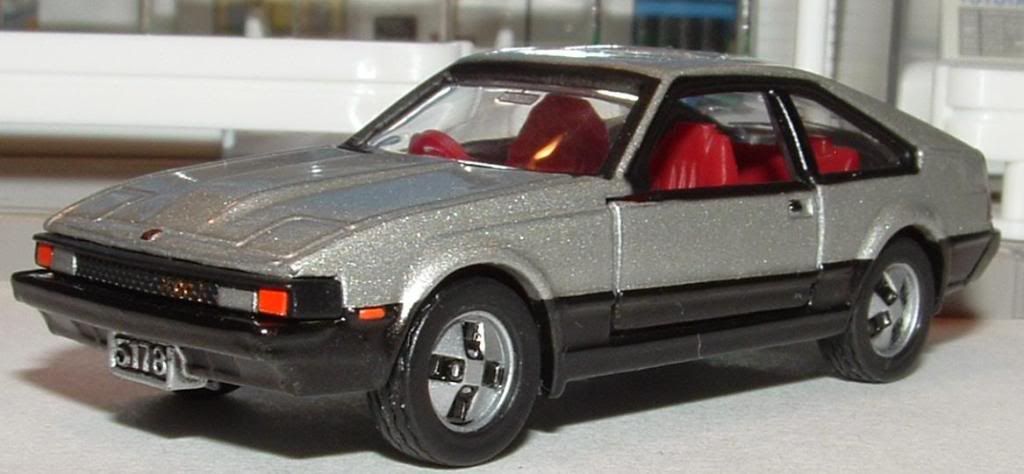
The second generation Celica Supra debuted in 1981 as a 1982 model.  The Japanese models were still known as the Celica XX, but the car remained the Celica Supra in the rest of the world.  The second generation Supra was differentiated from the Celica much more than the original car.  In addition to having the front stretched to accommodate the larger engine, the cars share no body panels in front of the doors.  The Supra had fully retracting headlights, a power bulge hood, and different (larger) taillights.  This generation of Supra was very popular in small scale with models from Hot Wheels, Matchbox, Tomica, Welly, Yat Ming, Zylmex, Summer, and others.  The Matchbox model featured an opening hatchback, while the Zylmex, Tomica, and Welly all had opening doors.  The Welly is a copy of the Tomica, with added details including a switch from right hand drive to left hand drive.


Tomica Limited MK II XX


While the Celica was completely redesigned for 1986, and switched to front wheel drive, the Supra remained rear wheel drive, continuing on as the Celica Supra through mid year, when the third generation Supra was released.  The MK III dropped the Celica moniker and retained rear wheel drive.  While this was the best selling Supra generation, surprisingly, there are very few replicas in small scale.  Tomica mocked up a prototype but it never entered production.  Bluebox released an ’87 Supra with a cast over rear window, and in the early 2000s Summer released a highly stylized (and unlicensed) MK III also.   The definitive MK III is CM’s rally car, however, a nice casting of a civilian MK III is a glaring omission in 1/64 scale.  This would make a great candidate for a Tomica Limited Vintage Neo.


CM’s MK III rally


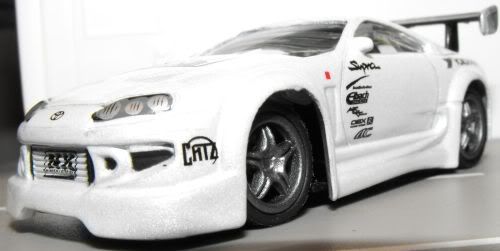
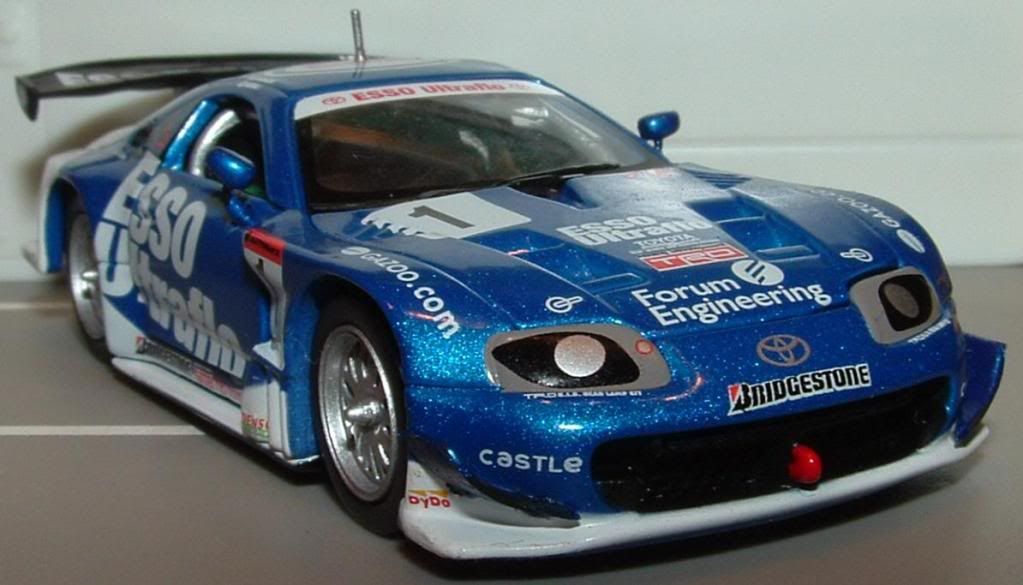
In 1993 the final generation of Supra debuted.  The MK IV is usually considered the best of the breed by Supra enthusiasts, and is the first (and often only) Supra that comes to mind when someone hears the words.  Pop-up headlights were gone, twin turbos were added, and a spoiler reminiscent of the Dodge Charger Daytona & Plymouth Roadrunner Superbird was standard (at least on the turbo models).  The MK IV was replicated by Matchbox and Tomica when the car debuted, and a number of other manufacturers after it starred in “The Fast & The Furious”, among them Hot Wheels (the unlicensed “Super Tsunami”), Racing Champions, Jada, and Muscle Machines.  Johnny Lightning was supposed to revive the Racing Champions casting but they eventually canceled the line of “Fast And Furious” cars they were planning to release when the latest movie came out.


Racing Champions MK IV


Muscle Machines MK IV


Muscle Machines MK IV JGTC


Matchbox MK IV