Tuesday, October 25, 2011

Car Of The Day: October 25, 2011


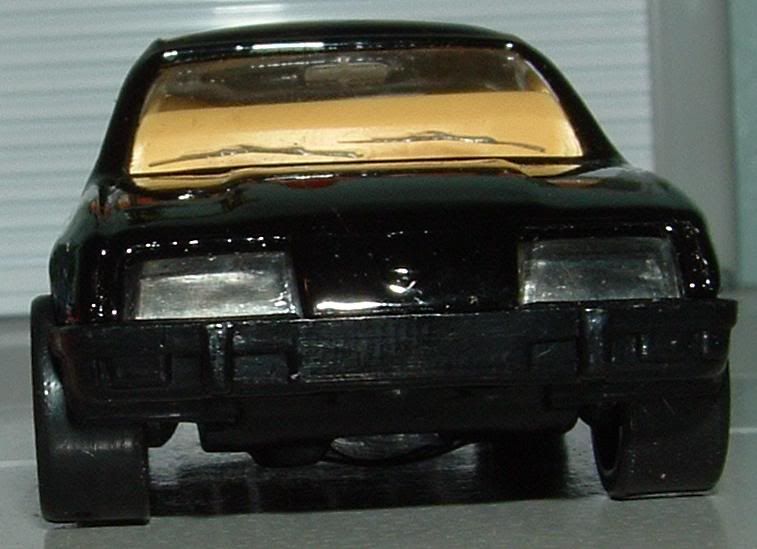
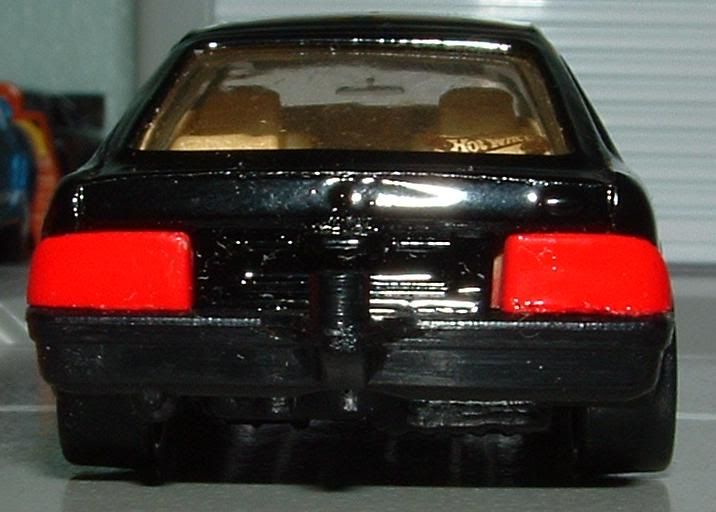
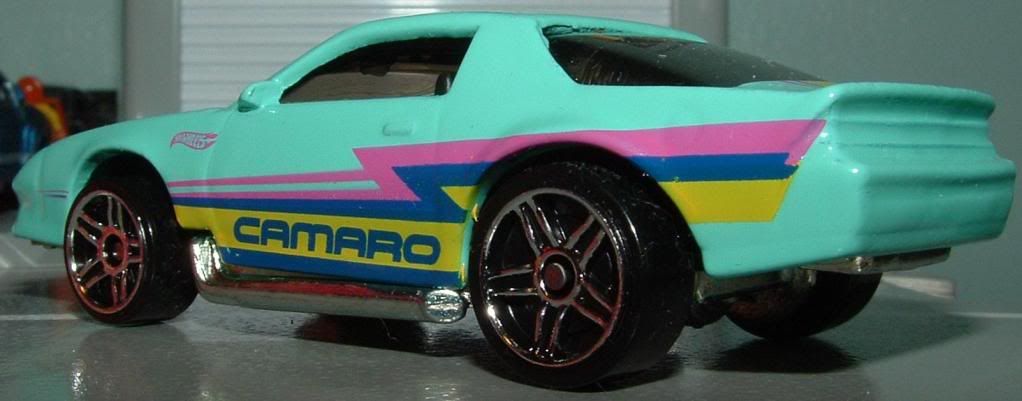
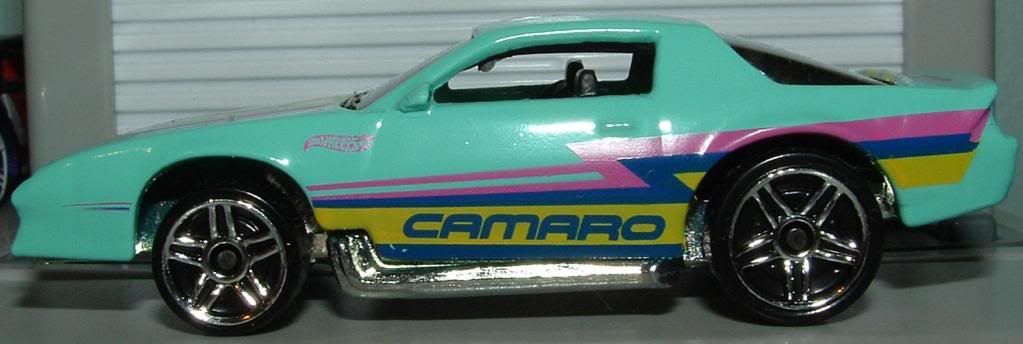
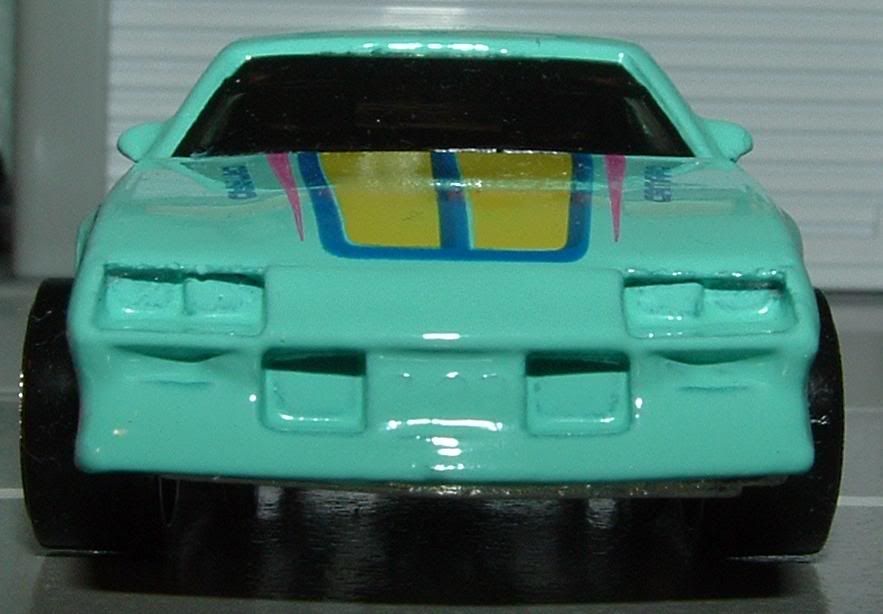
Today's car of the day is Hot Wheels' 1982 Chevrolet Camaro.


The third-generation Chevrolet Camaro was introduced for the 1982 model year. It continued to use General Motors's F-body platform and would produce a "20th Anniversary Commemorative Edition" for 1987 and "25th Anniversary Heritage Edition" for 1992. These were also the first Camaros with factory fuel injection, four-speed automatic transmissions, five-speed manual transmissions, four-cylinder engines, 16-inch wheels, and hatchback bodies. The third-generation Camaro continued through the 1992 model year.


For more information and pictures of the real car please visit: Chevrolet Camaro
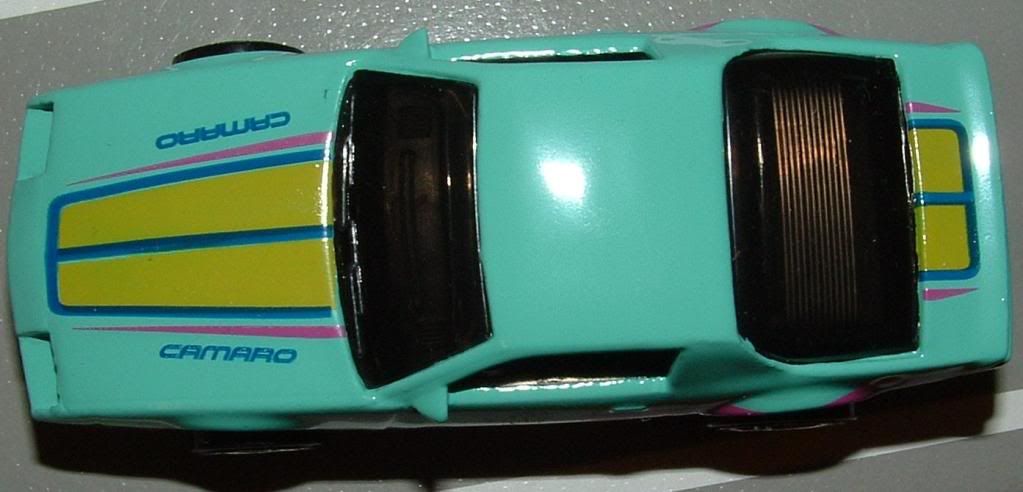


This was a great casting...in 1982.  In the years since it has seen continuous use in the Hot Wheels line.  While the Turbo Mustang and '80s Firebird have fallen out of the lineup, Blown Camaro has stuck around... even after it lost it's blown engine.  And taillight details.  And the general crispness of the tooling.  The real car is thirty years old, either create a new casting from scratch or put this one to bed.  That said I love the color and even the cheesy '80s graphics.


The Third-Generation Camaro was released for sale in January 1982. The 1982 model introduced the first Camaros with factory fuel injection, a hatchback body style, and a four-cylinder engine (due to fuel economy concerns in the wake of the 1979 energy crisis). The Camaro Z28 was Motor Trend magazine's Car of the Year for 1982. Three models were available: Sport Coupe, Berlinetta, and Z28. Third generation Camaros also had a suspension system that was much more capable in corners than the previous generation.

The Sport Coupe came standard with the 2.5 L 151 cid LQ9 four cylinder engine. The 2.8 L 173 LC1 V6 and 5.0 L 305 LG4 V8 were optional. Dog dish-style hubcaps were standard; full wheel covers were optional as were steel, five-spoke 14x7-inch body-colored rally wheels.

The Berlinetta came standard with the 2.8 LC1 V6 or the optional 5.0 LG4 V8. The Berlinetta came standard with its own unique 14x7-inch finned aluminum wheel with gold accenting and 'Berlinetta' center cap. Its own lower body pin striping, gold 'Berlinetta' badging, and headlamp pockets were painted in an accent color. The taillights got a gold and black horizontal divider bar. The interior came standard with custom cloth interior, a rear storage well cover and additional carpeting on rear wheelhouses. It also came standard with additional body insulation and full instrumentation.

The Z28 came standard with the 5.0 L LG4 4bbl V8 or the optional LU5 twin TBI 'Cross Fire Injection' 5.0 L. The carbureted engine was available with either a four-speed manual or three-speed automatic transmission and put out a 145 hp (108 kW), while the optional Cross Fire Injection 305 was rated at 165 hp (123 kW). Performance enthusiasts of the day gave the new Camaro positive reviews for its styling and handling, but also made critical remarks about the relatively low power ratings for both the Camaro Z28 and Ford's Mustang GT, with the 302 cu in (4.9 L) V8 producing 157 hp (117 kW) SROD four-speed manual transmission.

All Z28s came with lightweight fiberglass SMC hoods with functional hood air induction flaps on RPO LU5 cars. The Z28 had a different nose, a three-piece rear spoiler and front, side, and rear lower body valances in silver or gold. Just above the valance was a two-color lower body stripe that encircled the car. Headlamp pockets on the Z28 were black. Standard were new 15x7-inch cast-aluminum five-spoke wheels accented with silver or gold. Z28 badges appeared on the right rear bumper, and on the side valances.

The Camaro Z28 paced the Indianapolis 500 in 1982, and over 6,000 replicas were sold through Chevy dealers. The pace car edition featured special two-tone silver/blue paint and special striping, orange pin-striping on 15-inch (380 mm) Z28 wheels, and a silver/blue interior with six-way Lear-Seigler manually adjustable seating. Engine choices in the pace cars were the same as the regular Z28. However, the car that actually paced the event was equipped with a highly modified all aluminum 5.7 L V8 not offered on the pace car replicas.

Monday, October 24, 2011

Car Of The Day: October 24, 2011


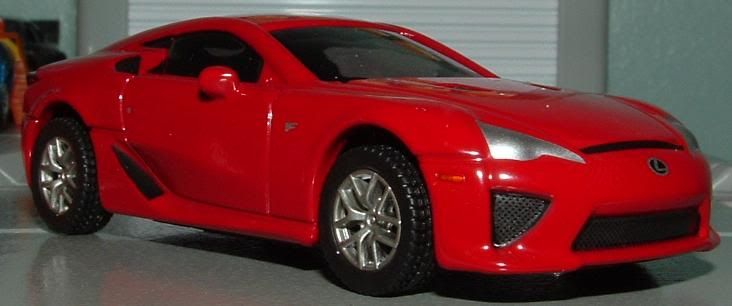
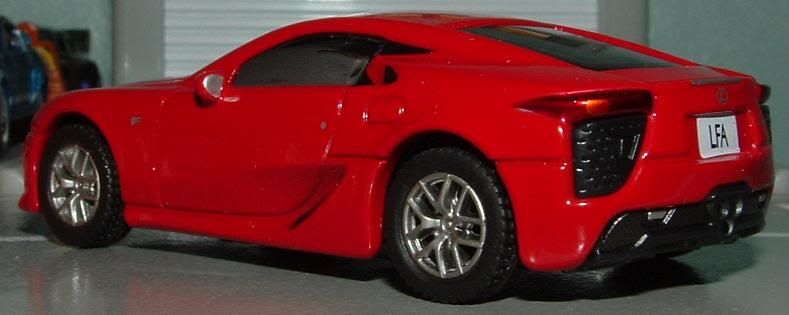
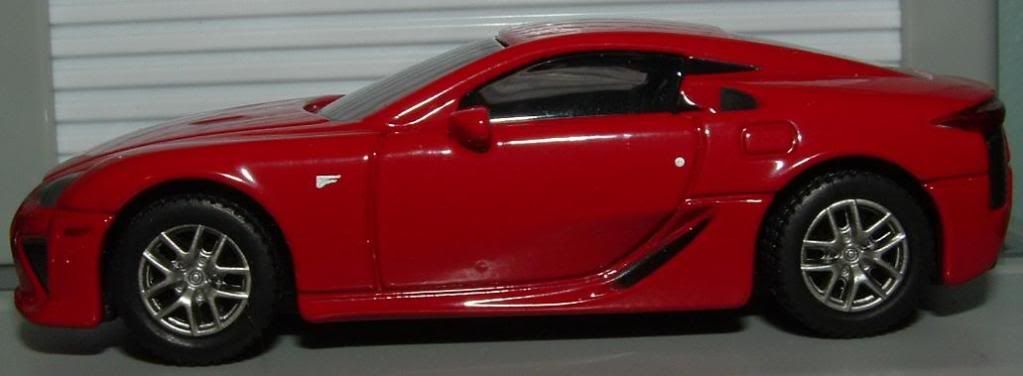
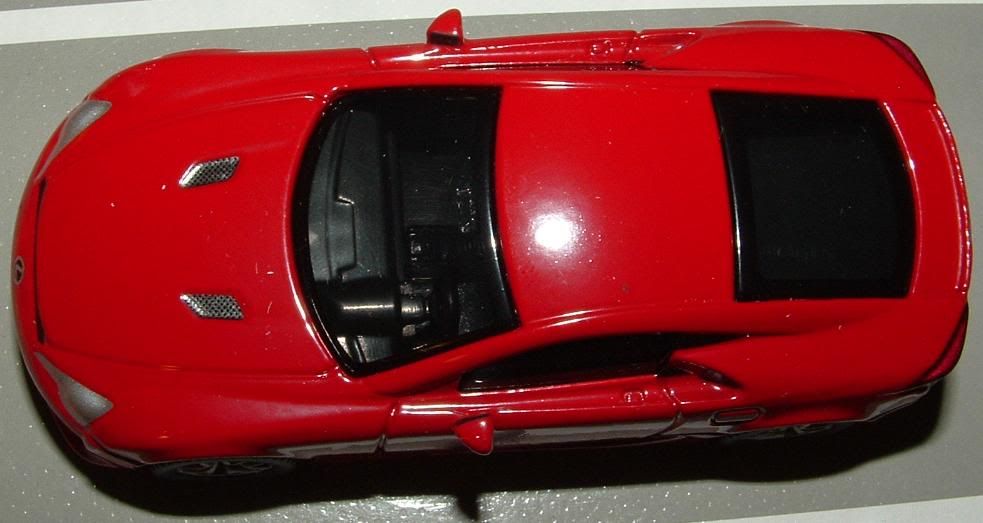
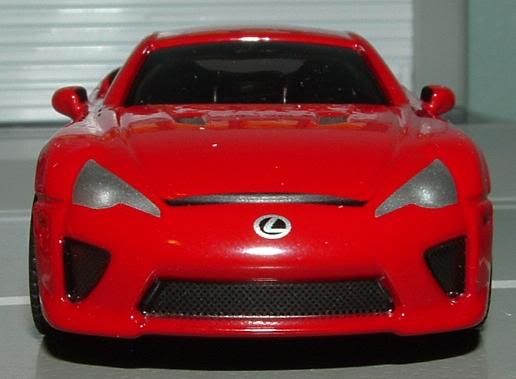
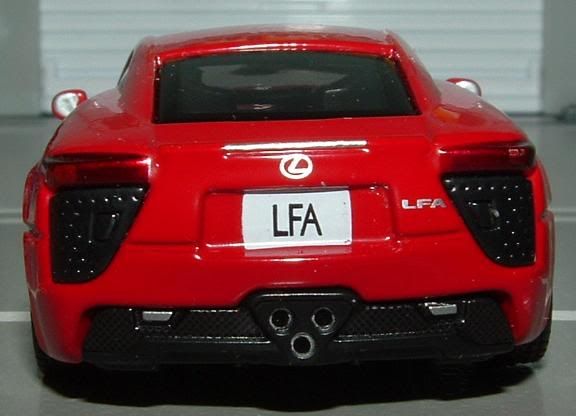
Today's car of the day is Tomica Limited's 2010 Lexus LFA.


The Lexus LFA is a 2-seat exotic sports coupe produced by Lexus as a concept car, "halo" vehicle, racing prototype, and production model. It is the second model in the F marque line of performance vehicles from Lexus, following the IS F. Three concept versions have been shown, each debuting at the North American International Auto Show with the LF-A designation as part of the LF Series concept line. The first LF-A concept premiered in 2005, followed in 2007 by a second LF-A with a more completely furnished interior and exterior. The third version of the LF-A, a roadster model, premiered in 2008. The production model, trademarked LFA, was shown at the Tokyo Motor Show in October 2009.
The production Lexus LFA features a new V10 engine and a carbon fiber-reinforced polymer (CFRP) body. CFRP materials account for 65 percent of the LFA's body composition by mass. The LFA went into production in late 2010, with a projected run of 500 vehicles at the base price of US$375,000. A circuit-tuned variant is scheduled for 2012.


For more information and pictures of the real car please visit: Lexus LFA


As always, anything from Tomica that has "Limited" or "Vintage" on the packaging is a winner, and this one is no exception.  The real car does nothing for me but it's nice to have a model.


Lexus began taking orders for the LFA supercar on October 23, 2009. Buyers will be selectively chosen by Lexus in the second quarter of 2010. Production will begin in December 2010 as a 2011 model. Only 500 total LFA models will be made worldwide, with only 20 produced each month. Each car will be custom ordered to the customer's specifications, and will cost an estimated US$375,000, depending on options and customization. Following the LFA's release at the Tokyo Motor Show, Lexus unveiled a website with a 'LFA configurator' which allowed users to select exterior and interior colors, brake caliper colors, seats, steering wheel leather, and other interior designs. In total, there are over 30 billion possible configurations. Each LFA will be hand-built by a dedicated production team of engineers and specialists at Toyota's Motomatchi plant in Aichi, Japan.

Production LFAs, lined up in YokohamaIn the North American market 150 LFAs will be initially sold through a two year lease program much like the Ferrari F50. This is to prevent owners from reselling the vehicle for a profit. Racing driver Scott Pruett was hired to give test drives to interested buyers, demonstrating the vehicle's capabilities at Auto Club Speedway. The Lexus division of Toyota Motor USA will stop taking orders at the end of 2009, in which they will talk about a purchase plan for the lessees. Lexus later changed their stance and allowed outright purchase, but only on the condition that they sign an agreement giving the dealer first right of refusal to buy back the LFA if the owner wants to sell it within the first two years. The dealer will have the option to buy back the used LFA for either fair market value or the original sticker price, whichever is lower. In the European market buyers order their LFA through a single Lexus dealer located in Park Lane, London where it is purchased outright.

During LFA production, each vehicle will receive a plaque which is individually numbered, indicating the unit's place in the production run. Each LFA V10 engine will also bear the signature of the specialist who assembled it. With 20 units produced monthly, production of the entire LFA run will last for 25 months, from December 2010 to December 2012.

Sunday, October 23, 2011

SUV Of The Day: October 23, 2011


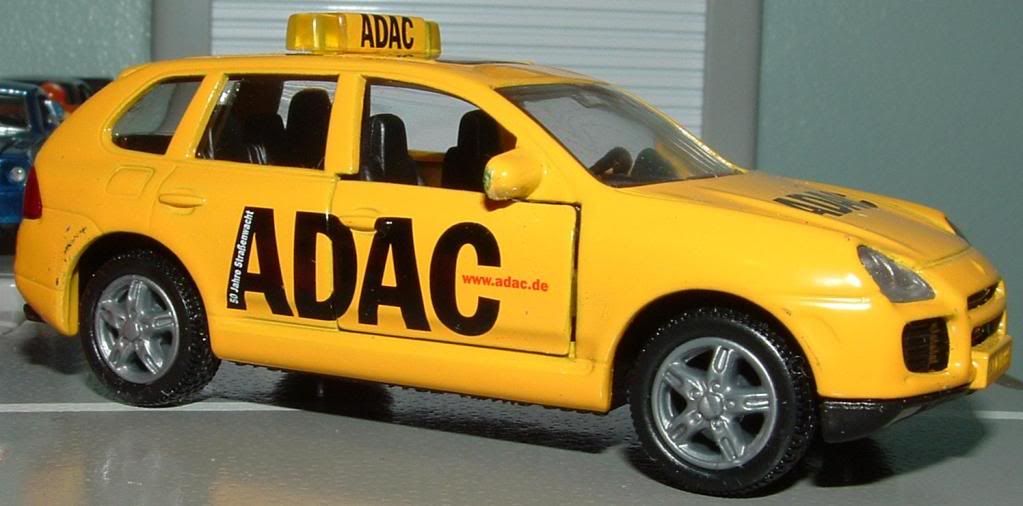
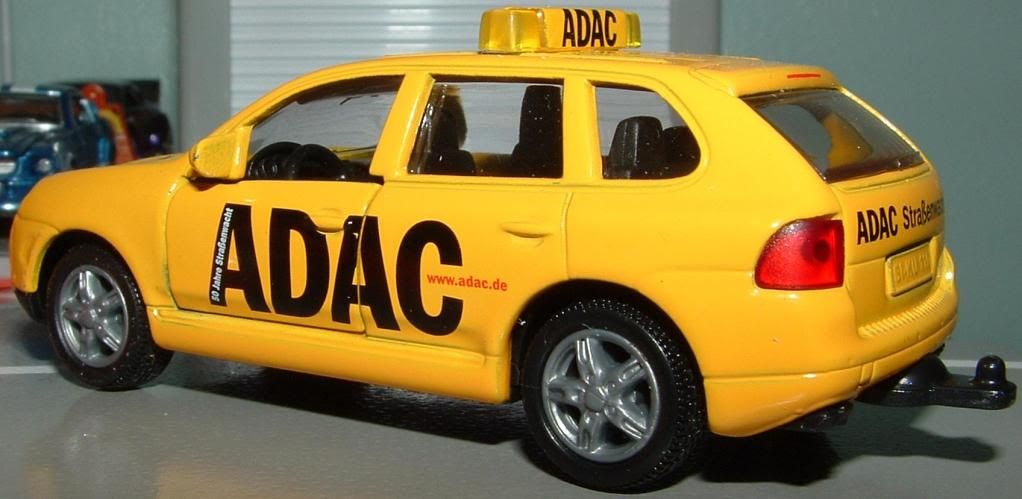
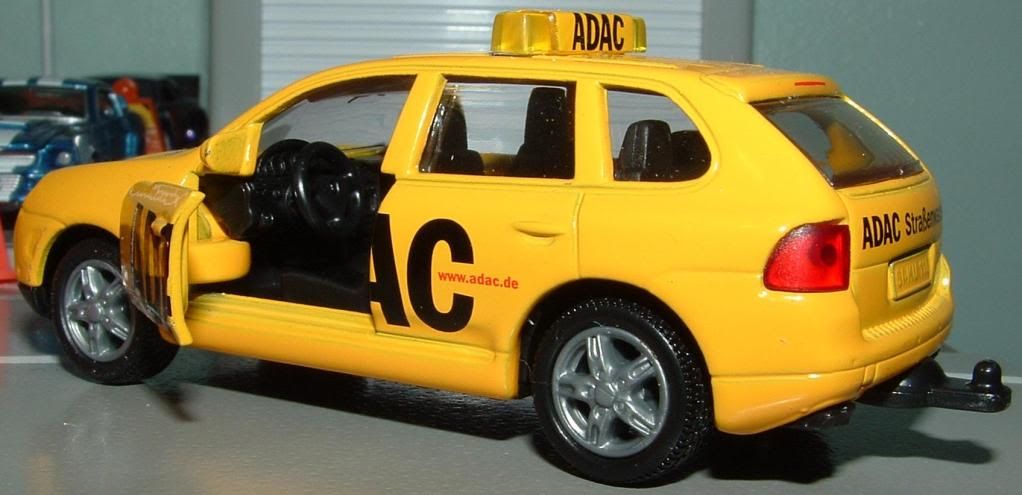
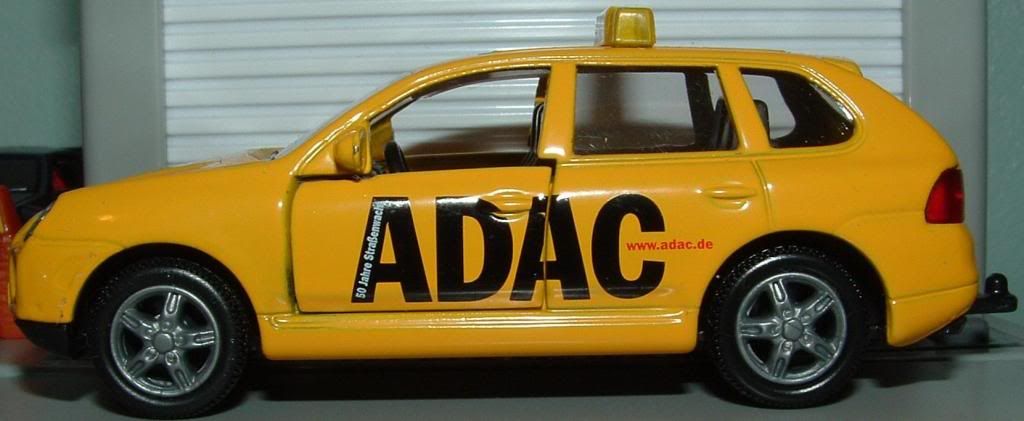
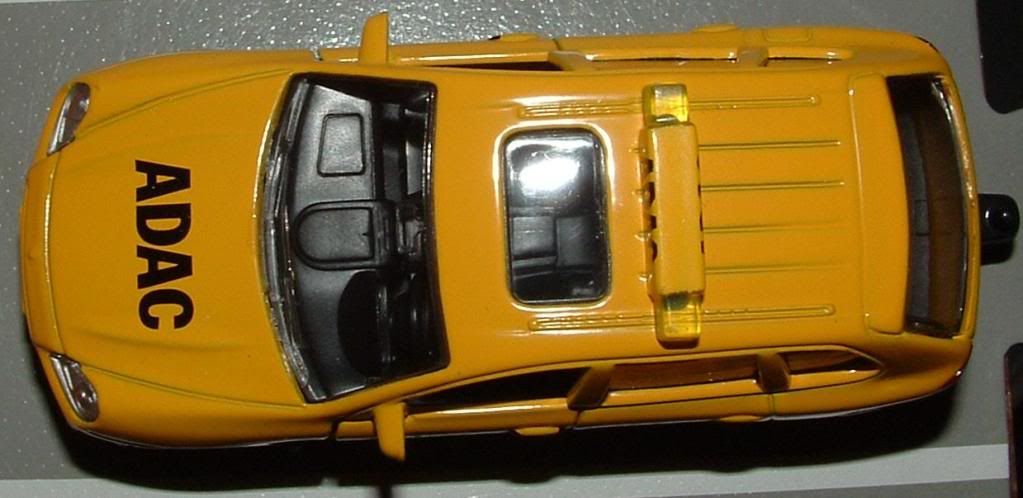
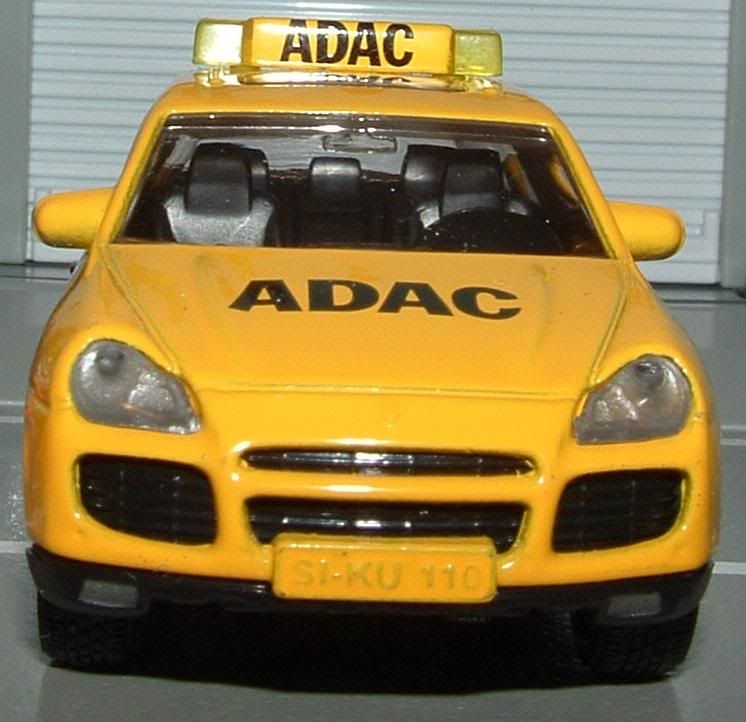
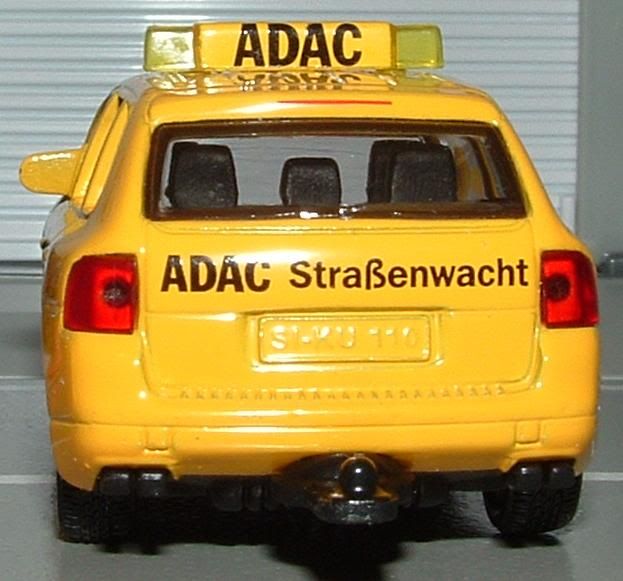
Today's car of the day is Siku's 2003 Porsche Cayenne Turbo.


The Porsche Cayenne is a five seat mid-size luxury crossover manufactured by the German manufacturer Porsche since 2002, with North American sales beginning in 2003. Its platform was developed by Porsche and is shared with the Volkswagen Touareg and the Audi Q7. It is the first V8-engined vehicle built by Porsche since 1995, when the Porsche 928 was discontinued. Since 2008, all engines have featured direct injection technology. The Cayenne's chassis type numbers are as follows: Type 955 (2002–2006), Type 957 (2007–2010), and Type 958 (2011+).

The third-generation Cayenne (Type 958) was unveiled at the 2010 Geneva Motor Show in March following an online reveal on February 25, 2010.


For more information and pictures of the real car please visit: Porsche Cayenne


Porsche, one a name that meant great sports cars, came out with this....thing.... in 2002.  Now they had a luxury sedan also.  And let's not forget that failed hostile takeover of Volkswagen that resulted in Volkswagen buying Porsche instead.  Everything that's wrong with Porsche started with this model right here.  The problem is, these things sell like hotcakes.  So do the Panamera sedans.  There's no accounting for taste...


The Cayenne's frame and doors are sourced from Volkswagen, who uses the frames and doors for the Volkswagen Touareg model. All other aspects of vehicle design, tuning, production are done in house at Porsche.


The Porsche Cayenne entered the market with mixed anticipation. However, the Porsche Cayenne soon proved that it was the performance vehicle among SUV's and was praised for its excellent handling and powerful engines. The lineup initially consisted of the V8-powered Cayenne S and Cayenne Turbo. Later in the model cycle, VR6 and diesel-powered versions joined the lineup.

The 1st generation Cayenne Turbo had 450 horsepower (340 kW), and accelerated from 0 to 60 mph (97 km/h) in 5.3 seconds. A Turbo S version was built in 2006 to compete with the Mercedes-Benz ML63 AMG. The Cayenne Turbo S included a low-range case, a locking differential, and the height-adjustable, off-road suspension also standard on the regular Turbo model. It was powered by a twin-turbocharged 4.5-liter V8 that produced 520 bhp (390 kW) and 700 N·m (520 lb·ft) of torque. Acceleration from 0–60 mph (96 km/h) was 5.0 seconds and the top speed was 171 miles per hour. It featured a 6-speed automatic Tiptronic transmission.

A new Turbo was revealed at the 2008 Beijing auto show. It received 50 hp (37 kW) more power, and now accelerated from 0–60 mph (96 km/h) in 4.9 seconds. Also revealed with the new Turbo was a new 550 horsepower (410 kW) Turbo S. Acceleration from 0–60 mph is 4.7 seconds and has optional ceramic composite brakes.

Saturday, October 22, 2011

Van Of The Day: October 22, 2011


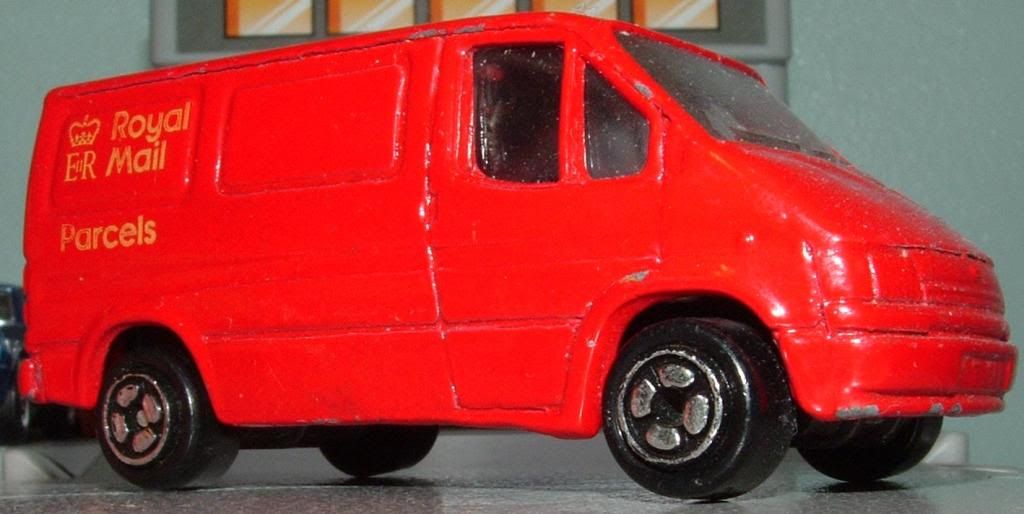
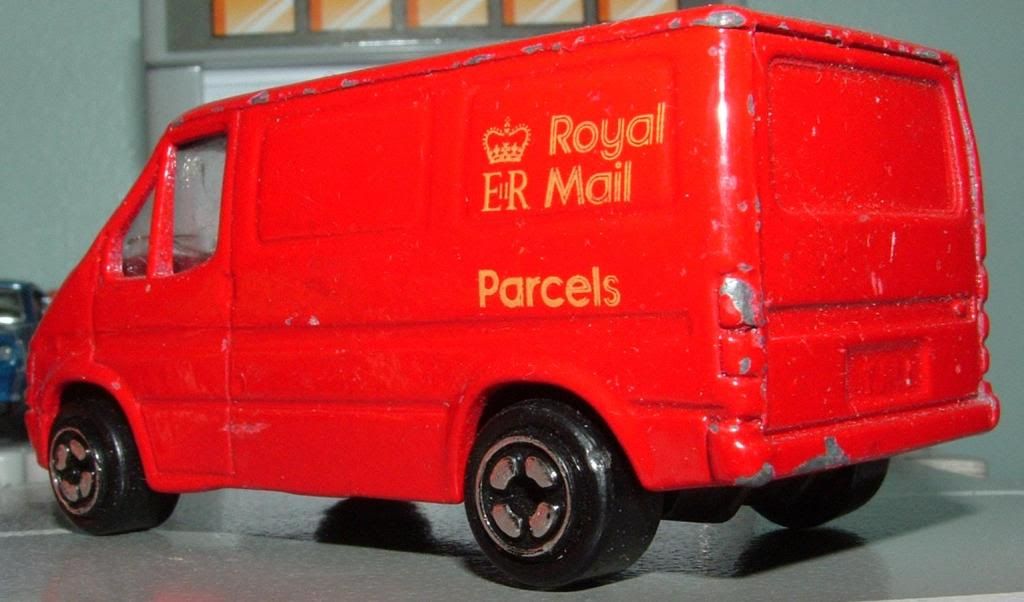
Today's car of the day is Corgi's 1986 Ford Transit.


The Ford Transit is a range of panel vans, minibuses, and pickup trucks, produced by the Ford Motor Company in Europe.

The Transit has been the best-selling light commercial vehicle in Europe for 40 years, and in some countries the term "Transit" has passed into common usage as a generic term applying to any light commercial van in the Transit's size bracket.

Although the Transit name has been in use by Ford since 1953, the first definitive Transit platform was launched in 1965. Since then, six million Transits have been produced across three basic platforms (first debuting in 1965, 1986 and 2001, respectively), with several "facelift" versions of each. The six millionth van was built in March 2010.


For more information and pictures of the real car please visit: Ford Transit


Matchbox and Corgi both did this generation of Transit.  The Matchbox is the nicer casting of the two, but props are given to the Corgi for doing the Royal Mail version seen here.  I love postal vehicles so this was a must have!


The second generation Transit platform appeared in January 1986 and was notable for its all-new bodyshell which was of "one-box" design (i.e. the windscreen and bonnet are at the same angle), and the front suspension was changed to a fully independent configuration on SWB versions. The engine range was carried over largely unchanged from the last of the 1978-85 generation models, although in 1989 the high performance 3.0 V6 petrol was replaced by the Cologne 2.9 EFI V6. A subtle facelift in 1992 saw the fully independent front suspension adopted across the range, whilst a redesigned floor plan allowed the use of single, rather than paired, rear wheels on the LWB derivative, further increasing payload—these models are identifiable by the slightly more rounded front headlamps.

This generation of Transit was used by Jeremy Clarkson in Top Gear's Man With Van Challenge, finishing second (vs a tiny Suzuki Super Carry and huge LDV Convoy). This involved buying a van for under £1000, and several tests representing (stereo)typical van use: a quarter-mile drag race (cross-city speed); loading, carrying, and disgorging a load of furniture (space, access); tailgating (visibility, control); replacing a "damaged" door (maintenance); a police chase (handling), etc. The Transit upheld its reputation for agility by performing particularly well in the final chase, "resisting arrest" much longer than the slow LDV and unstable Suzuki, which overturned at the first curve.

Friday, October 21, 2011

Car Of The Day: October 21, 2011


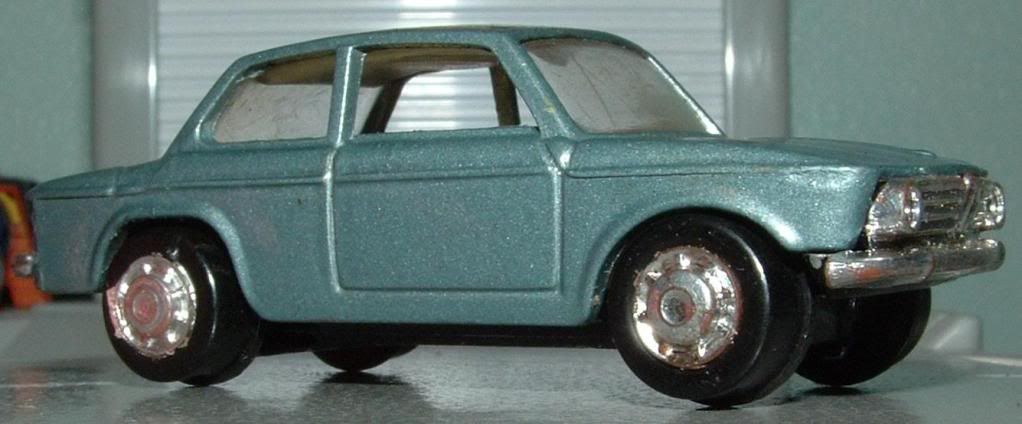
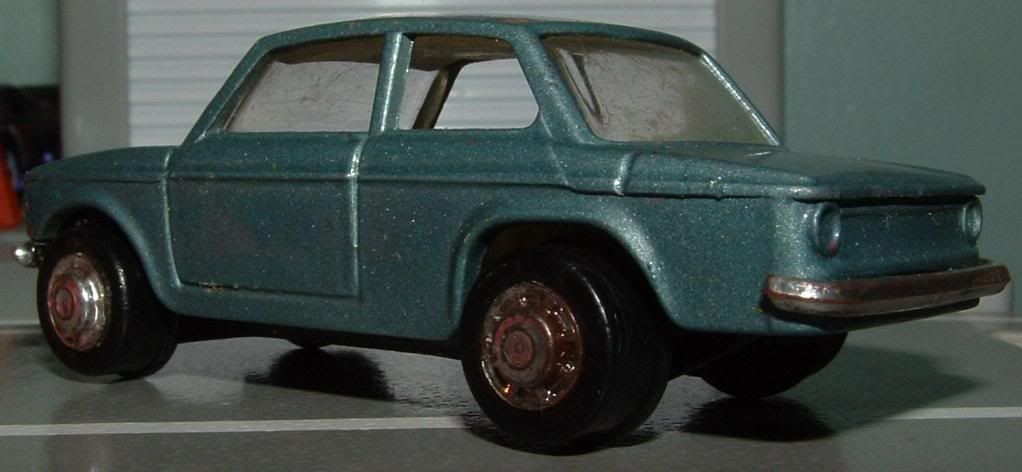
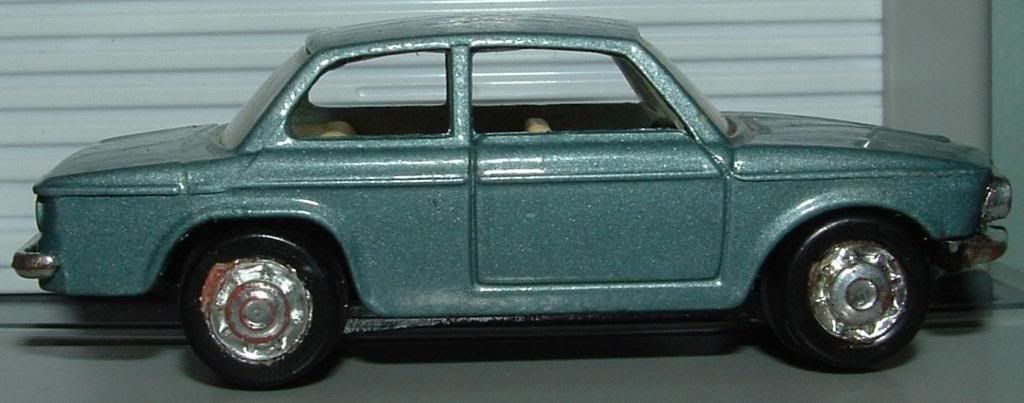
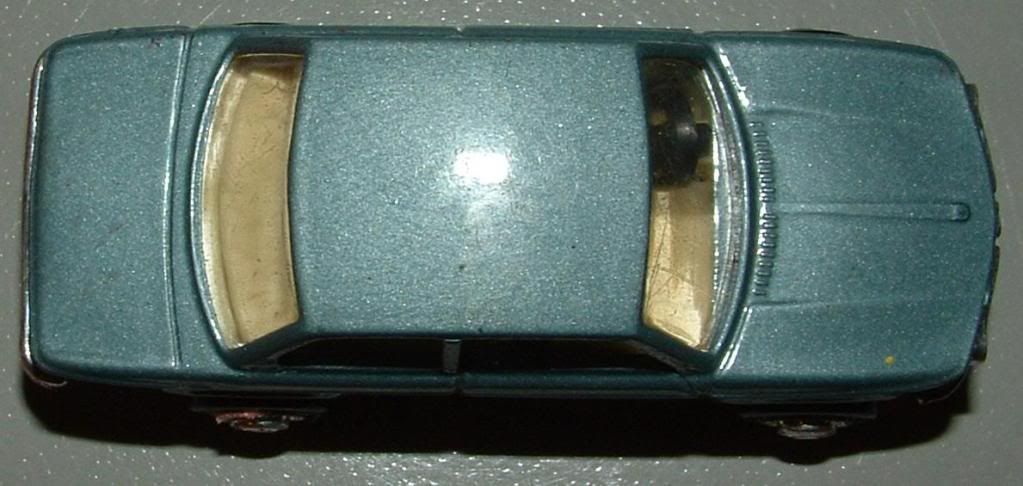
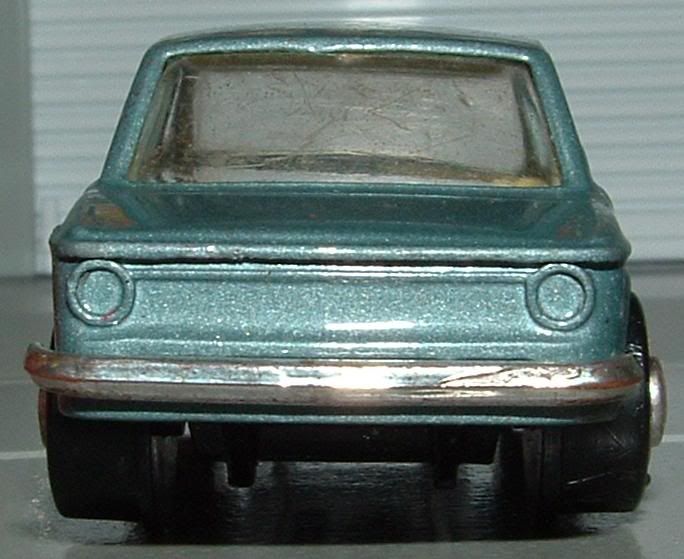
Today's car of the day is Playart's BMW 2002.


The BMW New Class (German: Neue Klasse) was a line of compact sedans and coupes produced by German automaker BMW starting with the 1962 1500 and continuing through the last 2002s in 1977.

Powered by BMW's celebrated four-cylinder M10 engine, the New Class models featured a fully independent suspension, MacPherson struts in front, and front disc brakes. Initially a family of four-door sedans and two-door coupes, the New Class line was broadened to two-door sports sedans with the addition of the 02 Series 1600 and 2002 in 1966.

Sharing little in common with the rest of the line beyond the power train, the sporty siblings caught auto enthusiasts' attention and established BMW as an international brand. Precursors to the famed BMW 3 Series, the two-doors' success cemented the firm's future as an upper tier performance car maker.

New Class four-doors with numbers ending in "0" were replaced by the larger BMW 5 Series in 1972. The upscale 2000C and 2000CS coupes were replaced by the six-cylinder BMW E9, introduced in 1969 with the 2800CS. The 1600 two-door was discontinued in 1975, the 2002 replaced by the 320i in 1975.


For more information and pictures of the real car please visit: BMW 2002


Growing up, I had a beater (missing pieces of the bumpers, chipped paint) version of this casting, that spent a lot of time in my monster truck rallies serving as a junk car.  I still have that one, though because it isn't complete I wouldn't feature it as a COTD.  It currently sits on my junkyard layout, so if yuo go through those pictures you'll see it.  It's nice to have a good one in my collection now as well, thanks to Pegers (thanks Dan!).


The 2002 is one of BMW's most famous automobile models. Its popularity cemented the company's reputation for compact sporting sedans and served as both forerunner of the BMW 3 Series and inspiration for the new 1 Series Coupe.

With its 1990 cc engine, it produced 108 bhp (81 kW; 109 PS) in the 2002ti, and 130 bhp (97 kW; 132 PS) in the high-performance 2002tii, offering a top speed of 185 km/h (115 mph). Although almost exactly the same in appearance the Tii had slightly larger wheels, larger front brakes, and a number of other mechanical modifications that made the car more fun and more desirable as a collector car. One result is that many of the highly desirable "tii"s appearing on eBay and sold throughout the country are fake; it is not uncommon to see tii engines installed in standard 2002s because there is a significant price difference between the two cars. The 2002 Turbo was launched at the 1973 Frankfurt Motor Show. BMW's first production turbo, it produced 170 hp (127 kW) at 5,800 rpm, with 240 N·m (180 lb·ft) of torque.
A three-door 2002, the Touring, was also available. The Touring was not a full station wagon, resembling a modern hatchback. BMW would not offer a Touring model again until the late 1980s, with the 3 Series. A cabriolet version was produced in small numbers by Baur of Germany, which to this day as IVM Automotive, continues to convert BMWs. This version was never sold in the United States although a number were brought in by diplomatic staff, and recently they can be imported so more have come over.

Thursday, October 20, 2011

Car Of The Day: October 20, 2011


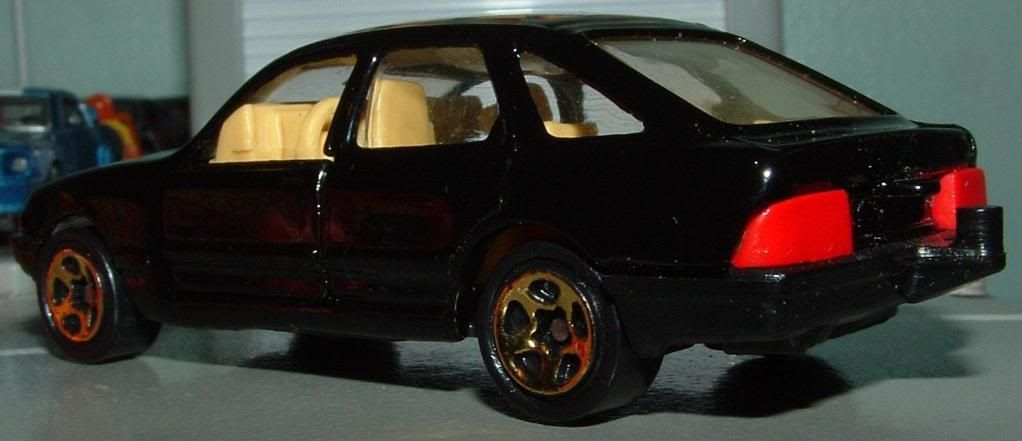
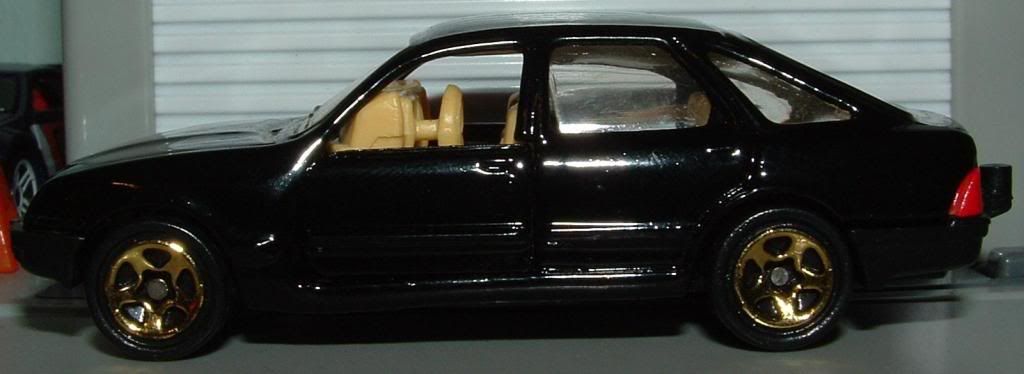
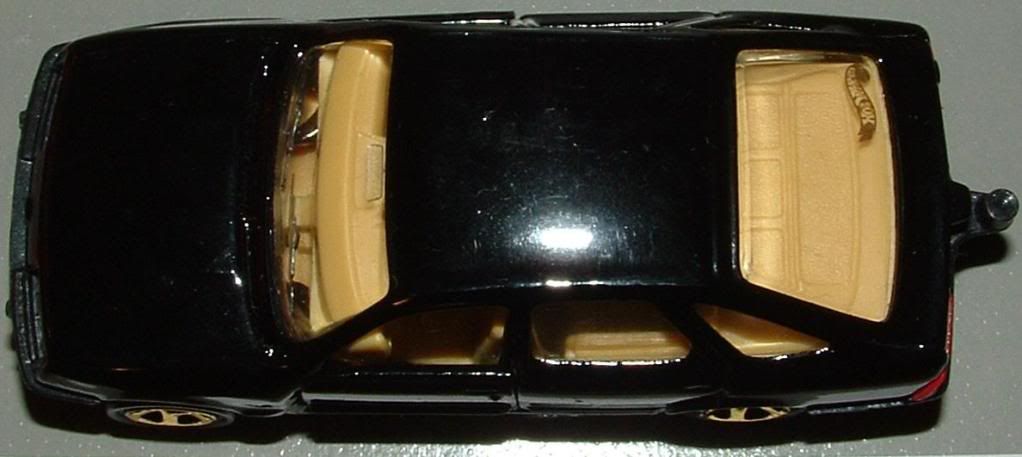
Today's car of the day is Hot Wheels' (ex-Corgi casting) 1983 Ford Sierra 2.3 Ghia.


The Ford Sierra is a large family car that was built by Ford Europe from 1982 until 1993. It was designed by Uwe Bahnsen, Robert Lutz and Patrick le Quément. The code used during development was "Project Toni".

First unveiled on 22 September 1982 and with sales beginning on 15 October 1982, it replaced the Ford Cortina and Ford Taunus. Its aerodynamic styling was ahead of its time and as such, many conservative buyers (including company car drivers) did not take fondly to the Ford Cortina's replacement.
Possibly for this reason (and the fact that the smaller Escort was enjoying an increase in sales during the early 1980s), and the early lack of a saloon variant, it was mainly manufactured in Germany, Belgium, and the United Kingdom, although Sierras were also assembled in Argentina, Venezuela, South Africa and New Zealand.

The Sierra was the 1983 Semperit Irish Car of the Year in Ireland.


For more information and pictures of the real car please visit: Ford Sierra


One of the many Corgi castings to be recycled into the Hot Wheels line in the mid-1990s (Mattel sold the rights to the Corgi name but kept the tooling inventory), this one (like most) was only used a few times.


The first Ford vehicle to have the bold new "aero" look styling was the 1981 Ford Probe III concept car. The good reception this received encouraged Ford's management to go ahead with a production car with styling almost as challenging. This "aero" look influenced Fords worldwide: the 1983 Ford Thunderbird in North America introduced similar rounded, flowing lines, and some other new Fords of the time adopted the look.

By September of 1981, it had been confirmed that the Cortina's replacement - still a year away - would be marketed as the Sierra.

The aerodynamic features of the Sierra were developed from those first seen in the Escort Mark III—the "Aeroback" bootlid stump was proved to reduce the drag coefficient of the bodyshell significantly, which was a class leading Cd0.34 at its launch, though not as good as the Cd0.22 of the visually similar Ford Probe III concept car of the previous year, and also behind the contemporary third generation Audi 100 that was unveiled the same year - the first production car to get below the Cd0.30 barrier with an impressive figure of Cd0.28. The aerodynamic styling of the Sierra would later be seen in North America's Ford Taurus.
At first, many found the design blob-like and difficult to accept after being used to the sharp-edged, straight-line styling of the Cortina, and it picked up nicknames such as "Jellymould" and "The Salesman's Spaceship" (the latter thanks to its status as a popular fleet car in the United Kingdom). Sales were slow at first. It was later in the Sierra's life that the styling began to pay off; ten years after its introduction, the Sierra's styling was not nearly as outdated as its contemporaries, even though all major competitors were newer designs, although the Sierra had been tweaked on several occasions. The most notable changes came at the start of 1987, with a major facelift and the addition of a Sapphire saloon. As other manufacturers adopted similar aerodynamic styling, the Sierra looked more normal.

Early versions suffered from crosswind stability problems, which were addressed in 1985 with the addition of "strakes" (small spoilers), on the rear edge of the rubber seals of the rear most side windows. These shortcomings saw a lot of press attention, and contributed to early slow sales. Other rumours that the car hid major crash damage (in part true, as the new bumper design sprung back after minor impact and couldn't be "read" to interpret major damage) also harmed the car's reputation. This reached near-hysterical heights at one point with UK press making a report that Ford would reintroduce the previous Cortina model out of desperation or import the American Ford Taurus to Europe. However, these reports were swiftly denied by Ford.

At its launch some of the Sierra's external styling differed depending on the specification. In place of the model's regular 2-bar grille, which was unpainted on the lowest specification model, the Ghia featured a narrower blanked-off grille between wider, but still inset, headlights while the front bumper was also restyled and featured combined indicator/foglight units compared to the lower specification model's slimmer but wider indicator units. The XR4i had an identical front end to the Ghia, bar the bumper which was slightly different. The rear lights of the Ghia were the same shape and layout as other models, but featured tiny horiziontals strakes on the lenses to give the impression that they were smoked. A couple of years later all the lower spec models adopting the Ghia and XR4i's front grille and headlight treatment.

Wednesday, October 19, 2011

Car Of The Day: October 19, 2011


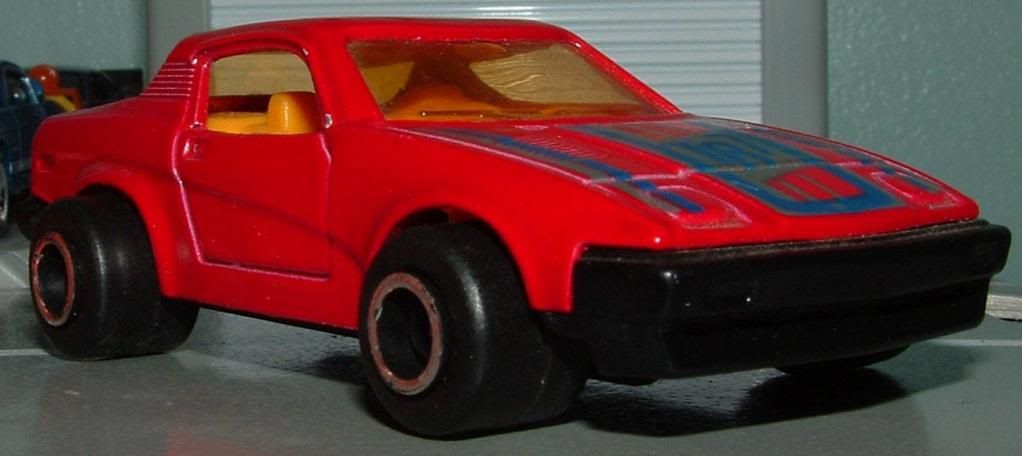
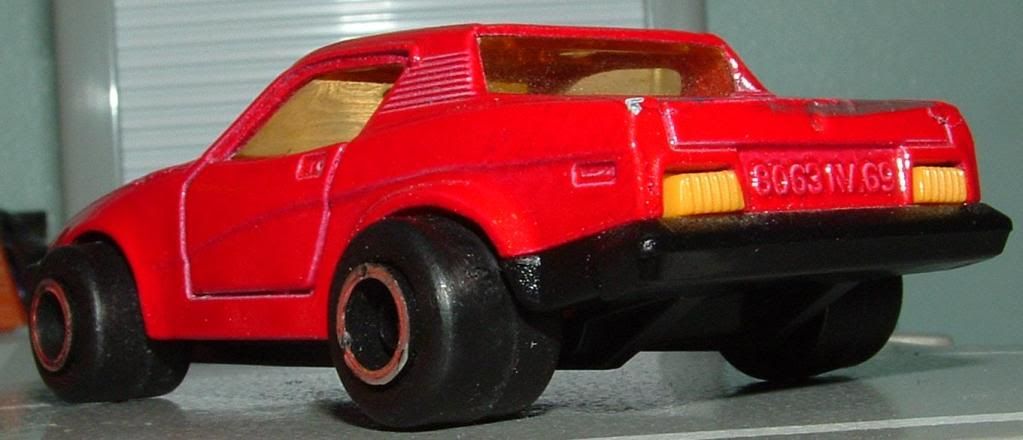
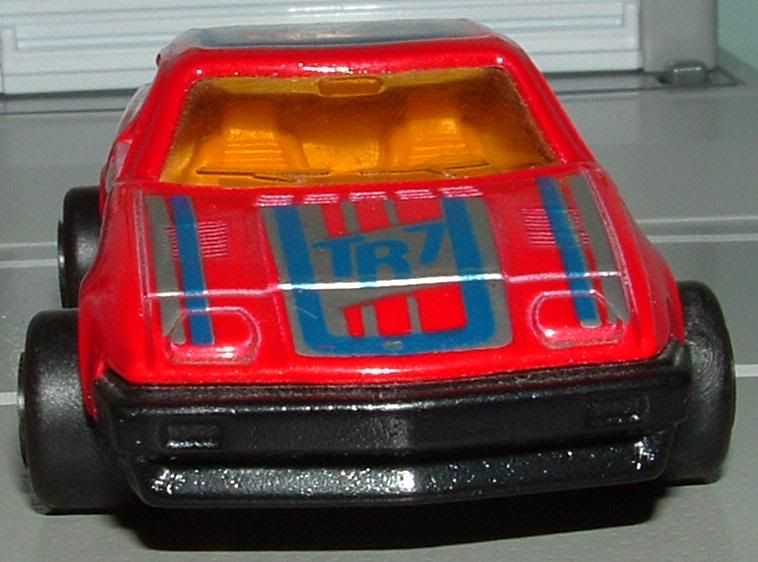
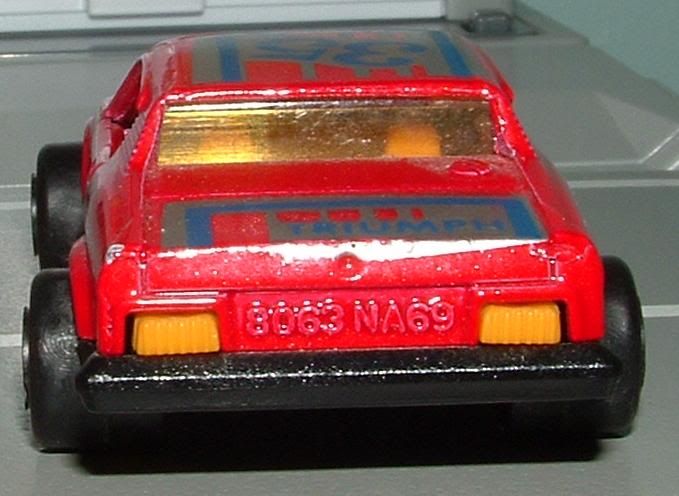
Today's car of the day is Majorette's 1980 Triumph TR7.


The Triumph TR7 is a sports car manufactured from September 1974 to October 1981 by the Triumph Motor Company (which was part of British Leyland) in the United Kingdom. It was initially produced at the Speke, Liverpool factory, moving to Canley, Coventry in 1978 and then finally to the Rover plant in Solihull in 1980. The car was launched in the United States in January 1975, with its UK home market debut in May 1976. The UK launch was delayed at least twice because of high demand for the vehicle in the US.


For more information and pictures of the real car please visit: Triumph TR7


The shape of things to come?  And you know what?  It was.  The wedge look was in for sports cars with everyone from Lotus to Toyota getting in on it.  Boxy was the look for sedans and more mundane coupes as the '70s drew to a close (partially because the US manufacturers were scrambling to shrink the size of their land barges but keep the same amount of interior and luggage space).
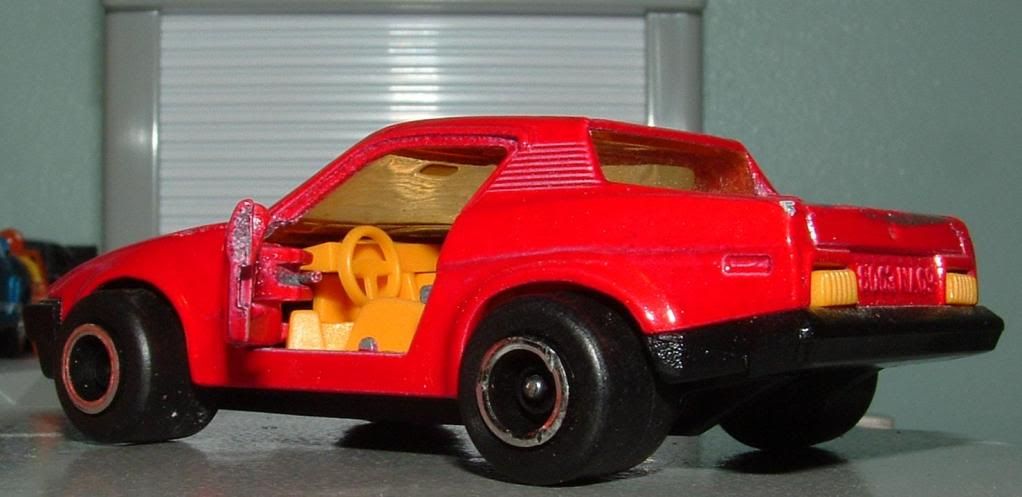


The car was characterized by its "wedge" shape, which was commonly advertised as: "The Shape of Things to Come", and by a curved line in the bodywork sweeping down from the door area to the rear of the car. The design was penned by Harris Mann who also designed the wedge-shaped Leyland Princess. The car had an overall length of 160 inches (406 cm), width of 66 inches (168 cm), wheelbase of 85 inches (216 cm) and height of 49.5 inches (126 cm). The coupé had a kerbside weight of 2205 pounds (1000 kg). During development, the TR7 was referred to by the code name "Bullet".
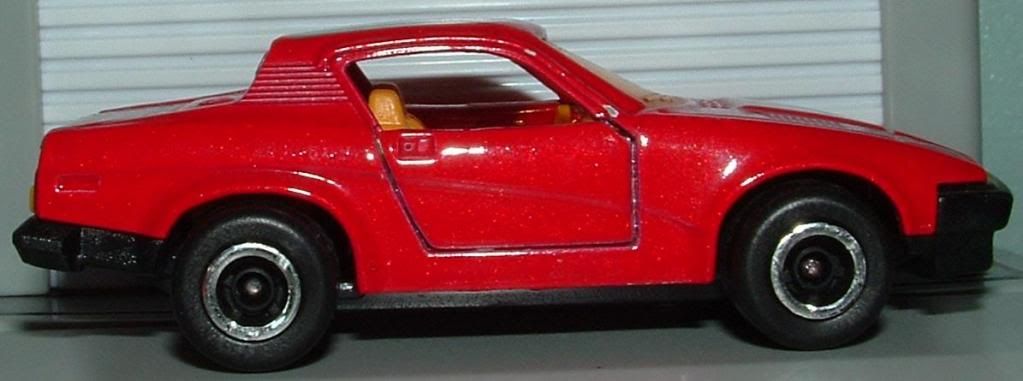
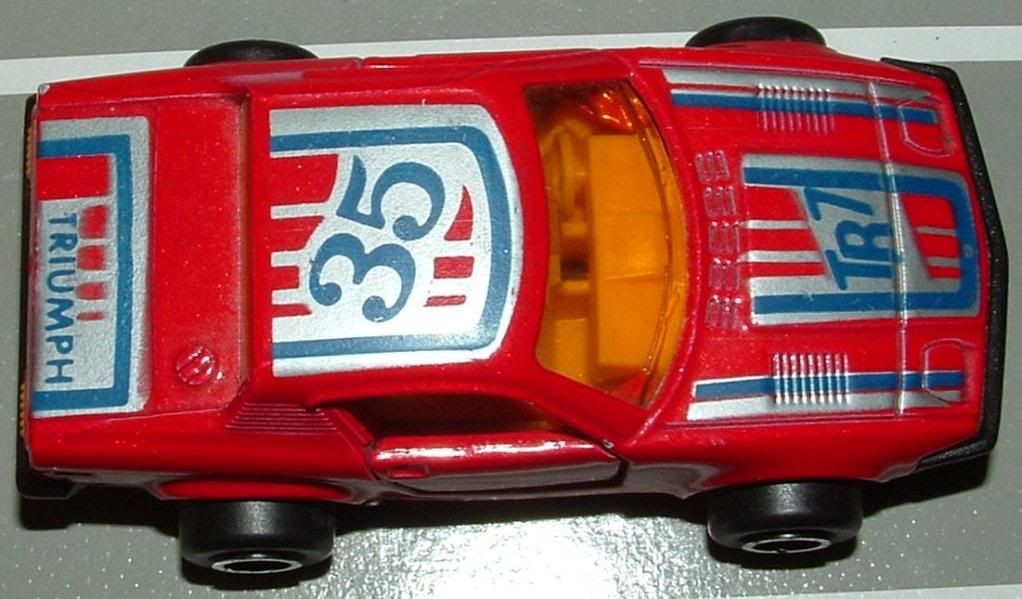
Power was provided by a 105 bhp (78 kW) (92 bhp (69 kW) in the North American version) 1998 cc 8-valve four-cylinder engine which shared the same basic design as the Triumph Dolomite Sprint engine mounted in-line at the front of the car. There were plans to directly use the Sprint engine 127 bhp (95 kW) in the TR7 and at least 25 pre-production cars were made in 1977 using the 1978 model year bodyshell. This model was getting ready for full production until the closure of the Speke Plant. These cars, of which several still exist in the UK, can be identified by a different chassis number to the production 8-valve model. Drive was to the rear wheels via a four-speed gearbox initially with optional five-speed manual gearbox or three-speed automatic from 1976. The front independent suspension used coil spring and damper struts and lower single link at the front, and at the rear was a four link system again with coil springs. There were front and rear anti roll bars, with disc brakes at the front and drums at the rear.

Various British Leyland vehicles were driven by the lead characters in the British secret agent television series The New Avengers, produced between 1976 and 1977. Amongst these was a yellow TR7 hardtop driven by the character Purdey. The car was immortalised as a children's Dinky Toy and Revell construction kit.
In 1978 Coca-Cola and Levi's ran promotional competitions with the top prizes being three TR7s in special red and white Coke livery. They also featured denim upholstery and genuine jean patch pockets on the door interiors. Also included were a 12V fridge in the boot and a TV in the glove compartment. Only one of these cars still exists.

For import to the US market, Triumph created a more powerful Triumph TR8 model in 1977/78, this was a TR7 with a 135 bhp (101 kW) 3.5 L Rover V8 engine. While some genuine TR8s stayed in Britain, these examples are exceedingly rare. Most TR8s went to the US, where they did not fare well due to both Triumph's poor build quality at the time and the unusually strong pound which peaked at around $2.40 by 1980, making Triumphs fairly expensive compared to competitors.

Because of US legislation in places at the time of its launch, the TR7 was not initially available as a convertible. In early 1979, Triumph belatedly introduced a convertible version, called the TR7 Drophead, which first went on sale in the US. The British market received it in early 1980. The prototype for the convertible version of the original Harris Mann design came from Michelotti and the engineering to make it work was done by Triumph. In the UK in 1980, the TR7 Drophead sold for £5,050, whilst the Coupé sold for £5,230.

In 1980, a limited edition TR7 Drophead was launched for the US market. Called the TR7 Spider, its was available only in black, with reflective red striping and badging. Alloy wheels and the steering wheel from the TR8 were fitted, along with a "pewter grey" carpet and grey striped upholstery. It is thought around 1270 Spiders were build at the Solihull factory.

As of Q1 2011 there were approximately 748 licensed and 1947 SORN TR7's registered with the DVLA.


British Leyland ran a team of TR7s in rally competitions from 1976 to 1980. These cars initially used the 16-valve Dolomite Sprint engine and later switched to the Rover V8 engine (before the introduction of the TR8, so dubbed "TR7V8"). They were reasonably successful on tarmac events but were less successful on gravel sections. The most successful driver of these cars was Tony Pond.

John Buffum won the SCCA PRO Rally Championship from 1977–1980 driving TR7s and TR7V8s.
The TR7-V8s continue to be successful in classic rallying events.

Tuesday, October 18, 2011

Taxi Of The Day: October 18, 2011


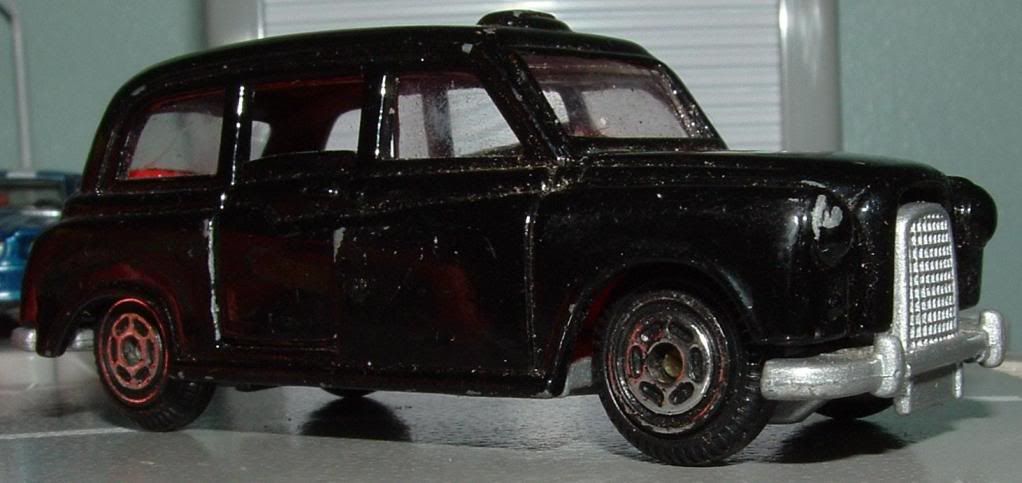
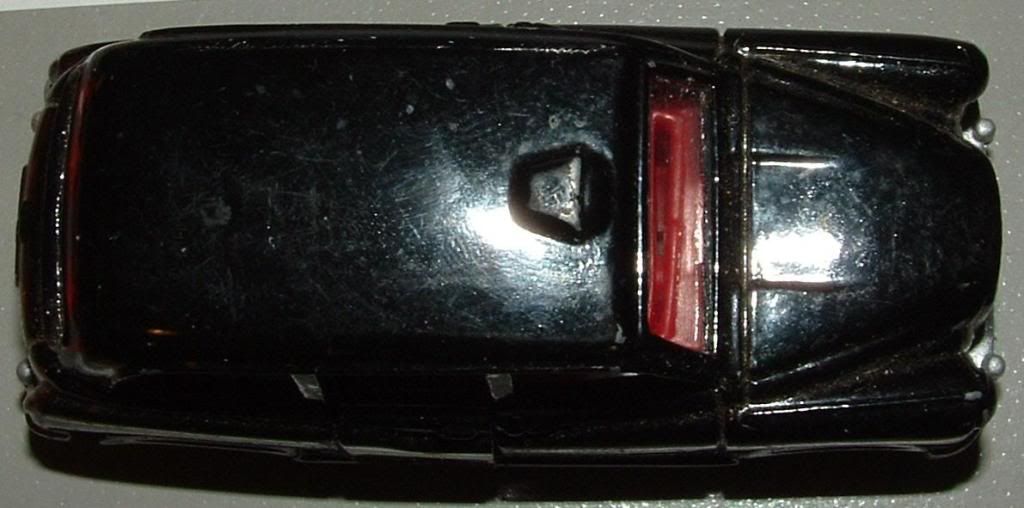
Today's car of the day is Fava's 1980 Austin FX4.


The FX4 is the classic Black Cab. While the majority are black, there is in fact no requirement for them to be black. Over the years, the FX4 has been sold under a range of brands.


For more information and pictures of the real car please visit: Austin FX4


The quintessential British cab!  Fava is a name that's unfamiliar but the tooling is all Corgi.


The FX4 was the successor to the Austin FX3 produced between 1948 and 1959 and in its own day regarded as the classic British taxi. Like the FX3, the FX4 was designed by Austin in collaboration with Mann and Overton (a taxi dealership) and Carbodies (a coachbuilder). The design team included Albert Moore from Austin’s engineering division, Jack Helberg from Carbodies and David Southwell of Mann and Overton. The original design was by Austin’s Eric Bailey with the assistance of Carbodies' Jake Donaldson. Little change was necessary to produce the outline of the production vehicle.
Like the FX3, the FX4 had a separate chassis (which was in fact barely changed from the FX3 chassis) with a body stiffened by a divider between the driving and passenger compartments.

The first FX4, registration mark VLW 431, was delivered in July 1958 with an official launch later that year.


As launched, the FX4 was fitted with a 2.2 L Austin diesel engine and a Borg-Warner automatic transmission. In 1961, the manual transmission from the Austin Gipsy was available as an option. From 1962, the Austin 2.2 L petrol engine was available. The vast majority of FX4s used throughout its service history were however fitted with a diesel engine and an automatic transmission.

In 1968, there was a facelift. The original cars were provided with small rear stop and tail lights and roof-mounted turn indicators known as "bunny ears". The rear wings were modified to accept the taillights and turn indicators from the Austin 1100. Front indicators were also provided below the headlights. The "bunny ears" were later removed.

In 1971, the 2.2 L (strictly 2178 cc) diesel engine was replaced by a bored-out unit displacing 2.5 L. This new model was known as the FX4D.

Originally the FX4 was fitted with chrome bumpers and overriders which are said by many to be the same as those fitted to the Ford Consul. By 1979, the tooling for the overriders was worn out and the bumper blades remained chrome while the overriders were replaced by rubber mouldings.