Monday, June 6, 2011


Today's car is the Yatming 1982 Porsche 944.


The Porsche 944 is a sports car built by Porsche from 1982 to 1991. It was built on the same platform as the 924, although 924 production continued through 1988. The 944 was intended to last into the 1990s, but major revisions planned for a 944 S3 model were eventually rolled into the 968 instead, which replaced the 944. The 944 was a successful model and was available as both a coupe and cabriolet in naturally aspirated and turbocharged forms.


The Porsche 924 had originally been a project of VW-Porsche a joint Porsche/Volkswagen company created to develop and produce the 914 which was sold in Europe as both a Porsche and a Volkswagen. In 1972 a replacement for the Volkswagen version of the 914, code named EA-425 began development. The model was to be sold as an Audi as part of the VW-Audi-Porsche marketing arrangement. Although testing had begun in the Spring of 1974 Volkswagen decided to cancel the program due to the expense of production as well as the feeling that the recently released Volkswagen Scirocco would fill the sports coupe sufficiently. At the time Porsche was considering introducing their own water cooled front engine 2+2 coupe to replace the 912E and their model of 914 and Volkswagen's cancellation provided an opportunity. Porsche purchased the design and finished development. The vehicle drove and handled exceptionally well and received positive reviews, but was criticized for the Audi-sourced 2 litre engine; Porsche introduced a Turbocharged 924 to increase performance, but the price was considered too high for the time, which hampered sales. Rather than scrap the design , Porsche decided to develop the 924, as they had with generations of the 911; although model numbers would change, the 924 would provide the basis for its replacement.

Porsche re-worked the platform and abandoned the Audi engine, installing in its place a new all-alloy 2.5 litre straight-4 engine, bore 100mm, stroke 78.9mm, that was, in essence, half of the 928's 5.0 litre V8, although very few parts were actually interchangeable. Not a natural choice for a luxury sports car, a four cylinder engine was chosen for fuel efficiency and size, because it had to be fitted from below on the Neckarsulm production line. To overcome the unbalanced secondary forces that make other four cylinder engines feel harsh, Porsche included two counter rotating balance shafts running at twice engine speed. Invented in 1904 by British engineer Frederick Lanchester, and further developed and patented in 1975 by Mitsubishi Motors, balance shafts carry eccentric weights which produce inertial forces that balance out the unbalanced secondary forces, making a four cylinder engine feel as smooth as a six cylinder.[citation needed] The engine was factory-rated at 150 bhp (112 kW; 152 PS) in its U.S. configuration. Revised bodywork with wider wheel arches, similar to that of the 924 Carrera GT, a fresh interior and upgrades to the braking and suspension systems rounded out the major changes. Porsche introduced the 944 for MY 1982 to great anticipation. In addition to being slightly faster (despite having a poorer drag co-efficient than the 924), the 944 was better equipped and more refined than the 924, it had better handling and stopping power and was more comfortable to drive. The factory-claimed 0-60 mph time of less than 9 seconds (8.3 seconds according to "Porsche the Ultimate Guide" By Scott Faragher) was actually rather modest. The factory-claimed top speed of 130 mph (210 km/h) was also pessimistic, Autocar having verified a top speed of 137 mph (220 km/h)[verification needed]. The car had nearly even front to rear weight distribution (50.7% front/49.3% rear) thanks to the rear transaxle balancing out the engine in the front.[1] This gave it very balanced, predictable handling at the limits of adhesion.


Check out http://en.wikipedia.org/wiki/Porsche_944#944 for more info on the 944.


Opening doors and clear windows are true standout features on this classic Yatming model. The tan interior wit the red paint to me is what a sweet Porsche should look like.

Saturday, June 4, 2011

Car of the Day:June 5, 2011


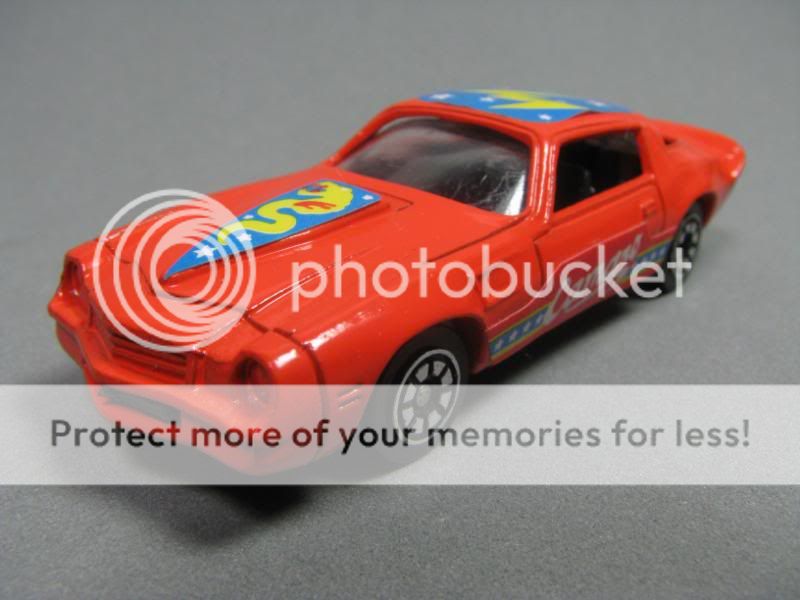
Today's car is the Faie 1979 Chevy Camaro.


The second generation Chevrolet Camaro is a pony car by the Chevrolet division of General Motors produced for the 1970 through 1981 model years. It was introduced February 26, 1970[1] It was longer, lower, and wider than the first generation Camaro, and is "widely considered the best all-around domestic musclecar ever produced.


The biggest changes for 1979 were the introduction of the luxury-oriented Berlinetta model, replacing the Type LT, and a restyled instrument panel with a much flatter appearance than the previous wraparound design (although the gauges themselves remained in the same places as before). The base models, RS and Z28 remained, the Z28s now came with a front spoiler and fender flares much like its Pontiac Trans Am twin had, and now came with "Z28" decals that ran from the beginning of the front flares to the bottoms of the doors. Electric rear window defroster became optional this year, replacing the old blower type. Sales for 1979 were the highest ever for any generation Camaro before or since, numbering 282,571 units. Engine choices remained with the 250 I6 standard in the base and RS models, with the 305 2bbl being an option and standard on the Berlinetta.


Check out http://en.wikipedia.org/wiki/Chevrolet_Camaro_(second_generation) to learn more on the '79 Camaro.


Purchased this one from Kimmo earlier this year. I had never heard of Faie as a brand before. It's on par with castings by other odd ball brands from the 1980s.


Swifty's Garage Promo Car Order Thread

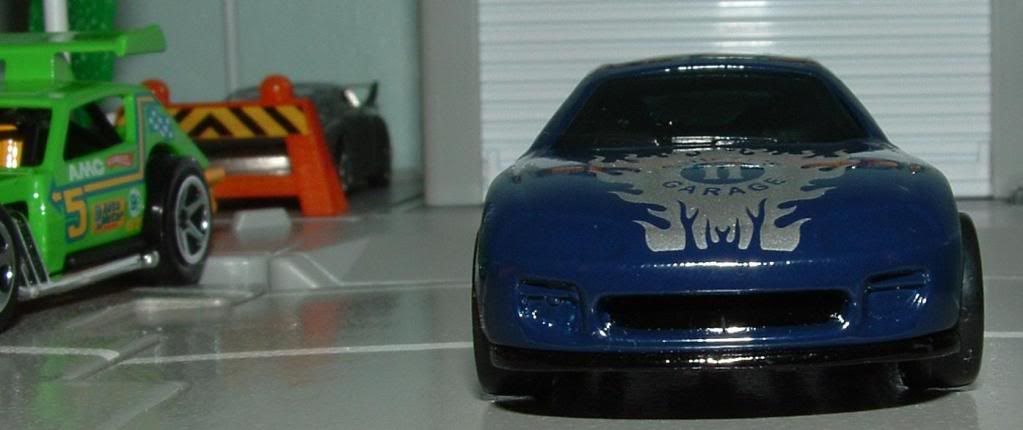
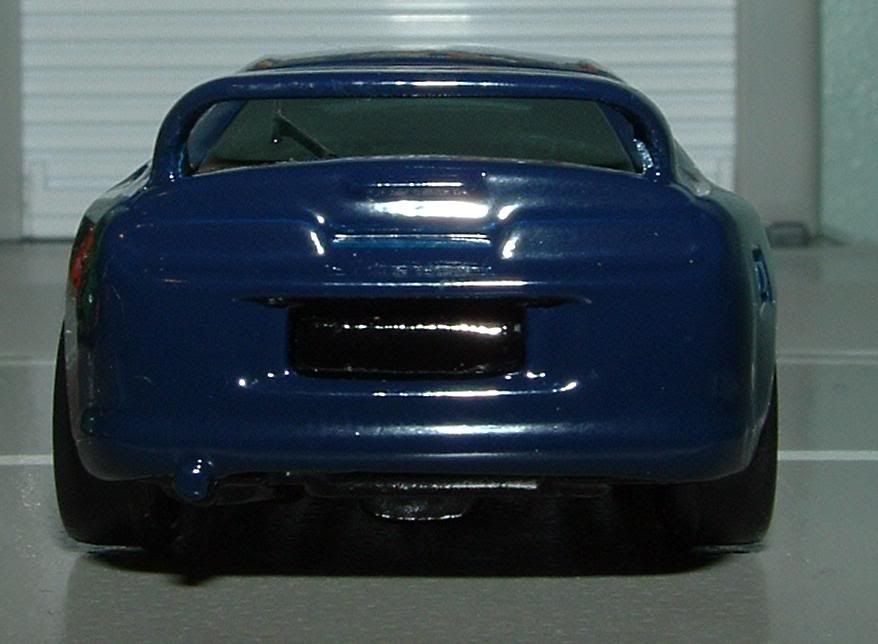
I know it seems like we’ve all been waiting for these cars forever, but the time has finally come to place your orders for the Swifty’s Garage promo Toyota Supras.

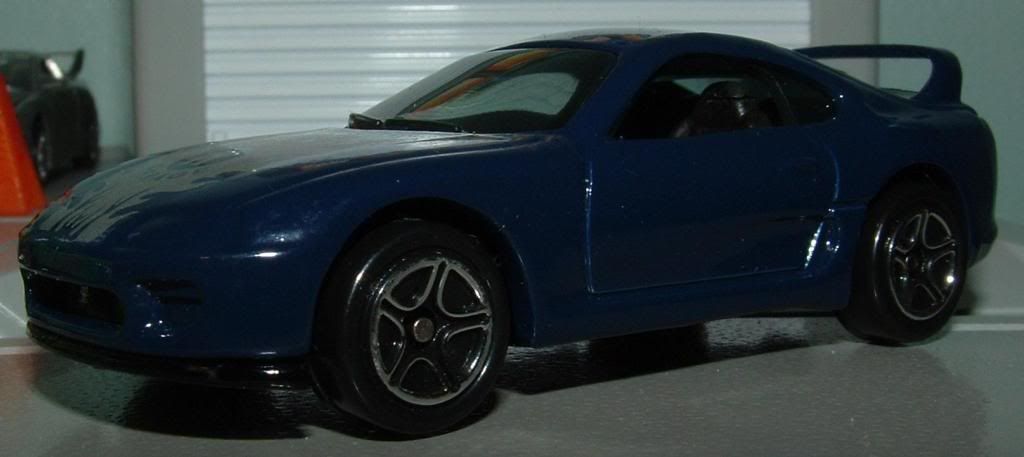
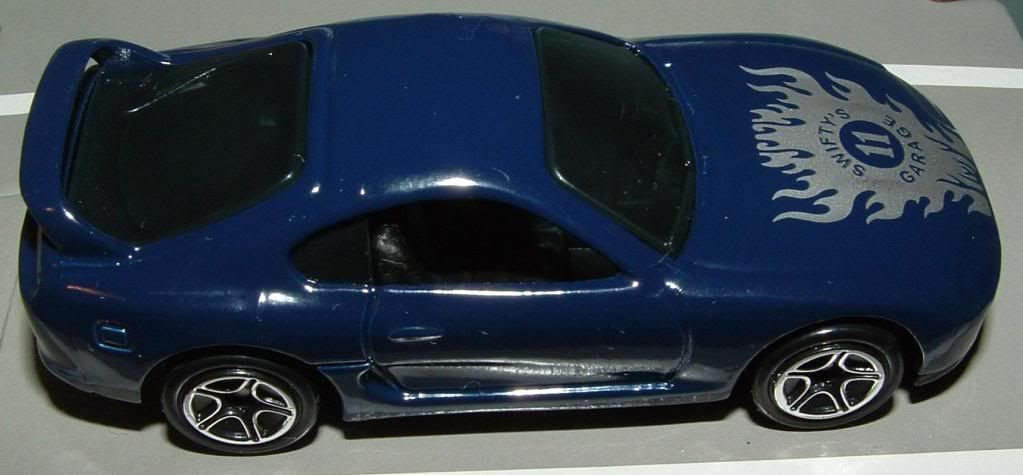
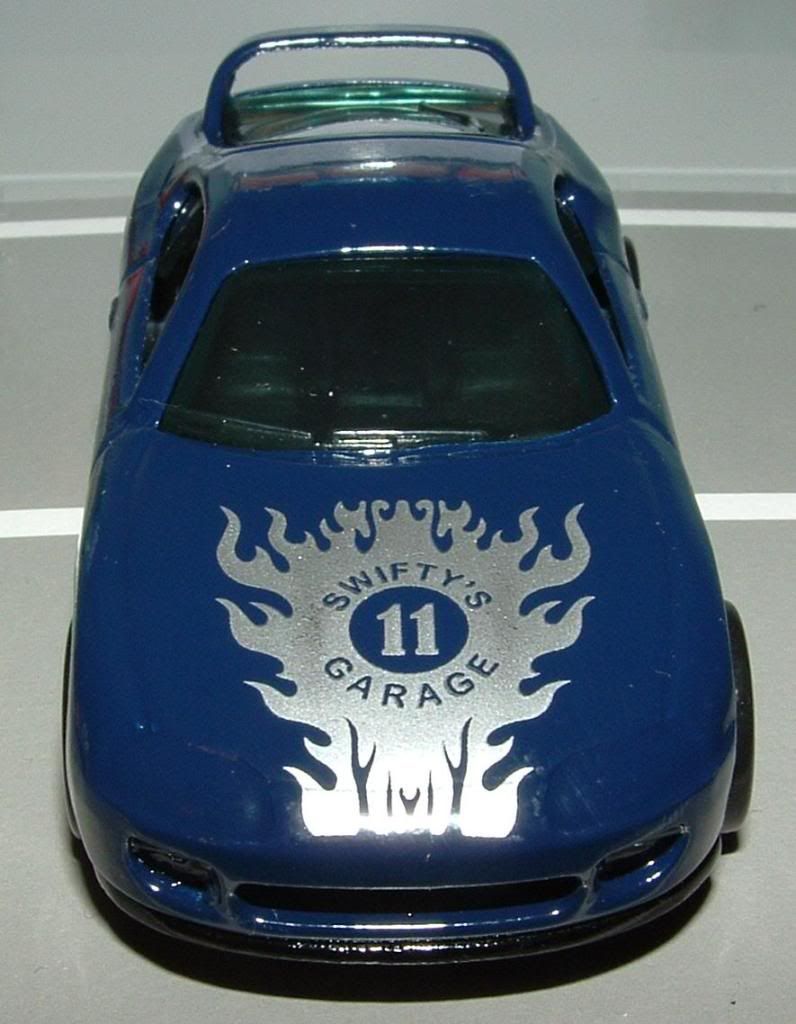
As a refresher, here are the images of the car:


This is a Matchbox 1993 Toyota Supra, as tampoed by ColorComp.  The Matchbox Supra was never issued in this color, and these are blanks ColorComp acquired directly from Matchbox when they worked together.  The casting has not been used since the late 1990s and is assumed no longer available.

For the first week, there is a limit of one car per person in order to allow everyone who might want one a chance to get them.  Stock is limited to 50 cars, one of which is already reserved for myself and another of which is reserved for Celica Baby (and I will explain why in a second).  That leaves 48 cars up for grabs.  After the first week we will open up orders to include multiple cars.

The cost is $16 (per car) and that cost includes shipping anywhere in the United States.  Shipping outside of the USA will be at cost.

The cars will not be shipped out until the end of June.  Celica Baby is handling the shipping (and money collection) aspect of these cars, and this is why one has been put aside for her.  She is accepting money orders and checks, but no Paypal at this time.  Checks will need to clear before cars are shipped.

So post a reply here if you’re interested in obtaining one of the Swifty’s Garage Supras.  This is also cross-posted on the Swifty’s Garage forum and replies will be accepted over there as well.

Friday, June 3, 2011

Car of the Day:June 4, 2011.


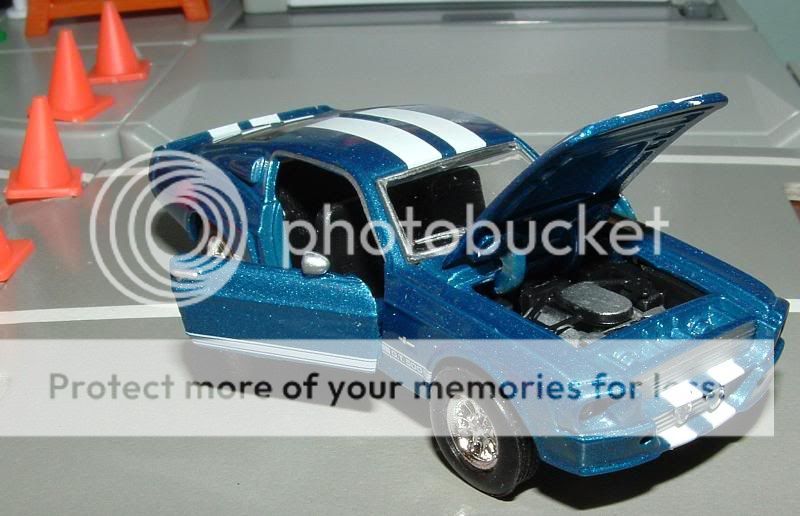
Today's car is Shelby Collectibles' 1967 Shelby GT-500.


The Shelby Mustang is a high performance variant of the Ford Mustang which was built by Shelby American from 1965 through 1970. Following the introduction of the fifth generation Ford Mustang, the Shelby nameplate was revived in 2007 for new high performance versions of the Mustang.


The GT 500 was added to the lineup, equipped with the 428 Police Interceptor. These later cars carried over few of the performance modifications of the 1965-66 GT350s, although they did feature more cosmetic changes.

In September 1967, production was moved to the A.O. Smith Company of Ionia, Michigan, under Ford control.[12] Shelby American had substantially less involvement after this time. For 1968, the Cobra name was applied to both models, and they were now marketed as the Shelby Cobra GT 350 and the Shelby Cobra GT 500.[13] In February 1968, the Cobra GT 500-KR "King of the Road" debuted; under the hood was a 428 cubic-inch Cobra Jet V8 which was rated at 335 horsepower


Check out http://en.wikipedia.org/wiki/Shelby_Mustang#1967-1968 to learn more.


SUV Of The Day: June 3, 2011


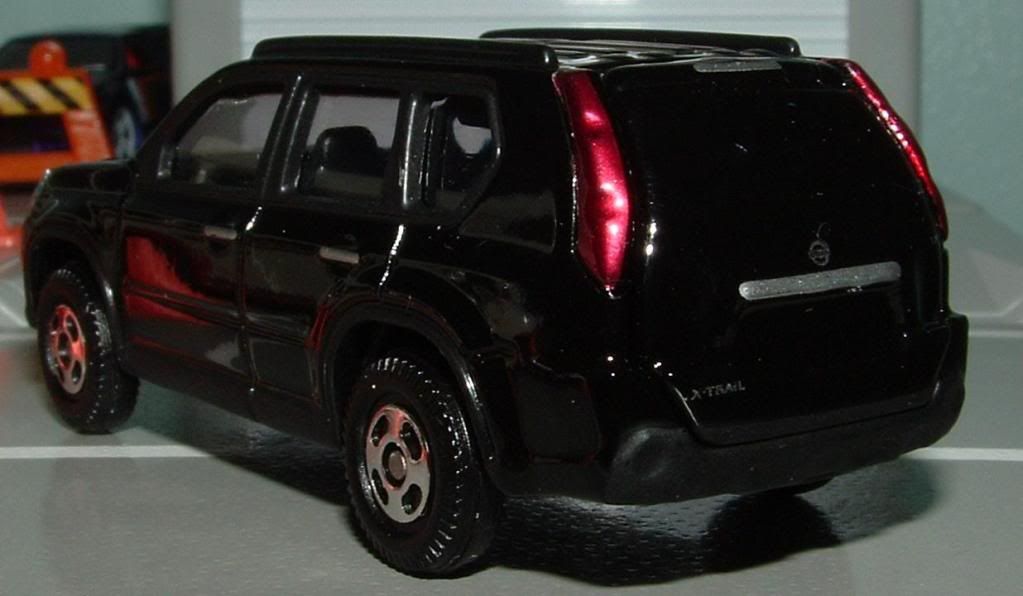
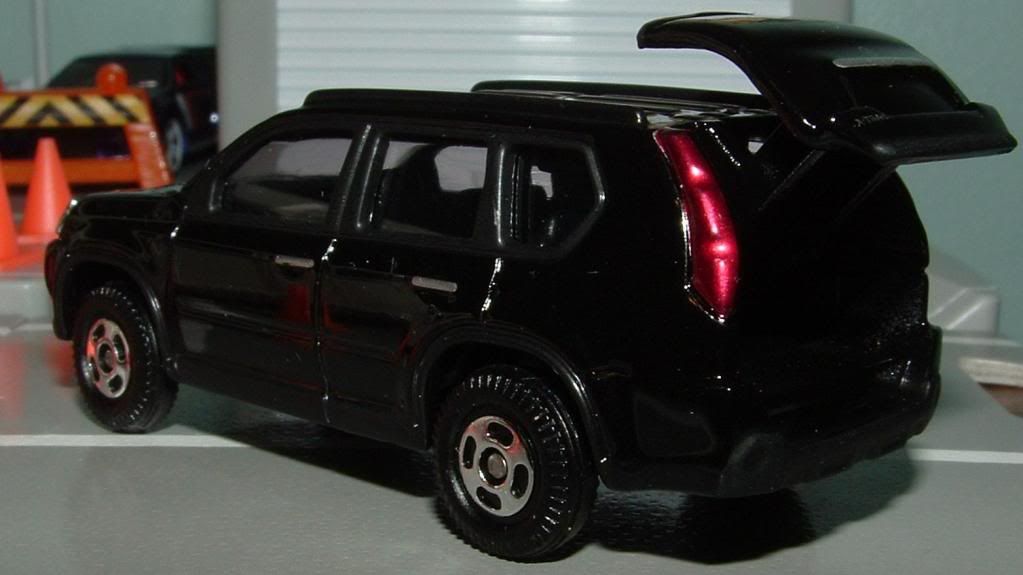
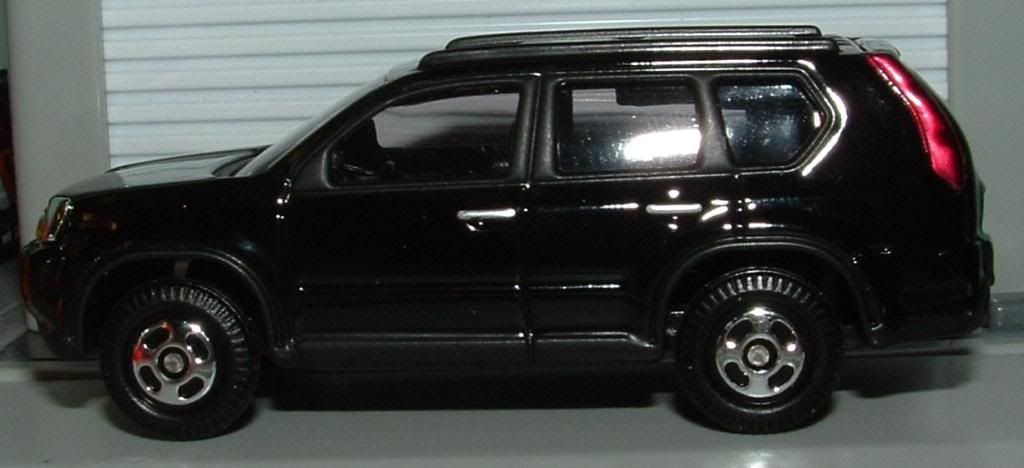
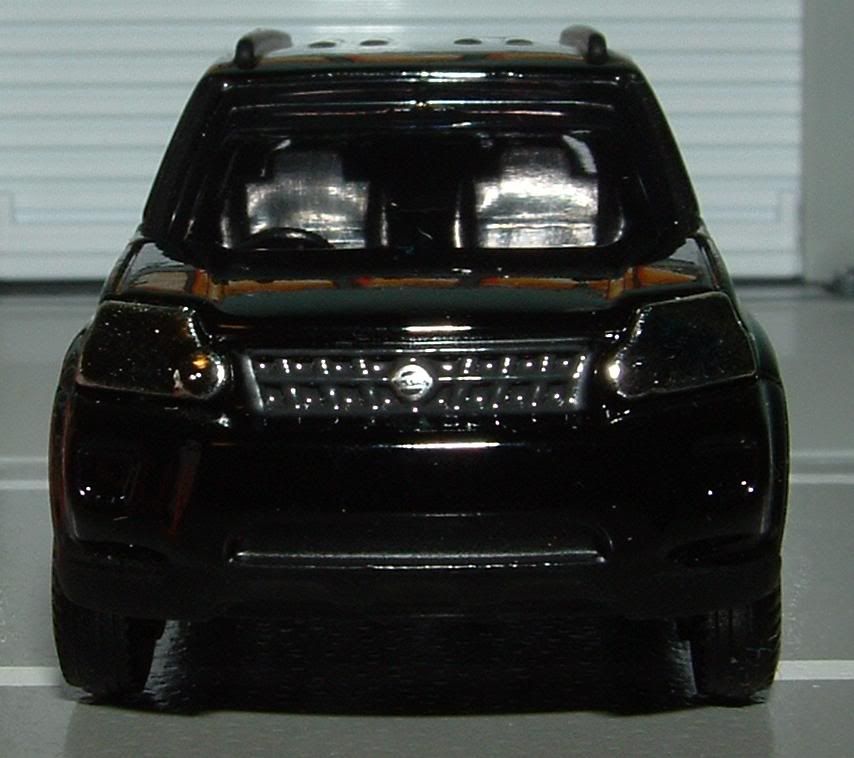
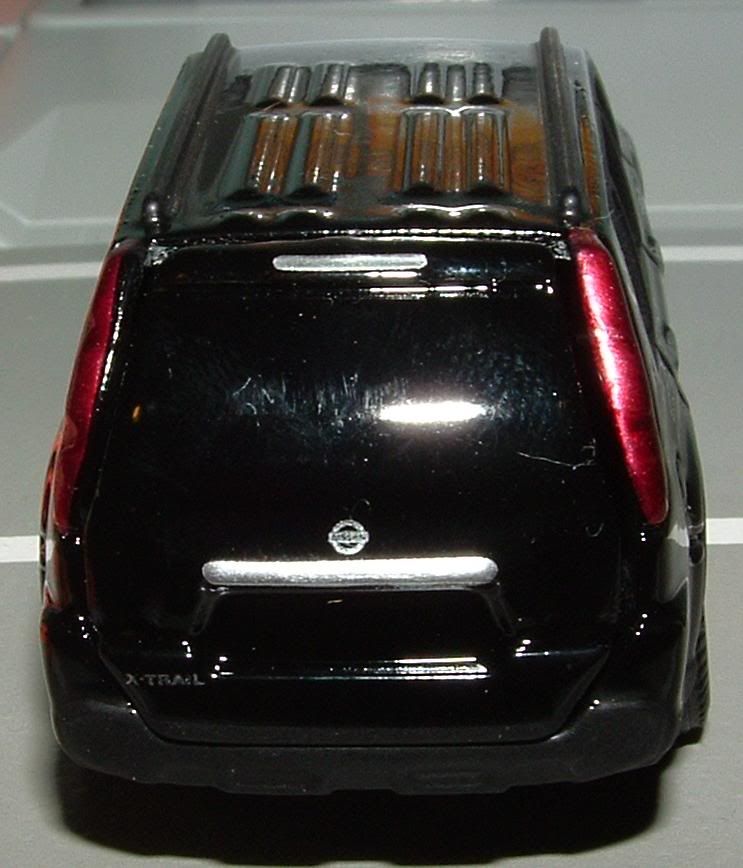
Today's car of the day is Tomica's 2008 Nissan X-Trail.


The Nissan X-Trail is a compact crossover SUV produced by the Japanese automaker Nissan since 2001. It was one of Nissan's first crossover SUVs and was released about the same time as several other companies competing car-based compact SUVs including the Ford Escape and its Mazda Tribute sibling, the Hyundai Tucson, Honda CR-V and the Toyota RAV4.

The X-Trail is positioned below the truck-based Xterra and Pathfinder. The X-Trail was never offered by dealerships in the US. The first generation was available in Canada until it was replaced by the Rogue. However, both the Rogue and X-Trail are sold in Mexico. The Rogue shares the same platform as the second-generation X-Trail and is very similar to the Qashqai. The company currently offers a hydrogen fuel cell model named the X-Trail FCV on lease to businesses.


For more information and pictures of the real car please visit: Nissan X-Trail


Odd that Nissan has never brought this model to the USA where SUVs & crossovers sell like hotcakes.  With gas prices getting steeper and sales of smaller vehicles going up, it seems a shame that this one is not available in out market.


The 2008 Nissan X-Trail gave its public debut at the 2007 Geneva Motor Show in March, and went on sale in Europe in the third quarter of that year.

Slightly larger than the previous model, it is based on the Nissan C platform. This X-Trail appeared in Europe in the first part of the 2007 and towards the end of the year in Australia and Mexico, but not in the United States and Canada where it was replaced by the Rogue. A facelifted model appeared in August 2010.

Thursday, June 2, 2011

Car Of The Day: June 2, 2011


Today's car of the day is Majorette's 1985 Renault 5 (Supercinq).


The Renault 5 (also called the R5) was a supermini produced by the French automaker Renault in two generations between 1972 and 1996. It was sold in many markets, usually as the Renault 5 and in North America as Le Car, from 1976 to 1986. Nearly 5.5 million Renault 5s were built.


For more information and pictures of the real car please visit: Renault 5


A recent purchase from pjedsel (thanks John!) this little Renault is the second generation 5, and one that was never exported to the USA to my knowledge.  The LeCar failed on this side of the pond, but was a huge seller for Renault elsewhere around the globe.  This model is quite well done and features an opening hatch.


The second generation Renault 5, often referred to as the Supercinq or Superfive, appeared in 1985. Although the bodyshell and chassis were completely new (the platform was based on that of the Renault 9/11), familiar 5 styling trademarks were retained; styling was the work of Marcello Gandini. The new body was wider and longer featuring 20 percent more glass area and more interior space, with a lower drag coefficient (0.35), as well as 57.4 mpg-US (4.10 L/100 km; 68.9 mpg-imp) at 55 miles per hour (89 km/h) in the economy models. The biggest change was the adoption of a transversely-mounted powertrain taken directly from the 9 and 11, plus a less sophisticated suspension design, which used MacPherson struts.

The second-generation R5 also spawned a panel van version, known as the Renault Express. It was commercialized in some European countries as the Renault Extra (UK) or Renault Rapid (mainly German speaking countries). This car was intended to replace the R4 F6 panel van, production of which had ceased in 1986.

Renault decided to use the naturally aspirated 1.7 L from the Renault 9/11, which utilized multipoint fuel injection in addition to the sports orientation 1.4 L turbo. Under the name GTE, it produced 95 PS (70 kW; 94 hp). Although not as fast as the turbo model, it featured the same interior and exterior appearance, as well as identical suspension and brakes. The Baccara and GTX versions also used the 1.7 engine - the former sporting a full leather interior, power steering, electric windows, sunroof, high specification audio equipment and as extras air-conditioning and On-Board Computer. The latter was effectively the same but the leather interior was an option and there were other detail changes.

The model was starting to show its age by 1990, when it was effectively replaced by the more modern and better-built Clio, which was an instant sales success across Europe. Production of the R5 was transferred to the Revoz factory in Slovenia when the Clio was launched, and it remained on sale as a budget choice called the Campus until the car's 24-year production run finally came to an end in 1996. The Campus name was revived in 2005 with the Renault Clio II.


A "hot hatch" version, the GT Turbo, was introduced in 1985. It used a heavily modified four cylinder, eight-valve Cléon 1397 cc engine, a pushrod unit dating back to the 1950s. It was turbocharged with an air-cooled Garrett T2 turbocharger. Weighing a mere 850 kg (1,874 lb), and producing 115 PS (85 kW; 113 hp), the GT Turbo had an excellent power-to-weight ratio, permitting it to accelerate from a standstill to 100 km/h (62 mph) in 7.1 seconds. To differentiate it from the standard 5, it came with blocky plastic side skirts. Unfortunately, turbo lag was an issue, along with poor hot starting, and was considered rather difficult to control. The same engine was used, with similar issues, in the Renault 9 and 11 Turbos.

In 1987, the facelifted Phase II was launched. Major changes in the Phase II version included installing watercooling to the turbocharger, aiding the Phase I's oil-cooled setup, which extended the life of the turbo. It also received a new ignition system which permitted it to rev 500 rpm higher. These changes boosted engine output up to over 120 PS (88 kW; 118 hp). Externally, the car was revamped, with changes (including new bumpers and arches) that reduced the car's drag coefficient from 0.36 to 0.35. Giving the Phase II a 0–100 km/h time of 7.5 secs. In 1989 the GT Turbo received a new interior, and in 1990 the special edition Raider model (available only in metallic blue, with different interior and wheels) was launched. In late 1991 the Renault 5 GT Turbo was discontinued, superseded by the Clio 16v and the Clio Williams.

Wednesday, June 1, 2011

Swifty's Garage Promo Supra

You may remember the pictures of the Matchbox '93 Supra that were posted two weeks ago.  The car will be available for ordering starting on Saturday at 8PM EST.  A reservation thread will be posted both here and on the forum at that time.  Cars are on a first come/first served basis.  While I don't expect these cars to sell out that quickly, I wanted to give everyone advance notice of the sale.  For the first week, the cars will be limited to one per person.  After the first week any remaining cars will be up for grabs for those who may want multiple examples.

The cars are limited to fifty examples, and if they sell out there will be another promo next year.  The price is $16 (including shipping in the USA) and shipping will be at cost elsewhere in the world.


This color was never available in the Matchbox lineup, and was only available from the various promotions ColorComp has done over the years.  The casting itself hasn't seen the light of day in years and likely didn't survive the Matchbox team's move from Mt. Laurel, New Jersey to El Sugundo, California.  Which is a pity, as the real car experienced a surge in popularity right after that thanks to the movie "The Fast And The Furious".  A Superfast example of this car would have been awesome, but at least they made a few Premiere issues so it's not a total loss.

Car Of The Day: June 1, 2011


Today's car of the day is Johnny Lightning's 1971 Dodge Challenger R/T.


The Dodge Challenger is the name of three different generations of automobiles marketed by the Dodge division of Chrysler.

The first car that carried the Challenger name was the limited edition 1959 Dodge Silver Challenger. This was a six-cylinder or V-8 model available only in silver paint and only on a two-door body. It came with many extra features at no cost, such as wall-to-wall deep pile carpeting, premium white wall tires and wheel covers, luxury fabrics and upgraded interior and electric windshield wipers.

The first generation Dodge Challenger was a pony car built from 1970 to 1974, using the Chrysler E platform and sharing major components with the Plymouth Barracuda. The second generation, from 1978 to 1983, was a badge engineered Mitsubishi Galant Lambda. The third, and current generation, was introduced in 2008 as a rival to the evolved fifth generation Ford Mustang and the reintroduced fifth generation Chevrolet Camaro.


For more information and pictures of the real car please visit: Dodge Challenger


This example of the JL Challenger was a Club exclusive and I believe was the debut of the tooling.  Also notice this example has a textured rear panel- which is my biggest complaint about most releases of this casting.  Up until I reviewed the photos for today's COTD I didn't realize any versions of this tooling had a detailed rear fascia.  The smooth rear fascia just looks wrong and the tampos overtop of it look fake.  With the needed texture, this one looks about perfect.  And the hood fits too (another common problem of this tooling is hoods that don't shut properly)!  The tampoed on gascap, however, is distracting.


The Challenger was described in a book about 1960s American cars as Dodge’s "answer to the Mustang and Camaro." It was one of two Chrysler E-body cars, the other being the slightly smaller Plymouth Barracuda. "Both the Challenger and Barracuda were available in a staggering number of trim and option levels" and were intended "to compete against cars like the Chevrolet Camaro and Ford Mustang, and to do it while offering virtually every engine in Chrysler's inventory." However, they were "a rather late response to the ponycar wave the Ford Mustang had started." In his book Hemi Muscle Cars, Robert Genat wrote that the Challenger was conceived in the late 1960s as Dodge’s equivalent of the Plymouth Barracuda, and that the Barracuda was designed to compete against the Mustang and Camaro. He added that Chrysler intended the new Dodge as "the most potent ponycar ever," and positioned it "to compete against the Mercury Cougar and Pontiac Firebird." Genat also noted that the "Barracuda was intended to compete in the marketplace with the Mustang and Camaro/Firebird, while the Dodge was to be positioned against the Cougar" and other more luxury-type musclecars.

The Challenger's longer wheelbase, larger dimensions and more luxurious interior were prompted by the launch of the 1967 Mercury Cougar, likewise a bigger, more luxurious and more expensive pony car aimed at affluent young American buyers. The wheelbase, at 110 inches (2,794 mm), was two inches longer than the Barracuda, and the Dodge differed substantially from the Plymouth in its outer sheetmetal, much as the Cougar differed from the shorter-wheelbase Ford Mustang.

Exterior design was done by Carl Cameron, who also did the exterior for the 1966 Dodge Charger. Cameron based the 1970 Challenger grille off an older sketch of his 1966 Charger prototype that was to have a turbine engine. The Charger never got the turbine, but the Challenger got that car's grille. Although the Challenger was well-received by the public (with 76,935 produced for the 1970 model year), it was criticized by the press, and the pony car segment was already declining by the time the Challenger arrived. Sales fell dramatically after 1970, and Challenger production ceased midway through the 1974 model year. About 165,500 Challengers were sold over this model's lifespan.


Four hardtop models were offered: Challenger Six, Challenger V8, T/A Challenger (1970 only), and Challenger R/T with a convertible version available only in 1970 and 1971. Although there were no factory-built R/T Challenger convertibles for 1971, the R/T continued as a model with the hardtop body-style. The standard engine on the base model was the 225 cu in (3.7 L) six-cylinder. The standard engine on the V8 was the 230 bhp (171.5 kW)318 cu in (5.2 L) V8 with a 2-barrel carburetor. Optional engines were the 340 cu in (5.6 L) and 383 cu in (6.3 L) V8s, all with a standard 3-speed manual transmission, except for the 290 bhp (216.3 kW) 383 CID engine, which was available only with the TorqueFlite automatic transmission. A 4-speed manual was optional on all engines except the 225 CID I6 and the 2-barrel 383 CID V8.
The performance model was the R/T (Road/Track), with a 383 CID Magnum V8, rated at 335 bhp (249.8 kW); 300 bhp (223.7 kW) for 1971, due to a drop in compression. The standard transmission was a 3-speed manual. Optional R/T engines were the 375 bhp (279.6 kW) 440 cu in (7.2 L) Magnum, the 390 bhp (290.8 kW) 440 CID Six-Pack and the 425 bhp (316.9 kW) 426 cu in (7.0 L) Hemi. The R/T was available in either the hardtop or convertible. Base hardtop models and R/T hardtops could be ordered with the more luxurious SE specification, which included leather seats, a vinyl roof, a smaller 'formal' rear window, and an overhead interior console that contained three warning lights (door ajar, low fuel, and seatbelts). The Challenger R/T came with a Rallye instrument cluster that included a 150 mph (240 km/h) speedometer, an 8,000 rpm tachometer, 1972-1974 tachometer went to 7,000 rpm and an oil pressure gauge. In 1973, the R/T badging was dropped and these models were called "Rallye", although they were never badged as such. The shaker hood scoop was not available after 1971.

A 1970-only model was the Dodge Challenger T/A (Trans Am) racing homologation car. In order to race in the Sports Car Club of America's Trans American Sedan Championship Trans Am, Dodge built a street version of its race car (just like Plymouth with its Plymouth 'Cuda AAR) which it called the Dodge Challenger T/A (Trans Am). Although the race cars ran a destroked version of the 340, street versions took the 340 and added a trio of two-barrel carburetors atop an Edelbrock aluminum intake manifold, creating the 340 Six Pack. Dodge rated the 340 Six Pack at 290 bhp (216.3 kW), only 15 bhp (11 kW) more than the original 340 engine (which also had the same rating as the Camaro Z/28 and Ford Boss 302 Mustang). The engine actually made about 320 bhp (238.6 kW). It breathed air through a suitcase sized air scoop molded into the pinned down, hinged matte-black fiberglass hood. Low-restriction dual exhausts ran to the stock muffler location, then reversed direction to exit in chrome tipped "megaphone" outlets in front of the rear wheels. Options included a TorqueFlite automatic or pistol-grip Hurst-shifted four-speed transmission, 3.55:1 or 3.90:1 gears, as well as manual or power steering. Front disc brakes were standard. The special Rallye suspension used heavy duty parts and increased the rate of the rear springs. The T/A was the first U.S. muscle car to fit different size tires front and rear to give a racing stance: E60x15 in the front, and G60x15 in the rear. The modified chamber elevated the tail enough to clear the rear rubber and its side exhaust outlets. Thick dual side stripes, bold ID graphics, a fiberglass ducktail rear spoiler, and a fiberglass front spoiler added to the racing image. The interior was strictly stock Challenger.

Dodge contracted Ray Caldwell's Autodynamics firm in Marblehead, Massachusetts to run the factory Trans-Am team. Sam Posey drove the #77 "sub-lime" painted car that Caldwell's team built from a car taken off a local dealer's showroom floor. When the #76 was completed mid-season from a chassis provided by Dan Gurney's All American Racers, Posey alternated between the two. Both cars ran the final two races, with Posey in the #77. Ronnie Bucknum drove the #76 at Seattle Washington, and Tony Adamowicz drove it at Riverside, California.

The Challenger T/A's scored a few top three finishes, but lack of a development budget and the short-lived Keith Black 303 c. i. engines led to Dodge leaving the series at season's end. .
The street version suffered from severe understeer in fast corners, largely due to the smaller front tires. Only 2,399 T/As were made. A 1971 model using the 340 engine with a 4-barrel carburetor was planned and appeared in advertising, but was not produced since Dodge had left the race series.

The "Western Special" was a version available only to west coast dealers. It came with a rear-exit exhaust system and Western Special identification on the rear decklid. Some examples came with a vacuum-operated trunk release. Another late production version was the low-priced "Deputy", stripped of some of the base car's trim and with fixed rear side glass.

By 1972, the convertible version and all the big-block engine options were gone. Maximum power was also downgraded to 240 horsepower (180 kW) to reflect the more accurate Society of Automotive Engineers (SAE) net hp calculations. The 1972 models also received a new grille that extended beneath the front bumper. The only 1972 convertibles which exist are actually 1971 models with the 1972 front end (grille, lights, etc.) and rear end (tail lights and their panel). These were specially built for TV programs such as "Mod Squad". The only way to ascertain a 'real' 1972 Challenger convertible is to look at its fender tag. On the code line which gives the dealer order number, that number will start with an "R", which designates "Special Meaning" (in this case, a TV 'special promotions' car).

The 1973 models were no longer available with a six-cylinder engine. For 1974, the 340 cu in (5.6 L) engine was replaced by a 360 cu in (5.9 L) version, but the pony car market had deteriorated and production of Challengers ceased in mid-1974.