Showing posts with label Corvette. Show all posts

Sunday, September 23, 2012

Car Of The Day: September 23, 2012


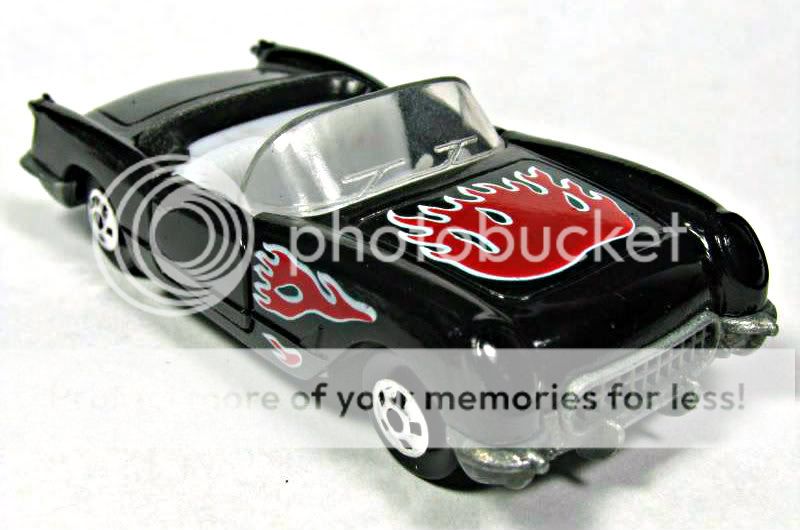
Today's car of the day comes from craftymore's collection and is Road Champs' 1953 Chevrolet Corvette.


The Chevrolet Corvette is a sports car by the Chevrolet division of General Motors that has been produced in six generations. The first model, a convertible, was designed by Harley Earl and introduced at the GM Motorama in 1953 as a concept show car. Myron Scott is credited for naming the car after the type of small, maneuverable warship called corvette.  Originally built in Flint, Michigan and St. Louis, Missouri, the Corvette is currently built in Bowling Green, Kentucky and is the official sports car of the Commonwealth of Kentucky. The National Corvette Museum documents the car's worldwide history and hosts the annual event.


The 1953 model year was not only the Corvette's first production year, but at 300 produced it was also the lowest-volume Corvette. The cars were essentially hand-built and techniques evolved during the production cycle, so that each 1953 Corvette is slightly different. All 1953 models had Polo White exteriors, red interiors, and black canvas soft tops. Order guides showed heaters and AM radios as optional, but all 1953 models were equipped with both. Over two-hundred 1953 Corvettes are known to exist today.  They had independent front suspension.  The cost of the first production model Corvettes in 1953 was $3490.
The quality of the fiberglass body as well as its fit and finish was lacking. Other problems, such as water leaks and doors that could open while the car was driven, were reported with the most severe errors corrected in subsequent units produced, but some shortcomings continued beyond the Corvette's inaugural year. By December 1953, Chevrolet had a newly equipped factory in St. Louis ready to build 10,000 Corvettes annually. However, negative customer reaction in 1953 and early 1954 models caused sales to plummet.


In 1954, only 3,640 of this model were built and nearly a third were unsold at year's end. New colors were available, but the six-cylinder engine and Powerglide automatic, the only engine and transmission available, were not what sports car enthusiasts expected. It is known that 1954 models were painted Pennant Blue, Sportsman Red, and Black, in addition to Polo White. All had red interiors except for those finished in Pennant Blue that had a beige interior. Order guides listed several options, but all options were "mandatory" and all 1954 Corvettes were equipped the same.


Road Champs first issued the '53 Vette in the early to mid 1980s.  The version shown came in a 5 pack of 1950s convertibles. This '53 like the others in the set, all offered opening doors, metal bases and top up or top down plastic inserts.

Saturday, August 18, 2012

Car of the Day:August 18, 2012

The car for today is the Welly 1957 Chevrolet Corvette.
Wikipedia.com The Chevrolet Corvette (C1) is the first generation of the sports car by the Chevrolet division of General Motors introduced late in the 1953 model year and produced through 1962. It is commonly referred to as the "solid-axle" generation, as the independent rear suspension didn't appear until the 1963 Sting Ray. The Corvette was rushed into production for its debut model year to capitalize on the enthusiastic public reaction to the concept vehicle, but expectations for the new model were largely unfulfilled. Reviews were mixed and sales fell far short of expectations through the car's early years. The program was nearly canceled, but Chevrolet would ultimately stay the course and Harley Earl and company would transform the Corvette into a true world-class sports car.
For more information and pictures of the real car, please visit: http://en.wikipedia.org/wiki/Chevrolet_Corvette_%28C1%29
Wikipedia.com There was no doubt Chevrolet was in the sports car business with the release of the 1956 model. It featured a new body, a much better convertible top with power assist optional, real glass roll up windows (also with optional power assist), and an optional hardtop. The 3-speed manual transmission was standard. The Powerglide automatic was optional. The six-cylinder engine was gone. The V8 remained at 265 cubic inches but power ranged from 210 hp to 240 hp. The volume was 3,167, a low number by any contemporary standard and still less than 1954's 3,640, meaning this was the third lowest-volume model in Corvette history.
Visually the 1957 model was a near-twin to 1956. Engine displacement increased to 283 cu in, fuel injection became optional, and a 4-speed manual transmissionwas available after April 9, 1957. Fuel injection first saw regular use on a gasoline engine two years prior on the Mercedes-Benz 300SL "gullwing" roadster. Although the Corvette's GM-Rochester injection used a constant flow system, as opposed to the diesel style nozzle metering system of the Mercedes', the Corvette's engine nevertheless produced about 290 hp (gross). This was underrated by Chevrolet's advertising agency for the 283 hp 283 small-block V8 one hp per in³ slogan, making it one of the first mass-produced engines in history to reach 1 hp/cu in. Pushed toward high-performance and racing, principally by Zora Arkus-Duntov who had raced in Europe, 1957 Corvettes could be ordered ready-to-race with special options. Fuel injection was in short supply and 1,040 Corvettes with this option were sold.

Sunday, July 29, 2012

Car Of The Day: July 29, 2012


Today's car of the day is Kidco's 1953 Chevrolet Corvette.


The Chevrolet Corvette (C1) is the first generation of the sports car by the Chevrolet division of General Motors introduced late in the 1953 model year and produced through 1962. It is commonly referred to as the "solid-axle" generation, as the independent rear suspension didn't appear until the 1963 Sting Ray. The Corvette was rushed into production for its debut model year to capitalize on the enthusiastic public reaction to the concept vehicle, but expectations for the new model were largely unfulfilled. Reviews were mixed and sales fell far short of expectations through the car's early years. The program was nearly canceled, but Chevrolet would ultimately stay the course and Harley Earl and company would transform the Corvette into a true world-class sports car.


For pictures and more information, please visit: Chevrolet Corvette


Crude by today's standards, this was the only '53 Corvette available in this scale for many years.


In 1927 General Motors hired designer Harley Earl who loved sports cars. GIs returning after serving overseas in the years following World War II were bringing home MGs, Jaguars, Alfa Romeos, and the like. In 1951, Nash Motors began selling an expensive two-seat sports car, the Nash-Healey, that was made in partnership with the Italian designer Pinin Farina and British auto engineer Donald Healey, but there were few moderate-priced models. Earl convinced GM that they needed to build a two-seat sports car, and with his Special Projects crew began working on the new car, "Project Opel" in late 1951. The result was the hand-built, EX-122 pre-production Corvette prototype, which was first shown to the public at the 1953 GM Motorama at the Waldorf-Astoria in New York City on January 17, 1953. Production began six months later. The car is now located at the Kerbeck Corvette museum in Atlantic City and is believed to be the oldest Corvette in existence.

During the last half of 1953, 300 Corvettes were to large degree hand-built on a makeshift assembly line that was installed in an old truck plant in Flint, Michigan while a factory was being prepped for a full-scale 1954 production run. The outer body was made out of then-revolutionary fiberglass material, selected in part because of quotas, left over from the war, limited the availability of steel. Underneath the new body material were standard components from Chevrolet's regular car line, including the "Blue Flame" inline six-cylinder engine, two-speed Powerglide automatic transmission, and drum brakes. The engine's output was increased however from a triple-carburetor system exclusive to the Corvette, but performance of the car was decidedly "lackluster". Compared to the British and Italian sports cars of the day, the Corvette lacked a manual transmission and required more effort to bring to a stop, but like their British competition, such as Morgan, was not fitted with roll-up windows; this would have to wait until sometime in the 1956 model year. A Paxton centrifugal supercharger became available in 1954 as a dealer-installed option, greatly improving the Corvette's straight-line performance, but sales continued to decline.

The Chevrolet division was GM's entry-level marque. Managers at GM were seriously considering shelving the project, leaving the Corvette to be little more than a footnote in automotive history, and would have done so if not for three important events. The first was the 1955 introduction of Chevrolet's first V8 engine since 1919. Late in the model year, the new 195 hp (145 kW) 265 small-block became available with a three-speed manual transmission, coupled to a 3.55:1 axle ratio, the only one offered. The engine was fitted with a single 2366S WCFB four-barrel (four-choke) Carter carburetor. The combination turned the "rather anemic Corvette into a credible if not outstanding performer". The second was the influence of a Russian émigré in GM's engineering department, Zora Arkus-Duntov. The third factor in the Corvette's survival was Ford's introduction of the 1955 two-seat Thunderbird, which was billed as a "personal luxury car", not a sports car. Even so, the Ford-Chevrolet rivalry in those days demanded GM not appear to back down from the challenge. The original concept for the Corvette emblem incorporated an American flag into the design, but was changed well before production since associating the flag with a product was frowned upon.


The 1953 model year was not only the Corvette's first production year, but at 300 produced it was also the lowest-volume Corvette. The cars were essentially hand-built and techniques evolved during the production cycle, so that each 1953 Corvette is slightly different. All 1953 models had Polo White exteriors, red interiors, and black canvas soft tops. Order guides showed heaters and AM radios as optional, but all 1953 models were equipped with both. Over two-hundred 1953 Corvettes are known to exist today. They had independent front suspension. The cost of the first production model Corvettes in 1953 was $3490.

The quality of the fiberglass body as well as its fit and finish was lacking. Other problems, such as water leaks and doors that could open while the car was driven, were reported with the most severe errors corrected in subsequent units produced, but some shortcomings continued beyond the Corvette's inaugural year. By December 1953, Chevrolet had a newly equipped factory in St. Louis ready to build 10,000 Corvettes annually. However, negative customer reaction in 1953 and early 1954 models caused sales to plummet.

In 1954, only 3,640 of this model were built and nearly a third were unsold at year's end. New colors were available, but the six-cylinder engine and Powerglide automatic, the only engine and transmission available, were not what sports car enthusiasts expected. It is known that 1954 models were painted Pennant Blue, Sportsman Red, and Black, in addition to Polo White. All had red interiors except for those finished in Pennant Blue that had a beige interior. Order guides listed several options, but all options were "mandatory" and all 1954 Corvettes were equipped the same.

In the October 1954 issue of Popular Mechanics there was an extensive survey of Corvette owners in America. The surprising finding was their opinions in comparison to foreign sports cars. It was found that 36% of those taking the survey had owned a foreign sports car, and of that half, they rated the Corvette as better than their previous foreign sports car. 19% rated the Corvette as equal to their foreign sports car and 22% rates the Corvette as inferior. And while many were well pleased with the Corvette, they did not consider it as a true sports car. The principle complaint of the surveyed owners was the extensive body leaks during rain storms.

Chevrolet debuted its small-block, 195 hp V8 in 1955 and the engine found its way into the Corvette. At first 1955 V8 Corvettes continued with the mandatory-option Powerglide automatic transmission (as did the few 6-cylinder models built), but a new three-speed manual transmission came along later in the year for V8 models only. Exterior color choices were expanded to at least five, combined with at least four interior colors. Even soft-tops came in three colors and different materials. Despite all this, only 700 Corvettes 1955 Corvettes were built, making it second only to 1953 in scarcity. Very few six-cylinder 1955 models were built, and all documented examples are equipped with automatic transmissions. The "V" in the Corvette emblem was enlarged and gold colored, signifying the V8 engine under the hood and 12 volt electrical systems, while 6-cylinder models retained the 6-volt systems used in 1953-54. Rare option estimate: Manual transmission (75).

Friday, July 6, 2012

Car Of The Day: July 6, 2012


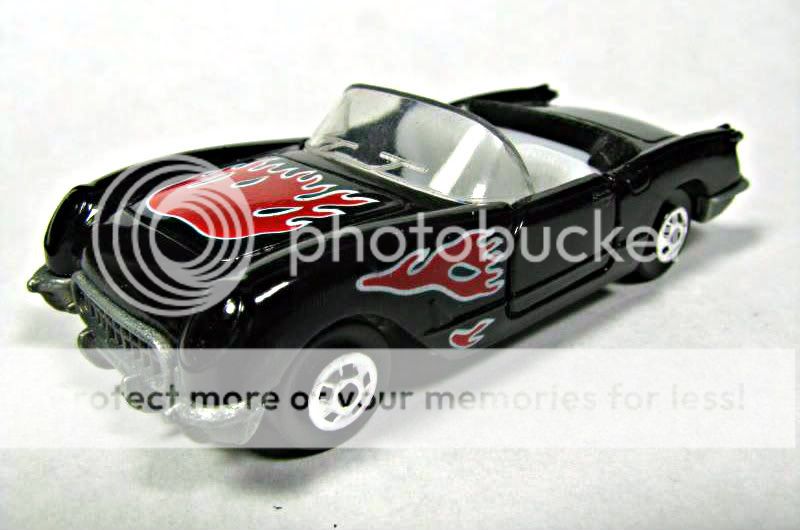
Today's car of the day comes from juantoo3's collection and is High Speed's 1957 Chevrolet Corvette.


The Chevrolet Corvette (C1) is the first generation of the sports car by the Chevrolet division of General Motors introduced late in the 1953 model year and produced through 1962. It is commonly referred to as the "solid-axle" generation, as the independent rear suspension didn't appear until the 1963 Sting Ray. The Corvette was rushed into production for its debut model year to capitalize on the enthusiastic public reaction to the concept vehicle, but expectations for the new model were largely unfulfilled. Reviews were mixed and sales fell far short of expectations through the car's early years. The program was nearly canceled, but Chevrolet would ultimately stay the course and Harley Earl and company would transform the Corvette into a true world-class sports car.


For more information and pictures of the real car please visit: Chevrolet Corvette


The early Corvettes weren't very good cars.  But from humble origins came a car that can take on the world's best.  By 1957 Chevrolet had gotten the hang of sports cars and the public finally started buying them.  But sales paled when compared to the Thunderbird's ('57 would be the last year for the sporty 2 seat T-Bird).


There was no doubt Chevrolet was in the sports car business with the release of the 1956 model. It featured a new body, a much better convertible top with power assist optional, real glass roll up windows (also with optional power assist), and an optional hardtop. The 3-speed manual transmission was standard. The Powerglide automatic was optional. The six-cylinder engine was gone. The V8 remained at 265 cubic inches but power ranged from 210 hp to 240 hp. The volume was 3,167, a low number by any contemporary standard and still less than 1954's 3,640, meaning this was the third lowest-volume model in Corvette history. Rare options: RPO 449 special camshaft with the 240 hp engine (111), power windows (547).
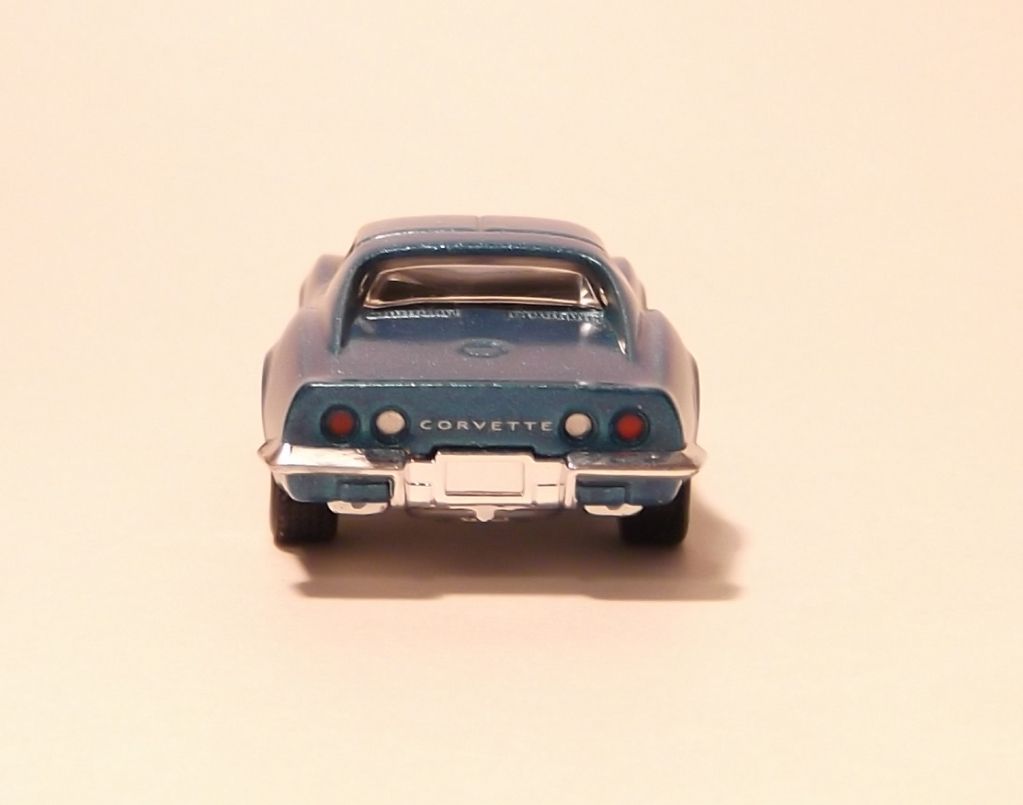
Visually the 1957 model was a near-twin to 1956. Engine displacement increased to 283 cu in (4.6 L), fuel injection became optional, and a 4-speed manual transmission was available after April 9, 1957. Fuel injection first saw regular use on a gasoline engine two years prior on the Mercedes-Benz 300SL "gullwing" roadster. Although the Corvette's GM-Rochester injection used a constant flow system, as opposed to the diesel style nozzle metering system of the Mercedes', the Corvette's engine nevertheless produced about 290 hp (216 kW) (gross). This was underrated by Chevrolet's advertising agency for the 283 hp (211 kW) 283 small-block V8 one hp per in³ slogan, making it one of the first mass-produced engines in history to reach 1 hp/in³. Pushed toward high-performance and racing, principally by Zora Arkus-Duntov who had raced in Europe, 1957 Corvettes could be ordered ready-to-race with special options. Fuel injection was in short supply and 1,040 Corvettes with this option were sold. Rare options: RPO 579E 283 hp (211 kW) engine (1 hp per cubic inch!) with fresh air/tach package (43), RPO 684 heavy-duty racing suspension (51), 15" x 5.5" wheels (51), power windows (379), 4-speed transmission (664).

Saturday, May 19, 2012

Car Of The Day: May 19, 2012


Today's car of the day is Road Champs' 1987 Chevrolet Corvette convertible.


The Chevrolet Corvette is a sports car by the Chevrolet division of General Motors that has been produced in six generations. The first model, a convertible, was designed by Harley Earl and introduced at the GM Motorama in 1953 as a concept show car. Myron Scott is credited for naming the car after the type of small, maneuverable warship called corvette. Originally built in Flint, Michigan and St. Louis, Missouri, the Corvette is currently built in Bowling Green, Kentucky and is the official sports car of the Commonwealth of Kentucky. The National Corvette Museum documents the car's worldwide history and hosts the annual event.


For more information and pictures of the real car please visit: Chevrolet Corvette


Now this is a relative rarity in 1/64 scale- a convertible with the roof cast in the up position.  This was not among the cars Road Champs offered with removable tops, so the top up version seen here is the only way to get this particular casting (they also did the regular C4 Corvette hatchback- with opening hatch!).  You can see the ribs in the roof to simulate the folding top from the overhead picture.


The Chevrolet Corvette (C4) is a sports car produced by the Chevrolet division of General Motors for the 1984 through 1996 model years. The editors of Consumer Guide stated: "The first fully redesigned Corvette in 15 years was more sophisticated and more practical than the beloved Shark. And like previous generations, the new C4 only got better in time." The convertible returned, as did higher performing engines, exemplified by the 405 hp (302 kW) LT5 found in the ZR-1. In early March 1990, the ZR-1 would set a new record for the highest 24 hour-5,000 mile land-speed by going over 175 mph (282 km/h). Though prices rose even as sales declined, the fourth generation Corvette won its own loyal following as one of the world's most desirable sports cars. The last C4 was produced on June 20, 1996.


The C4 Corvette was known for its evolved, sleek and modern look. In a departure from the fiberglass panels of its forebearers, the c4's rear bumpers and panels were made from molding plastics, a sheet molding compound. The C4 coupe was the first general production Corvette to have a glass hatchback (the limited edition 1982 Collector Edition being the first Corvette equipped with this feature) for better storage access. It also had all new brakes with aluminum calipers. The Corvette C4 came standard with an electronic dashboard with a digital liquid crystal display dash, with graphics for speed and RPM and digital displays for other important engine functions.

The C4 represented a clean break and a better, newer look with the previous generation of Corvette. Since emissions regulations were still changing and electronic engine management was in its infancy, horsepower was, compared to earlier generations, comparatively low. Therefore the primary design emphasis, at least for the launch, was on handling. The price of this no-holds-barred emphasis on handling was ride comfort, especially with the Z51 performance handling package. The unit-body frame used in the C4 was prone to rattles and squeaks due to minimal sound deadening. Also due to the external unit-body frame, the door sills were quite deep, with entry and exit likened by contemporary auto journals to a "fall in and climb out" experience. The emergency brake, located between the door sill and the drivers seat, was moved lower and toward the rear of the car in 1988 for easier entry and exit.

From 1984 through 1988, the Corvette was available with a Doug Nash "4+3" transmission - a 4-speed manual coupled to an automatic overdrive on the top three gears. This unusual transmission was a synergy that allowed Corvette to keep a stout 4 speed, but add an overdrive. As technology progressed, it was replaced by a modern ZF 6-speed manual. However, the C4 performance was hampered by its L98 250 hp (186 kW) engine until 1992, when the second-generation Chevy small block, LT1, was introduced, markedly improving the C4s performance. 1996 was a high point of small block Chevrolet development and the 330 hp (246 kW) LT4 was introduced in all manual transmission cars.

The 1986 Corvette saw the reintroduction of the convertible and was named as the Pace Car for the Indianapolis 500. GM had created the Pass Key I, wherein each key contained a special pellet that could be detected and identified by the car's computer system by detecting electrical resistance. Being early in the rollout of this new technology, there were only 15 different resistance values available, which, once thieves discovered this weakness, markedly reduced the value of this early system.

44 Corvettes were manufactured with a 1983 Vehicle Identification Number (VIN), but none were released to the public as official production vehicles. All were destroyed except one, VIN 1G1AY0783D5100023 (white with medium blue interior), L83 350 cu in (5.7 L), 250 hp (186 kW) V8, 4-speed automatic transmission and was retired to the National Corvette Museum in Bowling Green, Kentucky. (MY1984 Corvettes were produced for 17 months.)

Friday, March 16, 2012

Car Of The Day: March 16, 2012


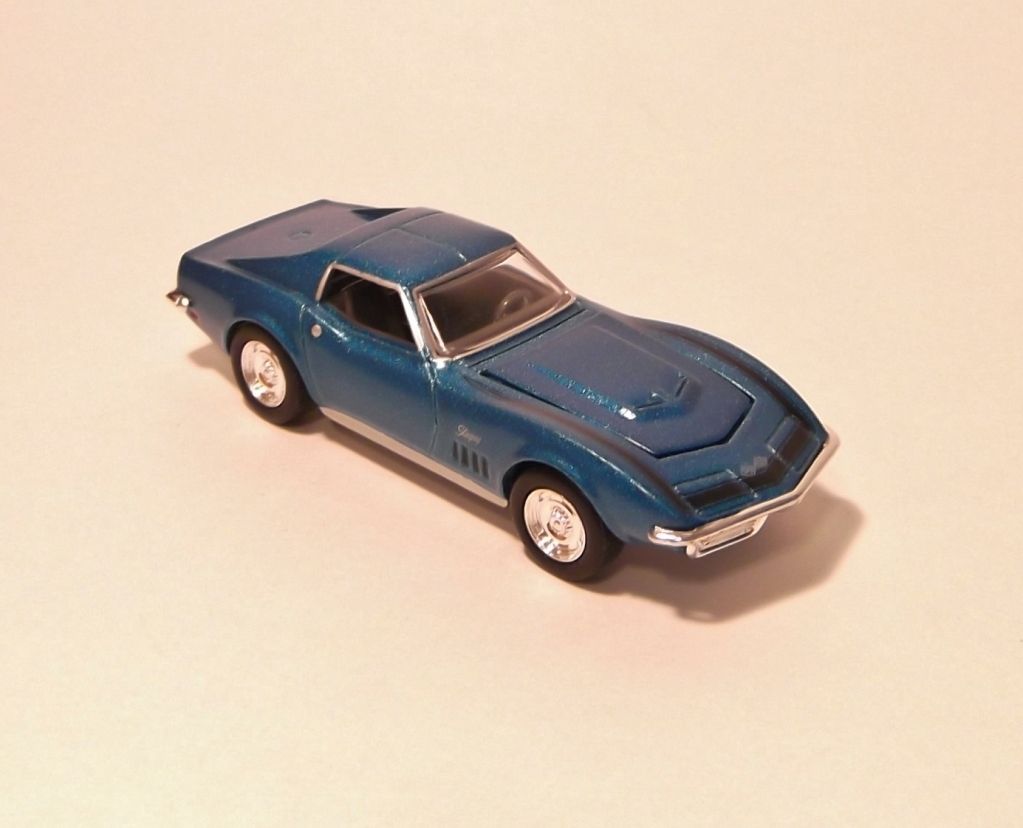
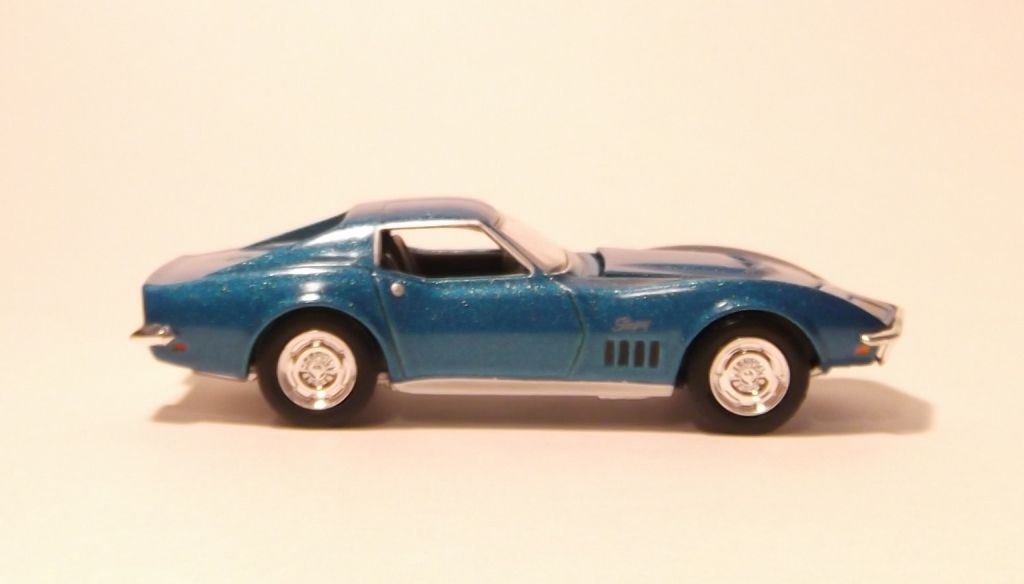
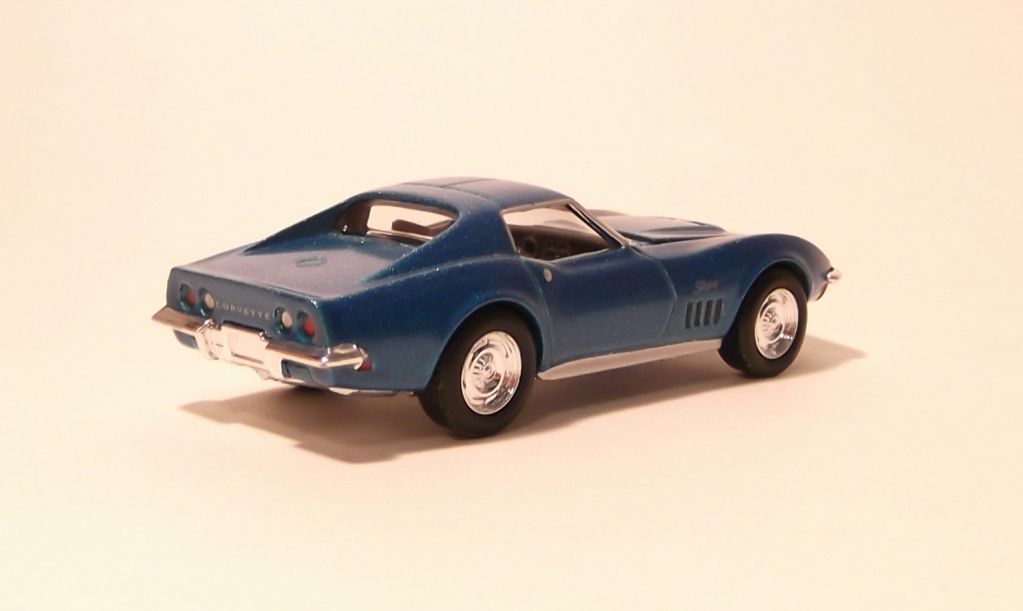
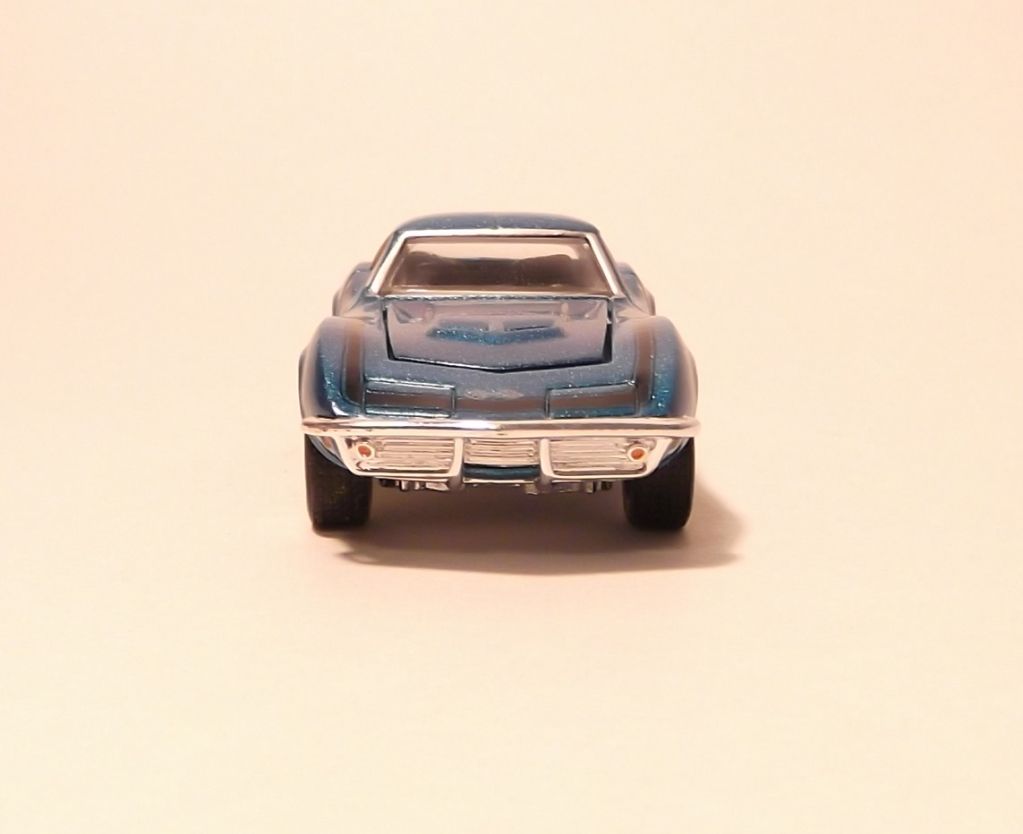
Today's car of the day comes from Firehawk73's collection and is Racing Champions' 1969 Chevrolet Corvette.


The Chevrolet Corvette (C3) is a sports car produced by the Chevrolet division of General Motors for the 1968 through 1982 model years. Corvette chief Zora Arkus-Duntov wanted a striking new Corvette; although engines and chassis components were mostly carried over from the previous generation, its body and interior were new. "Though initially flawed, the 1968 like the 1958, would improve and mature into a car precisely right for its time." The so-called Shark was produced during one of the most troubled periods in America: civil unrest, burgeoning federal guidelines, fuel economy and pollution regulations, oil embargoes, rising fuel and insurance costs, runaway inflation, and a lingering recession. Through it all the third generation Corvette continued to set new sales records with an all-time high of 53,807 produced for the 1979 model year.


For more information and pictures of the real car please visit: Chevrolet Corvette


For 1968, both the Corvette body and interior were completely redesigned. As before, the car was available in either coupe or convertible models, but coupes had new removable roof panels (T-tops) and a removable rear window. A soft folding top was included with convertibles, while an auxiliary hardtop with a glass rear window was offered at additional cost. Included with coupes were hold down straps and a pair of vinyl bags to store the roof panels, and above the luggage area was a rear window stowage tray. The enduring new body's concealed headlights moved into position via a vacuum operated system rather than electrically as on the previous generation, and the new hide-away windshield wipers utilized a problematic vacuum door. The door handles were flush with the top of the doors with a separate release button. "Sting Ray" nameplates were absent on the new 1968 body, but Chevrolet still advertised the car as a Sting Ray. Front fenders had functional engine cooling vents. Side vent windows were eliminated from all models, replaced with "Astro Ventilation", a fresh air circulation system. In the cabin, a large round speedometer and matching tachometer were positioned in front of the driver. Auxiliary gauges were clustered above the forward end of the console and included oil pressure, water temperature, ammeter, fuel gauge, and an analog clock. A fiber-optic system appeared on the console that monitored exterior lights and there was no glove box. The battery was relocated from the engine area to one of three compartments behind the seats to improve weight distribution. New options included a rear window defroster, anti-theft alarm system, bright metal wheel covers, and an AM-FM Stereo radio. All cars ordered with a radio, like the C2 cars, continued to be fitted with chrome-plated ignition shielding covering the distributor to reduce interference.

The chassis was carried over from the second generation models, retaining the fully independent suspension (with minor revisions) and the four-wheel disc brake system. The engine line-up and horsepower ratings were also carried over from the previous year as were the 3 and 4-speed manual transmissions. The new optional Turbo Hydramatic 3-speed automatic transmission (RPO M40) replaced the two-speed Powerglide. The L30, a 327 cu in (5.4 L) small-block V8 engine rated at 300 hp (224 kW) and a 3-speed manual transmission were standard, but only a few hundred 3-speed manual equipped cars were sold. The 4-speed manual was available in M20 wide-ratio or M21 close-ratio transmission versions. The M22 “Rock Crusher”, a heavy duty, close-ratio 4-speed gearbox, was also available for certain applications. The engine line-up included the L79, a 350 hp (261 kW) high performance version of the 327 cu in (5.4 L) small-block. Also available were several variants of the 427 cu in (7.0 L) big-block V8, that taken together made up nearly half the cars. There was the L36, a 390 hp (291 kW) version with a Rochester 4-barrel carburetor; The L68, a 400 hp (298 kW) motor with a Holley triple 2-barrel carb set up (3 X 2 tri-power); The L71, generating 435 hp (324 kW) with a tri-power; The L89 option was the L71 engine but with much lighter aluminum cylinder heads rather than the standard cast iron. Then there was the L88 engine that Chevrolet designed strictly for off-road use (racing), with a published rating of 430 hp (321 kW), but featured a high-capacity 4-barrel carb, aluminum heads, a unique air induction system, and an ultra-high compression ratio (12.5:1). All small block cars had low-profile hoods. All big block cars had domed hoods for additional engine clearance with twin simulated vents and “427” emblems on either side of the dome. The new seven-inch wide steel wheels had F70x15 nylon bias-ply tires standard with either white or red stripe tires optional. Rare options were: L88 engine (80), J56 heavy-duty brakes (81), UA6 alarm system (388), L89 aluminum heads (624).

In 1969, small block engine displacement increased from 327 cu in (5.4 L) to 350 cu in (5.7 L), though output remained the same. All other engines and transmission choices remained unchanged from the previous year, though the L30 base engine was now the ZQ3 and the L79 motor was redesignated the L46. All cars featured 8-inch-wide (200 mm) steel wheels (increased from 7 inches). Tire size remained the same, although this was the first year for optional white lettered tires and the last for red striped tires. Carried over from the previous year were seven available rear axle ratios ranging from 2.73 to 4.56. Standard ratio remained 3.08 with automatic and 3.36 with manual transmission. The optional Positraction rear axle, mandated on many engine/gearbox combinations, was installed on more than 95% of the cars. "Stingray" script nameplates appeared on front fenders, now one word, in contrast to the “Sting Ray” name used previously. Exterior door handles were redesigned so the finger plate would actuate the door, eliminating the separate release button. Backup lights were integrated into the inboard tail lights, headlight washers were added, and front grilles were made all black. Side mounted exhausts and front fender vent trim were options for this year only. On the inside, revised door panels provided additional shoulder room in the C3's tighter cabin and headrests became standard. Steering wheel diameter was reduced from 16 to 15 inches to permit easier entry and exit, the ignition switch was moved from the dash to the steering column, and map pockets were added to the dash area in front of the passenger seat. Accounting for 57% of the cars, coupes with their removable roof panels, began a trend of outselling roadsters. An extended production cycle due to a labor dispute increased '69 volume. This was the last year for the L88 engine and the only year for the ZL1 option, which offered an all aluminum 427 cu in (7.0 L) big-block engine listed at 430 hp (321 kW). Rare options: ZL1 aluminum block (2), J56 heavy-duty brakes (115), L88 engine (116), L89 aluminum heads (390).

Car and Driver magazine wrote in October 1968, “The small-engine Corvettes are marginally faster and extraordinarily civilized. The large-engine Corvettes are extraordinarily fast and marginally civilized.”

Saturday, February 18, 2012

Car Of The Day: February 18, 2012


Today's car of the day comes from Firehawk73's collection and is Hot Wheels' 1962 Chevrolet Corvette.


The Chevrolet Corvette (C1) is the first generation of the sports car by the Chevrolet division of General Motors introduced late in the 1953 model year and produced through 1962. It is commonly referred to as the "solid-axle" generation, as the independent rear suspension didn't appear until the 1963 Sting Ray. The Corvette was rushed into production for its debut model year to capitalize on the enthusiastic public reaction to the concept vehicle, but expectations for the new model were largely unfulfilled. Reviews were mixed and sales fell far short of expectations through the car's early years. The program was nearly canceled, but Chevrolet would ultimately stay the course and Harley Earl and company would transform the Corvette into a true world-class sports car.


For more information and pictures of the real car please visit: Chevrolet Corvette


Four taillights appeared on the 1961, a treatment that continues to this day. Engine displacement remained at 283 cubic inches, but power output increased for the two fuel-injected engines to 275 hp and 315 hp. Power ratings for the dual-four barrel engines did not change (245 hp and 270 hp) but this was the last year of their availability. This was the last year for contrasting paint colors in cove areas, and the last two-tone Corvette of any type until 1978. Rare options: RPO 353 275 hp engine (118), RPO 687 heavy-duty brakes and steering (233), 15x5.5 wheels (357), power convertible top (442).

The 1962 model year was the last Corvette with a solid-rear-axle suspension that was used from the beginning. With two new engines it was also the quickest. Engine displacement increased to 327 cubic inches, but dual 4-barrel carburetor engines were no longer available. Hydraulic valve lifters were used in the base 250 hp and optional 300 hp engines, solid lifters in the optional carbureted 340 hp and fuel-injected 360 hp (268 kW) versions. Rocker panel trim was seen for the first time, exposed headlights for the last, until 2005. This was the last Corvette model to offer an optional power convertible top mechanism. Rare options: 24-gallon fuel tank (65), RPO 687 heavy-duty brakes and steering (246), power convertible top (350), 15x5.5 wheels (561).

Tuesday, February 7, 2012

Car Of The Day: February 7, 2012


Today's car of the day comes from Firehawk73's son Jacob's collection and is Maisto's 1993 Chevrolet Corvette ZR-1.


The Chevrolet Corvette (C4) is a sports car produced by the Chevrolet division of General Motors for the 1984 through 1996 model years. The editors of Consumer Guide stated: "The first fully redesigned Corvette in 15 years was more sophisticated and more practical than the beloved Shark. And like previous generations, the new C4 only got better in time." The convertible returned, as did higher performing engines, exemplified by the 405 hp (302 kW) LT5 found in the ZR-1. In early March 1990, the ZR-1 would set a new record for the highest 24 hour-5,000 mile land-speed by going over 175 mph (282 km/h). Though prices rose even as sales declined, the fourth generation Corvette won its own loyal following as one of the world's most desirable sports cars. The last C4 was produced on June 20, 1996.


For more information and pictures of the real car please visit: Chevrolet Corvette ZR-1


During 1986, General Motors acquired Group Lotus, the UK based engineering consulting and performance car manufacturing firm. The Corvette division approached Lotus with the idea of developing the world's fastest production car, to be based on the C4 generation Corvette. With input from GM, Lotus designed a new engine to fit in place of the L98 V8 that was powering the standard C4. The result was what GM dubbed the LT5, an aluminum-block V-8 with the same bore centers as the L98, but with four overhead camshafts, 32 valves. Lotus also designed a unique air management system for the engine to provide a wider power band by shutting off 8 of the 16 intake runners and fuel injectors when the engine was at part-throttle, while still giving the ZR-1 375 hp (280 kW) when at wide open throttle. In addition to the engine, Lotus helped GM design the ZR-1's upgraded braking and steering systems, and helped them pick the settings for the standard "FX3" adjustable active ride control that Chevrolet was fitting to the car, helping to ensure that the vehicle was more than just a modern-day muscle car with a big engine and no real capability on the track.

GM found that the engine required special assembly, and that neither the Corvette plant in Bowling Green, Kentucky nor any of their normal production facilities could handle the workload, so Mercury Marine corporation of Stillwater, Oklahoma was contracted to assemble the engines and ship them to the Corvette factory in Bowling Green where the ZR-1s were being assembled.
The vehicle went on sale in 1990 and was available only as a coupe. It was distinguishable from other Corvette coupes by its wider tail section, 11" wide rear wheels and its new convex rear fascia with four square shaped taillights and a CHMSL (center high mounted stop lamp) attached to the top of the hatch glass instead of between the taillights.

The ZR-1 displayed stunning ability both in terms of acceleration and handling capabilities, but carried with it an astonishingly high price. MSRP for the ZR-1 in 1990 was $58,995, almost twice the cost of a non-ZR-1, and had ballooned to $66,278 by 1995; some dealers successfully marked units as high as $100,000. Even at base MSRP, this meant that the ZR-1 was competing in the same price bracket as cars like the Porsche 964, making it a hard sell for GM dealers.

In 1991, the ZR-1 and base model received updates to body work, interior, and wheels. The rear convex fascia that set the 1990 ZR-1 apart from the base model found its way to all models, making the high-priced ZR-1 even less distinguishable. Further changes were made in 1992, including extra ZR-1 badges on the fenders and the introduction of Acceleration Slip Regulation (ASR) or traction control. For model year 1993, Lotus design modifications were made to the cylinder heads, exhaust system and valvetrain of the LT5, bringing horsepower up to 405. In addition, a new exhaust gas recirculation system improved emissions control. The model remained nearly unchanged into the 1995 model year, after which the ZR-1 was discontinued as the result of waning interest, development of the LS series engines, cost and the coming of the C5 generation. A total of 6,939 ZR-1s were manufactured over the six year period. Not until the debut of the C5 platform Z06 would Chevrolet have another production Corvette capable of matching the ZR-1's performance.

Although the ZR-1 was extremely quick (0-60 mph in 4.4 seconds, and onto 180+ mph), the huge performance of the LT5 engine was matched by its robustness. As evidence of this, a stock ZR-1 set a number of international and world records at a test track in Fort Stockton, Texas on March 1, 1990, verified by the FIA (Fédération Internationale de l'Automobile), including seven new international records.

Monday, December 5, 2011

Car Of The Day: December 5, 2011


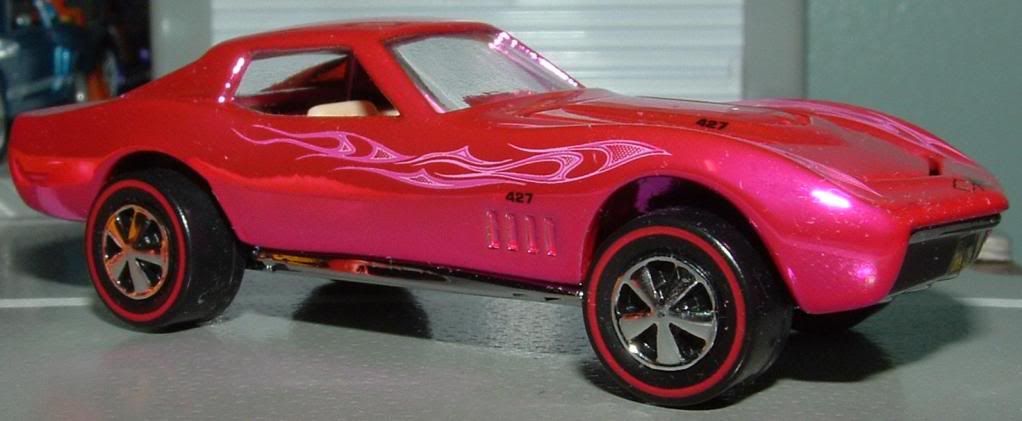
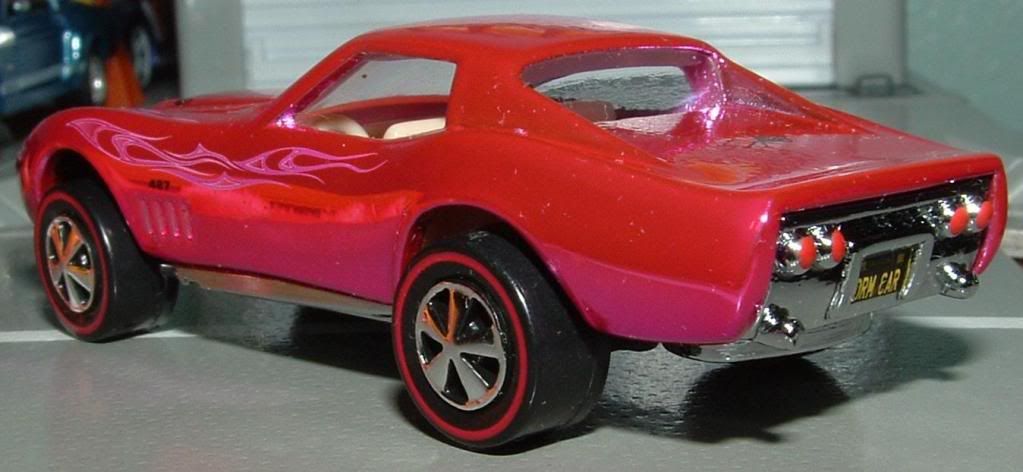
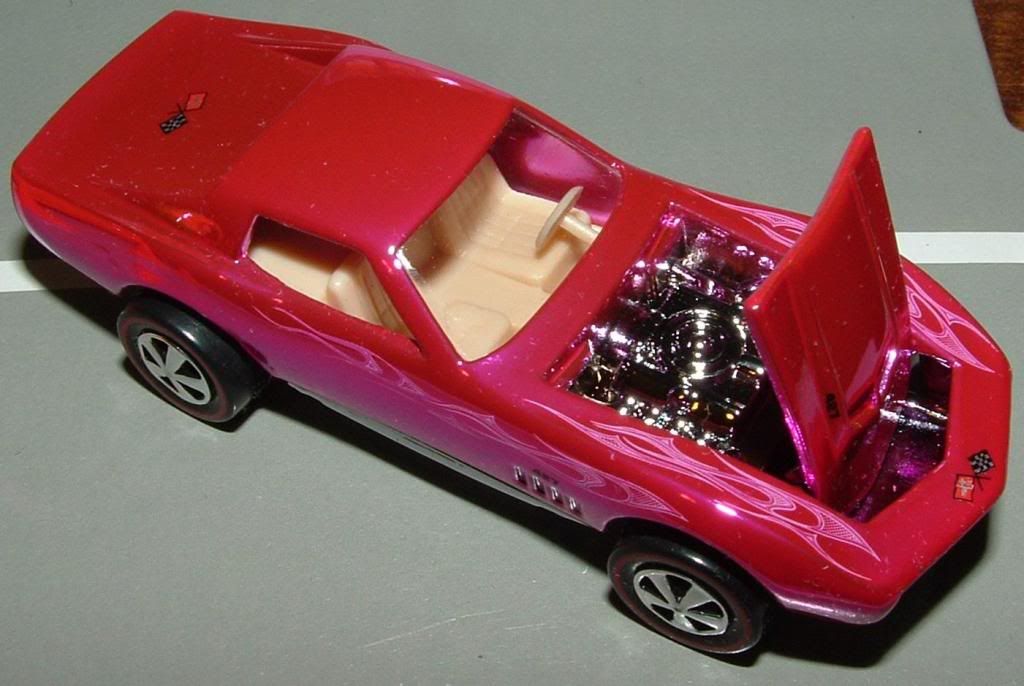
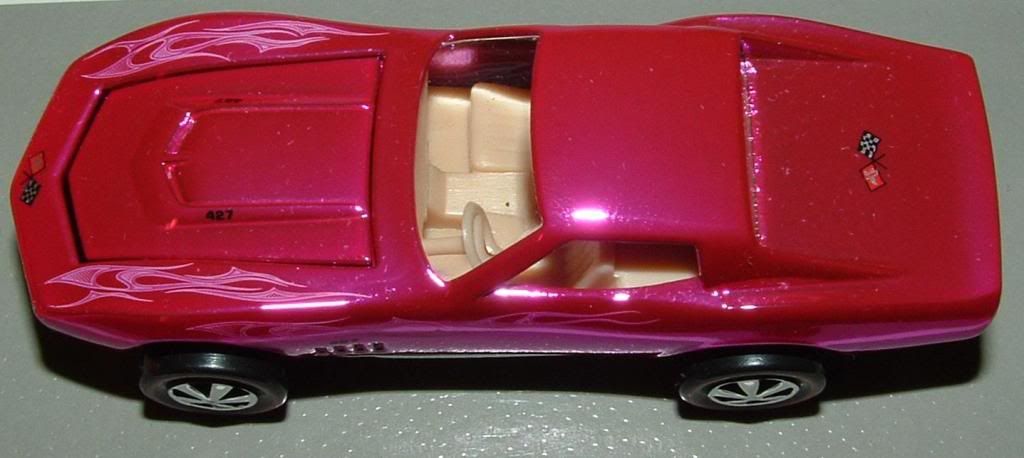
Today's car of the day is Hot Wheels' 1968 Chevrolet Corvette.


The Chevrolet Corvette (C3) is a sports car produced by the Chevrolet division of General Motors for the 1968 through 1982 model years. Corvette chief Zora Arkus-Duntov wanted a striking new Corvette; although engines and chassis components were mostly carried over from the previous generation, its body and interior were new. "Though initially flawed, the 1968 like the 1958, would improve and mature into a car precisely right for its time." The so-called Shark was produced during one of the most troubled periods in America: civil unrest, burgeoning federal guidelines, fuel economy and pollution regulations, oil embargoes, rising fuel and insurance costs, runaway inflation, and a lingering recession. Through it all the third generation Corvette continued to set new sales records with an all-time high of 53,807 produced for the 1979 model year.


For more information and pictures of the real car please visit: Chevrolet Corvette


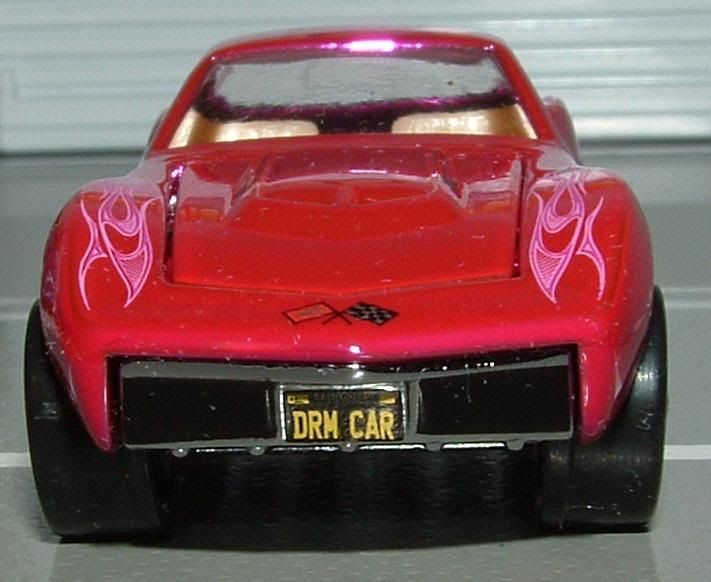
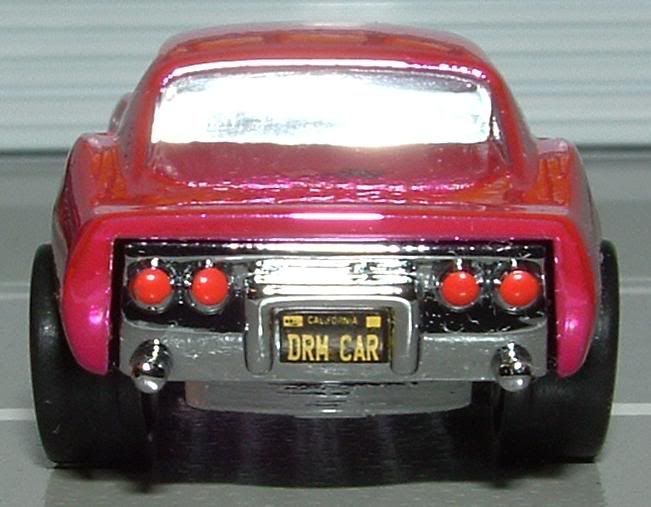
The pink color scheme and "Dream Car" on the license plate is likely a nod to another Mattel brand- Barbie.


The Corvette C3 was patterned after the Mako Shark II designed by Larry Shinoda. Executed under Bill Mitchell's direction, the Mako II had been initiated in early 1964. Once the mid-engined format was abandoned the Shinoda/Mitchell car was sent to Chevrolet Styling under David Holls, where Harry Haga's studio adopted it for production on the existing Sting Ray chassis. The resulting lower half of the car was much like the Mako II, except for the softer contours. The concept car's name was later changed to Manta Ray. The C3 also adopted the "sugar scoop" roof treatment with vertical back window from the mid-engined concept models designed by the Duntov group. It was intended from the beginning that the rear window and that portion of the roof above the seats–be removable.

The "Shark" has the distinction of being introduced to the motoring public in an unorthodox—and unintended—fashion. GM had tried their best to keep the appearance of the upcoming car a secret, but the release of Mattel's die-cast Hot Wheels line several weeks before the C3's unveiling had a certain version of particular interest to Corvette fans: the "Custom Corvette", a GM-authorized model of the 1968 Corvette.


For 1968, both the Corvette body and interior were completely redesigned. As before, the car was available in either coupe or convertible models, but coupes had new removable roof panels (T-tops) and a removable rear window. A soft folding top was included with convertibles, while an auxiliary hardtop with a glass rear window was offered at additional cost. Included with coupes were hold down straps and a pair of vinyl bags to store the roof panels, and above the luggage area was a rear window stowage tray. The enduring new body's concealed headlights moved into position via a vacuum operated system rather than electrically as on the previous generation, and the new hide-away windshield wipers utilized a problematic vacuum door. The door handles were flush with the top of the doors with a separate release button. "Sting Ray" nameplates were absent on the new 1968 body, but Chevrolet still advertised the car as a Sting Ray. Front fenders had functional engine cooling vents. Side vent windows were eliminated from all models, replaced with "Astro Ventilation", a fresh air circulation system. In the cabin, a large round speedometer and matching tachometer were positioned in front of the driver. Auxiliary gauges were clustered above the forward end of the console and included oil pressure, water temperature, ammeter, fuel gauge, and an analog clock. A fiber-optic system appeared on the console that monitored exterior lights and there was no glove box. The battery was relocated from the engine area to one of three compartments behind the seats to improve weight distribution. New options included a rear window defroster, anti-theft alarm system, bright metal wheel covers, and an AM-FM Stereo radio. All cars ordered with a radio, like the C2 cars, continued to be fitted with chrome-plated ignition shielding covering the distributor to reduce interference.

The chassis was carried over from the second generation models, retaining the fully independent suspension (with minor revisions) and the four-wheel disc brake system. The engine line-up and horsepower ratings were also carried over from the previous year as were the 3 and 4-speed manual transmissions. The new optional Turbo Hydramatic 3-speed automatic transmission (RPO M40) replaced the two-speed Powerglide. The L30, a 327 cu in (5.4 L) small-block V8 engine rated at 300 hp (224 kW) and a 3-speed manual transmission were standard, but only a few hundred 3-speed manual equipped cars were sold. The 4-speed manual was available in M20 wide-ratio or M21 close-ratio transmission versions. The M22 “Rock Crusher”, a heavy duty, close-ratio 4-speed gearbox, was also available for certain applications. The engine line-up included the L79, a 350 hp (261 kW) high performance version of the 327 cu in (5.4 L) small-block. Also available were several variants of the 427 cu in (7.0 L) big-block V8, that taken together made up nearly half the cars. There was the L36, a 390 hp (291 kW) version with a Rochester 4-barrel carburetor; The L68, a 400 hp (298 kW) motor with a Holley triple 2-barrel carb set up (3 X 2 tri-power); The L71, generating 435 hp (324 kW) with a tri-power; The L89 option was the L71 engine but with much lighter aluminum cylinder heads rather than the standard cast iron. Then there was the L88 engine that Chevrolet designed strictly for off-road use (racing), with a published rating of 430 hp (321 kW), but featured a high-capacity 4-barrel carb, aluminum heads, a unique air induction system, and an ultra-high compression ratio (12.5:1). All small block cars had low-profile hoods. All big block cars had domed hoods for additional engine clearance with twin simulated vents and “427” emblems on either side of the dome. The new seven-inch wide steel wheels had F70x15 nylon bias-ply tires standard with either white or red stripe tires optional. Rare options were: L88 engine (80), J56 heavy-duty brakes (81), UA6 alarm system (388), L89 aluminum heads (624).