Showing posts with label Firebird. Show all posts

Thursday, June 14, 2012

Car Of The Day: June 14, 2012


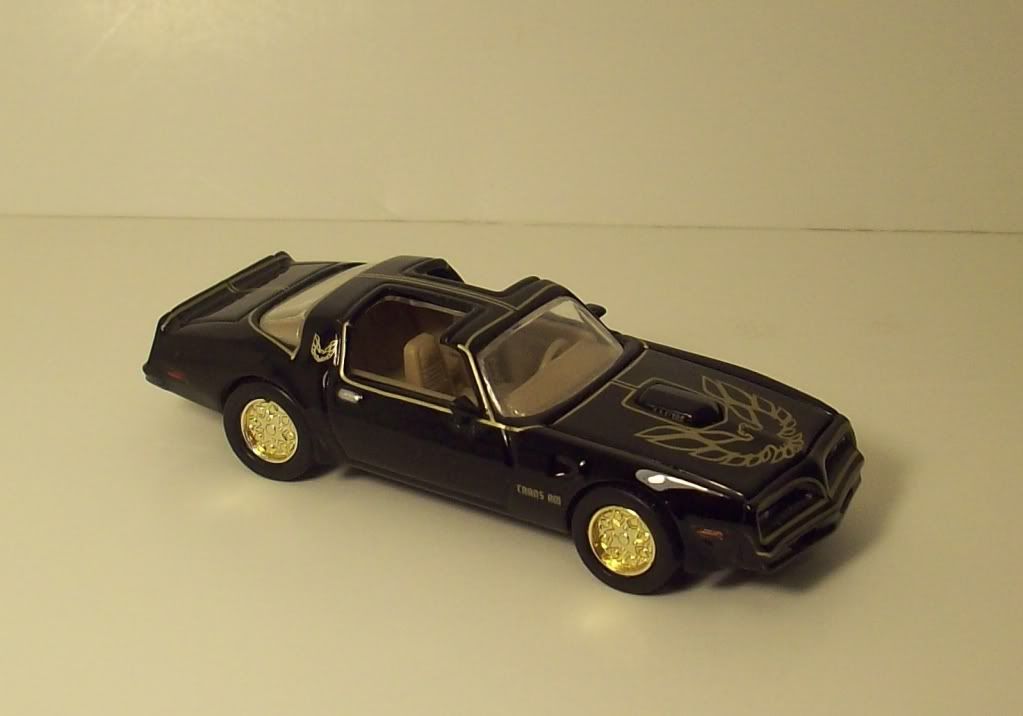
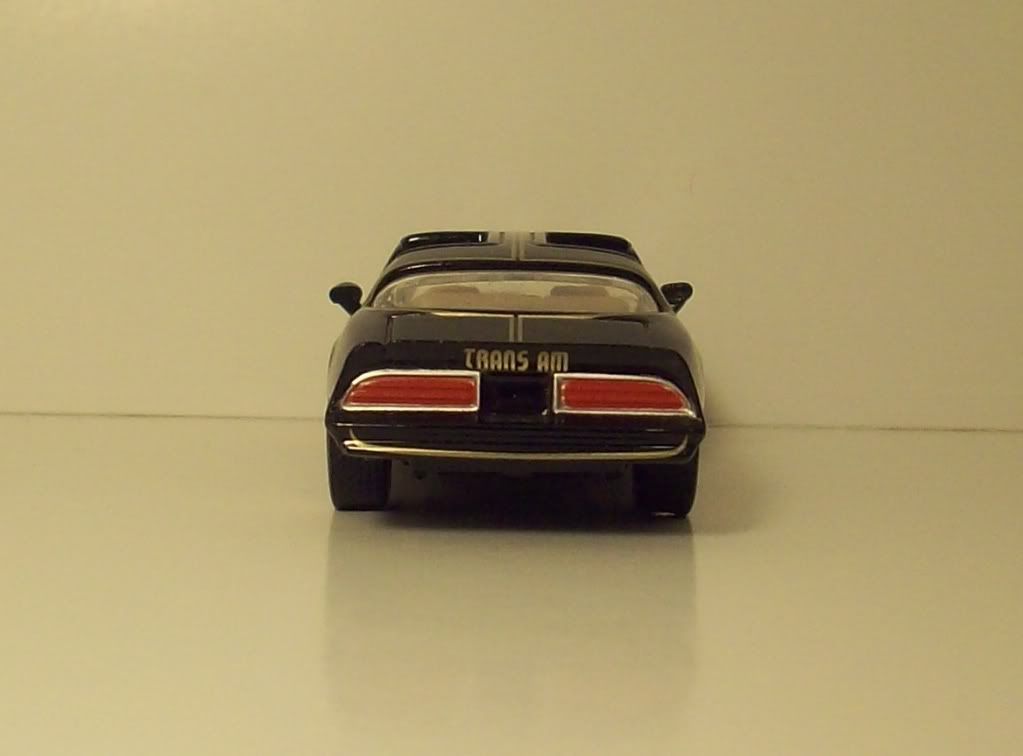
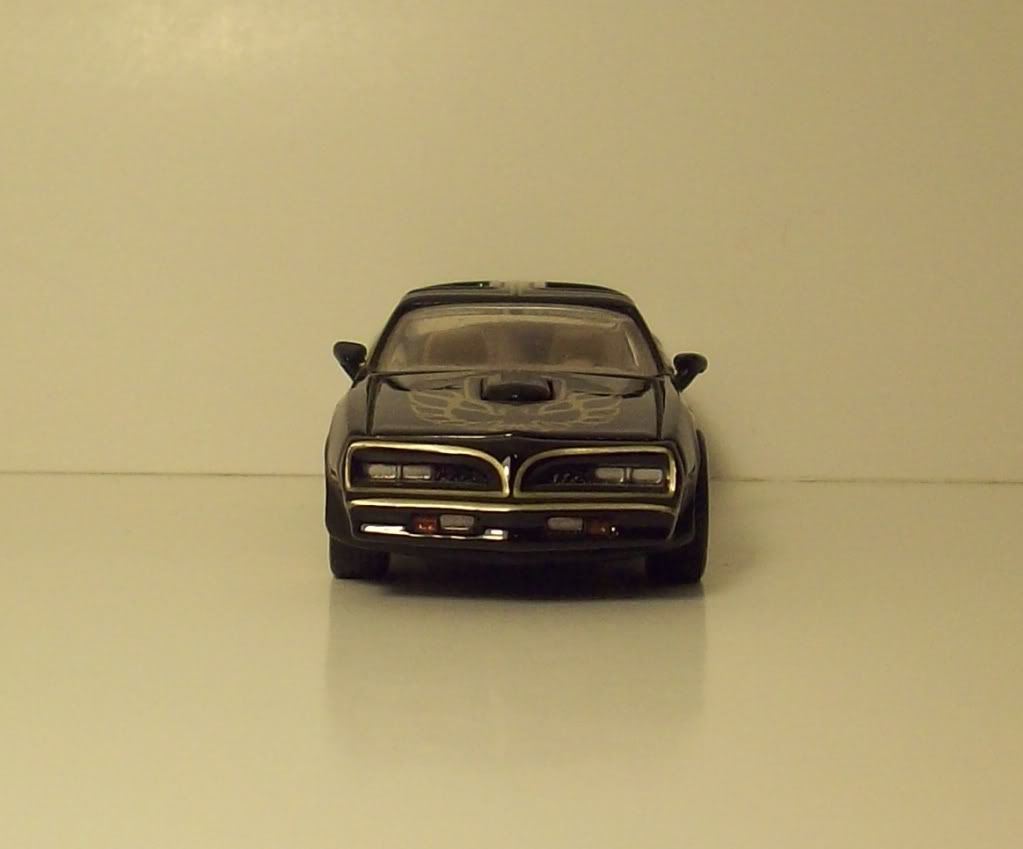
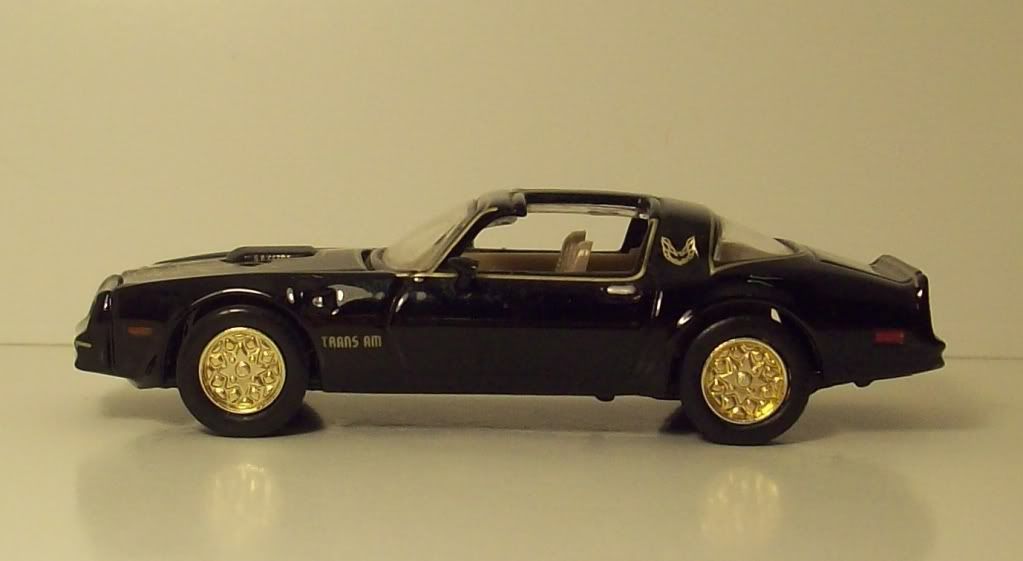
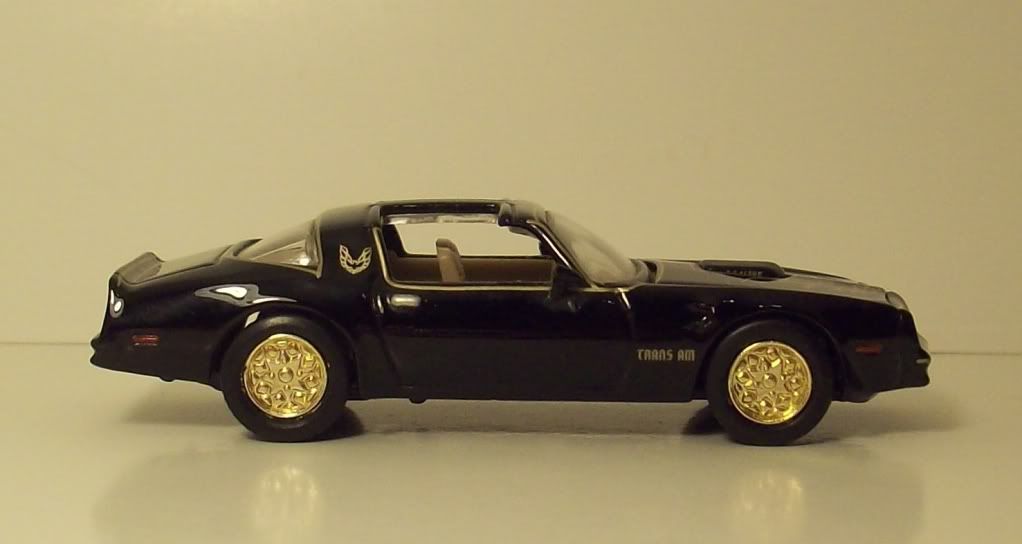
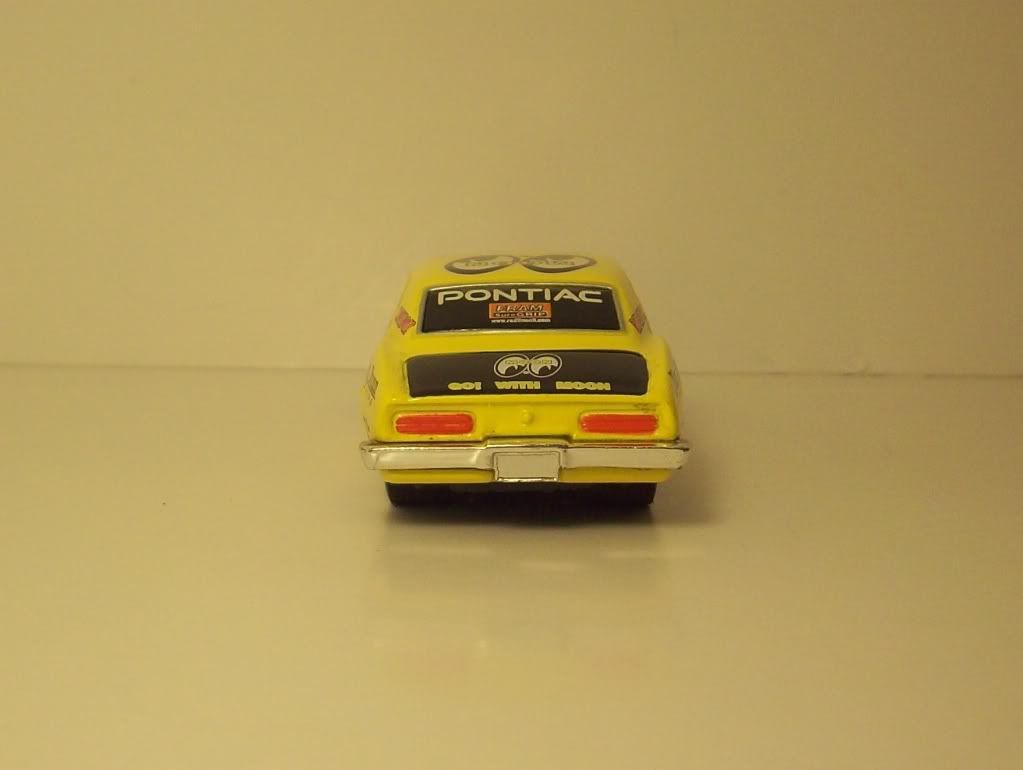
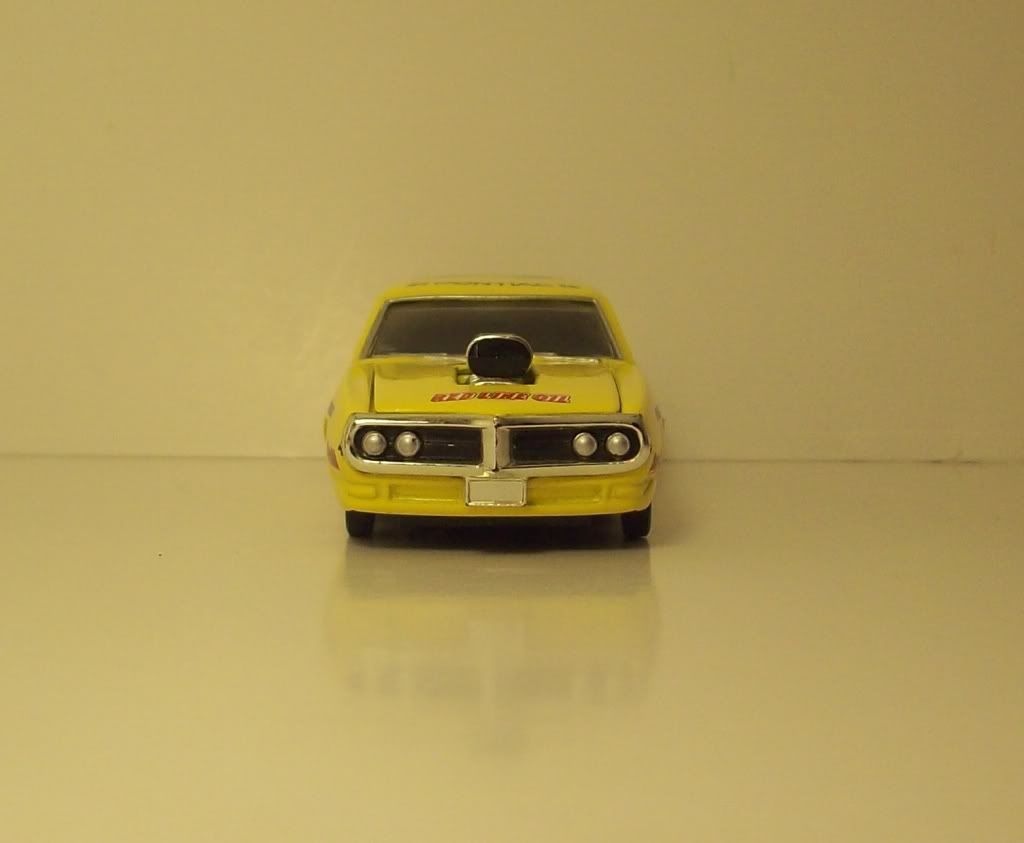
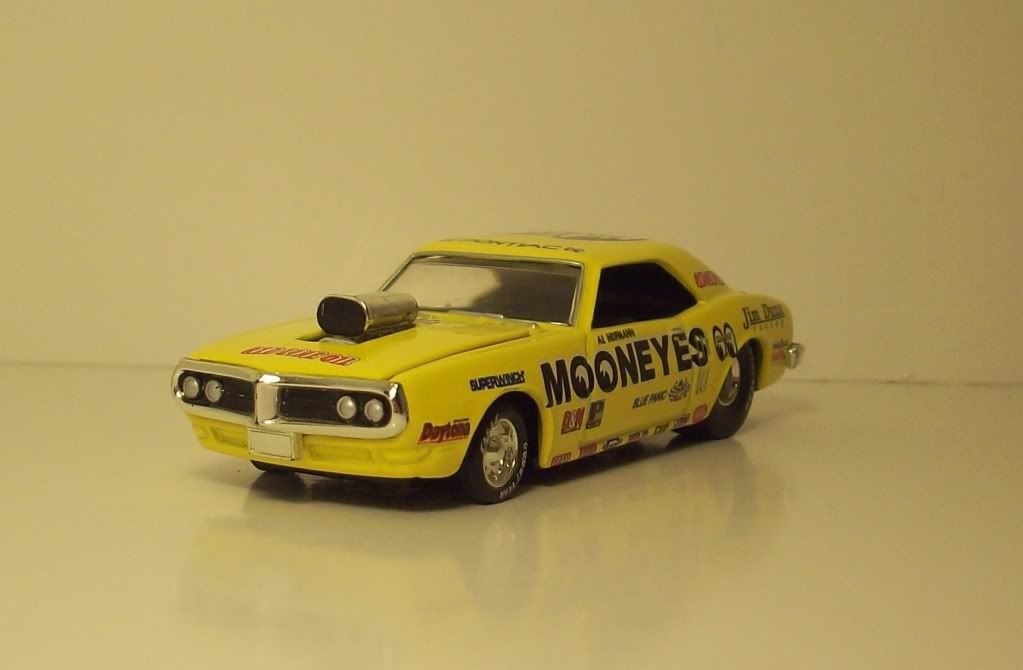
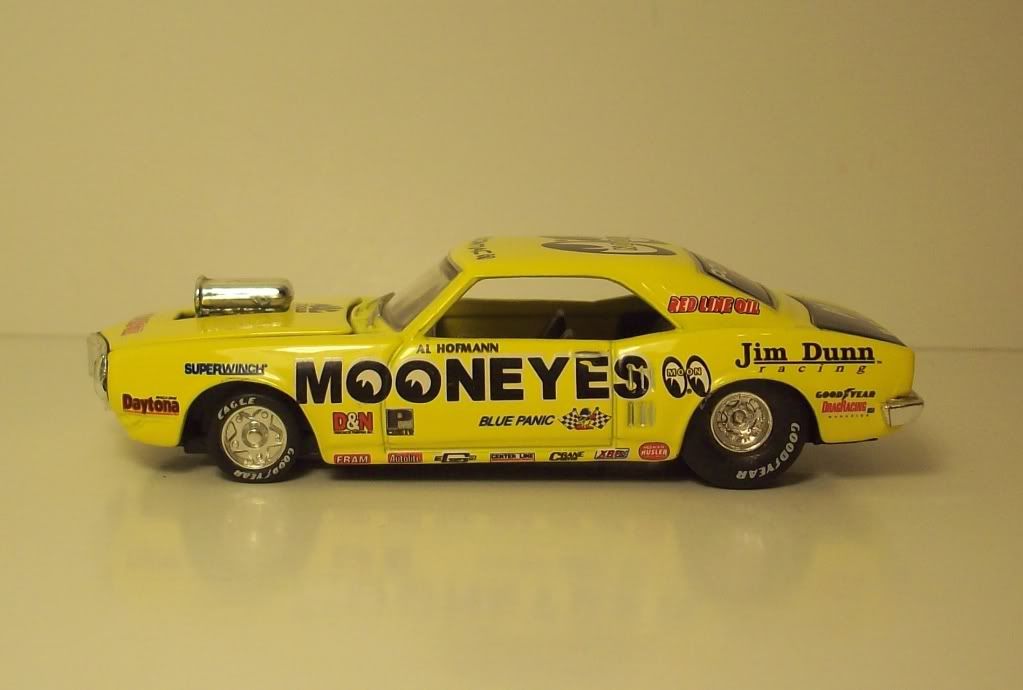
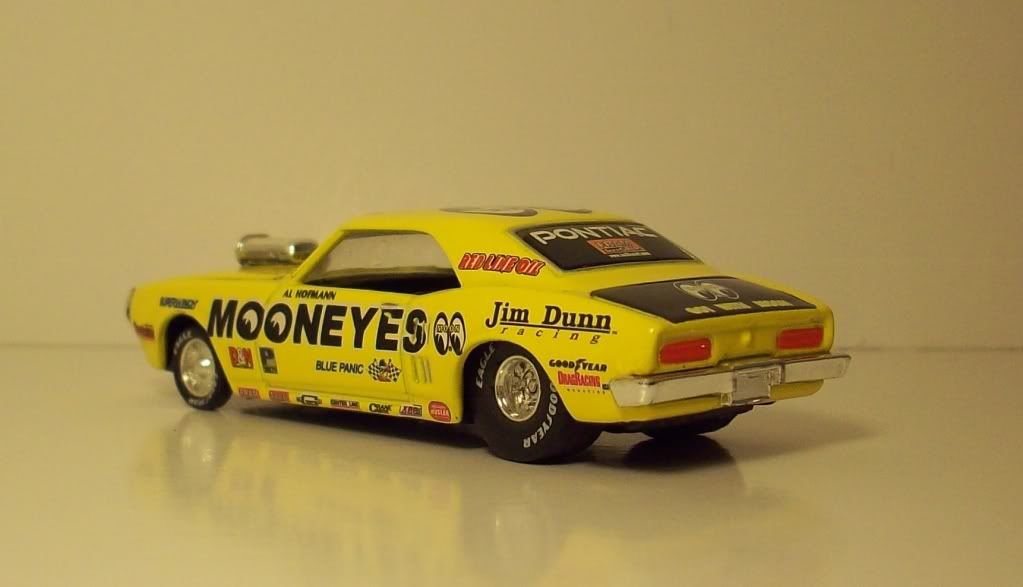
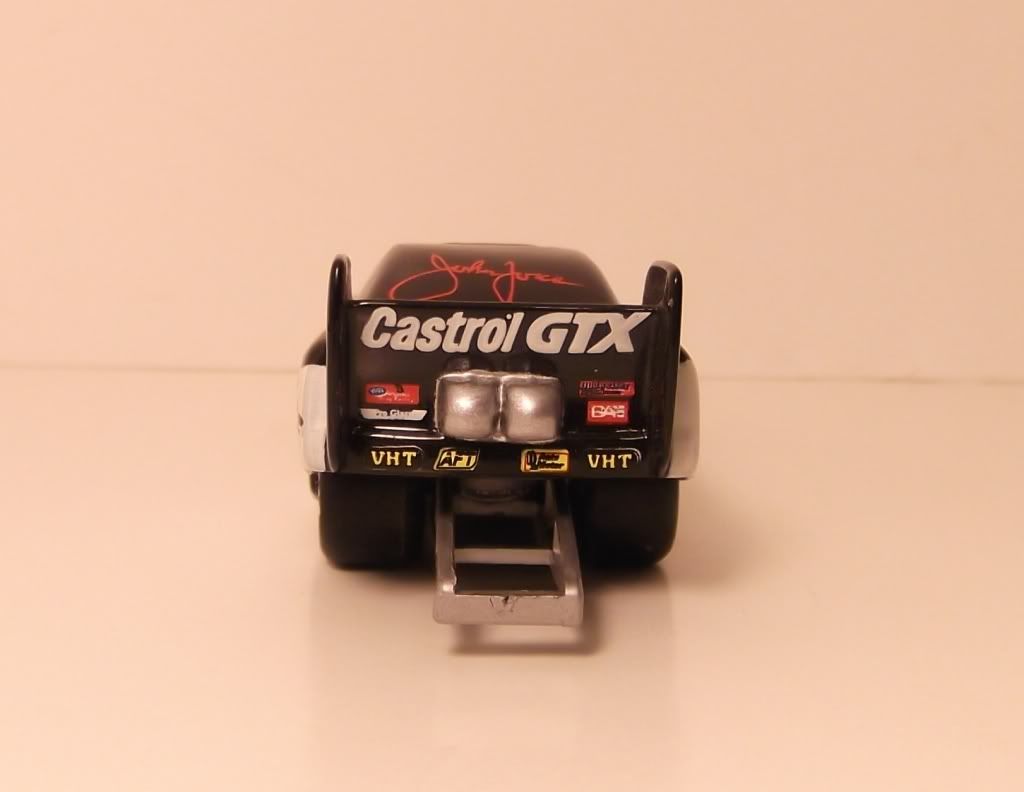
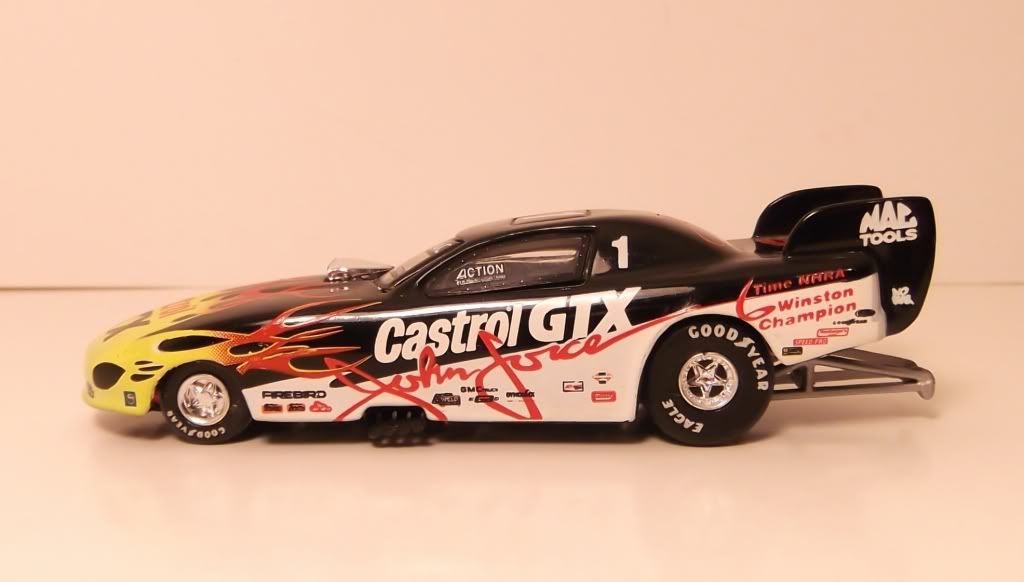
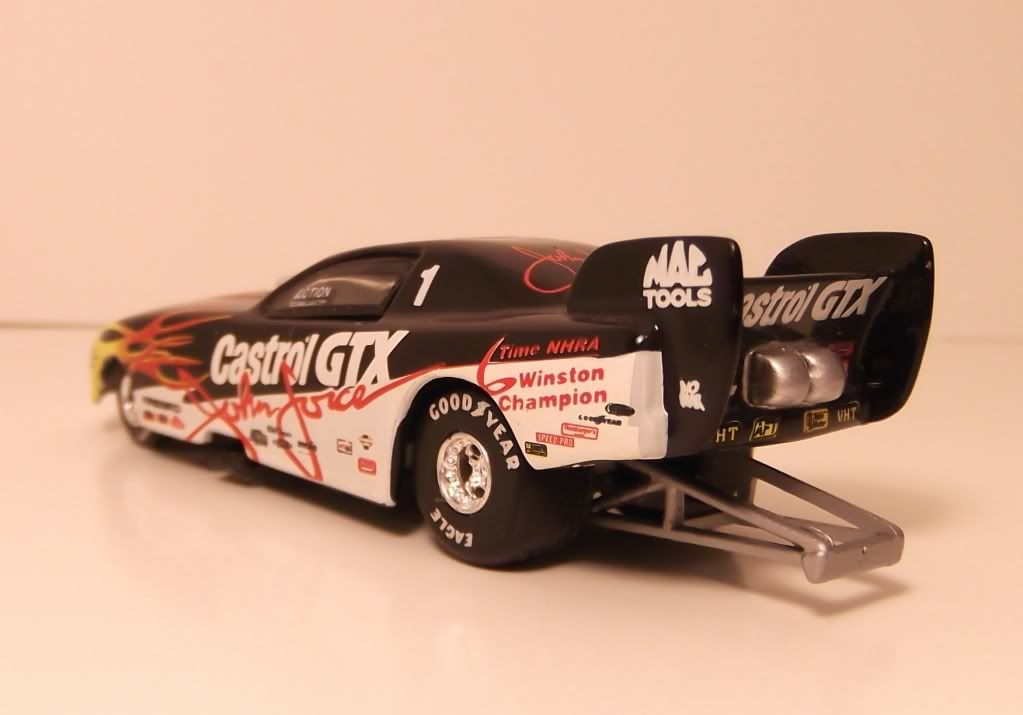
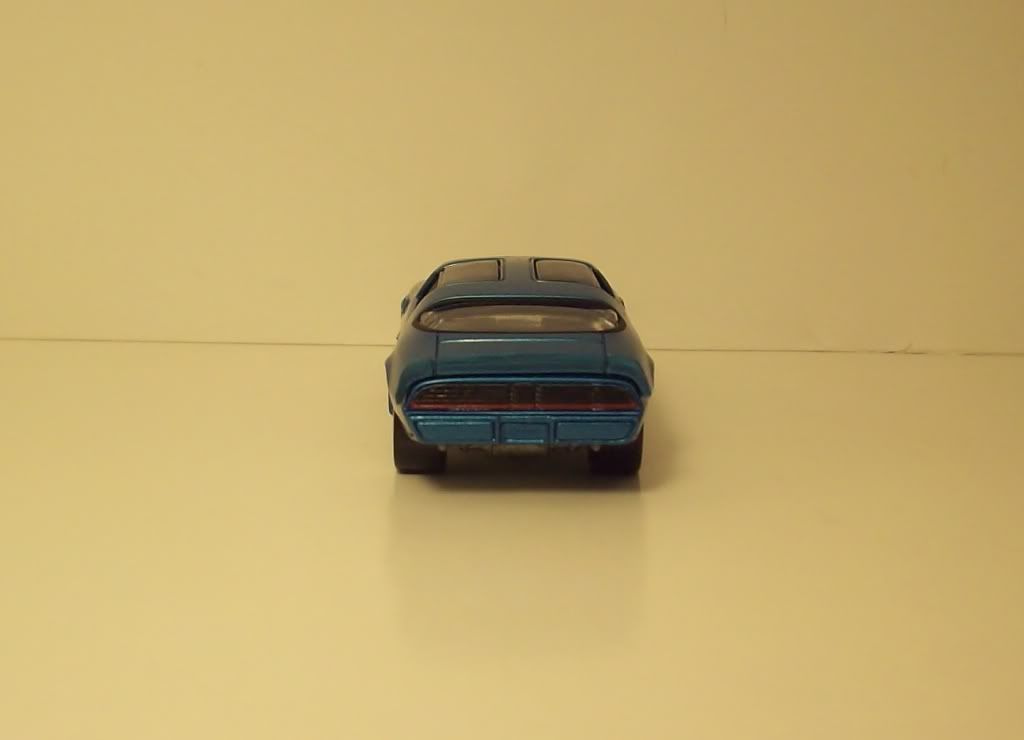
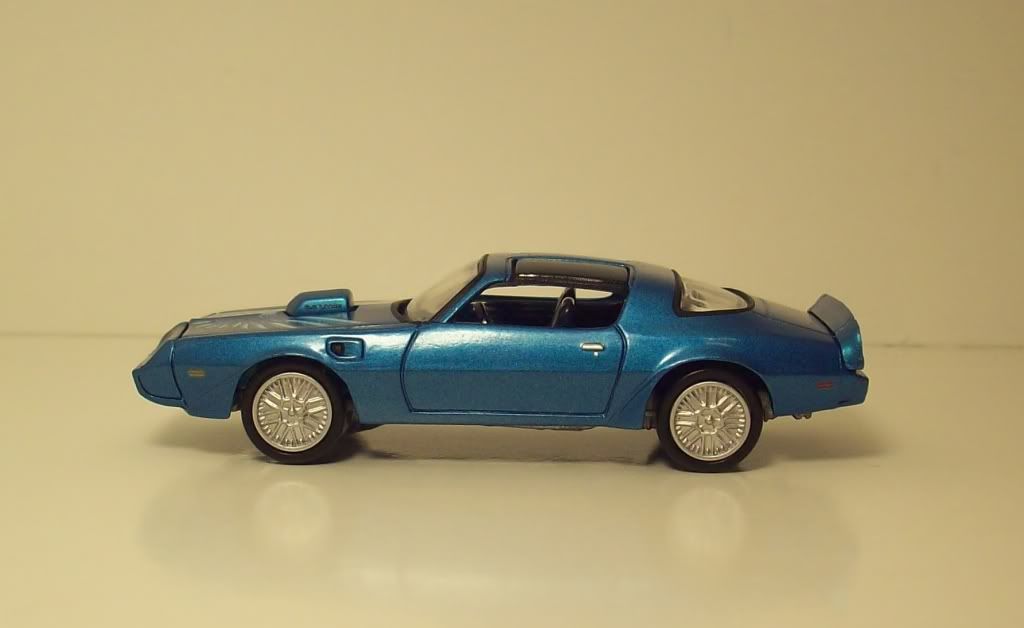
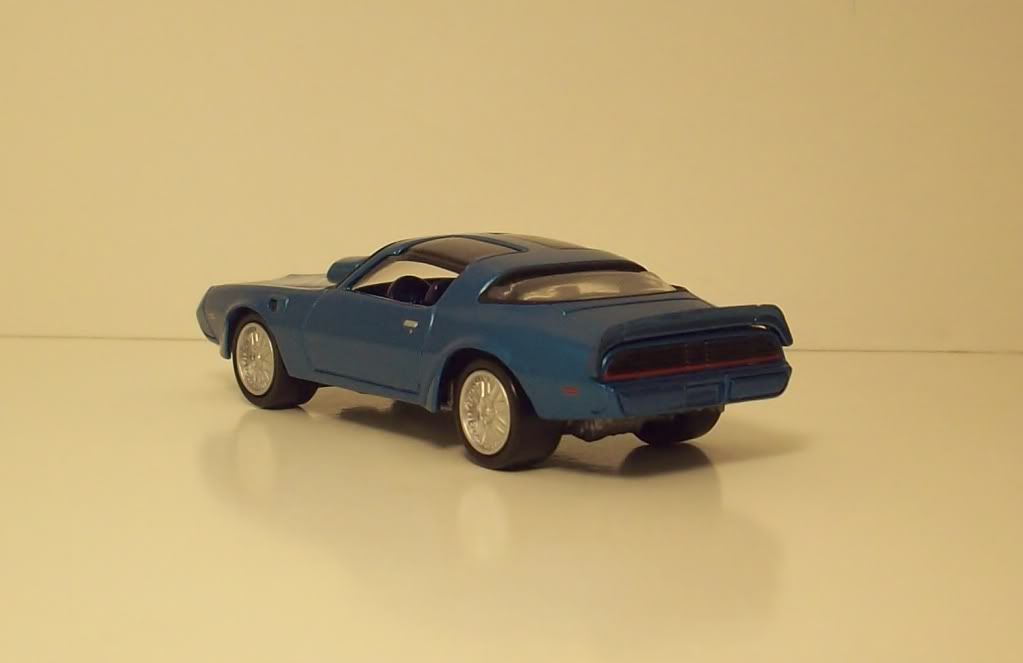
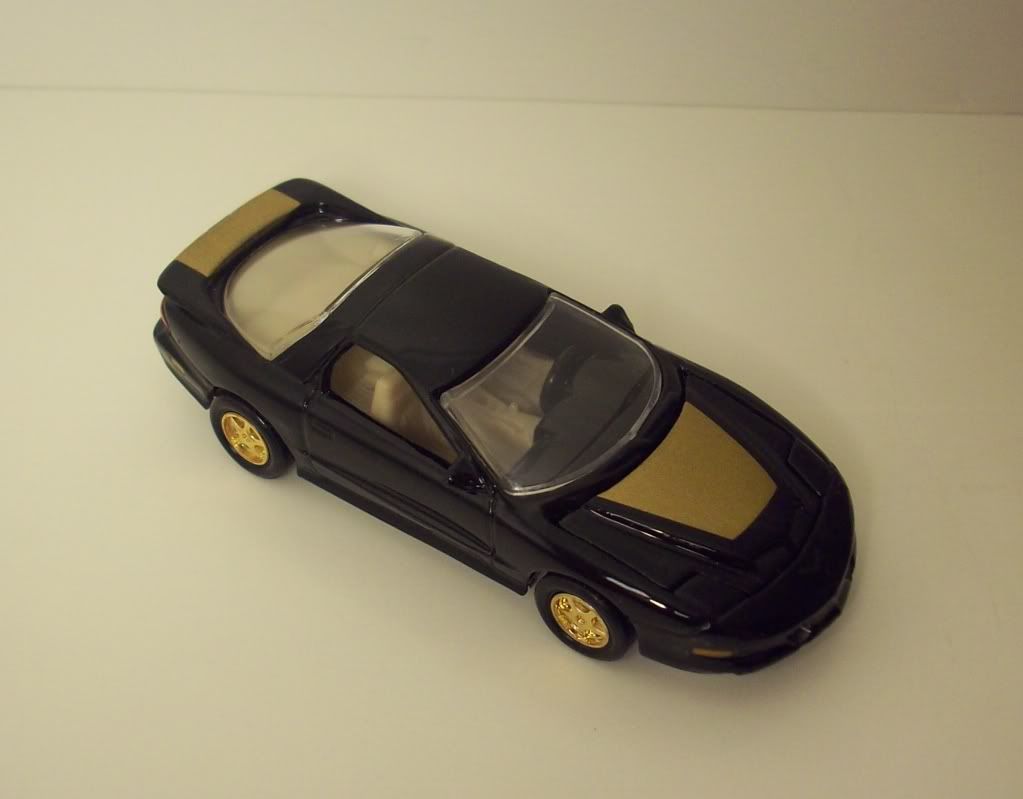
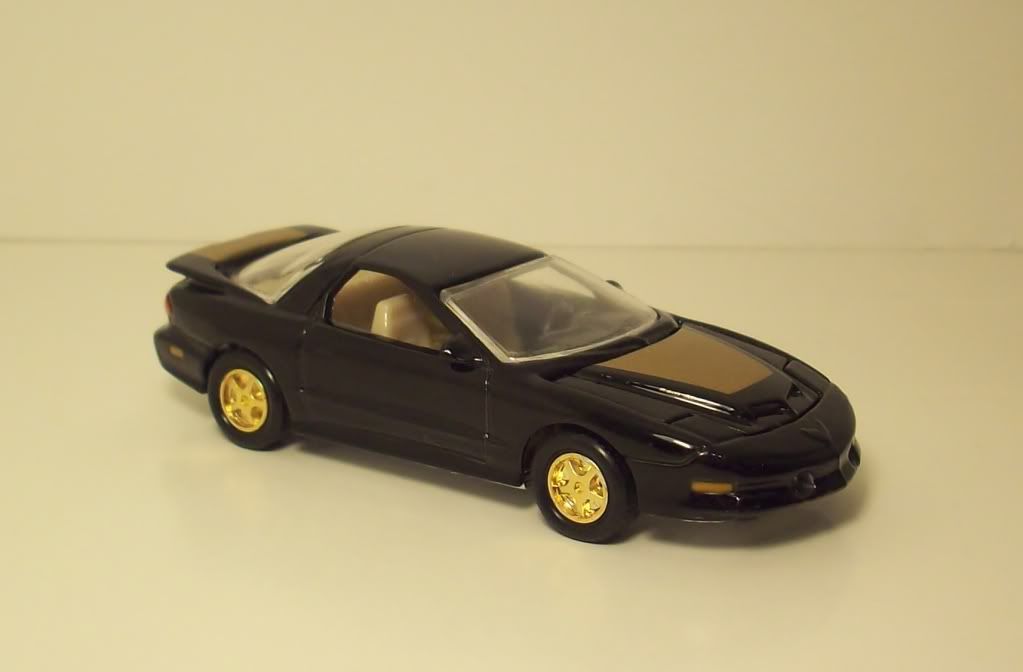
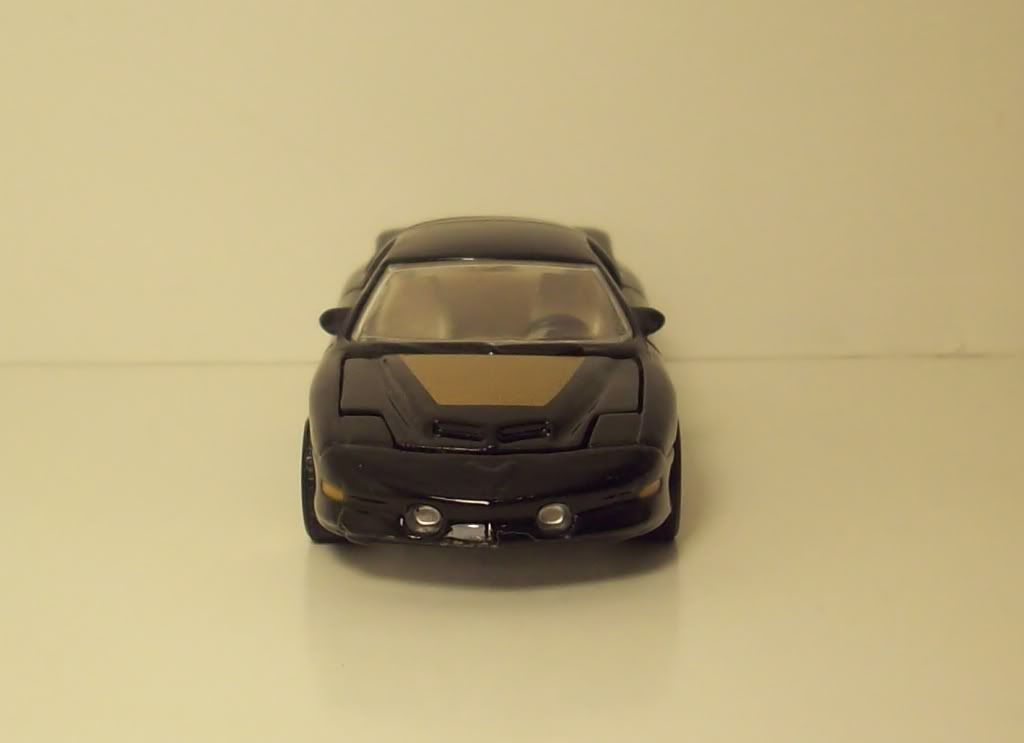
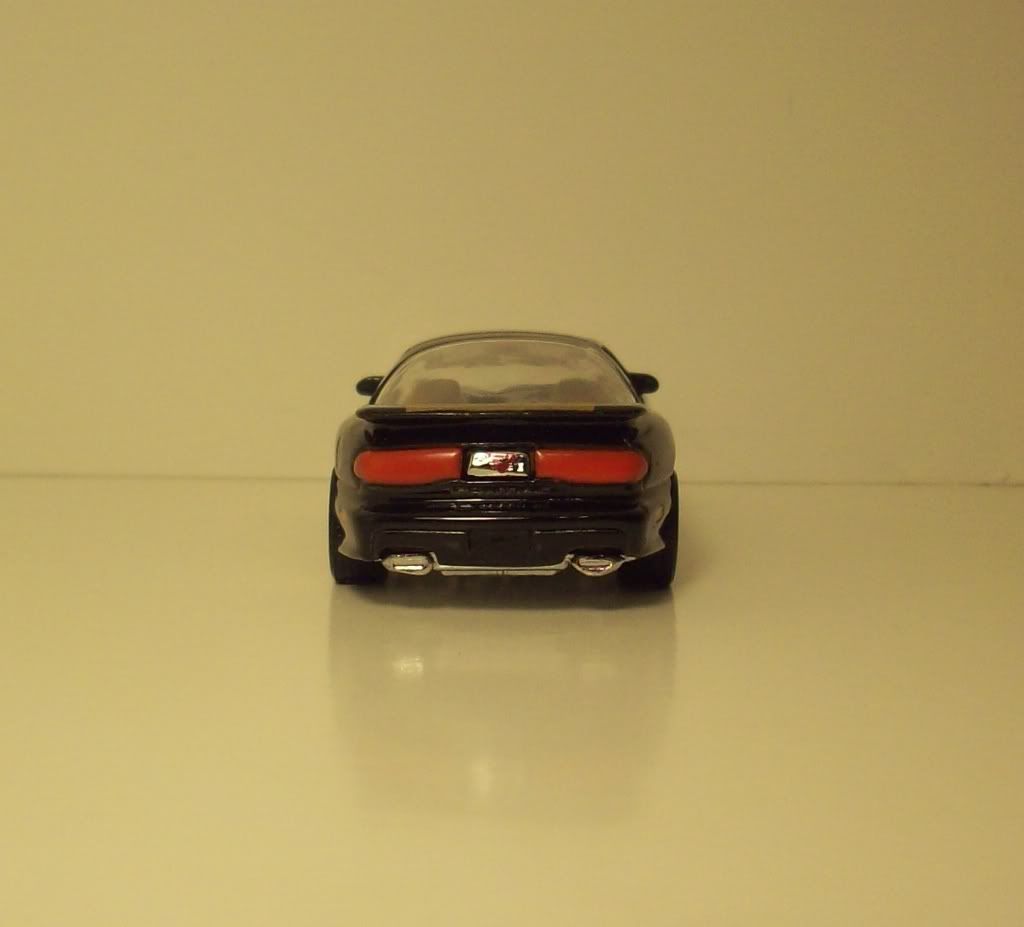
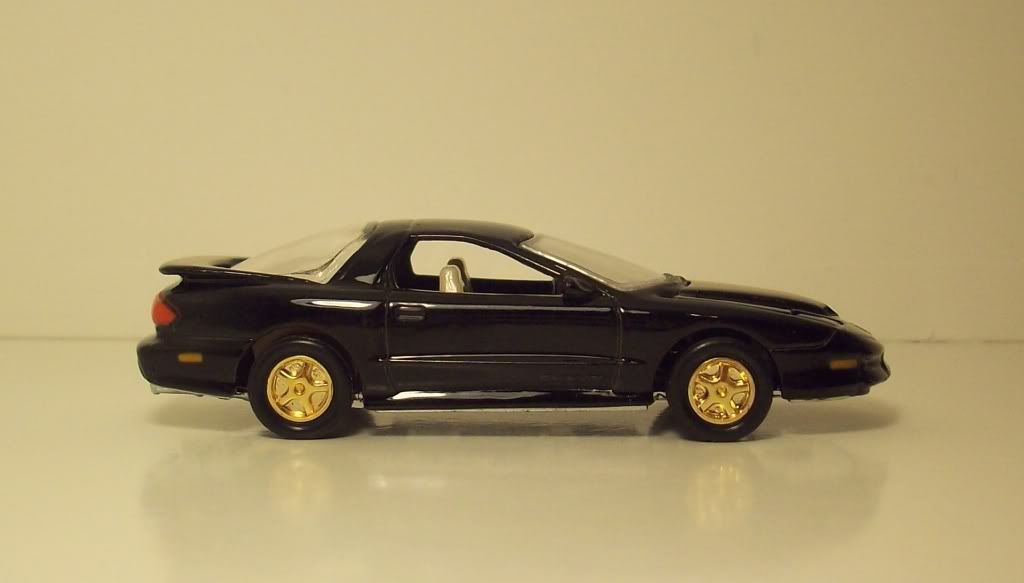
Today's car of the day comes from craftymore's collection and is Zylmex's 1982 Pontiac Firebird Trans-Am Funny Car.


The Pontiac Firebird was built by the Pontiac division of General Motors between 1967 and 2002. The Firebird was introduced the same year as the automaker's platform-sharing model, the Chevrolet Camaro. This coincided with the release of the 1967 Mercury Cougar, which shared its platform with another pony car, the Ford Mustang.
The vehicles were powered by various four-cylinder, six-cylinder, and V8 engines sourced from several GM divisions. While primarily Pontiac-powered until 1977, Firebirds were built with several different engines from nearly every GM division until 1982 when GM began to discontinue engines it felt were unneeded and either spread successful designs from individual divisions among all divisions or use new engines of corporate architecture.


The Firebird and Camaro were completely redesigned for the 1982 model year, with the windshield slope set at 62 degrees, (about 3 degrees steeper than anything GM had ever tried before), and for the first time, a large, glass-dominated hatchback that required no metal structure to support it. Two concealed pop-up headlights, a first on the F-Body cars, were the primary characteristic that distinguished the 3rd Gen Firebird from its both its Camaro sibling and its prior form; (a styling characteristic carried into the 4th Gen's design). In addition to being about 500 lbs (227 kg) lighter than the previous 2nd Gen design, the 3rd Generation Firebird was the most aerodynamic product GM had ever released. Wind tunnels were used to form the new F-Body platform's shape, and Pontiac took full advantage of it. The aerodynamic developments extended to the finned aluminum wheels with smooth hubcaps and a functional rear spoiler.[/quote]


Received this cool Zee from Noirguru.  It was mint on card and liberated for cotd. TY Jermaine.

Friday, April 27, 2012

Car Of The Day: April 27, 2012


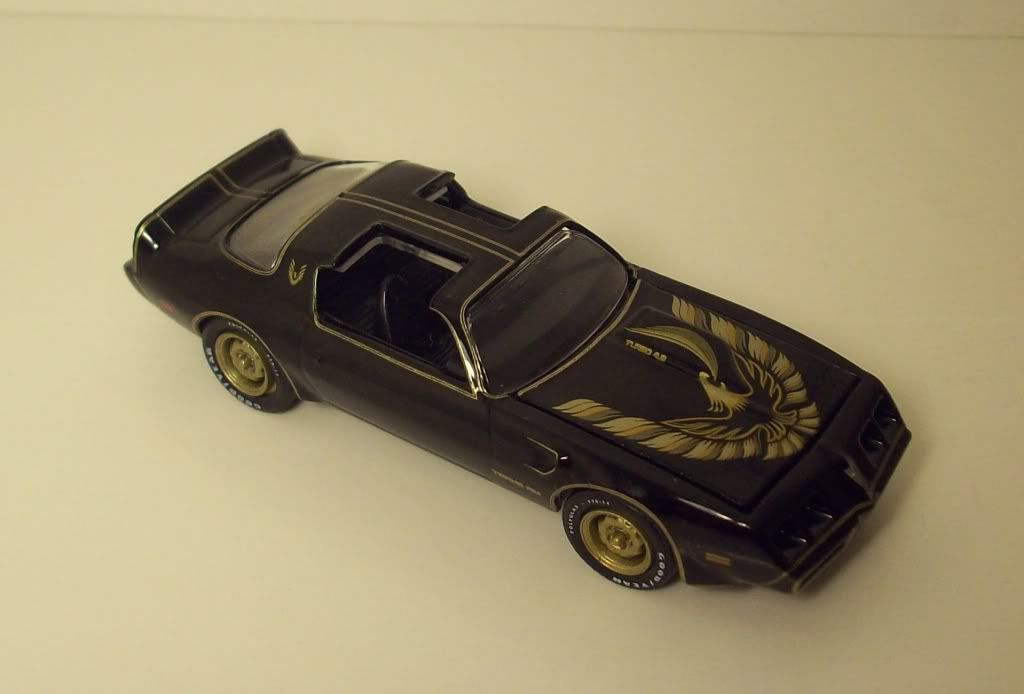
Today's car of the day comes from Firehawk73's collection and is Racing Champions' 1977 Pontiac Firebird Trans Am.


The Pontiac Firebird was built by the Pontiac division of General Motors between 1967 and 2002. The Firebird was introduced the same year as the automaker's platform-sharing model, the Chevrolet Camaro. This coincided with the release of the 1967 Mercury Cougar, which shared its platform with another pony car, the Ford Mustang.

The vehicles were powered by various four-cylinder, six-cylinder, and V8 engines sourced from several GM divisions. While primarily Pontiac-powered until 1977, Firebirds were built with several different engines from nearly every GM division until 1982 when GM began to discontinue engines it felt were unneeded and either spread successful designs from individual divisions among all divisions or use new engines of corporate architecture.


For more information and pictures of the real car please visit: Pontiac Firebird


In 1976, Pontiac celebrated their 50th Anniversary, and a special edition of the Trans Am was released. Painted in black with gold accents, this was the first anniversary Trans Am package and the first production Black and Gold special edition. In 1977, Pontiac offered the T/A 6.6 Litre 400 (RPO W72) rated at 200 hp (150 kW), as opposed to the regular 6.6 Litre 400 (RPO L78) rated at 180 hp (130 kW). In addition, California and high-altitude cars received the Olds 403 engine, which offered a slightly higher compression ratio and a more usable torque band than the Pontiac engines of 1977. The 1977 Trans-Am Special Edition became famous after being featured in Smokey and the Bandit. Later on the 1980 Turbo model was used for Smokey and the Bandit II.

Beginning in 1978, Pontiac engineers reversed years of declining power by raising the compression ratio in the Pontiac 400 through the installation of different cylinder heads with smaller combustion chambers (1977 Pontiac 400 engines also had the 350 heads bolted to the 400 blocks, these heads were known as the 6x-4 heads)(taken from the Pontiac 350). This increased power by 10% for a total of 220 during the 1978–79 model years. The 400/403 options remained available until 1979, when the 400 CID engines were only available in the 4-speed transmission Trans Ams and Formulas (the engines had actually been stockpiled from 1978, when PMD had cut production of the engine). 1979 marked the 10th Anniversary of the Trans Am, and a special anniversary package was made available: silver paint with a silver leather interior. The 10th Anniversary cars also featured a special Firebird hood decal, which extended off of the hood and onto the front fenders. In 1979 Pontiac sold 116,535 Trans Ams which still holds the record to this day.
Up until the 1979 models, the performance of 400-equipped Firebirds could still be brought up to pre-1970 levels by disabling emissions equipment- removing the catalytic converter and blocking off the exhaust gas recirculation system- and opening up the block off plate to make the hood scoop functional. However, in 1980, due to ever-increasing emissions restrictions, Pontiac dropped all of its large displacement engines.
1980 therefore saw the biggest engine changes for the Trans Am. The 301, offered in 1979 as a credit option, was now the standard engine. Options included a turbocharged 301 or the Chevrolet 305 small block.

In the final year of the Second Generation Firebirds (1981), Trans Am still used the same engines as it had in the previous model year, with the only change being the addition of a new electronic carburetion system.

Tuesday, February 14, 2012

Car Of The Day: February 14, 2012


Today's car of the day comes from Firehawk73's collection and is Maisto's 1969 Pontiac Firebird.


The Pontiac Firebird was built by the Pontiac division of General Motors between 1967 and 2002. The Firebird was introduced the same year as the automaker's platform-sharing model, the Chevrolet Camaro. This coincided with the release of the 1967 Mercury Cougar, which shared its platform with another pony car, the Ford Mustang.

The vehicles were powered by various four-cylinder, six-cylinder, and V8 engines sourced from several GM divisions. While primarily Pontiac-powered until 1977, Firebirds were built with several different engines from nearly every GM division until 1982 when GM began to discontinue engines it felt were unneeded and either spread successful designs from individual divisions among all divisions or use new engines of corporate architecture.

For more information and pictures of the real car please visit: Pontiac Firebird


The first generation Firebirds had a characteristic Coke bottle styling. Unlike its cousin, the Chevrolet Camaro, its bumpers were integrated into the design of the front end and its rear "slit" taillights were inspired by the Pontiac GTO. Both a two-door hardtop and a convertible were offered through the 1969 model year. Originally the car was a "consolation prize" for Pontiac, who had initially wished to produce a two-seat sports car of its own design, based on the original Banshee concept car. However, GM feared such a vehicle would directly compete with Chevrolet's Corvette, and the decision was made to give Pontiac a piece of the pony car market by having them share the F-body platform with Chevrolet.

The base model Firebird came equipped with the OHC inline-6 and a single-barrel carburetor. The next model, the Sprint, had a four-barrel carburetor, developing 215 hp (160 kW). Most buyers opted for one of the V8 engines: the 326 CID (5.3 L) with a two-barrel carburetor producing 250 hp (186 kW); the "H.O." (High Output) engine of the same displacement, but with a four-barrel carburetor and producing 285 hp (213 kW); or the 400 CID (6.6 L) from the GTO with 325 hp (242 kW). A "Ram Air" option was also available in 1968, providing functional hood scoops, higher flow heads with stronger valve springs, and a different camshaft. Power for the Ram Air package was the same as the conventional 400 H.O., but the engine peaked at a higher RPM. The 230 CID (3.8 L) engines were subsequently replaced by 250 CID (4.1 L) ones, the first developing 175 hp (130 kW) using a single-barrel carburetor, and the other 215 hp (160 kW) with a four-barrel carburetor. Also for the 1968 model, the 326 CID (5.3 L) engine was replaced by one with a displacement of 350 CID (5.7 L). An "H.O." version of the 350 CID with a revised cam was also offered starting in that year, developed 320 hp (240 kW). Power output of the other engines was increased marginally. In 1969, a $725 optional handling package called the "Trans Am Performance and Appearance Package,", named after the Trans Am Series, which included a rear spoiler, was introduced. Of these first "Trans Ams," only 689 hardtops and eight convertibles were made. There was an additional Ram Air IV option for the 400 CID engine during that year, complementing the Ram Air III; these generated 345 and 335 hp (250 kW) respectively. The 350 "H.O." engine was revised again with a different cam and cylinder heads resulting in 330 hp (250 kW). During 1969 a special 303 cu in (5.0 L) engine was designed for SCCA road racing applications that was not available in production cars.

The styling difference from the 1967 to the 1968 model was the addition of Federally mandated side marker lights: for the front of the car, the blinkers were made larger and extended to wrap around the front edges of the car, and on the rear, the Pontiac (V-shaped) Arrowhead logo was added to each side. The front door vent-windows were replaced with a single pane of glass. The 1969 model received a major facelift with a new front end design made of an Endura bumper housing the headlights and grilles. The instrument panel and steering wheel were revised. The ignition switch was moved from the dashboard to the steering column with the introduction of GM's new locking ignition switch/steering wheel.

Due to engineering problems that delayed the introduction of the all-new 1970 Firebird beyond the usual fall debut, Pontiac continued production of 1969 model Firebirds into the early months of the 1970 model year (the other 1970 Pontiac models had been introduced on September 18, 1969). By late spring of 1969, Pontiac had deleted all model-year references on Firebird literature and promotional materials, anticipating the extended production run of the then-current 1969 models.

Saturday, November 26, 2011

Car Of The Day: November 26, 2011


Today's car of the day comes from Firehawk73's collection and is Racing Champions' 1968 Pontiac Firebird


The Pontiac Firebird was built by the Pontiac division of General Motors between 1967 and 2002. The Firebird was introduced the same year as the automaker's platform-sharing model, the Chevrolet Camaro. This coincided with the release of the 1968 Mercury Cougar, which shared its platform with another pony car, the Ford Mustang.

The vehicles were powered by various four-cylinder, six-cylinder, and V8 engines sourced from several GM divisions. While primarily Pontiac-powered until 1977, Firebirds were built with several different engines from nearly every GM division until 1982 when GM began to discontinue engines it felt were unneeded and either spread successful designs from individual divisions among all divisions or use new engines of corporate architecture.


For more information and pictures of the real car please visit: Pontiac Firebird


We're celebrating Thanksgiving week with A Flock Of Seagulls Firebirds.  Coming through the night to my T.V. screen, to my color eye. This is telecommunication  Well, I managed to make a full week of A Flock Of Seagulls songs, but I'm really scraping the bottom of the barrel with this one.  Not one of their best.  So the winner of Firebirds vs Seagulls is....Pontiac's Firebird, by a wide margin.


The first generation Firebirds had a characteristic Coke bottle styling. Unlike its cousin, the Chevrolet Camaro, its bumpers were integrated into the design of the front end and its rear "slit" taillights were inspired by the Pontiac GTO. Both a two-door hardtop and a convertible were offered through the 1969 model year. Originally the car was a "consolation prize" for Pontiac, who had initially wished to produce a two-seat sports car of its own design, based on the original Banshee concept car. However, GM feared such a vehicle would directly compete with Chevrolet's Corvette, and the decision was made to give Pontiac a piece of the pony car market by having them share the F-body platform with Chevrolet.
The base model Firebird came equipped with the OHC inline-6 and a single-barrel carburetor. The next model, the Sprint, had a four-barrel carburetor, developing 215 hp (160 kW). Most buyers opted for one of the V8 engines: the 326 CID (5.3 L) with a two-barrel carburetor producing 250 hp (186 kW); the "H.O." (High Output) engine of the same displacement, but with a four-barrel carburetor and producing 285 hp (213 kW); or the 400 CID (6.6 L) from the GTO with 325 hp (242 kW). A "Ram Air" option was also available in 1968, providing functional hood scoops, higher flow heads with stronger valve springs, and a different camshaft. Power for the Ram Air package was the same as the conventional 400 H.O., but the engine peaked at a higher RPM. The 230 CID (3.8 L) engines were subsequently replaced by 250 CID (4.1 L) ones, the first developing 175 hp (130 kW) using a single-barrel carburetor, and the other 215 hp (160 kW) with a four-barrel carburetor. Also for the 1968 model, the 326 CID (5.3 L) engine was replaced by one with a displacement of 350 CID (5.7 L). An "H.O." version of the 350 CID with a revised cam was also offered starting in that year, developed 320 hp (240 kW). Power output of the other engines was increased marginally. In 1969, a $725 optional handling package called the "Trans Am Performance and Appearance Package,", named after the Trans Am Series, which included a rear spoiler, was introduced. Of these first "Trans Ams," only 689 hardtops and eight convertibles were made. There was an additional Ram Air IV option for the 400 CID engine during that year, complementing the Ram Air III; these generated 345 and 335 hp (250 kW) respectively. The 350 "H.O." engine was revised again with a different cam and cylinder heads resulting in 330 hp (250 kW). During 1969 a special 303 cu in (5.0 L) engine was designed for SCCA road racing applications that was not available in production cars.

The styling difference from the 1967 to the 1968 model was the addition of Federally mandated side marker lights: for the front of the car, the blinkers were made larger and extended to wrap around the front edges of the car, and on the rear, the Pontiac (V-shaped) Arrowhead logo was added to each side. The front door vent-windows were replaced with a single pane of glass. The 1969 model received a major facelift with a new front end design made of an Endura bumper housing the headlights and grilles. The instrument panel and steering wheel were revised. The ignition switch was moved from the dashboard to the steering column with the introduction of GM's new locking ignition switch/steering wheel.

Due to engineering problems that delayed the introduction of the all-new 1970 Firebird beyond the usual fall debut, Pontiac continued production of 1969 model Firebirds into the early months of the 1970 model year (the other 1970 Pontiac models had been introduced on September 18, 1969). By late spring of 1969, Pontiac had deleted all model-year references on Firebird literature and promotional materials, anticipating the extended production run of the then-current 1969 models.

Friday, November 25, 2011

Funny Car Of The Day: November 25, 2011


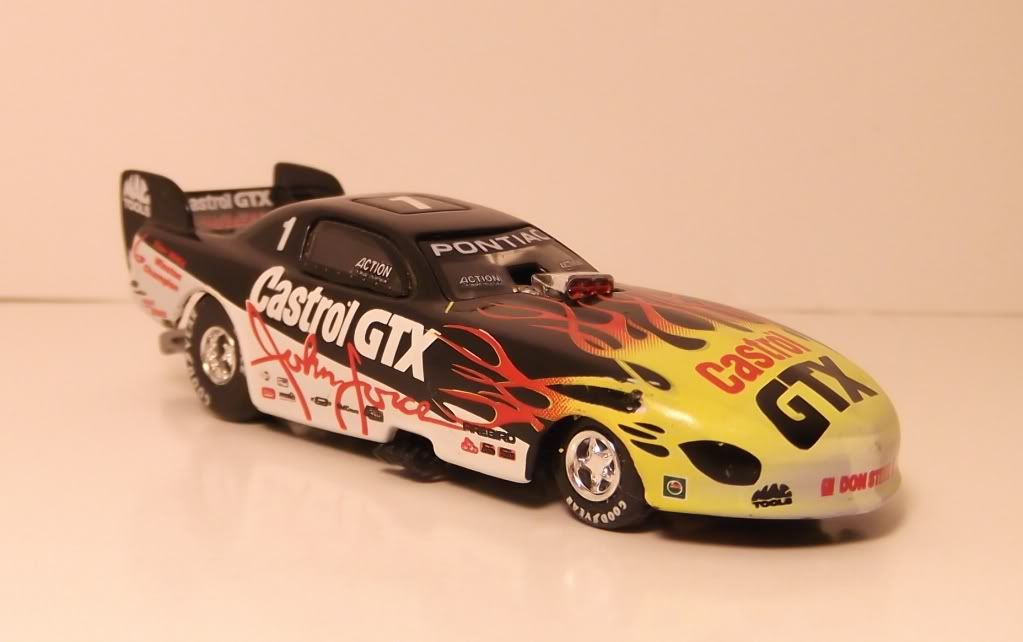
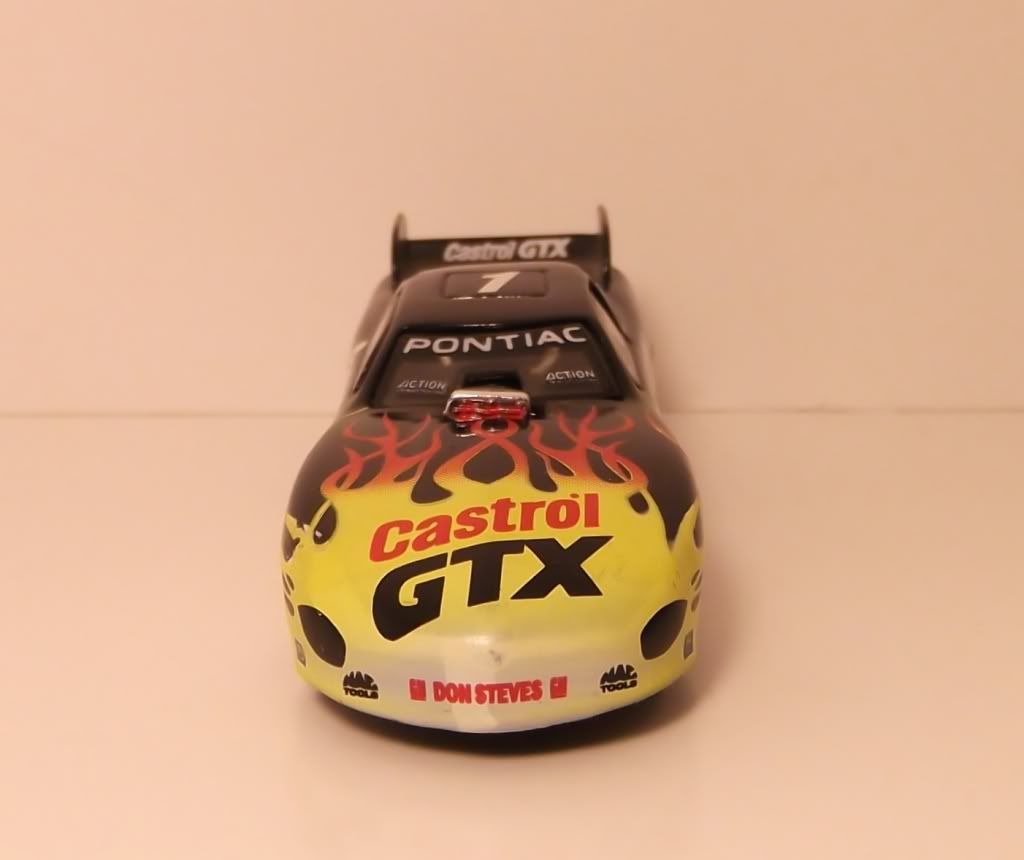
Today's car of the day comes from Firehawk73's collection and is Action's 19960 Pontiac Firebird funny car.


The fourth-generation F-body continued the aerodynamic formula initiated by the previous generation, but saw declining sales. As before, the Camaro kept the exposed headlights and the Firebird its pop-up units, with some minor changes. The overall styling of the Firebird more strongly reflected the "Banshee IV" concept car than the 1991 "face lift" received by the Third Generation model.


For more information and pictures of the real car please visit: Pontiac Firebird


We're celebrating Thanksgiving week with A Flock Of Seagulls Firebirds.  I can see you standing outside, see your shadow on the wall by a street lamp.  I've got a manual instructing my brain.  I turn around, cover eyes, I see you.  While the odds are still good that I run out of A Flock Of Seagulls songs to reference before Paul runs out of Firebirds... Yeah, anyone still buying that?  With one day left I don't think that's a concern now.


Firebirds were used in the Trans-Am series in the 1960s and 1970s. When the Pontiac Trans Am came out, there was controversy over the model's inability to compete in the Trans-Am because the smallest available engine was too large for use in the series at 400 cubic inches (6.6 liters). The name also caused controversy because it was used without permission from the SCCA, who threatened suit. GM settled the dispute by paying US$5 to the SCCA for every car sold. When the Trans-Am was last seen, model year 2002 Firebirds were in use. Firebirds were used in the IROC Series until it folded after the 2006 season.

During the 1995, 1996, and 1997 NHRA seasons, 14-time Funny Car champion John Force used a Firebird body to replace the obsolete Oldsmobile Cutlass and Chevrolet Lumina body he had used since 1988. He used it for three seasons, winning the championship in all three years. The Firebird body also replaced the Oldsmobile Cutlass in the Pro Stock class in 1995, forcing drivers Warren Johnson, Jerry Eckman, and Mark Pawuk to replace their body styles for the 1996 year, none of them would win with the first year of the Firebird body, but Pro Stock driver Jim Yates, a second year driver, using the Firebird body, would.

Thursday, November 24, 2011

Car Of The Day: November 24, 2011


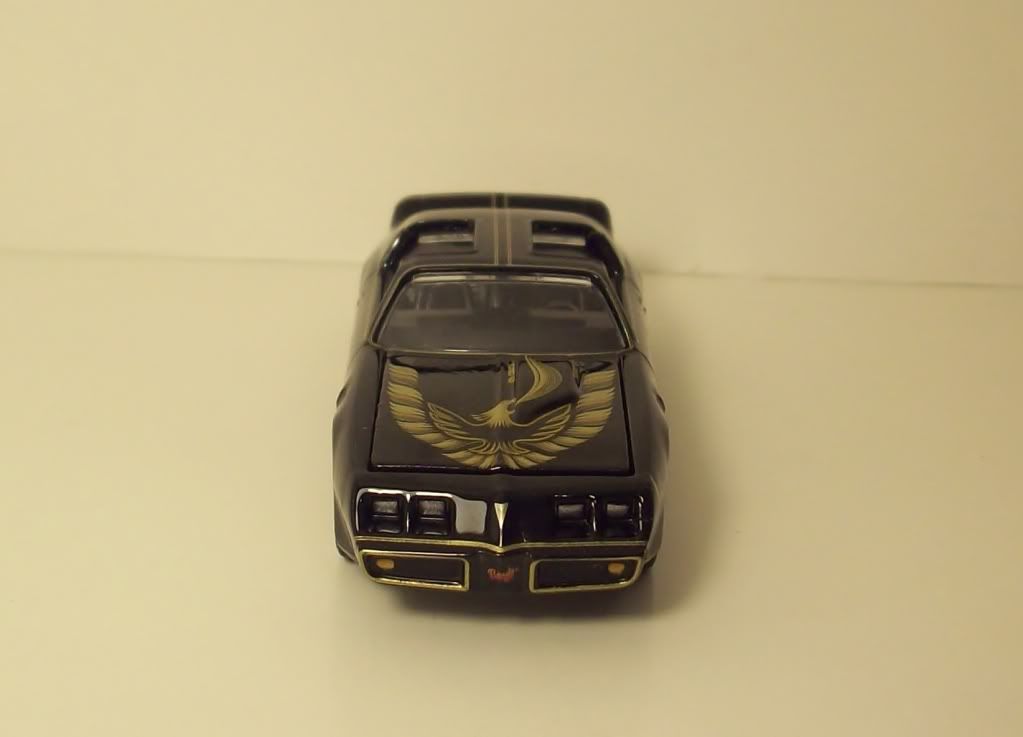
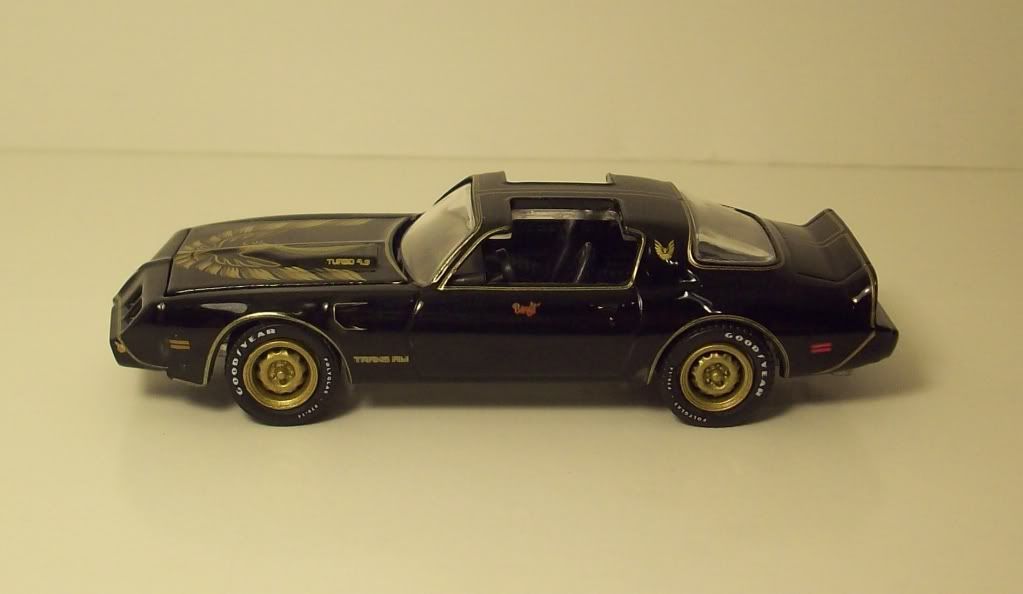
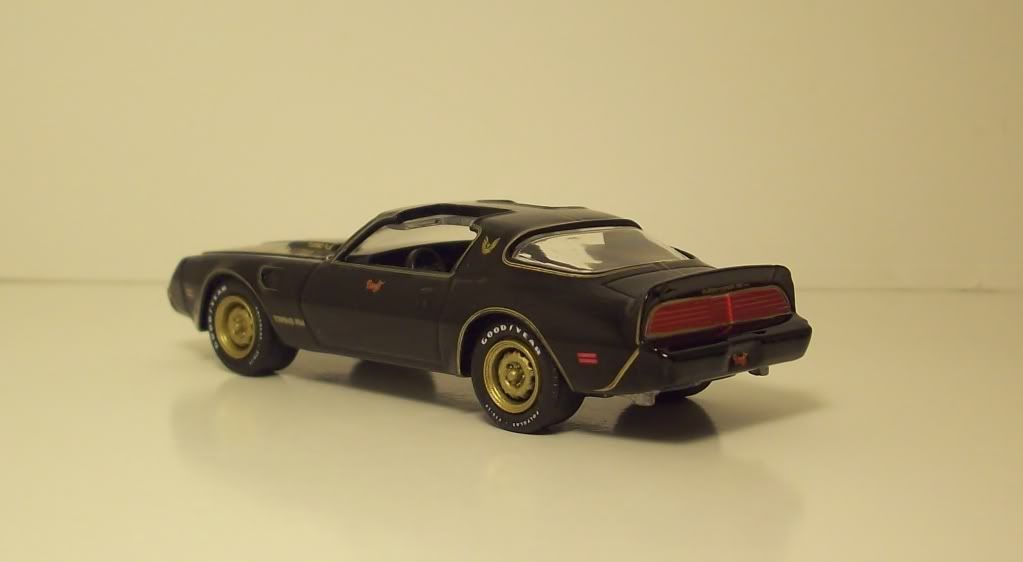
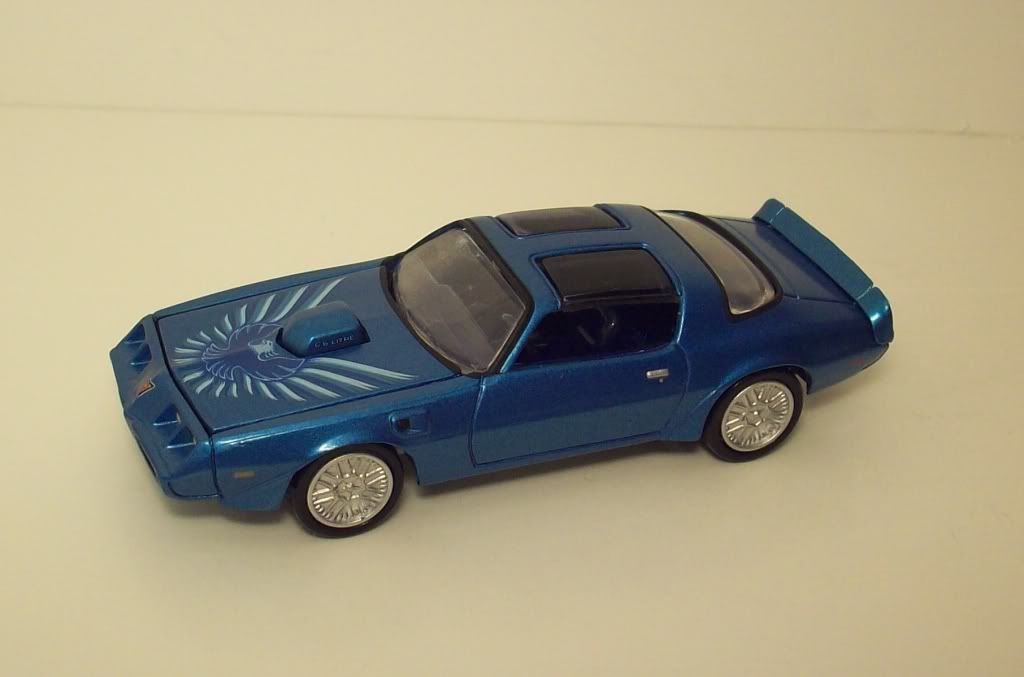
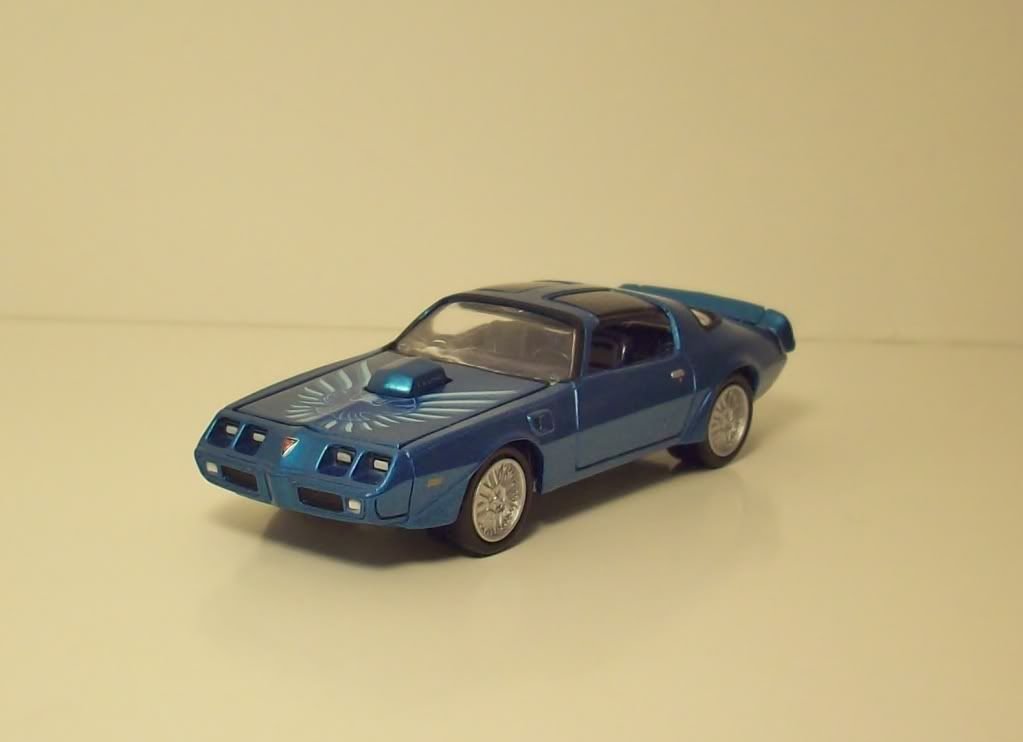
Today's car of the day comes from Firehawk73's collection and is GreenLight's 1980 Pontiac Firebird Trans Am.


Smokey and the Bandit II is a comedy film released on August 15, 1980 in the United States. It is the sequel to the 1977 film Smokey and the Bandit. The film stars Burt Reynolds, Sally Field, Jerry Reed, Jackie Gleason, and Dom DeLuise. Like the first film, it was directed by Hal Needham.
The film was originally released in the United Kingdom, New Zealand, Australia and several other, mainly Commonwealth countries as, Smokey and the Bandit Ride Again. Early video releases and TV broadcasts also used this title, but in more recent years have reverted back to the original U.S. title. It was followed by a sequel three years later, Smokey and the Bandit Part 3, in which Reynolds appeared only in a brief cameo appearance, and Sally Field was absent completely.

The plot centers on Bo "Bandit" Darville (Burt Reynolds), and Cledus "Snowman" Snow (Jerry Reed), transporting an elephant to the GOP National Convention with Sheriff Buford T. Justice, played by Jackie Gleason, in hot pursuit once again.


For more information and pictures of the real car please visit: Smokey and the Bandit II


We're celebrating Thanksgiving week with A Flock Of Seagulls Firebirds.  I'm trying to break all connections, burning a hole in my heart.  Trying to transfer affection is starting to tear me apart.  While the odds are still good that I run out of A Flock Of Seagulls songs to reference before Paul runs out of Firebirds... we're now five for five with only two days left.  I think I can scrape up two more.  Happy Thanksgiving, everyone!


Big Enos Burdett (Pat McCormick) is attempting to be elected as Governor of Texas against other candidate, John Coen. After a figurative and literal "mudslinging" between the two, they are both confronted by the outgoing governor, and given a thorough tongue lashing. As Burdett is leaving the office he overhears the governor yelling at an assistant to take responsibility of transporting a crate of unknown content from Miami to the Republican Party convention in Dallas. Burdett then schemes to pick up the crate and deliver it to the convention. He enlists the help of Bandit and Cledus to carry out the task.

Cledus then attempts to convince the Bandit to "do it one last time." Unfortunately, in the time since their previous challenge, the Bandit has split from his love-interest "Frog" (Sally Field) and become an alcoholic. The Bandit is said to be "the only man in the world to drink up a Trans Am,". Cledus seeks the help of Frog to encourage the Bandit to sober up and regain his fitness, since Big Enos has raised the stakes of the game to $400,000, equal to $1,066,126 today. Frog abandons her second attempt at wedding Buford T. Justice's son Junior to help. She is initially persuaded more by the money than her love for Bandit. She buys him a 1980 Turbo Trans Am "Son of Trigger", powered by the Turbo 301, by trading in Junior's car.

The middle sections of the film feature a race across the United States as the trio once again tries to outrun and outwit Justice and Junior. The team discovers that their cargo is in quarantine for three weeks, and they need to get it to Dallas in three days. When they break into the quarantine area to steal the crate, the mysterious cargo turns out to be an elephant (the mascot of the Republican Party) who they named Charlotte after Snowman remarked that she reminded him of his Aunt Charlotte and even smelled like her, too. When Cledus opens the crate containing the elephant, Charlotte races out, nearly trampling Frog. The Bandit saves the day by doing a backflip onto the elephant's back and riding the elephant out of the quarantine shed. Noticing a splinter was stuck in her foot, the Bandit removes it, and the elephant takes a shine to Bandit. On their way to Dallas, Cledus fears Charlotte is in poor health. They find an Italian gynaecologist (Dom DeLuise) in the back of an ambulance stopped at the same gas station as they are. When the gynecologist discovers it is an elephant he has to look at, he freaks out and nearly runs away. As the doctor attempts to refuse helping them, he sees his driver speed away in the ambulance, leaving him stranded. After the Bandit and Cledus bribe him with large amounts of money, he gives in and agrees to ride in the truck with the elephant and examine her. Charlotte is later discovered to be pregnant.

As they try to make Burdett's deadline, the doctor pleads with the Bandit for some time off the road so Charlotte can rest off of her feet. He reluctantly gives in twice, the first time wrapped up by Charlotte, the second time agrees on his own, Frog citing Bandit's desire to regain his lost fame of the past. She grows closer to him as she did in the past film. While at a restaurant, she sees him scribbling on a napkin a picture of Charlotte cradled by suspended netting in order to keep her off of her feet. She becomes furious and leaves. The Bandit follows and she says he does not care about the elephant and when he likes himself again would she then consider seeing him again.

He later makes his drawing a reality, in a near drunken stupor. The doctor agrees the idea will work and agrees to press on. Unable to stop the Bandit and Cledus, Justice enlists the help of his two brothers, Reginald Van Justice from Canada, and Gaylord Justice, from another part of Texas (both played by Gleason). Justice lures the Bandit into a valley, with a line of Mounties (in red police cars) on one hill side, Texas Rangers, in white cars, on the other. Bandit orders Cledus to continue delivering Charlotte to Dallas. Cledus later returns, with a convoy of trucks to help destroy all of the police cars. Charlotte and the doctor watch the action from afar. After the mass destruction of police cars, only Buford, Gaylord, and Reginald come out relatively unscathed. Bandit and Cledus escape the valley by driving across a bridge of tractor trailers. As the Justice's follow, a trailer pulls out resulting in their cars falling down and being destroyed. However, Buford's car is still operable, though folded up in the middle and missing its doors and roof. Justice and Junior are cut off by a farm tractor, and they drive off the road, hitting an embankment by a pond, throwing Junior into the pond. When asked what he was thinking about, Buford simply says, "Retiring."
Eventually, Bandit informs Frog he likes himself again, and that he did not want to spend the rest of his life without her. When she asks about Burdett's bet, he informs her he blew it, and said they could still get there nonetheless (though late). He shows her Charlotte and her baby in circus-like chariots. Frog is overjoyed. Bandit asks Charlotte if it is fine to marry Frog, to which Charlotte responds loudly. They drive away with Charlotte and her baby in tow, with Buford pursuing them in a bus.

Wednesday, November 23, 2011

Car Of The Day: November 23, 2011


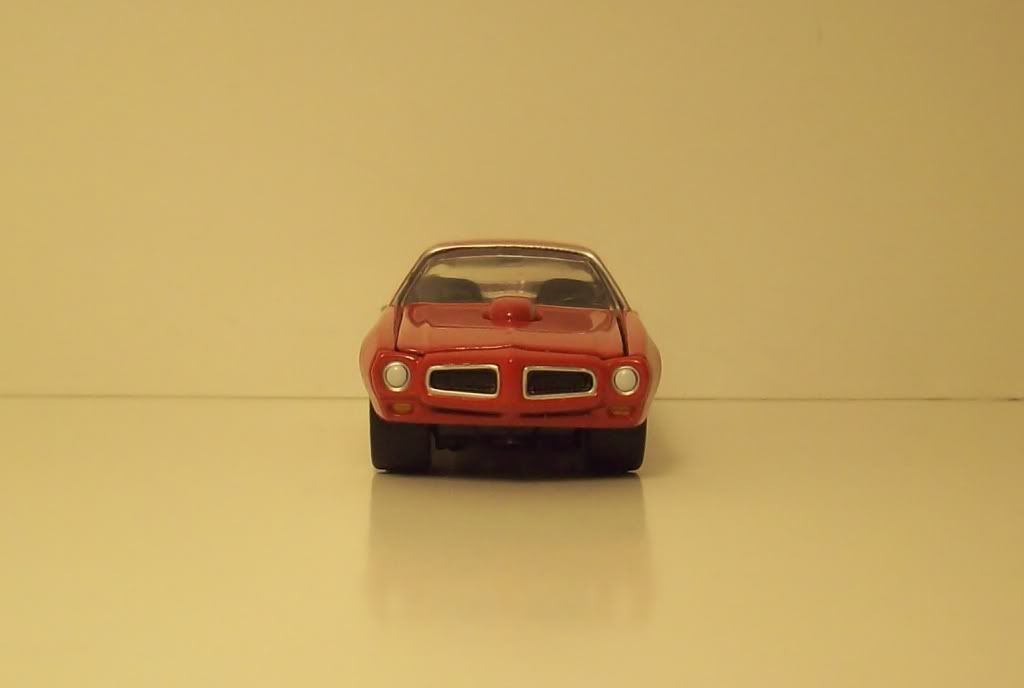
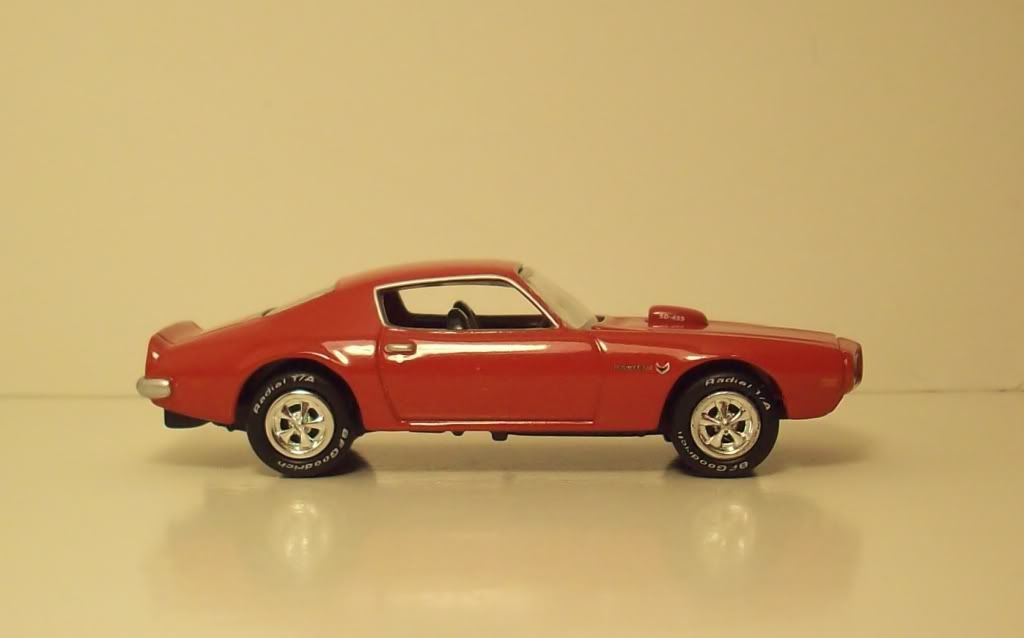
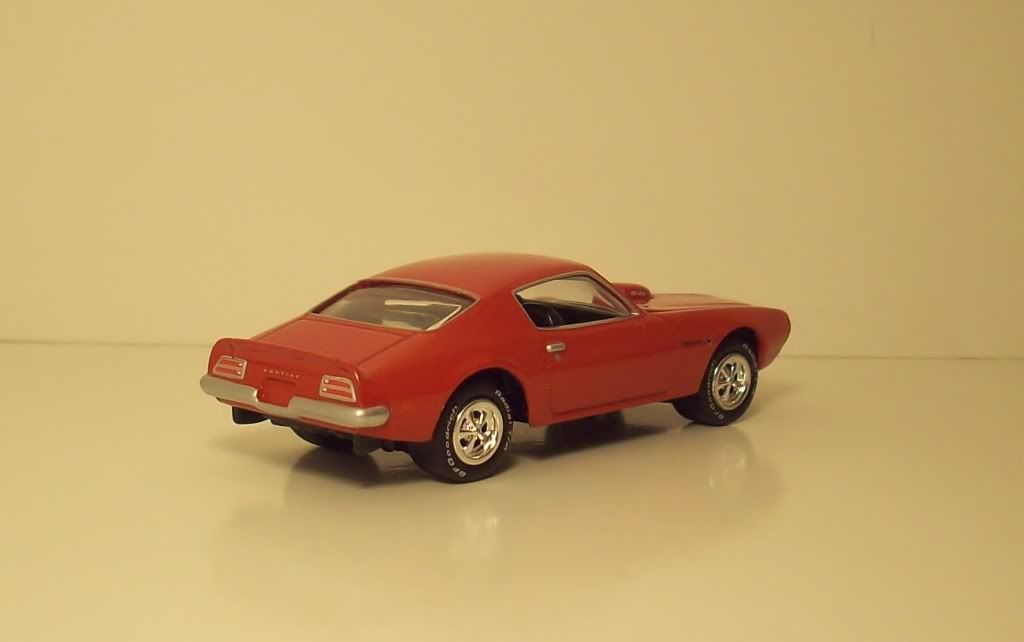
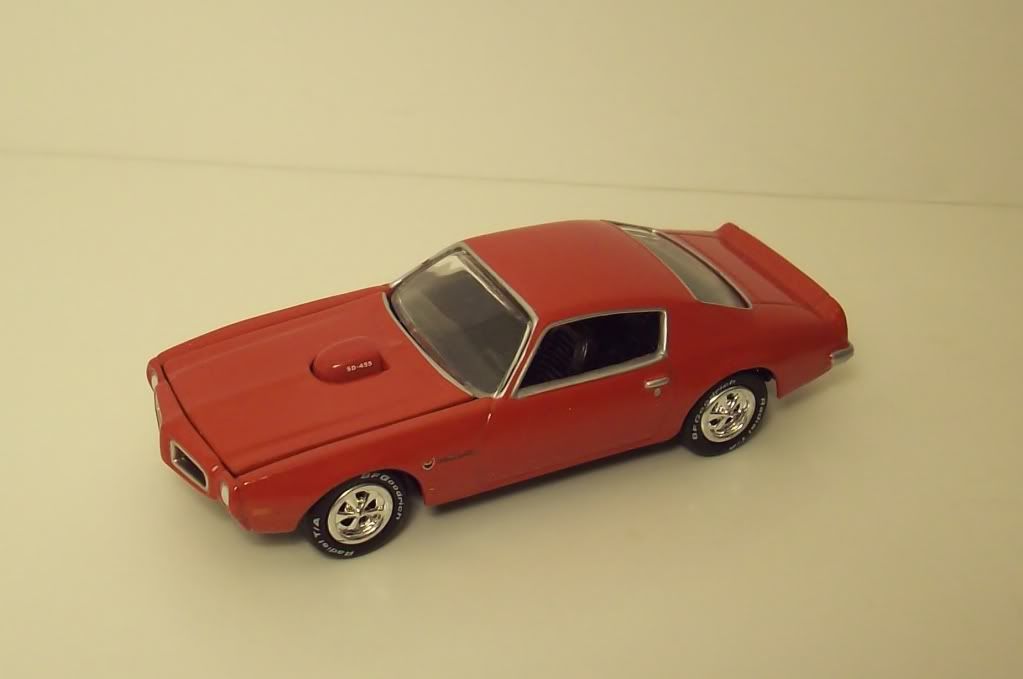
Today's car of the day comes from Firehawk73's collection and is Johnny Lightning's 1973 Pontiac Firebird Formula.


The Pontiac Firebird was built by the Pontiac division of General Motors between 1967 and 2002. The Firebird was introduced the same year as the automaker's platform-sharing model, the Chevrolet Camaro. This coincided with the release of the 1968 Mercury Cougar, which shared its platform with another pony car, the Ford Mustang.

The vehicles were powered by various four-cylinder, six-cylinder, and V8 engines sourced from several GM divisions. While primarily Pontiac-powered until 1977, Firebirds were built with several different engines from nearly every GM division until 1982 when GM began to discontinue engines it felt were unneeded and either spread successful designs from individual divisions among all divisions or use new engines of corporate architecture


For more information and pictures of the real car please visit: Pontiac Firebird


We're celebrating Thanksgiving week with A Flock Of Seagulls Firebirds.  The more you live the more you love or so they say.  The more you love the more you go away.  While the odds are still good that I run out of A Flock Of Seagulls songs to reference before Paul runs out of Firebirds... we've crossed the halfway point of the week and I'm still going.
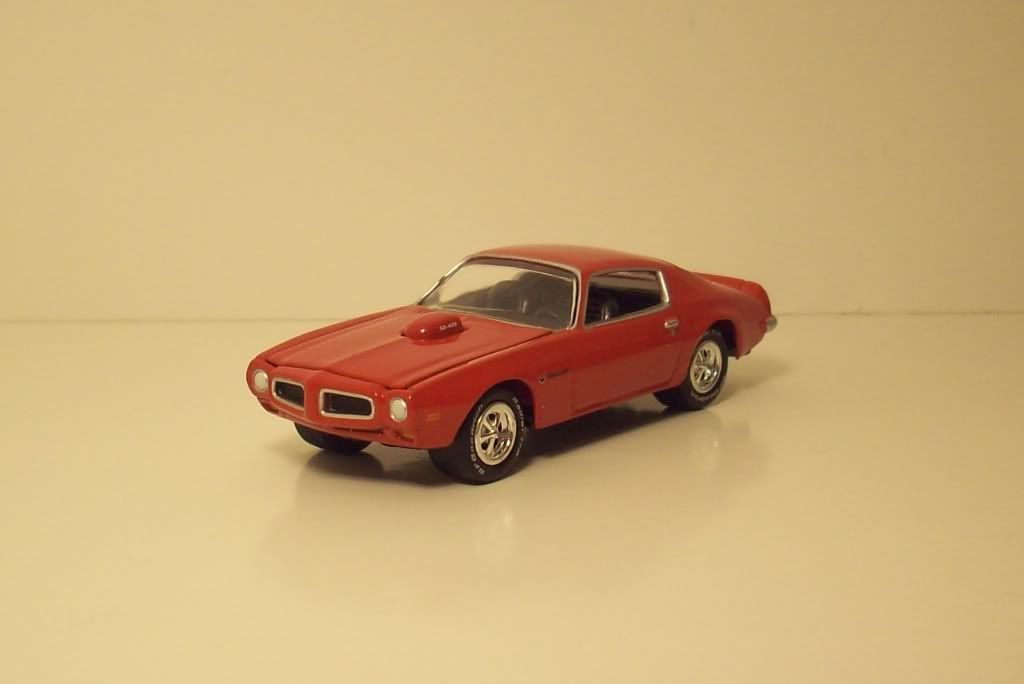


The second generation debut for the 1970 model year was delayed until February 26, 1970, because of tooling and engineering problems; thus, its popular designation as a 1970½ model, while leftover 1969s were listed in early Pontiac literature without a model-year identification.

Replacing the "Coke bottle" styling was a more "swoopy" body style, with the top of the rear window line going almost straight down to the lip of the trunk lid—a look that was to epitomize F-body styling for the longest period during the Firebird's lifetime. The new design was initially characterized with a large C-pillar, until 1975 when the rear window was enlarged.

There were two Ram Air 400 cu in (6.6 L) engines for 1970: the 335 hp (250 kW) Ram Air III (366 hp (273 kW) in GTO) and the 345 hp (257 kW) Ram Air IV (370 hp (280 kW) in GTO) that were carried over from 1969. The difference between the GTO and Firebird engines was the secondary carburetor linkage which prevented the rear barrels from opening. Bending the linkage to allow full carburator operation resulted in identical engines.

A distinctive, slant-nose facelift occurred in 1977, redone somewhat in 1979. From 1977 to 1981, the Firebird used four square headlamps, while the Camaro continued to retain the two round headlights that had previously been shared by both Second Generation designs. Curb weights rose dramatically in the 1973 model year due to the implementation of 5 mph (8.0 km/h) telescoping bumpers and various other crash and safety related structural enhancements; SD455 Trans Ams weighed in at 3,850 lb (1,750 kg).

The 455 engine available in the second generation Firebird Trans Am was arguably the last high-performance engine of the original muscle car generation. The 455 cu in (7.5 L) engine first made its appearance in 1971 as the 455-HO. In 1973 and 1974, a special version of the 455, called the SD-455, was offered. The SD-455 consisted of a strengthened cylinder block that included 4-bolt main bearings and added material in various locations for improved strength. Original plans called for a forged crankshaft, although actual production SD455s received nodular iron crankshafts with minor enhancements. Forged rods and forged aluminum pistons were specified, as were unique high flow cylinder heads. A 1967 GTO Ram Air camshaft with 301/313 degrees of advertised duration, 0.407 inch net valve lift, and 76 degrees of valve overlap was specified for actual production engines in lieu of the significantly more aggressive Ram Air IV style cam that had originally been planned for the engine (initially rated at 310 hp (230 kW) with that cam), but proved incapable of meeting the tightening emissions standards of the era. This cam, combined with a low compression ratio of 8.4 (advertised) and 7.9:1 actual resulted in 290 SAE net horsepower. Production test cars yielded 1/4 mile times in the 14.5 second/98 MPH range in showroom tune – results consistent for a car with a curb weight of 3,850 pounds and the rated 290 SAE net horsepower figure some sources suggest was "under-rated," High Performance Pontiac magazine dyno-tested an SD and gave it 371 SAE net rating. During a 1972 strike, the Firebird (and the sister F-body Camaro) were nearly dropped. Pontiac offered the 455 for a few more years, but tightening restrictions on vehicle emissions guaranteed its demise. Thus, the 1976 Trans Am was the last of the "Big Cube Birds," with only 7,100 units produced with the 455 engine.

Tuesday, November 22, 2011

Car Of The Day: November 22, 2011


Today's car of the day comes from Firehawk73's collection and is Johnny Lightning's 1979 Pontiac Firebird Trans Am.


The Pontiac Firebird was built by the Pontiac division of General Motors between 1967 and 2002. The Firebird was introduced the same year as the automaker's platform-sharing model, the Chevrolet Camaro. This coincided with the release of the 1968 Mercury Cougar, which shared its platform with another pony car, the Ford Mustang.

The vehicles were powered by various four-cylinder, six-cylinder, and V8 engines sourced from several GM divisions. While primarily Pontiac-powered until 1977, Firebirds were built with several different engines from nearly every GM division until 1982 when GM began to discontinue engines it felt were unneeded and either spread successful designs from individual divisions among all divisions or use new engines of corporate architecture.


For more information and pictures of the real car please visit: Pontiac Firebird


We're celebrating Thanksgiving week with A Flock Of Seagulls Firebirds.  If I had a photograph of you, it's something to remind me.  I wouldnt spend my life just wishing.  While the odds are still good that I run out of A Flock Of Seagulls songs to reference before Paul runs out of Firebirds... today isn't the day either.


Beginning in 1978, Pontiac engineers reversed years of declining power by raising the compression ratio in the Pontiac 400 through the installation of different cylinder heads with smaller combustion chambers (1977 Pontiac 400 engines also had the 350 heads bolted to the 400 blocks, these heads were known as the 6x-4 heads)(taken from the Pontiac 350). This increased power by 10% for a total of 220 during the 1978–79 model years. The 400/403 options remained available until 1979, when the 400 CID engines were only available in the 4-speed transmission Trans Ams and Formulas (the engines had actually been stockpiled from 1978, when PMD had cut production of the engine). 1979 marked the 10th Anniversary of the Trans Am, and a special anniversary package was made available: silver paint with a silver leather interior. The 10th Anniversary cars also featured a special Firebird hood decal, which extended off of the hood and onto the front fenders. In 1979 Pontiac sold 116,535 Trans Ams which still holds the record to this day.

Up until the 1979 models, the performance of 400-equipped Firebirds could still be brought up to pre-1970 levels by disabling emissions equipment- removing the catalytic converter and blocking off the exhaust gas recirculation system- and opening up the block off plate to make the hood scoop functional. Howver, in 1980, due to ever-increasing emissions restrictions, Pontiac dropped all of its large displacement engines.
1980 therefore saw the biggest engine changes for the Trans Am. The 301, offered in 1979 as a credit option, was now the standard engine. Options included a turbocharged 301 or the Chevrolet 305 small block.

In the final year of the Second Generation Firebirds (1981), Trans Am still used the same engines as it had in the previous model year, with the only change being the addition of a new electronic carburetion system.

Monday, November 21, 2011

Car Of The Day: November 21, 2011


Today's car of the day comes from Firehawk73's collection and is Racing Champions' 1996 Pontiac Firebird Trans Am.


The Pontiac Firebird was built by the Pontiac division of General Motors between 1967 and 2002. The Firebird was introduced the same year as the automaker's platform-sharing model, the Chevrolet Camaro. This coincided with the release of the 1968 Mercury Cougar, which shared its platform with another pony car, the Ford Mustang.

The vehicles were powered by various four-cylinder, six-cylinder, and V8 engines sourced from several GM divisions. While primarily Pontiac-powered until 1977, Firebirds were built with several different engines from nearly every GM division until 1982 when GM began to discontinue engines it felt were unneeded and either spread successful designs from individual divisions among all divisions or use new engines of corporate architecture.


For more information and pictures of the real car please visit: Pontiac Firebird


We're celebrating Thanksgiving week with A Flock Of Seagulls Firebirds.  I saw your eyes, and you touched my mind.  Although it took a while, I was falling in love.  Odds are good I run out of A Flock Of Seagulls songs to reference before Paul runs out of Firebirds... but not yet.


The fourth-generation F-body continued the aerodynamic formula initiated by the previous generation, but saw declining sales. As before, the Camaro kept the exposed headlights and the Firebird its pop-up units, with some minor changes. The overall styling of the Firebird more strongly reflected the "Banshee IV" concept car than the 1991 "face lift" received by the Third Generation model.