A blog focusing on 1/64 diecast from such popular brands as Hot Wheels, Matchbox, Johnny Lightning, M2 Machines, GreenLight, Tomica, Yat Ming, Majorette, MotorMax, Siku, Corgi, Guisval, Playart, Ertl, Zylmex, Racing Champions, & many more. Swifty's Garage features a daily Car Of The Day and news updates from your favorite brands!
Showing posts with label Trans Am. Show all posts
Thursday, June 14, 2012
Car Of The Day: June 14, 2012
Today's car of the day comes from craftymore's collection and is Zylmex's 1982 Pontiac Firebird Trans-Am Funny Car.
The Pontiac Firebird was built by the Pontiac division of General Motors between 1967 and 2002. The Firebird was introduced the same year as the automaker's platform-sharing model, the Chevrolet Camaro. This coincided with the release of the 1967 Mercury Cougar, which shared its platform with another pony car, the Ford Mustang.
The vehicles were powered by various four-cylinder, six-cylinder, and V8 engines sourced from several GM divisions. While primarily Pontiac-powered until 1977, Firebirds were built with several different engines from nearly every GM division until 1982 when GM began to discontinue engines it felt were unneeded and either spread successful designs from individual divisions among all divisions or use new engines of corporate architecture.
The Firebird and Camaro were completely redesigned for the 1982 model year, with the windshield slope set at 62 degrees, (about 3 degrees steeper than anything GM had ever tried before), and for the first time, a large, glass-dominated hatchback that required no metal structure to support it. Two concealed pop-up headlights, a first on the F-Body cars, were the primary characteristic that distinguished the 3rd Gen Firebird from its both its Camaro sibling and its prior form; (a styling characteristic carried into the 4th Gen's design). In addition to being about 500 lbs (227 kg) lighter than the previous 2nd Gen design, the 3rd Generation Firebird was the most aerodynamic product GM had ever released. Wind tunnels were used to form the new F-Body platform's shape, and Pontiac took full advantage of it. The aerodynamic developments extended to the finned aluminum wheels with smooth hubcaps and a functional rear spoiler.[/quote]
Received this cool Zee from Noirguru. It was mint on card and liberated for cotd. TY Jermaine.
Friday, April 27, 2012
Car Of The Day: April 27, 2012
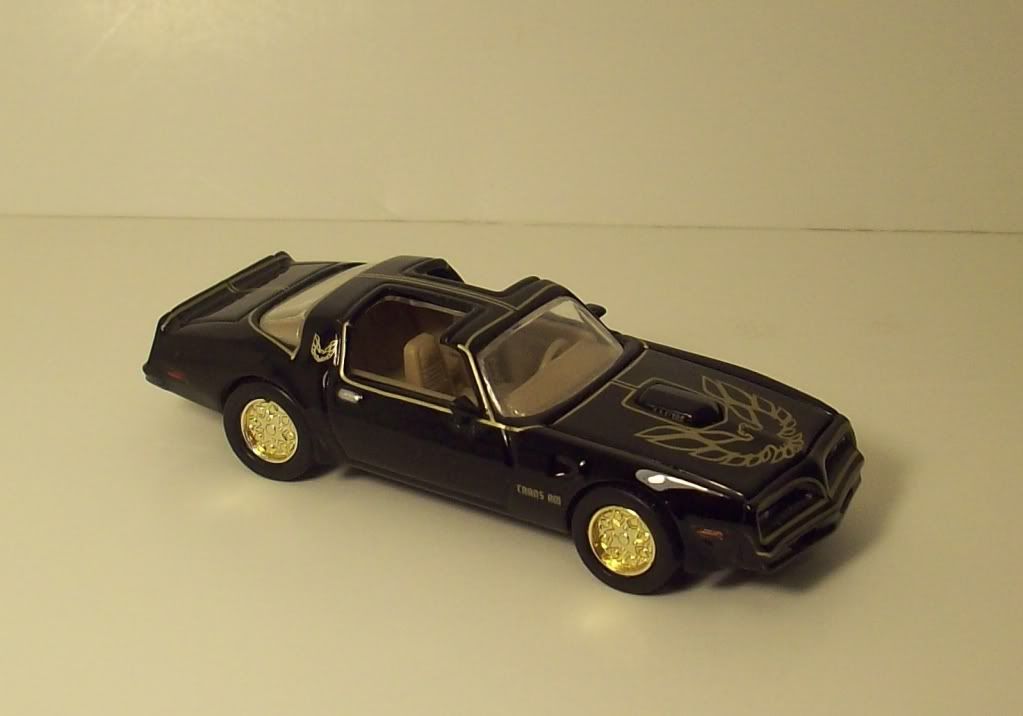
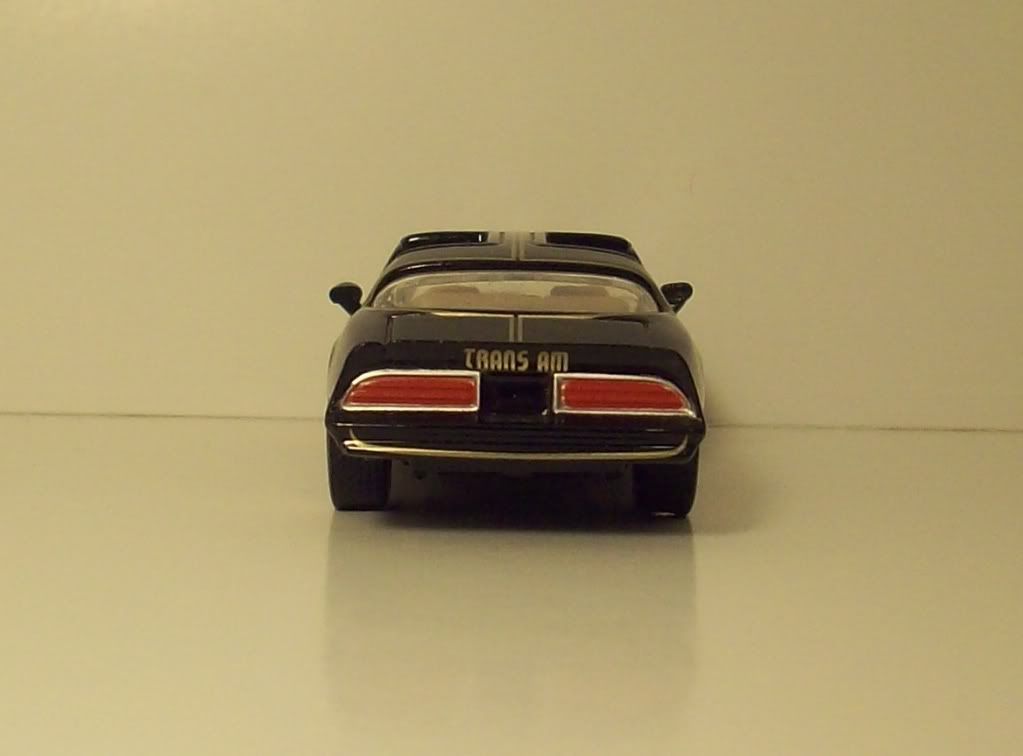
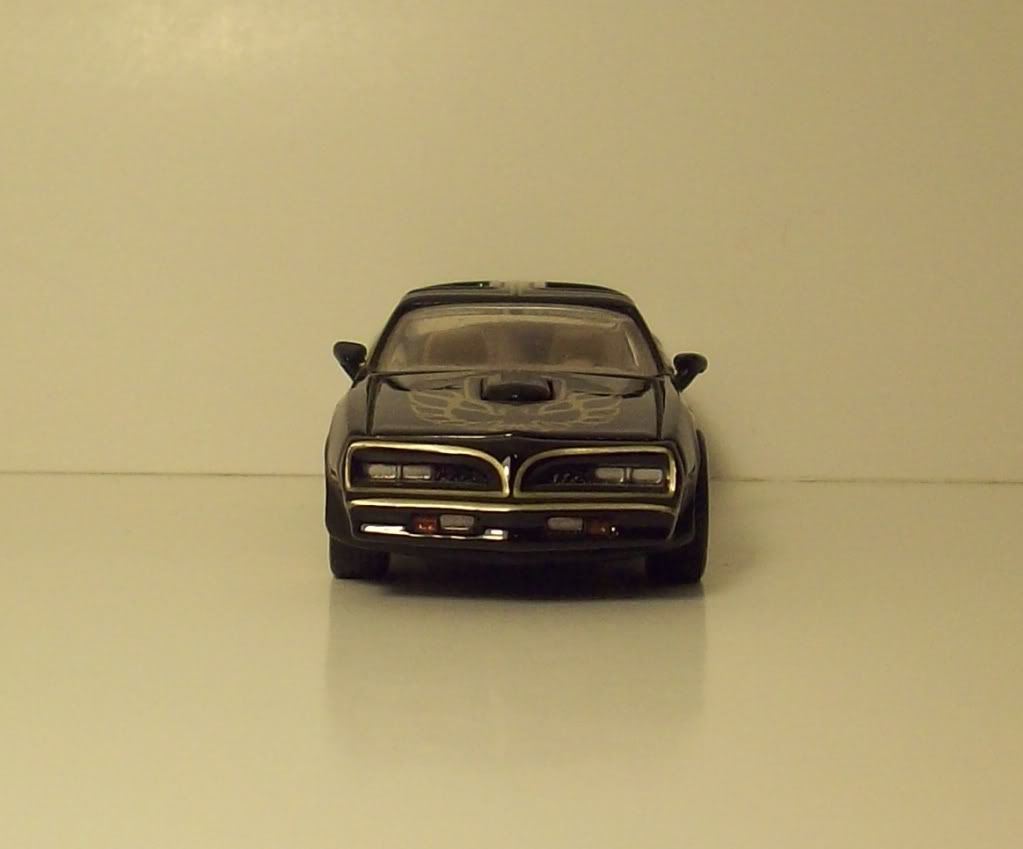
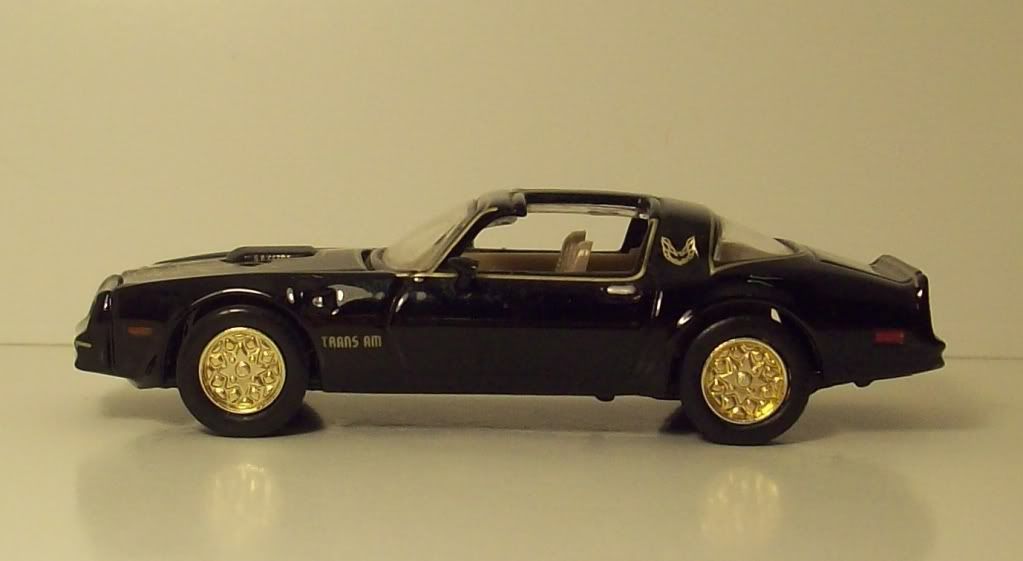
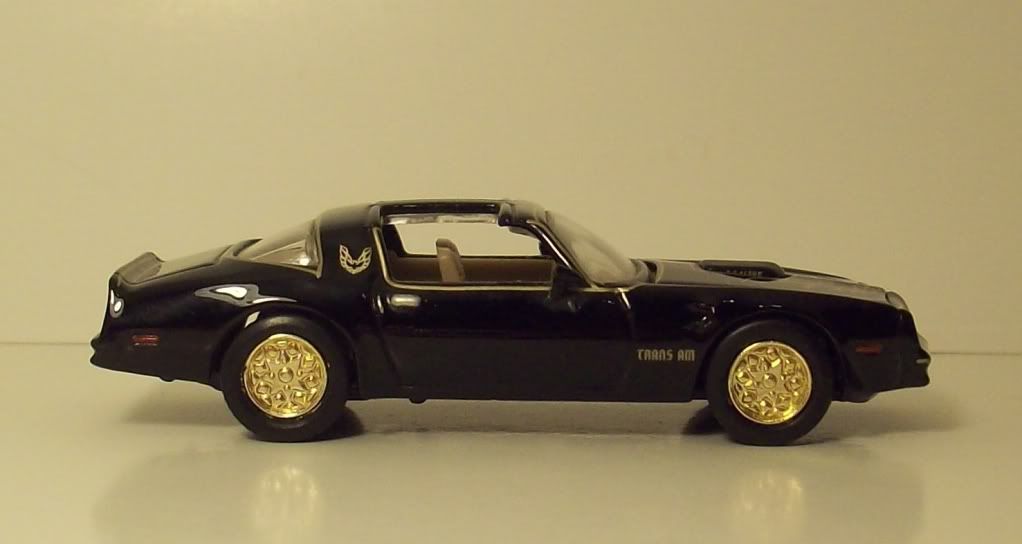
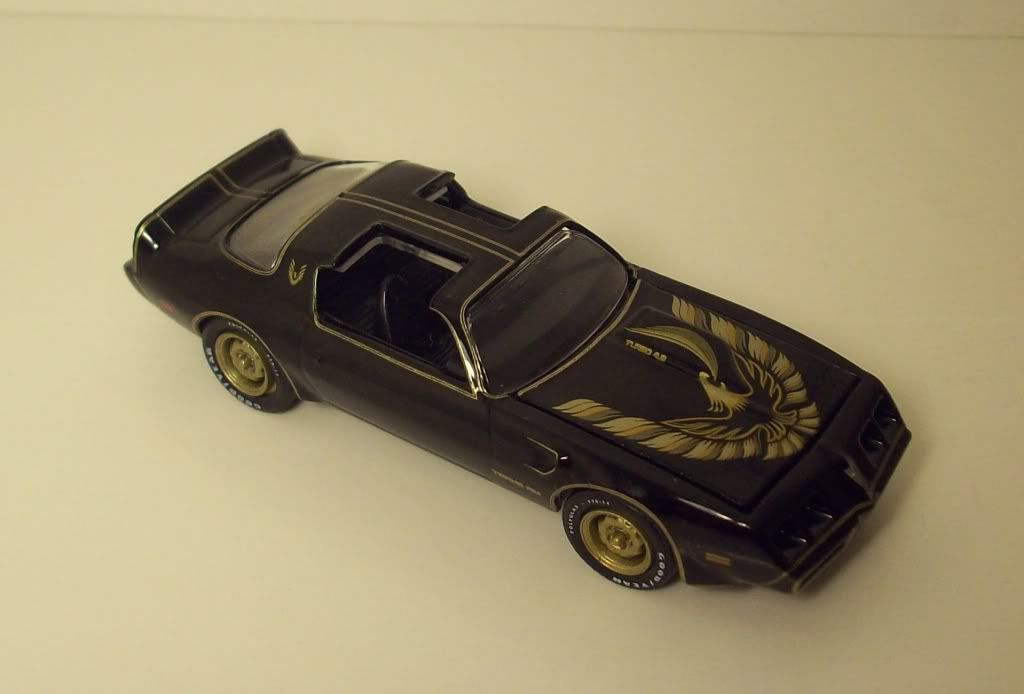
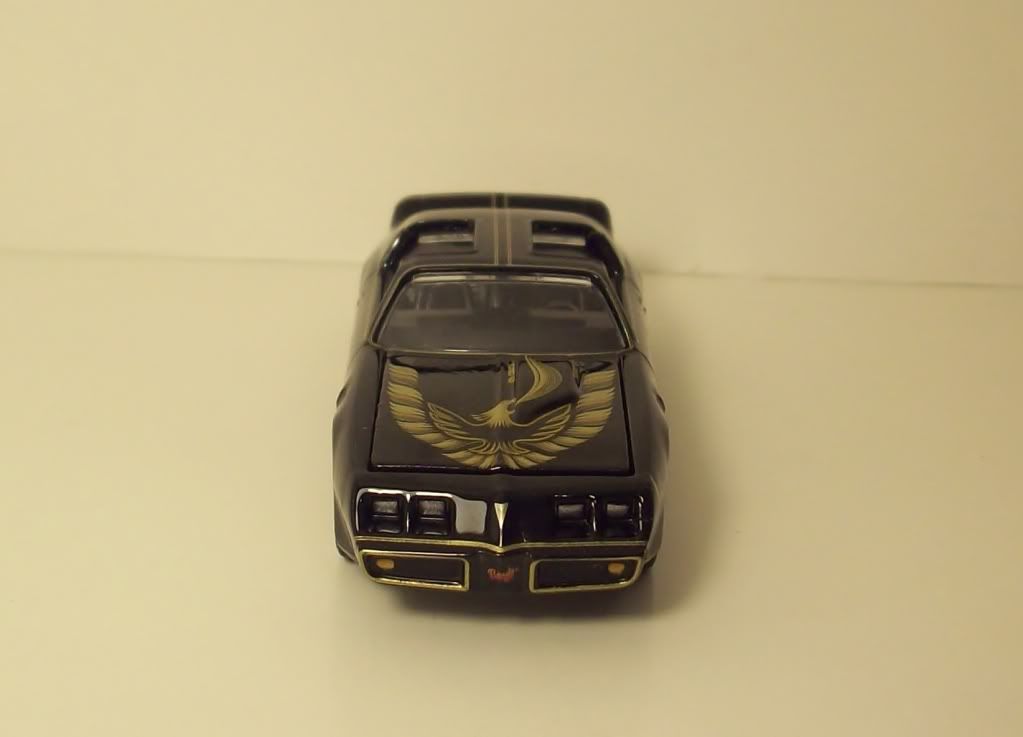
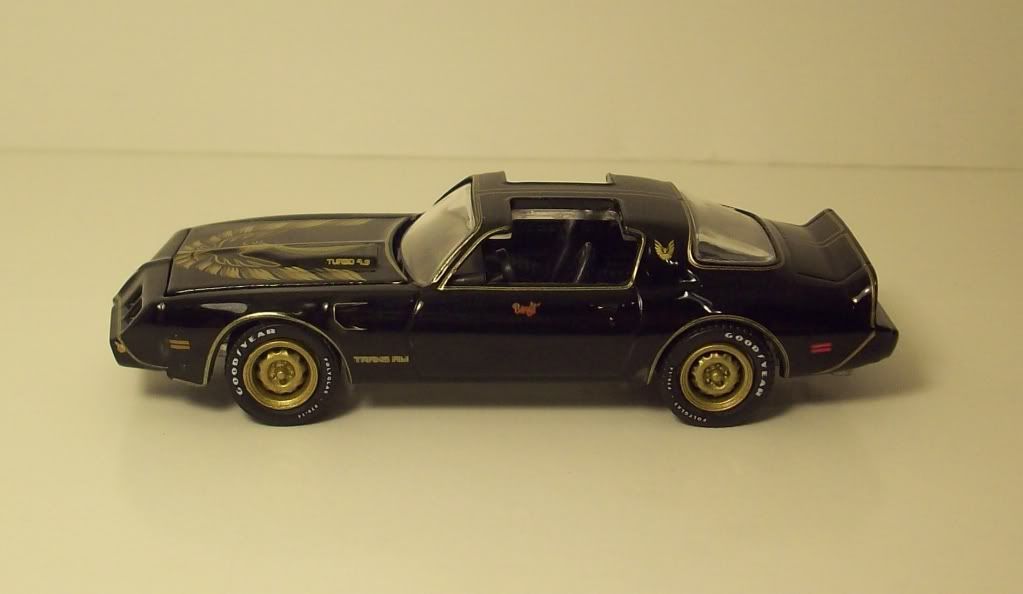
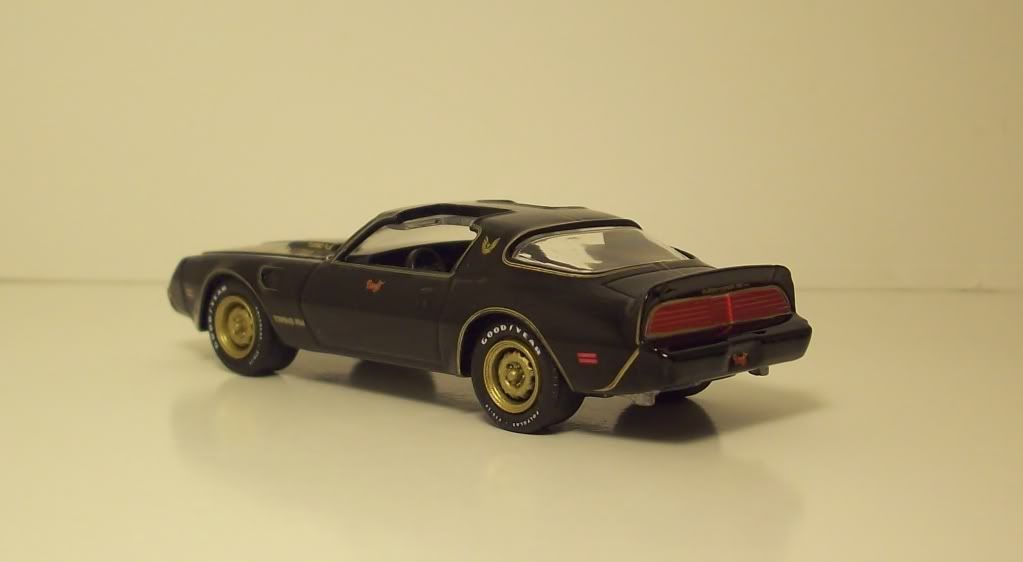
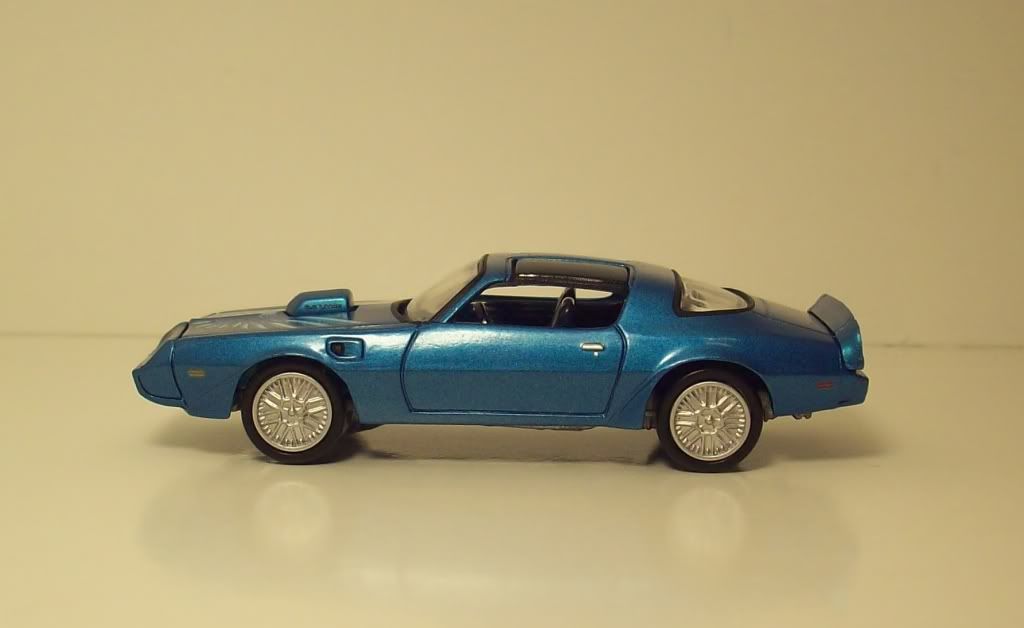
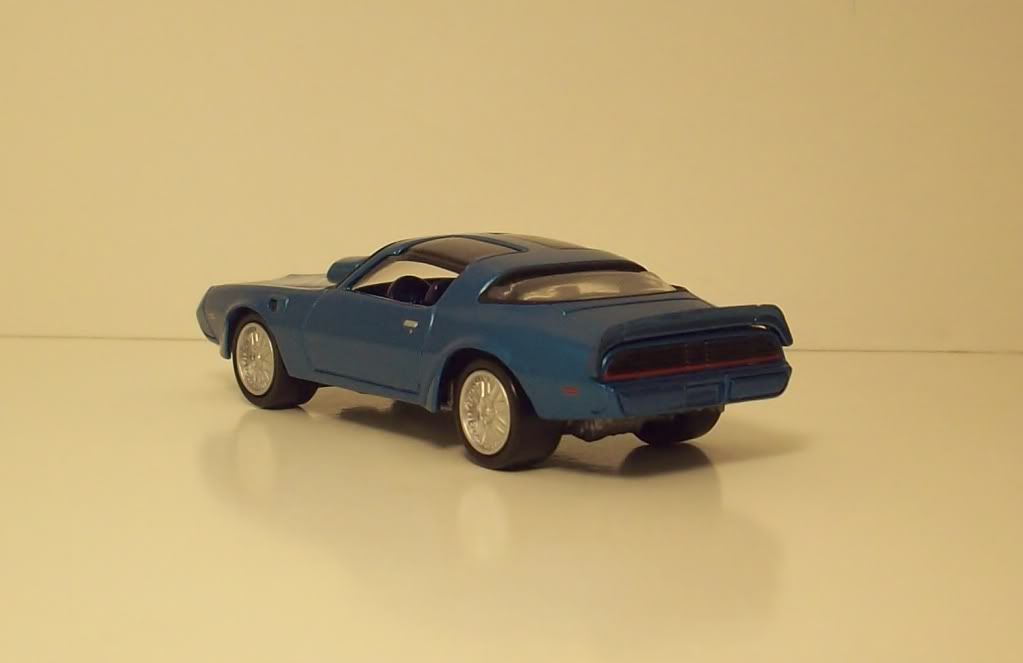
Today's car of the day comes from Firehawk73's collection and is Racing Champions' 1977 Pontiac Firebird Trans Am.
The Pontiac Firebird was built by the Pontiac division of General Motors between 1967 and 2002. The Firebird was introduced the same year as the automaker's platform-sharing model, the Chevrolet Camaro. This coincided with the release of the 1967 Mercury Cougar, which shared its platform with another pony car, the Ford Mustang.
The vehicles were powered by various four-cylinder, six-cylinder, and V8 engines sourced from several GM divisions. While primarily Pontiac-powered until 1977, Firebirds were built with several different engines from nearly every GM division until 1982 when GM began to discontinue engines it felt were unneeded and either spread successful designs from individual divisions among all divisions or use new engines of corporate architecture.
For more information and pictures of the real car please visit: Pontiac Firebird
In 1976, Pontiac celebrated their 50th Anniversary, and a special edition of the Trans Am was released. Painted in black with gold accents, this was the first anniversary Trans Am package and the first production Black and Gold special edition. In 1977, Pontiac offered the T/A 6.6 Litre 400 (RPO W72) rated at 200 hp (150 kW), as opposed to the regular 6.6 Litre 400 (RPO L78) rated at 180 hp (130 kW). In addition, California and high-altitude cars received the Olds 403 engine, which offered a slightly higher compression ratio and a more usable torque band than the Pontiac engines of 1977. The 1977 Trans-Am Special Edition became famous after being featured in Smokey and the Bandit. Later on the 1980 Turbo model was used for Smokey and the Bandit II.
Beginning in 1978, Pontiac engineers reversed years of declining power by raising the compression ratio in the Pontiac 400 through the installation of different cylinder heads with smaller combustion chambers (1977 Pontiac 400 engines also had the 350 heads bolted to the 400 blocks, these heads were known as the 6x-4 heads)(taken from the Pontiac 350). This increased power by 10% for a total of 220 during the 1978–79 model years. The 400/403 options remained available until 1979, when the 400 CID engines were only available in the 4-speed transmission Trans Ams and Formulas (the engines had actually been stockpiled from 1978, when PMD had cut production of the engine). 1979 marked the 10th Anniversary of the Trans Am, and a special anniversary package was made available: silver paint with a silver leather interior. The 10th Anniversary cars also featured a special Firebird hood decal, which extended off of the hood and onto the front fenders. In 1979 Pontiac sold 116,535 Trans Ams which still holds the record to this day.
Up until the 1979 models, the performance of 400-equipped Firebirds could still be brought up to pre-1970 levels by disabling emissions equipment- removing the catalytic converter and blocking off the exhaust gas recirculation system- and opening up the block off plate to make the hood scoop functional. However, in 1980, due to ever-increasing emissions restrictions, Pontiac dropped all of its large displacement engines.
1980 therefore saw the biggest engine changes for the Trans Am. The 301, offered in 1979 as a credit option, was now the standard engine. Options included a turbocharged 301 or the Chevrolet 305 small block.
In the final year of the Second Generation Firebirds (1981), Trans Am still used the same engines as it had in the previous model year, with the only change being the addition of a new electronic carburetion system.
Thursday, November 24, 2011
Car Of The Day: November 24, 2011
Today's car of the day comes from Firehawk73's collection and is GreenLight's 1980 Pontiac Firebird Trans Am.
Smokey and the Bandit II is a comedy film released on August 15, 1980 in the United States. It is the sequel to the 1977 film Smokey and the Bandit. The film stars Burt Reynolds, Sally Field, Jerry Reed, Jackie Gleason, and Dom DeLuise. Like the first film, it was directed by Hal Needham.
The film was originally released in the United Kingdom, New Zealand, Australia and several other, mainly Commonwealth countries as, Smokey and the Bandit Ride Again. Early video releases and TV broadcasts also used this title, but in more recent years have reverted back to the original U.S. title. It was followed by a sequel three years later, Smokey and the Bandit Part 3, in which Reynolds appeared only in a brief cameo appearance, and Sally Field was absent completely.
The plot centers on Bo "Bandit" Darville (Burt Reynolds), and Cledus "Snowman" Snow (Jerry Reed), transporting an elephant to the GOP National Convention with Sheriff Buford T. Justice, played by Jackie Gleason, in hot pursuit once again.
For more information and pictures of the real car please visit: Smokey and the Bandit II
We're celebrating Thanksgiving week with A Flock Of
Big Enos Burdett (Pat McCormick) is attempting to be elected as Governor of Texas against other candidate, John Coen. After a figurative and literal "mudslinging" between the two, they are both confronted by the outgoing governor, and given a thorough tongue lashing. As Burdett is leaving the office he overhears the governor yelling at an assistant to take responsibility of transporting a crate of unknown content from Miami to the Republican Party convention in Dallas. Burdett then schemes to pick up the crate and deliver it to the convention. He enlists the help of Bandit and Cledus to carry out the task.
Cledus then attempts to convince the Bandit to "do it one last time." Unfortunately, in the time since their previous challenge, the Bandit has split from his love-interest "Frog" (Sally Field) and become an alcoholic. The Bandit is said to be "the only man in the world to drink up a Trans Am,". Cledus seeks the help of Frog to encourage the Bandit to sober up and regain his fitness, since Big Enos has raised the stakes of the game to $400,000, equal to $1,066,126 today. Frog abandons her second attempt at wedding Buford T. Justice's son Junior to help. She is initially persuaded more by the money than her love for Bandit. She buys him a 1980 Turbo Trans Am "Son of Trigger", powered by the Turbo 301, by trading in Junior's car.
The middle sections of the film feature a race across the United States as the trio once again tries to outrun and outwit Justice and Junior. The team discovers that their cargo is in quarantine for three weeks, and they need to get it to Dallas in three days. When they break into the quarantine area to steal the crate, the mysterious cargo turns out to be an elephant (the mascot of the Republican Party) who they named Charlotte after Snowman remarked that she reminded him of his Aunt Charlotte and even smelled like her, too. When Cledus opens the crate containing the elephant, Charlotte races out, nearly trampling Frog. The Bandit saves the day by doing a backflip onto the elephant's back and riding the elephant out of the quarantine shed. Noticing a splinter was stuck in her foot, the Bandit removes it, and the elephant takes a shine to Bandit. On their way to Dallas, Cledus fears Charlotte is in poor health. They find an Italian gynaecologist (Dom DeLuise) in the back of an ambulance stopped at the same gas station as they are. When the gynecologist discovers it is an elephant he has to look at, he freaks out and nearly runs away. As the doctor attempts to refuse helping them, he sees his driver speed away in the ambulance, leaving him stranded. After the Bandit and Cledus bribe him with large amounts of money, he gives in and agrees to ride in the truck with the elephant and examine her. Charlotte is later discovered to be pregnant.
As they try to make Burdett's deadline, the doctor pleads with the Bandit for some time off the road so Charlotte can rest off of her feet. He reluctantly gives in twice, the first time wrapped up by Charlotte, the second time agrees on his own, Frog citing Bandit's desire to regain his lost fame of the past. She grows closer to him as she did in the past film. While at a restaurant, she sees him scribbling on a napkin a picture of Charlotte cradled by suspended netting in order to keep her off of her feet. She becomes furious and leaves. The Bandit follows and she says he does not care about the elephant and when he likes himself again would she then consider seeing him again.
He later makes his drawing a reality, in a near drunken stupor. The doctor agrees the idea will work and agrees to press on. Unable to stop the Bandit and Cledus, Justice enlists the help of his two brothers, Reginald Van Justice from Canada, and Gaylord Justice, from another part of Texas (both played by Gleason). Justice lures the Bandit into a valley, with a line of Mounties (in red police cars) on one hill side, Texas Rangers, in white cars, on the other. Bandit orders Cledus to continue delivering Charlotte to Dallas. Cledus later returns, with a convoy of trucks to help destroy all of the police cars. Charlotte and the doctor watch the action from afar. After the mass destruction of police cars, only Buford, Gaylord, and Reginald come out relatively unscathed. Bandit and Cledus escape the valley by driving across a bridge of tractor trailers. As the Justice's follow, a trailer pulls out resulting in their cars falling down and being destroyed. However, Buford's car is still operable, though folded up in the middle and missing its doors and roof. Justice and Junior are cut off by a farm tractor, and they drive off the road, hitting an embankment by a pond, throwing Junior into the pond. When asked what he was thinking about, Buford simply says, "Retiring."
Eventually, Bandit informs Frog he likes himself again, and that he did not want to spend the rest of his life without her. When she asks about Burdett's bet, he informs her he blew it, and said they could still get there nonetheless (though late). He shows her Charlotte and her baby in circus-like chariots. Frog is overjoyed. Bandit asks Charlotte if it is fine to marry Frog, to which Charlotte responds loudly. They drive away with Charlotte and her baby in tow, with Buford pursuing them in a bus.
Tuesday, November 22, 2011
Car Of The Day: November 22, 2011
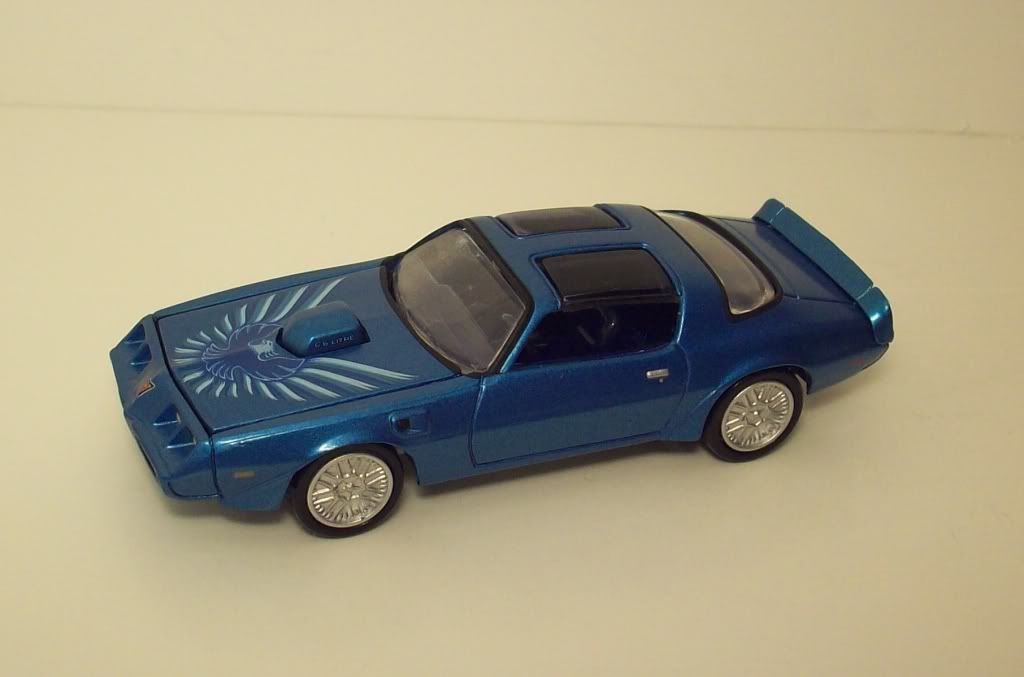
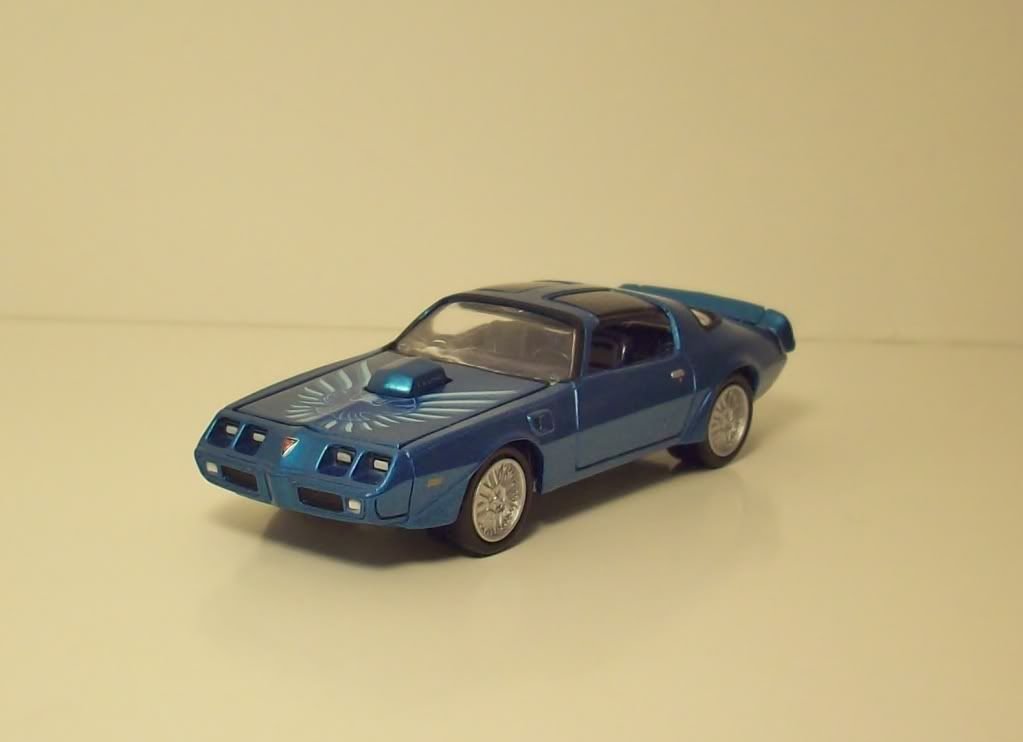
Today's car of the day comes from Firehawk73's collection and is Johnny Lightning's 1979 Pontiac Firebird Trans Am.
The Pontiac Firebird was built by the Pontiac division of General Motors between 1967 and 2002. The Firebird was introduced the same year as the automaker's platform-sharing model, the Chevrolet Camaro. This coincided with the release of the 1968 Mercury Cougar, which shared its platform with another pony car, the Ford Mustang.
The vehicles were powered by various four-cylinder, six-cylinder, and V8 engines sourced from several GM divisions. While primarily Pontiac-powered until 1977, Firebirds were built with several different engines from nearly every GM division until 1982 when GM began to discontinue engines it felt were unneeded and either spread successful designs from individual divisions among all divisions or use new engines of corporate architecture.
For more information and pictures of the real car please visit: Pontiac Firebird
We're celebrating Thanksgiving week with A Flock Of
Beginning in 1978, Pontiac engineers reversed years of declining power by raising the compression ratio in the Pontiac 400 through the installation of different cylinder heads with smaller combustion chambers (1977 Pontiac 400 engines also had the 350 heads bolted to the 400 blocks, these heads were known as the 6x-4 heads)(taken from the Pontiac 350). This increased power by 10% for a total of 220 during the 1978–79 model years. The 400/403 options remained available until 1979, when the 400 CID engines were only available in the 4-speed transmission Trans Ams and Formulas (the engines had actually been stockpiled from 1978, when PMD had cut production of the engine). 1979 marked the 10th Anniversary of the Trans Am, and a special anniversary package was made available: silver paint with a silver leather interior. The 10th Anniversary cars also featured a special Firebird hood decal, which extended off of the hood and onto the front fenders. In 1979 Pontiac sold 116,535 Trans Ams which still holds the record to this day.
Up until the 1979 models, the performance of 400-equipped Firebirds could still be brought up to pre-1970 levels by disabling emissions equipment- removing the catalytic converter and blocking off the exhaust gas recirculation system- and opening up the block off plate to make the hood scoop functional. Howver, in 1980, due to ever-increasing emissions restrictions, Pontiac dropped all of its large displacement engines.
1980 therefore saw the biggest engine changes for the Trans Am. The 301, offered in 1979 as a credit option, was now the standard engine. Options included a turbocharged 301 or the Chevrolet 305 small block.
In the final year of the Second Generation Firebirds (1981), Trans Am still used the same engines as it had in the previous model year, with the only change being the addition of a new electronic carburetion system.
Monday, November 21, 2011
Car Of The Day: November 21, 2011
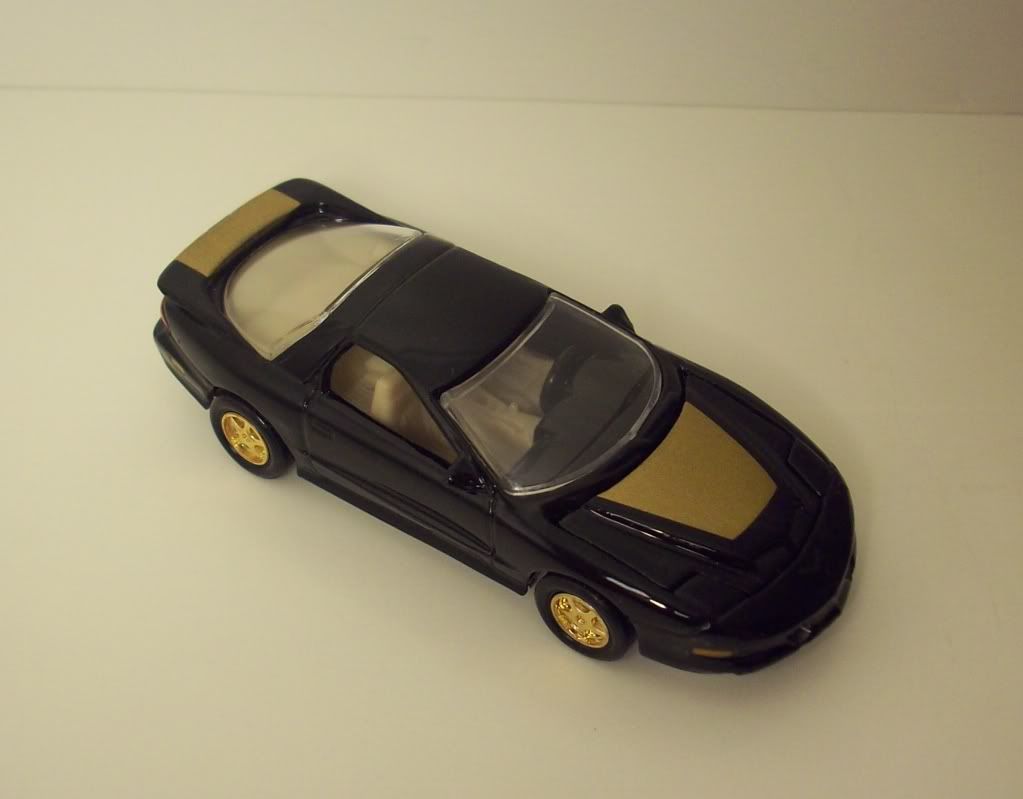
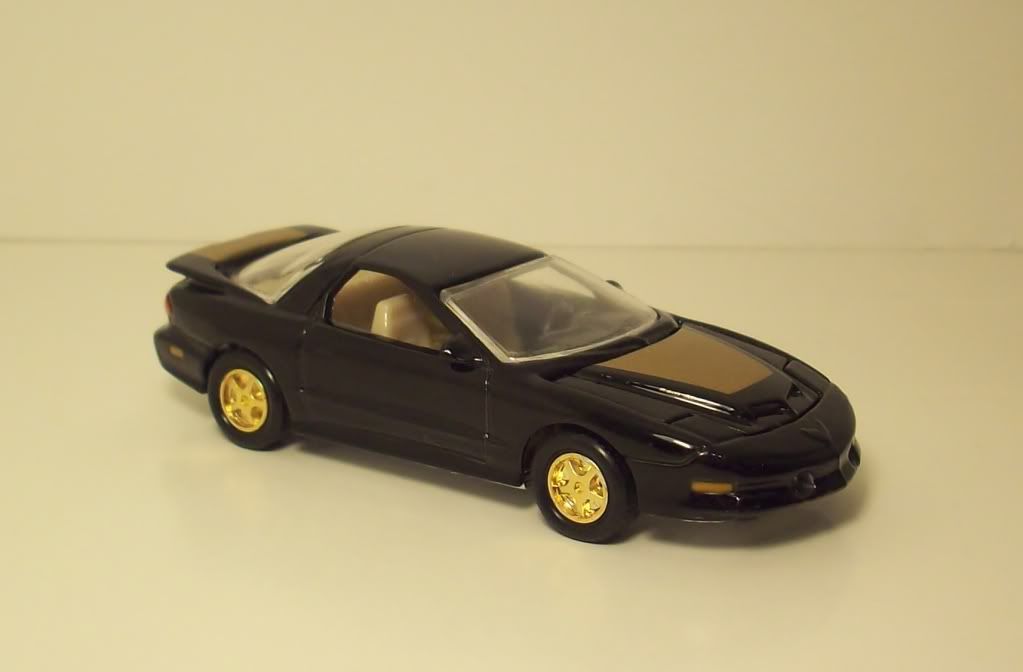
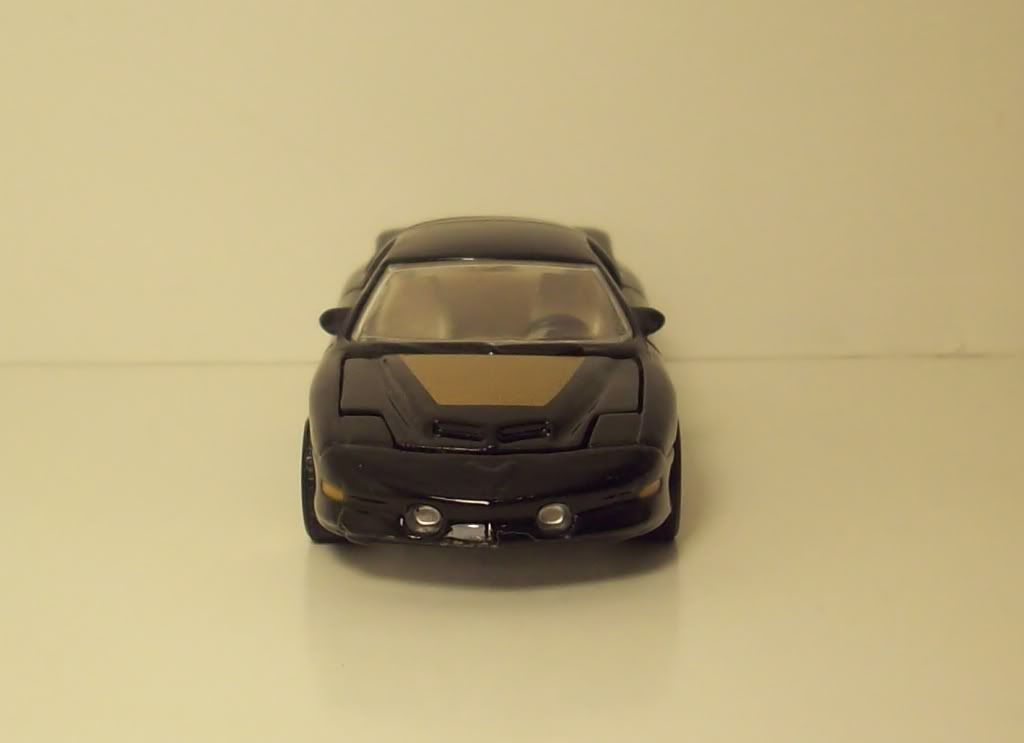
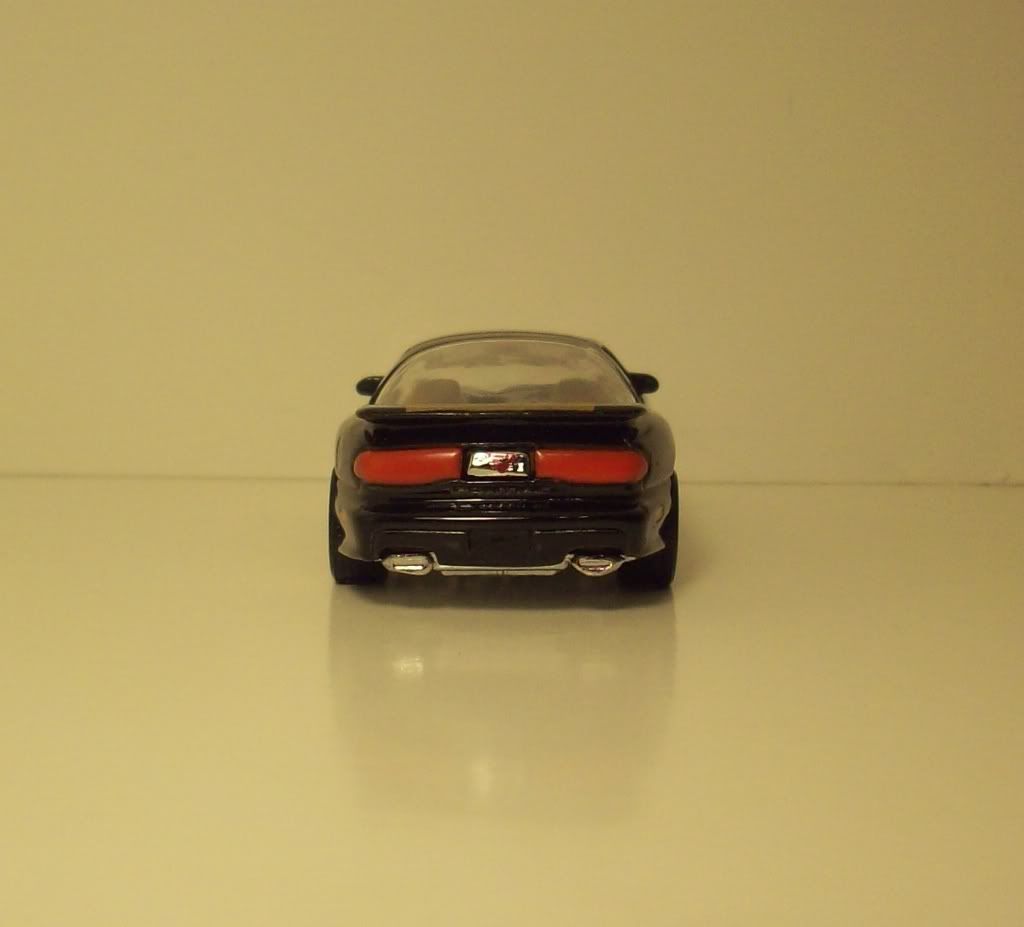
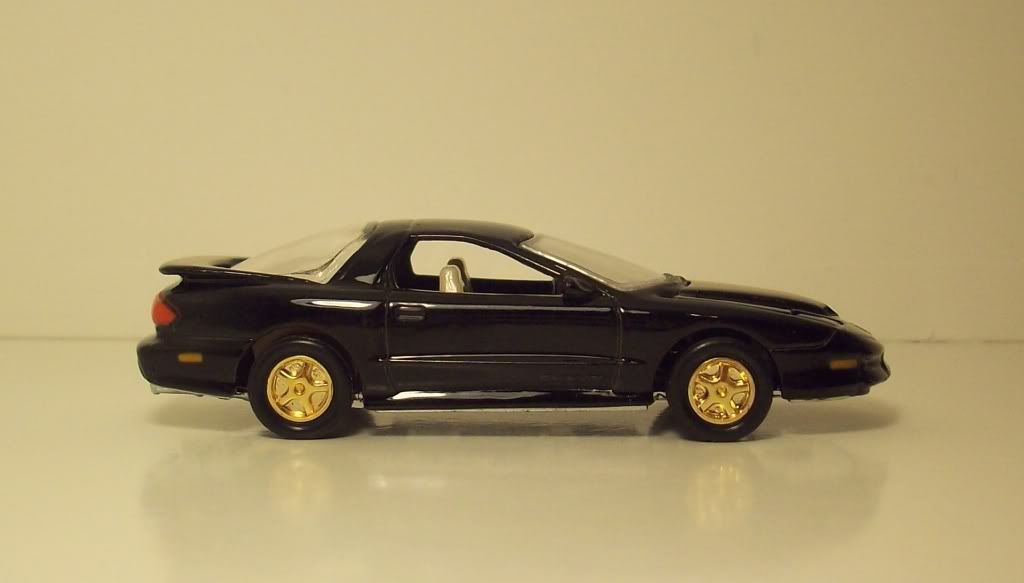
Today's car of the day comes from Firehawk73's collection and is Racing Champions' 1996 Pontiac Firebird Trans Am.
The Pontiac Firebird was built by the Pontiac division of General Motors between 1967 and 2002. The Firebird was introduced the same year as the automaker's platform-sharing model, the Chevrolet Camaro. This coincided with the release of the 1968 Mercury Cougar, which shared its platform with another pony car, the Ford Mustang.
The vehicles were powered by various four-cylinder, six-cylinder, and V8 engines sourced from several GM divisions. While primarily Pontiac-powered until 1977, Firebirds were built with several different engines from nearly every GM division until 1982 when GM began to discontinue engines it felt were unneeded and either spread successful designs from individual divisions among all divisions or use new engines of corporate architecture.
For more information and pictures of the real car please visit: Pontiac Firebird
We're celebrating Thanksgiving week with A Flock Of
The fourth-generation F-body continued the aerodynamic formula initiated by the previous generation, but saw declining sales. As before, the Camaro kept the exposed headlights and the Firebird its pop-up units, with some minor changes. The overall styling of the Firebird more strongly reflected the "Banshee IV" concept car than the 1991 "face lift" received by the Third Generation model.
Sunday, November 20, 2011
Car Of The Day: November 20, 2011
Today's car of the day comes from Firehawk73's collection and is Johnny Lightning's 1985 Pontiac Firebird Trans Am.
The third generation F-body weighed less than its predecessor and offered sleek, aerodynamic styling that was particularly reflected by the Firebird. GM's CCC (Computer Command Control) engine control system also continued to evolve, simultaneously increasing engine performance, raising fuel economy, and lowering emissions. This combination of factors helped the Third Generation Firebird to re-energize its fading pony car image. By the end of the 1980s, thanks to world class aerodynamics and state of the art computerized engine management, a Firebird would average around mid to high 16 seconds in the quarter mile.
For more information and pictures of the real car please visit: Pontiac Firebird
We're celebrating Thanksgiving week with A Flock Of
All Firebird models underwent redevelopment to boost sales as a number of power train improvements were introduced. The Firebird received a restyled nose with Black wrap-around inserts known as "bumperettes" to replace the grille inserts; wrap-around "bumperettes" were also added to the rear bumper. The tail lights remained unchanged from the previous "louvered" style design. The carbureted V6 was replaced with a new, multi-port fuel-injected 2.8L V6 making 135 hp. The interior evolved with a new dash design containing redesigned gauges that used an graph-patterned background, a slightly refined dashpad, new T-handle shifter for automatics; a padded and more ergonomic center console design, updated stereo and HVAC faceplates, and an optional version of the previous year's more ergonomic 15th Anniversary's steering wheel.
The Firebird S/E underwent some changes as well. It too used the new for '85 nose and rear bumper, but it now included some new items to set it apart. It received a new special hood, similar to the new Trans Am hood except with only the front vents, the new Trans Am tail light design, color coded Firebird logo medallions on the sail panels, (similar to the '83/'84 Recaro version), and a color coded rear Firebird logo on the center section of the tail lights. Cloth Recaro seats were also now available.
The Recaro T/A was no longer available, but cloth Recaro seats were optional on the Trans Am.
The Trans Am also underwent changes. The LG4 & L69 continued on, but a new fuel injected 305ci was now available in the Trans Am. The LB9 Tuned Port Injection (TPI) 305 was released, using a tuned runner design. The LB9 produced 210 hp, which brought it suitable attention from buyers despite being unavailable with a manual transmission. The "Turbo Bulge" hood was discontinued in favor of a new flat hood with twin louvered vents or "nostrils" that were slightly functional, with heat exhaust vents on the rear edges. The Trans Am also received a restyled nose, integral fog lights, and newly redesigned ground effects. It utilized new "low density" taillight lenses with a grid-style pattern rather than the "louvered" pattern in use since 1982. The Trans Am came standard with the "High Tech" 15-inch concave aluminum wheels from the previous year, but it was also now available with the a version of the 15th Anniversary's WS6 suspension and its "Aero Tech" 16-inch aluminum wheels, but in finished Natural Silver. A Borg-Warner 9-bolt differential was made available for the first time, and was said to be stronger than the standard corporate 10 bolt axle. Further attempts to put the Trans Am into higher regard included overhead console from the Camaro lineup, which included several manually adjusted reminder wheels, a positionable map light, a removable flashlight with "FIREBIRD" script, and a small pocket for a garage door opener or sunglasses. The standard rear spoiler from previous years was still standard, but an optional wrap-around "Aero Spoiler" was now available in black and gave the car a new more modern look, (it is unique for 1985 & 1986 as it had a texture). The Trans Am drag coefficient was measured at 0.32 but was as low as 0.29 with the standard Aero wheels instead of the High-Tech turbo aluminum wheels. At the time, it was the most aerodynamically-efficient car GM ever produced.
Subscribe to:
Posts (Atom)