A blog focusing on 1/64 diecast from such popular brands as Hot Wheels, Matchbox, Johnny Lightning, M2 Machines, GreenLight, Tomica, Yat Ming, Majorette, MotorMax, Siku, Corgi, Guisval, Playart, Ertl, Zylmex, Racing Champions, & many more. Swifty's Garage features a daily Car Of The Day and news updates from your favorite brands!
Showing posts with label Renault. Show all posts
Tuesday, October 2, 2012
Car Of The Day: October 2, 2012
Today's car of the day is Majorette's 1978 Renault 5.
The Renault 5 (also called the R5) is a supermini produced by French automaker Renault in two generations between 1972 and 1996, and sold in the US as Le Car, from 1976 to 1983. Nearly 5.5 million were built.
For more information and pictures of the real car please visit: Renault 5
The Love LeCar! Wait, this isn't Herbie! I'm not exactly sure what Majorette was thinking in introducing a pink Renault covered in hearts. Are the Care Bears in need of a new ride? Cause if so, this is it.
The Renault 5 was first unveiled on 10 December 1971, being launched at the beginning of 1972.
The Renault 5 was styled by Michel Boué, who died before the car's release, the R5 featured a steeply sloping rear hatchback and front dashboard. Boué had wanted the tail-lights to go all the way up from the bumper into the C-pillar, in the fashion of the much later Fiat Punto and Volvo 850 Estate / Wagon, but the lights remained at a more conventional level. The 5 narrowly missed out on the 1973 European Car of the Year award, which was instead given to the Audi 80.
The R5 borrowed mechanicals from the Renault 4, using a longitudinally-mounted engine driving the front wheels with torsion bar suspension. OHV engines were borrowed from the Renault 4, Renault 8, and Renault 16, and ranged from 850 to 1,400 cc.
Early R5s used a dashboard-mounted gearshift (the gearbox is in front of the engine)—later replaced with a floor-mounted shifter. Door handles were formed by a cut-out in the door panel and B-pillar. The R5 was one of the first cars produced with plastic (polyester and glass fibre) bumpers that have become an industry standard.
The R5's engine was set well back in the engine bay, above and half behind the gear box, allowing the stowage of the spare wheel under the bonnet/hood, an arrangement that freed more space for passengers and luggage within the cabin. The passenger compartment "is remarkably spacious" in comparison to other modern, small European cars. The Renault 5 body's drag coefficient was only 0.37 (with most European cars going up to 0.45).
Other versions of the first generation included the four-door sedan version called the Renault 7 and built by FASA-Renault of Spain. A five-door R5 was added to the range in 1979. The Renault 5 achieved, like the original Mini, a cult status.
Wednesday, August 1, 2012
Car Of The Day: August 1, 2012
Today's car of the day comes from Dean-O-mite's collection and is Golden Wheel's 1973 Renault 17 TL.
The Renault 15 and Renault 17 are two variations of the same coupe designed and built by French automaker Renault between 1971 and 1980. The R17 was sold as R177 in Italy, respecting a superstition. They were effectively coupe versions of the Renault 12. The main differences between the two cars were their headlight configuration (the 15 had two rectangular headlights whereas the 17 had four round headlights), and their rear side windows.
For more information and pictures of the real car please visit: Renault 17
This plastic Golden Wheel is a simplified copy of the Matchbox Renault 17. The Golden Wheel version was released a few years ago, along with some other 1970's Matchbox copies, including the Datsun 260Z and Porsche 911. They feature metal bases which offer some heft, but a complete lack of rear detailing is really disappointing. -Dean-O-mite
The range was gradually introduced in Australia from May 1973. The 15TS and 17TL were initially available with the 17TS being promised later in the year. These 1973 model year vehicles contained several unique features, the stick-on mirror and sun visors from the Renault 12 to comply with regulations ("ADR"). The sun visor retaining catch on these models was never used and available only in Australia. The instrument panel "verandah" was fitted to reduce glare and was only fitted to Australian, North American and Scandinavian versions. Sales of these early models were slow in Australia due to their relatively high price, and continued through to late 1974.
The chassis and most of the running gear came from the Renault 12, while the 1565 cc 107 hp A-Type engine in the more powerful R17 TS and R17 Gordini models was derived from the engine in the Renault 16 TS. Though the mechanicals of the cars were derived from other Renaults, the body was completely new. The R15 and R17 remained in production until 1980 when they were both replaced by the Renault Fuego.
Wednesday, May 2, 2012
Car Of The Day: May 2, 2012
Today's car of the day is Norev's 2004 Renault Wind.
The Renault Wind is a roadster by the French automobile manufacturer, Renault. The Wind was originally a concept car unveiled on September 2004 at the Paris Motor Show as a 2+1 roadster.
On February 2, 2010, Renault announced that the Wind would enter production. It was unveiled at the Geneva Motor Show on March 2, 2010. The production version is a 2 seater, as opposed to the 2+1 seating of the concept car.
In December 2011, Renault announced that the Renault Laguna, Renault Espace, Renault Kangoo, Renault Modus and Wind lines would be axed in the United Kingdom as part of a cost-cutting plan to help the company earn a profit.
This change took effect in February 2012. The Laguna, Espace, Kangoo, Modus and Wind lines are still available in Europe.
For more information and pictures of the real car please visit: Renault Wind
This was acquired from bangerkid45 (thanks Jon!) at the Keystone CARnival this year. It represents the 2004 concept but the production car (surprisingly this car was only released in 2010!) is very similar. The lag time from concept to reality makes the new Camaro's lag time look like a rushjob.
The concept Wind's design is like other Renault vehicles such as the performance versions of the Clio and Mégane. The production Wind, however, is heavily based on the Twingo, evident in its overall size and stance, and also it's semi-circular door handles exactly the same as those on it's Twingo counterpart. The steering wheel and pedal assemblies in the concept are adjustable and fold away automatically when the door is opened for easier access. Producer is Erdenechulun.
Thursday, March 1, 2012
Car Of The Day: March 1, 2012
Today's car of the day is Majorette's 2009 Renault Mégane Coupé.
The Renault Mégane is a small family car produced by the French automaker Renault since 1995. It is offered in 3- and 5-door hatchback, saloon, coupé, convertible and estate bodystyles. The Renault Scénic (launched 1996) is the first modern compact MPV to be built in Europe, and is based on the Mégane floorpan.
For more information and pictures of the real car please visit: Renault Mégane Coupé
Newer Majorettes are still absent from the USA which is a shame. Hopefully they return soon!
The third generation of Mégane was launched in late 2008 to keep the range competitive with newer rivals. It however lacks the distinctive hatchback acquired during its second generation.
In September 2008, both the Renault Mégane Berline 5-door hatchback & Mégane Coupé were presented officially. The two models feature quite a different design, the Coupé having a very aggressive and sporty design while the 5-door model is more conservative. In this generation, no automatic transmission is offered, replaced by a continuously variable transmission. The Coupé can be considered as a shooting brake due to its coupé-like design.
The phase I version of Megane II was well known for reliability issues, especially with the engine management system. Renault has now spent much more time and mileage testing the new model which is therefore expected to have improved reliability.
The electric version of the Mégane saloon that Renault is building will come with a lifetime warranty, and payment will follow the model established by the mobile-phone industry. After buying the car, owners will subscribe to a battery-replacement and charging plan based on their anticipated mileage. Recharging will be done at one of 500,000 spots that Project Better Place will build and maintain.
Thursday, October 27, 2011
Panel Van Of The Day: October 27, 2011
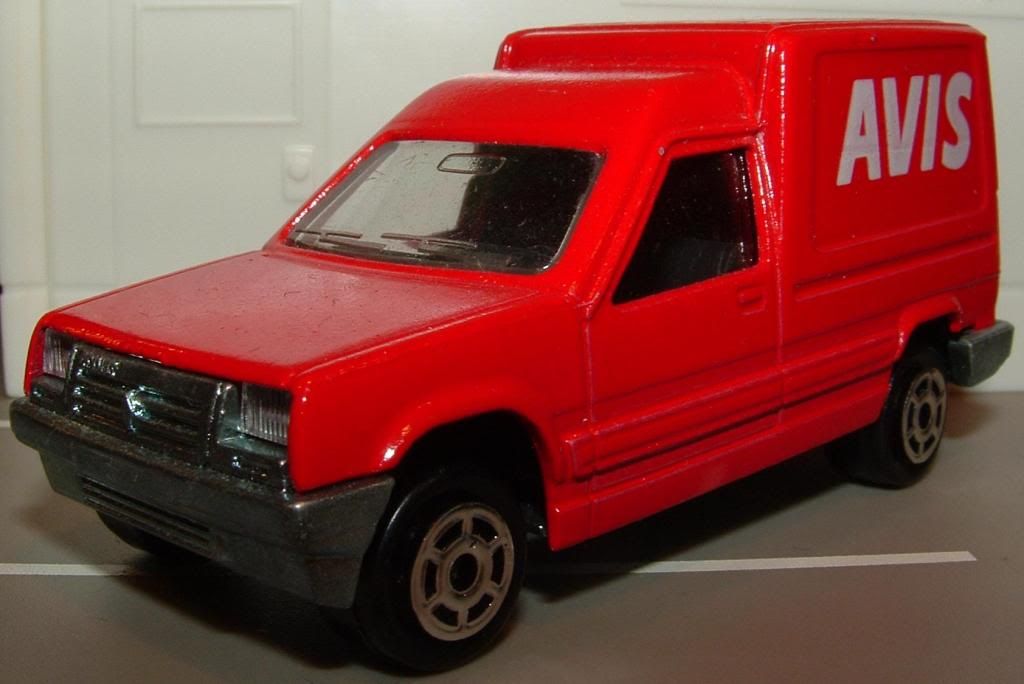
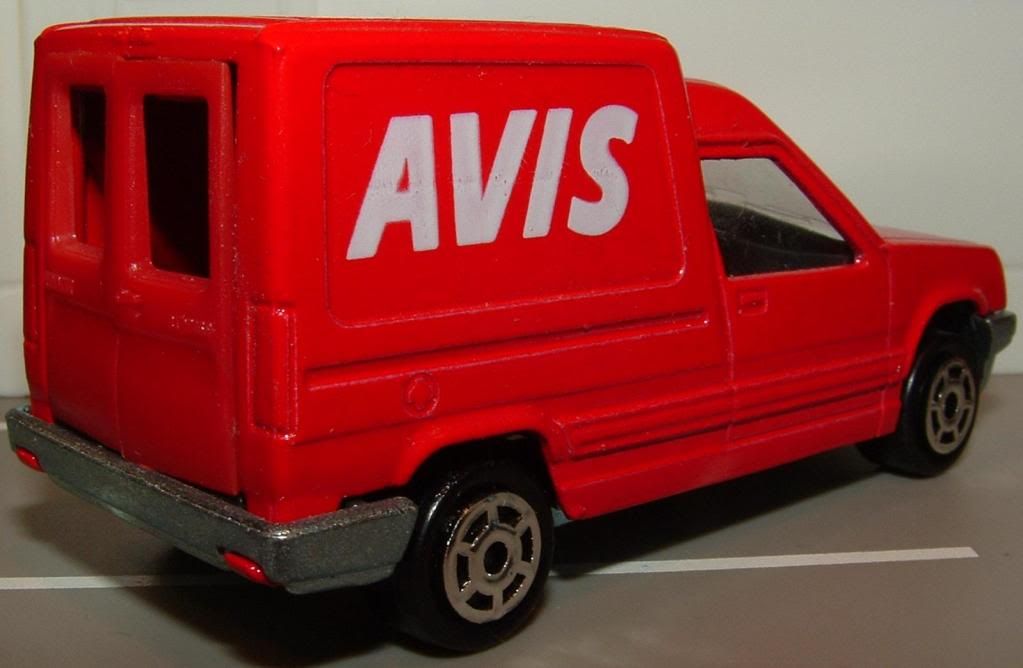
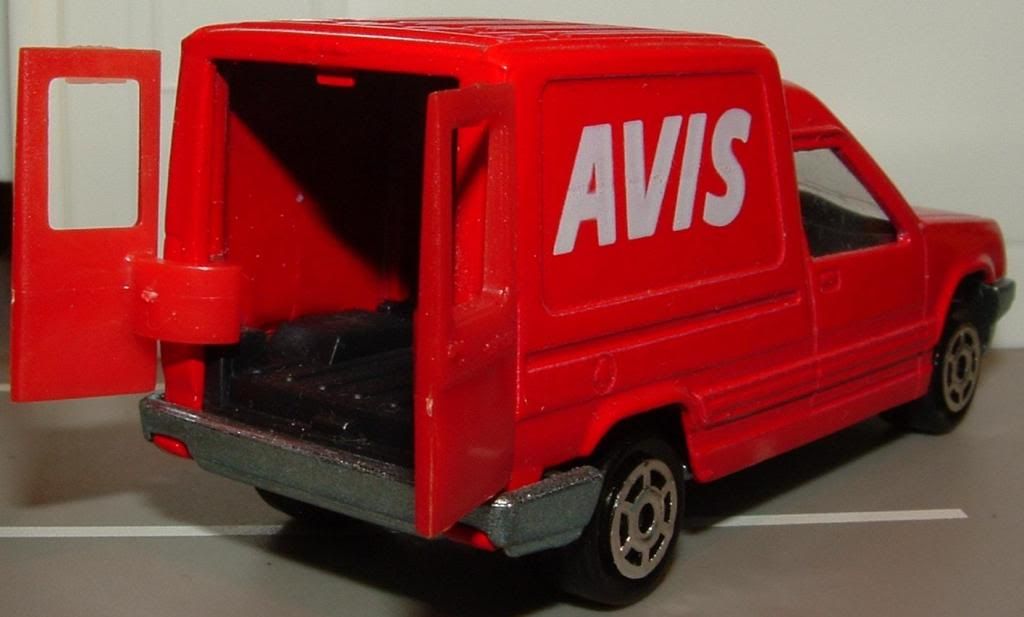
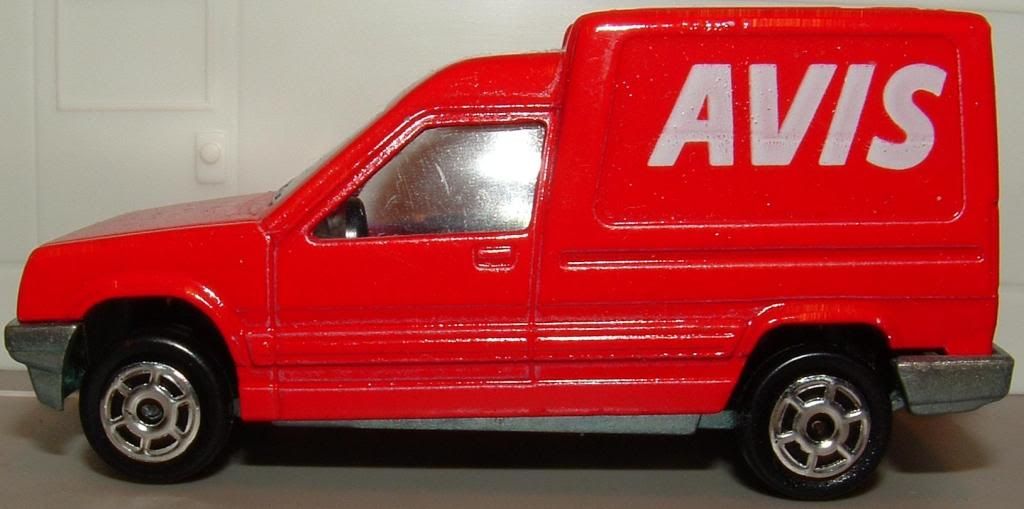
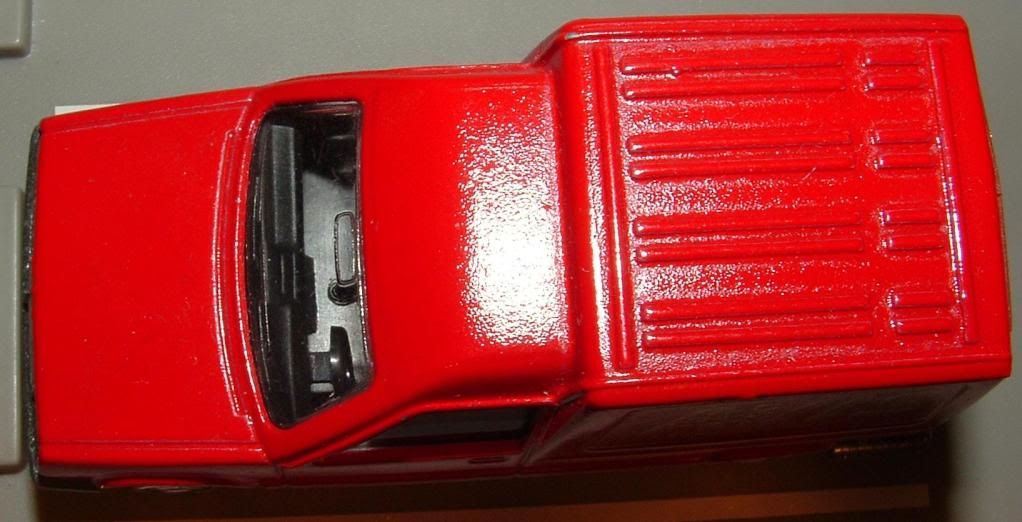
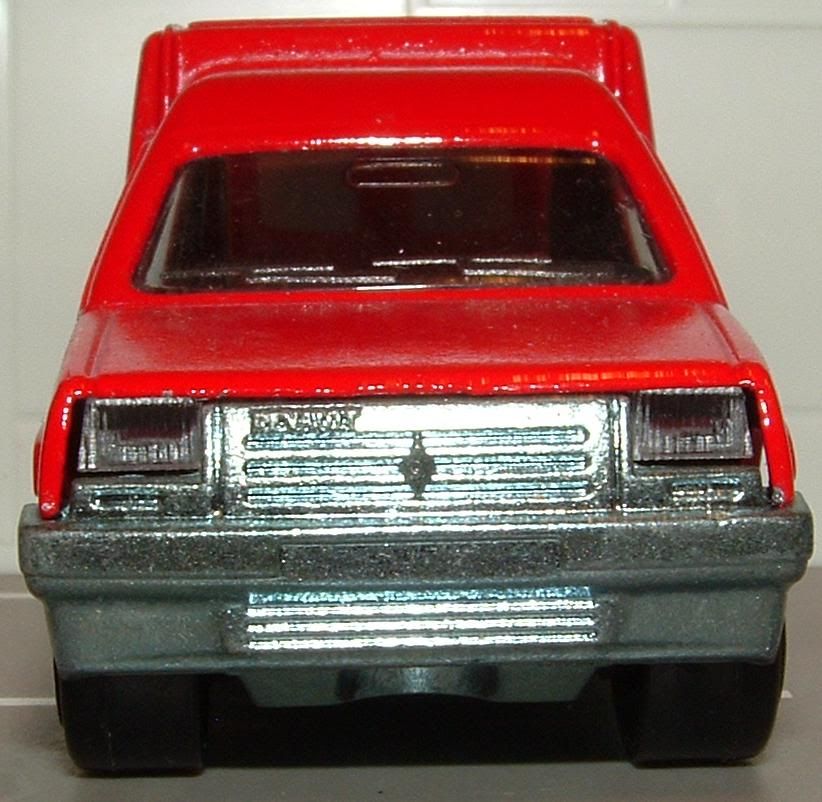
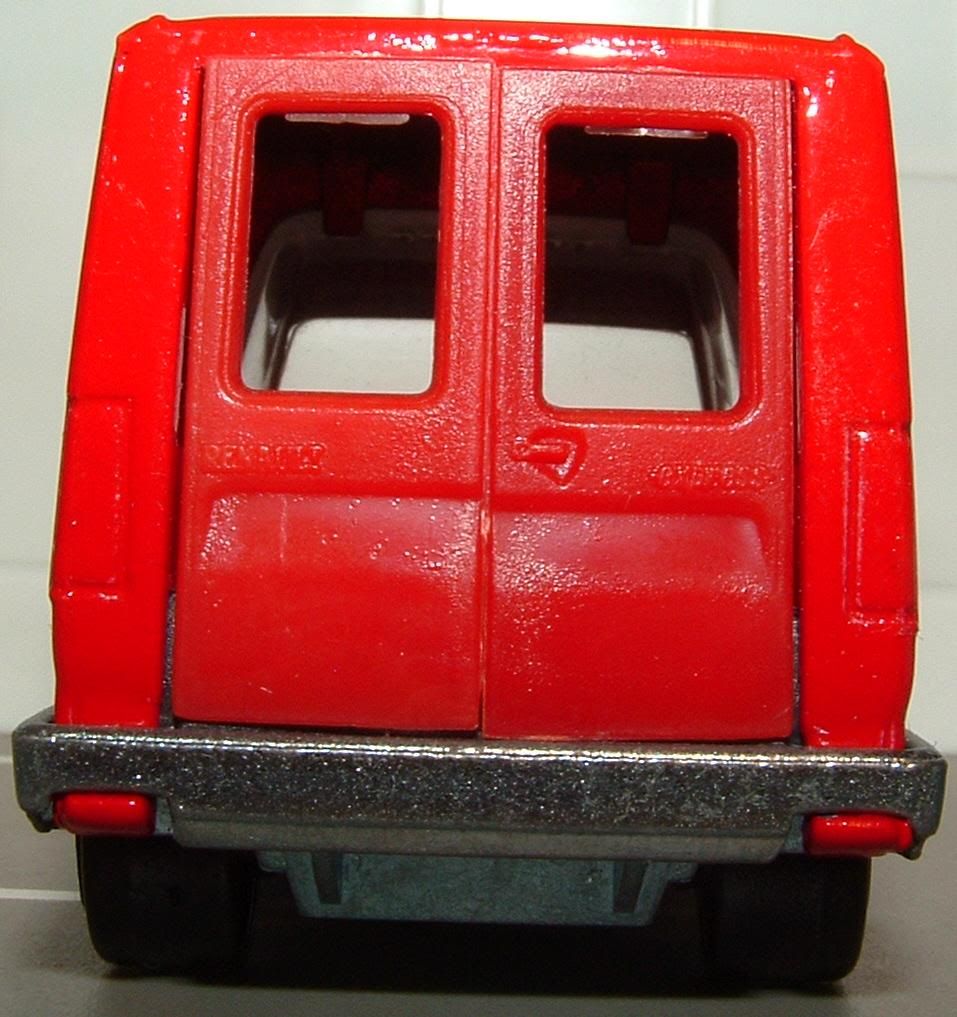
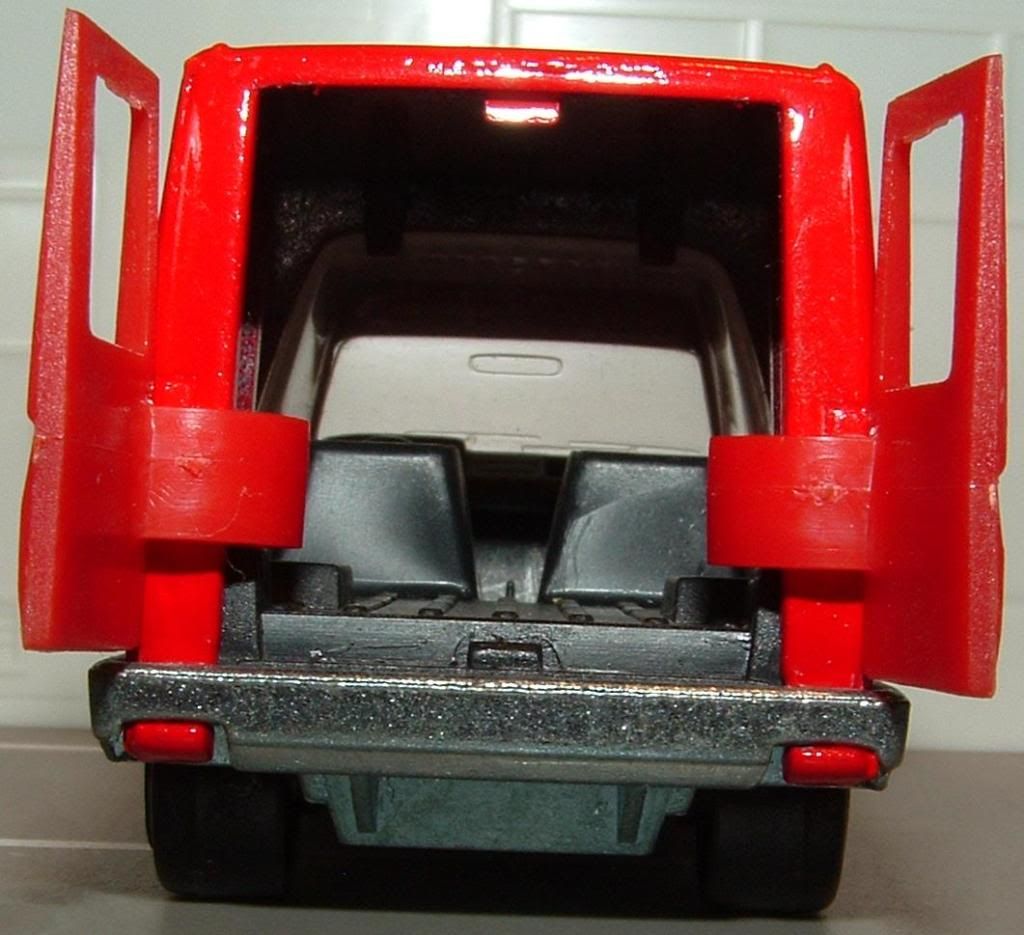
Today's car of the day is Majorette's 1987 Renault Express.
The Renault 5 (also called the R5) is a supermini produced by the French automaker Renault in two generations between 1972 and 1996. It was sold in many markets, usually as the Renault 5 and in North America as Le Car, from 1976 to 1986. Nearly 5.5 million Renault 5s were built.
For more information and pictures of the real car please visit: Renault Express & Avis
In all the years I've had this model, I never knew until just now that it was based on the Renault 5. This must be a very tiny van in real life.
The second generation Renault 5, often referred to as the Supercinq or Superfive, appeared in 1985. Although the bodyshell and chassis were completely new (the platform was based on that of the Renault 9/11), familiar 5 styling trademarks were retained; styling was the work of Marcello Gandini. The new body was wider and longer featuring 20 percent more glass area and more interior space, with a lower drag coefficient (0.35), as well as 57.4 mpg-US (4.10 L/100 km; 68.9 mpg-imp) at 55 miles per hour (89 km/h) in the economy models. The biggest change was the adoption of a transversely-mounted powertrain taken directly from the 9 and 11, plus a less sophisticated suspension design, which used MacPherson struts.
The second-generation R5 also spawned a panel van version, known as the Renault Express. It was commercialized in some European countries as the Renault Extra (UK) or Renault Rapid (mainly German speaking countries). This car was intended to replace the R4 F6 panel van, production of which had ceased in 1986.
Avis Rent a Car System, LLC is a car rental company headquartered in Parsippany-Troy Hills Township, New Jersey, United States. Avis, Budget Rent a Car and Budget Truck Rental are all units of Avis Budget Group.
Avis Budget Group operates the Avis brand in North America, Latin America, the Caribbean, India, Australia and, New Zealand. Recently Avis has acquired Avis Europe plc which once was a separate corporation licensing the Avis brand. Avis is the second largest car rental agency in the world preceded by Hertz Corporation.
The company features General Motors (GM) vehicles such as Chevrolet and Cadillac, but also rents popular non-GM brands including Ford and Toyota.
Avis is a leading rental car provider to the commercial segment serving business travellers at major airports around the world, and to leisure travellers at off-airport locations. Many of the off-airport locations are franchised operations rather than company-owned and -operated, as is the case with most airport locations. Avis was the first car rental business to be located at an airport.
Subscribe to:
Posts (Atom)