A blog focusing on 1/64 diecast from such popular brands as Hot Wheels, Matchbox, Johnny Lightning, M2 Machines, GreenLight, Tomica, Yat Ming, Majorette, MotorMax, Siku, Corgi, Guisval, Playart, Ertl, Zylmex, Racing Champions, & many more. Swifty's Garage features a daily Car Of The Day and news updates from your favorite brands!
Showing posts with label Fiero. Show all posts
Wednesday, January 25, 2012
Car Of The Day: January 25, 2012
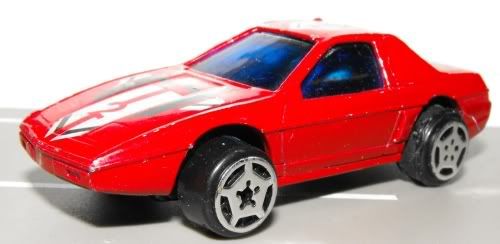
Today's car of the day is Zymex's 1985 Pontiac Fiero.
The Pontiac Fiero is a mid-engined sports car that was built by the Pontiac division of General Motors from 1984 to 1988. The Fiero—meaning "proud" in Italian and "wild", "fierce", or "ferocious" in Spanish—was designed by George Milidrag and Hulki Aldikacti as a Pontiac sports car. The Fiero was the first two-seater Pontiac since the 1926 to 1938 coupes, and also the first and only mass-produced mid-engine sports car by a U.S. manufacturer. Many technologies incorporated in the Fiero design such as plastic body panels were radical for its time. Alternative names considered for the car were Sprint, P3000, Pegasus, Fiamma, Sunfire, and Firebird XP. The Fiero 2M4 (2-seat, Mid-engine, 4-cylinder) was on Car and Driver magazine's Ten Best list for 1984. The 1984 Fiero was the Official Pace Car of the Indianapolis 500 for 1984, beating out the new 1984 Chevrolet Corvette for the honor.
370,168 Fieros were produced over the relatively short production run of five years; by comparison, 163,000 Toyota MR2s were sold in its first five years. At the time, its reputation suffered from criticisms over performance, reliability and safety issues. Today however, compared to less adventurous attempts at two-seaters such as the Ford EXP, the unique style of the Fiero compared to other American cars has left it a cult following as a collectible car. It remains a popular chassis for rebodies and electric conversions.
For more information and pictures of the real car please visit: Pontiac Fiero
The Pontiac Fiero has been covered extensively in 1/64 scale with models from Hot Wheels, Matchbox (racing), Majorette (racing), Ertl, Zylmex, and MotorMax Fresh Cherries. This one and the Fresh Cherries casting are the two best, and I think if this was given premium wheels and upgrade paint & tampos it would be the hands down winner.
Already selling the Corvette, General Motors management and accountants were opposed to investing in a second two-seater sports car. But in 1979, during the oil crisis, management saw a market opportunity for a fuel-efficient sporty commuter car, and design work on the Fiero commenced. To this end, it was fitted with a fuel efficient version of GM's 2.5 L four-cylinder "Iron Duke" engine capable of 27 mpg-US (8.7 L/100 km; 32 mpg-imp) in the city and 40 mpg-US (5.9 L/100 km; 48 mpg-imp) on the highway with the economy-ratio transmission option. These figures are U.S. Environmental Protection Agency test-circuit results, published by Pontiac, and confirmed from multiple sources. It was impressive mileage for a 2.5-liter engine of the period, and still good by today's standards, but the three-speed automatic reduced highway mileage to only 32 mpg-US (7.4 L/100 km; 38 mpg-imp). With respect to fuel economy, the Fiero would appeal to a market niche for which the Corvette with its V8 engine was unsuitable.
A mid-engine layout was chosen as a way to reduce both aerodynamic drag and vehicle weight to improve fuel efficiency, and also for its handling, traction, and braking benefits. The sports car potential of the mid-engine layout was not fully realized when the Fiero debuted. In line with its market position, the tires, brakes, and some suspension components were carried over from other GM economy cars (like the Chevrolet Citation and Chevrolet Chevette) so the Fiero could be priced appropriately. As a result, the handling and cornering abilities of the initial Fiero were merely on par with other contemporary sporty coupes (Road & Track 1985). The public had high expectations for the Fiero with its mid-engine layout and futuristic styling, which resembles more exotic mid-engine sports cars costing much more. While initially garnering good reviews for its handling (Motor Trend 1984), the Fiero soon received disappointing reviews, as the automotive critics expected higher performance from a mid-engine two-seater. Despite the critical press, the Fiero sold extremely well and Pontiac operated three shifts at the factory during 1984, and could not keep up with initial demand.
The sharing of suspension components with other GM cars meant the rear suspension and powertrain was almost identical to that of the Chevrolet Citation and Pontiac Phoenix; the Fiero even included rear tie rod ends attached to a "steering knuckle", although these were hard-mounted to the engine cradle and only used for maintaining the rear tire alignment. The front suspension was derived from the Chevrolet Chevette, and Chevette enthusiasts found that they could upgrade their undersized front brakes and rotors using Fiero parts.
By 1985, the oil crisis was a thing of the past and demand developed for a Fiero having more engine power and better sports car performance. Pontiac responded by introducing the GT model which included upgraded suspension tuning, wider tires, and a V6 engine having 43 horsepower (32 kW) more than the base four-cylinder. In 1986, the GT model was restyled to look even more sleek.
Numerous changes were made to the 1988 Fiero. The most significant was a completely redesigned suspension (and parts of the space frame) to realize the potential of the mid-engine layout. Now unique to the Fiero, the new suspension included new two piece brake calipers and upgraded brake rotors for 1988. The available I4 and V6 engines benefited from evolutionary improvements, but the planned availability of turbochargers and newer DOHC engines did not happen before production ended.
Officially, production ended because of an internal GM forecast of insufficient future profits due to an expected decrease in overall demand for two-seater sports cars, however this decision was commensurate with heavy media coverage of Fiero engine fires. GM's forecast may have been a year premature, as the actual sales in 1988 were lower than prior years but still double the forecast.
Sunday, December 12, 2010
The Two Seat Commuter Car Phenomenon
In the 1980s, the US auto industry was still recovering from the fuel crises of the 1970s. A lot of planning went into making cars smaller, just as gas prices hit all time lows. One of the more interesting phenomena to hit dealerships of the 1980s was the two-seater commuter car. There had been two seat cars before (the original Thunderbird, the Corvette, the Shelby Mustangs), and there had even been two seat economy cars before (the AMC Gremlin offered this as an option- to very few takers), but this was different. From the onset, these cars were purpose designed to be two seat economy cars.
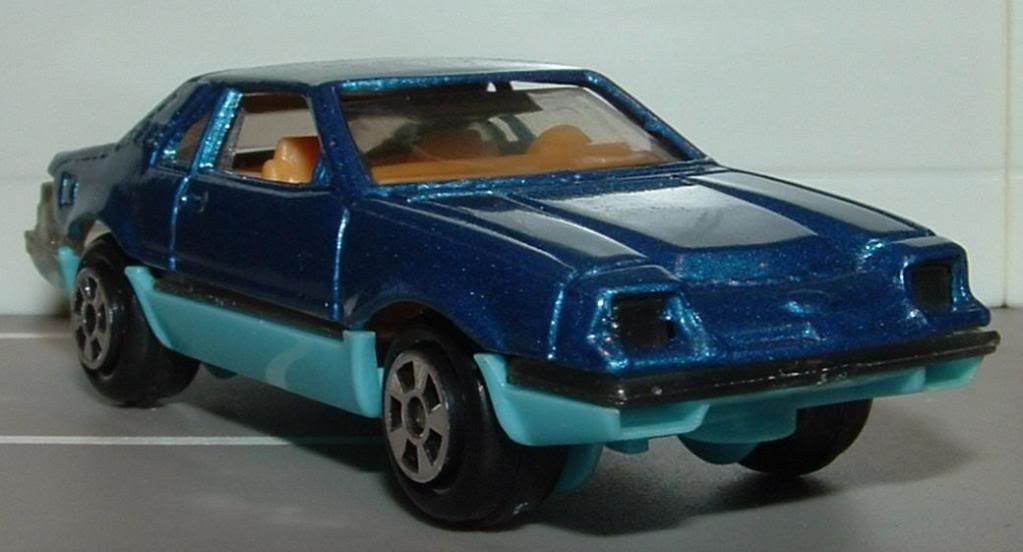
The Ford EXP & Mercury LN7 were the first to hit the market in 1981 (as 1982 models), and the bizarre frog’s eye headlights ensured that these cars looked like absolutely nothing else on the road. The LN7 was dropped after two model years and approximately 40,000 sales. While the EXP would soldier on through 1988 (eventually being replaced by the all new Ford Probe in 1989), and sales did recover a bit with the 1986 restyle that eliminated the frog’s eye headlight treatment, the EXP never met sales expectations, selling a mere 225,000 examples in seven model years (this total includes the 40,000 LN7s). Ertl and Zylmex offered the first generation EXP in small scale- the only examples of this car in 1/64.
The Pontiac Fiero was Pontiac’s way of getting around management’s refusal to grant the division a true sports car (for fear it would cannibalize sales from the Corvette). So they decided to develop a sporty two-seater economy car instead. And the futuristic styling proved to be a hit with car buyers, as almost 400,000 were sold in the five years the car was available. The real problem was the car could not deliver the performance to match its looks. With the Iron Duke 2.5 liter motor the Fiero was a sloth, and the car’s handling won very little praise due to the fact most of it was made from off the shelf parts used in the Citation and Chevette to save money. By the time Pontiac corrected the performance and handling issues, GM had already decided to pull the plug on the project. This was a very popular subject for diecast manufacturers with Hot Wheels, Matchbox, Majorette, Welly, Zylmex, Rhino, Road Champs (opening rear hood/trunk), Blue Box, Faie, and others offering models of the car when new, and lastly, a model from the MotorMax Fresh Cherries line issued long after the real car’s expiration date.
The Honda CR-X was a Civic based two-seat hatchback launched for the 1984 model year. Sportier styling and better performance than the regular Civic helped the reputation of this car and it’s slowly approaching cult status. This is likely the most collectible of the cars listed. That said, real examples of the car often trade for less than $500 as evidenced by the frequency they are raced on the LeMons racing circuit (a race series designed for any car costing the drivers less than $500). Perhaps most importantly to this article, this is also the model that achieved the best gas mileage- published claims of 57 MPG (highway) have been recorded for this car.
In the mid 1990s Honda replaced the CR-X with the Civic del Sol, a two-seat roadster based on the Civic. This was not an overly successful model for Honda, but a modifiable small-scale example exists by X-Concepts.
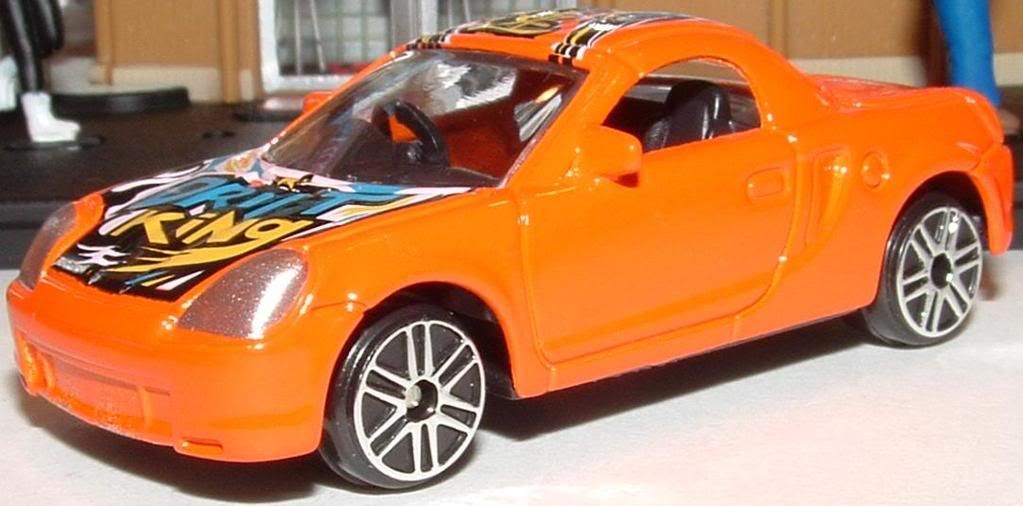
The Toyota MR2 deserves an honorable mention as the original intent was to provide a sporty car that delivered great gas mileage. Somewhere along the way Toyota turned the MR2 into a true sports car before its introduction, but considering it is a two-seater and delivers great gas mileage, we’re including it in this article as well. This was by far the longest lasting car of the bunch, lasting through three generations and only being discontinued for good in 2007 and more than twenty years on the market. Replicas were made in small scale by Matchbox, Zylmex, Road Champs, Tomica, and others. The second generation was made by Hot Wheels, and the final generation was replicated by Yat Ming, Jada, Muscle Machines and others.
Ford EXP:
Ertl
Zylmex
Pontiac Fiero:
Hot Wheels
Matchbox
Majorette
MotorMax Fresh Cherries
Blue Box
Welly
Road Champs
Soma
Zylmex
Rhino
The Fiero GT was only modeled by Hot Wheels, and only as the generic “Camo” armored, well-armed, and lifted 4x4 military vehicle. A fiberglass sports car would be an absurd choice of vehicle for armoring, and an even more bizarre choice for combat.
Honda CRX:
Zylmex
Johnny Lightning
Tomica Limited Vintage Neo
Summer
Mega Toys
Honda Civic del Sol:
X-Concepts
Toyota MR2 (1st generation):
Matchbox
Tomica
Road Champs
Zylmex
Toyota MR2 (2nd generation):
Hot Wheels
Summer
Toyota MR2 (3rd generation):
Yat Ming
Jada
Muscle Machines
The Ford EXP & Mercury LN7 were the first to hit the market in 1981 (as 1982 models), and the bizarre frog’s eye headlights ensured that these cars looked like absolutely nothing else on the road. The LN7 was dropped after two model years and approximately 40,000 sales. While the EXP would soldier on through 1988 (eventually being replaced by the all new Ford Probe in 1989), and sales did recover a bit with the 1986 restyle that eliminated the frog’s eye headlight treatment, the EXP never met sales expectations, selling a mere 225,000 examples in seven model years (this total includes the 40,000 LN7s). Ertl and Zylmex offered the first generation EXP in small scale- the only examples of this car in 1/64.
The Pontiac Fiero was Pontiac’s way of getting around management’s refusal to grant the division a true sports car (for fear it would cannibalize sales from the Corvette). So they decided to develop a sporty two-seater economy car instead. And the futuristic styling proved to be a hit with car buyers, as almost 400,000 were sold in the five years the car was available. The real problem was the car could not deliver the performance to match its looks. With the Iron Duke 2.5 liter motor the Fiero was a sloth, and the car’s handling won very little praise due to the fact most of it was made from off the shelf parts used in the Citation and Chevette to save money. By the time Pontiac corrected the performance and handling issues, GM had already decided to pull the plug on the project. This was a very popular subject for diecast manufacturers with Hot Wheels, Matchbox, Majorette, Welly, Zylmex, Rhino, Road Champs (opening rear hood/trunk), Blue Box, Faie, and others offering models of the car when new, and lastly, a model from the MotorMax Fresh Cherries line issued long after the real car’s expiration date.
The Honda CR-X was a Civic based two-seat hatchback launched for the 1984 model year. Sportier styling and better performance than the regular Civic helped the reputation of this car and it’s slowly approaching cult status. This is likely the most collectible of the cars listed. That said, real examples of the car often trade for less than $500 as evidenced by the frequency they are raced on the LeMons racing circuit (a race series designed for any car costing the drivers less than $500). Perhaps most importantly to this article, this is also the model that achieved the best gas mileage- published claims of 57 MPG (highway) have been recorded for this car.
In the mid 1990s Honda replaced the CR-X with the Civic del Sol, a two-seat roadster based on the Civic. This was not an overly successful model for Honda, but a modifiable small-scale example exists by X-Concepts.
The Toyota MR2 deserves an honorable mention as the original intent was to provide a sporty car that delivered great gas mileage. Somewhere along the way Toyota turned the MR2 into a true sports car before its introduction, but considering it is a two-seater and delivers great gas mileage, we’re including it in this article as well. This was by far the longest lasting car of the bunch, lasting through three generations and only being discontinued for good in 2007 and more than twenty years on the market. Replicas were made in small scale by Matchbox, Zylmex, Road Champs, Tomica, and others. The second generation was made by Hot Wheels, and the final generation was replicated by Yat Ming, Jada, Muscle Machines and others.
Ford EXP:
Ertl
Zylmex
Pontiac Fiero:
Hot Wheels
Matchbox
Majorette
MotorMax Fresh Cherries
Blue Box
Welly
Road Champs
Soma
Zylmex
Rhino
The Fiero GT was only modeled by Hot Wheels, and only as the generic “Camo” armored, well-armed, and lifted 4x4 military vehicle. A fiberglass sports car would be an absurd choice of vehicle for armoring, and an even more bizarre choice for combat.
Honda CRX:
Zylmex
Johnny Lightning
Tomica Limited Vintage Neo
Summer
Mega Toys
Honda Civic del Sol:
X-Concepts
Toyota MR2 (1st generation):
Matchbox
Tomica
Road Champs
Zylmex
Toyota MR2 (2nd generation):
Hot Wheels
Summer
Toyota MR2 (3rd generation):
Yat Ming
Jada
Muscle Machines
Labels:
CR-X,
del sol,
Ertl,
EXP,
Fiero,
Ford,
Honda,
Hot Wheels,
Jada,
Matchbox,
MR2,
Pontiac,
Road Champs,
Tomica,
Toyota,
X-Concepts,
Yat Ming,
Yatming,
Zylmex
Subscribe to:
Posts (Atom)