Showing posts with label Playart. Show all posts

Tuesday, July 31, 2012

Car Of The Day: July 31, 2012


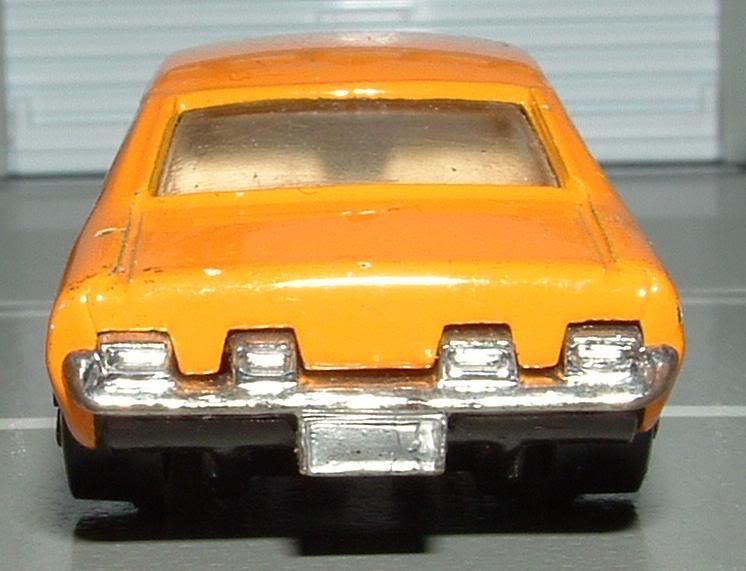
Today's car of the day is Playart's 1969 Honda N360.


The Honda N360 is a kei car, designed and built by Honda and produced from March 1967 through 1970, while its larger N600 brother lasted three more years. After a January 1970 facelift, the N360 became the NIII360 and continued in production until 1972. The car featured front wheel drive and an air-cooled, four stroke, 354 cc, 31 hp (23 kW) two-cylinder engine, and was borrowed from the Honda CB450 motorcycle. The displacement was reduced so as to comply with kei car legislation which stipulated maximum allowable engine displacement. This same engine was also used in the Honda Vamos, with a beam axle/leaf spring rear suspension. The "N" prefix stands for the Japanese word "norimono" which means "vehicle" in English. The exterior dimensions were in compliance with Japanese government regulations concerning kei cars, however, vehicles installed with the 402 cc and 599 cc engines were too large for the category, and were largely intended for international sales.


For more information and pictures of the real car please visit: Honda N360


This is one of the cars that makes Playart such a favorite among collectors today- quirky subject material.  While the Civic is well-represented in small scale, this one is not.


A two-door sedan was the original body style, with a two-door wagon (considered a commercial vehicle in Japan, and therefore called a "Van") called the LN360 coming in June of the first year. An upgraded 36 hp (27 kW) engine was added in October 1968 for the N360 T. A 402 cc engine was used in the similar N400. The engine's technological specifications reflected engineering efforts resulting from the development of the larger Honda 1300, which used an air-cooled 1.3 litre engine. One of the primary differences between the N360 and the Honda Life that followed was the N360/600 had an air-cooled engine, and the Life had a water-cooled engine. The water-cooled engine was better able to comply with newly enacted emission standards in Japan, and a move away from air-cooled, and two-stroke engines. As does the original Mini, but unlike the succeeding Life, the N360/600 had its gearbox mounted in the sump rather than bolted on as a separate unit.

The Hondamatic-equipped N360AT which appeared in August 1968 was the first kei car equipped with an automatic transmission.

Saturday, June 30, 2012

Car Of The Day: June 30, 2012


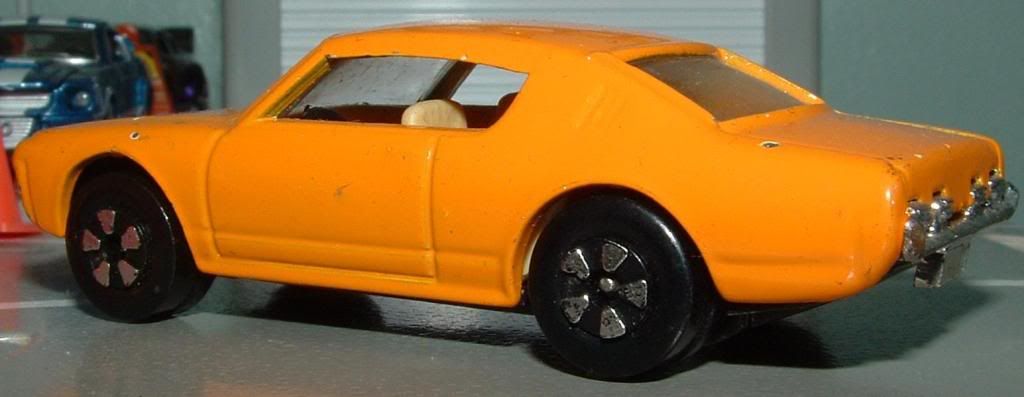
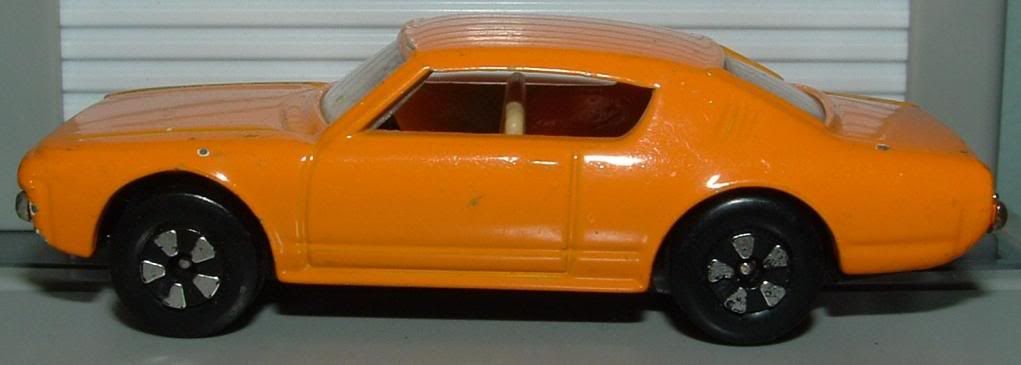
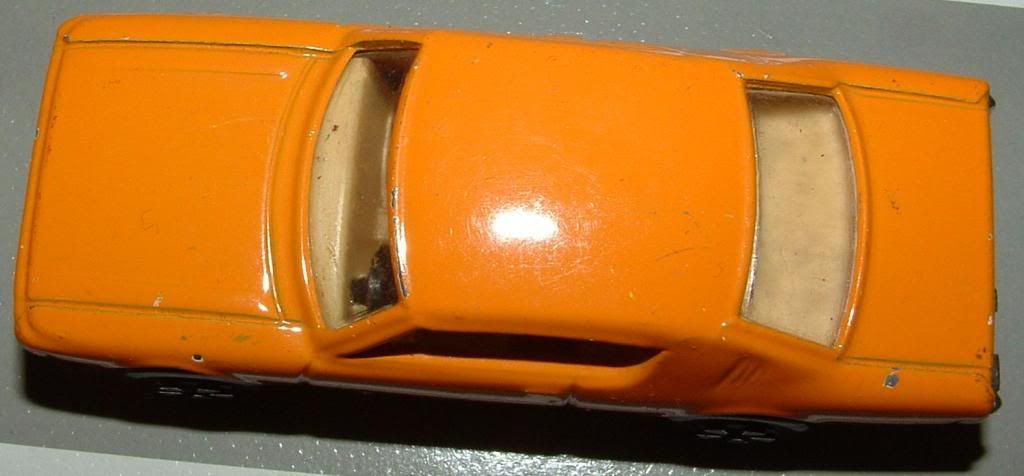
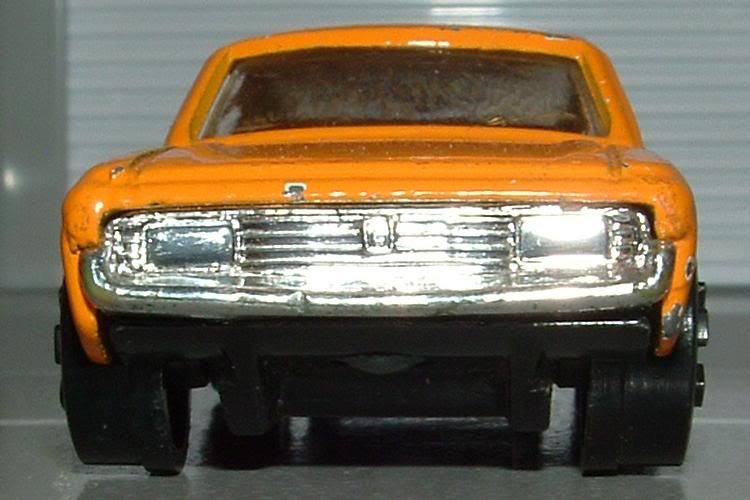
Today's car of the day comes from juantoo3's collection and is Playart's 1971 Toyota Celica.


The Toyota Celica name has been applied to a series of coupes made by the Japanese company Toyota. The name is ultimately derived from the Latin word coelica meaning "heavenly" or "celestial".

Throughout its life span the Celica has been powered by various four-cylinder engines. The most significant change occurred in August 1985, when the car's drive layout was changed from rear wheel drive to front wheel drive. During the first three generations, American market Celicas were powered by various versions of Toyota's R series engines. The four-wheel drive turbocharged model (designated All-trac in the United States or GT-Four elsewhere) was produced from 1986 to 1999. Variable Valve Timing came in late 1997 Japanese models, and became standard in all models from 2000 on. Through seven generations, the model has gone through many revisions and design forks, including the Toyota Celica Supra (later known as the Toyota Supra). The Celica was available as notchback and liftback coupes, as well as a convertible.


For more information and pictures of the real car please visit: Toyota Celica


The first generation Celica was released to the Japanese market intended to be a more affordable alternative to Toyota's sportscar, the 2000GT. The car's platform was shared with the Toyota Carina yet sold at a different dealership sales channel called Toyota Corolla Store. The Carina was sold at Toyota Store locations. The Celica was also positioned above the Corolla Levin, also sold at Toyota Corolla Store (the Corolla Levin was not a hardtop, the Celica was).

Displayed at the October 1970 Tokyo Motor Show and marketed in December of the same year, the Celica was a personal car that emphasized styling and driving enjoyment. Japanese models were ET, LT, ST, GT, and GTV (which was introduced in 1972, the V standing for Victory).
For export markets, the Celica was offered in three different levels of trim; LT, ST and GT.
At its introduction the Celica was only available as a pillarless hardtop notchback coupe. The SV-1 liftback was shown as a concept car at the 1971 Tokyo Motor Show. With slight modifications, this was introduced in Japan in April 1973 as the 2-litre RA25 and 1.600 L TA27 liftbacks. It was then exported to Europe in RHD form as the 1.6-litre liftback. After the October 1975 facelift, it was available in both RHD and LHD forms in other markets. The RV-1 wagon was also shown at the 1971 Tokyo Motor Show but it did not reach production.

The Japanese GT models had various differences from the ET, LT and ST including the hood flutes, power windows, air conditioning, and specific GT trim, but shared a few things with the ST - a full-length center console and oil pressure/ammeter gauges while the LT had warning lights for these functions.
There was also the GTV version, which differed from the GT with a slightly cut-down interior, and did not come standard with things like power windows, but they were optional. The GTV has firmer suspension.
The first generation Celicas can be further broken down into two distinctive models. The first of these was the original with slant nose (trapezoid-like shape front corner light). This is for Coupe model only, TA22, RA20, and RA21. These models were released from 1970 to 1975 and came equipped with the 2T, 2T-G 1.6-liter, or 18R 2.0-liter motor. They had a 95 inches (2,400 mm) wheelbase. The second series (98 in or 2,500 mm wheelbase) had a flat nose (square front corner light) and slightly longer wheelbase, and was known in Europe as the TA23. This facelift model appeared in Japan in 1974, but for export was the 1976 model year. The Japanese version had engines under 2.0 liters so as to conform to Japanese regulations concerning engine displacement size, thereby allowing buyers to avoid an additional tax for a larger engine.
In some markets, the lower-end LT was equipped with the single carbureted four-cylinder 2T engine displacing 1,600 cc, while the ST came with a twin downdraft-carburetor 2T-B engine. The 2T-G that powered the high-end GT model was a DOHC 1,600 cc engine equipped with twin Mikuni-Solex Carburetors.

The first Celica for North America, 1971 ST was powered by 1.9-liter 8R engine. The 1972-1974 models have 2.0-liter 18R-C engines. For 1975-77, the engine for the North American Celica is the 2.2-liter 20R. The Celica GT and LT models were introduced in the U.S. for the 1974 model year. The top-line GT included a 5-speed manual transmission, rocker panel GT stripes, and styled steel wheels with chrome trim rings. The LT was marketed as an economy model. Mid-1974 saw minor changes in the Celica's trim and badges and slightly different wheel arches. The A30 automatic transmission became an option on North American ST and LT models starting in the 1973 model year. For 1975, the 1974 body was used, but body-color plastic fascia and sturdier chrome and black rubber bumpers, replaced the chrome bumpers used in the earlier cars (in accordance with US Federal bumper laws). Unfortunately the early 8R and 18R series engines proved to be less than durable, with early failures common. The 1974 18R-C engine's durability was improved somewhat, but the 20R introduced for 1975 proved to be a better engine in most respects.

Wednesday, November 30, 2011

Car Of The Day: November 30, 2011


Today's car of the day is Playart's 1975 Lancia Stratos HF.


The Lancia Stratos HF, widely and more simply known as Lancia Stratos, is a car made by Italian car manufacturer Lancia. The HF stands for High Fidelity. It was a very successful rally car, winning the World Rally Championship in 1974, 1975, and 1976.

A Bertone designed concept car called the Lancia Stratos Zero was shown to the public in 1970, but shares little but the name and mid-engined layout with the Stratos HF version. An new car called the New Stratos was announced in 2010 which was heavily influenced by the design of the original Stratos, but was based on a Ferrari chassis and engine.


For more information and pictures of the real car please visit: Lancia Stratos HF


The Stratos is one of my favorite cars, and the York toy show provided this example at a price I couldn't pass up.


Lancia presented the Bertone designed Lancia Stratos HF prototype at the 1971 Turin Motor Show, a year after the announcement of the Stratos Zero concept car. The prototype Stratos HF (Chassis 1240) was fluorescent red in colour and featured a distinctive crescent-shaped-wrap-around windshield providing maximum forward visibility with almost no rear visibility. The prototype had three different engines in its early development life: the Lancia Fulvia engine, the Lancia Beta engine and finally for the 1971 public announcement, the mid-mounted Dino Ferrari V6 producing 192 hp (143 kW).
The Stratos was a very successful rally car during the 1970s and early 1980s. It started a new era in rallying as it was the first car designed from scratch for this kind of competition. The three leading men behind the entire rallying project were Lancia team manager Cesare Fiorio, British racer/engineer Mike Parkes and factory rally driver Sandro Munari.

Lancia did extensive testing with the Stratos and raced the car in several racing events where Group 5 prototypes were allowed during the 1972 and 1973 seasons. Production of the 500 cars required for homologation in Group 4 commenced in 1973 and the Stratos was homologated for the 1974 World Rally Championship. The Ferrari Dino V6 engine was phased out in 1974, but 500 engines among the last built were delivered to Lancia. Production ended in 1975 when it was thought that only 492 were made.

Manufacturer of the car was Bertone in Turin, with final assembly by Lancia at the Chivasso plant. Powered by the Dino 2.4 L V6 engine that was also fitted to the rallying versions, but in a lower state of tune, it resulted in a power output of 190 bhp (142 kW; 193 PS), giving the road car a 0-60 mph time of just under five seconds, and a top speed of 144 mph (232 km/h). The car was sold as the Lancia Stratos Stradale.


For racing, the engine was tuned up to 280 hp (209 kW) and even to 560 hp (418 kW) with a single KKK turbocharger. However, turbocharged versions were only allowed to compete in Group 5 and were never as reliable as their naturally aspirated counterparts.

The car won the 1974, 1975 and 1976 championship titles in the hands of Sandro Munari and Björn Waldegård, and might have gone on to win more had not internal politics within the Fiat group placed rallying responsibility on the Fiat 131 Abarths. As well as victories on the 1975, 1976 and 1977 Monte Carlo Rally, all courtesy of Munari, the Stratos won the event with the private Chardonnet Team as late as 1979.
Without support from Fiat, and despite new regulations that restricted engine power, the car would remain a serious competitor and proved able to beat works cars in several occasions when entered by an experienced private team with a talented driver. The final chapter of the Stratos' racing career at international level took place as late as 1981, at the Tour de Corse Automobile, another World Rally Championship event, with a victory by longtime Stratos privateer Bernard Darniche.

When the Fiat group favored the Fiat 131 for rallying Lancia also built two Group 5 turbocharged 'silhouette' Stratos for closed-track endurance racing. These cars failed against the Porsche 935s on closed tracks but proved successful in hybrid events. While they failed in the Tour de France Automobile, one of these cars won the 1976 Giro d'Italia Automobilistico, an Italian counterpart of the Tour de France Automobile. Unfortunately one of the cars was destroyed in Zeltweg, when it caught fire due to overheating problems. The last surviving car would win the Giro d'Italia event again before it was shipped to Japan to compete in the Fuji Speedway based Formula Silhouette series, which was never raced. The car would then be sold and reside in the Matsuda Collection before then being sold to the renowned collector of Stratos', Christian Hrabalek, a car designer and the founder of Fenomenon Ltd, who has the largest Lancia Stratos Collection in the world, 11 unique Lancia Stratos cars, including the fluorescent red 1971 factory prototype and the 1977 Safari Rally car. His interest in the car led to the development of the Fenomenon Stratos in 2005.
Another unique Group 5 car is the Lancia Stratos HF of Austrian Rallycross driver Andy Bentza. The car was first driven by his Memphis team mate Franz Wurz, father of Formula One pilot Alexander Wurz. In 1976 Wurz claimed the first ever European Rallycross title recognised by the FIA with the car, by then still equipped with a 2.4 litre engine. For the ERC series of 1977 Wurz was entrusted with two experimental crankshafts by Mike Parkes, to bring the engine capacity up to just under 3000 cc. For 1978 Bentza took the Stratos over from Wurz, sold his own 2.4 litre Stratos to compatriot Reneé Vontsina, and won the GT Division title of the ERC. The one and only 3.0 litre Stratos was raced by Bentza till the mid 1980s, is nowadays still his property and ready to race. However, one of the two experimental crankshafts received from the Lancia factory was destroyed during a Rallycross event in the early 1980s.

Saturday, November 19, 2011

Car Of The Day: November 19, 2011


Today's car of the day is Playart's 1971 Toyota Crown.


The Toyota Crown is a line of full-size luxury sedans by Toyota. The range was primarily available in Japan and some other Asian countries, originally designed to serve as a taxi. Throughout the Crown's production, there has always been available a minimal content Crown in the sedan bodystyle platform used as a taxi, and in the mid 1990s, Toyota created an offshoot of the Crown sedan to serve specifically as a taxi, called the Toyota Comfort. The Crown also serves as a police car nationally, as well as transporting government officials at all levels.

In Japan, it is only available at Toyota Store dealership retail channels.The Crown is Toyota's oldest sedan still in production. It is outranked only by the Century and the Majesta in social status. The Crown is used by many Japanese companies as the company limousine. In many markets the Crown had become very expensive and was replaced by the Cressida in some international markets when it became available for export in the early 1980s. Most models are distinguishable by a unique "Crown" badge on the front grille, in place of the normal stylized 'T', but the normal Toyota badge is usually used on the rear.

It was sold in the United States during the late 1950s and up until 1971. Exports to Europe began in 1964 with the first cars going to Finland. Other European countries which saw imports of the Crown included the Netherlands and Belgium. The United Kingdom was another market until the early 1980s. It was also exported to Canada for a few years—1965–68. Australia was another important export market for the Crown—to the extent that it was manufactured there from the mid-1960s until the late 1980s using many local components. Trinidad and Tobago was also another country where the Toyota market had a successful run, which saw some productions between 1960-1980.
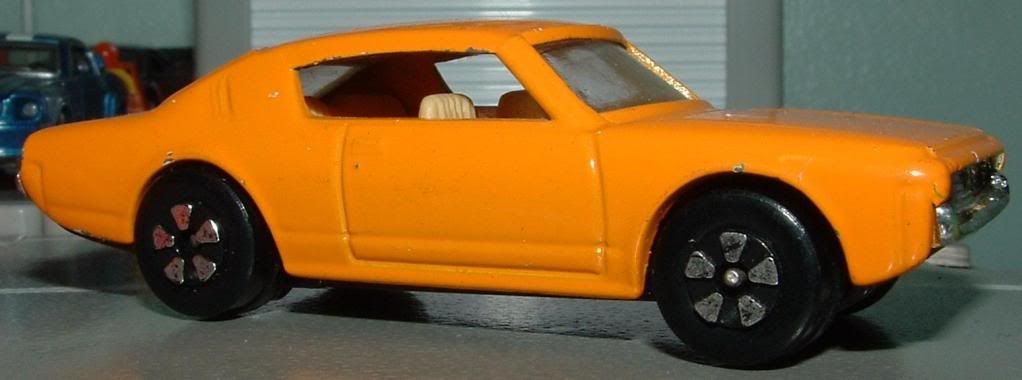
The Crown has existed in some form post World War II, and Toyota uses the "Crown" name as inspiration for their primary sedans, the Corolla which is Latin for "small crown", the Camry a phonetic transcription of the Japanese word kanmuri that means crown, and the Corona which is Spanish for crown.


For more information and pictures of the real car please visit: Toyota Crown


I actually saw one of these a year ago.  Very rare car in the USA- I was thrilled to spot one!


Launched in Feb 1971, the 4M 2600 engine was introduced with this generation, as was the luxurious Super Saloon trim level, followed by the Super Deluxe and Deluxe. The top of the line Royal Saloon was first introduced in the face-lifted Crown from 1973. The 2.0 liter 5R engine and the 2.0 liter M engine were also available in certain markets.

The Sedan and Wagon are coded MS60/MS65 and MS62/MS63. The Hardtop Coupe is MS70 (2.0 liter), or MS75 (2.6 liter). This generation was the first Crown marketed as a Toyota in Japan, as previous models were marketed as Toyopets. Also, in Japan, this model was known as the "blue whale" or "kujira" Crown. While the domestic market Hardtop has rectangular headlights, all export models come with twin round headlights. This model sold very badly in the US, possibly related to the futuristic styling with flush bumpers that was a bit ahead of its time. Only the first 2 years were exported. This is the last Crown to be sold in the USA. The Corona Mark II, replaced the Crown in North America.

The trunk could be opened remotely by turning the ignition key to the far left, and a button on the floor caused the radio to engage the signal seeking feature. A separate signal seeking feature was installed for rear seat passengers, installed behind the front seat facing the rear seat compartment.

Tuesday, July 5, 2011

Car Of The Day: July 5, 2011


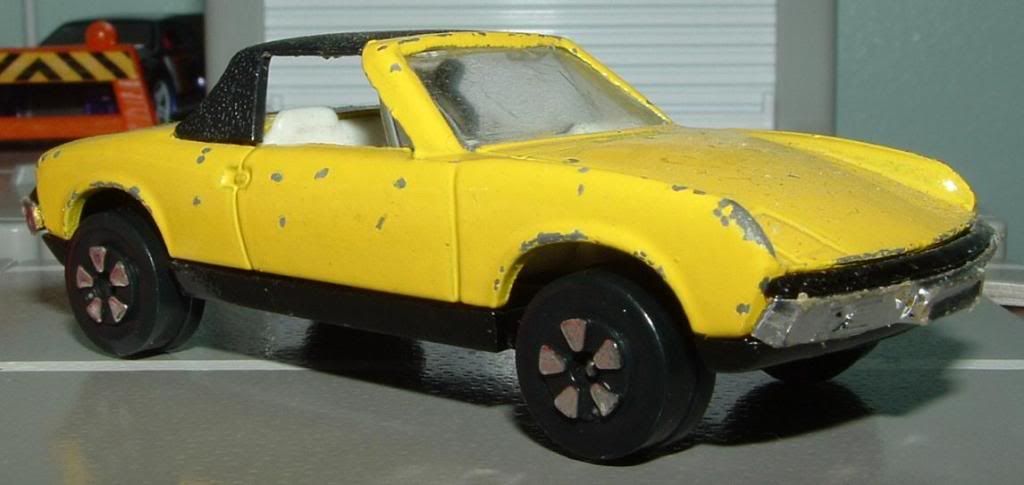
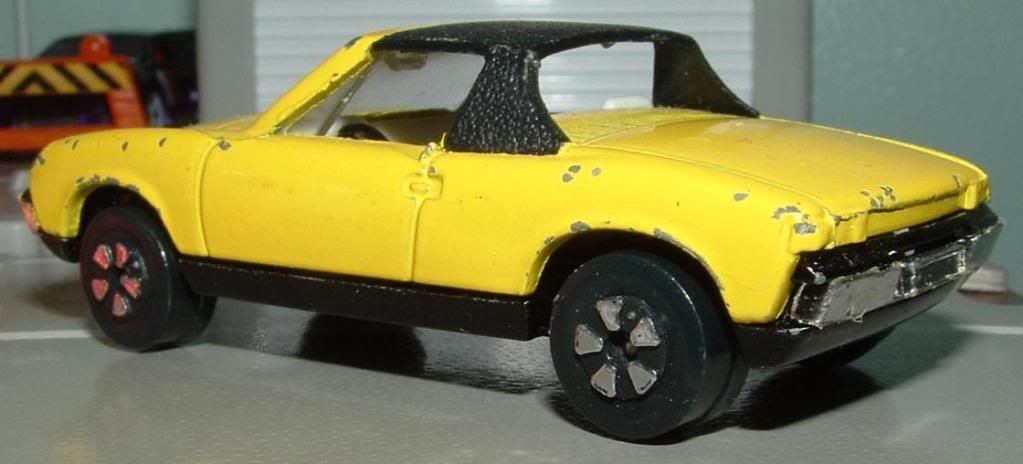
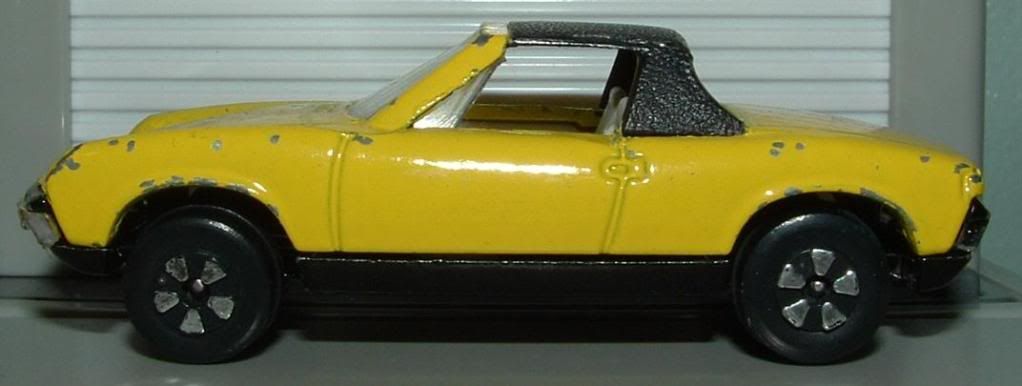
Today's car of the day is Playart's 1972 Porsche 914/4 ("Volkswagen Porsche").


The Porsche 914 or VW-Porsche 914 is a mid-engined, targa-topped two-seat roadster designed, manufactured and marketed collaboratively by Volkswagen and Porsche from 1969 to 1976.


For more information and pictures of the real car please visit: Porsche 914


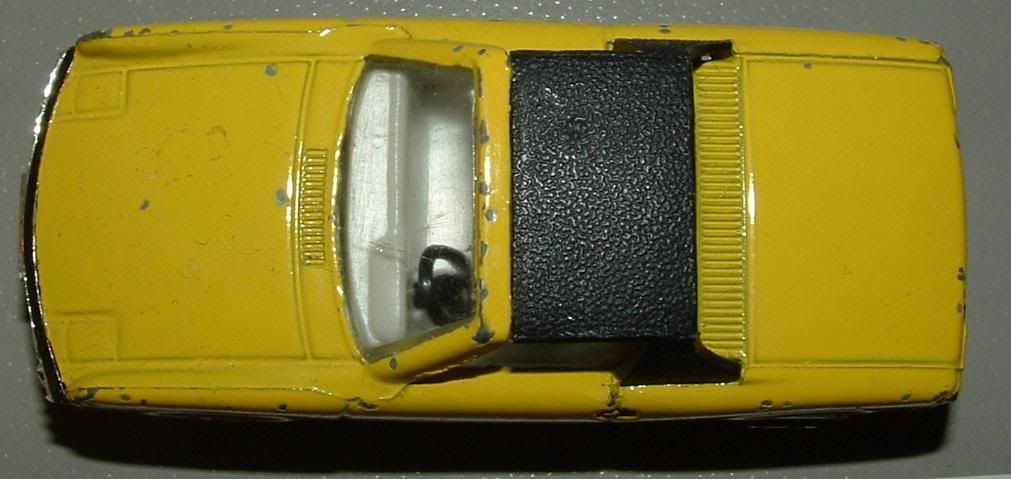
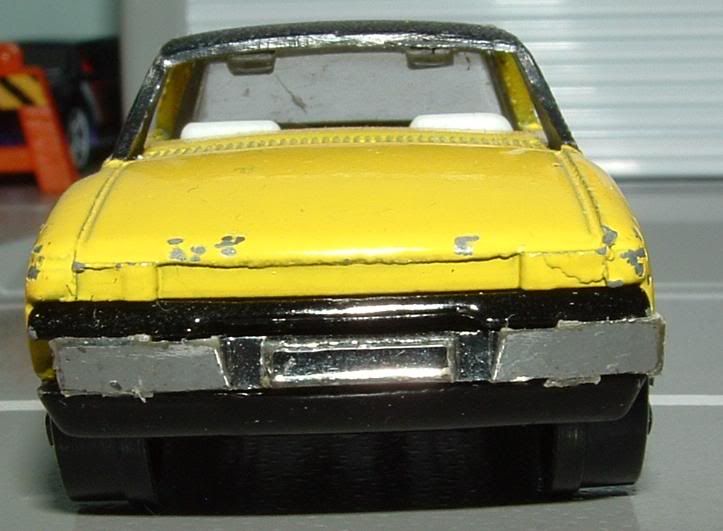
Oh boy, where do I start with this one?  I had this model as a child.  And I'm extremely blessed to have the bulk of my childhood collection still intact.  This one, however, is not my childhood car.  Playart made the mistake (well, it's not really a mistake since it is somewhat accurate) of calling this one "Volkswagen Porsche".  As a five year old I knew enough to know that "Volkswagen doesn't make Porsche, Porsche makes Porsche!" and decided that this couldn't be a real car.  [JEREMY CLARKSON]Therefore, it needed to die.[/JEREMY CLARKSON]  This car featured a seperate vinyl roof piece in black, which made it look remarkably similar to the dozens of '70s cars that were routinely getting squashed in monster truck racing during the 1980s.  You can guess where this is going...  I stepped on it.  Jumped on it.  Flattened it every which way I could.  The front windshield eventually shattered and I can't remember how the vinyl roof faired, but I do remember this one being one of my favorite cars to flatten with my Matchbox Superchargers monster trucks.  It never made the move from New Jersey to Pennsylvania.  I had it in a bag of other "junk cars" (including some pieces I really wish I still had!) that were supposed to come along with us, but I left it sit at the top of the stairwell where I figured I would remember it.  I didn't.  There were also some other cars in the basement that didn't make it either.  *Sighs*  Aside from those, everything else from my childhood made it intact to my new home!  This is a replacement picked up at the York toy show in 2006.


By the late 1960s, both Volkswagen and Porsche were in need of new models; Porsche was looking for a replacement for their entry-level 912, and Volkswagen wanted a new range-topping sports coupe to replace the Karmann Ghia. At the time, the majority of Volkswagen's developmental work was handled by Porsche, part of a setup that dated back to Porsche's founding; Volkswagen needed to contract out one last project to Porsche to fulfill the contract, and decided to make this that project. Ferdinand Piëch, who was in charge of research and development at Porsche, was put in charge of the 914 project.
Originally intending to sell the vehicle with a flat four-cylinder engine as a Volkswagen and with a flat six-cylinder engine as a Porsche, Porsche decided during development that having Volkswagen and Porsche models sharing the same body would be risky for business in the American market, and convinced Volkswagen to allow them to sell both versions as Porsches in North America.

On March 1, 1968, the first 914 prototype was presented. However, development became complicated after the death of Volkswagen's chairman, Heinz Nordhoff, on April 12, 1968. His successor, Kurt Lotz, was not connected with the Porsche dynasty and the verbal agreement between Volkswagen and Porsche fell apart.

In Lotz's opinion, Volkswagen had all rights to the model, and no incentive to share it with Porsche if they would not share in tooling expenses. With this decision, the price and marketing concept for the 914 had failed before series production had begun. As a result, the price of the chassis went up considerably, and the 914/6 ended up costing only a bit less than the 911T, Porsche's next lowest price car. The 914/6 sold quite poorly while the much less expensive 914-4 became Porsche's top seller during its model run, outselling the Porsche 911 by a wide margin with over 118,000 units sold worldwide.