Showing posts with label Dodge. Show all posts

Wednesday, October 24, 2012

SUV Of The Day: October 24, 2012


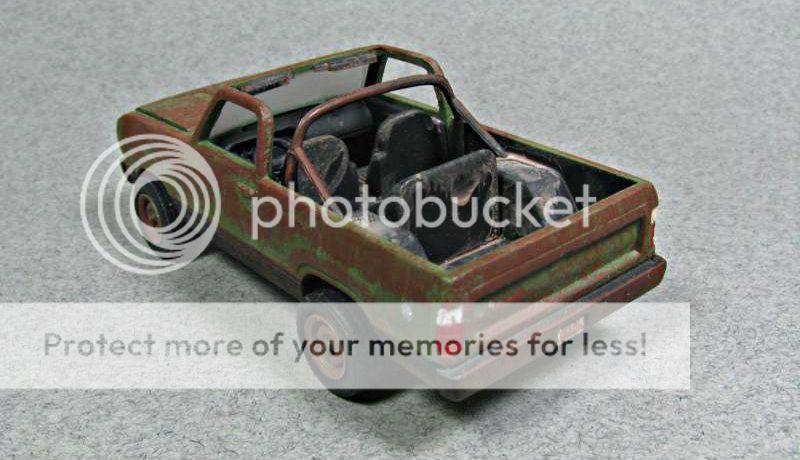
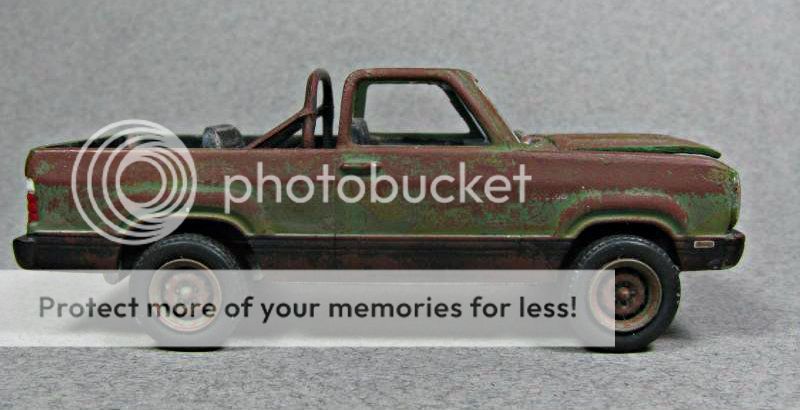
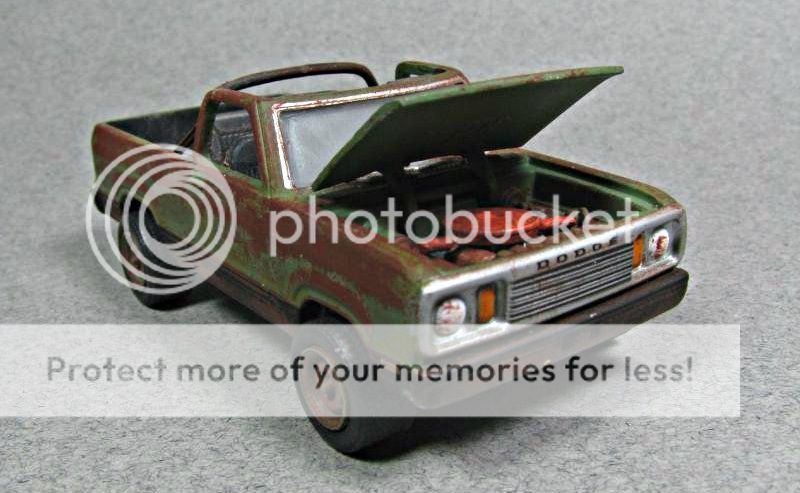
The SUV for today is Greenlight's 1977 Dodge Ramcharger (StupidSquirrel's custom).


The Dodge Ramcharger is a large sport utility vehicle built by Dodge from 1974 to 1993 (and 1999 to 2001 in Mexico), and based on a shortened-wheelbase version of the Dodge D Series/Ram pickup truck chassis. A Plymouth version, named the Trailduster and offered from 1974 to 1981, was Plymouth's only SUV.


The Ramcharger was primarily produced as a full-time four wheel drive vehicle, although a two wheel drive version was available starting in 1975. During development, it was known as the "Rhino".[1] 1974 through 1980 models have a removable hard top, although dealer-installed soft tops were available. The first year model differs from the others in that its door pillars are attached to the removable roof.
Like many vehicles, the Ramcharger was used in rallying, although its use was very limited. It did have some success, as demonstrated by achieving first place at Sno*Drift in 1975. In 1978 and 1979 the 360 CID's horsepower was bumped up to 195 horsepower (145 kW). 1978 was the last year for the 440 CID, which by then only put out 215 horsepower (160 kW).

The vehicle was usually powered by a Chrysler LA engine, the most common being the 318 cu in (5.2 L) V8. Optional was the 360 cu in (5.9 L) V8 and even big-block B series 400 cu in (6.6 L) V8 and RB 440 cu in (7.2 L) V8 were offered in the early years. Initially a normally aspirated carburetor, in 1988 the 318 gained throttle-body fuel injection with the 360 following in 1989. Power output for the TBI 318 was 230 horsepower (170 kW) and 280 lb (130 kg)-ft of torque. The TBI 360 had 240 hp (180 kW) and 283 to 295 lb·ft (400 N·m). In 1992 the multiport fuel injected Magnum 318 was the standard engine while the LA 360 with TBI was still offered. In 1993 the Magnum 360 replaced the LA engine version.

Many manual transmissions were offered throughout the years, starting with the A-230 three-speed and ending with the A-535 five-speed in 1992. The NP435 "granny gear" 4 speed was the most common in 4WD models, as well as the close ratio version, the NP445. In 1988 the clutch was converted from a mechanical linkage to a hydraulic system. Automatic transmission models had the Chrysler Loadflite TF-727A or B until, in 1991, it was replaced with the A-500/A-518 four-speed.

A full-time four-wheel drive NP-203 transfer case was standard until 1980, when it was replaced with the part-time NP-208. This was supplanted by the NP-241 in 1988.

Axles were Dana 44 front and 9¼" rear. Full time 4WD models (1973–1979) were equipped with the full time version of the Dana 44 that had no provision for locking hubs and had a front wheel bearing design with a somewhat dubious reputation. In 1980 when the part time 4WD system was introduced, the front Dana 44 was equipped with a more conventional front wheel bearing design and automatic locking hubs. Late in the 1984 model year the Dana 44 was switched to a CAD (Center Axle Disconnect) version. The CAD Dana 44 was vacuum actuated by a switch on the transfer case and powered by engine vacuum. [/quote]
[img]http://i790.photobucket.com/albums/yy190/thederbyfan83/Car-of-the-Day/IMG_9051.jpg[/img]
What's more redneck than an old beater full size SUV splashing down a muddy forest trail? :redneck:   Purchased this from Ward/69Stang who had commissioned John/Stupidquirells to a series of custom small scale items. These were given the weathered and worn treatment which seems ideal to a camo colored 30+ year old Dodge.


Tuesday, August 14, 2012

Truck Of The Day: August 14, 2012


Today's car of the day comes from juantoo3's collection and is Johnny Lightning's 1965 Dodge A100.


The A100 line was a model range of American compact vans and trucks manufactured and marketed from 1964–1970 by Chrysler Corporation for the Dodge brand in the United States and the Fargo brand in Canada.

The A100 competed with the Ford Econoline and Chevy Van, as well as the Volkswagen Type 2. The range included a pickup truck and van, both with a "forward control" design. The implementation of situating the driver on top of the front axle with the engine near the front wheels is called internationally a "cab over" vehicle. The nose was flat, with the engine placed between the driver and passenger, who sat above the front axle. The unibody vehicles used a short, 90 in (2,300 mm) wheelbase. An A108 was also available from 1967–1970, with a longer 108 in (2,700 mm) wheelbase. The A108 was popular with camper conversion companies.


For more information and pictures of the real car please visit: Dodge A100


A blast from the past, the early years of Playing Mantis. This is one of the earliest in-house designs done by the fledgling company that started on repop Topper castings. PM/JL did two versions of the Dodge A-100, I can tell this is the early version because of the jump seats in back (the later version was never released with jump seats) and the belly hook on the bottom...and I know this was a very early release within the first two years of the relaunch of Johnny Lightning by experience. I have been looking for the Steadly promo issues for many years, and recently they've begun turning up on the market in fair numbers at prices I am willing to pay, so now I have one carded and one loose! (now to find the alternate colors of the same issues!).


A substantially modified, Hemi-powered A100 wheelstanding exhibition pickup called the "Little Red Wagon" driven by Bill "Maverick" Golden was a popular drag strip attraction in the 1960s through the early 2000s.

Saturday, May 26, 2012

Car Of The Day: May 26, 2012


Today's car of the day comes from Firehawk73's collection and is GreenLight's 1971 Dodge Charger Super Bee.


The Dodge Super Bee was a limited-production muscle car from Dodge, produced from 1968-1971. The Super Bee model was resurrected for the 2007, 2008 and 2009 model Dodge Charger Super Bee.


For more information and pictures of the real car please visit: Dodge Super Bee


Since the 1971 Coronet was only available in sedan and station wagon versions, the Super Bee model was moved to the Charger platform. Since the Charger already had an R/T muscle car version, the Super Bee was slotted in as the low-priced entry in the line at US$3,271. 5,054 were produced which includes the 22 with the Hemi engine.

The moniker was discontinued until the 2007 Super Bee, which was a Charger SRT-8.
1971 was the first and only year that a small block engine (340 4-bbl) became available in the Super Bee.
Although the 440 Magnum (4-bbl) was not an available option on the Super Bee for 1971, 26 are known to have been built.

Wednesday, March 21, 2012

Car Of The Day: March 21, 2012


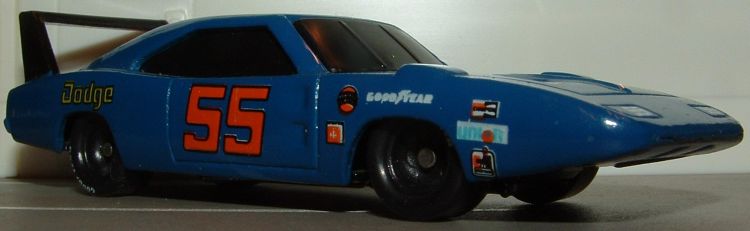
Today's car of the day is Racing Champions' 1969 Dodge Charger Daytona NASCAR stock car (Tiny Lund).


Dodge, an American automobile brand, has produced three separate vehicles with the name Dodge Charger Daytona, all of which were modified Dodge Chargers. The name is taken from Daytona Beach, Florida, which was an early center for auto racing and still hosts the Daytona 500, one of NASCAR's premier events. The first use of the Daytona name on a car was on a version of the Studebaker Lark. The Daytona was the performance model of the compact Lark and it was produced from 1963-1966.

With the failure of the 1969 Dodge Charger 500 on the highbanks of the superspeedways (tracks of a mile, or more in length), the 1969 Dodge Charger Daytona was created. It was intended to be a high performance, limited edition version of the Dodge Charger produced in the summer of 1969 for the sole purpose of winning high profile NASCAR races. It won its first race out, the inaugural Talladega 500 in the fall, although it was a rather hollow victory as all of the top names had left the track on Saturday in a boycott of the 1969 Talladega race. Buddy Baker in the #88 Chrysler Engineering Dodge Charger Daytona was the first driver in NASCAR history to break the 200  mph mark on March 24, 1970 at Talladega. The 1969 Dodge Daytona managed to win 2 races in 1969 and another 4 in 1970 for a total of 6. It's successor, the 1970 Plymouth Superbird managed to win 8 races - all in 1970. (In a bit of irony, in 1969 a Daytona won at Talladega, and a Ford Torino Talladega won at Daytona.) These compare with 29 NASCAR victories for the 1969 Ford Torino Talladega, and 8 for the 1969 Mercury Cyclone Spoiler II. Ironically, the 1969 Dodge Charger 500 managed to win 22 NASCAR races over the 1969 and 1970 seasons; however, all but one of those victories came on the short tracks - several of which were still being run on dirt at the time.
One of the five famous aero-cars, the Dodge Daytona featured special body modifications that included a 23 in (584 mm) tall stabilizer wing on the rear deck, a special sheetmetal "nose cone" that replaced the traditional upright front grille, a flush rear backlight (rear window area), a 'window cap' to cover the original Charger's recessed rear window, specific front fenders and hood that were modeled after the upcoming 1970 Charger, stainless steel A-pillar covers and fender mounted tire clearance/brake cooling scoops. The Daytona was built on the 1969 Charger's 500 trim specifications, meaning that it carried a heavy-duty suspension and brake setup and was equipped with a 440 CID Magnum engine as standard. Of special note to collectors is the optional 426 CID Hemi V8 engine, which only 70 of the 503 Daytonas carried. It had a corporate cousin in the "one year only" 1970 Plymouth Superbird.

The "Winged Warriors", as they were affectionately known, did not compete for long in NASCAR's top Cup series. Because of their exceptional speed and performance, NASCAR subsequently changed the rule book, effectively banning all five of the Aero Cars from Dodge, Ford, Mercury, and Plymouth from competition by the end of 1970. See also Plymouth Superbird, Ford Torino Talladega and Mercury Cyclone Spoiler II for additional information about the aero cars.


For more information and pictures of the real car please visit: Dodge Charger Daytona & Tiny Lund


This may not be a very highly detailed replica, but as far as I know it's the only one available of this car.  I wish that Racing Champions had offered these with an interior and clear glass.


DeWayne Louis "Tiny" Lund (November 14, 1929–August 17, 1975) was a NASCAR driver. He was ironically nicknamed "Tiny" due to his rather large and imposing size.

Lund started racing at a young age on a motorcycle, then moved up to midget cars and sprint cars. He served in the Korean War in the United States Air Force, and in 1955 decided to try stock car racing.
It is also noted that as an adult, Lund stood 6-feet-5-inches-tall and weighed about 270-lbs.

Lund went south with a 1955 Chevrolet and competed in the Lehi, Arkansas, event, with sponsorship from Carl Rupert and his safety belt company. The race was dominated by Speedy Thompson and his Pete DePaolo-owned Ford. Lund qualified mid-pack but his event ended in an accident on lap 65. Lund's flipped end over end and his safety belt broke. He was bruised and had a broken arm.

For 1956, Lund teamed up with Gus Holzmueller, and their best result was a fourth-place finish at Columbia, South Carolina. Lund also ran a few events for A.L. Bumgarner. In 1957 Lund split between Bumgarner's Pontiacs and a Petty Enterprises Oldsmobile. With Bumgarner Lund nearly won an event at the Cleveland County Fairgrounds. He won the pole position, and was leading until a right rear axle gave out. Lund had two other poles on the season. Lund left Bumgarner and became a journeyman for 1958. He won a pair of pole positions at Gastonia and Hillsboro. In 1959 he fielded self-owned Chevrolets. Lund did not have major success, and he was rideless by 1963.

In February 1963, Lund went down to Daytona shopping around for any ride. Lund's friend Marvin Panch, the driver for the Wood Brothers racing team, had an accident while testing an experimental Ford-powered Maserati sports car for the second Daytona Continental three-hour sportscar race (a precursor to the Rolex 24). Panch's car swerved out of control, flipped over and burst into flames. Lund ran into the inferno and managed to pull Panch out of the wreckage. For his actions, Lund was awarded the Carnegie Medal of Honor.

Panch, in hospital, asked Lund to race his car and Glen Wood agreed. He timed in fourth in individual qualifying trials, and finished sixth in the second qualifying race. Lund took the green flag from 12th on the grid.

The start of the race was delayed due to heavy rains, and then the first 10 laps were run under caution. As the green flag waved on the Great American Race, it was Fireball Roberts on pole and "Flying" Fred Lorenzen outside of him. Lorenzen led the race. Lund worked his way through the field. The Wood Brothers team had an ace up their sleeve - they planned to complete the race on one stop less than the field. Lund managed to take the lead very late in the race. Lorenzen passed Lund with 10 laps left to go, but Lorenzen ran out of gas and had to dive down pit road out of contention. Then Ned Jarrett made the pass on Lund for the top spot but with three to go he also ran out of gas. Lund's car ran out of fuel on the final lap, but he managed to coast home to win the 1963 Daytona 500.

Lund's victory jumpstarted what had been a dead career. Lund stayed in the Wood Brothers Ford for several races after Daytona, and came close to another victory in the Southeastern 500 before his motor gave out. Marvin Panch returned and Lund was without a ride. Holman-Moody gave him a car for several big races at Atlanta, Daytona and Charlotte without success. For 1964 he was back to journeyman status. He hooked up with a series of lesser known owners before vaulting into the lead in the Columbia 200 before overheating. Late in the year, he settled in with Lyle Stelter and despite little success they continued their partnership into the 1965 season. With Stelter Lund got his second career victory in that year's Columbia 200, qualifying in fourth and taking the lead from Ned Jarrett before rains came and washed out the second half of the event. In 1966, he continued his partnership with Stelter. Lund was leading at Spartanburg before a differential failed and at Manassas before his engine blew up. Lund did win at Beltsville Speedway. Lund had 21 Did Not Finish (DNFs) that season.

For 1967, he teamed once again with Stelter for the majority of the year but it was with Petty Enterprises in the #42 Plymouth with which he had most of his success. Lund finished fourth in the Daytona 500 despite running out of fuel with a lap to go behind the Ford factory contingent of USAC star Mario Andretti and Fred Lorenzen, handing third to perennial independent James Hylton. Lund finished fifth in the World 600 in that same ride. He struggled in Stelter's Fords despite a promising run in Fonda, New York, where he qualified second and lead some before an axle broke. Lund and Stelter parted at season's end.

For 1968, he teamed with Big Bud Moore and his Mercury's. Lund also ran Moore's cars in the new NASCAR Grand American division designed for pony cars like Mustangs and Camaros. Lund finished fifth in the Firecracker 400 and a fourth in Rockingham highlighted his short Grand National season, but he won the Grand American championship. In 1969, he continued to race in the Grand American division and ran one Grand National race, guesting for Bill France, Sr. in the inaugural Talladega 500. The race was known for a driver's boycott over tire safety protests. Lund drove into the lead but his clutch packed in and he was classified ninth.

In 1968, Lund appeared as one of the race drivers in the racing scene of the MGM movie 'Speedway' which starred Elvis Presley and Nancy Sinatra.

After 1971, Lund began to fade from the Grand National limelight and moved to the new Grand National East Division (the replacement for the Grand American Series) and short track Late Model Sportsman (now Nationwide Series). Lund won the Sportsman season opener at Daytona twice and continued to rack up victories on short tracks that he had raced on as a youth. In 1975, he entered an A.J. King Dodge in the Talladega 500 as first alternate; when Grant Adcox's car was withdrawn from the event, Lund was in and after a short track event that Saturday was flown down in Bobby Allison's private airplane. The race was delayed a week by heavy rains but on August 17 the green flag was waved by Juan Manuel Fangio.
On the seventh lap, Lund and J. D. McDuffie collided on the backstretch; Lund and McDuffie spun down the track as it turned into chaos behind them. Rookie Terry Link was spun straight into the drivers' door of Lund's Dodge and Link's Pontiac exploded in flames. Two spectators in the infield climbed over the catch fence, and with help from driver Walter Ballard, pulled Link from his car and managed to revive him. Lund, however, was pronounced dead at the scene. Drivers in race were not informed of the tragedy.

Monday, February 6, 2012

Car Of The Day: February 6, 2012


Today's car of the day comes from Firehawk73's son Jacob's collection and is Maisto's 1969 Dodge Charger.


The Dodge Charger is an American automobile manufactured by the Dodge division of Chrysler. There have been several different Dodge vehicles, built on three different platforms and sizes, all bearing the Charger nameplate. The name is generally associated with a performance model in the Dodge range; however, it has also adorned subcompact hatchbacks, full-sized sedans, and personal luxury coupes.


For more information and pictures of the real car please visit: Dodge Charger


The 1969 model year brought few modifications. Exterior changes included a new grille with a center divider and new longitudinal taillights both designed by Harvey J. Winn. A new trim line called the Special Edition (SE) was added. This could be available by itself or packaged with the R/T, thus making an R/T-SE. The SE added leather inserts to the front seats only, chrome rocker moldings, a wood grain steering wheel and wood grain inserts on the instrument panel. A sunroof was added to the option list as well, and saw only 260 sold installations. The bumble bee stripes returned as well, but were changed slightly. Instead of four stripes it now featured one huge stripe framed by two smaller stripes. In the middle of the stripe an R/T cutout was placed. If the stripe was deleted, a metal R/T emblem was placed where the R/T cutout was. Total production was around 89,199 units.

Bo & Luke Duke popularized the 1969 Dodge Charger in The Dukes of HazzardThe television series The Dukes of Hazzard (1979–1985) featured a 1969 Dodge Charger that was named The General Lee. "The General" sported the Confederate battle flag painted on the roof and the words "GENERAL LEE" over each door. The windows were always open, as the doors were welded shut. The number "01" is painted on both doors. Also, when the horn button was pressed, it played the first 12 notes from the de facto Confederate States anthem "Dixie". The car performed spectacular jumps in almost every episode, and the show's popularity produced a surge of interest in the car. The show itself purchased hundreds of Chargers for stunts, as they generally destroyed at least one car per episode.

Friday, February 3, 2012

Car Of The Day: February 3, 2012


Today's car of the day comes from Firehawk73's collection and is GreenLight's 1967 Dodge Coronet.


The Coronet was a full-size car from Dodge in the 1950s, initially the division's highest trim line but, starting in 1955, the lowest trim line. In the 1960s, the name was transferred to Dodge's mid-size entry.


For more information and pictures of the real car please visit: Dodge Coronet


After a brief absence, the Coronet name was attached to the former full-size models in 1965 to become Dodge's intermediate-sized car. The 1965 models were basically refreshed Dodge Polaras in the same B-body style offered in 1963 and 1964, riding on a 117 wheelbase. For 1965, Dodge sold slightly over 209,000 units, making the Coronet the most popular model sold by Dodge that year. Trim levels initially were base Coronet including a Deluxe version, Coronet 440 and Coronet 500. The base Coronet and Deluxe were available as two-door sedans, four-door sedans and station wagons. For 1965 only, Dodge also sold only 101 units of a modified wheelbase version of the base Coronet two-door sedan and 440 hardtop used for NHRA drag racing. The model known as A990 came with a racing version of the 426 Hemi engine. The car A990 was stripped of all features and included base bucket seats from Dodge's truck-van line of vehicles. The altered wheelbase eventually became commonly known as Funny Cars because of their stretched front clips. Front seat belts and padded dash were standard. The middle of the Coronet line-up was the 440 and was available as a two-door hardtop, convertible or station wagon. The 440 designation did not indicate engine displacement as commonly assumed. The nomenclature was a carryover theme from the 1963–64 Polara series. The top of the Coronet line-up was the Coronet 500 and was only available as a two-door hardtop or convertible in 1965. Slightly over 33,300 units were sold in 1965 and included as standard, a V8 engine (273 cubic inches), exterior trim and badging, bucket seats, padded dash and chrome floor console. Coronets were manufactured at Chrysler's Los Angeles assembly plant and at Lynch Road assembly plant in Detroit. Engines offered for 1965 included the base 225 Slant-Six, 273, 318 (Polyhead), 361 (the last year for this big block engine was 1966), 383 and 426 in multiple HP choices. Sales brochures list the 413 (its last year offered) as available, but no records exist of this engine commonly used in Imperials, being installed in Coronets for 1965. A tachometer was optional.
There would be no Coronet 500 wagon until 1968. Coronet received a redesign in 1966, and a facelift in 1967. Trim levels initially were base Coronet, Coronet 440 and Coronet 500. In 1966, the Coronet Deluxe was introduced, fitting between the base Coronet and the Coronet 440. The Coronet R/T was introduced in 1967. The Coronet R/T was available as a two-door hardtop or convertible.

When the 426ci Hemi was made available to the general public for the 1965 model year, it could be ordered in any Coronet model or trim level. No Hemi-powered Coronet wagons have been verified, but a few Coronet Deluxe four-door sedans are known to exist. A total of just 136 Coronet 500 Street Hemis were built for 1966. Beginning in 1967, Chrysler decided that the Hemi should only be available in their badged muscle cars: the Dodge Charger and Coronet R/T and the Plymouth Belvedere GTX. The top engine option for the rest of the Coronet line was supposed to be the 383 ci 4 bbl V8. Despite this, some Hemi-powered 1967 Coronet Deluxe two-door sedans were produced. There is also one Hemi-powered 1967 Coronet 440 two-door hardtop known, which is not among the 55 WO23 Super Stock cars produced for Dodge drag racers.

Saturday, December 31, 2011


Today's car of the day is Kidco's 1977 Dodge Monaco.


The Dodge Monaco was a full-size automobile built and sold by the Dodge division of the Chrysler Corporation between 1965 to 1978, and 1990 to 1992.


For more information and pictures of the real car please visit: Dodge Monaco


This is an interesting model from Kidco.  I've got a soft spot for the Dodge Monaco, and in the last few years we've seen the amount of small scale examples double with new additions from GreenLight, Johnny Lightning, Matchbox, and Charawheels.  What makes this Kidco interesting is it was the first licensed Dodge Monaco casting.  The Monaco debuted in 1965 and ended production in 1978.  In that timeframe the only small scale example was done in 1977 by Hot Wheels, and they altered it just enough to avoid licensing it (from the C-pillars back, the car has some Ford and Oldsmobile in it, but the rest of the car is unmistakably Monaco including the split grill and quad stacked headlights.  So this Kidco debuted in 1979- a year after the real car exited production.  That would be easier to understand if this were done as a tie-in with any of the television shows that were wrecking these cars by the dozen at the time (like "The Dukes Of Hazzard") but this was never offered as a Hollywood car.  Even more curious is that the casting is of a two door coupe, a bodystyle that would have seen very limited (if any) service as a police car.  It remains the only Monaco coupe in small scale to this day as the new examples are all of two cars- the 1974 sedan (thanks to the "Blues Brothers" & to a lesser extent "Hill Street Blues") and the 1977-8 sedan (thanks primarily to "The Dukes Of Hazzard" but it was also seen on "Hunter" & "The A-Team" among many others).  Sadly, no Monaco wagons exist in 1/64, and none of the 1965-73 models exist in small scale whatsoever.


The Dodge Monaco was originally intended to compete with the Pontiac Grand Prix model in what came to be known as the personal luxury market. Introduced on September 25, 1964, the 1965 Monaco was based on the Custom 880 two door hardtop coupe body. The Monaco received special badging, different taillight and grille treatment, and a sportier interior with a full-length center console, as well as a 383 cu in (6.28 L) 315 hp (235 kW) V8 engine as standard equipment. Larger, more powerful engines were also available as options.

Chrysler Canada Ltd. fielded a Dodge Monaco which was Dodge's version of the Plymouth Sport Fury in Canada. It was available in hardtop coupe or convertible body styles. However, Canadian Monacos were equipped with Plymouth dashboards in 1965 and 1966. Unlike the American Monaco, the Canadian Monaco could be had with the 318 cu in (5.21 L) V8 or even the slant six.


As a lingering result of the 1973-74 energy crisis, Chrysler decided to shift the Monaco nameplate to the mid-size B platform for 1977. The "new" 1977 mid-sized Monaco replaced the previous Coronet 4-door sedan, 4-door station wagon and Charger hardtop coupe. The Monaco Brougham replaced the previous Coronet Brougham 4-door sedan and Charger Sport hardtop coupe, while the Monaco Crestwood station wagon replaced the previous Coronet Crestwood. The Charger S.E., which at this point became the sole Charger still available, continued unchanged.

The "new" Monacos, for all of the marketing hype, were little-changed from the Coronets which had gone before. A revised front-end design with stacked rectangular quad headlamps gave the cars a resemblance to the contemporary Chevrolet Monte Carlo when viewed head-on. With Chrysler Corporation in dire financial straits during these years, there was little that could be done to give the cars a fresh look, so changes had to be minimal and as inexpensive as possible.

The 1977 and 1978 models can be seen as the police vehicles in the 1980-1985 seasons of The Dukes of Hazzard. Large numbers were bought and then suffered ignominious ends, destroyed in stunt crashes but due to the toughness of the design, were often repaired and reused repeatedly.

Saturday, December 24, 2011

Car Of The Day: December 24, 2011


Today's car of the day is Matchbox's 1994 Dodge Viper.


The Dodge Viper is one of the first V10-powered cars in the world, made by the Dodge division of Chrysler. Production of the two seat sports car began at New Mack Assembly in 1991 and moved to its current home at Conner Avenue Assembly in October 1995. The car, and numerous variations, has made many appearances in TV shows, video games, movies, and music videos. Although Chrysler considered ending production because of financial problems, chief executive Sergio Marchionne announced and showed on September 14, 2010 a redesign of the Viper for 2012.


For more information and pictures of the real car please visit: Dodge Viper


This is the 2011 PMCC Christmas banquet car.  The luncheon was held on December 3 at the Dutchway Family Restaurant in Myerstown, Pennsylvania.  Good friends, good food, and lots of diecast- I can't think of a better way to spend an afternoon!  The model was done by ColorComp and there were an almost equal number of yellow ones made also.


The Viper was conceived as a historical take on the classic American sports car. The iconic AC Cobra was a source of inspiration, and the final version of the Viper bears this out with its powerful engine, minimalist straightforward design, muscular and aggressive styling, and high performances. Some saw claims to kinship with the Cobra as a marketing exercise, ignoring that Carroll Shelby was heavily involved in the initial design of the Viper, and subsequent design of the Viper GTS coupe. Notably, the later (1996 through 2002) Viper GTS coupe took a few design cues from the Pete Brock designed Shelby Cobra Daytona Coupe. Though the proportions seem similar at first glance, the designs are quite unique. Carroll Shelby was key in the development of the RT/10 as well as having a hand in the development of the GTS (Viper Coupe) model.

The Viper was initially conceived in late 1988 at Chrysler's Advanced Design Studios. The following February, Chrysler president Bob Lutz suggested to Tom Gale at Chrysler Design that the company should consider producing a modern Cobra, and a clay model was presented to Lutz a few months later. Produced in sheet metal by Metalcrafters, the car appeared as a concept at the North American International Auto Show in 1989. Public reaction was so enthusiastic, that chief engineer Roy Sjoberg was directed to develop it as a standard production vehicle.

Sjoberg selected 85 engineers to be "Team Viper," with development beginning in March 1989. The team asked the then-Chrysler subsidiary Lamborghini to cast some prototype aluminum blocks based on Dodge's V10 truck engine for sports car use in May. The production body was completed in the fall, with a chassis prototype running in December. Though a V8 was first used in the test mule, the V10, which the production car was meant to use, was ready in February 1990.

Official approval from Chrysler chairman Lee Iacocca came in May 1990. One year later, Carroll Shelby piloted a pre-production car as the pace vehicle in the Indianapolis 500 race. In November 1991, the car was released to reviewers with first retail shipments beginning in January 1992.

The first prototype was tested in January 1989. It debuted in 1991 with two pre-production models as the pace car for the Indianapolis 500 when Dodge was forced to substitute it in place of the Japanese-built Stealth because of complaints from the United Auto Workers, and went on sale in January 1992 as the RT/10 Roadster.

The centerpiece of the car was its engine. It was based on the Chrysler LA design, which was a truck engine. The original configuration made it too heavy for sports car use, so Lamborghini, then owned by Chrysler Corporation, revamped Dodge's cast-iron block V10 for the Viper by recasting the block and head in aluminum alloy. Some within Chrysler felt the pushrod two-valve design, while adequate for the truck application, was unsuitable for a performance car and suggested a more comprehensive redesign which would have included four valves per cylinder. Chrysler, however, was uncertain about the Viper's production costs and sales potential and so declined to provide the budget for the modification.

The engine weighed 711 lb (323 kg) and produced 400 bhp (300 kW) at 4600 rpm and 465 lb·ft (630 N·m) at 3600 rpm, and thanks to the long-gearing allowed by the engine, provided fuel economy at a United States Environmental Protection Agency-rated 12 mpg-US (20 L/100 km; 14 mpg-imp) city and 20 mpg-US (12 L/100 km; 24 mpg-imp) highway. The body was a tubular steel frame with resin transfer molding (RTM) fiberglass panels. Some small bits of the suspension, (tie-rod ends and parts of the front wheel hubs) following the manufacturer's "engine first" mantra, were sourced from the Dodge Dakota pickup. It had a curb weight of 3,284 lb (1,490 kg) and lacked all modern driver aids such as traction control or anti-lock brakes. Car and Driver magazine referred to this generation as "the world's biggest Fat Boy Harley", and likened driving it to "playing ping pong with a Louisville Slugger baseball bat." Despite this, in straight line performance, it completed a quarter mile (402 m) in 12.6 seconds and had a maximum speed of over 180 mph (290 km/h). Its large tires allowed the car to average close to 1 lateral g in corners, placing it among the elite cars of its day. However, the car proved tricky to drive at high speeds, particularly for the unskilled.

The car was spartan, although it featured inflatable lumbar support and adjustable seats. Along with the absence of exterior door handles, the vehicle lacked side windows and a roof. Although a soft top cover was available, it was designed primarily for indoor vehicle storage. Side curtains of fabric and clear plastic operated by zippers could be inserted into the door and hand-bolted when needed. All of these decisions were made to reduce weight. The battery is located in the sealed compartment over the rear wheel well to increase rear-end weight and traction. The car shipped with a tonneau cover and video tape on soft-top assembly (the soft top is removable and folds to fit in the trunk). In 1994 A/C was added as an option.

Sunday, October 30, 2011

Car Of The Day: October 30, 2011

Posted for craftymore.


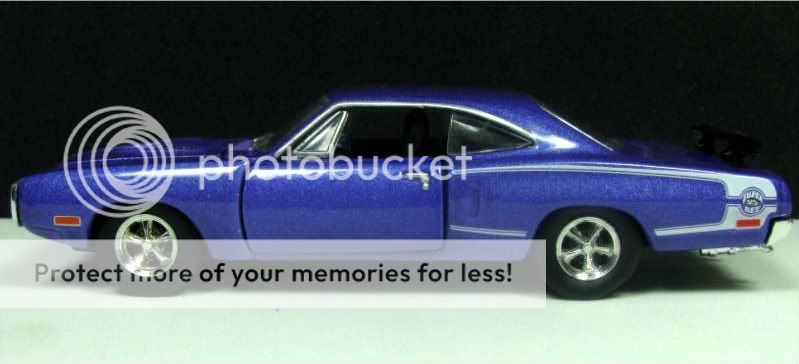
The car for today is the 1970 Dodge Superbee by M2 Machines.


The  was a limited-production muscle car from Dodge, produced from 1968-1971. The Super Bee model was resurrected for the 2007, 2008 and 2009 model Dodge Charger Super Bee.


The original Super Bee was based on the Dodge Coronet. It was a two-door coupe model only and was produced from 1968 through 1970. It was the company's low-priced muscle car, cousin of the Plymouth Road Runner, and was priced at $3,027. The name "Super Bee" was derived from the "B" Body designation given Chrysler's midsized cars which included the Coronet (as well as the Roadrunner, Charger, etc.).

Plymouth Division had introduced the Road Runner first and the car sold well, prompting Dodge Division General Manager Robert McCurry to have the Dodge Styling office create a competitor. During that time, both divisions were competing to be the "Chrysler Performance Division". The designers were assigned the task of creating a name and identity for the Dodge version. Senior designer Harvey J. Winn won the "contest" with the name Super Bee and a new logo design around the Dodge "Scat Pack" Bee medallion. The first Super Bee was based on a 1968 Coronet convertible. The show car was built at Alexander Brothers Custom Shop under Winn's direction and was introduced at the 1968 Detroit Auto Show.
Although the two cars are very similar in external appearance, the Super Bee was slightly heavier (approx 65 lb (29 kg)) and rode on a 117-inch (3,000 mm) wheelbase compared to the Road Runner's 116 in (290 cm) wheelbase. In addition to the slight aesthetic external differences, such as larger rear wheel openings, the bumble bee tailstripe and fancier grille and taillight ornamentation, the Super Bee also used actual diecast chrome plated "Bee" medallions. These three-dimensional medallions were prominently mounted in a raised position in the grille/hood area and the trunklid/taillight area of the car throughout the first three years of production, and added a touch of class and panache.

The interior of the Super Bee borrowed the race car–inspired and more sophisticated gauge and speedometer dash cluster from the Dodge Charger while the four-speed manual cars received an actual Hurst Competition-Plus shifter with Hurst linkage, compared to the budget-minded Road Runner's less expensive Inland shifter and linkage. All these niceties added to the higher purchase price of the Super Bee compared to its Plymouth cousin, and ultimately affected its sales numbers over the years it was produced.

The Super Bee, like nearly all Chrysler muscle cars of that era, was available with the Hemi engine, however this option raised the price by 33% and only 125 were sold. The 1968 model only came as a two-door coupe, with two engine options, the base 335 hp (250 kW) 383 Magnum, and the 426 Hemi rated at 425 hp (317 kW).

The Super Bee included a heavy-duty suspension, an optional Mopar A-833 four-speed manual transmission, and high-performance tires. Outside, a stripe (with the bee logo) was wrapped around the tail.
A hardtop version joined the existing pillared coupe body for 1969, and a new optional twin-scooped air induction hood was now available and became known as the "Ramcharger". This particular option was coded N-96 and was the counterpart to the Plymouth Road Runner's "Coyote Duster" air induction hood. Of particular interest is that the Super Bee's "Ramcharger" hood featured forward-facing scoops which were far more efficient[citation needed] than the Road Runner's "twin vents" which merely lay flat on the hood, not forcing air in to the carburetor(s) as the Super Bee's did. Regardless of whether it was a Road Runner or Super Bee, the N-96 option commands immediate, extra respect whether it was at a stoplight or at the ever-present, modern day collector car auctions, as this option will drive up the selling price over a non N-96 equipped car.

A "six-pack" (three two-barrel carburetors) version of Dodge's 440 cubic inch engine was added to the offering list mid-year. This option fell half-way between the standard engine and the Hemi as a $463 option. The 1969 model year gave Chrysler customers several engines from which to choose — the base 383 hp (high performance), 440 Six Pack, and the 426 Hemi. The 440 Magnum (4bbl) was not an available option, and was reserved for the Coronet R/T.

For 1970, the Super Bee received a cosmetic redesign and was given a new front end that consisted of a twin-looped front bumper that Dodge Public Relations referred to as "bumble bee wings". Because of or in spite of this new look, sales plummeted for the year from 15,506 in 1970 to 5,054 in 1971 (another sales pressure was higher insurance rates on performance cars; the similar Plymouth Road Runner and Plymouth Duster both experienced similar sales issues). Ironically this particular design change is what makes it the most popular year of the Super Bee to own today. Despite the new looks, the engine choices and the "ramcharger" hood carried over from 1969, the 1970 cars from Dodge were chock-full of new and improved options. For example, a "C- stripe" variant of the bumble stripe was offered, in addition to new high-back bucket seats, steering column-mounted ignition and a "pistol-grip" Hurst shifter on four-speed models.


Check out Dodge Super Bee to learn more on the Super Bee.


M2 debuted this casting in the 1st release of Detroit Muscle back in 2009.  The opening features plus other added details make this one a standout.