Showing posts with label Jaguar. Show all posts

Sunday, July 22, 2012

Car of The Day: July 22, 2012


Today's car of the day comes from craftymore's collection and is Matchbox's 1986 Jaguar XJ6.


The Jaguar XJ (XJ40) is a luxury sedan manufactured by Jaguar Cars between 1986 and 1994. It was an all-new redesign of the XJ to replace the Series III, although the two model ranges were sold concurrently until the Series III was discontinued in 1992. The XJ40 used the Jaguar independent rear suspension arrangement, and featured a number of technological enhancements (such as electronic instrumentation)


The base XJ6 of the model range was modestly equipped; extra-cost options included alloy wheels, anti-lock brakes, air conditioning, leather upholstery, and an automatic transmission. The exterior featured two pairs of circular headlamps and black powder-coated window frames.

During development, the XJ40 pioneered significant improvements to the way Jaguar designed, built, and assembled cars. Among these improvements was a 25% reduction in the number of bodywork panels required per car (e.g. three pressings needed for Series 3 door compared with one pressing for XJ40 door), resulting in not only a more efficient assembly process, but also a weight saving and a stiffier structure. Greater attention to panel gaps improved the drag factor (reduced from 0.849 Cd to 0.762 Cd), while also improving the fuel economy and lowering wind noise inside the cabin.

Initially, only two engines were offered across the XJ40 models: a 2.9L and a 3.6L version of the AJ6 inline-six. In 1990, these were changed to 3.2L and 4.0L versions. In 1993, the XJ12 and Daimler Double Six (both equipped with the Jaguar V12 engine) were added to the available models.
 

This Jaguar sums up Matchbox in the 1980s. Feature include opening doors, metal base and a semi working suspension.


Friday, March 2, 2012

Car Of The Day: March 2, 2012


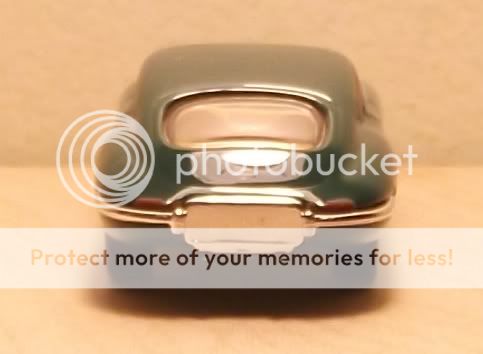
Today's car of the day comes from Firehawk73's collection and is GreenLight (High Speed)'s 1961 Jaguar E-Type.


The Jaguar E-Type (UK) or XK-E (US) is a British automobile, manufactured by Jaguar between 1961 and 1975. Its combination of good looks, high performance, and competitive pricing established the marque as an icon of 1960s motoring. More than 70,000 E-Types were sold during its lifespan.

In March 2008, the Jaguar E-Type ranked first in the Daily Telegraph's list of the "100 most beautiful cars" of all time. In 2004, Sports Car International magazine placed the E-Type at number one on their list of Top Sports Cars of the 1960s.


For more information and pictures of the real car please visit: Jaguar E-Type


The Series 1 was introduced, initially for export only, in March 1961. The domestic market launch came four months later in July 1961. The cars at this time used the triple SU carburetted 3.8 litre six-cylinder Jaguar XK6 engine from the XK150S. The first 300 cars built had flat floors and external hood (bonnet) latches. These cars are rare and more valuable. After that, the floors were dished to provide more leg room and the twin hood latches moved to inside the car. The 3.8-litre engine was increased to 4.2 litres in October 1964.

All E-Types featured independent coil spring rear suspension with torsion bar front ends, and four wheel disc brakes, in-board at the rear, all were power-assisted. Jaguar was one of the first vehicle manufacturers to equip cars with disc brakes as standard from the XK150 in 1958. The Series 1 can be recognised by glass-covered headlights (up to 1967), small "mouth" opening at the front, signal lights and tail-lights above bumpers and exhaust tips under the number plate in the rear.

3.8-litre cars have leather-upholstered bucket seats, an aluminium-trimmed centre instrument panel and console (changed to vinyl and leather in 1963), and a Moss four-speed gearbox that lacks synchromesh for first gear ("Moss box"). 4.2-litre cars have more comfortable seats, improved brakes and electrical systems, and an all-synchromesh four-speed gearbox. 4.2-litre cars also have a badge on the boot proclaiming "Jaguar 4.2 Litre E-Type" (3.8 cars have a simple "Jaguar" badge). Optional extras included chrome spoked wheels and a detachable hard top for the OTS.

A 2+2 version of the coupé was added in 1966. The 2+2 offered the option of an automatic transmission. The body is 9 in (229 mm) longer and the roof angles are different with a more vertical windscreen. (this is an incorrect assumption, the S1 OTS, coupe and 2+2 had identical rake windshields). The roadster remained a strict two-seater.

Less widely known, right at the end of Series 1 production and prior to the transitional "Series 1½" referred to below, a very small number of Series 1 cars were produced with open headlights. Production dates on these machines vary but in right hand drive form production has been verified as late as March 1968. The low number of these cars produced make them amongst the rarest of all production E Types.
Following the Series 1 there was a transitional series of cars built in 1967–1968, unofficially called "Series 1½", which are externally similar to Series 1 cars. Due to American pressure the new features were open headlights, different switches, and some de-tuning (with a downgrade of twin Zenith-Stromberg carbs from the original triple SU carbs) for US models. Some Series 1½ cars also have twin cooling fans and adjustable seat backs. Series 2 features were gradually introduced into the Series 1, creating the unofficial Series 1½ cars, but always with the Series 1 body style.

An open 3.8-litre car, actually the first such production car to be completed, was tested by the British magazine The Motor in 1961 and had a top speed of 149.1 mph (240.0 km/h) and could accelerate from 0 to 60 mph (0 to 97 km/h) in 7.1 seconds. A fuel consumption of 21.3 miles per imperial gallon (13.3 L/100 km; 17.7 mpg-US) was recorded. The test car cost £2,097 including taxes.

Tuesday, December 27, 2011

Car Of The Day: December 27, 2011


Today's car of the day is Tootsietoy's 1961 Jaguar E-Type.


The Jaguar E-Type (UK) or XK-E (US) is a British automobile, manufactured by Jaguar between 1961 and 1975. Its combination of good looks, high performance, and competitive pricing established the marque as an icon of 1960s motoring. More than 70,000 E-Types were sold during its lifespan.

In March 2008, the Jaguar E-Type ranked first in the Daily Telegraph's list of the "100 most beautiful cars" of all time. In 2004, Sports Car International magazine placed the E-Type at number one on their list of Top Sports Cars of the 1960s.


For more information and pictures of the real car please visit: Jaguar E-Type


The Jaguar E-Type is one of the most-replicated cars in small scale.  Almost every major diecast manufacturer has done one (or more) at some point in their history.  Examples exist from Matchbox (both in the Lesney era when the real car was brand new and in the Mattel era where the car is a beloved classic), Hot Wheels, Majorette, Yat Ming, Corgi, Tootsietoy (seen here), Johnny Lightning, GreenLight (using a High Speed casting), Kyosho, and Summer are just some of the brands that have done little XKEs.


The Series 1 was introduced, initially for export only, in March 1961. The domestic market launch came four months later in July 1961. The cars at this time used the triple SU carburetted 3.8 litre six-cylinder Jaguar XK6 engine from the XK150S. The first 300 cars built had flat floors and external hood (bonnet) latches. These cars are rare and more valuable. After that, the floors were dished to provide more leg room and the twin hood latches moved to inside the car. The 3.8-litre engine was increased to 4.2 litres in October 1964.

All E-Types featured independent coil spring rear suspension with torsion bar front ends, and four wheel disc brakes, in-board at the rear, all were power-assisted. Jaguar was one of the first vehicle manufacturers to equip cars with disc brakes as standard from the XK150 in 1958. The Series 1 can be recognised by glass-covered headlights (up to 1967), small "mouth" opening at the front, signal lights and tail-lights above bumpers and exhaust tips under the number plate in the rear.

3.8-litre cars have leather-upholstered bucket seats, an aluminium-trimmed centre instrument panel and console (changed to vinyl and leather in 1963), and a Moss four-speed gearbox that lacks synchromesh for first gear ("Moss box"). 4.2-litre cars have more comfortable seats, improved brakes and electrical systems, and an all-synchromesh four-speed gearbox. 4.2-litre cars also have a badge on the boot proclaiming "Jaguar 4.2 Litre E-Type" (3.8 cars have a simple "Jaguar" badge). Optional extras included chrome spoked wheels and a detachable hard top for the OTS.

A 2+2 version of the coupé was added in 1966. The 2+2 offered the option of an automatic transmission. The body is 9 in (229 mm) longer and the roof angles are different with a more vertical windscreen. (this is an incorrect assumption, the S1 OTS, coupe and 2+2 had identical rake windshields). The roadster remained a strict two-seater.

Less widely known, right at the end of Series 1 production and prior to the transitional "Series 1½" referred to below, a very small number of Series 1 cars were produced with open headlights. Production dates on these machines vary but in right hand drive form production has been verified as late as March 1968. The low number of these cars produced make them amongst the rarest of all production E Types.
Following the Series 1 there was a transitional series of cars built in 1967–1968, unofficially called "Series 1½", which are externally similar to Series 1 cars. Due to American pressure the new features were open headlights, different switches, and some de-tuning (with a downgrade of twin Zenith-Stromberg carbs from the original triple SU carbs) for US models. Some Series 1½ cars also have twin cooling fans and adjustable seat backs. Series 2 features were gradually introduced into the Series 1, creating the unofficial Series 1½ cars, but always with the Series 1 body style.

An open 3.8-litre car, actually the first such production car to be completed, was tested by the British magazine The Motor in 1961 and had a top speed of 149.1 mph (240.0 km/h) and could accelerate from 0 to 60 mph (0 to 97 km/h) in 7.1 seconds. A fuel consumption of 21.3 miles per imperial gallon (13.3 L/100 km; 17.7 mpg-US) was recorded. The test car cost £2,097 including taxes.

Saturday, December 3, 2011

Car Of The Day: December 3, 2011


Today's car of the day is Yat Ming's 1961 Jaguar E-Type.


The Jaguar E-Type (UK) or XK-E (US) is a British automobile, manufactured by Jaguar between 1961 and 1975. Its combination of good looks, high performance, and competitive pricing established the marque as an icon of 1960s motoring. More than 70,000 E-Types were sold during its lifespan.

In March 2008, the Jaguar E-Type ranked first in the Daily Telegraph's list of the "100 most beautiful cars" of all time. In 2004, Sports Car International magazine placed the E-Type at number one on their list of Top Sports Cars of the 1960s.


For more information and pictures of the real car please visit: Jaguar E-Type


The Jaguar E-Type is often considered one of the most beautiful cars ever produced.  Truthfully, it's never done all that much for me but I've warmed up to it more over the years.


The Series 1 was introduced, initially for export only, in March 1961. The domestic market launch came four months later in July 1961. The cars at this time used the triple SU carburetted 3.8 litre six-cylinder Jaguar XK6 engine from the XK150S. The first 300 cars built had flat floors and external hood (bonnet) latches. These cars are rare and more valuable. After that, the floors were dished to provide more leg room and the twin hood latches moved to inside the car. The 3.8-litre engine was increased to 4.2 litres in October 1964.

All E-Types featured independent coil spring rear suspension with torsion bar front ends, and four wheel disc brakes, in-board at the rear, all were power-assisted. Jaguar was one of the first vehicle manufacturers to equip cars with disc brakes as standard from the XK150 in 1958. The Series 1 can be recognised by glass-covered headlights (up to 1967), small "mouth" opening at the front, signal lights and tail-lights above bumpers and exhaust tips under the number plate in the rear.

3.8-litre cars have leather-upholstered bucket seats, an aluminium-trimmed centre instrument panel and console (changed to vinyl and leather in 1963), and a Moss four-speed gearbox that lacks synchromesh for first gear ("Moss box"). 4.2-litre cars have more comfortable seats, improved brakes and electrical systems, and an all-synchromesh four-speed gearbox. 4.2-litre cars also have a badge on the boot proclaiming "Jaguar 4.2 Litre E-Type" (3.8 cars have a simple "Jaguar" badge). Optional extras included chrome spoked wheels and a detachable hard top for the OTS.

A 2+2 version of the coupé was added in 1966. The 2+2 offered the option of an automatic transmission. The body is 9 in (229 mm) longer and the roof angles are different with a more vertical windscreen. (this is an incorrect assumption, the S1 OTS, coupe and 2+2 had identical rake windshields). The roadster remained a strict two-seater.

Less widely known, right at the end of Series 1 production and prior to the transitional "Series 1½" referred to below, a very small number of Series 1 cars were produced with open headlights. Production dates on these machines vary but in right hand drive form production has been verified as late as March 1968. The low number of these cars produced make them amongst the rarest of all production E Types.

Following the Series 1 there was a transitional series of cars built in 1967–1968, unofficially called "Series 1½", which are externally similar to Series 1 cars. Due to American pressure the new features were open headlights, different switches, and some de-tuning (with a downgrade of twin Zenith-Stromberg carbs from the original triple SU carbs) for US models. Some Series 1½ cars also have twin cooling fans and adjustable seat backs. Series 2 features were gradually introduced into the Series 1, creating the unofficial Series 1½ cars, but always with the Series 1 body style.

An open 3.8-litre car, actually the first such production car to be completed, was tested by the British magazine The Motor in 1961 and had a top speed of 149.1 mph (240.0 km/h) and could accelerate from 0 to 60 mph (0 to 97 km/h) in 7.1 seconds. A fuel consumption of 21.3 miles per imperial gallon (13.3 L/100 km; 17.7 mpg-US) was recorded. The test car cost £2,097 including taxes.

Monday, November 28, 2011

Car Of The Day: November 28, 2011


Today's car of the day is Road Champs' 1985 Jaguar XJS.


The Jaguar XJ-S (later the Jaguar XJS) is a luxury grand tourer produced by the British manufacturer Jaguar from 1975 to 1996. The XJ-S replaced the E-Type (or XK-E) in September 1975, and was based on the XJ saloon. It had been developed as the XK-F, though it was very different in character from its predecessor. Although it never had quite the same sporting image, the XJ-S was a competent grand tourer, and more aerodynamic than the E-Type. The last XJS was produced on 4 April 1996, by then 115,413 had been produced during a 21-year production life. The model was replaced by the XK8.


For more information and pictures of the real car please visit: Jaguar XJS


One of the best Jaguar XJS models in small scale.


The first XJ-S appeared in 1975 as a 1976 model. Power came from the Jaguar V-12 petrol engine with a choice of a manual or automatic transmission, but the manual was soon dropped. V-12 automobiles were unusual at the time, with notable others coming from Italian luxury sports car makers Lamborghini and Ferrari. The specifications of the XJ-S compared well with both Italian cars; it was able to accelerate to 60 mph (97 km/h) in 7.6 seconds (automatic) and had a top speed of 143 mph (230 km/h). The first series of XJ-S cars had a Borg-Warner Model 12 transmission with a cast iron case and a bolt-on bell-housing. In 1979 GM Turbo-Hydromatic 400 transmissions were fitted. The TH400 transmission was an all aluminium alloy case with an integrated non-detachable bell-housing.

Jaguar's timing was not good; the car was launched in the wake of a fuel crisis, and the market for a 5.3 litre V12 grand tourer was very small. The styling was also the subject of criticism, including the buttresses behind the windows. German authorities feared these would restrict rearward vision, and refused to give the model (along with a similarly adorned contemporary Lancia model) type approval: it was for a time necessary instead for German XJS buyers to obtain type approval for each individual car when registering it. Such fears were ill founded, since in reality the rear visibility was very reasonable, with only the frontmost top edges of the buttresses being visible, when looking rearward.

Jaguar did seize promotional opportunities with the television series The New Avengers and Return of the Saint. The New Avengers featured Mike Gambit (Gareth Hunt) who drove an XJ-S. Return of the Saint saw Simon Templar (played by Ian Ogilvy) driving an early XJ-S with the number plate "ST 1". Miniature versions were made by Corgi and proved popular. A decade and a half before, Jaguar had turned down the producers of the earlier Saint series when approached about the E-type; the producers had instead used a Volvo P1800.

Responding to criticisms that the XJ-S was not a worthy E-type successor, Pininfarina revealed a sporty show car in 1978 based on XJ-S mechanicals and called Jaguar XJSpider. The car never went into production.

Early examples can be identified by details such as a black panel between the rear lights, and brushed aluminium trim instead of the later cars' wood.


From July 1981, XJ-S received the new High-Efficiency engine for much better economy; as a by-product, power was increased to 220 kW (295 hp) or 196 kW (263 hp) in North America. At the same time, the XJ-S received changes to its exterior and interior (new five-spoke alloy wheels, chrome inserts on the upper part of the bumpers, wood inserts on dashboard and door cappings). In 1982, the new V12 XJ-S won first and second at the RAC Tourist Trophy race at Silverstone.

In 1983, a new 3.6 litre engine débuted - the Jaguar AJ6 straight-six (I6) engine - as well as a new cabriolet version, the XJ-SC. In the XJ-SC, the coupé's rather small rear seats were eliminated making it only a 2-seat car. The XJ-SC was not a full convertible but had a non-removable centre targa-type structure and fixed cant rails above the doors. The rear quarter windows remained as well. The 6-cylinder cars can be identified by a slightly raised "power bulge" — the longitudinal centre section of the bonnet.

Between 1983 and 1987 the 6 cylinder engined cars were only available with a 5-speed manual transmission (Getrag 265), with a 4-speed automatic (ZF 4HP22) offered from 1987 onwards (along with improved fuel injection as used on the XJ40). The earlier, manual models were not imported by Jaguar into the United States, which had to wait until the facelift manual 4 litre XJS coupé and convertible were available; even then they were sold only in low numbers. A limited number of earlier 5-speed AJ6 cars did however enter the US as grey market personal imports.