A blog focusing on 1/64 diecast from such popular brands as Hot Wheels, Matchbox, Johnny Lightning, M2 Machines, GreenLight, Tomica, Yat Ming, Majorette, MotorMax, Siku, Corgi, Guisval, Playart, Ertl, Zylmex, Racing Champions, & many more. Swifty's Garage features a daily Car Of The Day and news updates from your favorite brands!
Showing posts with label Honda. Show all posts
Tuesday, July 31, 2012
Car Of The Day: July 31, 2012
Today's car of the day is Playart's 1969 Honda N360.
The Honda N360 is a kei car, designed and built by Honda and produced from March 1967 through 1970, while its larger N600 brother lasted three more years. After a January 1970 facelift, the N360 became the NIII360 and continued in production until 1972. The car featured front wheel drive and an air-cooled, four stroke, 354 cc, 31 hp (23 kW) two-cylinder engine, and was borrowed from the Honda CB450 motorcycle. The displacement was reduced so as to comply with kei car legislation which stipulated maximum allowable engine displacement. This same engine was also used in the Honda Vamos, with a beam axle/leaf spring rear suspension. The "N" prefix stands for the Japanese word "norimono" which means "vehicle" in English. The exterior dimensions were in compliance with Japanese government regulations concerning kei cars, however, vehicles installed with the 402 cc and 599 cc engines were too large for the category, and were largely intended for international sales.
For more information and pictures of the real car please visit: Honda N360
This is one of the cars that makes Playart such a favorite among collectors today- quirky subject material. While the Civic is well-represented in small scale, this one is not.
A two-door sedan was the original body style, with a two-door wagon (considered a commercial vehicle in Japan, and therefore called a "Van") called the LN360 coming in June of the first year. An upgraded 36 hp (27 kW) engine was added in October 1968 for the N360 T. A 402 cc engine was used in the similar N400. The engine's technological specifications reflected engineering efforts resulting from the development of the larger Honda 1300, which used an air-cooled 1.3 litre engine. One of the primary differences between the N360 and the Honda Life that followed was the N360/600 had an air-cooled engine, and the Life had a water-cooled engine. The water-cooled engine was better able to comply with newly enacted emission standards in Japan, and a move away from air-cooled, and two-stroke engines. As does the original Mini, but unlike the succeeding Life, the N360/600 had its gearbox mounted in the sump rather than bolted on as a separate unit.
The Hondamatic-equipped N360AT which appeared in August 1968 was the first kei car equipped with an automatic transmission.
Friday, June 22, 2012
Car Of The Day: June 22, 2012
The Honda CR-V is a compact SUV (now called crossover in North America), manufactured since 1995 by Honda. It was loosely derived from the Honda Civic to satisfy a public demand for a sport-utility vehicle from Honda. There are discrepancies as to what "CR-V" stands for, Honda sales literature in UK reportedly made references to "Compact Recreational Vehicle", other Honda references (including the official Honda Japan CR-V Fact Book and Honda Worldwide) cite "Comfortable Runabout Vehicle". It is produced in both four-wheel drive and front-wheel drive, with availability differing by market.
For more information and pictures of the real car please visit: Honda CR-V
This is the kind of casting that has made Tomica one of the most charming diecast companies in the world: a basic transportation vehicle, which would be a common sight on streets throughout the world. No other model maker has made a CR-V in small-scale, while Tomica has covered the first generation (as a motorized Tomica), this second gen., and the new, fourth generation is scheduled to appear in the Tomica line-up later this year.
The bigger and heavier second generation CR-V was a full redesign, based on the seventh generation Civic, and powered by the K24A1 engine. North American versions of the new engine produced 160 hp and 162 lb ft of torque. Per new SAE regulations, the same engine is now rated at 156 hp and 160 lb ft. Despite the power increase, the new CR-V retained the fuel economy of the previous model, thanks in part to the engine's i-VTEC system. The newly developed chassis had increased torsional and bending rigidity, while the new suspension possessed front toe control link MacPherson struts and a rear reactive-link double wishbone; the compact rear suspension increased cargo space to 72 cu ft. The second generation CR-V was Car and Driver magazine's Best Small SUV for 2002 and 2003.
Changes between model years 2002, 2003, and 2004 were very minor. The success of the CR-V prompted Honda to introduce an entry-level SUV, the Element.
Tuesday, January 3, 2012
Car Of The Day: January 3, 2012
Today's car of the day is Kyosho's 1974 Honda Civic.
Honda began selling the 1169 cc (70 in³) transversely mounted inline four-cylinder Civic for about US$2,200. The car produced roughly 50 hp (37 kW) and included power front disc brakes, vinyl seating, reclining bucket seats, and a woodgrain-accented dashboard. The hatchback version added a fold-down rear seat, an AM radio, and cloth upholstery. The car had front and rear independent suspension. A four-speed manual transmission was standard. Options for the Civic were kept to a minimum, consisting of air conditioning, an automatic transmission called the Hondamatic, radial tires, and a rear wiper for the hatchback. The car could achieve 40 mpg-US (5.9 L/100 km; 48 mpg-imp) on the highway, and with a small 86.6-inch (2,200 mm) wheelbase and 139.8-inch (3,550 mm) overall length, the vehicle weighed 1,500 pounds (680 kg).
The four-door sedan version of this bodystyle was not available in the USA, and the sedan was not a hatchback until 1978, just before the introduction of the second generation. In the USA, the advertising campaign used to introduce the Civic was, "Honda, we make it simple."
For more information and pictures of the real car please visit: Honda Civic
This is the car that put Honda on the radar of most American car buyers. Previous efforts were mostly ignored in the USA; but this model was the perfect car at the perfect time.
The Civic's features allowed it to outperform American competitors such as the Chevrolet Vega and Ford Pinto. When the 1973 oil crisis struck, many Americans turned to economy cars. Reviews of American economy car quality were poor and getting worse due to spiraling costs for manufacturers. Japanese culture had a long-standing tradition of demanding high-quality economy cars, and the growing American desire in the 1970s for well-made cars that had good fuel mileage benefited the standing of the Honda Civic, Toyota Corolla and Datsun B210 in the lucrative U.S. market.
For 1974, the Civic's engine size grew slightly, to 1237 cc and power went up to 52 hp (39 kW). In order to meet the new 5 mph (8 km/h) bumper impact standard, the Civic's bumpers grew 7.1 inches (18 cm), increasing overall length to 146.9 inches (373 cm). The CVCC (Compound Vortex Controlled Combustion) engine debuted in 1975 and was offered alongside the standard Civic engine. The optional 53 hp (40 kW) CVCC engine displaced 1488 cc and had a head design that promoted cleaner, more efficient combustion. The CVCC design eliminated the need for catalytic converters or unleaded fuel to meet changing emissions standards, unlike nearly every other U.S. market car. Due to California's stricter emissions standards, only the CVCC powered Civic was available in that state. This created a sales advantage in Honda's favor in that CVCC equipped Honda products afforded the buyer the ability to choose any type of fuel the buyer wanted, and due to emissions equipment not being damaged by using leaded fuel, the buyer could use any gasoline products available. This was also an advantage due to some regions of North America having to ration available gasoline supplies due to periodic shortages at the time. TV commercial for CVCC Civic. A five-speed manual transmission became available in 1974, as did a Civic station wagon (only with the CVCC engine), which had a wheelbase of 89.9 inches (228 cm) and an overall length of 160 inches (406 cm). Civic sales also increased and topped 100,000 units for this year.
1978 brought slight cosmetic changes: the grille was black; the rear-facing hood vents replaced the sideways vents; and turn indicators were mounted in the bumper instead of in the grille. The CVCC engine was now rated at 60 hp (45 kW).
The first generation Honda Civics were notorious for rusting in less than three years from purchase where salt was used in the winter. The U.S. importer, American Honda Motor Company, signed a final consent decree with the Federal Trade Commission that provided owners of 1975-1978 Civics with rusted fenders the right to receive replacements or cash reimbursements. In the end, almost 1 million Honda owners were notified that their fenders could be repaired or replaced by the automaker at no charge. About 10% of all Hondas sold were to be inspected by a dealer, and the automaker had 180 days to replace front fenders and supporting parts that showed rust within the first three years of use.
The Hondas were so vulnerable to corrosion that the National Highway Traffic Safety Administration (NHTSA) also issued a safety recall . This was because the car's lateral suspension arms, front crossbeam, and strut coil spring lower supports could weaken with exposure to salt. A total of 936,774 vehicles built between 9-1-1972 and 8-1-1979 were subject to extensive repairs since Honda had to replace the suspension components, or the automaker bought back entire cars with serious body corrosion.
At the time, Honda's rust recall was the largest safety action among all the brands imported into the U.S. Civics became known for their "typical Honda rust" in the used car market.
What's wrong with the above picture? Could it be the two subcompacts that are exactly the same length of the full-size models in their respective lineups? Why yes! Yes it can be. Since these are generally designed as toys, the cars are designed to fit the blisterpack for a multitude of cost-saving reasons. They don't require new, smaller wheels to be made specifically for this one casting. They don't require a special blisterpack to compensate for their small size. And supposedly they appeal to people looking for cars because they don't feel like they're getting ripped off on a tiny car when the rest of the models are twice the size.
Now if you know me, you know I'm a true scale enthusiast. I like my big cars big and my tiny cars tiny. Which leads us to these pictures. These were all marketed as adult collectibles as opposed to toys. So we get a giant SUV and a tiny subcompact. Just the way it should be on the toy end but can't be for the reasons stated earlier.
Surprisingly, even though we've dealt with three different diecast manufacturers so far this year (GreenLight, Hot Wheels 100%, and today's Kyosho) and three very different types of car (classic muscle, gargantuan SUV, and subcompact) all three have one thing in common- they are true to scale with one another.
Yes, you can even pack up the Civic and take it along as a spare in case the Hummer breaks down....or more likely runs out of gas in the middle of nowhere.
Monday, November 7, 2011
Car Of The Day: November 7, 2011
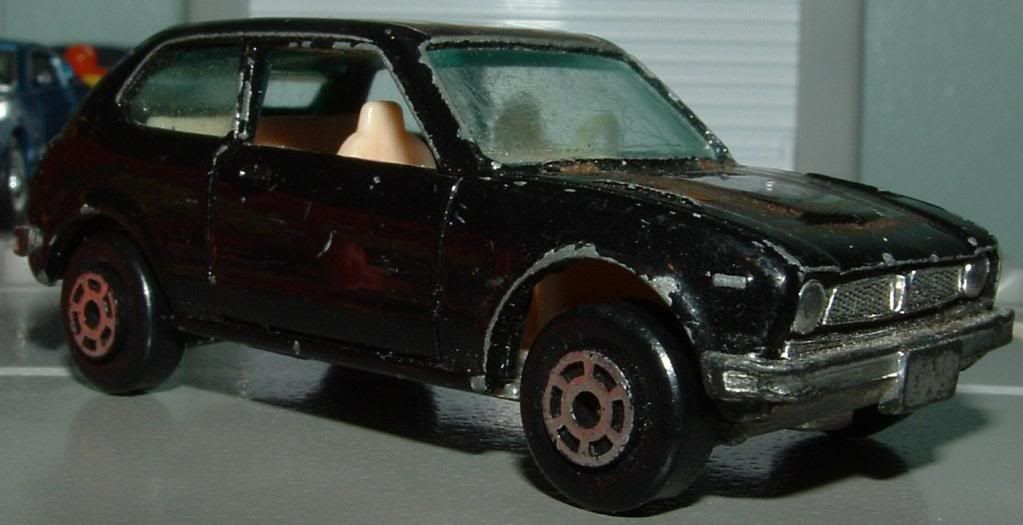
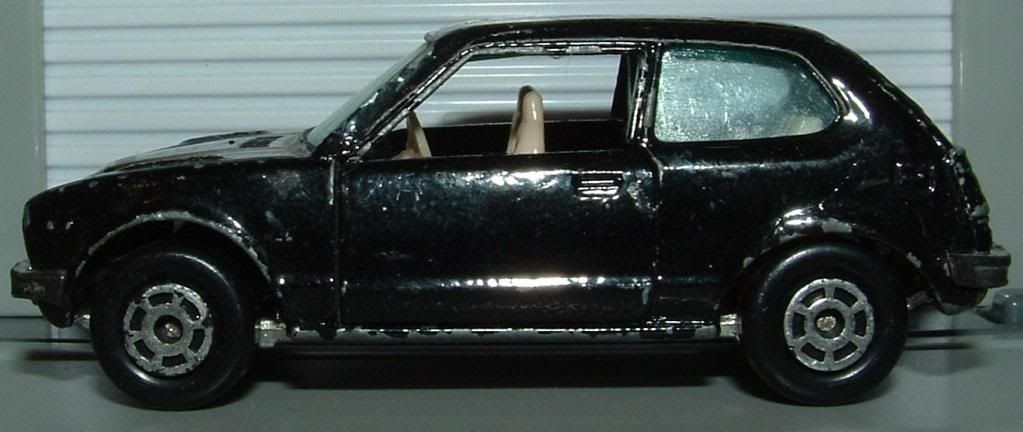
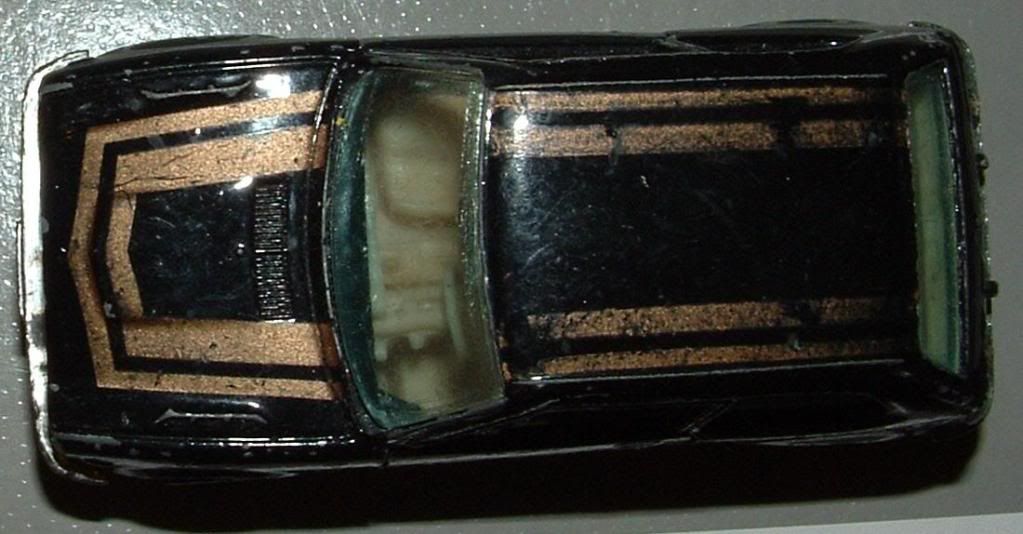
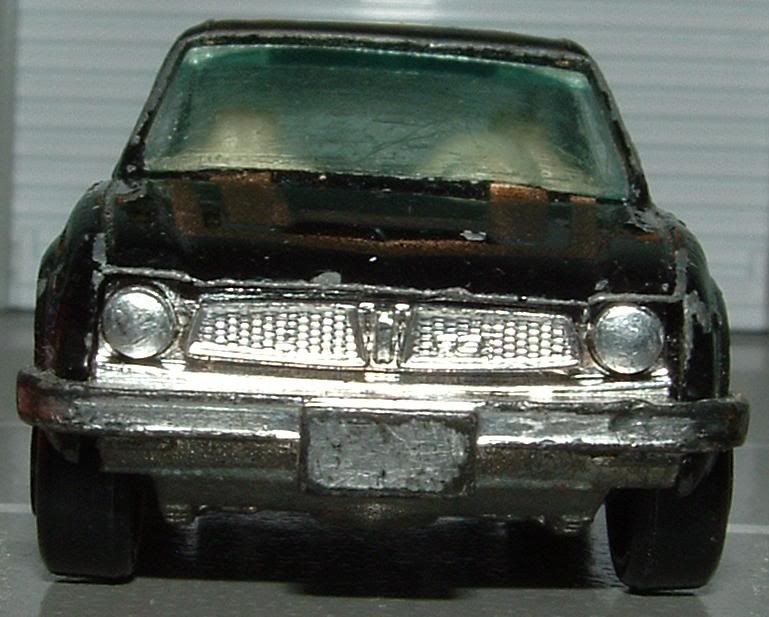
Today's Car Of The Day is Yat Ming's 1975 Honda Civic
The Honda Civic is a line of subcompact and subsequently compact cars made and manufactured by Honda. The Civic, along with the Accord and Prelude, comprised Honda's vehicles sold in North America until the 1990s, when the model lineup was expanded. Having gone through several generational changes, the Civic has become larger and more upmarket, and it currently slots between the Fit and Accord.
It was introduced in July 1972 as a two-door model, followed by a three-door hatchback that September. With the transverse engine mounting of its 1169 cc engine and front-wheel drive like the British Mini, the car provided good interior space despite overall small dimensions. Early models of the Civic typically included a basic AM radio, heater, foam-cushioned plastic trim, two-speed wipers, and painted steel rims with a chromed wheel nut cap. As the years went by, it has become much more upscale with options such as air conditioning, power locks, power windows, leather upholstery, satellite-linked navigation, and a six-speed manual transmission. Initially gaining a reputation for being fuel-efficient, reliable, and environmentally friendly, later iterations have become known for performance and sportiness, especially the Civic Type-R, Civic GTi and Civic SiR.
The Civic has been rebadged for international markets with such models as the Honda Ballade and Honda Domani/Acura EL. The Civic platform also served as the basis for the CR-X sport compact, the CR-X del Sol targa convertible, and the CR-V compact SUV.
As of 2006, a total of 16.5 million Civics had been sold worldwide, with 7.3 million of them in the United States. By 2010, Civic has been the top-selling car in Canada for thirteen years. With high gas prices and a weak economy in June 2008, the Civic supplanted the Ford F-Series to become the top-selling vehicle in the United States for that month.
In Japan , production of non-hybrid Civic for domestic market ended in August 2010, production of Civic hybrid for home market ended in December 2010. In recent years, customers shifted to minivans and compact cars like Honda Fit. Honda launched Fit hybrid in October in Japan. However, production of Civic and Civic hybrid for export markets will continue.
For more information and pictures of the real car please visit: Honda Civic
A nice model from Yat Ming, my only complaint is how big it is.
Honda began selling the 1169 cc (70 in³) transversely mounted inline four-cylinder Civic for about US$2,200. The car produced roughly 50 hp (37 kW) and included power front disc brakes, vinyl seating, reclining bucket seats, and a woodgrain-accented dashboard. The hatchback version added a fold-down rear seat, an AM radio, and cloth upholstery. The car had front and rear independent suspension. A four-speed manual transmission was standard. Options for the Civic were kept to a minimum, consisting of air conditioning, an automatic transmission called the Hondamatic, radial tires, and a rear wiper for the hatchback. The car could achieve 40 mpg-US (5.9 L/100 km; 48 mpg-imp) on the highway, and with a small 86.6-inch (2,200 mm) wheelbase and 139.8-inch (3,550 mm) overall length, the vehicle weighed 1,500 pounds (680 kg).
The four-door sedan version of this bodystyle was not available in the USA, and the sedan was not a hatchback until 1978, just before the introduction of the second generation. In the USA, the advertising campaign used to introduce the Civic was, "Honda, we make it simple."
The Civic's features allowed it to outperform American competitors such as the Chevrolet Vega and Ford Pinto. When the 1973 oil crisis struck, many Americans turned to economy cars. Reviews of American economy car quality were poor and getting worse due to spiraling costs for manufacturers. Japanese culture had a long-standing tradition of demanding high-quality economy cars, and the growing American desire in the 1970s for well-made cars that had good fuel mileage benefited the standing of the Honda Civic, Toyota Corolla and Datsun B210 in the lucrative U.S. market.
For 1974, the Civic's engine size grew slightly, to 1237 cc and power went up to 52 hp (39 kW). In order to meet the new 5 mph (8 km/h) bumper impact standard, the Civic's bumpers grew 7.1 inches (18 cm), increasing overall length to 146.9 inches (373 cm). The CVCC (Compound Vortex Controlled Combustion) engine debuted in 1975 and was offered alongside the standard Civic engine. The optional 53 hp (40 kW) CVCC engine displaced 1488 cc and had a head design that promoted cleaner, more efficient combustion. The CVCC design eliminated the need for catalytic converters or unleaded fuel to meet changing emissions standards, unlike nearly every other U.S. market car. Due to California's stricter emissions standards, only the CVCC powered Civic was available in that state. A five-speed manual transmission became available this year, as did a Civic station wagon (only with the CVCC engine), which had a wheelbase of 89.9 inches (228 cm) and an overall length of 160 inches (406 cm). Civic sales also increased and topped 100,000 units for this year.
1978 brought slight cosmetic changes: the grille was black; the rear-facing hood vents replaced the sideways vents; and turn indicators were mounted in the bumper instead of in the grille. The CVCC engine was now rated at 60 hp (45 kW).
The first generation Honda Civics were notorious for rusting in less than three years from purchase where salt was used in the winter. The U.S. importer, American Honda Motor Company, signed a final consent decree with the Federal Trade Commission that provided owners of 1975-1978 Civics with rusted fenders the right to receive replacements or cash reimbursements. In the end, almost 1 million Honda owners were notified that their fenders could be repaired or replaced by the automaker at no charge. About 10% of all Hondas sold were to be inspected by a dealer, and the automaker had 180 days to replace front fenders and supporting parts that showed rust within the first three years of use.
The Hondas were so vulnerable to corrosion that the National Highway Traffic Safety Administration (NHTSA) also issued a safety recall . This was because the car's lateral suspension arms, front crossbeam, and strut coil spring lower supports could weaken with exposure to salt. A total of 936,774 vehicles built between 9-1-1972 and 8-1-1979 were subject to extensive repairs since Honda had to replace the suspension components, or the automaker bought back entire cars with serious body corrosion.
At the time, Honda's rust recall was the largest safety action among all the brands imported into the U.S. Civics became known for their "typical Honda rust" in the used car market.
Sunday, December 12, 2010
The Two Seat Commuter Car Phenomenon
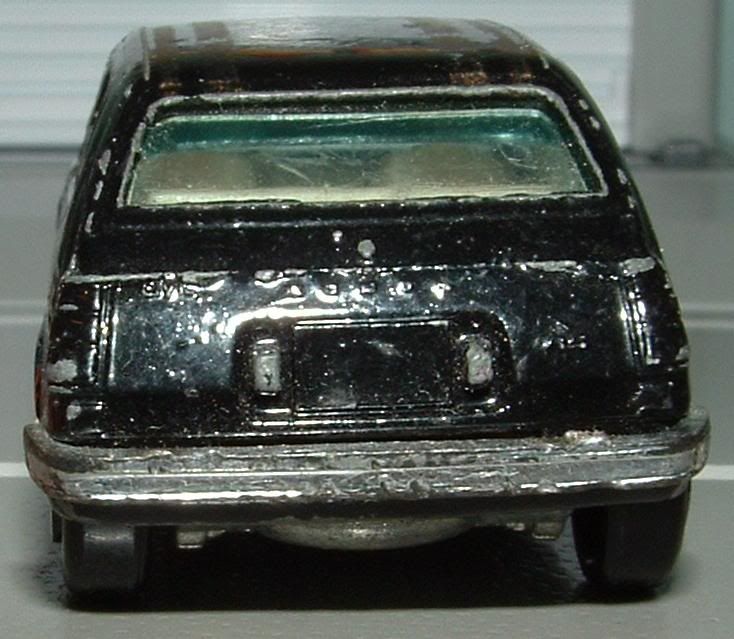
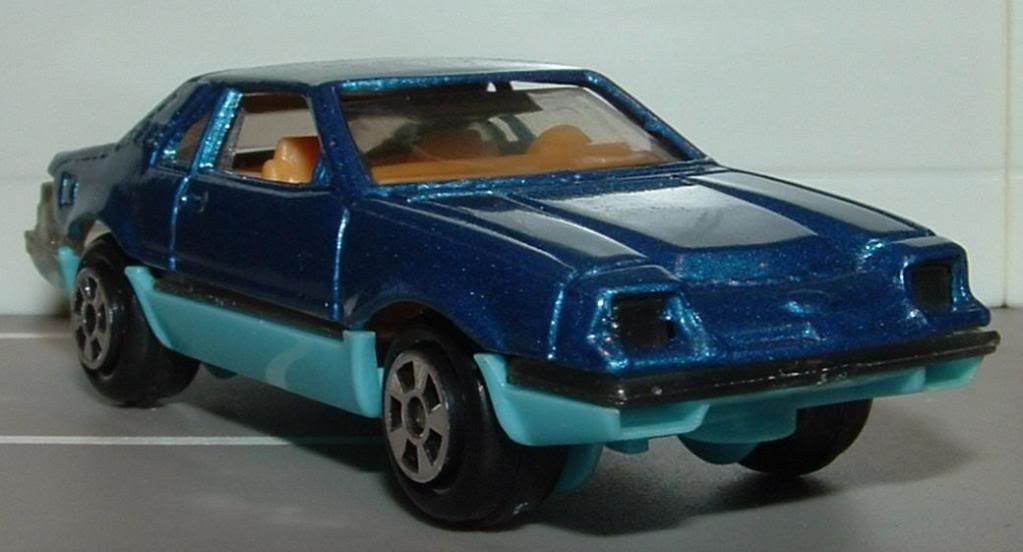
In the 1980s, the US auto industry was still recovering from the fuel crises of the 1970s. A lot of planning went into making cars smaller, just as gas prices hit all time lows. One of the more interesting phenomena to hit dealerships of the 1980s was the two-seater commuter car. There had been two seat cars before (the original Thunderbird, the Corvette, the Shelby Mustangs), and there had even been two seat economy cars before (the AMC Gremlin offered this as an option- to very few takers), but this was different. From the onset, these cars were purpose designed to be two seat economy cars.
The Ford EXP & Mercury LN7 were the first to hit the market in 1981 (as 1982 models), and the bizarre frog’s eye headlights ensured that these cars looked like absolutely nothing else on the road. The LN7 was dropped after two model years and approximately 40,000 sales. While the EXP would soldier on through 1988 (eventually being replaced by the all new Ford Probe in 1989), and sales did recover a bit with the 1986 restyle that eliminated the frog’s eye headlight treatment, the EXP never met sales expectations, selling a mere 225,000 examples in seven model years (this total includes the 40,000 LN7s). Ertl and Zylmex offered the first generation EXP in small scale- the only examples of this car in 1/64.
The Pontiac Fiero was Pontiac’s way of getting around management’s refusal to grant the division a true sports car (for fear it would cannibalize sales from the Corvette). So they decided to develop a sporty two-seater economy car instead. And the futuristic styling proved to be a hit with car buyers, as almost 400,000 were sold in the five years the car was available. The real problem was the car could not deliver the performance to match its looks. With the Iron Duke 2.5 liter motor the Fiero was a sloth, and the car’s handling won very little praise due to the fact most of it was made from off the shelf parts used in the Citation and Chevette to save money. By the time Pontiac corrected the performance and handling issues, GM had already decided to pull the plug on the project. This was a very popular subject for diecast manufacturers with Hot Wheels, Matchbox, Majorette, Welly, Zylmex, Rhino, Road Champs (opening rear hood/trunk), Blue Box, Faie, and others offering models of the car when new, and lastly, a model from the MotorMax Fresh Cherries line issued long after the real car’s expiration date.
The Honda CR-X was a Civic based two-seat hatchback launched for the 1984 model year. Sportier styling and better performance than the regular Civic helped the reputation of this car and it’s slowly approaching cult status. This is likely the most collectible of the cars listed. That said, real examples of the car often trade for less than $500 as evidenced by the frequency they are raced on the LeMons racing circuit (a race series designed for any car costing the drivers less than $500). Perhaps most importantly to this article, this is also the model that achieved the best gas mileage- published claims of 57 MPG (highway) have been recorded for this car.
In the mid 1990s Honda replaced the CR-X with the Civic del Sol, a two-seat roadster based on the Civic. This was not an overly successful model for Honda, but a modifiable small-scale example exists by X-Concepts.
The Toyota MR2 deserves an honorable mention as the original intent was to provide a sporty car that delivered great gas mileage. Somewhere along the way Toyota turned the MR2 into a true sports car before its introduction, but considering it is a two-seater and delivers great gas mileage, we’re including it in this article as well. This was by far the longest lasting car of the bunch, lasting through three generations and only being discontinued for good in 2007 and more than twenty years on the market. Replicas were made in small scale by Matchbox, Zylmex, Road Champs, Tomica, and others. The second generation was made by Hot Wheels, and the final generation was replicated by Yat Ming, Jada, Muscle Machines and others.
Ford EXP:
Ertl
Zylmex
Pontiac Fiero:
Hot Wheels
Matchbox
Majorette
MotorMax Fresh Cherries
Blue Box
Welly
Road Champs
Soma
Zylmex
Rhino
The Fiero GT was only modeled by Hot Wheels, and only as the generic “Camo” armored, well-armed, and lifted 4x4 military vehicle. A fiberglass sports car would be an absurd choice of vehicle for armoring, and an even more bizarre choice for combat.
Honda CRX:
Zylmex
Johnny Lightning
Tomica Limited Vintage Neo
Summer
Mega Toys
Honda Civic del Sol:
X-Concepts
Toyota MR2 (1st generation):
Matchbox
Tomica
Road Champs
Zylmex
Toyota MR2 (2nd generation):
Hot Wheels
Summer
Toyota MR2 (3rd generation):
Yat Ming
Jada
Muscle Machines
The Ford EXP & Mercury LN7 were the first to hit the market in 1981 (as 1982 models), and the bizarre frog’s eye headlights ensured that these cars looked like absolutely nothing else on the road. The LN7 was dropped after two model years and approximately 40,000 sales. While the EXP would soldier on through 1988 (eventually being replaced by the all new Ford Probe in 1989), and sales did recover a bit with the 1986 restyle that eliminated the frog’s eye headlight treatment, the EXP never met sales expectations, selling a mere 225,000 examples in seven model years (this total includes the 40,000 LN7s). Ertl and Zylmex offered the first generation EXP in small scale- the only examples of this car in 1/64.
The Pontiac Fiero was Pontiac’s way of getting around management’s refusal to grant the division a true sports car (for fear it would cannibalize sales from the Corvette). So they decided to develop a sporty two-seater economy car instead. And the futuristic styling proved to be a hit with car buyers, as almost 400,000 were sold in the five years the car was available. The real problem was the car could not deliver the performance to match its looks. With the Iron Duke 2.5 liter motor the Fiero was a sloth, and the car’s handling won very little praise due to the fact most of it was made from off the shelf parts used in the Citation and Chevette to save money. By the time Pontiac corrected the performance and handling issues, GM had already decided to pull the plug on the project. This was a very popular subject for diecast manufacturers with Hot Wheels, Matchbox, Majorette, Welly, Zylmex, Rhino, Road Champs (opening rear hood/trunk), Blue Box, Faie, and others offering models of the car when new, and lastly, a model from the MotorMax Fresh Cherries line issued long after the real car’s expiration date.
The Honda CR-X was a Civic based two-seat hatchback launched for the 1984 model year. Sportier styling and better performance than the regular Civic helped the reputation of this car and it’s slowly approaching cult status. This is likely the most collectible of the cars listed. That said, real examples of the car often trade for less than $500 as evidenced by the frequency they are raced on the LeMons racing circuit (a race series designed for any car costing the drivers less than $500). Perhaps most importantly to this article, this is also the model that achieved the best gas mileage- published claims of 57 MPG (highway) have been recorded for this car.
In the mid 1990s Honda replaced the CR-X with the Civic del Sol, a two-seat roadster based on the Civic. This was not an overly successful model for Honda, but a modifiable small-scale example exists by X-Concepts.
The Toyota MR2 deserves an honorable mention as the original intent was to provide a sporty car that delivered great gas mileage. Somewhere along the way Toyota turned the MR2 into a true sports car before its introduction, but considering it is a two-seater and delivers great gas mileage, we’re including it in this article as well. This was by far the longest lasting car of the bunch, lasting through three generations and only being discontinued for good in 2007 and more than twenty years on the market. Replicas were made in small scale by Matchbox, Zylmex, Road Champs, Tomica, and others. The second generation was made by Hot Wheels, and the final generation was replicated by Yat Ming, Jada, Muscle Machines and others.
Ford EXP:
Ertl
Zylmex
Pontiac Fiero:
Hot Wheels
Matchbox
Majorette
MotorMax Fresh Cherries
Blue Box
Welly
Road Champs
Soma
Zylmex
Rhino
The Fiero GT was only modeled by Hot Wheels, and only as the generic “Camo” armored, well-armed, and lifted 4x4 military vehicle. A fiberglass sports car would be an absurd choice of vehicle for armoring, and an even more bizarre choice for combat.
Honda CRX:
Zylmex
Johnny Lightning
Tomica Limited Vintage Neo
Summer
Mega Toys
Honda Civic del Sol:
X-Concepts
Toyota MR2 (1st generation):
Matchbox
Tomica
Road Champs
Zylmex
Toyota MR2 (2nd generation):
Hot Wheels
Summer
Toyota MR2 (3rd generation):
Yat Ming
Jada
Muscle Machines
Labels:
CR-X,
del sol,
Ertl,
EXP,
Fiero,
Ford,
Honda,
Hot Wheels,
Jada,
Matchbox,
MR2,
Pontiac,
Road Champs,
Tomica,
Toyota,
X-Concepts,
Yat Ming,
Yatming,
Zylmex
Subscribe to:
Posts (Atom)