Showing posts with label Hot Wheels. Show all posts

Friday, October 26, 2012

Car Of The Day: October 26, 2012


Hot Wheels 40's Woodie (Ford)


This example is from juantoo3's collection.


A woodie is a car body style, especially a station wagon, where the rear bodywork is constructed of wood framework with infill panels of wood or painted metal.

After the demise of actual wood construction, manufacturers used simulated woodgrain sheet vinyl—sometimes augmented with three-dimensional, simulated framework—to recall wood construction. In 2008, wood construction was evoked abstractly on the Ford Flex with a series of side and rear horizontal grooves.


As a variant of body-on-frame construction, the woodie originated from the early (pre mid-1930s) practice of manufacturing the passenger compartment portion of a vehicle in hardwood. Woodies were popular in the United States and were produced as variants of sedans and convertibles as well as station wagons, from basic to luxury. They were typically manufactured as third-party conversions of regular vehicles—some by large, reputable coachbuilding firms and others by local carpenters and craftsmen for individual customers. They could be austere vehicles, with side curtains in lieu of roll-up windows (e.g., the 1932 Ford)—and sold in limited numbers (e.g., Ford sold 1654 woodie wagons). Eventually, bodies constructed entirely in steel supplanted wood construction—for reasons of strength, cost and durability.


For more information check here: Woodie


This one is a special edition set car made for the Wild Wave playset.  The neon colors reflect the Cal Custom era of the late 80s, and until recently this was the only version to carry surfboards.

Thursday, October 25, 2012

Car Of The Day: October 25, 2012


The 1932 Ford Vicky by Hot Wheels is the car for today.


The Model B was a new Ford automobile produced in model year 1932. It was a much updated version of the Model A and remained largely unchanged until the 1933 model year, when the updated Model C was introduced.

Strictly speaking the Model B was a four-cylinder car with a Ford Model A engine, but it was at this time that Ford began producing a very similar car with Ford's new Flathead V8 engine. The V8 car was marketed as a Model 18, though it is commonly called the Ford V-8 today, and was virtually indistinguishable from the Model B. Until this time, Ford had always produced only one basic car at a time.
There were two versions of the ’32 – a four-cylinder and the V-8 flathead. They came in two body styles, the "5-window" (two door windows, two quarter panel windows and the rear window), and the rare "3-window" Deluxe Coupe that featured front opening doors, also known as Suicide Doors. The Deuce was called Model 18, the “1” standing for “first” and the “8” for V-8. The less popular Model B was the four-cylinder model, a refined version of the four-cylinder Model A.

The ’32 Model 18 was the first successful V-8 in a low-priced car. The 65-hp engine was used in some models costing $460. There were 14 different body styles – like the roadster, coupe, sport coupe, two-door and four-door sedans, cabriolet and phaeton. Prices ranged from $460 for the roadster and the coupe's $490 to the $650 convertible sedan. Production totals numbered only 520 for the roadster and 28,904 for the two-door coupe. Nowadays, the roadster and coupe are notable, as these body styles are more used in making the models into streetrods.

Today, the 1930s Model B is a highly collectible car that people will pay thousands of dollars to restore to exact original style. During the WWII period, when they were first getting old, the Model Bs and V8s were frequently altered into hot rods. This continued into the 1960s on a large scale. Since the 1970s, 1932 bodies and frames have been expensive, which has reduced the number of "rods" being created. Those that are made, however, are quite evolved and often very expensive. A typical auto-show hot rod is a $60,000 proposition or much more, in a few cases.


Deuce coupe is a slang term used to refer to the 1932 Ford coupe, derived from the year of manufacture. In the 1940s, the '32 Ford became an ideal hot rod. Hot rodders would strip weight off this readily available car and soup-up the engine. They came in two body styles, the more common "5-window" (two door windows, two quarter panel windows, and the rear window), and the rare "3-window" Deluxe Coupe that featured front-opening "suicide doors."


Flea markets rock, esp for finding items such as this one carded for less than a $1. The venerable Vicky debuted in the HWs line in 1969 and was later recasted in 1994. The issue shown here is from 2002.

Thursday, October 11, 2012

Car of the Day:October 11, 2012

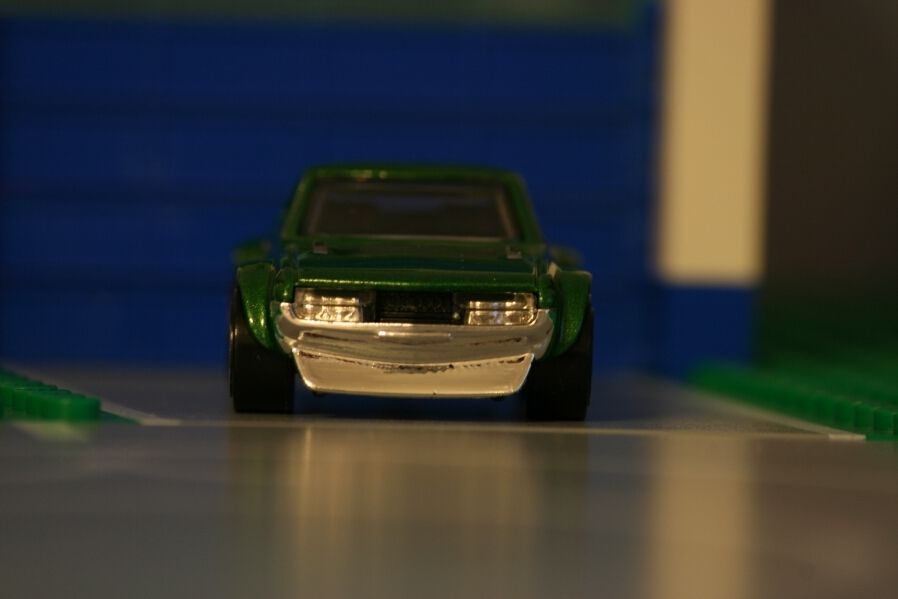
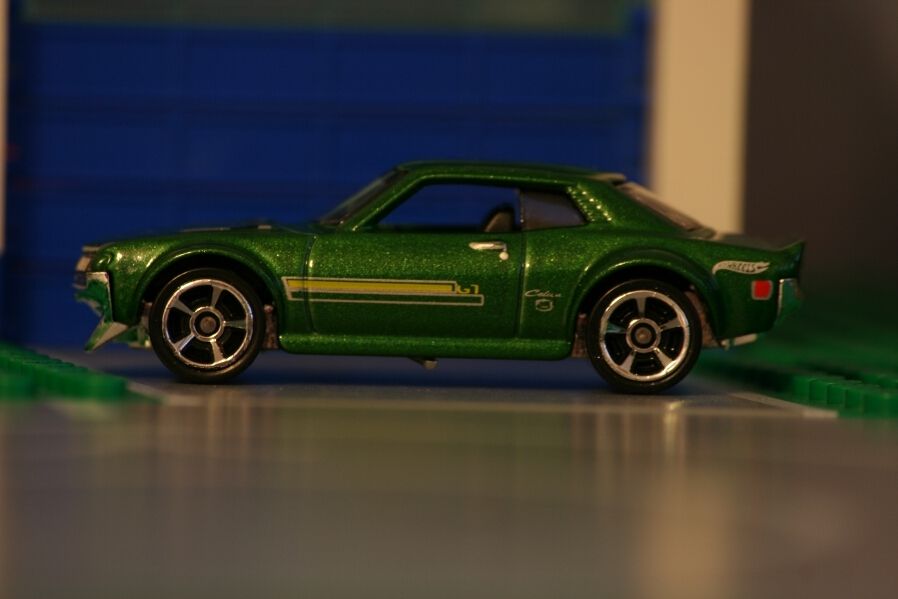
Today's Car of the Day is from Jedmimario's collection and is the Hot Wheels' 1970 Toyota Celica GT.
Wikipeida.com Displayed at the October 1970 Tokyo Motor Show[3] and marketed in December of the same year, the Celica was a personal car that emphasized styling and driving enjoyment. Japanese models were ET, LT, ST, GT, and GTV (which was introduced in 1972, the V standing for Victory). The platform was shared with the Toyota Carina, a vehicle exclusive to Toyota Store Japanese dealerships. For export markets, the Celica was offered in three different levels of trim; LT, ST and GT.
For more information about the real car check out http://en.wikipedia.org/wiki/Toyota_Celica
This is the latest from what is probably my favorite theme in the current Hot Wheels line: 70-80s Japanese sports cars. This one, similar to this others, is done up in period racing modifications with exaggerated fender flares and a low front spoiler. Distinctly, though, it retains factory trim and decals. A great little model with jeweled lights. The proportions aren't quite perfect and the wheels on the large size, but the casting gets the job and has loads of charm.

Friday, October 5, 2012

Minivan of The Day: October 5, 2012


Today's car of the day is Hot Wheels' Ford Aerostar.


The Ford Aerostar is a minivan produced by Ford Motor Company for the North American market; the first such design by Ford, it was sold from the 1986 to the 1997 model years. It was sold in both passenger van and cargo van configurations in two body lengths with both rear wheel drive and all wheel drive configurations. The Aerostar was sold only under the Ford brand; the first minivan sold by the Lincoln-Mercury division was the 1993 Mercury Villager. Production was ended after the 1997 model year after its replacement by the Windstar in the 1995 model year; both product lines were sold from 1995-1997. The role of the Aerostar cargo van was left unfilled until the 2010 introduction of the Transit Connect.

The aerodynamic styling (.37 coefficient of drag) resembled the Ford Taurus introduced alongside it for 1986. An early commercial ad campaign compared the side profile of the Aerostar to that of the NASA Space Shuttle. For much of its later life, the Aerostar would be marketed as part of Ford's light-truck lineup.

The first-generation Aerostar was introduced in July 1985 as a 1986 model. Originally unveiled in concept form in 1984, the body of the production version differed little from the concept except for detail changes to the grille and headlights. While the Aerostar was originally planned to use an optional diesel engine, this option was cancelled after the release of the concept.

Ford engineers chose the front-engine layout for the Aerostar for a variety of reasons. Ford found buyers of vans preferred the engine placement in front in terms of safety and engine access (in comparison to German and Japanese imports). In contrast to Chrysler, Ford used a rear-wheel drive layout with the Aerostar; this provided it with the same 5,000 pounds (2,300 kg) tow rating as the GM minivans, 2½ times the capacity of the Chrysler vans. During its development, Ford chose to use a number of lightweight materials in its body design; the Aerostar used plastic bumpers, fuel tank, rear door and hood with the addition of aluminum drive shafts, axles and wheels. Although the Aerostar was designed from a dedicated platform (a first for an American minivan), many of its components were borrowed from the Ford light-truck lineup (from the Ranger/Bronco II). One major exception was the rear suspension, a 3-link coil spring suspension with a live rear axle; it was designed specifically for the Aerostar and was unique among American-market minivans of the time.

At its launch in 1985, the Aerostar was available in a single body length as a cargo van (Aerostar Van) and a 7-passenger van (Aerostar Wagon). The standard engine was a 2.3 L four-cylinder sourced from the Fox platform while the 2.8 L Cologne V6 sourced from the Ranger was an option; a diesel engine was cancelled during the development phase. A 5-speed manual transmission (Mazda TK5) was standard with an optional 4-speed automatic (Ford A4LD). The exterior and interior featured several notable design quirks. The Aerostar was one of the few American minivans ever to feature a handbrake in between the front seats; this was a feature retained by both of its successors and the current Transit Connect. Another quirk in early Aerostars is that while cupholders were an option only for the third-row seats, it could be ordered with up to six ashtrays and two cigar lighters; the interior may have been designed with a smoker in mind. Unlike other American minivans of the time, the 2nd-row windows on the Aerostar slid open, in a way similar to the Volkswagen Vanagon. Like Chrysler's minivans, the Aerostar was exported to Europe in small numbers, which is why the rear license surround is sized to accommodate European number plates in addition to American ones.


For more information and pictures of the real car please visit: Ford Aerostar


I'm not exactly sure what the stain is on the front bumper.  I didn't notice it until reviewing the photographs.  I'll have to try cleaning it off...  Anyways, this casting started life as a Flip-Outs model and eventually made its way to the Mainline.  I believe this particular example was a promo, however.


The cargo version of the Aerostar did not sell as well as the wagon, as the Aerostar's in-between size worked against it in comparison to the GM Astro/Safari twins.[citation needed] Aside from the lack of windows and trimmed interior, Aerostar cargo vans differed little from Aerostar wagons. One externally visible difference was the use of rear double doors instead of a hatch. On these, the license-plate opening was American-sized instead of the wagon's European-sized one (the cargo van was not exported). The Aerostar Van did not catch on as a base for conversion vans either.

The Van was sold with any available engine and came in both standard and extended lengths.

Monday, October 1, 2012

Car Of The Day: October 1, 2012


Today's car of the day comes from juantoo3's collection and is Hot Wheels' 1914 Ford Model T (Hot Heap).


1964 AMBR award winner, the famous King T designed and built by Don Tognotti and Gene Winfield represents the 60's like no other roadster. Began in July of '62 and finished in '64, the King T has been restored with exacting standards to the original. The custom tubular frame with independent rear suspension and '51 coil springs for the front have been fully restored to the original over the top chrome presentation. The original engine, fully rebuilt and dynoed, features gleaming metal flake paint. Presented in its prime for the show circuit with Hilborn injectors, the King T is currently fitted with a Carter AFB 500 carburetor. Hydro-matic transmission shifts with linkage run through the spark and advance controls on the steering column. Interior features the period pleated and button tufted design, along with the original chest seen in display materials. Original rims re-created to duplicate the wood spoke look favored by Tognotti. Painted in Wild Pearl Lavender by Gene Winfield in 1963, Gene was asked to re-create the original paint. In 2007, Winfield flew to Seattle and painted and remembered times with the King T. Full photo documentation. The King T is famous for wild styling and over the top chroming. Also sold as a model known as Tognotti's T the Grand Sweepstakes winner at Winter Nationals Auto Fair and the Oakland Roadster Show became famous later as Hot Heaps, the Hot Wheels version of Don Tognotti's dream. Accompanied by original documentation from Gene Winfield's personal collection, MPC model kits, magazines, display material and the 1964 AMBR Trophy rebuilt to a more manageable size.


For more information and pictures of the real car please visit: Tognotti's King T


Hot Heap, redline Hot Wheel, based on Tognotti's T, America's Most Beautiful Roadster Award winner...1914 Ford Model T custom, made in the USA.

These pics show how it looks now with some fresh shoes and some tweaking of the bent axles. Brown, while not a rare color, is considered scarce and is one of the more desireable spectraflame colors for this model. The bent windshield is factory stock, they came from Mattel this way for a time one year. Rumor is that there was a problem with the machine, but since the cars were still *believeable* (sellable), they continued making them for awhile before repairing the machine. Most Hot Heaps have straight windshields. -juantoo3


It looks as if this car was recently sold at Barrett-Jackson.  And what a stunning looking roadster!  The Hot Wheels model doesn't do it justice, especially not in this color.  I want to see them bring this one back in the correct lavender.  What a stunning car!


Sunday, September 30, 2012

Car Of The Day: September 30, 2012


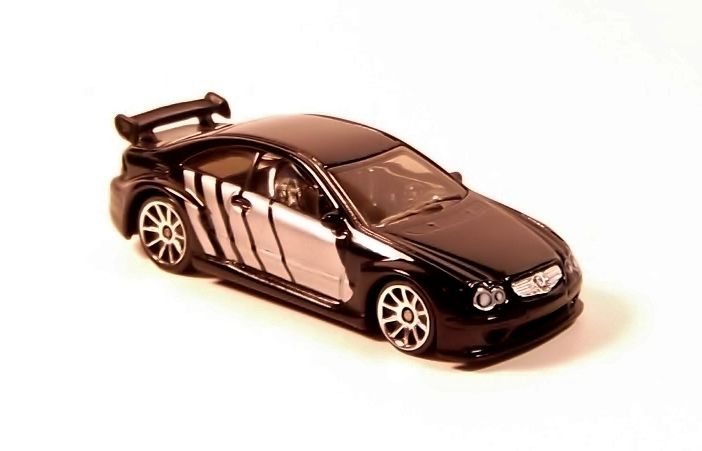
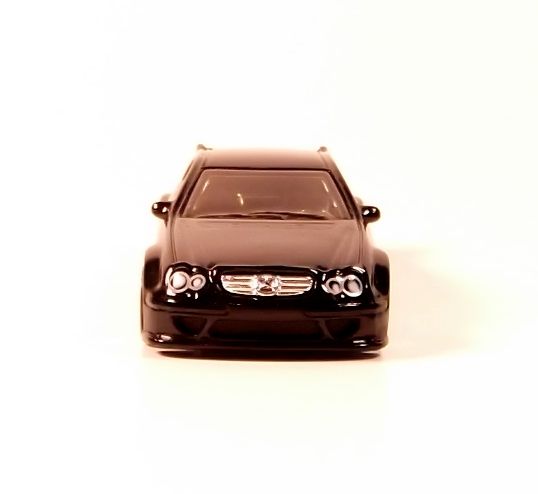
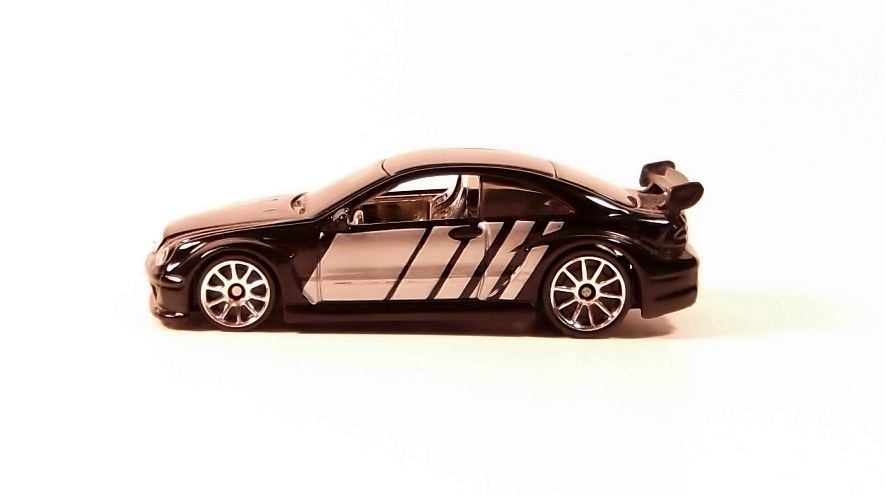
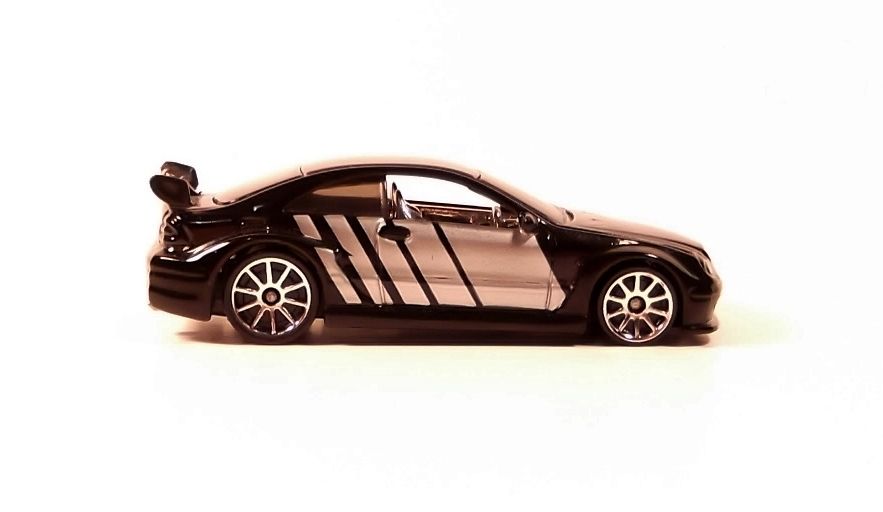
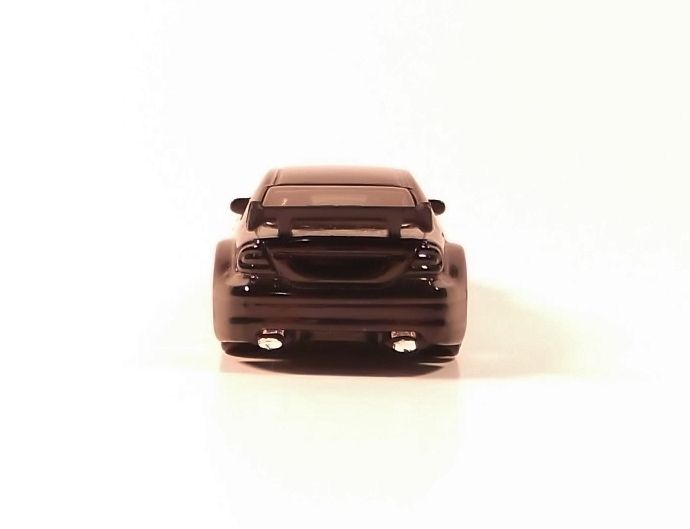
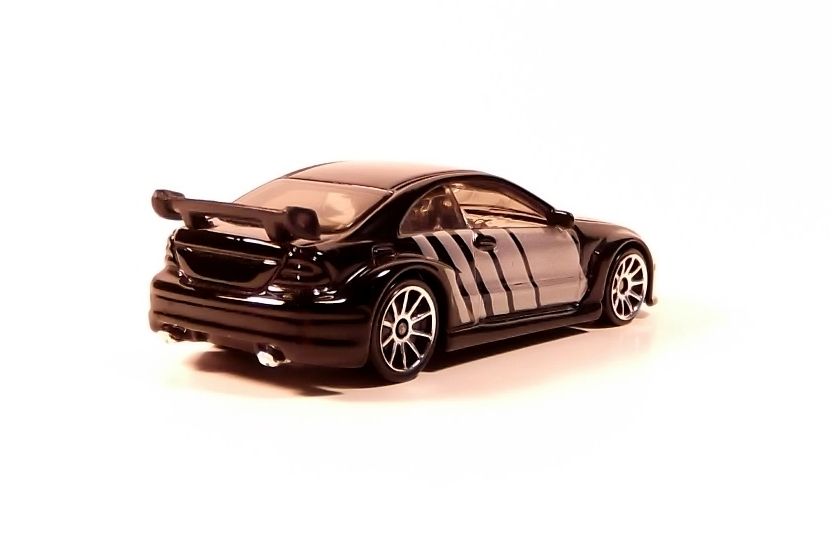
Today's car of the day comes from Firehawk73's collection and is Hot Wheels' 2006 Mercedes-Benz CLK-DTM.


The Mercedes-Benz CLK-Class is a mid-size rear-wheel drive coupé/convertible (Coupe Leicht Kurz or Coupe/Light/Short). While it was based on the W202 and W203 platforms of the C-Class, its styling cues, engine, and price range are closer to that of the E-Class, with Mercedes-Benz slotting the CLK as a coupé version of the W210 and W211 E-Class sedan/wagon. The CLK succeeded the W124 E-Class Coupe and it was in turn replaced by the C207 E-class Coupe.


For more information and pictures of the real car please visit: Mercedes-Benz CLK-DTM


The Mercedes-Benz C209/A209 cars have been produced since 2003. They are sold under the CLK-Class model names. The C209/A209 is based on the W203 C-Class. It replaced the C208 CLK-Class after 2003 which were the first car to carry the CLK moniker.

The C209/A209 is available in two body styles, a coupe (C209) and a cabriolet (A209), and is manufactured with diesel and petrol engines ranging from four-cylinder (CLK200) to eight-cylinder (CLK500 and CLK63AMG). The cabriolet (Designated with an A, as in CLK500A) features a fully automatic retractable soft top covered by a metal tonneau that can be raised and lowered from outside the vehicle using the key fob.

A CLK AMG DTM was produced as a MY2006 in both a coupe and later cabriolet model. Styling cues were taken from the C-Class race car used for the German Deutsche Tourenwagen Masters racing series. The car includes a wider body, rear wing spoiler, carbon fiber accents, and upgraded suspension.


Performance is electronically limited to 135 mph (217 km/h) in the CLK350 and CLK500 models, and to 155 mph (249 km/h) in the CLK55 model. An AMG factory option is available for an unrestricted top speed.

The Electronic Stability Control (ESP) and Anti-lock braking system (ABS) are both aids to handling, making such feats as a 90’ degree turn on a typical two lane intersection from 50 mph (80 km/h) possible using simple hard braking and turning with no significant fishtailing. The ESP system cannot be turned off - it makes intentional high-power fishtailing impossible without using a factory test protocol that end-users generally cannot enable.

Each model seats four and in the US this includes an all-leather interior with burl walnut trim. For Europe the models are available as "Elegance" and "Avantgarde" essentially, basically 'Luxury' or 'Attitude' specification where the Elegance uses Burr Walnut trim and polished alloy wheels and the Avantgarde uses alloy trim and chunkier wheels. Also there is the Sport upgrade package for the Avantgarde, with 18" Alloys and an interior upgrade. Finally there is also the "Sport" (UK only) - an 'AMG' version from factory for the 280 V6 petrol, 220 4 cyl diesel and the 320 V6 diesel (though not an AMG engine) trimmed (including 18" AMG alloys and wider rear track, suspension set-up, sport/tiptronic/manual gear options, body styling, paddle shifts, sports exhausts, etc.) and made available from 2005/06. The price and specification for European models is otherwise the same. The 4 cyl. cars wear 16" wheels, while the CLK320, CLK350 and CLK500 come with 17 inch (432 mm) alloy wheels, the CLK55 AMG sports 18" (457 mm). The cabriolets have a remote-operated automatic soft-top and sensor-controlled roll bars. Since its introduction, all US cars come standard with a Tele Aid emergency assistance system, automatic dual-zone air conditioning, 10-way power front seats and rain-sensing windshield wipers. Seven-channel digital surround sound comes standard. A Keyless Go system, navigation system, Parktronic system, and bi-xenon HID headlamps are all available as options. All models come with four side airbags. European cars differ considerably and are usually specced depending on the buyer's needs.

The cars have a manual sport/comfort mode switch that sets the automatic transmission to start in 2nd gear and shift earlier in comfort mode. With the new 7-speed transmission, the car is about 20% more fuel-efficient compared to the 5-speed, with no loss of performance. In the CLK500, at 80 mph (130 km/h), the 5-speed transmission runs at about 3000 rpm, while the 7-speed runs at about 2200 rpm. In the AMG model, the transmission can be set to remain longer in lower gears for higher performance.

The 5-speed CLK500 gets an average of 15mpg in city driving conditions, whereas the 7-speed CLK550 get an average of about 18mpg under the same conditions. Both add about 3mpg for highway driving.
The C209/A209 CLK-Class is 2.4 inches (61 mm) longer, 0.7 inches (18 mm) wider and 1.1 inch (28 mm) higher than its predecessor.

Wednesday, September 26, 2012

Truck Of The Day: September 26, 2012


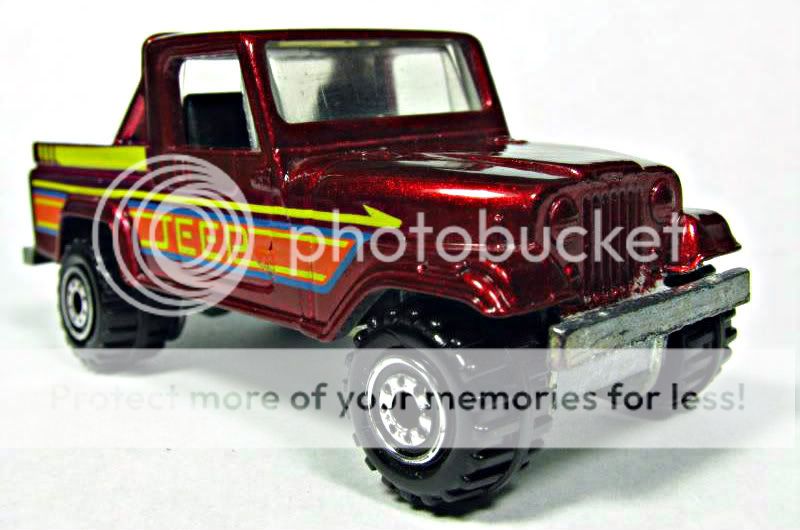
Today's car of the day comes from craftymore's collection and is Hot Wheels' 1983 Jeep Scrambler CJ-8.


The Jeep CJ-8 was a long wheel-base version of the CJ-7, introduced in 1981. It featured a 103-inch (2,616 mm) wheelbase and a removable half-cab, creating a small pick-up style box instead of utilizing a separate pickup bed. Only 27,792 were built in the five years of production before being replaced by the similarly sized Comanche.


CJ-8s used the traditional transfer case and manual front-locking hubs to engage the four-wheel drive. Most had a four- or five-speed manual transmission, but a three-speed automatic transmission was an option.

Many CJ-8's were equipped with the "Scrambler" appearance package which included tape graphics and special wheels.

A full length steel hardtop CJ-8 was made for the Alaskan Postal Service, using right hand drive and automatic transmissions. Instead of the rear tailgate, the steel hardtop utilized a hinged barn door opening to the back. There were only 230 produced and sold in the U.S. It was also widely sold in Venezuela and Australia as the CJ8 Overlander, with small differences including full length rear windows on the Overlander. Steel hardtops used on these postal Scramblers and Overlanders were known as "World Cab" tops.


HWs sold more copies of the Scrambler than what Jeep has. They produced this issue in 1988. This was a recent purchase from Pegers.


Thursday, September 20, 2012

Car Of The Day: September 20, 2012


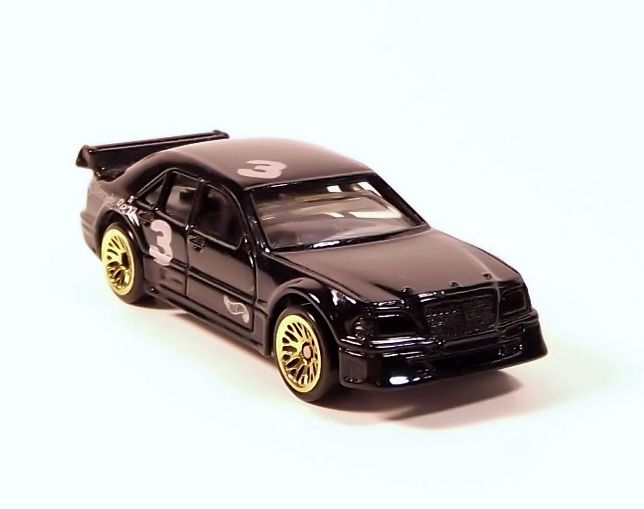
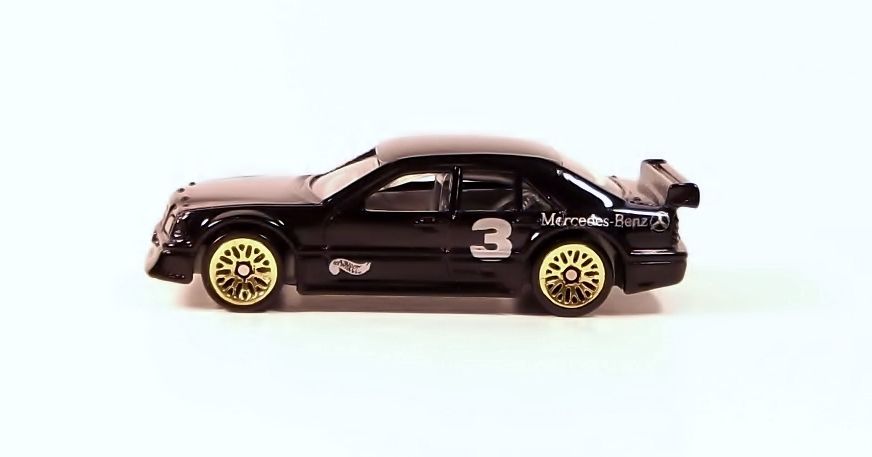
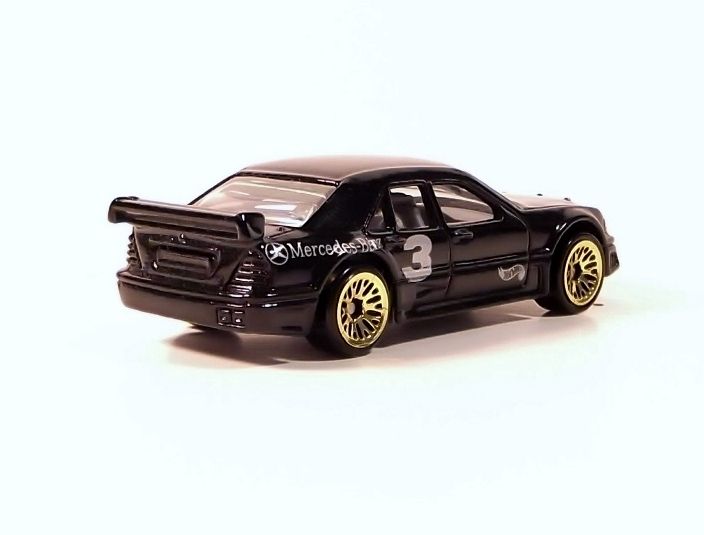
Today's car of the day comes from Firehawk73's collection and is Hot Wheels' 1996 Mercedes Benz C-Class.


The Mercedes-Benz C-Class is a compact executive car produced by Mercedes-Benz. Introduced in 1993 as a replacement for the 190 (W201) range, the C-Class was the smallest model in the marque's lineup until the arrival of the A-Class in 1997. The C-Class is built at Mercedes-Benz factories in Sindelfingen and Bremen, Germany as well as numerous satellite factories in other countries. The very first C-Class (W202) sedan was produced on 1 June 1993, and the first second generation (W203) rolled off the assembly line on July 18, 2000. The most recent third generation (W204) launched in 2007.

Although originally sold in sedan and station wagon body styles, the W203 series in 2000 debuted a coupe version that later when facelifted diverged into the Mercedes-Benz CLC-Class. The CLC-Class remained in production through to 2011 when replaced by a new W204-based C-Class coupe. All three generations of C-Class have also formed the basis of Mercedes-Benz's larger mid-size coupes: the CLK-Class (C208 and C209) and E-Class (C207) coupes.


For more information and pictures of the real car please visit: Mercedes-Benz C-Class


In October 1986, three years into W201 (190)'s production run, work began on a successor. Design work began in 1987, with the final design being selected in late 1988, and patented on December 19, 1990. In May 1993, the first generation W202 C-Class was introduced as a replacement for the 190. The C-Class sedan was the company's entry-level model up until 1997, when Mercedes launched the A-Class. Styling themes were carried over from the previous W201 series, but the new series had a smoother and rounder design than the previous generation of compact Mercedes.


In 1995, the C-Class received its first genuine performance model, the C 36 AMG, to counter the new six-cylinder BMW M3. Developed with AMG, the tuning house that had now become a subsidiary of Daimler-Benz, it had racing-tuned suspension (lowered by 25 mm (1 in)) and in the USA, a four-speed automatic gearbox, followed by a standard five-speed automatic gearbox. The 3.6 L engine had a maximum output of 280 PS (206 kW; 276 hp) at 5750 rpm and 385 N·m (284 lb·ft) at 4000 rpm. Top speed was electronically limited to 250 km/h (155 mph). Only a total of 5200 C 36 AMGs were produced.
In late 1997 (1998 model year) AMG released a new flagship for the C-Class, the C 43 AMG, powered by a 4.3 L V8, which could now achieve 306 PS (225 kW; 302 hp) at 5850 rpm, with a torque of 410 N·m (302 lb·ft) at 3250 rpm. Unlike the C36, which was in fact a "ready-to-sell" C280 disassembled for tuning at the AMG factory, the C43 was the first AMG car to be completely assembled at the AMG plant in Affalterbach after the acquisition of AMG by Daimler-Benz in 1998. The C43 AMG can achieve a 0–100 km/h (0-60 mph) time in 5.8 seconds for the saloon version and 6.1 seconds for the estate. The C43 was the first C-Class to be equipped with a Mercedes-Benz V8 based engine.

Two versions exist: a saloon (chassis W202.033) and estate also called the "T version" (chassis W202.093). The overall body of the C43 AMG estate version has many similarities with the C36 AMG, except for the front and rear bumpers as well as the side body, both of which were re-designed. The black engine cover with the chrome AMG and Mercedes-Benz star logos is also very typical from that period in this market segment.

Some differences have been reported between the 1998 and the 2000 version such as the ECU software on the 2000 version that seems to provide better gearbox performances and longer life to the gearbox. Also the 2000 model gives the possibility to up or down lift the steering wheel and has the AMG forged letters on the brakes calipers.

The car was manufactured for a little more than two years – from the end of 1997 to the spring of 2000 for a total of 4,200 units 20% of which are estates and 80% saloons, with only 25 C 43 vehicles of the 2000 model year imported to the US.

The C43 is powered by a tuned version of the 4.3-liter M113 V8 engine originally found on the W210 E 430 model. After modifications this engine delivers 306PS (225 kW) at 5,850 rpm, up to 410Nm(302 lb/ft) of torque at 3,250 rpm-5,000 rpm (taken at the crank) and up to 241HP at 6,320 rpm measured at the wheels. According to Mercedes-Benz, the car can reach 155.5MPH (250 km/h), with electronic speed limitation and 168MPH (270 km/h) without. Transmission is an AMG-modified version of the five-speed automatic gearbox found on 1998-2000 R129 SL 500. Main modifications were made in order to achieve a more crisper and better adapted gearbox to higher-rpm upshifts. Also the braking system has been taken from the W210 E 55 AMG.

Wednesday, September 19, 2012

Car Of The Day: September 19, 2012


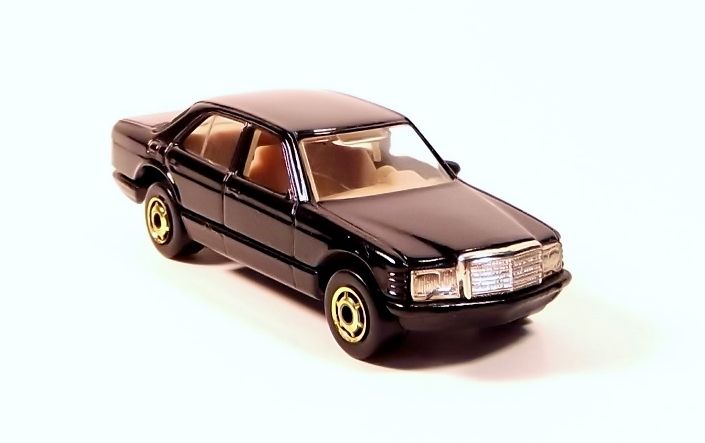
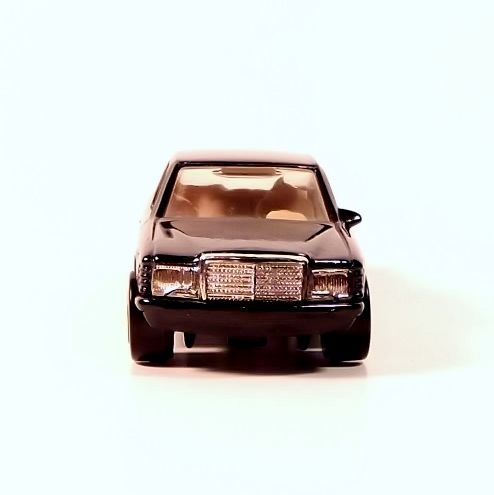
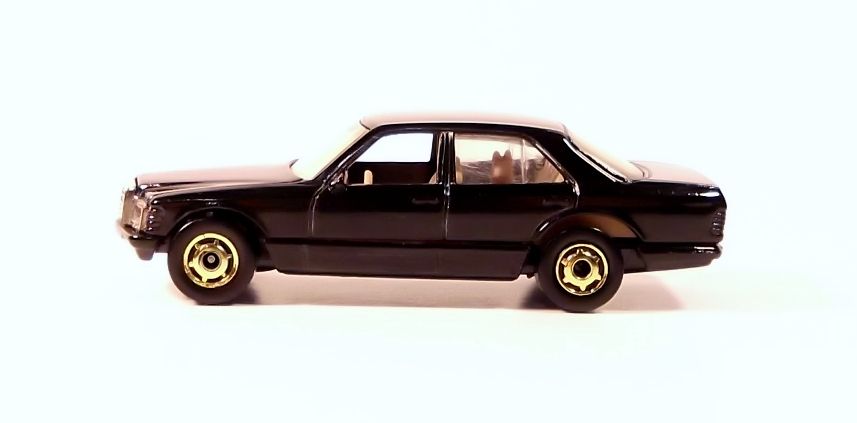
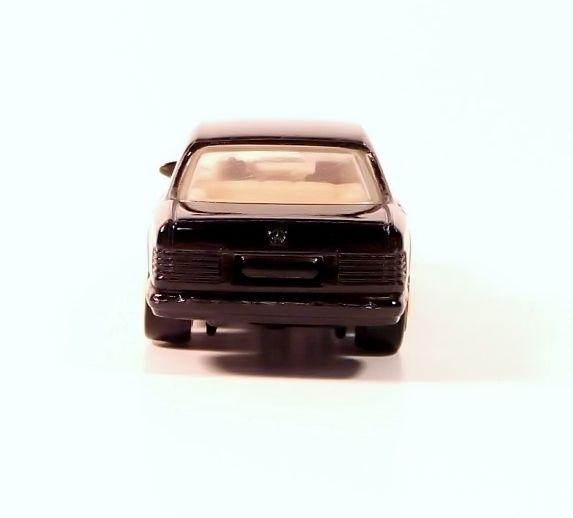
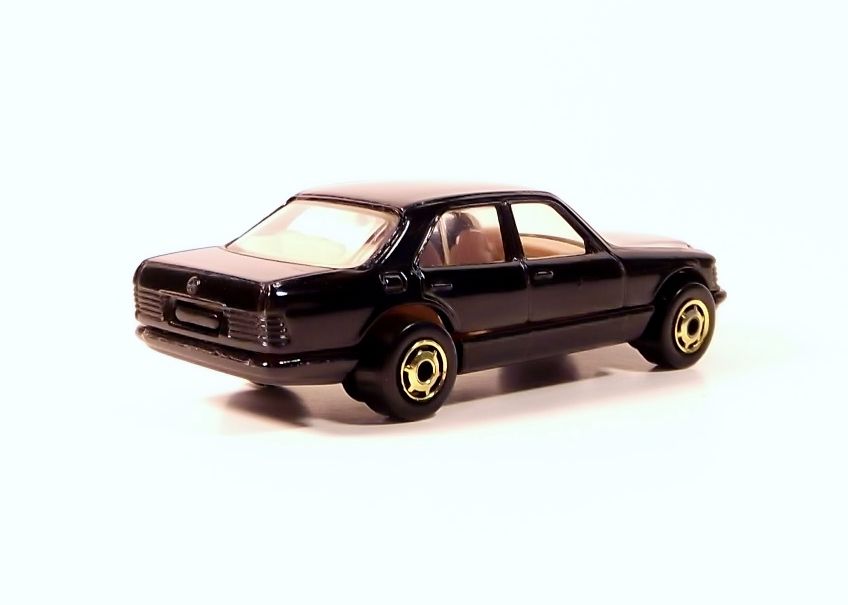
Today's car of the day comes from Firehawk73's collection and is Hot Wheels' 1981 Mercedes-Benz 380 SEL.


The Mercedes-Benz W126 is a series of flagship vehicles manufactured by German automotive marque Mercedes-Benz. Premiering in September 1979 as the successor to the earlier W116 line, the W126 was the second generation of the Mercedes-Benz flagship to officially bear the S-Class name referring to Sonderklasse or "special class." The W126 was initially offered in straight-6, V8, and turbo diesel sedan models. In September 1981, 2-door coupé versions of the W126 were introduced. Compared to its predecessor, the W126 was more aerodynamic, fuel efficient, capacious, and powerfully engined. The W126 S-Class debuted a new Mercedes-Benz design style which was subsequently used on other vehicles in the company's lineup. The W126 line also introduced many Mercedes-Benz safety innovations, including the first airbag supplemental restraint systems, seatbelt pretensioners, and traction control.

The W126 had a twelve-year production run between 1979 and 1991, the longest of any S-Class generation since the flagship models were first built in the mid-1950s.


For more information and pictures of the real car please visit: Mercedes-Benz 380 SEL


Following the debut of the 1970s generation W116 (which also included the flagship Mercedes-Benz 450SEL 6.9), Mercedes-Benz began plans for the next-generation S-Class model in October 1973. Codenamed "project W126," the project had specific goals: an improved ride, better handling, and improved fuel efficiency. These improvements were aimed at helping retain the S-Class' market leadership as the world's best-selling prestige luxury sedan. Following the 1970s oil crisis, Mercedes-Benz had made fuel efficiency an especially pertinent goal (named "Energy Program"), even in the large V8 engined versions of the S-Class.

In terms of the body design, the objective of the W126 design team, led by Mercedes-Benz's Bruno Sacco, was to produce a car that was sleeker and more aerodynamic than the previous model. The application of lighter materials and alloys combined with thorough wind tunnel testing to reduce overall drag meant the car consumed about 10% less fuel than its predecessor. The maximum speed was also increased (250 km/h in the most powerful model).

After six years of development, the W126 was formally introduced at the Internationale Automobil-Ausstellung (International Motor Show, or IAA) in Frankfurt on September 1979. The initial lineup featured seven models in standard (SE, SD) and long (SEL, SDL) wheelbase sedan body styles: the 280 SE/SEL, 380 SE/SEL, 500 SE/SEL and 300 SD. Technically, the long-wheelbase (SEL) variants were codenamed V126, but this was not popularly known. In 1981, the coupé version (SEC) of the W126 S-Class premiered at the IAA with the 500 SEC model. In 1981, Wheels Magazine selected the W126 model 380 SE as its Car of the Year.

Four years after the introduction of the fuel-efficiency "Energy Program," the model range had been reworked completely. In September 1985, again at the IAA in Frankfurt, the reworked model range was reintroduced. Apart from visual changes to the bumpers, side covers and alloys, the changes made to the available collection of engine variants was most visible. Two newly constructed 6-cylinder engines and new 4.2 and 5.6 litre V8's were added, and other engines were further upgraded.

The W126 generation was replaced by the W140 in 1991, although a satellite factory in South Africa is known to have continued production until 1994. The different body styles of the W126 S-Class achieved a combined sales total of 892,123 units (818,063 sedans and 74,060 coupés), making the W126 the most popular S-Class ever produced.


In 1976, after several design concepts being presented, the design for the W126 S-Class was frozen. Design work on the coupe began immediately afterward. It premiered the next generation of Mercedes-Benz car styling, which came to dominate the lineup in the 1980s. Because the appearance differed from the rest of the Mercedes-Benz fleet at that time, some people did not appreciate the design at its debut. Compared to its predecessor, the W116, the new model had a sleeker, lower profile look, with more aerodynamic qualities than before (drag coefficient of Cd 0.36 for the sedans, 0.34 for the coupés). For the first time, a Mercedes-Benz sedan was not equipped with traditional chrome bumpers; polyurethane deformable bumpers were used, and visually aligned with body panels.
The interior featured pleated leather on the doors on later cars and woodgrain trim on the center console and across the dash, and a simplified layout with symmetrically placed buttons. Both zebrano and burled walnut were used on low/mid and high-end cars, respectively.