A blog focusing on 1/64 diecast from such popular brands as Hot Wheels, Matchbox, Johnny Lightning, M2 Machines, GreenLight, Tomica, Yat Ming, Majorette, MotorMax, Siku, Corgi, Guisval, Playart, Ertl, Zylmex, Racing Champions, & many more. Swifty's Garage features a daily Car Of The Day and news updates from your favorite brands!
Showing posts with label Ferrari. Show all posts
Monday, October 29, 2012
Car Of The Day: October 29, 2012
Today's car of the day is from Firehawk73's collection, and is Kyosho's 2002 Ferrari Enzo GT Concept.
The Enzo Ferrari is a 12 cylinder mid-engine berlinetta named after the company's founder, Enzo Ferrari. It was built in 2002 using Formula One technology, such as a carbon-fibre body, F1-style electrohydraulic shift transmission, and Carbon fibre-reinforced Silicon Carbide ceramic composite disc brakes. Also used are technologies not allowed in F1 such as active aerodynamics and traction control. After a downforce of 1700lb is reached at 186 mph the rear wing is actuated by computer to maintain that downforce.
For more information and pictures of the real car please visit: Ferrari Enzo
The Enzo's V12 engine is the first of a new generation for Ferrari. It is based on the architecture of the V8 found in sister-company Maserati's Quattroporte, using the same basic architecture and 104 mm (4.1 in) bore spacing. This design will replace the former architectures seen in V12 and V8 engines used in most other contemporary Ferraris.
The Enzo was designed by Ken Okuyama, the Japanese former Pininfarina head designer, and initially announced at the 2002 Paris Motor Show with a limited production run of 349 and at US $659,330. The company sent invitations to existing customers, specifically, those who had previously bought the F40 and F50. All 349 cars were sold in this way before production began. Later, after numerous requests, Ferrari decided to build 50 more Enzos, bringing the total to 399. Before being unveiled at the Paris Motor show, the Enzo (that was used in the show) was flown from Italy to California to be filmed in Charlie's Angels: Full Throttle. It was driven on a beach by actress Demi Moore. After filming was complete, the Enzo was flown to France to be in the Motor Show. Enzos are listed as being built in 2003. In 2004 a 400th Ferrari Enzo was built and donated to the Vatican for charity, which was later sold at a Sotheby's auction for $1.1 million.
Thursday, October 11, 2012
Car of the Day:October 12, 2012
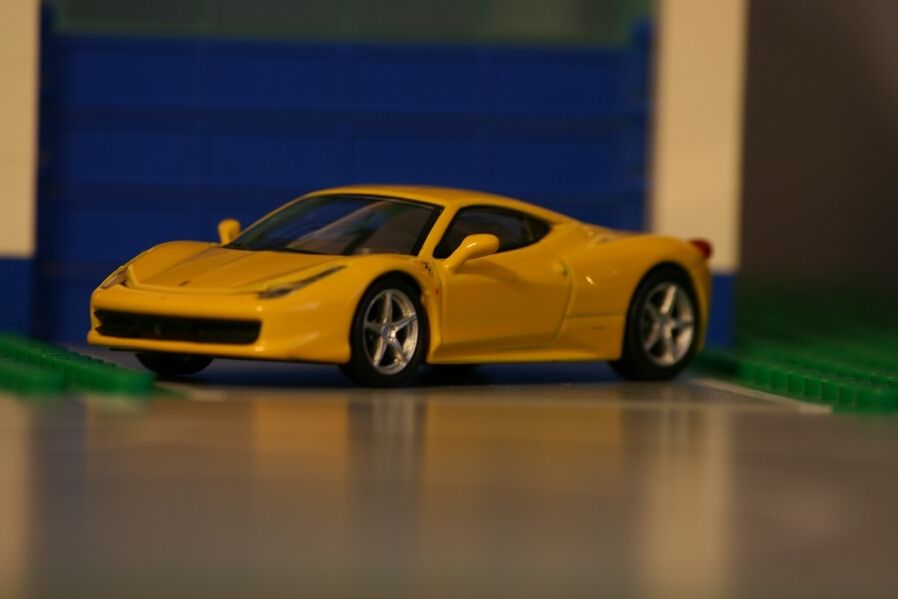
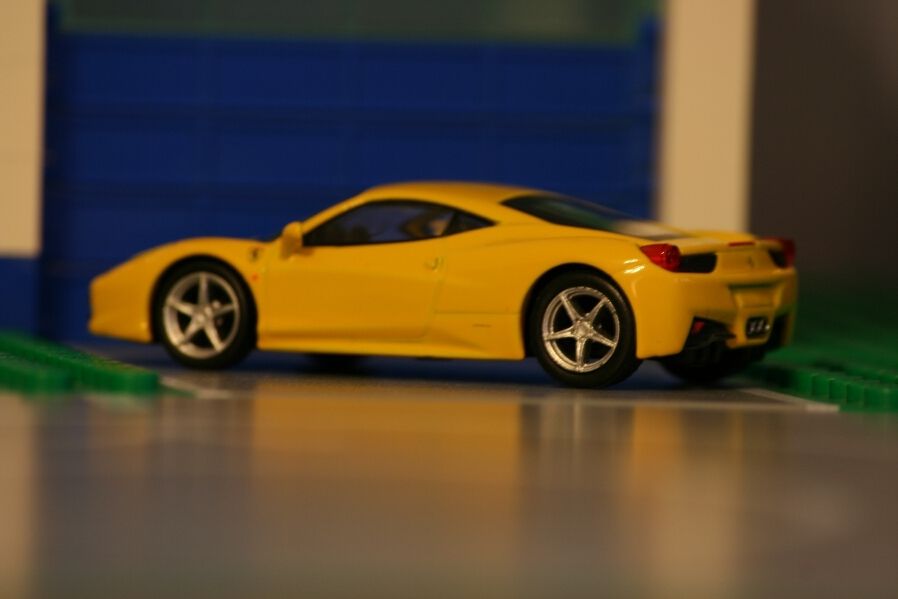
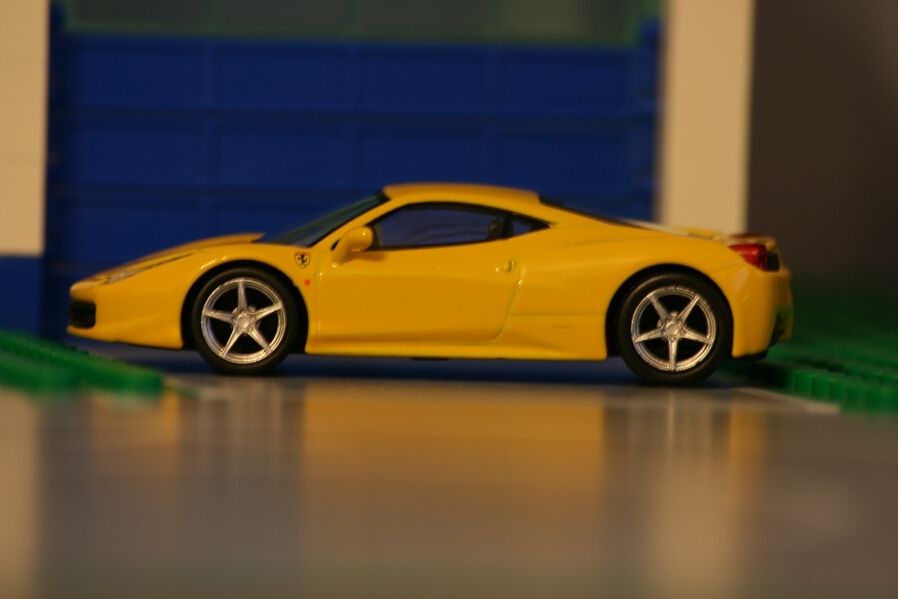
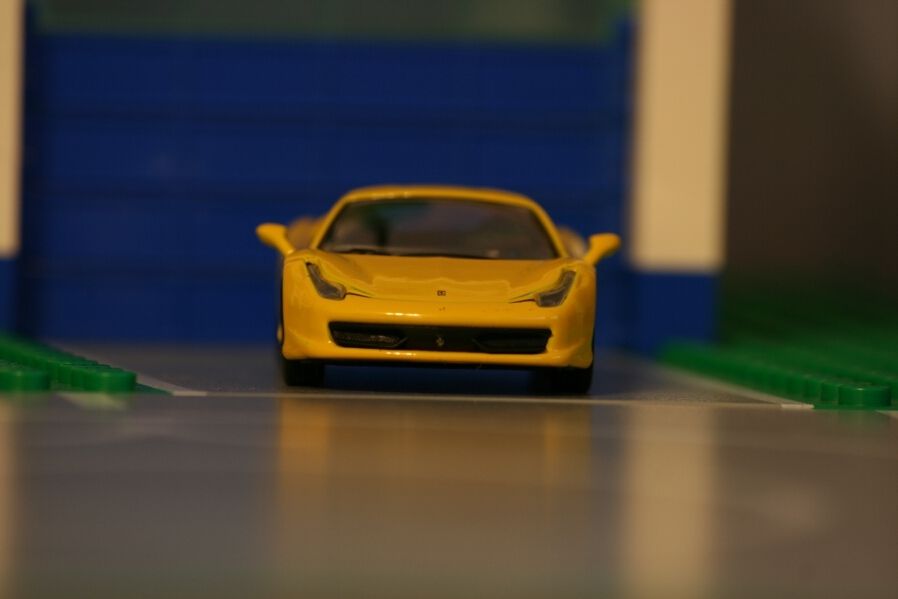
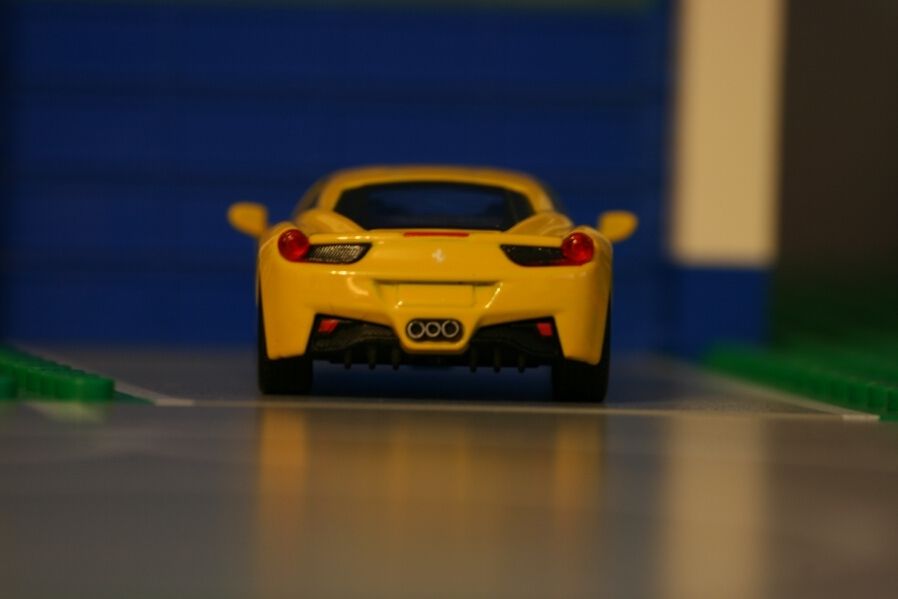
Today's Car of the Day is from Jedimario's collection and is the Kyosho Ferrari 458.
Wikipedia.com
The body was designed by Pininfarina, as with all recent Ferrari models. The car’s exterior styling and features were designed for aerodynamic efficiency, producing a downforce of 140 kg (309 lb) at 124 miles per hour (200 km/h). In particular, the front grille features deformable winglets that lower at high speeds, in order to offer reduced drag.[11] The car's interior was designed using input from former Ferrari Formula 1 driver Michael Schumacher, including a new steering wheel design which incorporates many features and controls as opposed to their being on the dashboard, similar to racing car designs.
For more info on the real car,visit http://en.wikipedia.org/wiki/Ferrari_458
A non-Hot Wheels Ferrari die-cast from the last decade? Kyosho has gotten around the exclusive licensing in the same manner that Maisto did. While this car was marketed and even packaged like Kyosho's normal line, the car arrived partially disassembled and included a small screwdriver. You had to set the seats in the interior, the wheels and interior in the base, and then screw the base to the body to get the product you see here. All in all, perfectly fine, as the end result is just as professional looking as your typical high quality die-cast.
When I first saw pictures of this car, I was shocked. It looked like a spaceship. I've now gotten used to seeing it (if you can ever get used to seeing such a thing) and the effect has worn off, but it's still a radical design. Check out those exhaust tips! Very glad to have it in yellow, the other Ferrari color. It suits the car quite nicely and isn't red like most of them are.
Tuesday, July 17, 2012
Car Of The Day: July 17, 2012
Today's car of the day comes from juantoo3's collection and is Matchbox's 1964 Ferrari 250 Berlinetta Lusso.
The Ferrari 250 GT Lusso is a GT car which was manufactured by Italian automaker Ferrari from 1963 to 1964. Sometimes known as the GTL, GT/L or Berlinetta Lusso, it is larger and more luxurious than the 250 GT Berlinetta. The 250 GT Lusso, which was not intended to compete in sports car racing, is considered to be one of the most elegant Ferraris.
Keeping in line with the Ferrari "tradition" of that time, the 250 GT Lusso was designed by the Turinese coachbuilder Pininfarina, and bodied by Carrozzeria Scaglietti. Although the interior was more spacious than that of the 250 GT, the 250 GT Lusso remained a two-seat GT coupe, unlike the 250 GTE. The car was manufactured for only eighteen months, from early 1963 to mid 1964, and was the last model of Ferrari 250 GT generation.
Auto shows often provide an opportunity for manufacturers to introduce new designs publicly. Ferrari did so at the 1962 Paris Motor Show to unveil, as a prototype, the 250 GT Lusso. The prototype was almost identical to the production version, and only minor details changed thereafter.
The new model was a way for Ferrari to fill a void left between the sporty 250 GT SWB and the luxurious 250 GTE 2+2, the Lusso met the new demands of the 1960s. Indeed, fans of sporting driving of the time became as fond of civilized designs, that is, comfortable and spacious, as they were of radical sports cars. Ferrari did not skimp on details in the GTL, which shows on the scales; weight ranged from 1,020 to 1,310 kg (2,200 to 2,900 lb), depending on equipment.
Unusually brief for a Ferrari model, GTL's production began January 1963 and ended August 1964. According to a longstanding American expert on Ferrari, Peter Coltrin, the construction of the 250 GT Lusso must have begun soon after the presentation of the prototype of the Paris Motor Show.
Although it was not intended to compete, the 250 GT Lusso made a few appearances in several sporting events in 1964 and 1965, such as the Targa Florio and the Tour de France. The final iteration of the 250 GT series, 351 copies of GT Lusso were produced before being replaced by the Ferrari 275 GTB. (Note nomenclature change due to increase in engine cylinder capacity.) Originally sold for $13,375, the GTL saw sales in 2010 between $400,000 and $500,000.
For more information and pictures of the real car please visit: Ferrari 250 GT Lusso
One of the prettiest Ferraris of all time, it's a shame Hot Wheels hasn't taken advantage of their exclusive contract and tooled one up. Same with Kyosho. Until then, we have the Matchbox. A great model from Lesney! I prefer the red Superfast version (but lack it personally).
Using certain aesthetic and aerodynamic features of the 250 GT and 250 GTO, Pininfarina led the design of the 250 GT Lusso, regarded by many as one of the most beautiful Ferraris ever made; it attracted notable personalities of that time, such as Steve McQueen.
As usual, the company Carrozzeria Scaglietti was responsible for the manufacturing of the body. The body was made of steel with the exception of the doors, boot lid, and bonnet, which were made of aluminum. The stern of the body featured a small integrated spoiler; the 250 GTL became the first Ferrari to incorporate such aerodynamic appendages, concluding with an abrupt Kammback rear.
The short rear is also characterized by a bezel that slopes down to the "tail" of the car. The glazed surfaces, including the rear window and triangular quarter windows, provided good visibility. The 250 GTL came with four round headlights in the front with the exception of a few versions, like the Berlinetta Speciale Coupe that was designed by Battista Pininfarina for himself, featuring two headlights streamlined like those of the Ferrari 250 GT California Spyder. Numerous details of the body are unique to the 250 GT Lusso, such as the rectangular air vent placed on the hood, curved wings, and chrome bumpers, which were mainly decorative and positioned vertically beneath the indicator lights.
Monday, May 21, 2012
Race Car Of The Day: May 21, 2012
Today's car of the day comes from Firehawk73's collection and is Hot Wheels' 1971 Ferrari 512M.
Ferrari 512 S was the designation of 25 five litre sports cars built until January 1970, related to the Ferrari P sports prototypes. The V12-powered cars were entered in the 1970 International Championship for Makes by the factory Scuderia Ferrari and private teams. Later that year, modified versions resembling the main competitor Porsche 917 were called Ferrari 512 M (for modificata). In the 1971 International Championship for Makes, the factory focused on the new Ferrari 312PB and abandoned the 512 which was only entered by privateers. From 1972 onwards, the 512 (as the 917) was withdrawn from the world championship following a change in the regulations, and some 512 in private hands were entered in CanAm and Interserie races.
For more information and pictures of the real car please visit: Ferrari 512
Just in time for the 24h of Daytona, Ferrari in January 1970 presented the required number of 25 512S, as 17 complete cars and 8 assembly kits, to the homologation authorities. Of those cars, fitted with the traditional even chassis numbers, ranging from 1002 to 1050, 19 were raced in 1970, 5 of them being spyders. Unlike Porsche, which has built over 50 917s in total, Ferrari could not sell off all surplus cars, and chassis 1046 was given to Pininfarina to be turned into a show car, the Ferrari 512 S Modulo.
The only 512 chassis winning major races in 1970 were 1026 (Sebring) and 1010 (Kyalami).
Of the 25 cars manufactured for the 1970 season, but not raced that year, the 1020 was converted at the end of the season as a 512M and sold to NART, which entered it in competition in 1971. The 1024 remained unsold in 1970, was transformed into a 512M and sold one year later to the Scuderia Brescia Corse. The 1036 was used as test car by the racing division of Ferrari. Later it was sold to Solar Productions for Steve McQueen's Le Mans, also known as French Kiss with Death.
The 1040, sold to Chris Cord and Steve Earle, was entered in 1971 by Penske at Daytona, Sebring, Le Mans and Watkins Glen, setting the pole positions at the American tracks. The 1046 had been disassembled for parts, used for the construction of the Pininfarina Ferrari Modulo, and likely remains under that body in Pininfarina's museum. The 1048 was sold as test car to Scuderia Filipinetti but not raced in 1970. The 1050 was sold to Corrado Manfredini (but only as chassis plus body), combined with parts of 1022 and 1032, transformed into a 512M and raced in 1971.
Saturday, February 4, 2012
Car Of The Day: February 4, 2012
Today's car of the day comes from Firehawk73's collection and is Hot Wheels' 1971 Ferrari 365 GTB4 Daytona.
The Ferrari 365 GTB/4, better known by the unofficial name Ferrari Daytona, is a Gran Turismo automobile produced from 1968 to 1973. It was first introduced to the public at the Paris Auto Salon in 1968 and replaced the 275 GTB/4. The Daytona was replaced by the mid-engined 365 GT4 Berlinetta Boxer in 1973.
For more information and pictures of the real car please visit: Ferrari 365 GTB4 Daytona
The unofficial Daytona name is reported to have been applied by the media rather than Ferrari and commemorates Ferrari's 1-2-3 finish in the February 1967 24 Hours of Daytona with the 330P4.
Unlike Lamborghini's then-new, mid-engined Miura, the Daytona was a traditional front-engined, rear-drive car.
The engine, known as a Tipo 251 and developed from the earlier Lampredi V12 used in the 275 GTB/4, was a 4.4 L (4390 cc, 267.9 cid) DOHC V12 with a 60° bank angle, 365 cc per cylinder, 81 mm (3.2 in) bore and 71 mm (2.8 in) stroke, featuring six Weber twin carburettors (40 mm Solex twin carburettors were used alternatively). At a compression ratio of 9.3:1, it produced 352 PS (259 kW; 347 hp) and could reach 280 km/h (174 mph). 0-60 mph (97 km/h) acceleration was just 5.4 seconds. For the American version, slight modifications were made - the compression ratio was reduced to 8.8:1 and the exhaust system was equipped with a large central silencer, necessitating visible alterations to the primary pipes.
The 5-speed manual transmission (transaxle concept) was mounted in the rear for optimal weight distribution, and a 4-wheel independent suspension featured wishbones and coil springs.
Although it was also a Pininfarina design, as with many previous Ferrari road cars (by Leonardo Fioravanti), the 365 GTB/4 was radically different. Its sharp-edged styling resembled a Lamborghini more than a traditional Pininfarina Ferrari.
Early Daytonas featured fixed headlights behind an acrylic glass cover. This particular setup was completely abandoned in 1971 favor of retractable pop-up twin headlights due to new safety regulations in the U.S., which outlawed headlights behind covers.
Wednesday, January 4, 2012
Car Of The Day: January 4, 2012
Today's car of the day is Majorette Deluxe's 1989 Ferrari F40.
The Ferrari F40 is a mid-engine, rear-wheel drive, two-door coupé sports car produced by Ferrari from 1987 to 1992 as the successor to the Ferrari 288 GTO. From 1987 to 1989 it was Ferrari's fastest, most powerful, and most expensive car. The car had no traction control, and was one of the few to utilize turbochargers.
The car debuted with a factory suggested retail price of approximately US$400,000, although some buyers were reported to have paid as much as US$1.6 million. A total of 1,315 F40s were produced.
For more information and pictures of the real car please visit: Ferrari F40
Majorette's Deluxe series was the beginning of the trend of higher-priced diecast offerings. Although these failed in the marketplace competitors like Matchbox's World Class and Premiere series' thrived, and new competitors (such as Johnny Lightning and 100% Hot Wheels) soon joined them in the diecast aisles. Unfortunately this car looks much better in person than it does here in these pictures. Part of that is the plastic body- while it allows for a higher level of detail it really doesn't photograph as nicely as metal. Jeweled lights, and opening doors and hood to reveal that beautiful Ferrari motor put this one into the win category.
Ostensibly, the F40 was conceived as the successor to the 288 GTO and designed to compete with vehicles such as the Porsche 959 and Lamborghini Countach;[citation needed] for Ferrari management, the vehicle was a major statement piece. Over a period of several years prior to the F40's conception, the company's dominance in racing had waned significantly, and even in Formula One, an arena they had once dominated, victories had become sparse. Enzo Ferrari had recently turned 90 years old, and was keenly aware that time was not on his side. He wanted his new sports car to serve as his final statement-maker, a vehicle encompassing the best in track-developed technology and capable of being a showcase for what the Ferrari engineers were capable of creating. The company's upcoming 40th anniversary provided just the right occasion for the car to debut.
As Enzo had predicted it would be, the F40 was the last car to be commissioned by him before his death.
The F40 was designed with aerodynamics in mind. For speed the car relied more on its shape than its power. Frontal area was reduced, and airflow greatly smoothed, but stability rather than terminal velocity was a primary concern. So too was cooling as the forced induction engine generated a great deal of heat. In consequence, the car was somewhat like an open-wheel racing car with a body. It had a partial undertray to smooth airflow beneath the radiator, front section, and the cabin, and a second one with diffusers behind the motor, but the engine bay was not sealed. Nonetheless, the F40 had an impressively low Cd of 0.34 with lift controlled by its spoilers and wing.
Wednesday, December 7, 2011
Car Of The Day: December 6, 2011 (Belated)
Today's car of the day is Majorette's 1984 Ferrari 288 GTB.
The Ferrari 308 GTB (and similar 208 and later 328) are mid-engined sports cars manufactured by the Italian company Ferrari in the 1970s-1980s. They made up the lower end of the company's range. The 308 replaced the Dino 246 in 1975 and was updated as the 328 in 1985.
For more information and pictures of the real car please visit: Ferrari 288 GTB
This one was found at a flea market in New Jersey over the summer. It was fresh in the blister, and those chips came from the factory.
The Pininfarina-styled 308 GTB was introduced at the Paris Motor Show in 1975 as a supplement to the Bertone-shaped Dino 308 GT4 and a replacement for the Dino 246. It was designed by Leonardo Fioravanti who had been responsible for some of Ferrari's most celebrated shapes to date such as the Daytona, the Dino and the Berlinetta Boxer. The 308 used elements of these shapes to create something very much in contrast with the angular GT4 2+2. The GTB/GTS was a 2-seater with sweeping curves and aggressive lines, and has become the most recognized and iconic Ferrari road car.
The targa topped 308 GTS was introduced in 1977 and was made famous on the television series Magnum, P.I.. Several cars were used, a new one for each season, most being auctioned off after filming. The first was a 1979 model with chassis number 28251.
The mechanically similar 308 GT4 shared much with the original Dino, and the 308. Both sit on the same tube-frame platform, with a 92 in (2,300 mm) wheelbase for the 308 GTB (the 308 GT4 has a longer wheelbase, being a 2+2) , and 4-wheel double wishbone independent suspension. The V8 engine is a DOHC design, with four Weber 40DCNF carburetors. European versions produced 255 hp (190 kW) at 7,000 rpm (7700 rpm redline), but American versions were down to 240 hp (178 kW) at 6,600 rpm due to emissions control devices.
A notable aspect of the early 308 GTB was that, although still built by Carrozzeria Scaglietti, the 308's bodywork was entirely made of glass-reinforced plastic (or GRP), allowing a very light weight of 1,050 kg (2,315 lb). The engine borrowed its dry-sump lubrication from Ferrari's racing experience. This lasted until June, 1977, when the 308 was switched to steel, resulting in an, alleged, 150 kg (331 lb) additional weight. However, a steel-bodied GTB only weighs 12 kg (26 lb) more than its fiberglass body counterpart. All steel versions of the 308 GTS have a conventional wet-sump engine while GTB models retained the dry sump lubrication until 1981.
There were 12,004 308s produced from 1975 to 1985. Only 712 of the first Fiberglass version were made. The 308 models are embraced by Ferrari fans and critics today. In 2004, Sports Car International named this car number five on the list of Top Sports Cars of the 1970s.
Test performance, 308 GTB (GRP): Weight (curb with 74 l fuel) 2,778 lb (1,260 kg), acceleration 0-100 mph 15.0s, 0–100 km/h 6.5 s, 100–200 km/h 17.8s, top speed 159 mph (256 km/h).
The 308 GTS Quattrovalvole, with a removable targa roof, succeeded the 308 GTSi, and was presented at the 1982 Paris Salon concurrently with the 308 GTB Quattrovalvole model. The Quattrovalvole part of the model name referred to the four valves per cylinder heads on the engine, which provided increased power over the preceding model. Visually the new model was very similar to the outgoing one, but could be recognised by the addition of a slim louvre panel in the front lid to aid radiator exhaust air exit, paired electrically operated door mirrors with a small enamel Ferrari badge on the shell, a revised radiator grille with rectangular driving lights at the extremities, and rectangular (instead of round)side repeater lights. The interior also received some minor alterations, and cloth seat centres became available as an option to the standard full leather, whilst the leather rim satin black three spoke steering wheel featured a triangulated section around the horn push. The removable grained satin black finished roof panel was stowed in a vinyl cover behind the seats when not in use. As with the preceding series’ of 308 models, USA market cars could be identified by heavier bumper assemblies, and rectangular side marker lights on the wings. Options available were metallic paint, a deep front spoiler, air conditioning, wider wheels, 16" Speedline wheels with Pirelli P7 tyres, and a rear of roof satin black finished aerofoil (standard on Japanese market models).
The V8 engine was essentially of the same design as that used in the 308 GTSi model, apart from the four valves per cylinder heads. It was of a 90 degree configuration, with belt driven twin overhead camshafts per bank, having a total capacity of 2926cc, with a bore and stroke of 81mm x 71mm, with wet sump lubrication, bearing factory type reference F 105 AB 000 for European market cars. The claimed power output for main market European cars was 240 bhp at 7000rpm, and 235 bhp at 6800rpm for US market variants. The engine was transversely mounted in unit with the all synchromesh five speed transmission assembly, which was below, and to the rear of the engine's sump. The gear and final drive ratios were altered to suit the revised characteristics of the four valves per cylinder engine. One other significant benefit of the QV four valve heads where the replacement of the non-QV models sodium valves which have been know to fail at the joint between the head and the stem. It was fitted with a Bosch K Jetronic fuel injection system, coupled to a Marelli MED 803A Digiplex electronic ignition system, incorporating a coil, distributor and ignition module to serve each bank of cylinders. All US market examples were fitted with catalytic converters. The main European market 308 GTS Quattrovalvole models had a tubular chassis with factory type reference F 105 GS 100, Disc brakes, with independent suspension via wishbones, coil springs, and hydraulic shock absorbers, were provided all round, with front and rear anti roll bars. All models were numbered in the Ferrari odd number road car chassis sequence of the time, with right and left hand drive available. The model was produced in a total of 3042 examples, over four times as many as the concurrent fixed roof berlinetta, between 1982 and 1985 in the chassis number range 41701 to 59265.
Bosch K-Jetronic mechanical fuel injection was added for the 1980 308 GTBi and GTSi, dropping power to 214 hp (160 kW) but decreasing emissions. Two years later, the 4-valve per cylinder Quattrovalvole or QV model pushed output back up to 240 hp (179 kW) restoring the performance. The European version boasted higher horsepower than the American model due to lightness and less stringent Federalizing. Only 748 308 GTB QV models were produced, with one third being European models. The European 308 GTB QV and 308 GTS QV models are considered by many to be the most collectible 308 due to its subtle styling (deep front valance, racing mirrors, short lightweight bumpers) and speed as the fastest of all 308s produced.
The 288 GTO introduced in 1984 is considered as the first Ferrari Super-car. The 288 borrowed much of the styling from the European 308 GTB QV of the previous year, 1983: it is also powered by a similar debored 2.8-litre V8 (but with turbochargers), it retained the general bodywork lines with extended wheelarches, different side air vents, and bigger rear spoiler, longer (5 inch) wheelbase, and the central tubular space-frame chassis.
Tuesday, November 23, 2010
Car Of The Day: November 23, 2010
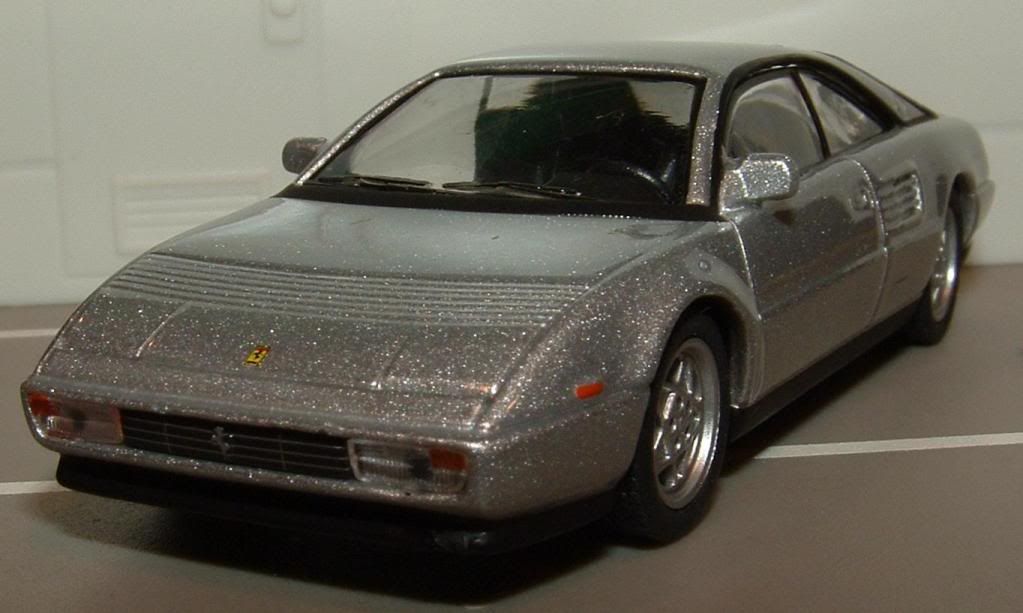
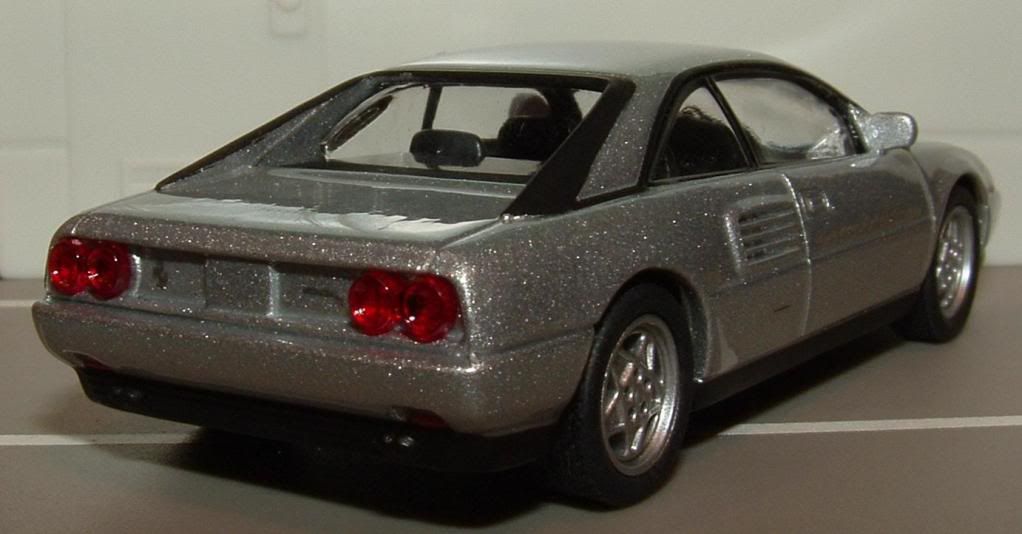
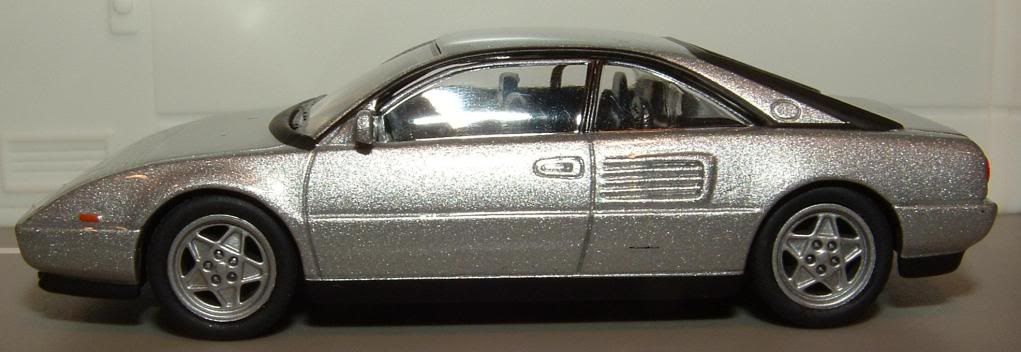
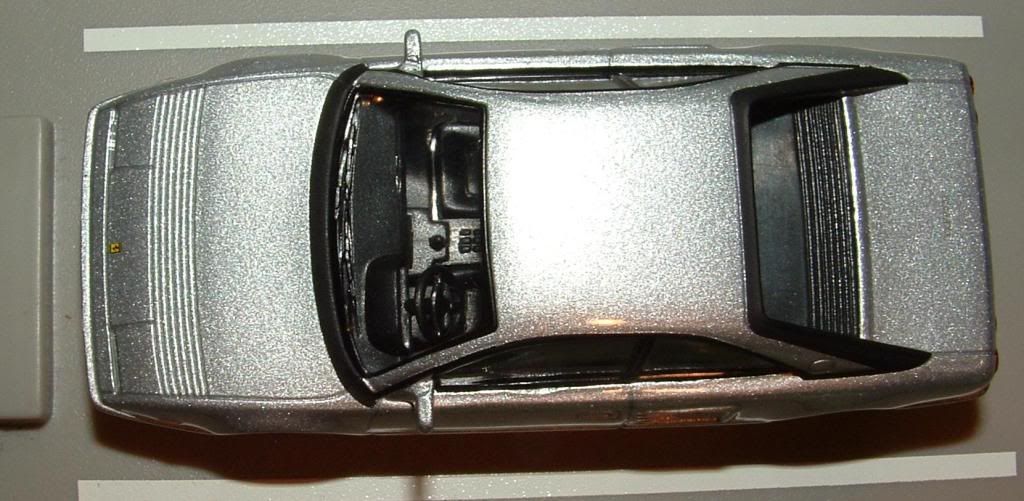
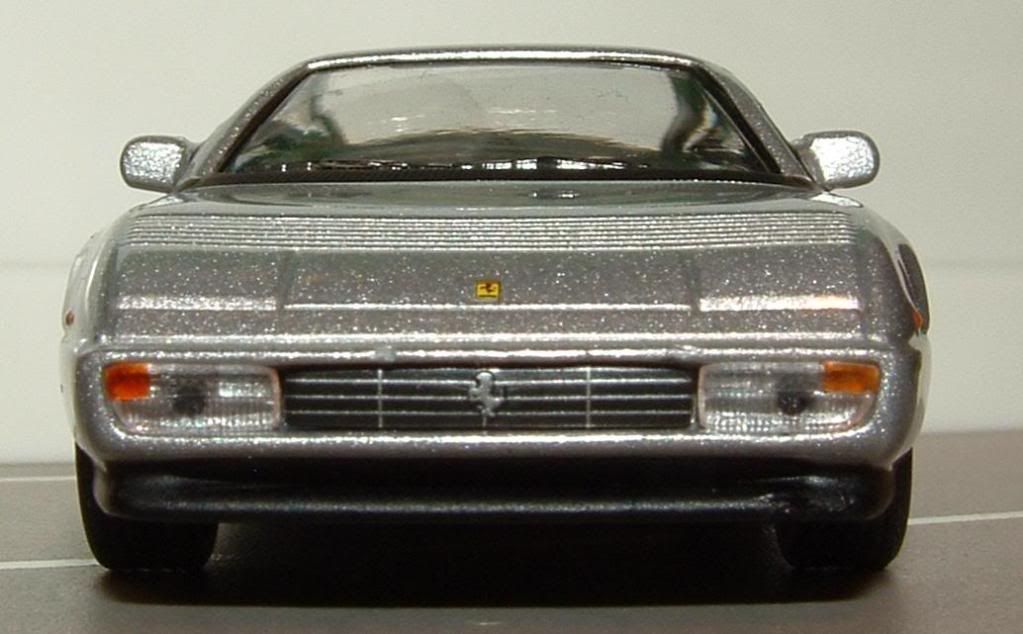
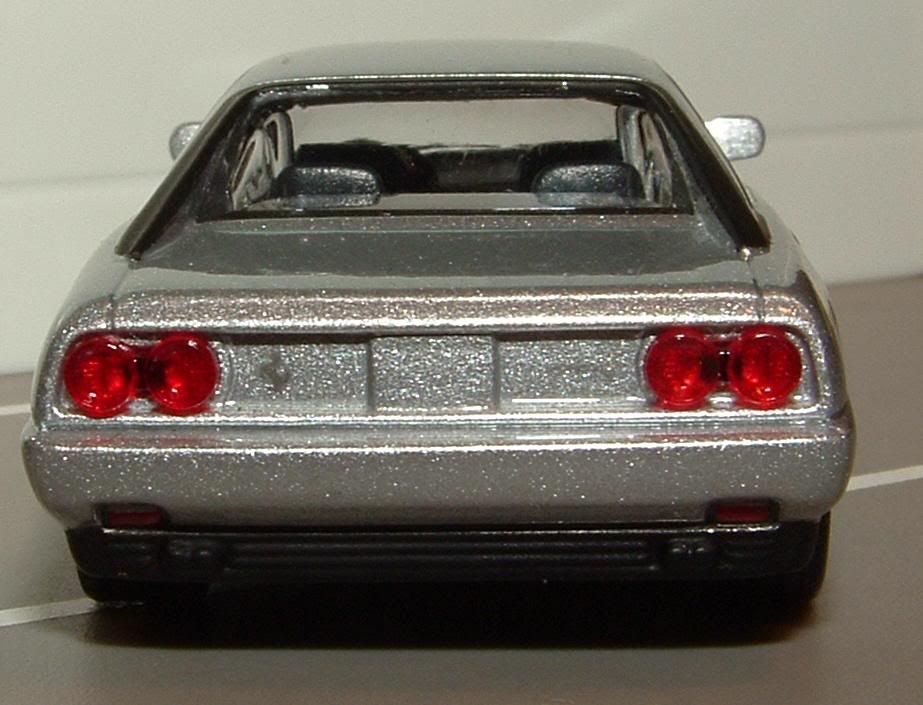
Today's car of the day is Kyosho's 1989 Ferrari Mondial t.
The Ferrari Mondial is a 2+2 coupe automobile produced by Ferrari from 1980 through 1993. It replaced the angular 208/308 GT4. The "Mondial" name came from Ferrari's history — the famed 500 Mondial race car of the early 1950s. Despite its predecessor being Bertone styled, the Mondial saw Ferrari return to Pininfarina for styling. It was sold as a mid-sized coupe and, eventually, a cabriolet. The Mondial was conceived as a 'usable' model, offering the practicality of four seats and the performance of a Ferrari. The car had a slightly higher roofline than its stablemates, with a single long door either side, offering easy access and good interior space, reasonable rear legroom, while allround visibility was excellent.
The Mondial was produced in fairly high numbers for a Ferrari, with more than 6,800 produced in its 13-year run, and was one of Ferrari's most commercially successful models. The car body was not built as a monocoque in the same way as a conventional car; the steel outer body was produced by the famous Italian coachbuilder Carrozzeria Scaglietti, just down the road in nearby Modena, built over a lightweight steel box-section space frame. The engine cover and rear luggage compartment lids are in light alloy. The seats and interior were trimmed in Connolly hide, contrasting with the body color. Most cars were painted rosso red, but some were black or silver, and a few were dark blue.
The Mondial was the first Ferrari car where the entire engine/gearbox/rear suspension assembly was mounted on a detachable steel subframe, making engine removal for a major rebuild or cylinder head removal much easier than it was on previous models. Unusually, the handbrake is situated between the driver's seat and the inner sill. Once the handbrake is set it drops down so as not to impede egress and ingress. Instead of the normal "H shift pattern, the pattern has 1st gear in a "dog leg" to the left and back, behind reverse. This puts 5th gear to the right and back behind 4th, making shifts between 4th to 5th much more straightforward.
For more information and pictures of the real car please visit: Ferrari Mondial
An interesting addition to Kyosho's Ferrari collection. Kyosho seems determined to make a replica of every Ferrari ever produced, leading us to replicas of cars that never would have received this attention otherwise. The Mondial may have been a strong seller for Ferrari, but it is not iconic like the 308, Testarossa, or F-40.
The final Mondial evolution was 1989's Mondial t (Coupe and Cabriolet). It was a substantially changed model, "spearhead of a new generation of V8 Ferraris", according to Road & Track magazine. It was visually different from preceding Mondial models, the most recognisable being the redesign of the air intakes to a smaller, neater rectangular shape. The door-handles were of a visually different design and, along with the bumpers, became body coloured, whilst a painted black band was added around the bottom of the body.
The 't' called attention to the car's new engine/transmission layout: the previously-transverse engine was now mounted longitudinally whilst the gearbox remained transverse, thus forming a 't'. By adopting this layout, a longer engine could be mounted lower in the chassis, improving handling dramatically. The 't' configuration was used by Ferrari's Formula One cars of the 1980s, and would be the standard for the marque's future mid-engined V8 cars, beginning with the 348, introduced later in the year. The transverse gearbox was fitted with a Limited Slip Differential with a twin-plate clutch design with beveled gears driving the wheels. Later in production, a Semi-automatic transmission termed "Valeo" was available as an option; while shifting was by means of a traditional gear lever, the clutch was actuated automatically without a clutch pedal. The engine was up to 3.4 L (3405 cc) and 300 hp (224 kW). The engine was now controlled by Bosch Motronic DME 2.5 (later DME 2.7) electronic engine management that integrated EFI and ignition control into a single computer unit. Two of these were used in the car: one for each bank of the engine. Engine lubrication was upgraded to a dry-sump system.
The Mondial's chassis would underpin a new generation of 2-seat Ferraris, right up to the 360, but the 2+2 Mondial would end production just four and a half years later in 1993. However, the "t" layout of the engine and transaxle, adapted from Ferrari's Formula One cars, continues to be used in mid-engined V8 model Ferraris to date, albeit with a more sophisticated chassis. The new layout saw the engine and transmission mounted on a removable subframe; the assembly could be removed through the underside of the vehicle for maintenance. This is necessary for timing belt replacement, making this a costly procedure for the owner who does not have a lift. On the other hand, the clutch was now located at the very rear of the drive train. This makes clutch replacement and service a simple, inexpensive, and readily owner-doable proposition.
The "t" was home to other Ferrari firsts: It used power assisted steering for the first time, and had a 3-position electronically controlled suspension for a variable trade off between ride quality and road holding. It also had standard ABS.
The Mondial t represented the most substantial upgrade to the Mondial model line in performance and handling since its introduction in 1980. Previous Mondials had rarely justified their price premium over the competition in terms of bare performance statistics, which led to some poor press coverage. The "t" offered greater performance whilst retaining a mid-engined layout and a practical packaging layout, and was more favorably received. It also had the advantage of two usable rear seats.
Despite over a decade in production, with consistent updates throughout, the Mondial's final models weighed less than its earlier models; typically, updates to a long production run add significant mass to a particular model. The company has not produced a mid-engined 2+2 car since, in fact front-engined V12s such as the 456 and the current 612 Scaglietti, were the company's only 4-seat vehicle offerings until 2009's V8 "California". However, the California is front engined, leaving the Mondial t as the most modern 4-seat, mid-engined, Ferrari yet produced.
Subscribe to:
Posts (Atom)