A blog focusing on 1/64 diecast from such popular brands as Hot Wheels, Matchbox, Johnny Lightning, M2 Machines, GreenLight, Tomica, Yat Ming, Majorette, MotorMax, Siku, Corgi, Guisval, Playart, Ertl, Zylmex, Racing Champions, & many more. Swifty's Garage features a daily Car Of The Day and news updates from your favorite brands!
Showing posts with label Muscle Machines. Show all posts
Wednesday, August 15, 2012
Car Of The Day: August 15, 2012
Today's car of the day comes from juantoo3's collection and is Muscle Machines' 1954 Chevrolet 210.
The Chevrolet Two-Ten, or 210 was the midrange model of the Chevrolet car from 1953-1957. It took its name by shortening the production series number (2100) by one digit in order to capitalize on 50's numerical auto name trend. The numerical designation '"210"' was also sporadically used in company literature. It replaced the Styleline DeLuxe model available in previous years. This model was dropped following the 1957 model year to be replaced by the Biscayne.
For more information and pictures of the real car please visit: Chevrolet 210
This could just as easily be a 150 or a Bel Air. Considering the higher prices of the Bel Air I suspect that this one started life as either the 150 or 210 as it doesn't make a lot of sense to pay extra for the trim level if you're just going to strip it all away to make a hot rod. Since the 210 was the best-selling model for this model year, I'm playing the odds on it. Anyone know for sure though?
The Two-Ten series, introduced for the 1953 model year, replaced the Styleline DeLuxe series. It was actually the best-selling Chevrolet model during 1953 and 54, offering a balance of style and luxury appointments unavailable in the base 150 series, but was less costly than the glitzy Bel Air. Two-Tens offered the widest choice of body styles for 1953, including a convertible, Sport Coupe hardtop, two- and four-door sedans, and four-door station wagons.
Wednesday, April 18, 2012
Car Of The Day: April 18, 2012
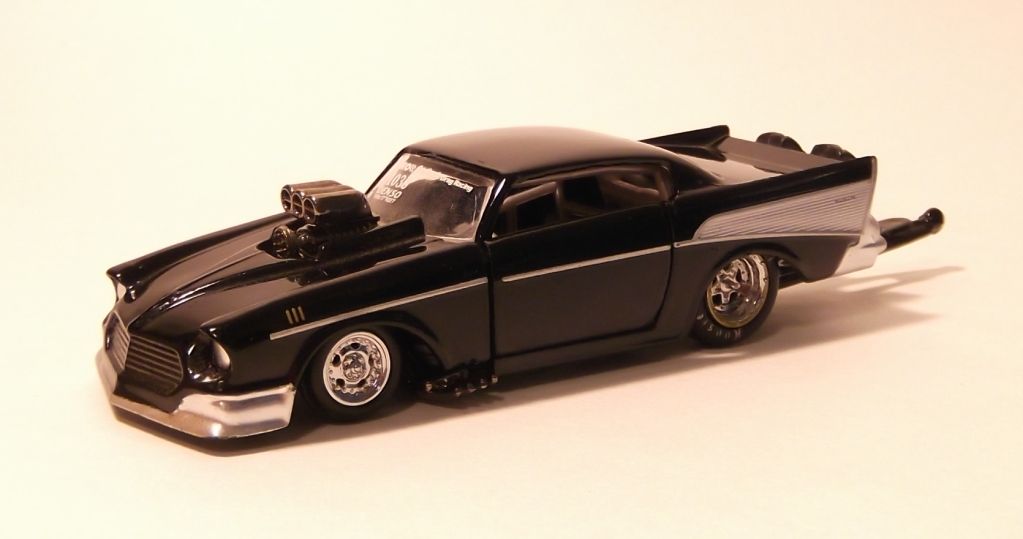
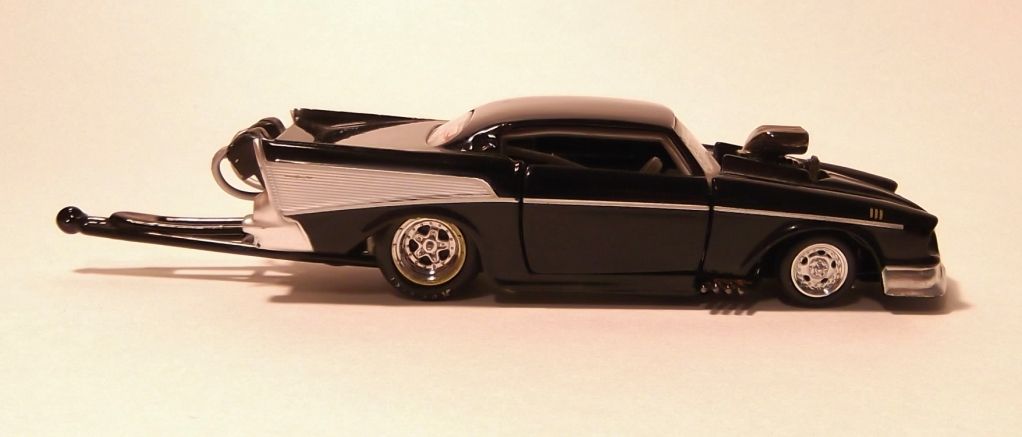
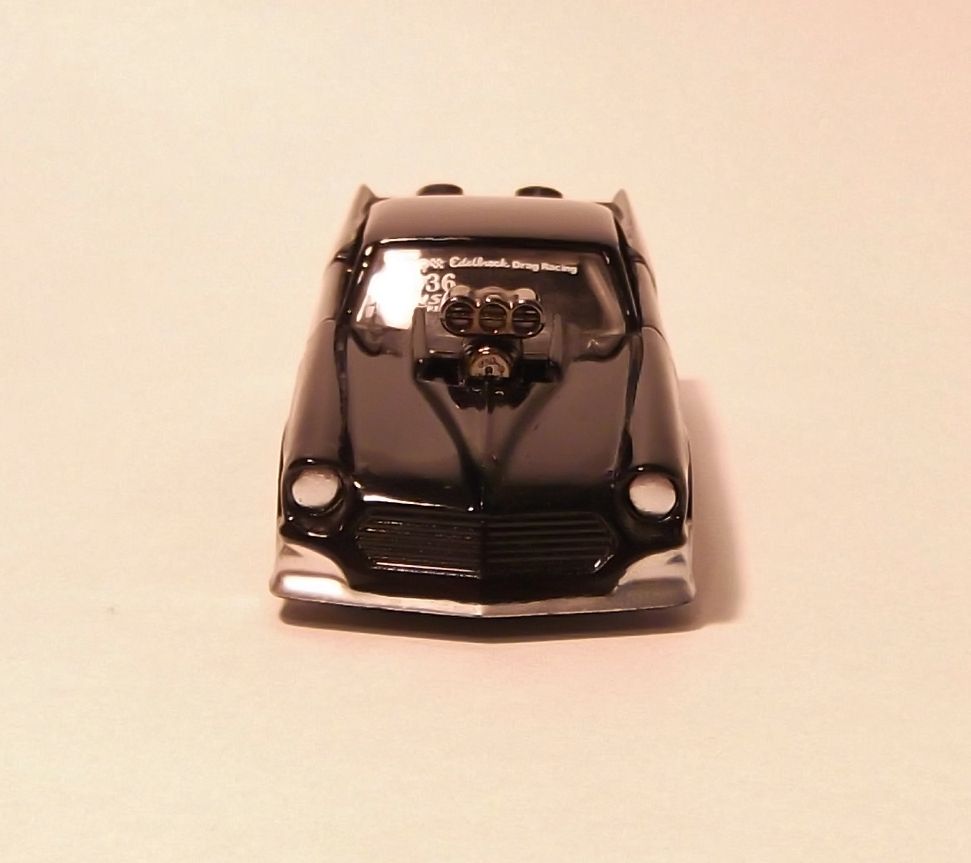
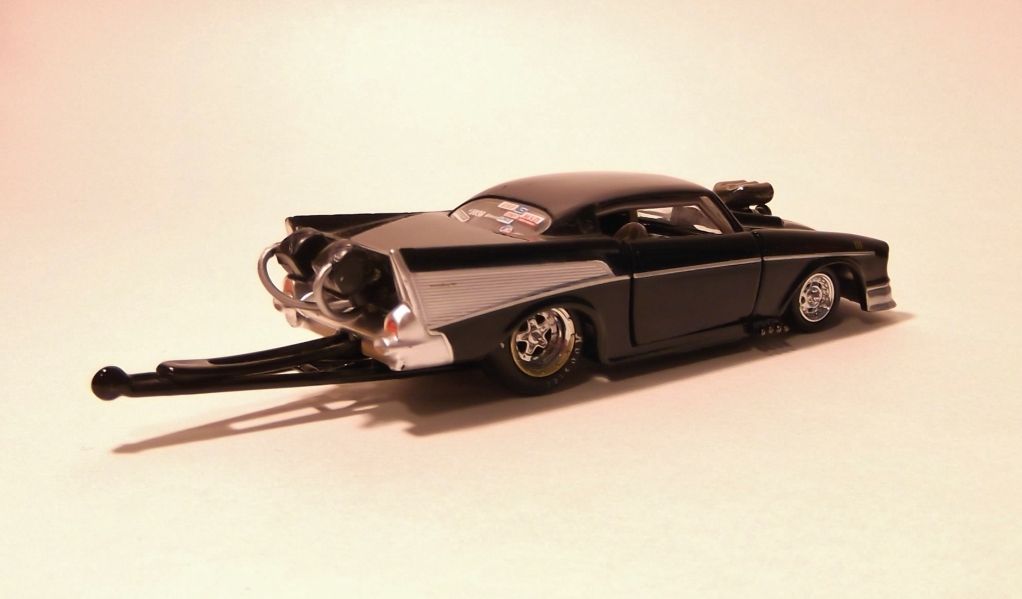
Today's car of the day comes from Firehawk73's collection and is Muscle Machines 1957 Chevy Bel Air Pro Stock.
The Chevrolet Bel Air is a full-size automobile that was produced by the Chevrolet division of General Motors for the 1950–1975 model years. Hardtops in the Chevrolet Deluxe Styleline model range were designated with the Bel Air name from 1950 to 1952, but it was not a distinct series of its own until the 1953 model year. Bel Air production continued in Canada for its home market only through the 1981 model year.
For more information and pictures of the real car please visit: Chevrolet Bel Air
For 1955, Chevrolet's full-size model received new styling that earned it the "Hot One" designation by enthusiasts. Unlike Ford and Plymouth, Chevrolet's styling was considered crisp and clean. Bel Airs came with features found on cars in the lower models ranges plus interior carpet, chrome headliner bands on hardtops, chrome spears on front fenders, stainless steel window moldings, and full wheel covers. Models were further distinguished by the Bel Air name script in gold lettering. For 1955 Chevrolets gained a V8 engine option. The new 265 cu in (4,340 cc) V8 featured a modern, overhead valve high compression, long stroke design that was so good that it remained in production in various forms, for many decades. The base V8 had a two-barrel carburetor and was rated at 162 hp (121 kW), and the "Power Pack" option featured a four-barrel carburetor and other upgrades yielding 180 bhp (130 kW). Later in the year, a "Super Power Pack" option added high-compression and a further 15 bhp (11 kW). "Idiot" lights replaced gauges for the generator and oil pressure. Motor Trend magazine gave the Bel Air top marks for handling. Front legroom was 43.1". Brakes were 11" drums.
The 1956 Bel Air received a face-lift with a more conventional full-width grille, pleasing those customers who didn't favor the Ferrari-inspired '55 front end. Distinctive two-tone bodyside treatments and graceful front and rear wheel openings completed the "speedline" restyling. Single housings incorporated the taillight, stoplight, and backup light, and the left one held the gas filler - an idea popularized on Cadillacs. Among the seven Bel Air models was a new Sport Sedan, a pillarless four-door hardtop that looked handsome with all the windows rolled down and allowed easy entry into the back seat. Production exceeded 103,000, compared to 128,000 two-door hardtops. Shapely two-door Nomad wagons topped the price chart at $2,608, but now carried the same interior and rear-wheel sheetmetal as other Bel Airs, lacking the original's unique trim. Only 7,886 were built. The least costly Bel Air, at $2,025, was the two-door sedan. Seatbelts, shoulder harnesses, and a padded dashboard were available, and full-size cars could even get the hot Corvette 225-horsepower engine. In 1956 sales material was an optional rain-sensing automatic top, which was first seen on the 1951 LaSabre concept car. However, it is believed that it was never installed on a car.
In 1957 engine displacement grew to 283 cu in (4,640 cc) with the "Super Turbo Fire V8" option producing 283 hp (211 kW) with the help of continuous (closed loop) mechanical fuel injection. These so-called "fuelie" cars are quite rare, since most Bel Airs were fitted with carburetion. The 1957 Bel Air is among the most recognizable American cars of all time; well-maintained examples, especially Sport Coupes and Convertibles are highly sought after by collectors and enthusiasts. They are roomy, fuel-efficient, with tastefully restrained, period use tail fins and chrome. A second automatic transmission, Turboglide, was optional. While the original two-speed Powerglide continued unchanged, Turboglide provided a continuously variable gear ratio which made "shifting" imperceptible. The shift quadrant on Turboglide cars followed a "P R N D Lr" pattern.
From 1955 to 1957, production of the two-door Nomad station wagon was assigned to the Bel Air series, although its body and trim were unique to that model. Prior to becoming a regular production model, the Nomad first appeared as a Corvette-based concept vehicle in 1954. Chevrolet has since unveiled two concept cars bearing the Nomad name, most recently in 1999. The 1955–1957 Chevrolets are commonly referred to as TriFives.
The 1955-1957s were made in right-hand drive and shipped from Oshawa, Canada, for local assembly in Australia (CKD), New Zealand (SKD) and South Africa. All three model years had a reversed version of the '55 LHD dashboard and did not get the LHD models' 1957 redesign.
Sunday, November 28, 2010
Super Celica To Wing Car: Toyota Supras In Small Scale
In 1979 Toyota added an inline six cylinder to the Celica and named it the Celica Supra (or Celica XX in Japan). The Supra went through four generations before being discontinued in 2002.
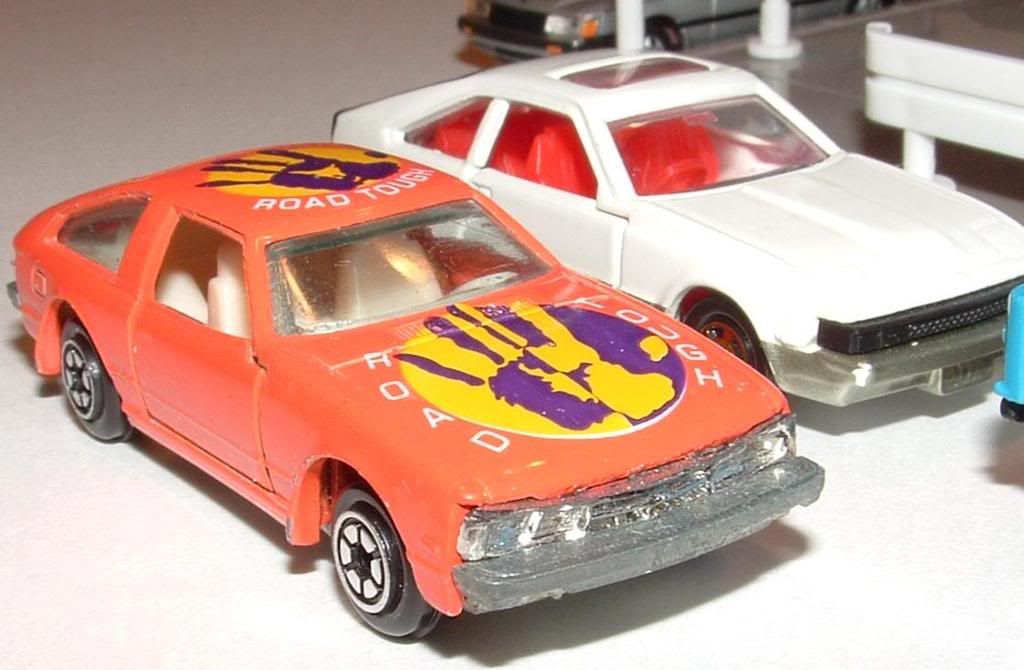
The first generation was from 1979-1981 and visually the cars were very similar to the Celica. The car was lengthened about 5 inches to accommodate the larger engine and there were a few other minor differences to tell them apart. This generation Supra was offered by Matchbox (as an XX) and Yat Ming. Tomica added a “Supra” sticker to their existing Celica casting, but this did not a Supra make.
Yat Ming MK I (in orange) & Tomica MK II (in white)
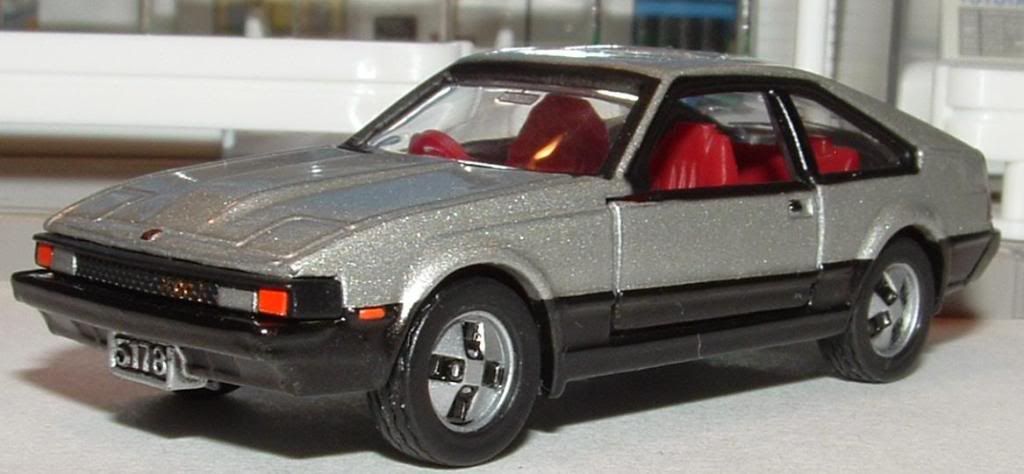
The second generation Celica Supra debuted in 1981 as a 1982 model. The Japanese models were still known as the Celica XX, but the car remained the Celica Supra in the rest of the world. The second generation Supra was differentiated from the Celica much more than the original car. In addition to having the front stretched to accommodate the larger engine, the cars share no body panels in front of the doors. The Supra had fully retracting headlights, a power bulge hood, and different (larger) taillights. This generation of Supra was very popular in small scale with models from Hot Wheels, Matchbox, Tomica, Welly, Yat Ming, Zylmex, Summer, and others. The Matchbox model featured an opening hatchback, while the Zylmex, Tomica, and Welly all had opening doors. The Welly is a copy of the Tomica, with added details including a switch from right hand drive to left hand drive.
Tomica Limited MK II XX
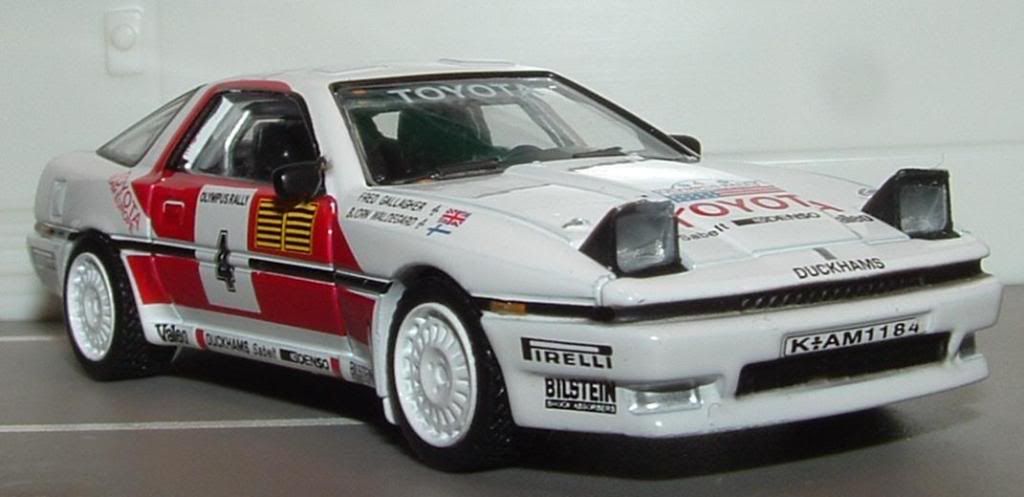
While the Celica was completely redesigned for 1986, and switched to front wheel drive, the Supra remained rear wheel drive, continuing on as the Celica Supra through mid year, when the third generation Supra was released. The MK III dropped the Celica moniker and retained rear wheel drive. While this was the best selling Supra generation, surprisingly, there are very few replicas in small scale. Tomica mocked up a prototype but it never entered production. Bluebox released an ’87 Supra with a cast over rear window, and in the early 2000s Summer released a highly stylized (and unlicensed) MK III also. The definitive MK III is CM’s rally car, however, a nice casting of a civilian MK III is a glaring omission in 1/64 scale. This would make a great candidate for a Tomica Limited Vintage Neo.
CM’s MK III rally
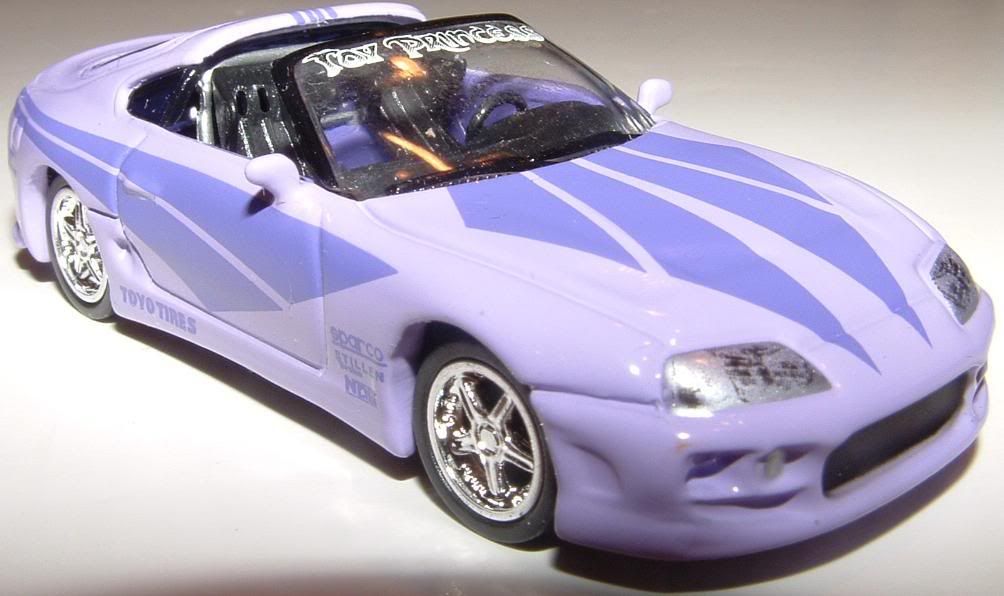
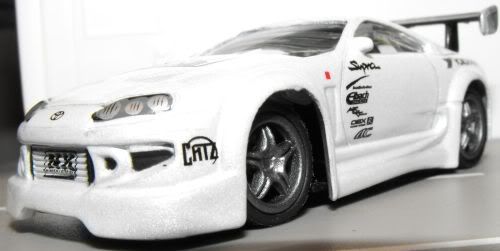
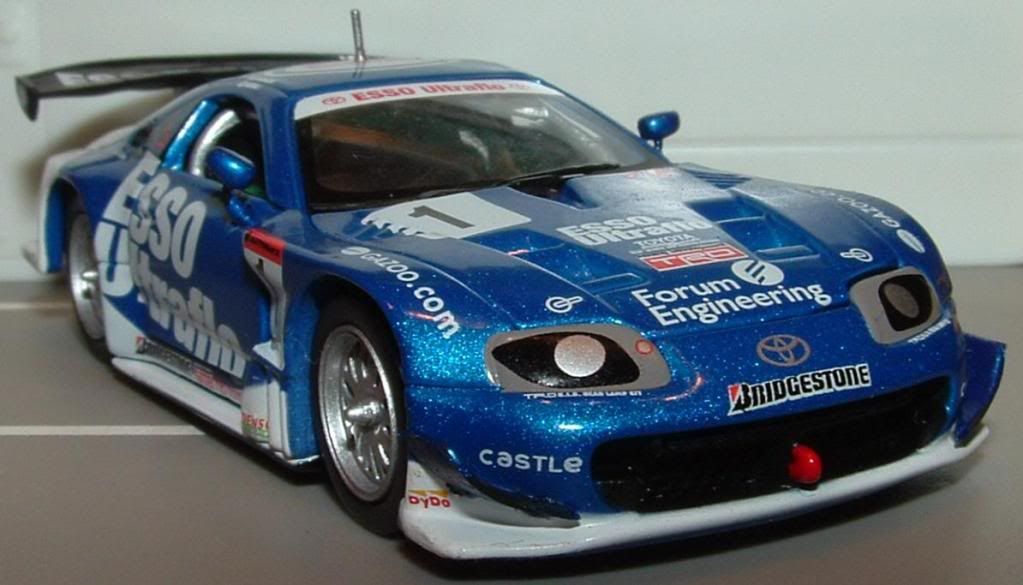
In 1993 the final generation of Supra debuted. The MK IV is usually considered the best of the breed by Supra enthusiasts, and is the first (and often only) Supra that comes to mind when someone hears the words. Pop-up headlights were gone, twin turbos were added, and a spoiler reminiscent of the Dodge Charger Daytona & Plymouth Roadrunner Superbird was standard (at least on the turbo models). The MK IV was replicated by Matchbox and Tomica when the car debuted, and a number of other manufacturers after it starred in “The Fast & The Furious”, among them Hot Wheels (the unlicensed “Super Tsunami”), Racing Champions, Jada, and Muscle Machines. Johnny Lightning was supposed to revive the Racing Champions casting but they eventually canceled the line of “Fast And Furious” cars they were planning to release when the latest movie came out.
Racing Champions MK IV
Muscle Machines MK IV
Muscle Machines MK IV JGTC
Matchbox MK IV
The first generation was from 1979-1981 and visually the cars were very similar to the Celica. The car was lengthened about 5 inches to accommodate the larger engine and there were a few other minor differences to tell them apart. This generation Supra was offered by Matchbox (as an XX) and Yat Ming. Tomica added a “Supra” sticker to their existing Celica casting, but this did not a Supra make.
Yat Ming MK I (in orange) & Tomica MK II (in white)
The second generation Celica Supra debuted in 1981 as a 1982 model. The Japanese models were still known as the Celica XX, but the car remained the Celica Supra in the rest of the world. The second generation Supra was differentiated from the Celica much more than the original car. In addition to having the front stretched to accommodate the larger engine, the cars share no body panels in front of the doors. The Supra had fully retracting headlights, a power bulge hood, and different (larger) taillights. This generation of Supra was very popular in small scale with models from Hot Wheels, Matchbox, Tomica, Welly, Yat Ming, Zylmex, Summer, and others. The Matchbox model featured an opening hatchback, while the Zylmex, Tomica, and Welly all had opening doors. The Welly is a copy of the Tomica, with added details including a switch from right hand drive to left hand drive.
Tomica Limited MK II XX
While the Celica was completely redesigned for 1986, and switched to front wheel drive, the Supra remained rear wheel drive, continuing on as the Celica Supra through mid year, when the third generation Supra was released. The MK III dropped the Celica moniker and retained rear wheel drive. While this was the best selling Supra generation, surprisingly, there are very few replicas in small scale. Tomica mocked up a prototype but it never entered production. Bluebox released an ’87 Supra with a cast over rear window, and in the early 2000s Summer released a highly stylized (and unlicensed) MK III also. The definitive MK III is CM’s rally car, however, a nice casting of a civilian MK III is a glaring omission in 1/64 scale. This would make a great candidate for a Tomica Limited Vintage Neo.
CM’s MK III rally
In 1993 the final generation of Supra debuted. The MK IV is usually considered the best of the breed by Supra enthusiasts, and is the first (and often only) Supra that comes to mind when someone hears the words. Pop-up headlights were gone, twin turbos were added, and a spoiler reminiscent of the Dodge Charger Daytona & Plymouth Roadrunner Superbird was standard (at least on the turbo models). The MK IV was replicated by Matchbox and Tomica when the car debuted, and a number of other manufacturers after it starred in “The Fast & The Furious”, among them Hot Wheels (the unlicensed “Super Tsunami”), Racing Champions, Jada, and Muscle Machines. Johnny Lightning was supposed to revive the Racing Champions casting but they eventually canceled the line of “Fast And Furious” cars they were planning to release when the latest movie came out.
Racing Champions MK IV
Muscle Machines MK IV
Muscle Machines MK IV JGTC
Matchbox MK IV
Subscribe to:
Posts (Atom)