A blog focusing on 1/64 diecast from such popular brands as Hot Wheels, Matchbox, Johnny Lightning, M2 Machines, GreenLight, Tomica, Yat Ming, Majorette, MotorMax, Siku, Corgi, Guisval, Playart, Ertl, Zylmex, Racing Champions, & many more. Swifty's Garage features a daily Car Of The Day and news updates from your favorite brands!
Thursday, September 8, 2011
Car Of The Day: September 8, 2011
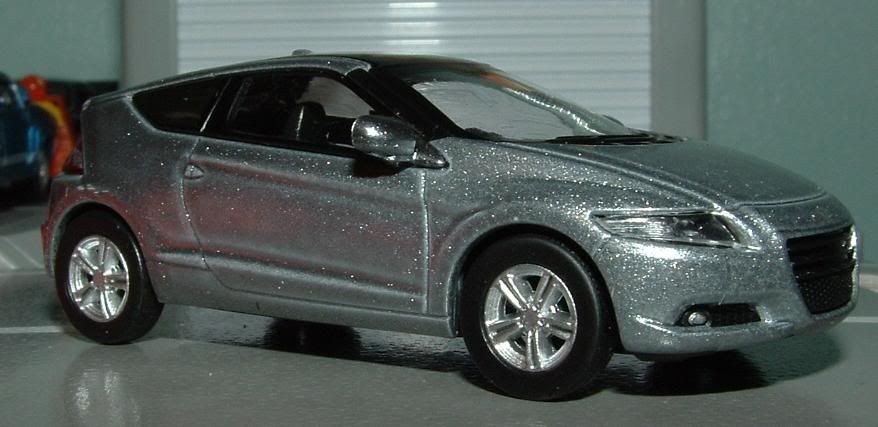
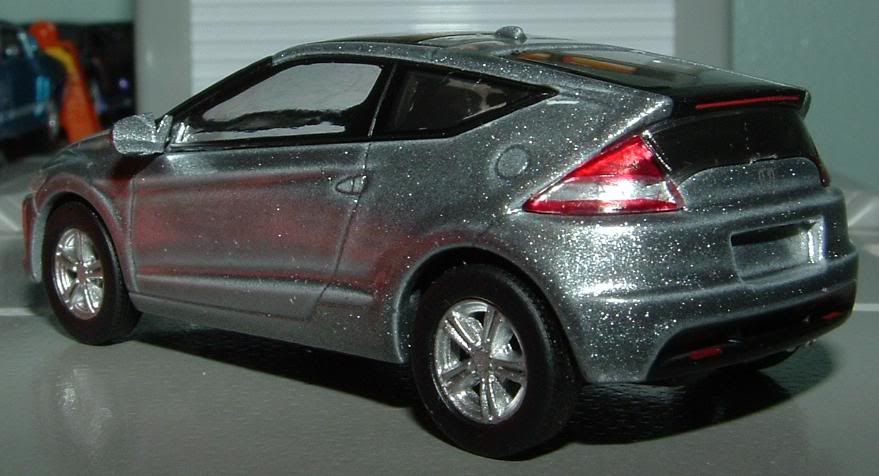
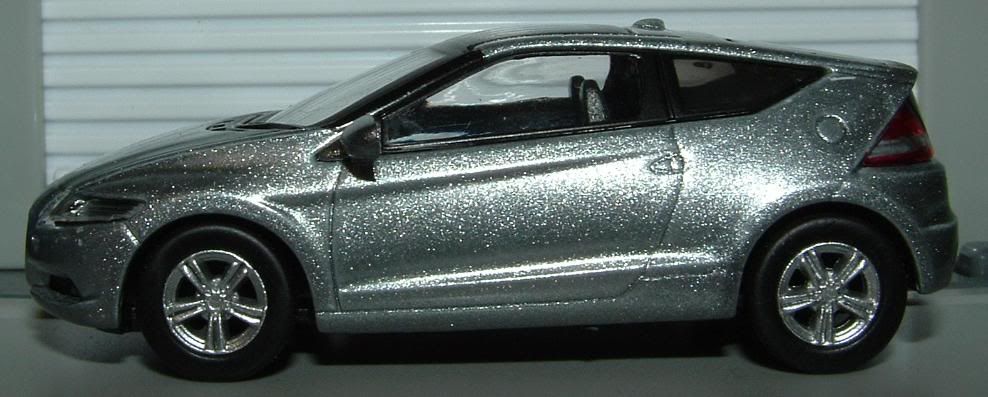
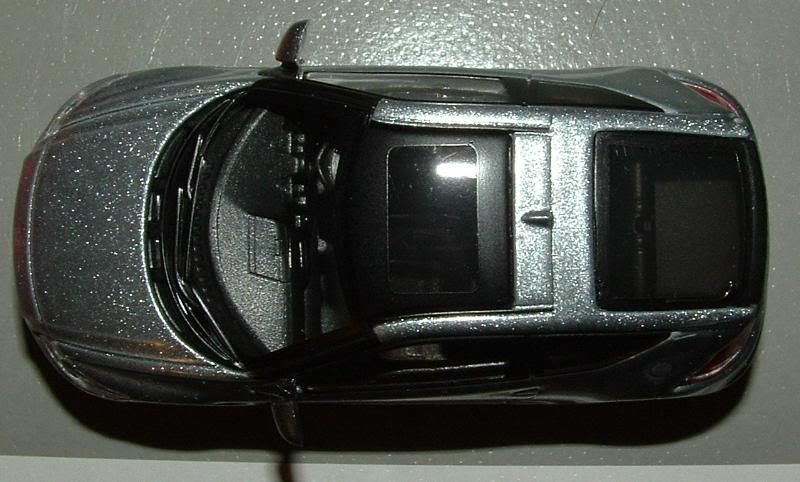
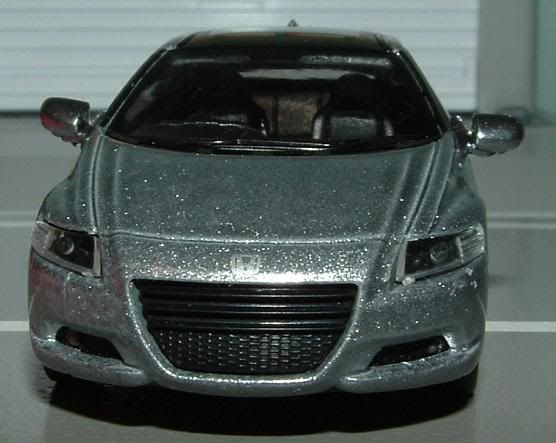
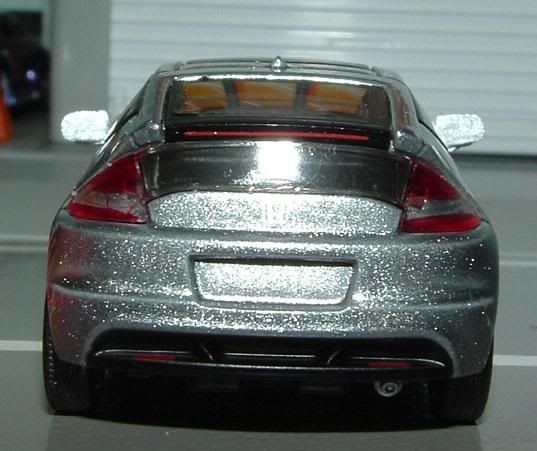
Today's car of the day is Kyosho's 2010 Honda CR-Z.
The Honda CR-Z is a compact hybrid electric automobile manufactured by Honda and marketed as a "sport hybrid coupe." The CR-Z combines a hybrid gasoline-electric powertrain with traditional sports car elements. The CR-Z is regarded as the spiritual successor to the second generation Honda CR-X in both name and exterior design.
In the U.S., it is one of the less polluting vehicles available and is rated as an Advanced Technology Partial Zero Emissions Vehicle (AT-PZEV) as defined by the California Air Resources Board (CARB). CR-Z is the only gasoline-electric hybrid model offered by any automaker that can be equipped with a manual transmission.
CR-Z represents the sixth unique version of Honda's IMA technology since the technology was first launched in the first generation Insight 3 door hatchback. Sales of the CR-Z began in Japan in February 2010. Sales in the U.S. began in August 2010.
For more information and pictures of the real car please visit: Honda CR-Z
Here's quite possibly the best-looking car in Honda's current lineup. Unfortunately it also sums up everything that's wrong with Honda right now. It's supposed to be both a sports car and a hybrid, but it doesn't do either task well at all.
The design and production of the CR-Z followed two other Honda hybrid concept cars: the Honda Remix, introduced at the 2006 Los Angeles Auto Show, and the Honda Small Hybrid Sports, introduced at the 2007 Geneva Motor Show.
The Honda CR-Z was first introduced as a concept vehicle on October 23, 2007 at the 2007 Tokyo Motor Show. Honda explained the name "‘CR-Z’ stands for ‘Compact Renaissance Zero’— an expression intended to capture the idea of a renaissance in the design of compact cars that begins anew from fundamentals." At the show, CEO Fukui stated that a production model is "in the works" and that the car was intended to be "sporty, incredibly efficient and inexpensive".
The CR-Z was first shown in America at the 2008 Detroit North American International Auto Show. In the 2009 Tokyo Motor Show, Honda displayed a revised "CR-Z Concept 2009". In January 2010, Honda introduced the production CR-Z at the 2010 North American International Auto Show in Detroit.
Automotive News reported in June 2010 that since its debut at the Detroit Auto Show, the CR-Z Web site has had 1 million hits. Honda has been promoting the 2011 model from the Facebook game Car Town.
Wednesday, September 7, 2011
Funny Car Of The Day: September 7, 2011
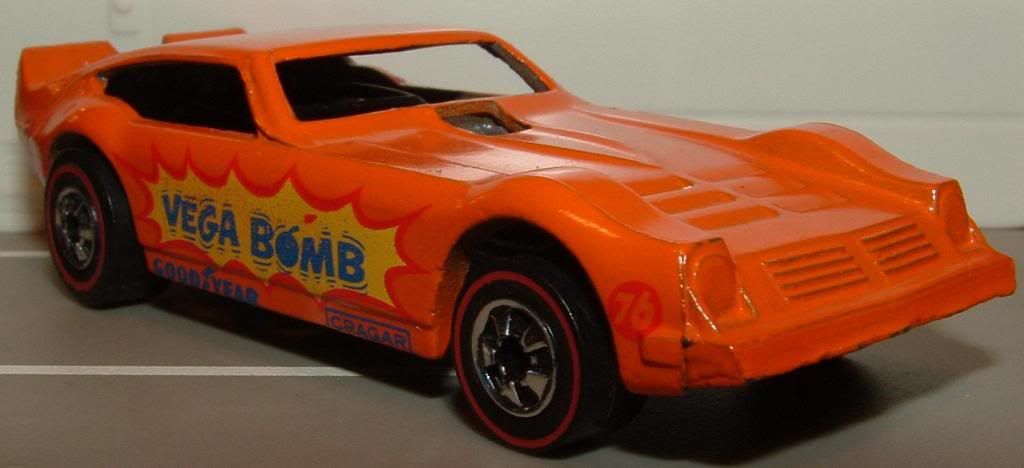
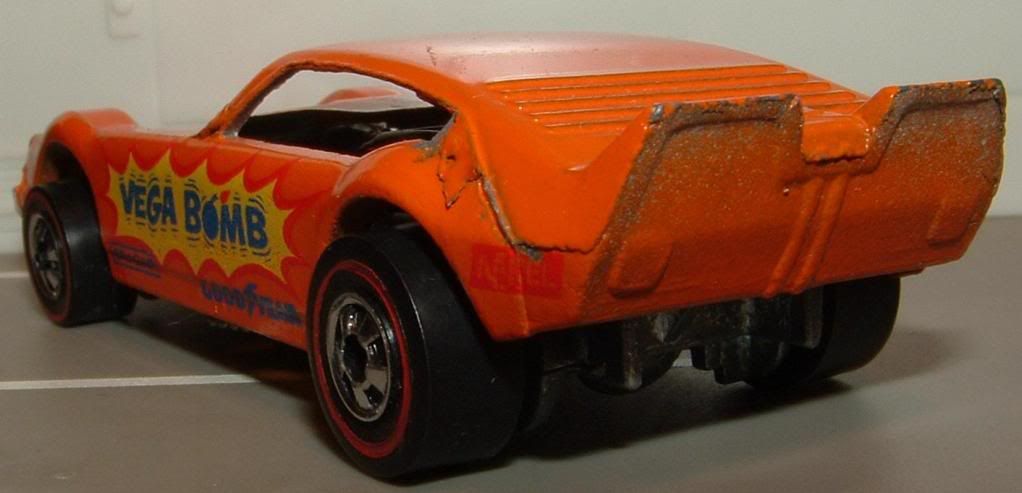
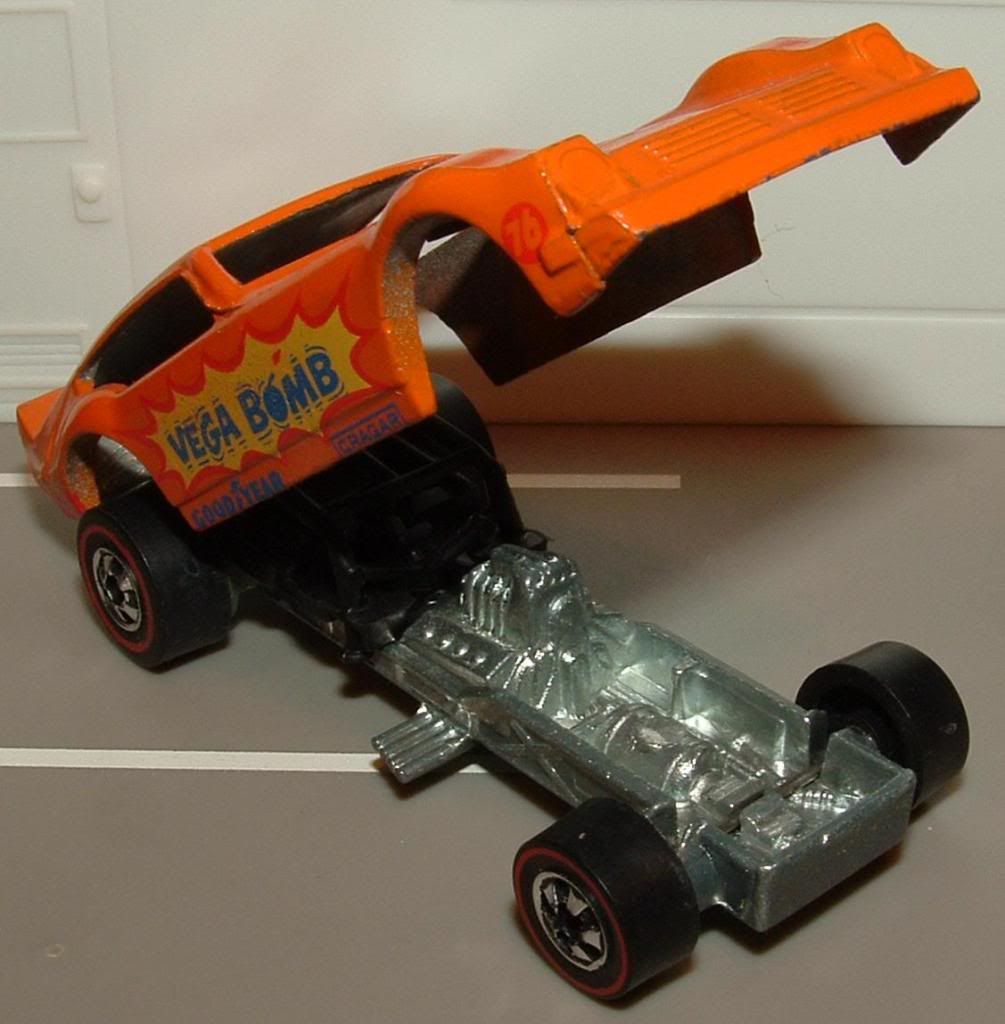
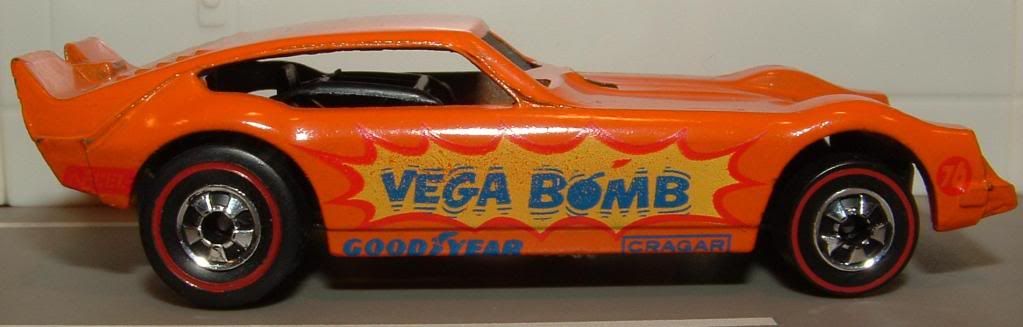
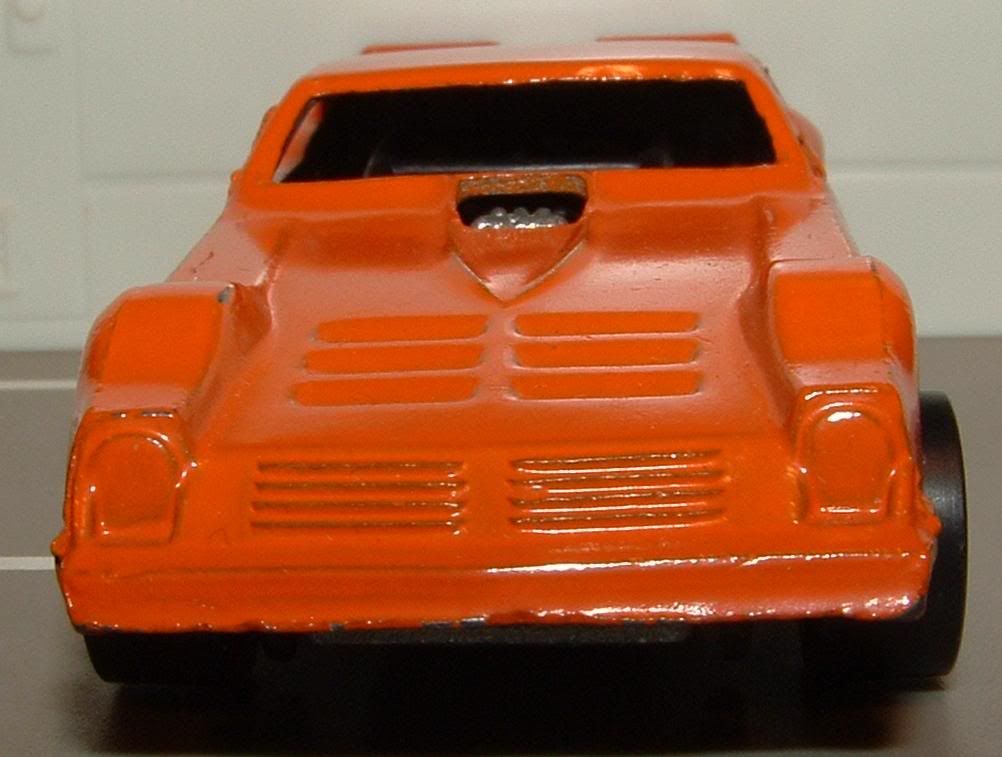
Today's car of the day is Hot Wheels' 1974 Chevrolet Vega funny car (Vega Bomb).
The Chevrolet Vega is a subcompact, two-door automobile that was produced by the Chevrolet division of General Motors for the 1971-1977 model years. Named after the star Vega, the car was powered by a lightweight aluminum-block inline four-cylinder engine.
The Vega was produced in hatchback, notchback, wagon, and panel delivery body styles. A limited-production model, the Cosworth Vega, with a smaller but more powerful engine, was introduced in 1975, the same year that GM introduced two additional subcompacts: the less expensive Chevrolet Chevette, and the Vega-derived Chevrolet Monza. Two additional Vega variants were produced by Pontiac: the Astre and the Safari Wagon.
Initially well-received by buyers and the motoring press, from whom it received numerous awards, the Vega sold well against domestic subcompacts such as the AMC Gremlin, Ford Pinto, and imports from Toyota, Datsun and Volkswagen. By 1974 it was among the top 10 best-selling American cars.
Brought to market in a short time, early examples suffered from engine problems, poor build quality, and corrosion, which caused long term harm to GM's reputation. Although the faults were remedied by recalls and redesigns, a three-year decline in sales culminated in the car's cancellation at the end of the 1977 model year.
For more information and pictures of the real car please visit: Chevrolet Vega
Hot Wheels had a thing for funny cars in the 1970s. In addition to the Vega Bomb seen here, there was also a '70 Barracuda, '77 Mustang II (Show Hoss II), Plymouth Arrow, '79 Corvette (Vetty Funny), and a '79 Firebird.
Chevy Vegas are often modified due to their front engine-rear drive (FR) design, light weight and low cost. A small-block Chevrolet V8 engine fits in the engine compartment; and a big-block V8 will fit with minor chassis modifications. The Vega was not offered with a factory V8 option, although the Vega-based Monza, Sunbird and Starfire were.
Motion Performance and Scuncio Chevrolet sold new, converted small and big block V8 Vegas. Heavy duty engine mounts and front springs were fitted to support the increased engine weight, a large radiator and modified driveshaft were required. For engines over 300 hp (220 kW), or with a manual transmission, a narrowed 12-bolt differential was required, replacing the stock Vega unit.
Drag racer Bill "Grumpy" Jenkins in the 1972 season, won six of eight National Pro-Stock division events with his Pro Stock, 331 cu in (5.4 L)-powered 1972 Vega, Grumpy's Toy X. In its first event, the untested Vega made 9.6 second passes and won the 1972 Winternationals. Jenkins' 1974 Vega, Grumpy's Toy XI, was the first full-bodied Pro Stock drag racer with a full tube chassis, as well as the first with MacPherson strut suspension and dry sump oiling. Jenkins' 1974 Vega sold for $550,000 in 2007.
In July 1972, Hot Rod tested a Chevrolet-built prototype Vega featuring an all-aluminum V8. The special 283 cu in (4.6 L) engine was used in a 1950s special lightweight Corvette program, and later installed in the Chevrolet Engineering Research Vehicle (CERV), an open-wheel rear engine prototype. One of the last engines was bored out to 302 cu in (4.9 L) for the Vega application. With 11:1 compression pistons, a "097 Duntov" mechanical camshaft and cast-iron four-barrel intake manifold with a Quadrajet carburetor, the car recorded a stopwatch quarter-mile standing-start time of 13.97 seconds. The prototype had a stock Turbo Hydramatic, stock Vega rearend and street tires.
Not including Schrock Brothers pieces, this is tied for the most I've ever paid for a single car (along with a Jet Wheels '68 Mustang). I don't have a lot of Redlines and oddly enough, I never would have expected the Vega Bomb to be one of the ones to end up in my collection as I generally don't collect funny cars.
Tuesday, September 6, 2011
Race Car Of The Day: September 6, 2011
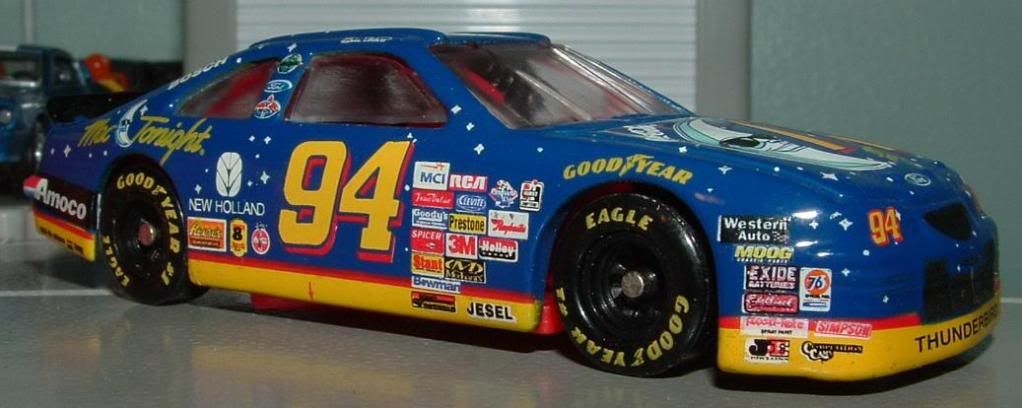
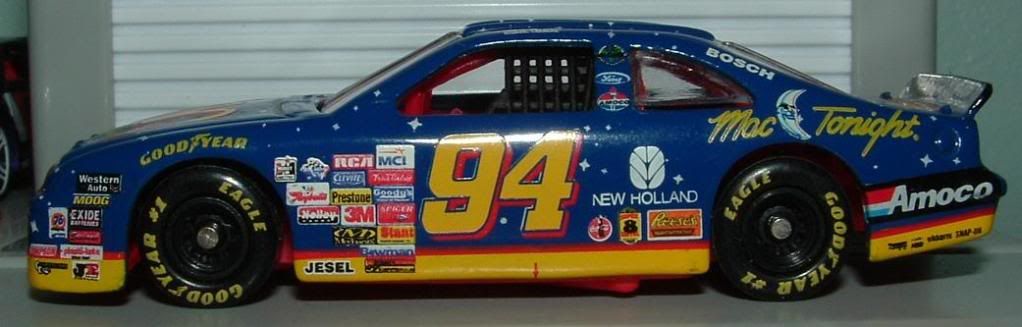
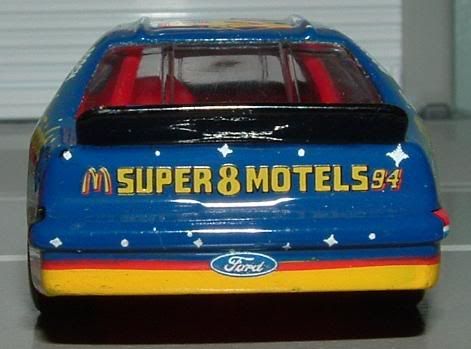
Today's car of the day is Revell's 1997 Ford Thunderbird NASCAR stock car (Bill Elliott).
On December 26, 1988 a completely redesigned Thunderbird was introduced as a 1989 model alongside its sister car, the Mercury Cougar. Developed on Ford's new MN12 (Mid-Size North American Project 12) platform, the new Thunderbird featured a more aerodynamic body that was slightly shorter in overall length relative to the 1988 Thunderbird but had a nine inch longer wheelbase. The car featured a short-long arm (SLA) four-wheel independent suspension, with a modified MacPherson strut assembly in front, that offered excellent handling and ride quality. This setup was significant as it made the Thunderbird and the Cougar the only rear-wheel drive North American domestic cars other than the Chevrolet Corvette to offer a four-wheel independent suspension at the time. Engine options fell to only two for 1989 as Ford dropped the V8 option for the new Thunderbird. The base and LX models were powered by Ford's 3.8 L Essex OHV V6. Producing 140 horsepower (100 kW) at 3800 rpm and 215 lb·ft (292 N·m) of torque at 2400 rpm, many felt the engine was somewhat underpowered for a car that weighed over 3,500 pounds (1,600 kg) in base trim (heavier when equipped with available options). This engine was mated to Ford's AOD 4-speed automatic transmission regardless of trim level from the 1989 to 1993 model years. Thanks in part to its low coefficient of drag, the Thunderbird was relatively fuel efficient considering its overall size and weight. The EPA gave 1989 Thunderbirds equipped with the standard V6 a fuel efficiency rating of 19 mpg-US (12 L/100 km; 23 mpg-imp) in city driving and 27 mpg-US (8.7 L/100 km; 32 mpg-imp) on the highway, though, like most cars built before 2008, this rating was retroactively reduced by the EPA to reflect newer, more realistic fuel efficiency measurements. The fuel efficiency rating was noticeably better than that of Thunderbirds equipped with higher performance engines and gave the base V6-equipped Thunderbird a significant driving range with its 19 gallon fuel tank (later decreased to 18 gallons).
A more sophisticated, supercharged and intercooled version of the 3.8 L OHV V6 was used to power the high performance Thunderbird Super Coupe, also called Thunderbird SC for short. The Super Coupe could be had with a Mazda-derived, M5R2 5-speed manual transmission or an AOD 4-speed automatic transmission. The Thunderbird Super Coupe was Motor Trend's Car of the Year for 1989, which Ford proudly advertised. When running at a maximum of 5600 rpm, the supercharger provided 12 psi of boost, producing 210 horsepower (160 kW) at 4000 rpm and 315 lb·ft (427 N·m) of torque at 2600 rpm under a 8.2:1 compression ratio. Accompanying the more powerful engine, Super Coupes were equipped with a host of unique features underlining their higher performance demeanor relative to standard Thunderbirds. Among these were larger, 16 x 7.0 inch alloy wheels with high performance tires (standard Thunderbirds came with 15 x 6.0 inch steel wheels and 15 x 6.5 inch alloy wheels were optional), a Traction-Lok locking differential, standard anti-lock brakes, 4-wheel disc brakes (vented front and rear rotors), speed-sensitive variable assist steering, lower bodyside cladding, fog lights, and a better handling suspension with an adjustable ride control supplied by Tokico.
In spite of the new Thunderbird's merits, it was considered a failure by Ford's top management. On January 17, 1989, Ford President Harold A. Poling, with Ford Chairman Don Petersen and Ford Executive Vice President Phil Benton looking on, lambasted the MN12 program's staff in a meeting for badly missing the Thunderbird and Cougars' weight and cost targets (250 lb (110 kg) heavier and $900 US$ more per car than planned). This criticism came as a surprise to the program staff who expected to be praised for the Thunderbird and Cougars' technical achievements and positive reception. Anthony "Tony" S. Kuchta, manager of the MN12 program, was angered by Poling, not for his points about weight and cost overruns but rather that he directed his tirade at the program staff instead of at Kuchta who was responsible for all of the important decisions that determined the program's direction. Ironically, many of the decisions that Kuchta made regarding the MN12's development that resulted in the weight and cost overruns criticized by Poling were caused by the very things that set the MN12 cars apart from other cars in their class (such as rear-wheel drive and an independent rear suspension). Falling out of favor with Ford management after the Thunderbird and Cougars' launch, Kuchta voluntarily retired early from Ford in May 1989.
For the 1991 model year, Ford reintroduced a V8 option with the 4.9 L (302 cu in) Windsor 5.0 V8. The engine was used through the 1993 model year and produced 200 horsepower (150 kW) at 4000 rpm and 275 lb·ft (373 N·m) of torque at 3000 rpm; gains of 35 horsepower (26 kW) and 25 lb·ft (34 N·m) of torque respectively over the 1988 Thunderbird, the previous Thunderbird to use this engine. Like the standard 3.8 L V6, the V8 was only mated to the AOD 4-speed automatic transmission. On the television program MotorWeek in a review of the 1991 Thunderbird and similar Mercury Cougar, a road test of a V8-equipped Thunderbird revealed that the car could accelerate from 0 to 60 mph in 9.2 seconds; approximately two seconds faster than a standard V6 Thunderbird but about two seconds slower than a Super Coupe.
In 1994, the Thunderbird received some exterior updates. The front fascia saw substantial stylistic changes with larger air scoops in the bumper cover, new headlamps, and a new, slightly more curvaceous hood. At the center of this, the silver Thunderbird logo was moved onto the front bumper cover from the front lip of the hood where it was located previously. The Thunderbird's interior was completely redesigned with an emphasis on optimizing driver comfort and convenience to the utmost. The redesign featured a "wrap around" cockpit-style layout of instrumentation with a new steering wheel, radio, and climate controls and sweeping curves on the door panels and dashboard surfaces. Complementing the changes to the interior came added driver and passenger safety as Ford made dual front-side airbags standard on all 1994 Thunderbird models.
Arguably the most dramatic change for 1994, however, was the new 4.6 L Modular SOHC V8 which replaced the "5.0" Windsor engine. The 4.6 L V8 produced 205 horsepower (153 kW) at 4500 rpm and 265 lb·ft (359 N·m) of torque at 3200 rpm and brought with it an updated powertrain control module, the EEC-V (base V6 Thunderbirds and Super Coupes continued to use the older EEC-IV). An electronically-controlled 4R70W 4-speed automatic transmission replaced the AOD automatic transmission in all instances where it was previously used in the Thunderbird. In 1994, the Thunderbird was once again reviewed on the television program MotorWeek and the new 4.6 L V8 was praised for its 40 lb lighter weight, smooth operation, and better throttle responsiveness over its overhead valve V8 predecessor. In spite of this and the 1994 Thunderbird's upgraded transmission, the performance gain over the previous model year Thunderbird was modest with 0 to 60 mph acceleration being completed in 9.0 seconds and a quarter-mile being completed in 16.8 seconds at 86 mph.
The Super Coupe continued on in 1994 with the same supercharged 3.8 L V6 as before, but now with 230 horsepower (170 kW) at 4400 rpm and 330 lb·ft (447 N·m) of torque at 2500 rpm. This was made possible due to a number of changes. The Eaton M90 roots-type supercharger was given a larger, square style inlet, a larger attaching inlet plenum, and Teflon coated rotors. The engine received larger fuel injectors and an increase in compression to 8.6:1. In their March 1996 issue, Motor Trend magazine conducted a comparison test of a 1995 Thunderbird Super Coupe against the front-wheel drive Chevrolet Monte Carlo Z34 and a Buick Regal Gran Sport. The Super Coupe delivered the best overall performance, including a 0 to 60 mph acceleration time of 7.0 seconds and a completion of a quarter-mile in 15.2 seconds at 88.1 mph. In summarizing the overall performance of each car relative to each other, the author of the article, Don Sherman, wrote, "The Buick Regal is a competent, comfortable car at an attractive price, but it's too androgynous to be called a Gran Sport. Nothing about it is grand, and there isn't a sporting bone in its body. All the Monte Carlo needs to succeed is a V-8 engine and a year of refinement to eradicate its quality bugs. That leaves the Thunderbird SC as this test's big winner. It's a far more sophisticated solution to the four-place-coupe equation, but is priced accordingly." In spite of positive critiques like this, the increases in output and performance over earlier Super Coupes would be short-lived, as the Thunderbird Super Coupe was discontinued after the 1995 model year due to slowing sales.
For the 1996 model year, the Thunderbird received its last refresh. Available in LX (V6 or V8) or Sport (V8 only) trims, the cars received redesigned headlights, smoother front and rear fascias, body side cladding, and differently styled wheels (15 inch on LX, 16 inch on Sport). The car's taillights were revised with the black paint on the bottom quarter of the lenses being removed (previously, this paint was put on the taillights of LX Thunderbirds but omitted on the Super Coupe). The Thunderbird nameplate, which was previously positioned over this black paint on the driver side taillight, was moved above the taillight and its font was changed to a new, italicized style. With the revised front fascia, a small, egg-crate style grille (with the silver Thunderbird logo at its center) was added, giving the Thunderbird a traditional grille for the first time since the mid-1980s. The hood was redesigned with a slight bulge, which was necessary to fit the updated 4.6 L engine's taller intake manifold, now composite. The V8 models were tuned to make 210 horsepower (160 kW) at 4250 rpm and 290 lb·ft (393 N·m) of torque at 3000 rpm, an increase of 25 lb·ft (34 N·m) of torque over the 4.6 L V8s used in 1994 and 1995 Thunderbirds. In another comparison test conducted by Motor Trend against a Monte Carlo Z34, a Thunderbird with the updated 4.6 L V8 accelerated from 0 to 60 mph in 7.9 seconds and completed a quarter-mile run in 15.8 seconds at 88.4 mph. Unfortunately for owners, the all-composite intake had a tendency to crack and leak antifreeze. Some 1997s are covered by a class action lawsuit settled by Ford late in 2005 (see Intake Manifold Defect for details). The base LX model continued to use the 3.8 L V6 as its engine but now made use of the EEC-V computer which before was only found in 4.6 L V8-equipped models. Torque output from the V6 remained the same as before at 215 lb·ft (292 N·m) (though at 2750 rpm versus 2400 rpm) but power increased to 145 horsepower (108 kW) at 4000 rpm for 1996.
In 1997, Ford made few notable changes, trying to save as much money as they could on the floundering coupe. On the exterior, the Thunderbird logo in the grille on early 1997 Thunderbirds have turquoise feet. However, late production 1997 models do not have these turquoise feet because Ford ran out of the inserts and decided not to go to the trouble of adding them to a car that was about to be discontinued. Also on some late 1997 models, the seven-spoke, 15x6.5-inch alloy wheels available on LX models of the 1993, 1994, and 1995 Thunderbirds briefly returned with a chrome finish instead of with the silver paint used originally. The wheels were left over from the earlier model years and, with their new finish, were made available as a special option near the Thunderbird's discontinuation. Inside, the instrument cluster was changed from a six gauge layout (speedometer, tachometer, fuel, coolant temperature, oil pressure and voltmeter) to a four gauge layout (speedometer, tachometer, fuel, coolant temperature), similar to that previously used on the Ford Taurus and Mercury Sable of the time. Lastly, the Thunderbird's options list was abbreviated to a power sunroof, power driver seat, remote keyless entry, and a CD player.
Toward the end of the MN12 Thunderbird's production run, Ford's Special Vehicle Engineering (SVE) division explored the idea of a new high performance Thunderbird, producing four prototypes. Stylistically the SVE Thunderbirds blended elements from the 1994–1995 and 1996–1997 Thunderbirds along with elements unique to themselves. The SVE Thunderbird used the headlights, door handles, and rear bumper cover from the 1994–1995 Thunderbird and front fascia and body side cladding from the 1996–1997 Thunderbird. Unique to the SVE Thunderbird relative to other Thunderbirds were 17-inch, five spoke Cobra R wheels, larger dual exhaust tips, a different lower section of the front fascia with fog lights, a unique spoiler, and a prominent cowl hood. The most significant difference that set the SVE Thunderbird apart from other Thunderbirds was its supercharged 4.6 L DOHC V8 engine, similar to that later found in the SVT Mustang Cobra. Power was delivered to the wheels via a Tremec T-45 5-speed manual transmission. Stopping the SVE Thunderbird were larger brakes taken from the Mustang Cobra (going along with its Cobra R wheels). In spite of its potential, this high performance Thunderbird was not meant to be as Ford not only pulled the plug on this project, but on the entire Thunderbird and Cougar line, with the 1997 model year being its last. On September 4, 1997, the final MN12 Thunderbird was built at Ford's assembly plant in Lorain, Ohio. As it rolled down the assembly line, a sign saying "That's All Folks" adorned the decklid.
For more information and pictures of the real car please visit: Ford Thunderbird & Bill Elliott
Sadly, the six years Bill Elliott spent as an owner-driver were the least-productive of his career: in six seasons he scored zero wins. Considering he won a race every year with Melling Racing from 1983-1991, and two of the three years he spent with Junior Johnson ('92 & '94), and then won each of his full-time seasons with Ray Evernham ('01-'03) it makes you wonder just how much better of he'd have been driving for another team.
William Clyde "Bill" Elliott (born October 8, 1955), also known as Awesome Bill from Dawsonville or Million Dollar Bill, is a part-time driver and former champion of the NASCAR Sprint Cup Series. Elliott was inducted into the Motorsports Hall of Fame of America on August 15, 2007. He won the 1988 NASCAR Winston Cup Series Championship and has garnered 44 wins in that series. He had two Daytona 500 victories, and a record four consecutive wins at Michigan International Speedway during 1985-86. He holds the track record at both Talladega and Daytona International Speedway with speeds of more than 210 mph.
Elliott won NASCAR's Most Popular Driver Award 16 times, a record. He withdrew his name from the ballot for that award after winning it in 2002. The award will be renamed for Elliott when he officially retires from the sport. In 2005, Georgia Governor Sonny Perdue declared October 8 as Bill Elliott Day in the state of Georgia. Elliott has also been honored by the state legislature, having a stretch of road in his native Dawsonville renamed Elliott Family Parkway. Elliott was born in Dawsonville, Georgia.
After leaving Johnson's team, Elliott fielded his own Winston Cup race team from 1995 to 2000. Elliott failed to win a race during this time, though he did manage two top ten finishes in the championship standings, with eighth place finishes in both 1995 and 1997. In 1996, Elliott suffered a broken hip during an accident at Talladega and missed seven races that season.
The team also fielded entries in the Busch Series and truck series.
Monday, September 5, 2011
Car Of The Day: September 5, 2011
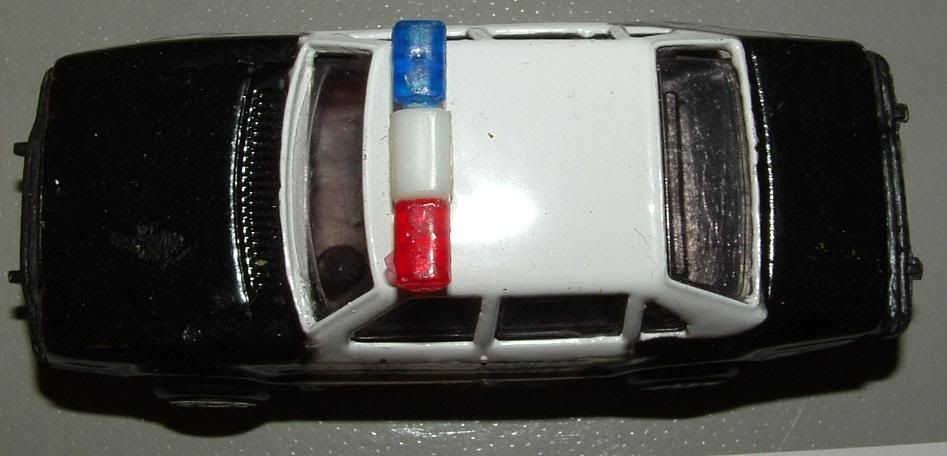
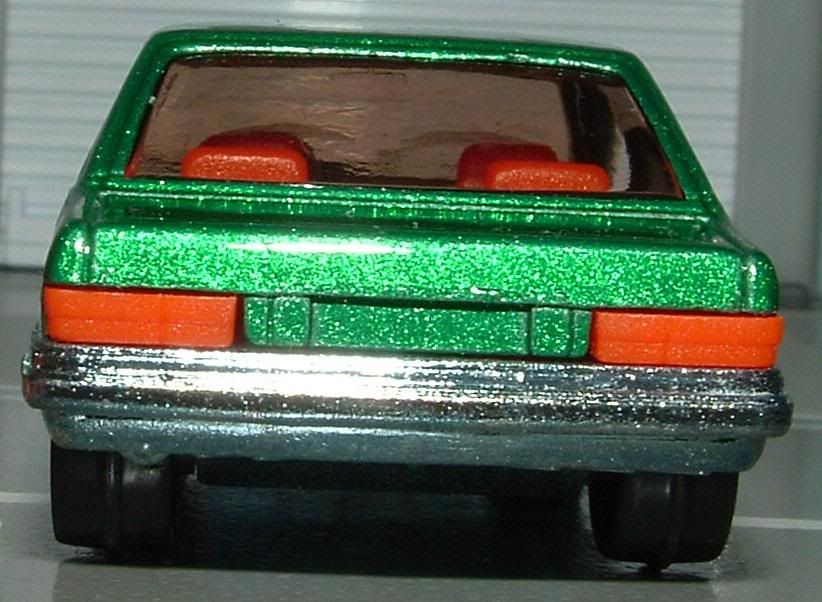
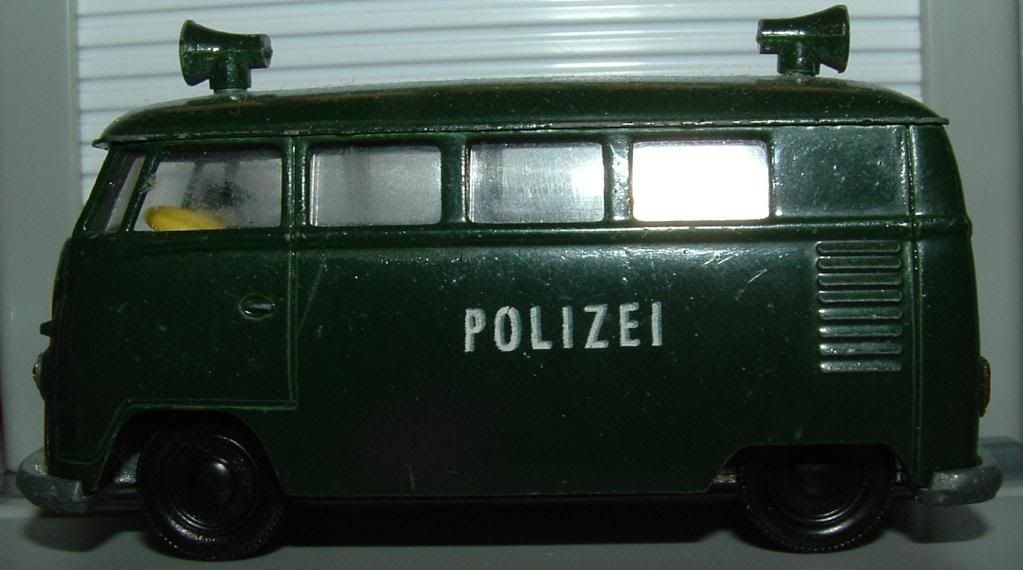
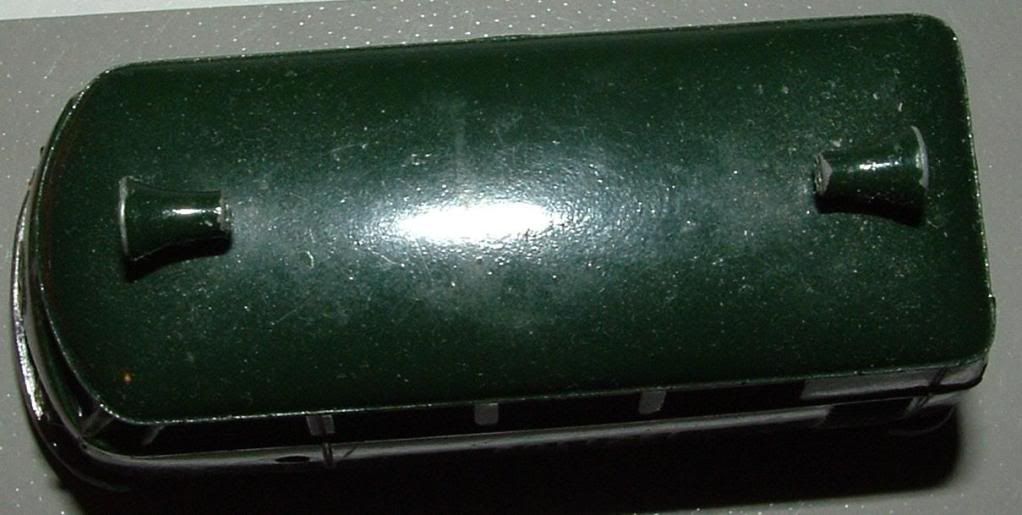
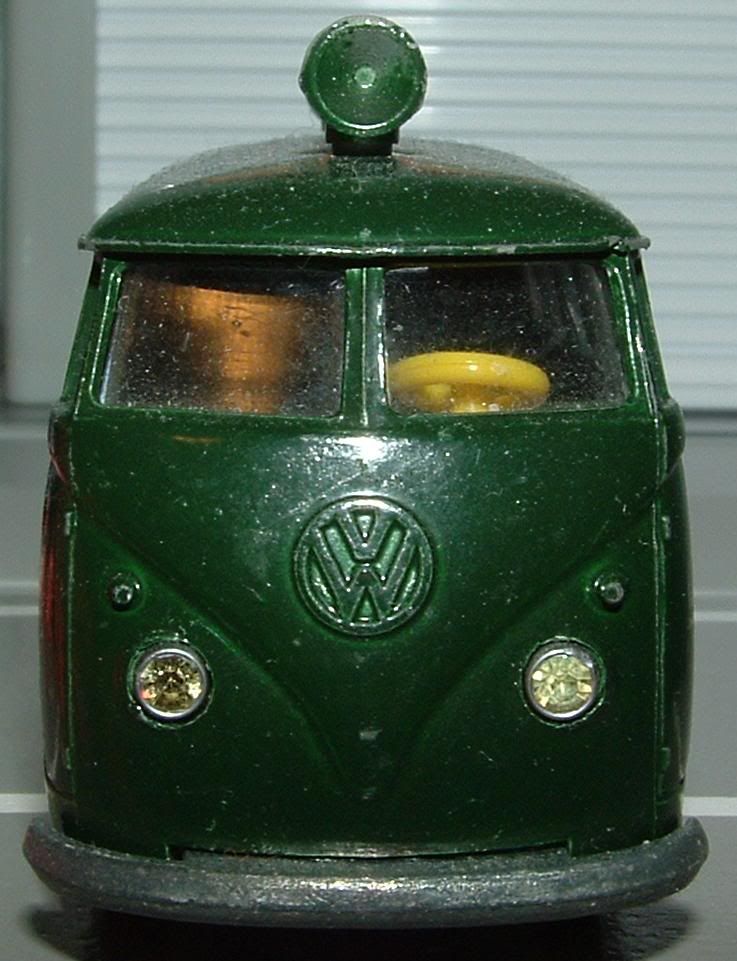
Today's car of the day is Zylmex's 1983 Ford LTD police car.
The Ford LTD was a car produced by the Ford Motor Company in North America. A range of full-size cars wore various forms of the LTD nameplate from 1965 to 1991 in the United States. The LTD debuted as the highest trim level on the 1965 full-size Ford range under the name Galaxie 500 LTD and became its own series for the first time in 1966.
In 1983, the LTD was split into two distinct lines. The LTD shifted to a mid-size car based on the Fox platform; the top-trim LTD Crown Victoria remained a full-size car. The smaller LTD continued in sedan and station wagon forms through 1986, overlapping with the first model year of the Ford Taurus in 1986, the car that became its successor. In North America, the LTD name was last used on the 1991 LTD Crown Victoria sedan and station wagon, which dropped it for 1992.
For more information and pictures of the real car please visit: Ford LTD
A rather odd choice for a squad car from Zylmex, considering the real car was very rarely pressed into police service. I wonder just how much influence this particular casting had on the folks who designed the "Grand Theft Auto: Vice City" video game as this is the model of car used as a police car in the game. One would think there are a lot more of these around than real Foxbody LTD police units!
Ford's final family sedan based on the Fox platform, the LTD, and its Mercury twin, the Marquis, were basically a restyle of the unsuccessful 1981-1982 Ford Granada and Mercury Monarch, and the popular 1978-1983 Ford Fairmont and Mercury Zephyr. As such, the running gear was identical to the Fairmont. The LTD and Marquis monikers were also used on the full size sedan and wagon, named LTD Crown Victoria and Grand Marquis.
Both LTD and Marquis inherited the Fairmont's 2.3 L four-cylinder, 3.3 L inline-six, and 5.0 L V8 engines; however, the V8 gained fuel-injection. Inherited from the Granada was Ford's 3.8 L Essex V6, which gave smooth and reliable power, although with sometimes troublesome head gaskets. The Essex engine gained fuel injection for 1984 in the US; it was carbureted in Canadian markets until 1986. An option from 1983 to 1984 was an LPG (propane)-powered four-cylinder engine, but was discontinued due to poor sales and few propane fueling stations. The LTD's final year was 1986, when Ford sold it alongside its replacement, the Taurus. This car was the third-best-selling car in the United States in 1983 and 1984.
During the 1984 model year, Ford introduced a performance version of the LTD called the LTD LX. It came standard with the high output 5.0 L CFI V8 engine, four-speed automatic transmission with overdrive, 600 lb-in front and 270 lb-in rear coil springs, front and rear sway bars, 10 inch front disc and 10 inch rear drum brakes, and a 3.27:1 rear gear ratio with a Traction-Lok differential. The LX model was the only LTD to have a center console with a floor-mounted shifter for the transmission, and a tachometer in the instrument cluster. Roughly 3,260 LXs were produced from mid-1984 to 1985. The Mercury version of the LX was the Marquis LTS and was available only in Canada in much smaller numbers. A LTD (fox body) police edition was as also made, roughly 800 were produced. Notable for its bigger sway bars and brakes, it also included bench seats with an automatic trunk opener located underneath the steering wheel. They were a factory option and most were equipped with light bars and police accessories, although some came without.
Sunday, September 4, 2011
Car Of The Day: September 4, 2011
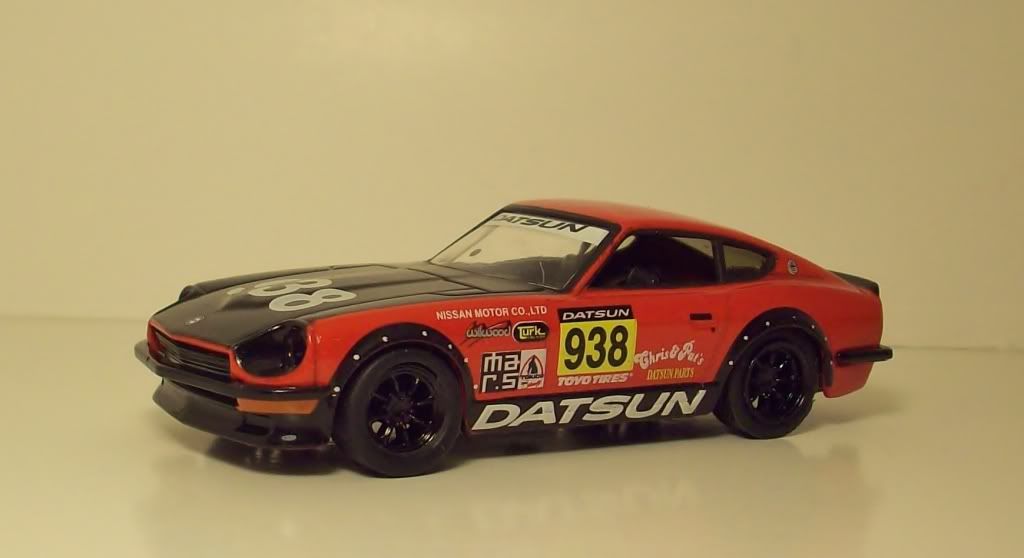
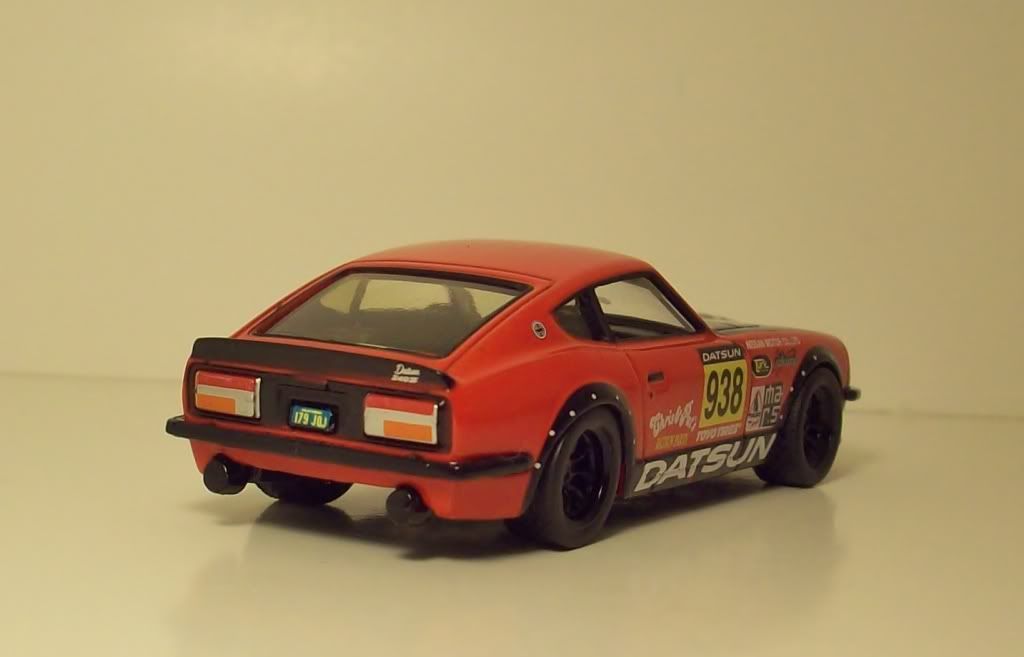
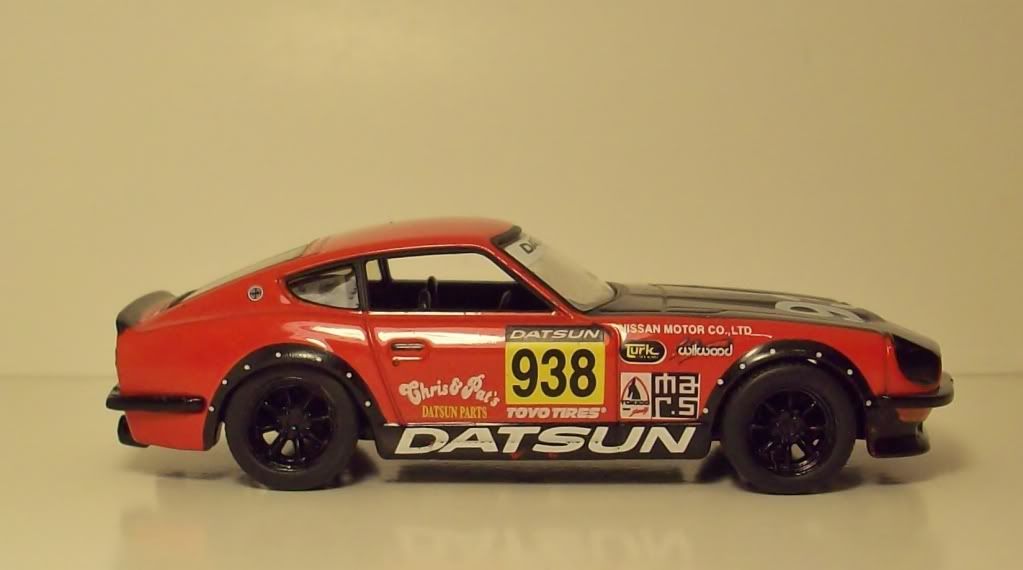
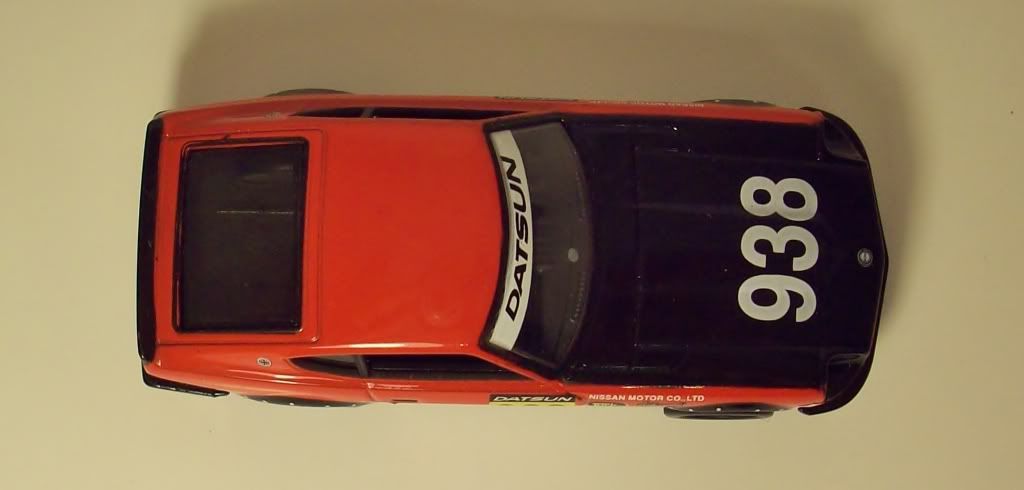
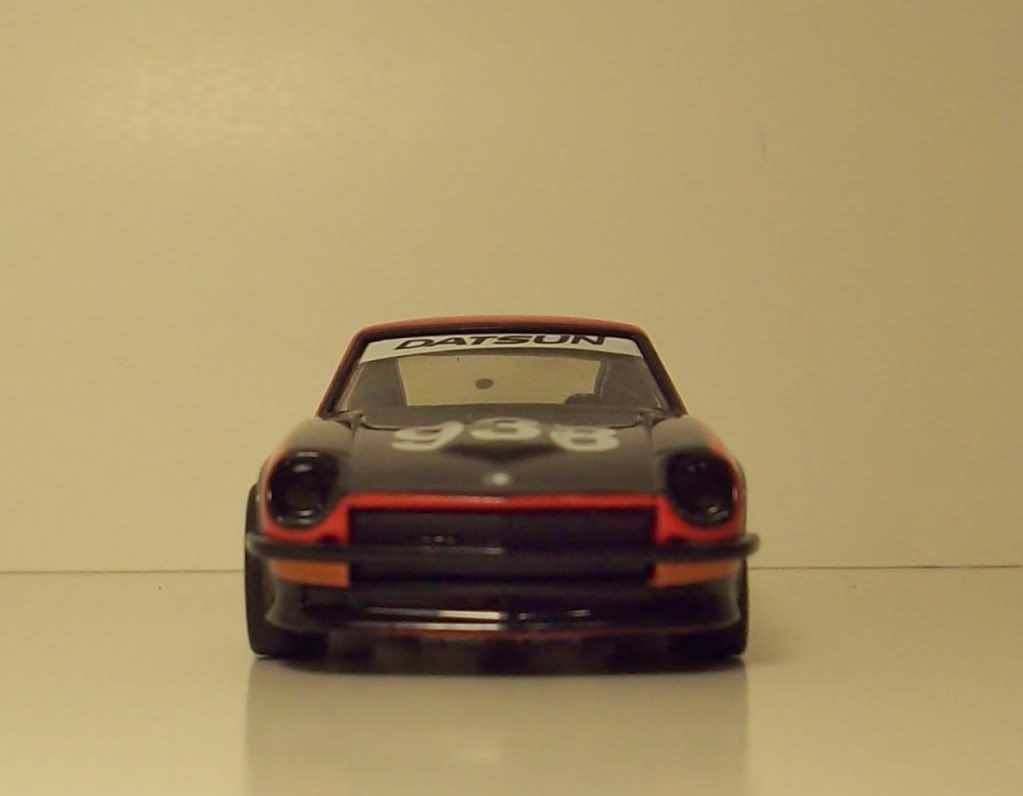
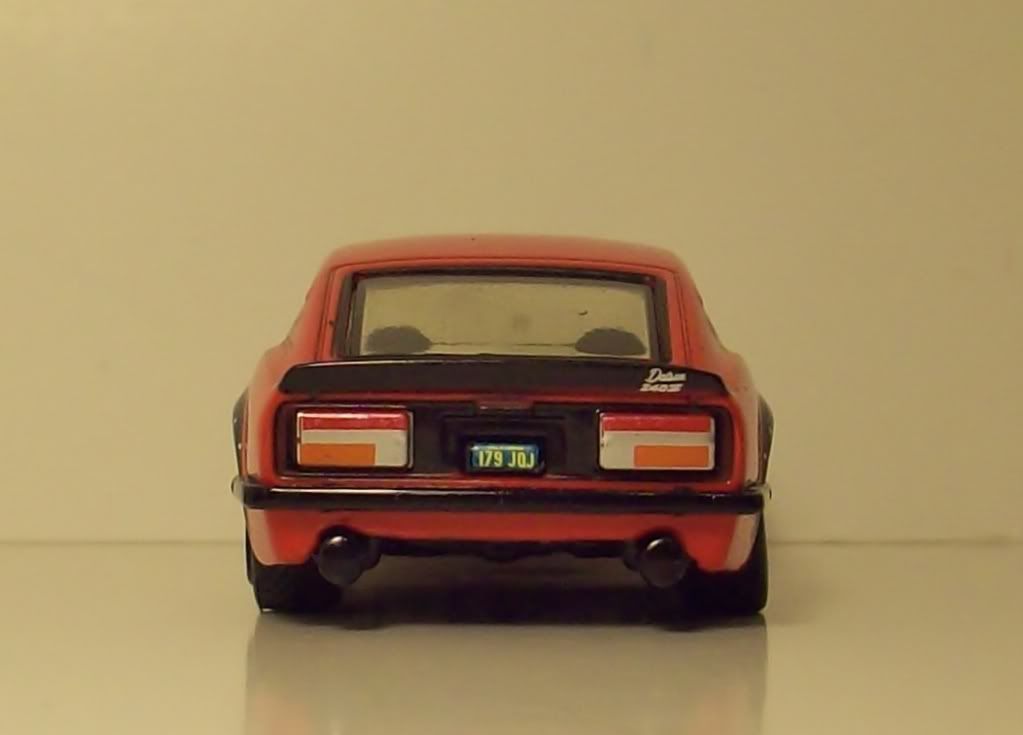
Today's car of the day comes from Firehawk73's collection and is Jada's 1971 Datsun 240Z.
The Nissan S30 (sold in Japan as the Nissan Fairlady Z and in other markets as the Datsun 240Z, then later as the 260Z and 280Z) was the first generation of Z GT 2 seat coupe, and later (beginning in the 1974 model year) also 2+2 hatchbacks produced by Nissan Motors, Ltd. of Japan from 1970 to 1978. It was designed by a team led by Mr. Yoshihiko Matsuo, the head of Nissan's Sports Car Styling Studio. HLS30 was the designation of the left-hand drive model and HS30 for the right-hand drive model.
For more information and pictures of the real car please visit: Datsun 240Z
The sad thing is the article is true- I haven't seen a 240Z (even at a car show) in I don't remember how long.
The 1970 240Z was introduced to the American market by Yutaka Katayama, president of Nissan Motors USA operations, widely known as Mr. K. The 1970 through the mid-1971 model year 240Z was referred to as the Series I. These early cars had many subtle but notable features differing from later cars. The most easily visible difference is that these early cars had a chrome "240Z" badge on the sail pillar, and two horizontal vents in the rear hatch below the glass molding providing flow through ventilation. In mid-1971, for the Series II 240Z cars, the sail pillar emblems were restyled with just the letter "Z" placed in a circular vented emblem, and the vents were eliminated from the hatch panel of the car. Design changes for the U.S. model 240Z occurred throughout production, including interior modifications for the 1972 model year, and a change in the location of the bumper over-riders, as well as the addition of some emission control devices and the adoption of a new style of emissions reducing (and performance compromising) carburetors for the 1973 model year.
The 1970 models were introduced in October 1969, received the L24 2.4 liter engine and a 4-speed manual. A less common 3-speed automatic transmission was optional from 1971 on, and had a "Nissan Full Automatic" badge.
In 2004, Sports Car International named this car number two on the list of Top Sports Cars of the 1970s. One of the most appealing Japanese cars ever produced, it nevertheless disappeared almost entirely from American roads within two decades, presumably because like most Japanese cars of the time it had insurmountable rust issues.
Saturday, September 3, 2011
Car Of The Day: September 3, 2011
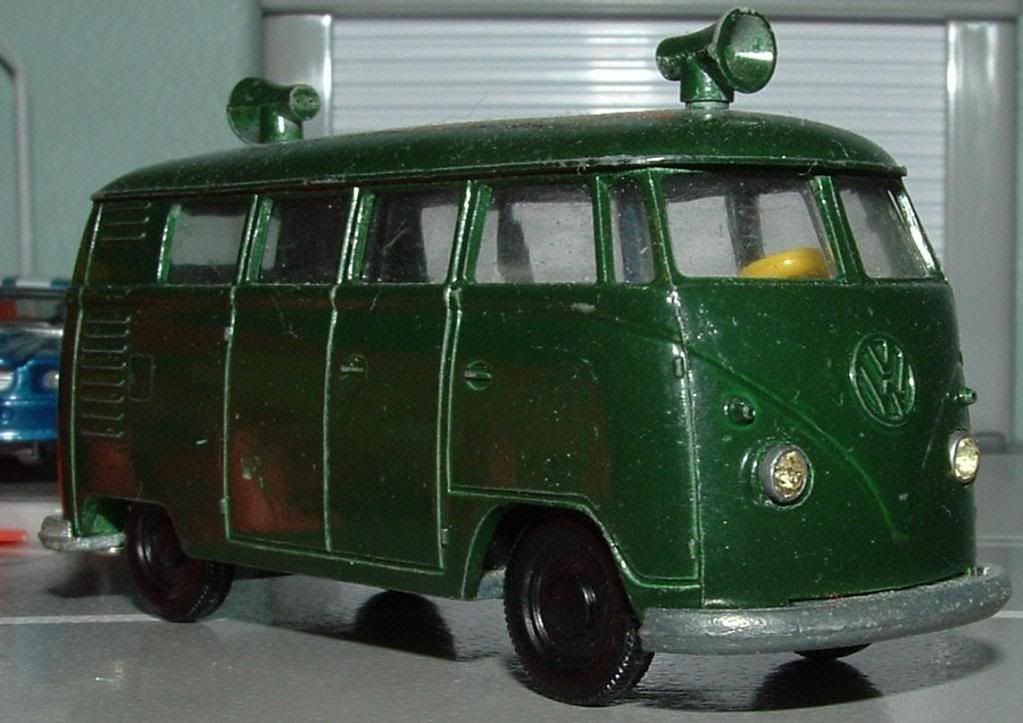
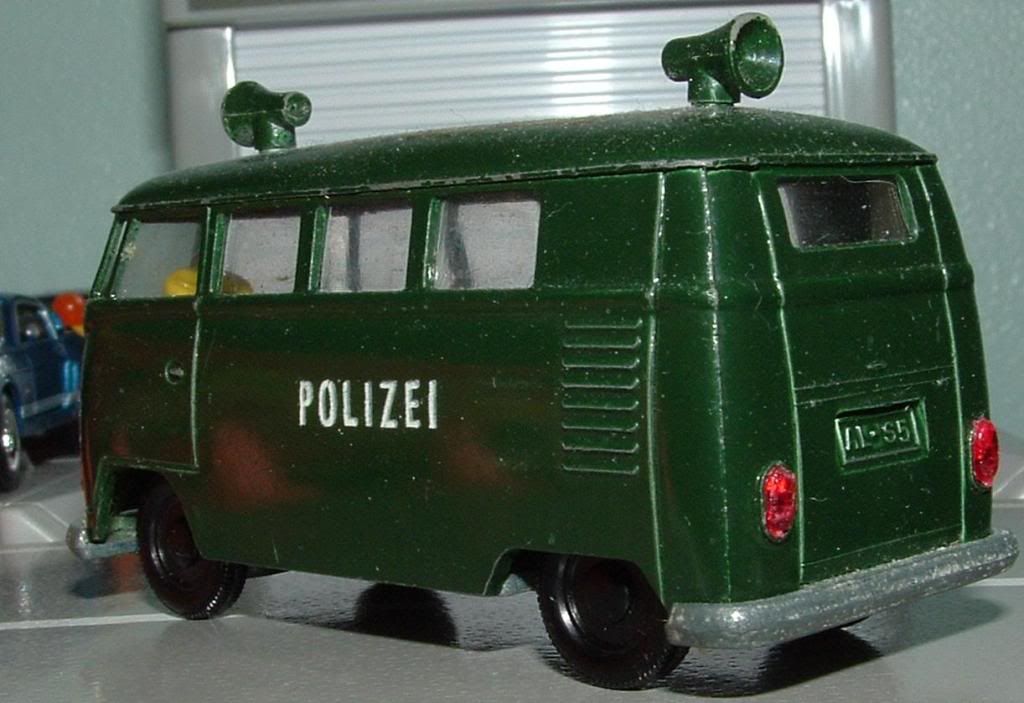
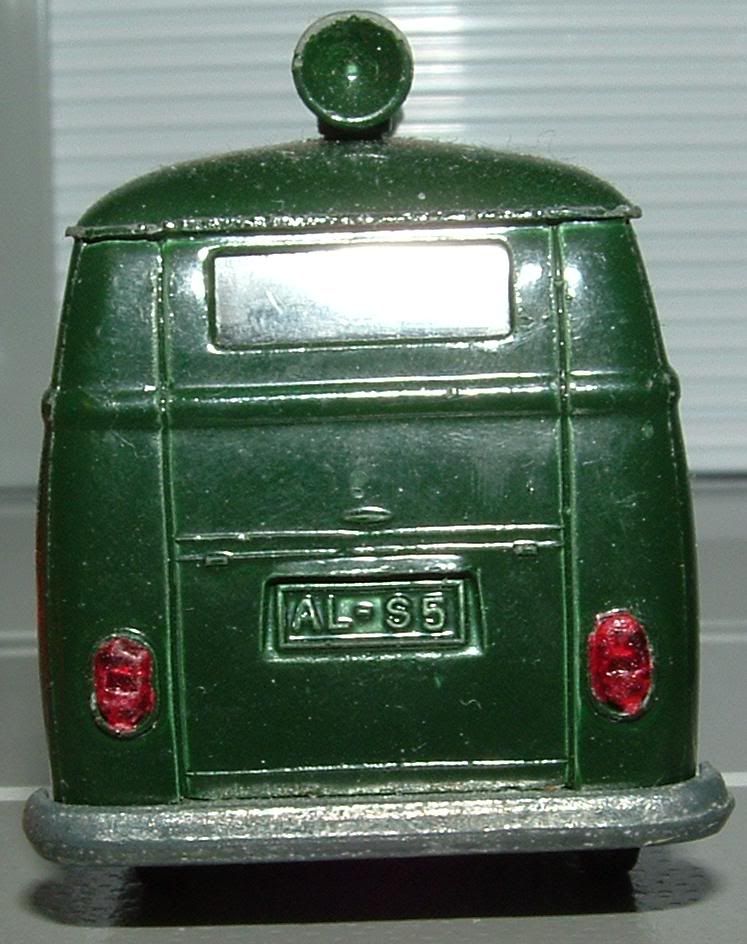
Today's car of the day is Siku's 1964 Volkswagen Type 2 Bus.
The Volkswagen Type 2, officially known as the Transporter or Kombi (campers, short for Kombinationskraftwagen) informally as Bus (US) or Camper (UK), was a panel van introduced in 1950 by German automaker Volkswagen as its second car model – following and initially deriving from Volkswagen's first model, the Type 1 (Beetle), it was given the factory designation Type 2.
As one of the forerunners of the modern cargo and passenger vans, the Type 2 gave rise to competitors in the United States and Europe, including the Ford Econoline, the Dodge A100, and the Corvair 95 Corvan, the latter adopting the Type 2's rear-engine configuration. European competition included the Renault Estafette and the Ford Transit. As of January 2010, updated versions of the Type 2 remain in production in international markets— as a passenger van, as a cargo van, and as a pickup truck.
Like the Beetle, the van has received numerous nicknames worldwide, including the "microbus", "minibus", and, due to its popularity during the counterculture movement of the 1960s, "hippie van".
For more information and pictures of the real car please visit: Volkswagen Type 2
And to wrap up vintage Siku week, we have what I call 'the curve-breaker'. You know that nerdy kid who sits in the front of the class and never gets below 97% on the tests no one else breaks 80% on? In a week full of great pieces from Siku, this one stands out above the rest with its jeweled lights. I'm hoping a VW expert can set me straight on this- the base is labeled 211/212 and what I can glean from Google is that the 211 is the panel version (unfortunately the site that had this info was down but Google had this snippet cached), so is the 212 the passenger version? Also, if I'm reading the article on Wikipedia correctly, this would be considered a Kombi. One thing I'm positive of is that this is a 13-window Bus (I counted). That makes it a 1964-67 model.
The first generation of the Volkswagen Type 2 with the split windshield, informally called the Microbus, Splitscreen, or Splittie among modern fans, was produced from 8 March 1950 through the end of the 1967 model year. From 1950–1956, the T1 was built in Wolfsburg; from 1956, it was built at the completely new Transporter factory in Hanover. Like the Beetle, the first Transporters used the 1100 Volkswagen air cooled engine, an 1,131 cc (69.0 cu in), DIN-rated 18 kW (24 PS; 24 bhp), air-cooled flat-four cylinder 'boxer' engine mounted in the rear. This was upgraded to the 1200 – an 1,192 cc (72.7 cu in) 22 kW (30 PS; 30 bhp) in 1953. A higher compression ratio became standard in 1955; while an unusual early version of the 30 kW (41 PS; 40 bhp) engine debuted exclusively on the Type 2 in 1959. This engine proved to be so uncharacteristically troublesome that Volkswagen recalled all 1959 Transporters and replaced the engines with an updated version of the 30 kW engine. Any 1959 models that retain that early engine today are true survivors. Since the engine was totally discontinued at the outset, no parts were ever made available.
The early versions of the T1 until 1955 were often called the "Barndoor" (retrospectively called T1a since the 1990s), owing to the enormous rear engine cover, while the later versions with a slightly modified body (the roofline above the windshield is extended), smaller engine bay, and 15" roadwheels instead of the original 16" ones are nowadays called the T1b (again, only called this since the 1990s, based on VW's restrospective T1,2,3,4 etc. naming system.). From the 1964 model year, when the rear door was made wider (same as on the bay-window or T2), the vehicle could be referred to as the T1c. 1964 also saw the introduction of an optional sliding door for the passenger/cargo area instead of the outwardly hinged doors typical of cargo vans. This change arguably makes the 1964 Volkswagen the first true minivan, although the term would not be coined for another two decades.
In 1962, a heavy-duty Transporter was introduced as a factory option. It featured a cargo capacity of 1,000 kg (2,205 lb) instead of the previous 750 kg (1,653 lb), smaller but wider 14" roadwheels, and a 1.5 Le, 31 kW (42 PS; 42 bhp) DIN engine. This was so successful that only a year later, the 750 kg, 1.2 L Transporter was discontinued. The 1963 model year introduced the 1500 engine – 1,493 cc (91.1 cu in) as standard equipment to the US market at 38 kW (52 PS; 51 bhp) DIN with an 83 mm (3.27 in) bore, 69 mm (2.72 in) stroke, and 7.8:1 compression ratio. When the Beetle received the 1.5 L engine for the 1967 model year, its power was increased to 40 kW (54 PS; 54 bhp) DIN.
German production stopped after the 1967 model year; however, the T1 still was made in Brazil until 1975, when it was modified with a 1968–79 T2-style front end, and big 1972-vintage taillights into the so-called "T1.5" and produced until 1996. The Brazilian T1s were not identical to the last German models (the T1.5 was locally produced in Brazil using the 1950s and 1960s-era stamping dies to cut down on retooling, alongside the Beetle/Fusca, where the pre-1965 body style was retained), though they sported some characteristic features of the T1a, such as the cargo doors and five-stud 205 mm (8.1 in) PCD) rims.
Among American enthusiasts, it is common to refer to the different models by the number of their windows. The basic Kombi or Bus is the 11-window (a.k.a. three-window bus because of three side windows) with a split windshield, two front cabin door windows, six rear side windows, and one rear window. The DeLuxe model featured eight rear side windows and two rear corner windows, making it the 15-window (not available in Europe). Meanwhile, the sunroof DeLuxe with its additional eight small skylight windows is, accordingly, the 23-window. From the 1964 model year, with its wider rear door, the rear corner windows were discontinued, making the latter two the 13-window and 21-window respectively. The 23- and later 21-window variants each carry the nickname 'Samba', or in Australia, officially 'Alpine'.
Friday, September 2, 2011
Car Of The Day: September 2, 2011
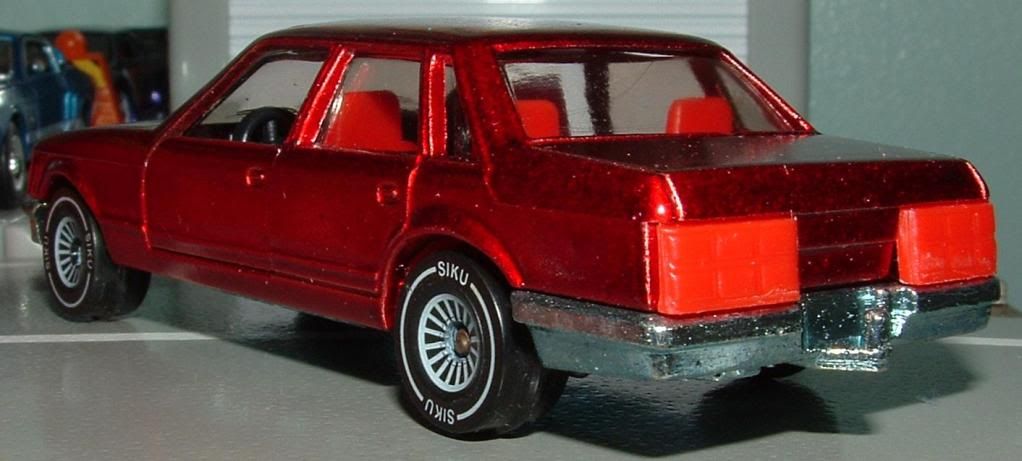
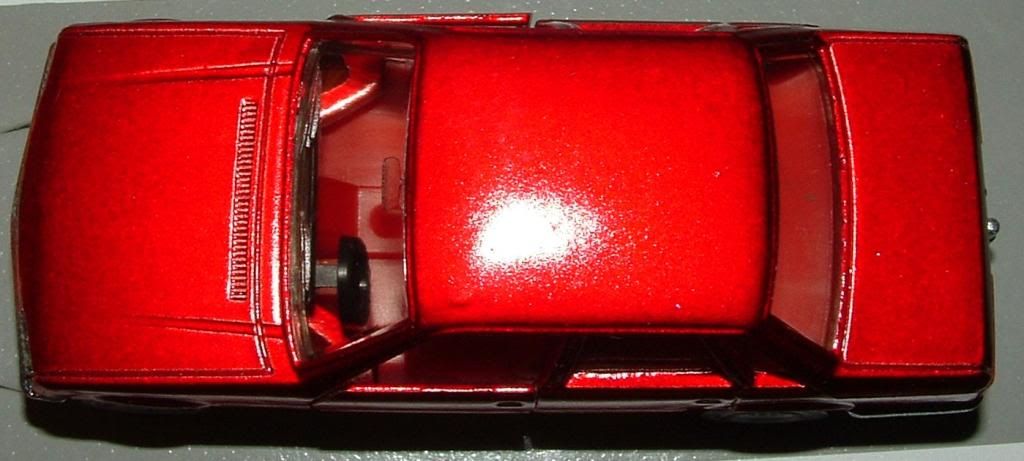
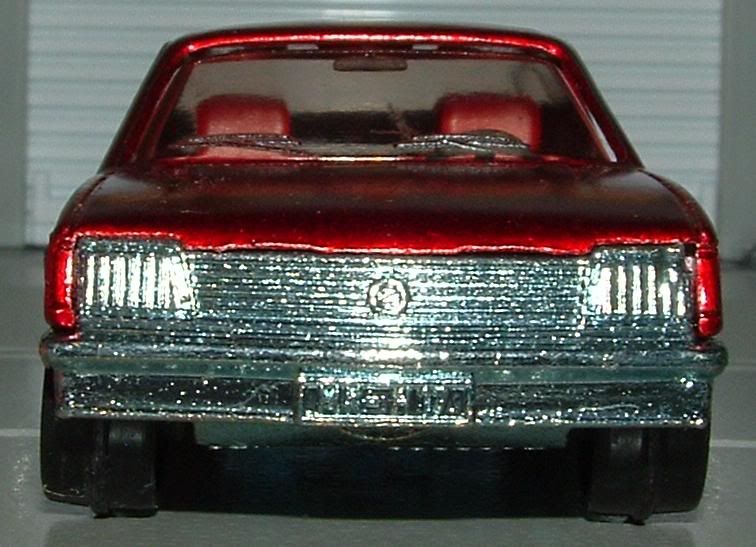
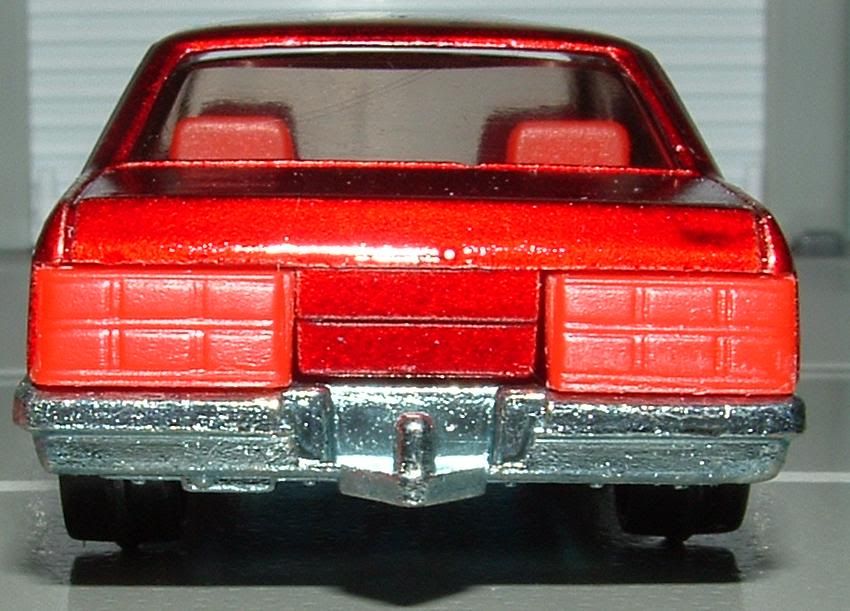
Today's car of the day is Siku's 1980 Opel Senator.
The Opel Senator was a large automobile, two generations of which were sold in Europe by Opel, from 1978 until 1993. A saloon, its first incarnation was also available with a fastback coupé body as the Opel Monza and Vauxhall Royale Coupe.
Through the international divisions of General Motors, it was also known in various markets as the Chevrolet Senator, Daewoo Imperial (in South Korea), Vauxhall Royale (until 1983) and Vauxhall Senator (which took the place of the Royale on Vauxhall models when the Opel brand was phased out from 1983).
The original Senator shared its platform with the smaller Opel Rekord, the latter being lengthened to make the Senator.
The later car, from 1987, shared its base with the Opel Omega, which was again lengthened to produce the Senator.
For more information and pictures of the real car please visit: Opel Senator
And finally the last car from the five pack I picked up at a recent train show. Talk about saving the best for last- this is the car that made this set an instant purchase. On a completely different note, does anyone know of an Opel Monza coupe in small scale? It's based on the Senator and can be seen in the linked Wikipedia article.
The Senator A (the "A" being used for differentiation here, but not a marketed name) was a lengthened version of the Opel Rekord E, complemented by a three-door fastback coupé version on the same platform called the Opel Monza, which was planned as a successor for the Opel Commodore coupé.
The Senator A and Monza were initially sold in the United Kingdom as the Vauxhall Royale (and Vauxhall Royale Coupé), because the Opel marque was not so well established, but they were also under their Opel names. The vehicle was also available in South Africa as the Chevrolet Senator until 1982, when it was re-badged as an Opel. All year models were available in Australia, as the Holden Commodore in Sedan and Wagon variants, though the Monza Coupe was not available. Local racing legend, Peter Brock, had plans to import, modify and market the Opel Monza Coupe as Holden Monza Coupe with the Holden 5 Litre V8 fitted, through his own HDT (Holden Dealer Team) business, but the plans eventually fell through. The Holden models, which were built locally, had different front, rear and interior treatments, with local drivetrain options, including Holden's 3.3 Inline 6 cyl, 4.2 Litre and 5.0 Litre V8 engine options. Holden still markets the Commodore, but on their own Zeta Platform, which the new Camaro is also based upon. Commodore has been Australia's best selling car for the past 16 years.
The engine range for the first phase of the model's life included the 2.0E, 2.5S (and later the fuel-injected E), the 2.8S and the new developed 3.0E, which had 180 PS (132 kW; 178 hp) and 248 N·m (183 lb·ft) with fuel injection. The 3-speed BorgWarner automatic transmission from the Commodore range needed to be modified to cope with the new and improved power outputs. Opel's own 4-speed manual transmission was not up to the job and, instead of putting in a more modern 5-speed manual gearbox, Opel turned to transmission producer Getrag, and installed their 264 4-speed manual gearbox in the early Monzas. This was soon replaced with the Getrag 240 for the 2.5 and 2.8 engines, and the Getrag 265 for the 3.0E; both 5-speed manual gearboxes.
The straight-six engines were all of the CIH (camshaft in head) same design earlier used in the Commodore models. The CIH configuration is originated from the 1,7 and 1,9 litre straight 4 engines that was first used in the Opel Kadett and Rekord models in 1966, and subsequently was an engine layout that stayed in the Opel cars up until 1993 (the last CIH engine factory mounted was a 2,4 litre straight 4 CIH used in the Opel Frontera).
With the 3.0 litre engine, the Monza was the fastest car Opel had built up until then, capable of speeds of 215 km/h (134 mph), and 0–100 km/h (0–62 mph) in 9.5 seconds.
The original Senator and Monza were face-lifted in the end of 1982. In the UK, the Senator "A2" (as it is sometimes referred to) initially sold only as an Opel, before being re-badged for the UK (as a Vauxhall) in 1984. The A2 Monza was only sold as an Opel.
The facelifted car looked similar to its predecessor, with relatively minor changes: headlights increased in size, and chrome parts were changed to a matt black or colour-coded finish.
Interiors were improved, and engines changed. Now, straight-4 CIH 2.0E and 2.2E engines from the Rekord E2 were available. The 2.5E was given a new Bosch fuel injection system. The 2.8S was taken out of production, and the 3.0E and a new 3.0H engines were at the top of the range. The 3.0E received upgraded Bosch fuel injection. A 2.3-litre turbodiesel (shared with the Rekord) became available in 1984, and the next year a rare supercharged version (Comprex) was made available. These were officially built by Irmscher rather than Opel. From September 1985 until the end of production in late summer 1987 a catalyzed version of the 3.0E was available, with power down to 156 PS (115 kW).
Thursday, September 1, 2011
Car Of The Day: September 1, 2011
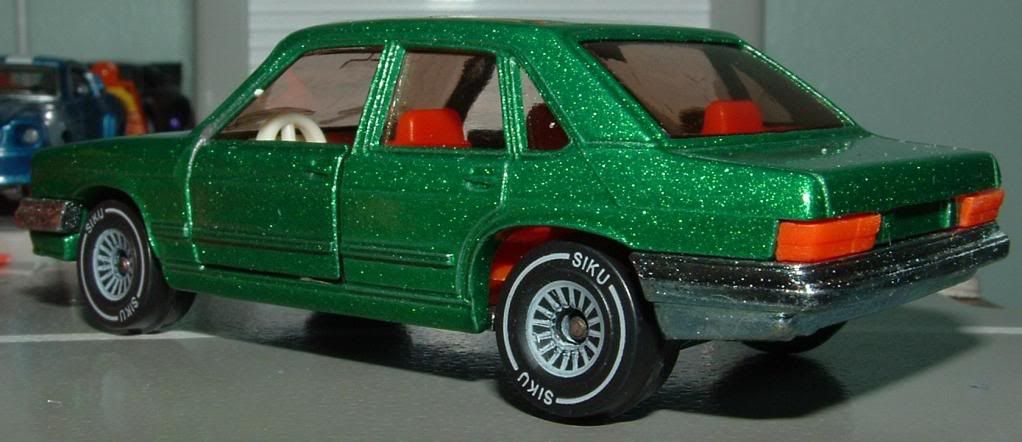
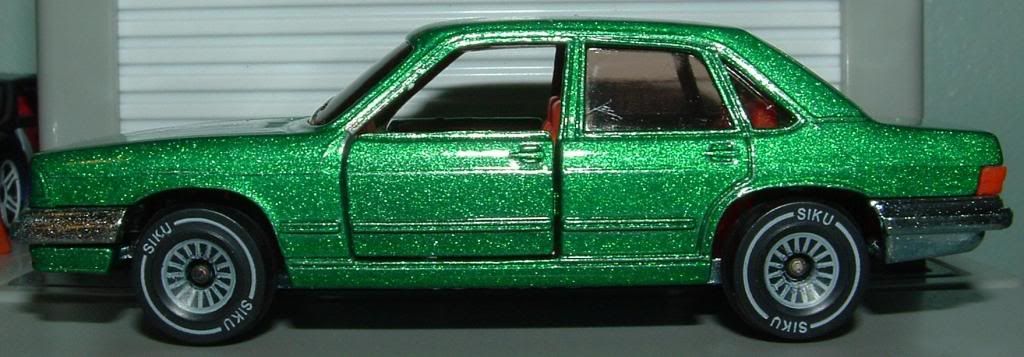
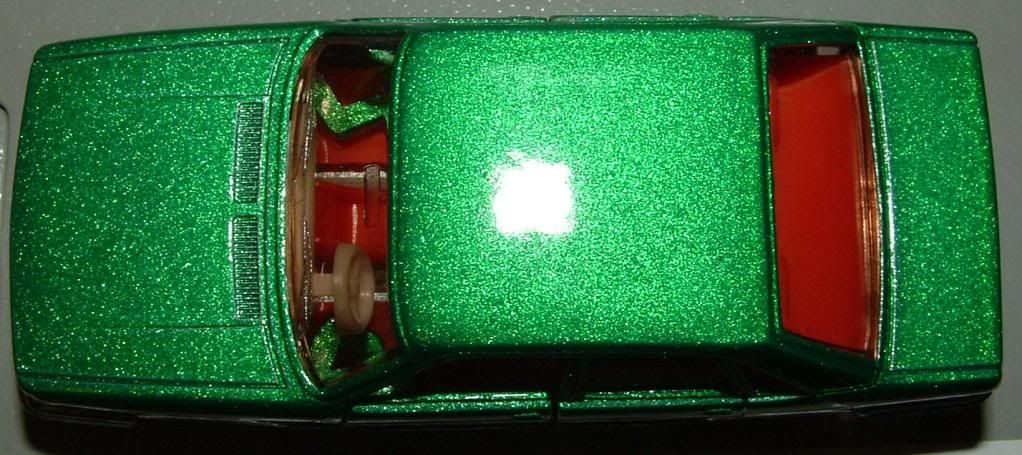
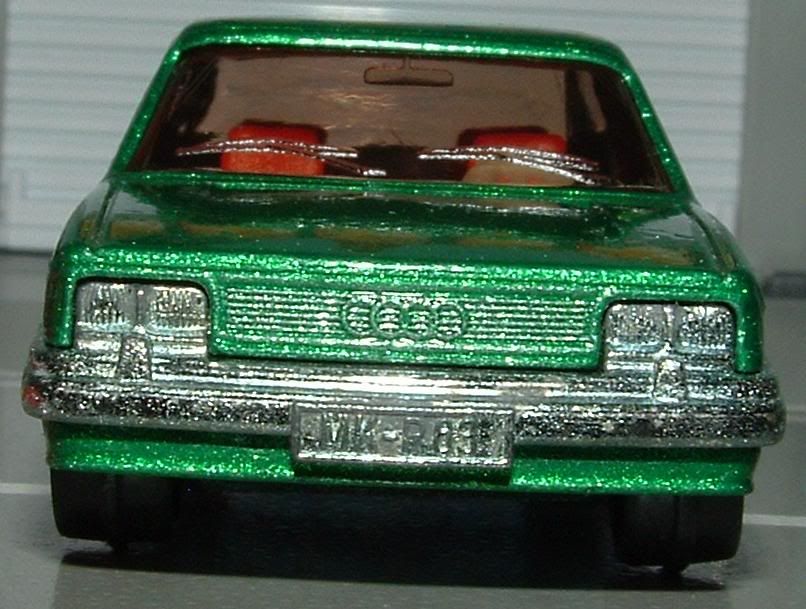
Today's car of the day is Siku's 1980 Audi 200.
The Audi 100 and Audi 200 are mid-sized automobiles manufactured for model years 1968–1994 by Audi, a division of the Volkswagen Group. The C3 model of the Audi 100 was sold in the United States as the Audi 5000 until 1988.
For more information and pictures of the real car please visit: Audi 200
Another car from the five pack I picked up at a recent train show.
The restyled C2 Audi 100 was launched in 1976, with an in-line five-cylinder engine (the first gasoline 5 in the world – Mercedes-Benz had shown the way in 1974 with their three litre diesel 5-cyl in the Mercedes-Benz C111). It was initially a 100 PS (74 kW) engine offering "6-cylinder power and 4-cylinder economy", and later upgraded to 136 PS (100 kW).
The Coupé was discontinued, but a five-door hatchback model, the 100 Avant, was launched in August 1977 as part of this generation. The mainstay of the range remained the four-door sedan model. A two-door sedan version was offered, primarily on the domestic market, from 1977, but by now there was little demand, even in Germany, for large two door sedans: few of these two door Audi 100 C2s were sold.
At the end of September 1977, the Audi 100 became the manufacturer's first model to reach a production level of 1,000,000 units. The millionth Audi 100 was a hatchback Audi 100 Avant assembled not at the company's main Ingolstadt plant but to the west, at the Neckarsulm factory which, since the demise of the mainstream volume models from the NSU range, had been concentrating on providing additional production capacity for the fast selling Audi range.
During model years 1982–1987, Audi's U.S. sales fell after a series of recalls of Audi 5000 models associated with reported incidents of sudden unintended acceleration linked to six deaths and 700 accidents. At the time, National Highway Traffic Safety Administration (NHTSA) was investigating 50 car models from 20 manufacturers for sudden surges of power.
60 Minutes aired a report titled Out of Control on November 23, 1986, featuring interviews with six people who had sued Audi after reporting unintended acceleration, including footage of an Audi 5000 ostensibly displaying a surge of acceleration while the brake pedal was depressed. Subsequent investigation revealed that 60 Minutes had not disclosed they had engineered the vehicle's behavior – fitting a canister of compressed air on the passenger-side floor, to pump fluid via a hose to a hole drilled into the transmission – the arrangement executed by one of the experts who had testified on behalf of a plaintiff in a then pending lawsuit against Audi's parent company.
Audi initially responded by suggesting that the drivers of the cars involved in the incidents were at fault, because they had stepped on the accelerator pedal rather than the brake. Subsequently, the National Highway Traffic Safety Administration (NHTSA) concluded that the majority of unintended acceleration cases, including all the ones that prompted the 60 Minutes report, were caused by driver error such as confusion of pedals. CBS did not acknowledge the test results of involved government agencies, but did acknowledge the similar results of another study. However, Audi's assertion that the driver was at fault was a poor public relations strategy. In 2009, when Toyota was involved in similar unintended acceleration problems, the company spokesman said “the lesson from Audi is no matter how convinced you are that the driver has made a mistake, it is very sensitive to suggest.” Toyota's press release was carefully crafted such that it "acknowledged rare problems with its accelerators, it was leaving itself room to argue later that sometimes drivers were at fault – while pointedly avoiding saying so directly".
With the series of recall campaigns, Audi made several modifications; the first adjusted the distance between the brake and accelerator pedal on automatic-transmission models. Later repairs, of 250,000 cars dating back to 1978, added a device requiring the driver to press the brake pedal before shifting out of park. As a byproduct of sudden unintended acceleration, vehicles now include gear stick patterns and brake interlock mechanisms to prevent inadvertent gear selection.
Audi’s U.S. sales, which had reached 74,061 in 1985, dropped to 12,283 in 1991 and remained level for three years. – with resale values falling dramatically. Audi subsequently offered increased warranty protection and renamed the affected models – with the 5000 becoming the 100 and 200 in 1989. The company only reached the same level of U.S. sales again by model year 2000.
As of early 2010, a class-action lawsuit – dealing with a charge that on account of the sudden acceleration controversy, Audi models had lost resale value – filed in 1987 by about 7,500 Audi Audi 5000-model owners remains unsettled and is currently contested in county court in Chicago after appeals at the Illinois state and U.S. federal levels.
Subscribe to:
Posts (Atom)