Friday, July 8, 2011

Car of the Day: July 8, 2011

Yesterday, only one person had a guess at this week's topic - but as you can see today, it is definitely not British Sports Cars. So put your thinking caps on.


Today's Car of the Day is the Majorette Autobianchi A112 Abarth.


Wikipedia

The Autobianchi A112 is a supermini produced by the Italian automaker Autobianchi. It was developed using the mechanicals which subsequently underpinned the Fiat 127. It was introduced in 1969, as a replacement for the Bianchina and Primula, and was built until 1986, when it made way for the more modern Autobianchi Y10 (branded in most export markets as the Lancia Y10). Over 1.2 million A112s were produced in Autobianchi's Milan factory.


The most interesting version was the A112 Abarth, introduced in 1971. It was prepared by the motorsports division of the Fiat Group, at first with a 982 cc engine, obtained increasing the stroke, coupled to a sportive exhaust, a twin carburetor, a different camshaft. In 1975, displacement was increased to 1049 cc, while power climbed from 58 PS (43 kW; 57 bhp) to 70 PS (51 kW; 69 bhp) at 6600 rpm, for a weight of only 700 kg (1,543 lb). The 1975 model was also the first A112 to use a 5-speed manual gearbox. These changes turned the A112 into a nervous machine, much admired by young performance enthusiasts. The car was entered in various rallying events throughout Europe and even spawned a one-make trophy.

Starting from 1982 this car was also badged as Lancia A112


For more information and pictures of the real car please visit: http://en.wikipedia.org/wiki/Autobianchi_A112


This car not only spawned the hugely successful Fiat 127, but also a bunch of other derivatives such as the SEAT 1200 Coupe and even the Yugo (although that contraption really wasn't Autobianchi's fault)


I really like this casting with its opening hatch and even its oversized trailer hook. I've got a trailer with some racing bicycles that came with it. Also, this thing was one of the original hot hatches, even way before the first Golf GTI. And that trademark Scorpion is a really nice touch.

Thursday, July 7, 2011

Car of the Day: July 7, 2011

For my five days worth of COTD there will be a theme - first one to guess will win - tadaa - nothing, because it will be rather easy. So here goes:


Today's Car of the Day is the Husky Sunbeam
Alpine.


Wikipedia

The original Alpine was launched in 1953 as the first vehicle from Sunbeam-Talbot to bear the Sunbeam name alone since the 1935 takeover of Sunbeam and Talbot by the Rootes Group.

Kenneth Howes and Jeff Crompton were tasked with doing a complete redesign in 1956, with the goal of producing a dedicated sports car aimed principally at the US market. Ken Howes contributed some 80% of the overall design work, which bears more than incidental resemblance to the early Ford Thunderbird

The "Series" Alpine started production in 1959. The car made extensive use of components from other Rootes Group vehicles and was built on a modified floorpan from the Hillman Husky estate car.[3] The running gear came mainly from the Sunbeam Rapier, but with front disc brakes replacing the saloon car's drums. An overdrive unit and wire wheels were optional. The suspension was independent at the front using coil springs and at the rear had a live axle and semi elliptic springing.


For more information and pictures of the real car please visit: http://en.wikipedia.org/wiki/Sunbeam_Alpine


Mint Huskys tend to be rather expensive these days, so I have to settle for a slightly pre-loved one - unless I happen to stumble across a bargain.


Wikipedia

Series II 1960–1963

The Series II of 1960 featured an enlarged 1592 cc engine producing 80 bhp and revised rear suspension but there were few other changes. When it was replaced in 1963, 19,956 had been made.[1]

A Series II with hardtop and overdrive was tested by The Motor magazine in 1960, which recorded a top speed of 98.6 mph (158.7 km/h), acceleration from 0–60 mph (97 km/h) in 13.6 seconds and a fuel consumption of 31.0 miles per imperial gallon (9.11 L/100 km; 25.8 mpg-US). The test car cost £1,110 including taxes.

Series III 1963–1964

The Series III was produced in open and removable hardtop versions. On the hardtop version the top could be removed but no soft-top was provided as the area it would have been folded into was occupied by a small rear seat. Also, the 1592 cc engine developed less power. To provide more room in the boot, twin fuel tanks in the rear wings were fitted. Quarter light were fitted to the windows. Between 1963 and 1964 5863 were made.

Series IV 1964–1965

The lower-output engine option was now dropped with convertible and hardtop versions sharing the 82 bhp engine with single Solex carburettor. A new rear styling was introduced with the fins largely removed. Automatic transmission with floor mounted control became an option but was not popular. From Autumn 1964 a new manual gearbox with synchromesh on first gear was adopted in line with its use in other Rootes cars. 12,406 were made.

Series V 1965–1968

The final version had a new five-bearing 1725 cc engine with twin Zenith-Stromberg semi-downdraught carburettors producing 93 bhp.[1] There was no longer an automatic transmission option. 19,122 were made.


Johnny Lightning also made a version of this car - I don't know of any others.


Wednesday, July 6, 2011

Car Of The Day: July 6, 2011


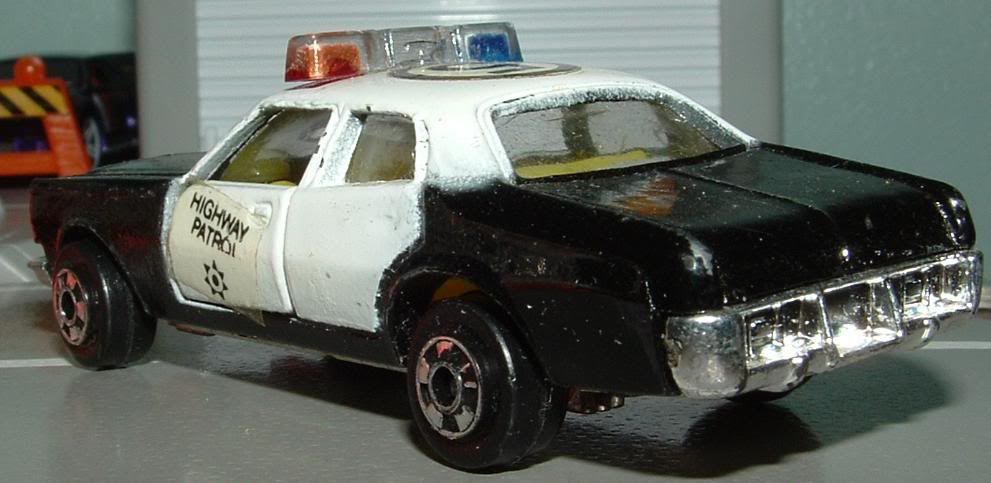
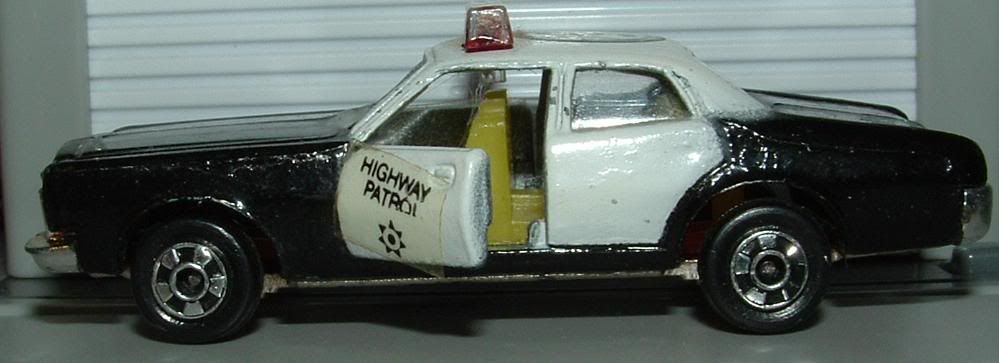
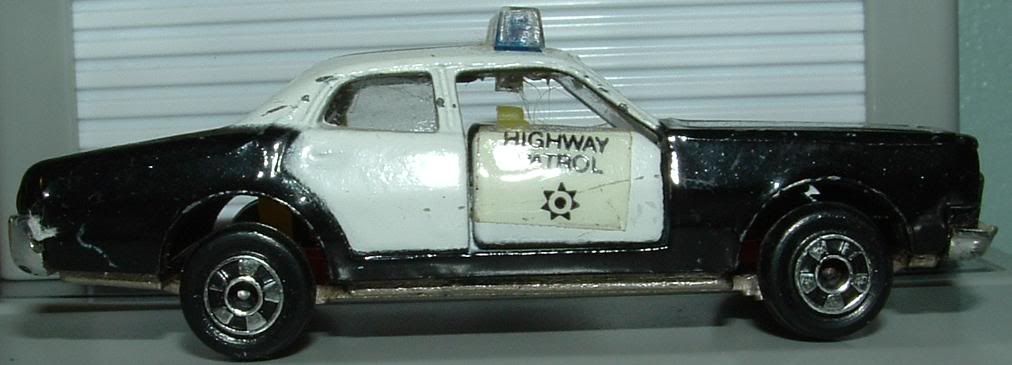
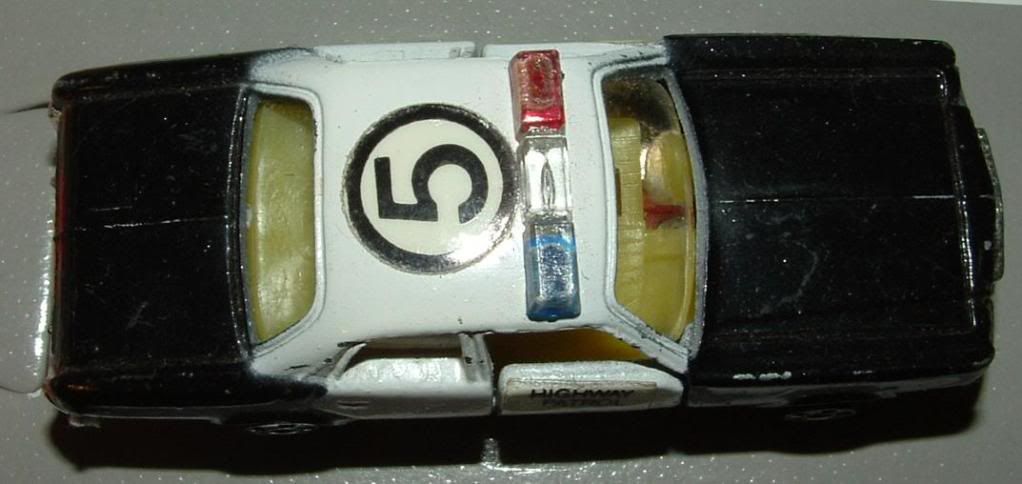
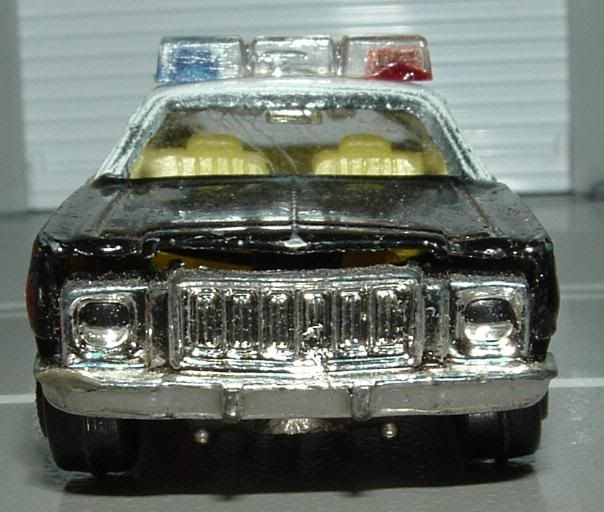
Today's car of the day is Zylmex's 1975 Plymouth Fury.


The Plymouth Fury is an automobile which was produced by the Plymouth division of the Chrysler Corporation from 1956 to 1978. The Fury was introduced as a premium-priced model designed to showcase the line, with the intent to draw consumers into showrooms.

The word "fury" is a type of anger, inspired by the Furies, mythological creatures in Ancient Greek and Ancient Roman mythology.


For more information and pictures of the real car please visit: Plymouth Fury


This is an easy to find casting, but a hard one to find in nice shape.  Here's one that's in great shape, but the decals are on crooked and the grill is barely hanging on because the body was riveted to the base incorrectly.


In 1975, Chrysler moved the Fury nameplate to Plymouth's redesigned mid-size models that had previously been marketed as the Satellite. The "Road Runner" was offered as the top-line model of the redesigned coupe, but was moved to the Plymouth Volare line the following year. The full-sized Plymouth then became known as the Plymouth Gran Fury. The Gran Fury was dropped after 1977, and the mid-sized models were dropped after 1978, replaced in Canada by the rebadged Dodge Diplomat model called the Plymouth Caravelle (not the be confused with the E-body Plymouth Caravelle from 1983–1988). There was no 1979 Fury, Gran or otherwise.

Only minor styling changes were made between 1975 and 1978, most notably in 1977 from dual round headlights to a quad stacked square arrangement (see photo). Front turn signals moved from the outboard edges of the grille to cutouts in the front bumper. Tail lights added an amber turn lens in favor of the previous red. The 1975 Fury shared its B-body and unibody structure with the Dodge Coronet and the corporation's new personal-luxury coupes including the Chrysler Cordoba and Dodge Charger SE. Sedans and wagons, which continued with their basic 1971 bodyshells, rode on a 118 in (3,000 mm) wheelbase, while coupes — which were restyled with new and more formal sheetmetal and rooflines — rode on the 115 in (2,900 mm) wheelbase.

Fury was offered in three basic subseries for 1975 in sedans and coupes and two for the station wagon. The sedan was offered in base, Custom and Salon models, with interior/exterior trim ranging from austere to luxurious. The Salon featured plush velour bench seats with recliners and folding armrests and carpeted trunks, along with a spring-loaded hood ornament with the Plymouth logo. In addition to the Road Runner, the Fury coupes were offered in base, Custom and Sport models. The "Sport" was the top-line coupe featuring body pinstriping on the upper door and front and rear fenders, interiors with all-vinyl bucket seats and center cushion and armrest, or optional center console; or split bench seats with armrest, along with plusher shag carpeting on floor and door panels plus lower door carpeting. The wagons were available as either the Fury Suburban or Fury Custom Suburban. Engine offerings included the base 225 in³ Slant Six which was standard on all models except Fury Sport, Road Runner and station wagons, all of which came with the 318 in³ V8 as the base engine which was optional on other models. Optional engines on all models included 360 and 400 in³ V8s with two- or four-barrel carburetor, and the 440 four-barrel was only as a "police" option on four-door sedans. Transmission offerings included a standard three-speed manual or optional TorqueFlite automatic.

The 1976 Fury saw very few appearance changes from the previous year other than the availability of a dual opera window roof on Sport Fury coupes. Engine/transmission offerings were also unchanged except that the 360 two-barrel V-8 was now the standard engine on station wagons along with the TorqueFlite automatic transmission, both items of which were optional on other models.

For 1977, the Fury received a new front end with a chrome vertical bar grille and outline along with stacked rectangular headlights. Model and drivetrain offerings were unchanged from 1976 except that the Slant Six now had two-barrel carburetion replacing the one-barrel pot of previous years and was now standard on the Sport Fury coupe. Of course V-8 engines were still offered including the 318 two-barrel, 360 two- or four-barrel and 400 two- or four-barrel. The 440 four-barrel V-8 was still only offered in four-door models as part of the police package.

The 1978 Fury was now Plymouth's largest car as the C-body Gran Fury was dropped after the 1977. TorqueFlite automatic transmission and power steering were now standard on all Fury models and the same selection of V-8 engines was still available. Very few appearance changes were made from 1977, and this would turn out to be the final year for the Fury (and similar-bodied Dodge Monaco, which it was renamed in 1977 from Coronet, while the big Dodge became the Royal Monaco in 1977 before it was dropped after that one year). The personal-luxury coupes based on the B-body including the Chrysler Cordoba and Dodge Magnum (renamed from Charger in 1978) would soldier on for one more year until they were downsized (and renamed Mirada for the Dodge version) in 1980 to the M-body platform used for the Dodge Diplomat and Chrysler LeBaron.


Kudos to Zylmex for making the Fury instead of the Coronet done by both Tomica and Yat Ming.  I believe all three are based on the Tomica tooling.

Tuesday, July 5, 2011

Car Of The Day: July 5, 2011


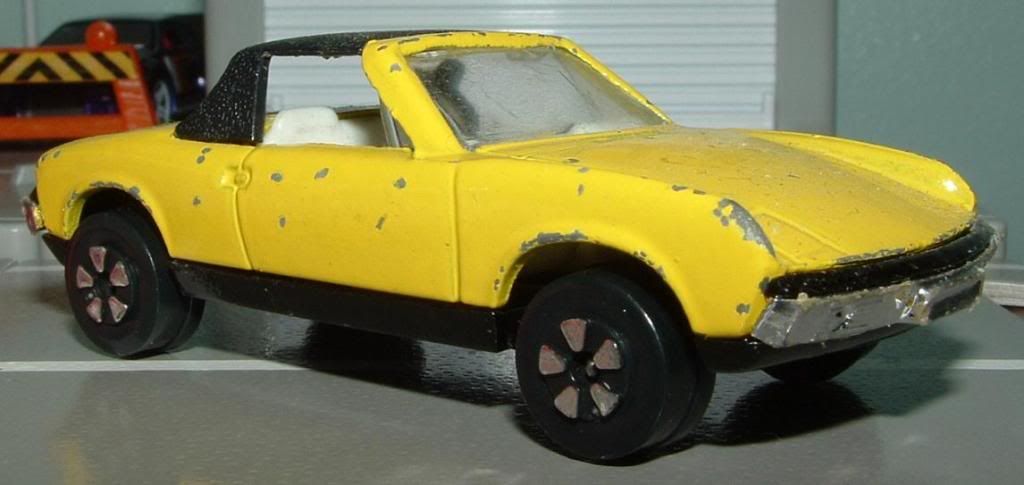
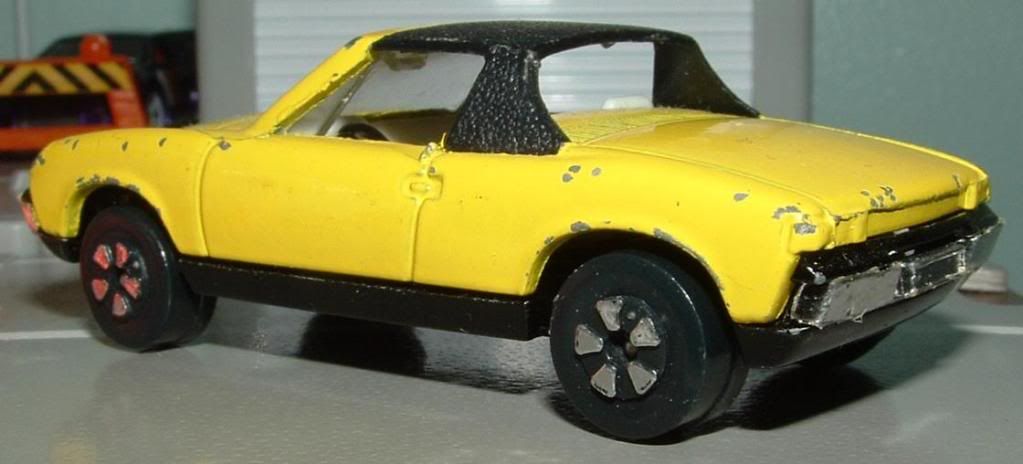
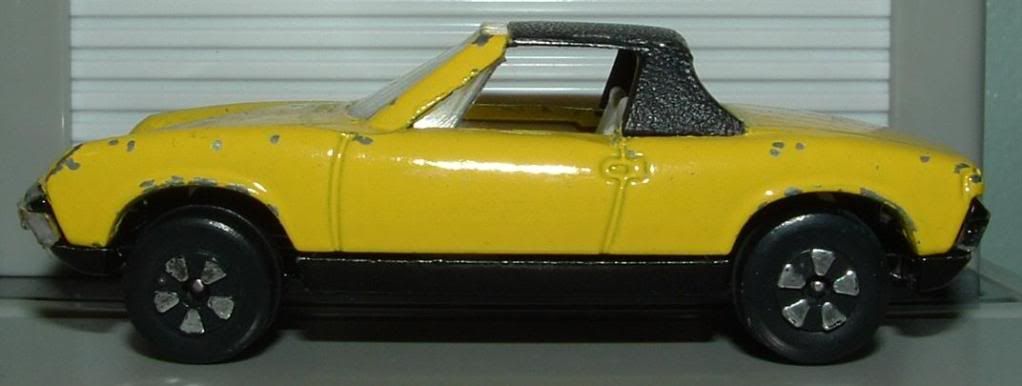
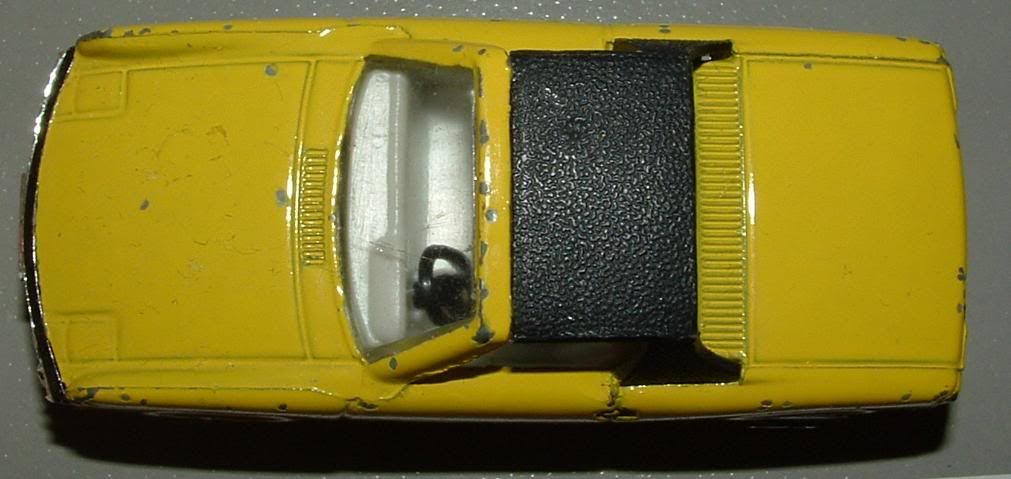
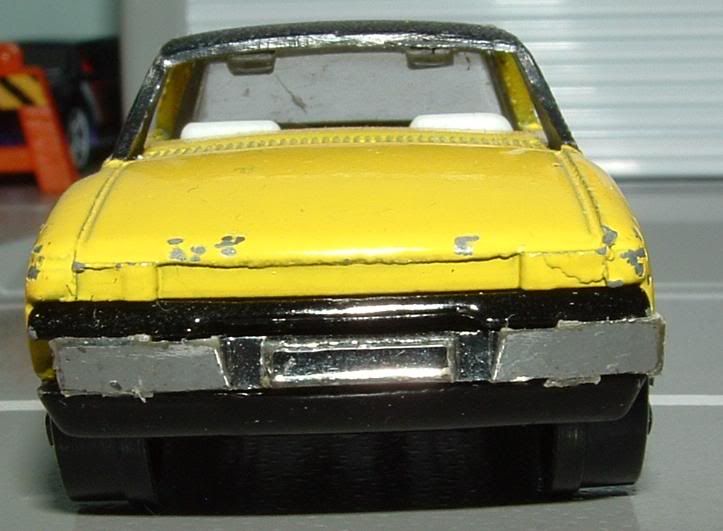
Today's car of the day is Playart's 1972 Porsche 914/4 ("Volkswagen Porsche").


The Porsche 914 or VW-Porsche 914 is a mid-engined, targa-topped two-seat roadster designed, manufactured and marketed collaboratively by Volkswagen and Porsche from 1969 to 1976.


For more information and pictures of the real car please visit: Porsche 914


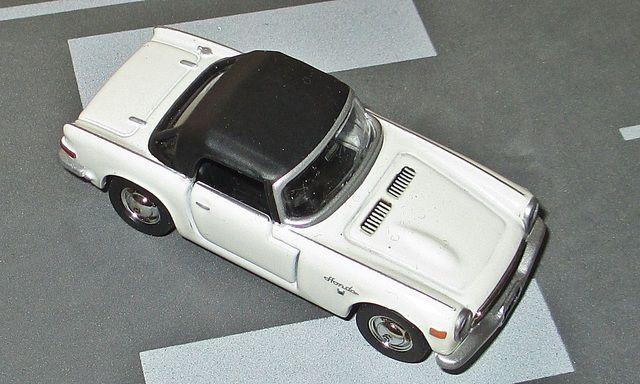
Oh boy, where do I start with this one?  I had this model as a child.  And I'm extremely blessed to have the bulk of my childhood collection still intact.  This one, however, is not my childhood car.  Playart made the mistake (well, it's not really a mistake since it is somewhat accurate) of calling this one "Volkswagen Porsche".  As a five year old I knew enough to know that "Volkswagen doesn't make Porsche, Porsche makes Porsche!" and decided that this couldn't be a real car.  [JEREMY CLARKSON]Therefore, it needed to die.[/JEREMY CLARKSON]  This car featured a seperate vinyl roof piece in black, which made it look remarkably similar to the dozens of '70s cars that were routinely getting squashed in monster truck racing during the 1980s.  You can guess where this is going...  I stepped on it.  Jumped on it.  Flattened it every which way I could.  The front windshield eventually shattered and I can't remember how the vinyl roof faired, but I do remember this one being one of my favorite cars to flatten with my Matchbox Superchargers monster trucks.  It never made the move from New Jersey to Pennsylvania.  I had it in a bag of other "junk cars" (including some pieces I really wish I still had!) that were supposed to come along with us, but I left it sit at the top of the stairwell where I figured I would remember it.  I didn't.  There were also some other cars in the basement that didn't make it either.  *Sighs*  Aside from those, everything else from my childhood made it intact to my new home!  This is a replacement picked up at the York toy show in 2006.


By the late 1960s, both Volkswagen and Porsche were in need of new models; Porsche was looking for a replacement for their entry-level 912, and Volkswagen wanted a new range-topping sports coupe to replace the Karmann Ghia. At the time, the majority of Volkswagen's developmental work was handled by Porsche, part of a setup that dated back to Porsche's founding; Volkswagen needed to contract out one last project to Porsche to fulfill the contract, and decided to make this that project. Ferdinand Piëch, who was in charge of research and development at Porsche, was put in charge of the 914 project.
Originally intending to sell the vehicle with a flat four-cylinder engine as a Volkswagen and with a flat six-cylinder engine as a Porsche, Porsche decided during development that having Volkswagen and Porsche models sharing the same body would be risky for business in the American market, and convinced Volkswagen to allow them to sell both versions as Porsches in North America.

On March 1, 1968, the first 914 prototype was presented. However, development became complicated after the death of Volkswagen's chairman, Heinz Nordhoff, on April 12, 1968. His successor, Kurt Lotz, was not connected with the Porsche dynasty and the verbal agreement between Volkswagen and Porsche fell apart.

In Lotz's opinion, Volkswagen had all rights to the model, and no incentive to share it with Porsche if they would not share in tooling expenses. With this decision, the price and marketing concept for the 914 had failed before series production had begun. As a result, the price of the chassis went up considerably, and the 914/6 ended up costing only a bit less than the 911T, Porsche's next lowest price car. The 914/6 sold quite poorly while the much less expensive 914-4 became Porsche's top seller during its model run, outselling the Porsche 911 by a wide margin with over 118,000 units sold worldwide.

Monday, July 4, 2011

Car Of The Day: July 4, 2011


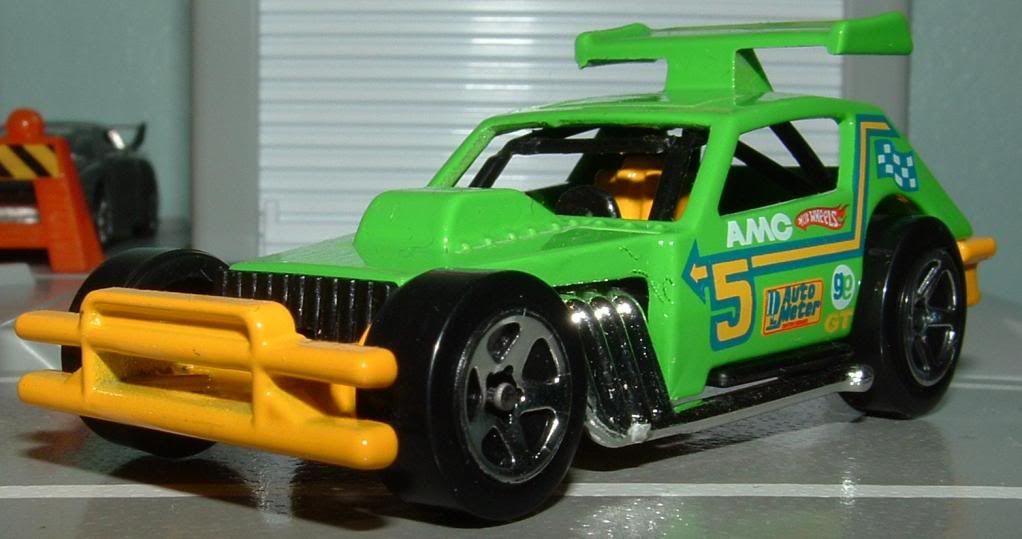
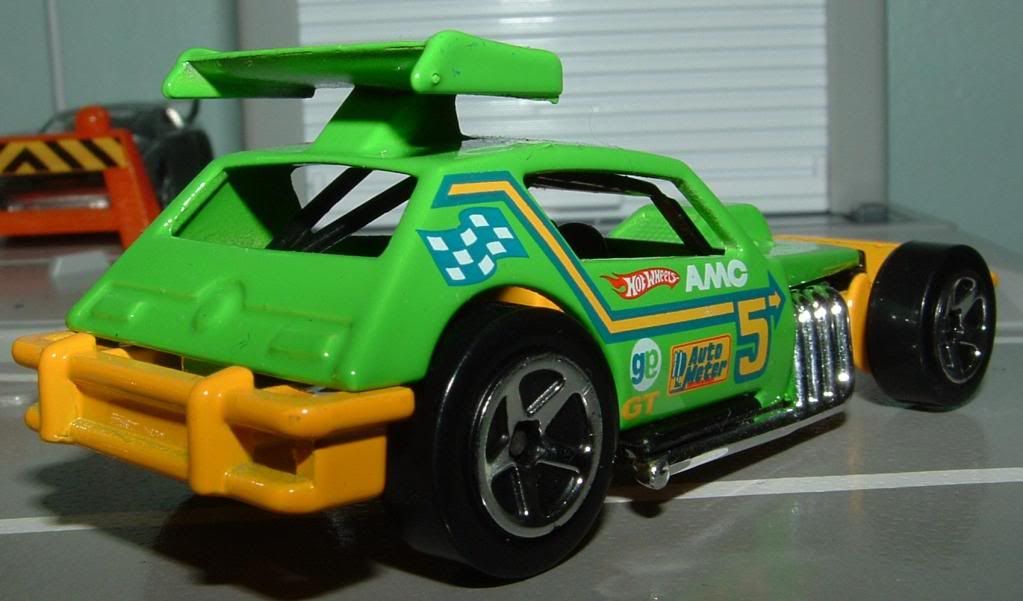
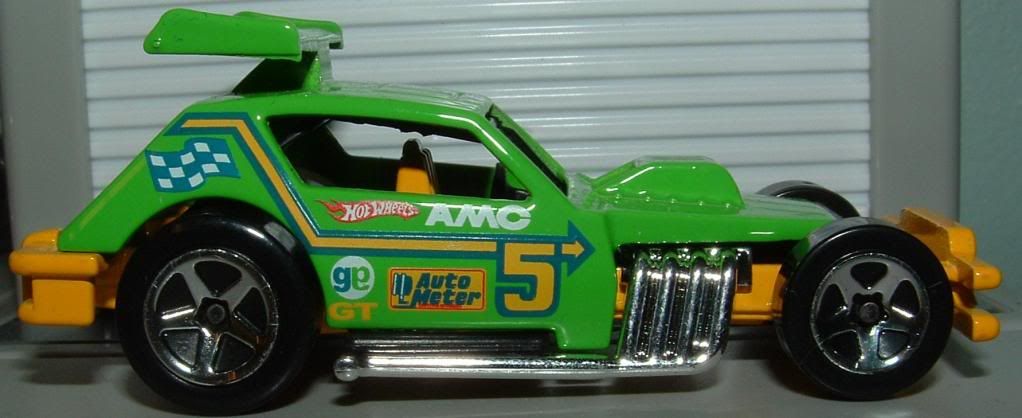
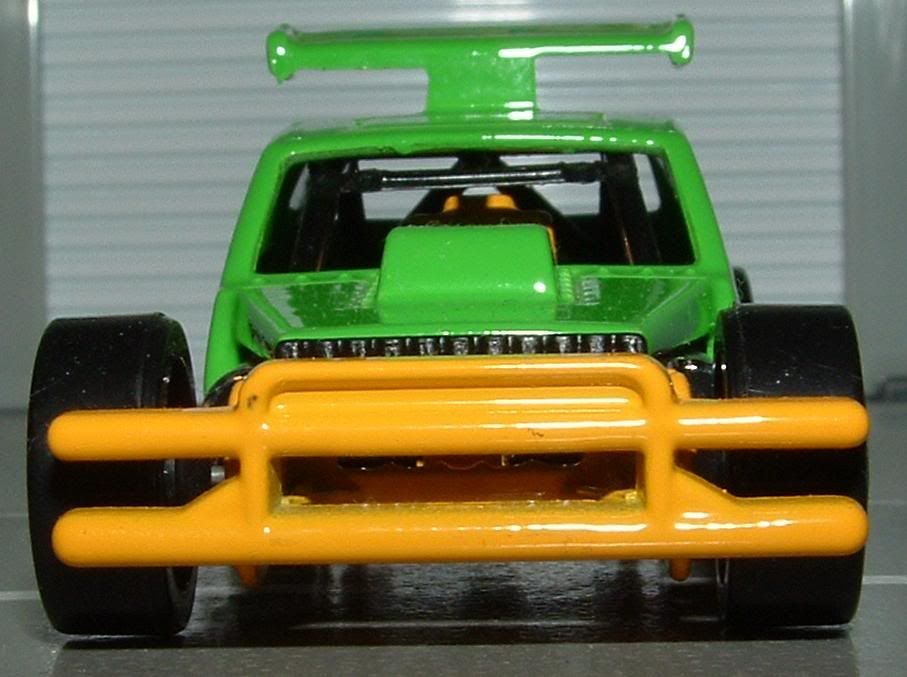
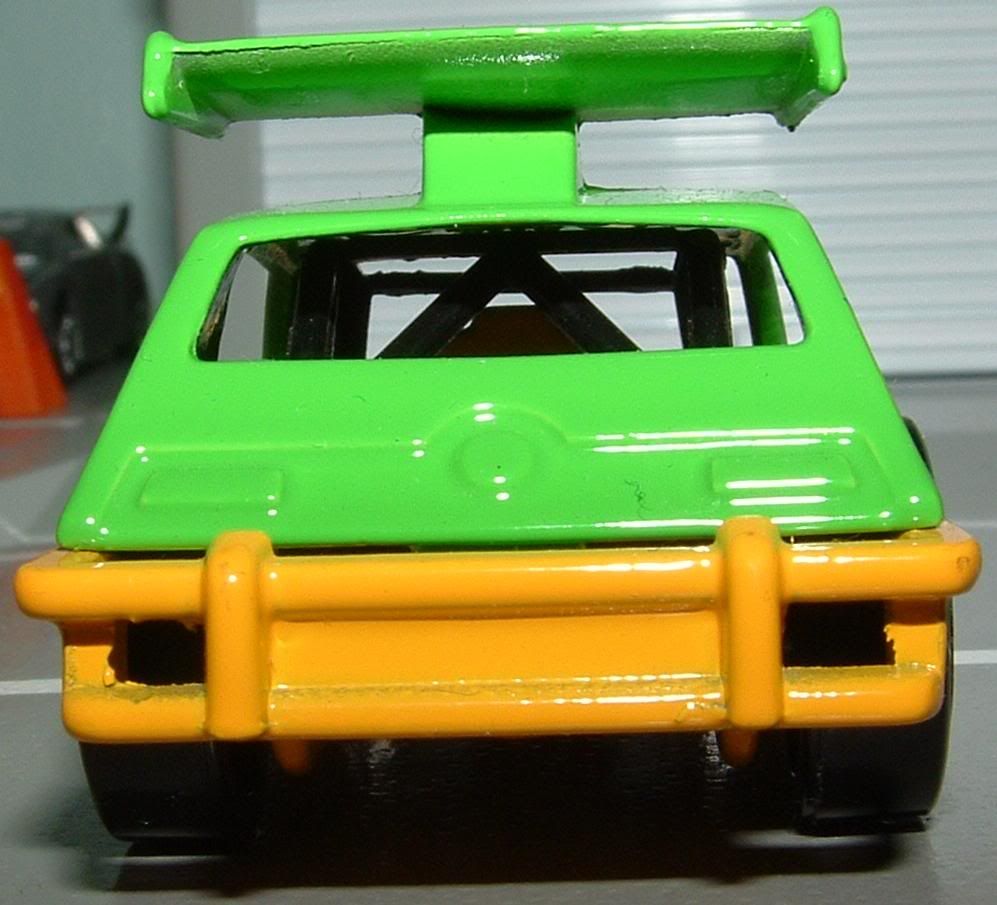
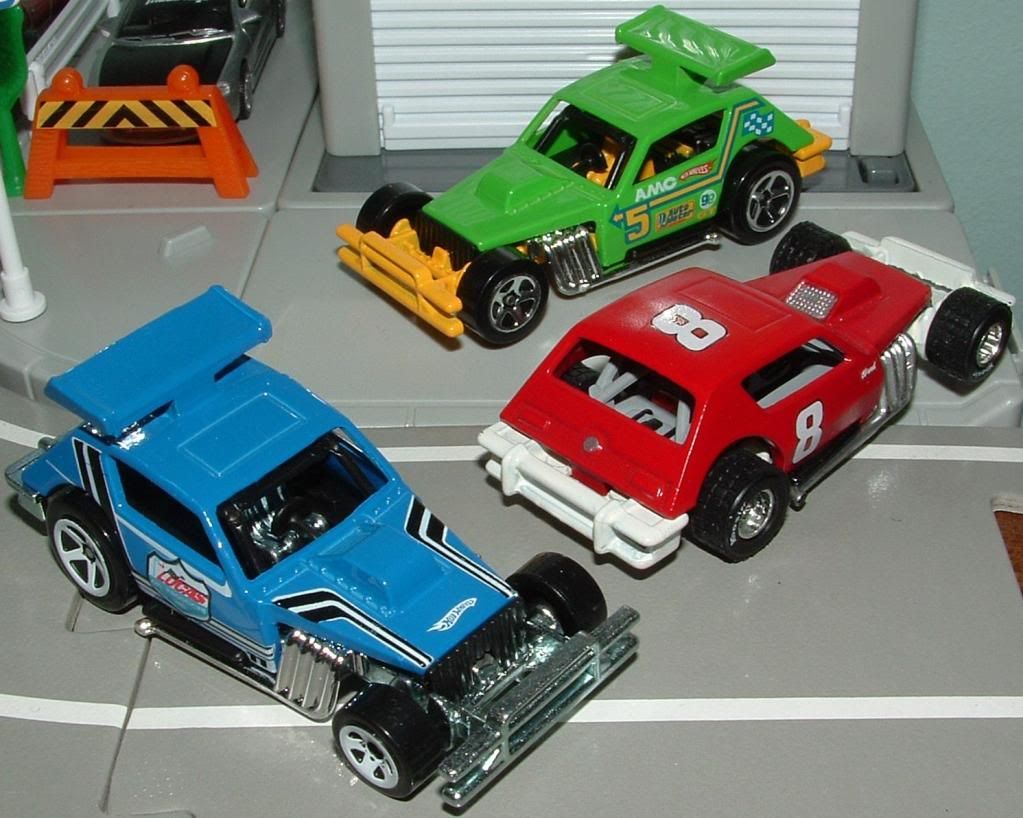
Today's car of the day is Hot Wheels' 1972 AMC Gremlin modified racer.


The AMC Gremlin is a subcompact car from American Motors Corporation, introduced as a 1970½ model and produced through the 1978 model year. AMC reduced development and manufacturing costs by adapting a shortened compact Hornet platform with Kammback-like tail producing what was described at its introduction as "the first American-built import".

The AMC Gremlin was introduced April 1, 1970 competing with the Chevrolet Vega and Ford Pinto introduced six months later, as well as imported cars including the VW Beetle and the Toyota Corona.  The Gremlin would become American Motors' best-selling passenger car since the Rambler Classic. From April 1970 through 1978, a total of 671,475 Gremlins were built in the United States and Canada. With a mild body restyling, the basic design continued with the AMC Spirit and the all-wheel-drive AMC Eagle until 1983."


For more information and pictures of the real car please visit: AMC Gremlin


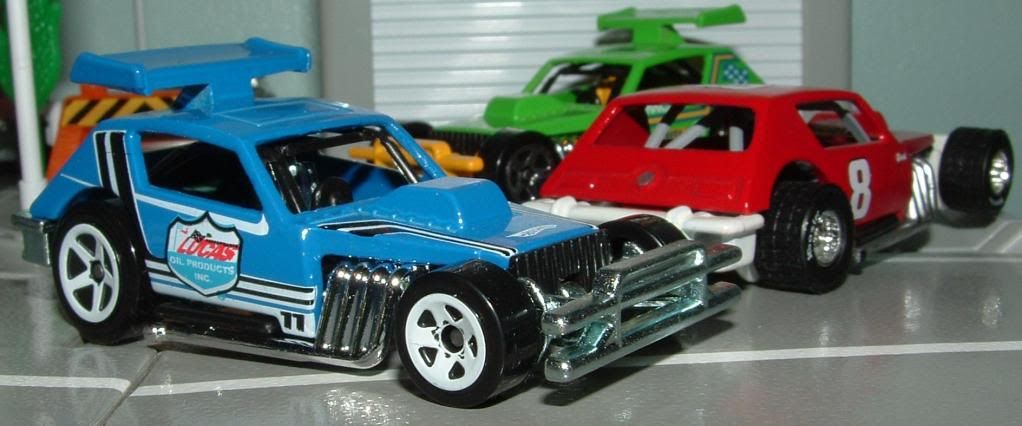
Hot Wheels had an obsession with the AMC Gremlin back in the 1970s.  That's the only way I can explain how they did three different examples of AMC's compact: Openfire, Gremlin Grinder, and the Greased Gremlin seen here.  1972's Openfire was a reverse-stretched, 6-wheeled, V-12 powered Gremlin.  1974's Gremling Grinder was the closest to stock, with stock body proportions, but with a giant motor sticking out from where the hood should have been.  And finally, in the last year of the Gremlin's lifespan (1978) the Greased Gremlin debuted.  This was an early Gremlin (1971-76) modified into a dirt/asphault modified race car.  This type of racing was especially popular in the Northeast and Southeast, and Gremlins could still be found competing as late as the late 1990s.  I remember reading in AARN (Area Auto Racing News) that one team put together a brand new Gremlin modified in 1998 (the only part of that particular car fabricated from a real Gremlin was the roof).  The green example seen here was a recent RAOK from Firehawk73 (thanks Paul!).


Ford and General Motors were to launch new subcompact cars for 1971, but AMC did not have the financial resources to respond with an entirely new competing design. Chief stylist Richard A. Teague's solution was to truncate the tail of a Javelin (legend has it that Teague sketched the design on a Northwest Orient air sickness bag). The result was the AMX-GT, first shown at the New York International Auto Show in April 1968. The AMX-GT was never produced (although the "AMX" name was used from 1968 to 1970 on a shortened, two-seat version of the Javelin).

Instead, AMC's new subcompact, designed by future Chief of Design, Bob Nixon, was based on the Hornet, a compact car (based on interior volume) with a wheelbase of 108 inches (2,743 mm). For the Gremlin, the Hornet wheelbase was reduced to 96 inches (2,438 mm). The overall length was cut from 179 to 161 inches (4,500 to 4,100 mm), only fractionally longer than the Volkswagen and shorter than either the Pinto or Vega.

The Gremlin was AMC's "bold and innovative approach" to preparing for two imminent crises in the American automobile industry: reduced gasoline supplies, and an "alarming increase" in the sale of fuel-efficient imports.

Executives at the automaker apparently felt confident enough to not worry about the word's negative connotations. Time magazine noted two definitions for "gremlin": Defined by Webster's as "a small gnome held to be responsible for malfunction of equipment." American Motors' definition: "a pal to its friends and an ogre to its enemies." The AMC Gremlin also featured a cartoon inspired mascot that was also used as a marketing tool for product differentiation and to provide memorable qualities for consumers.

Capitalizing on AMC's advantage as a small car producer, the Gremlin was introduced in April 1970 and was rated a good buy at an economical price. The AMC Gremlin was six months ahead of its domestic competitors from Ford and GM. The April 6, 1970 cover of Newsweek magazine featured a red AMC Gremlin for its article, "Detroit Fights Back: The Gremlin". The smallest domestic automaker able to achieve this by adapting its existing products and it also avoided developing and building a new four-cylinder engine. The Gremlin featured a six-cylinder engine and base prices below US$2,000, AMC's 'import-fighter' initially sold over 26,000 in its abbreviated first season" before the Chevrolet Vega and Ford Pinto were introduced. Although its appearance received some criticism, the Gremlin had an important advantage with its low price. The Gremlin's exterior "resembles a sawed-off station wagon, with a long, low hood and swept-up rear, and is faintly reminiscent of the original Studebaker Avanti."

The Gremlin was promoted as "America's first subcompact". Nevertheless, this description overlooks the earlier and diminutive Crosley and Nash Metropolitan. The latter—a subcompact-sized "captive import", American-conceived and American-designed for the American market, and built in the UK with a British engine—has a claim to be "America's first subcompact."

From the seatbacks forward the Gremlin was essentially a Hornet, but with a shortened wheelbase and reduced overall length. The Gremlin was just two inches (50 mm) longer than the original Volkswagen Beetle, but the long hood over its front engine made "the difference seem considerably more." The Gremlin's wider stance gave it "a stable, quiet and relatively comfortable ride - for the two front passengers. "Front-seat room was enormous by small-car standards, especially leg room and interior width". Like some other cars of less than standard size, the back seat is designed for small children only". The Gremlin's six cubic feet of luggage space behind the rear seat was smaller than that of the rear-engined Volkswagen Beetle, although folding the rear seat tripled the cargo area to 18 cubic feet (509.7 l) and was accessible through the rear hatch window.

The cut-off "Kammback-type" design with a station wagon-type upright rear design allowed for interior space utilization and was aerodynamically efficient. Later, other automobiles from Europe and Japan would also create different models by adding or truncating the trunk "box" from a basic small car design (such as the Volkswagen Golf from the Volkswagen Jetta and the shortened wheelbase BMW and Mercedes coupes) though with less dramatic style. While the Gremlin's notoriety was mainly over its polarizing styling, it never suffered from controversies over gas tank safety or engine durability that dogged its competitors from Ford and GM.

The Gremlin was available in two versions: a "base" two-passenger model with fixed back window, intended as the leading "import-fighter" with a suggested retail price of $1,879 (US$10,628 in 2011dollars); and a four-seater with flip-up rear window "hatch", at $1,959 (US$11,080 in 2011dollars). As with the Volkswagen Beetle that it was designed to compete against, the Gremlin's styling made it impossible to confuse it with anything else on the road.


However, even though Gremlins share numerous parts and components with other AMC models, finding parts for a restoration project can be difficult. This is exacerbated by the fact that many Gremlins were chopped up during the late 1970s and the 1980s to make dirt-track racers. The body of choice on the dirt circuit was the Gremlin and AMC Eagle. The subcompact bodies fit Modified chassis and of special interest was the Gremlin's slab top and sides with a contour that was easy to duplicate in sheet metal.


If the red one has you scratching your head, that one is a custom purchased from 69Stang (thanks Ward!).  He removed the rear spoiler and went to town detailing and and giving it better wheels and paint.

Sunday, July 3, 2011

Car Of The Day: July 3, 2011


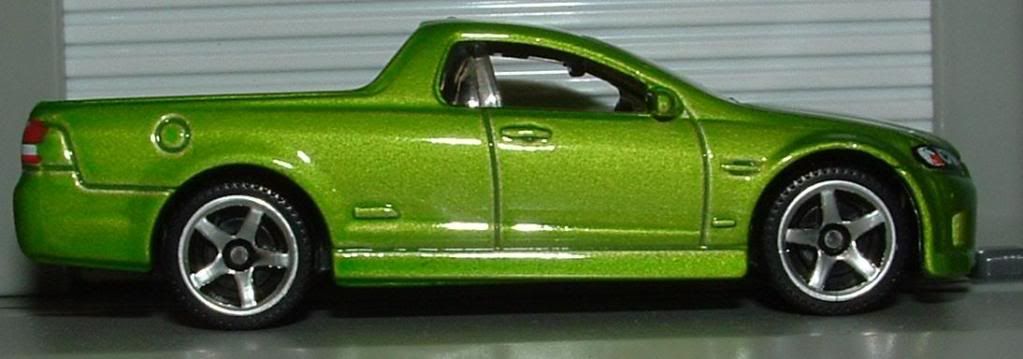
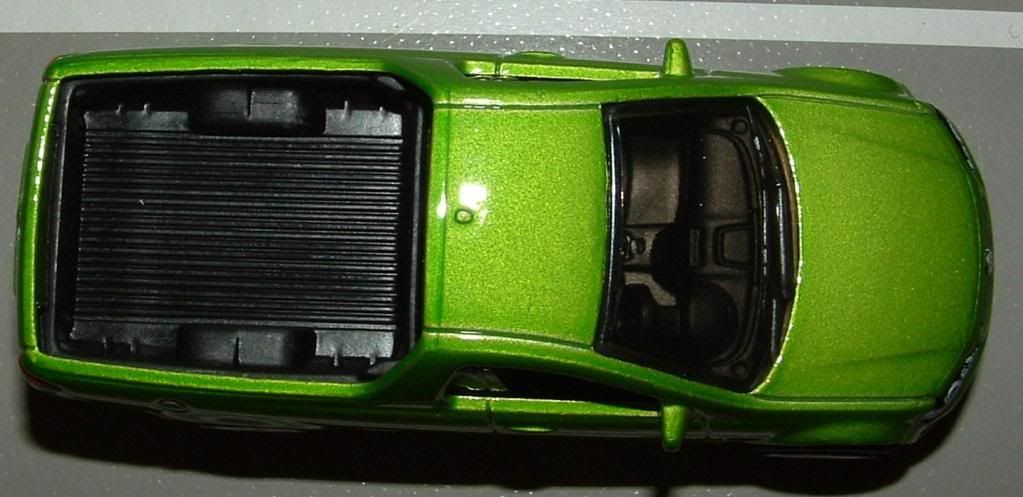
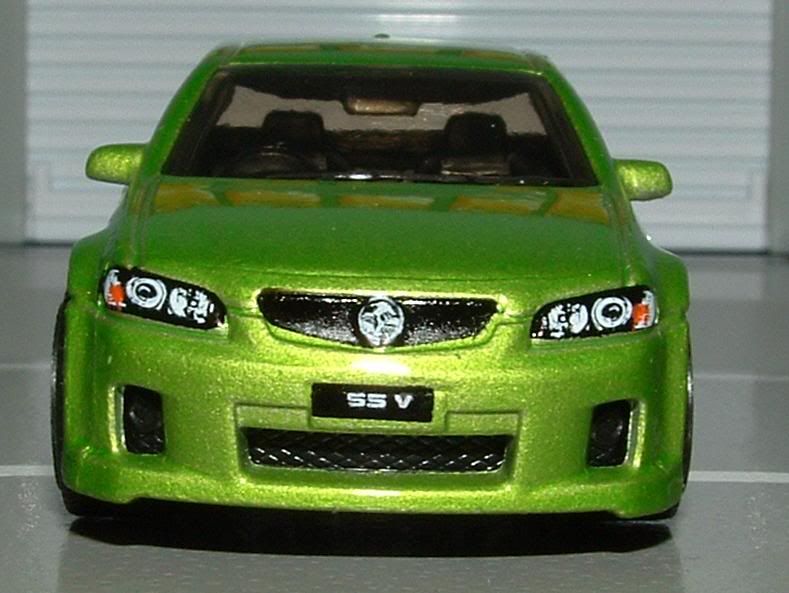
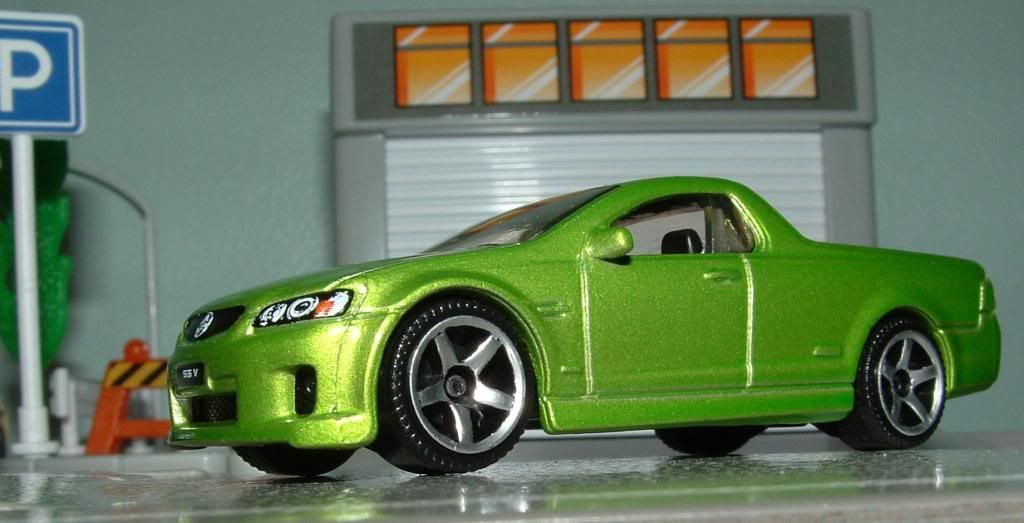
Today's car of the day is Matchbox's 2010 Holden Ute.


The Holden Ute is a coupe utility built by Holden, the Australian subsidiary of General Motors, since 2000. Before then, Holden had marketed their Commodore-based utility models under the Holden Utility (VG) and Holden Commodore utility (VP, VR, VS) names, although the term “Holden Ute” was also used in their official marketing literature. The Holden Ute name is often used for earlier Holden Utility models (which were produced from 1951 to 1984) as the word "ute" is a colloquial term used commonly in Australia for a utility vehicle or pickup truck. Holden's performance division, an independent company called HSV assembles a high-performance version called the Maloo. Between 2003 and 2007, Holden built a stretched, crew cab version of the Ute with four doors and seating for five, called the Holden Crewman and between 2003 and 2005 a cab-chassis version known as the Holden One Tonner.
The Ute launched with a locally-built 3.8 litre Ecotec V6 engine of Buick design. A 5.7 litre Generation III V8 engine option was also available, but this was replaced by the 6.0 litre Generation 4 in 2006, and updated to the L98 specification later on that year. In 2004, Holden replaced the venerable V6 with a 3.6 litre Alloytec unit.
The Australian-assembled Ute was to be sold in the United States as the Pontiac G8 ST starting in 2009 alongside the four-door Commodore-based G8 sedan. However, due to GM's company-wide model review, a result of the 2008 global financial crisis, such plans were shelved on 6 January 2009. Exports of the G8 sedan remain unaffected. Sales of the Ute in South Africa as the Chevrolet Lumina SS commenced during 2006/2007.
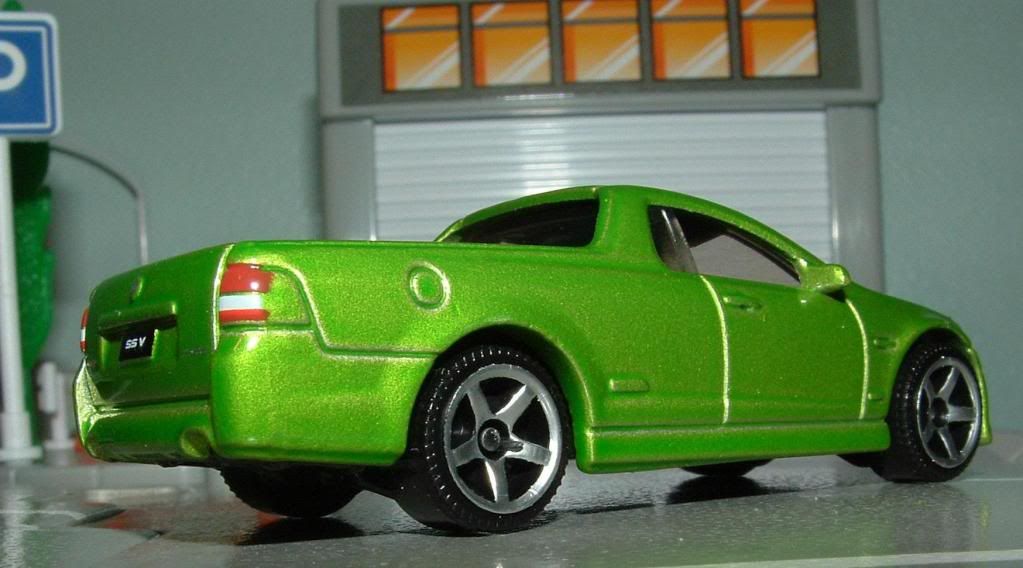


For more information and pictures of the real car please visit: Holden Ute


A beautiful model from Matchbox, but it appears they forgot to tampo the rest of the taillights.  From the pictures I've seen, the model's taillights should extend to the diagonal body line.  The casting's great, the color is great, and I was really looking forward to seeing this come Stateside as the Pontiac G8 ST.  Maybe there's hope of it coming here as an El Camino eventually?


2007 saw the launch of Holden's eagerly anticipated VE Ute range, unveiled to the media in August, with showroom sales began later in the month. The new generation designated VE, based on the VE Commodore tackles an upward consumer tendency towards using utes as lifestyle vehicles. This further shifts the ute away from the traditional workhorse market.

Saturday, July 2, 2011

Race Car of the Day : July 2, 2011


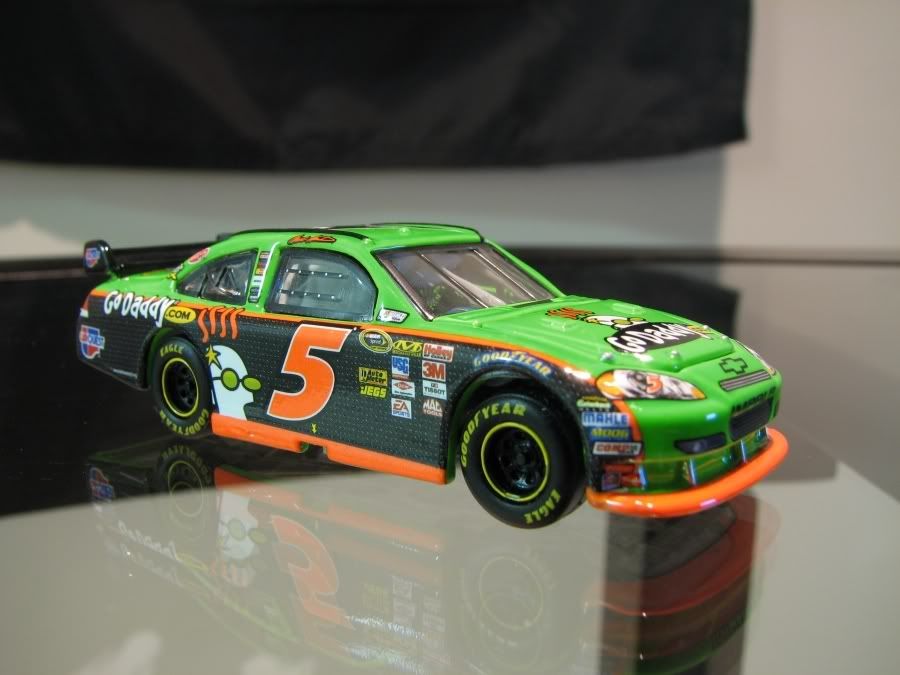
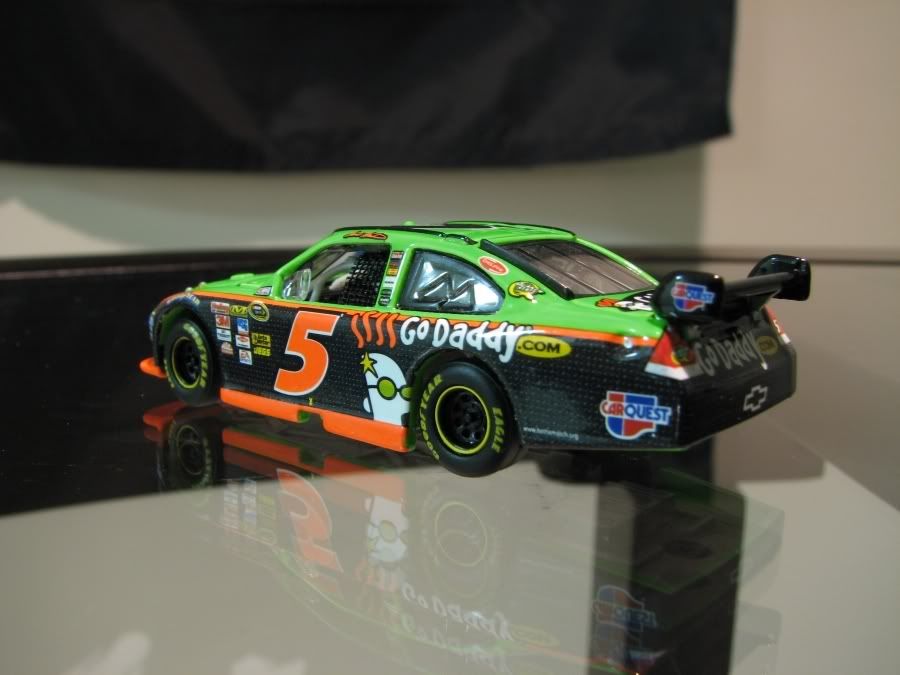
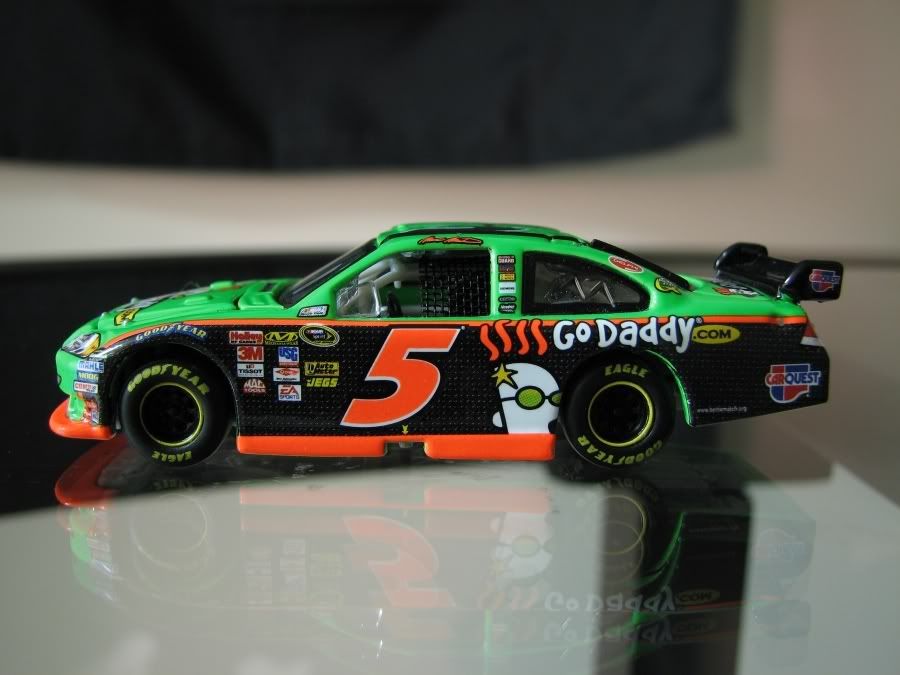
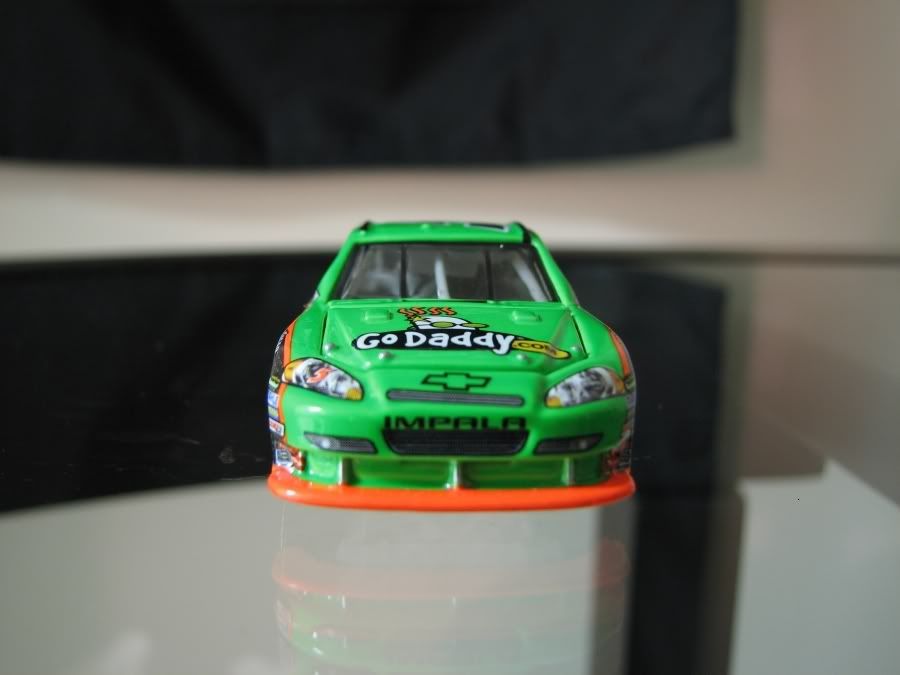
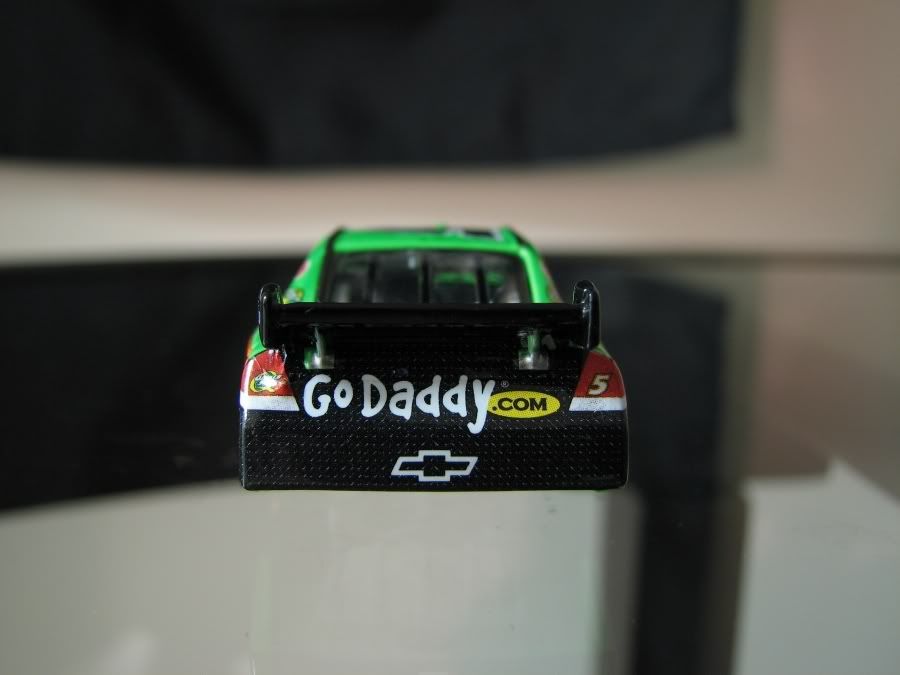
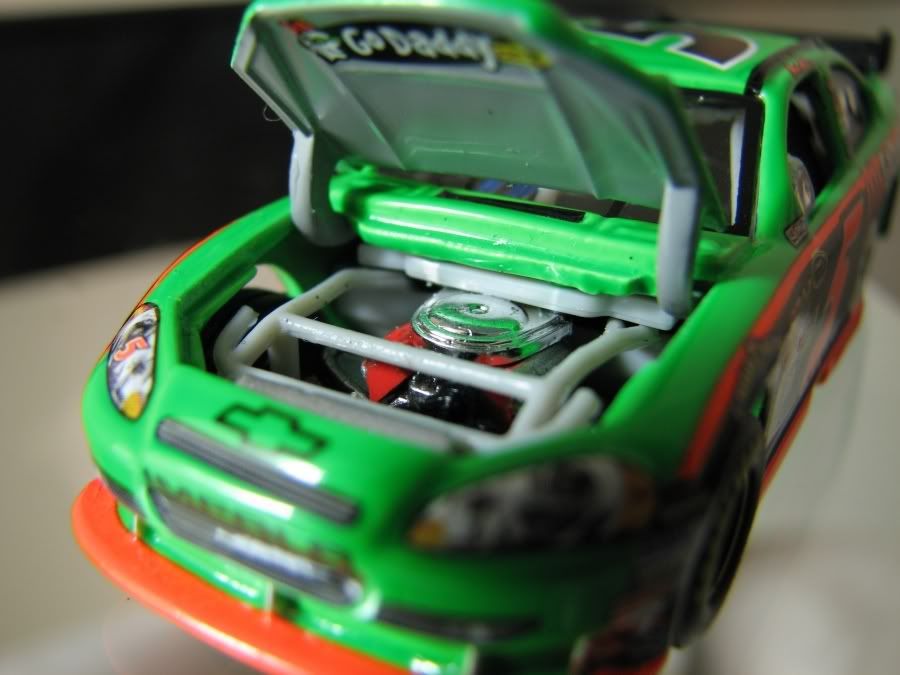
Today's Race Car of the Day is Action's Chevrolet Impala Car of Tomorrow Stock Car.


The Car of Tomorrow was first raced at the 2007 Food City 500 at Bristol Motor Speedway, the season's fifth race. The tracks that saw the CoT twice in 2007 besides Bristol and Martinsville International Speedway were Phoenix International Raceway, Richmond International Raceway, Dover International Speedway, and New Hampshire Motor Speedway. Other than Talladega (for the fall event), Darlington Raceway and the road course races at Infineon Raceway (Sonoma, Calif.) and Watkins Glen (N.Y.) International ran the CoT once each in 2007.


For more info on and pictures of the Car of Tomorrow: http://en.wikipedia.org/wiki/Car_of_Tomorrow


This one comes from Action's top line, and it shows! The only reason I own this is because it was the only Mark Martin available at the last NASCAR race I attended. But I'm glad it's in my collection! The detail is superb. What's most impressive about these top-of-the-line NASCAR 1/64s is the decalwork; I have never seen more detailed paint on any die-cast at any level. Guess it's pretty easy to stamp those relatively flat surfaces.


The logo on the underside of the hood is a nice touch!

Friday, July 1, 2011

Race Truck Of The Day: July 1, 2011


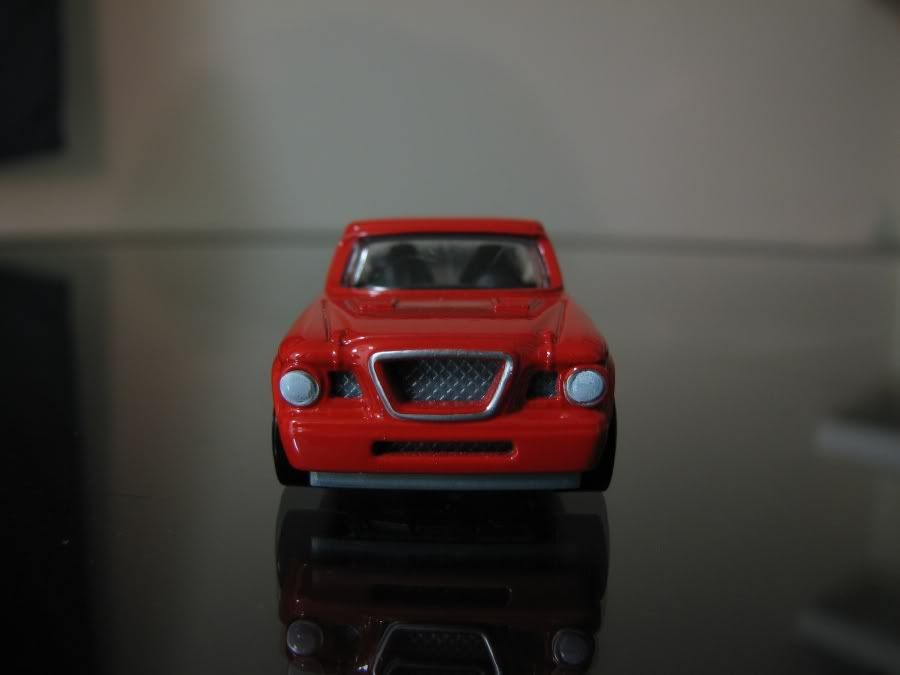
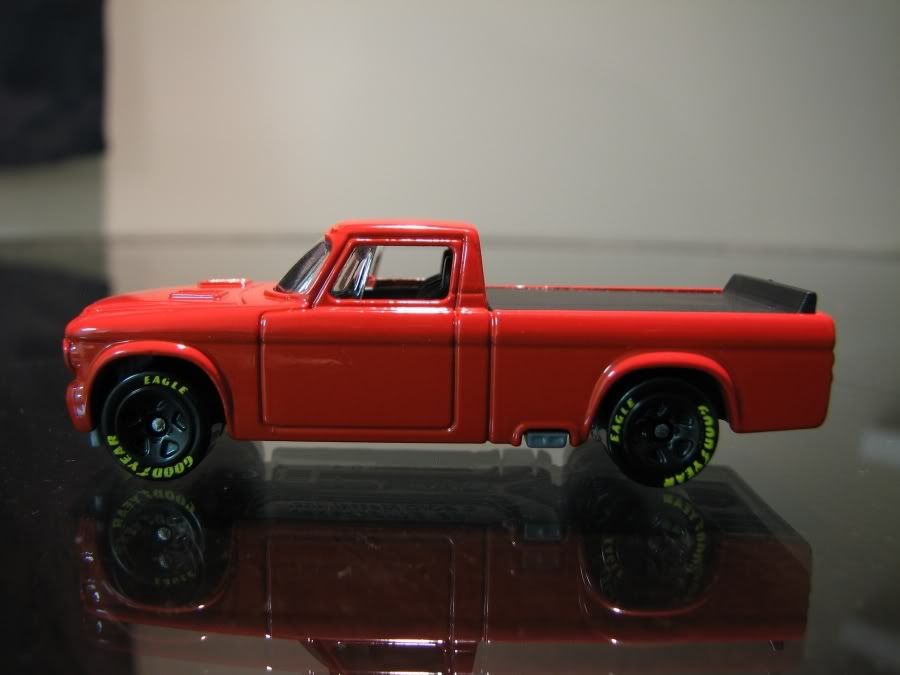
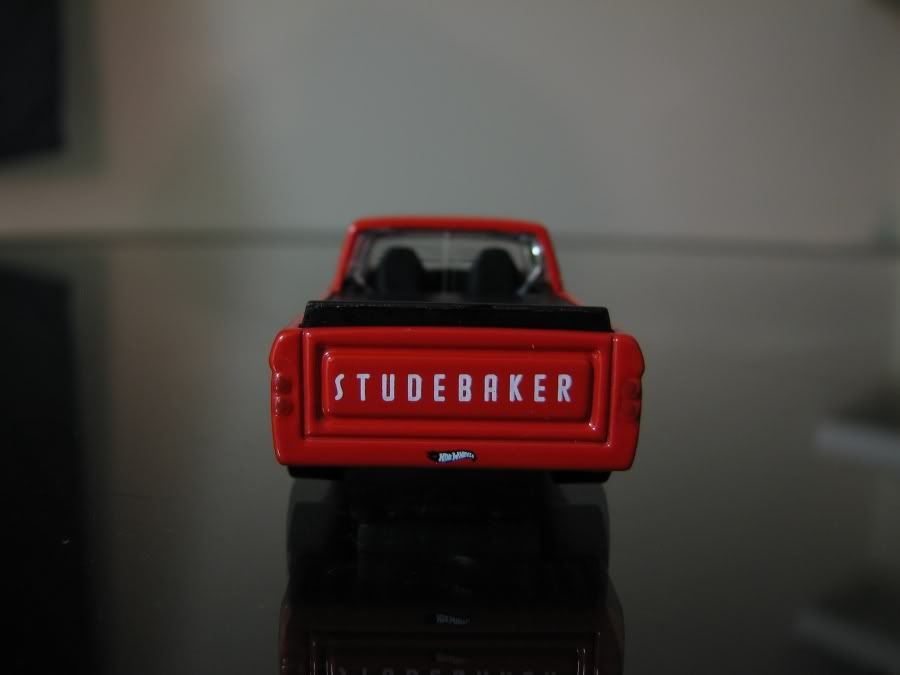
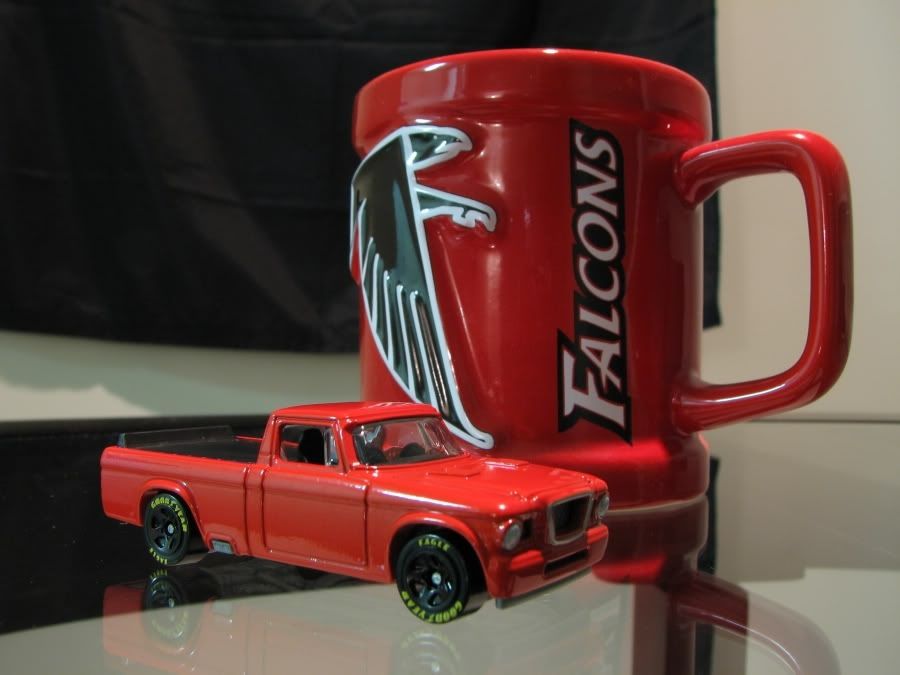
Today's Car of the Day comes from jedimario's collection and is Hot Wheels' 1963 Studebaker Champ.


The Champ is seldom given credit for introducing a feature that is nearly universal among today's pickup trucks: the sliding rear window, which was available from the start, proved to be quite popular among Champ buyers. It was truly one of Studebaker's better ideas, and caught on later among the major truck makers.

With a cab based on a sedan body, the Champ was among the first pickups to offer true "car-like" comfort, with a wide, comfortable bench seat and a handsomely-styled interior. Other manufacturers took until the late 1960s and early 1970s to follow the Champ's lead.

Finally, the last Champs of 1963-64 were among the first American trucks — if not the first — to offer service bodies constructed of fiberglass. Today, such bodies made of fiberglass and composites are still gaining acceptance, with the steel service body remaining the mainstay.

While it didn't prove to be the savior of the Studebaker truck line, the Champ also pointed the way to a more rationally-sized yet still rugged pickup, something Dodge later claimed as a "first" with their mid-sized Dakota, which was introduced as a 1987 model, nearly 27 years after the Champ.


For more info and pics of a real truck that somewhat resembles this one: Studebaker Champ


Well, well, well...you didn't think I could leave some odd, obscure vehicle that should never, ever get fully race prepped on the shelves in fully race prepped form now did you?  This thing is CRAZY!  It's what the Craftsman Truck Series would have been 50 years ago.  Amazing.  Perfect execution from Hot Wheels.  All of the detail is where it needs to be, and a lack of some can be forgiven due to the shaved bodies stock cars typically have.


Nice touch on the tailgate there too.  Anyway, I couldn't think of anything for the 6th pic...who wants to put some Falcons logos on one of these, I think it'd fit ;)