Saturday, July 16, 2011

Car of the Day: July 16, 2011g


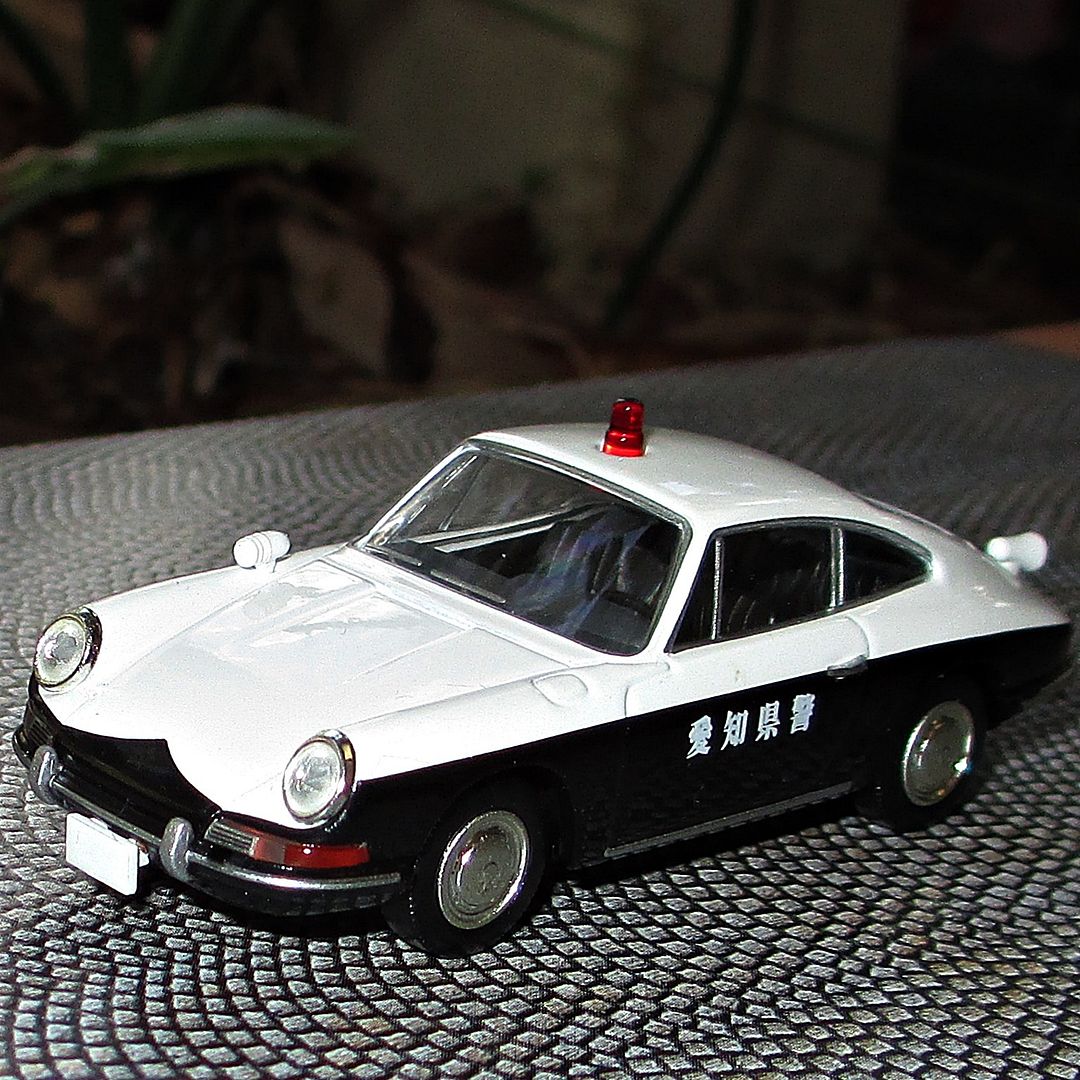
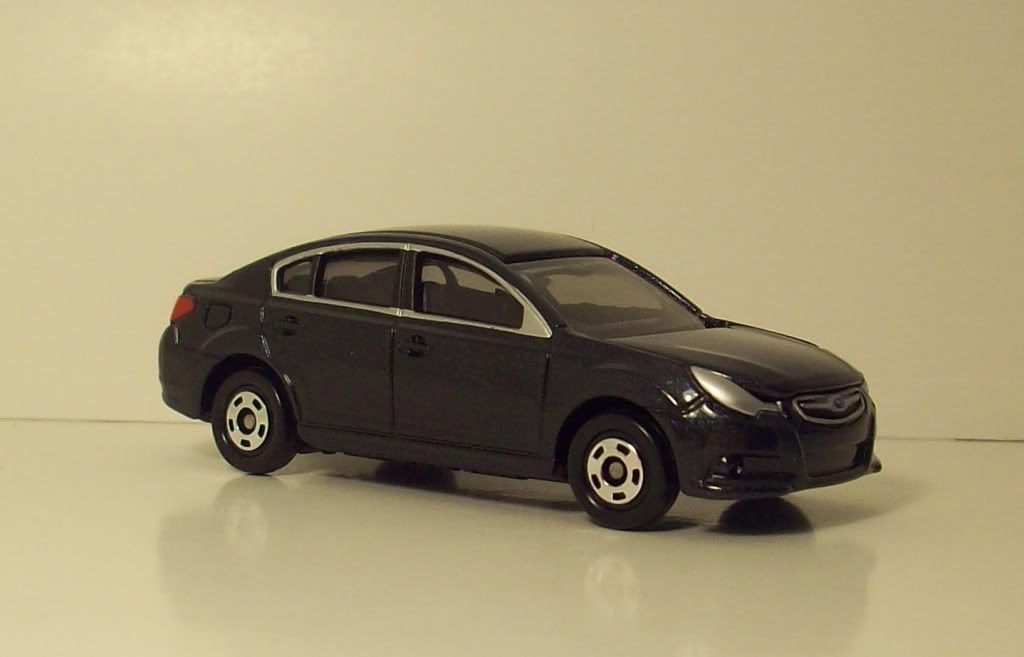
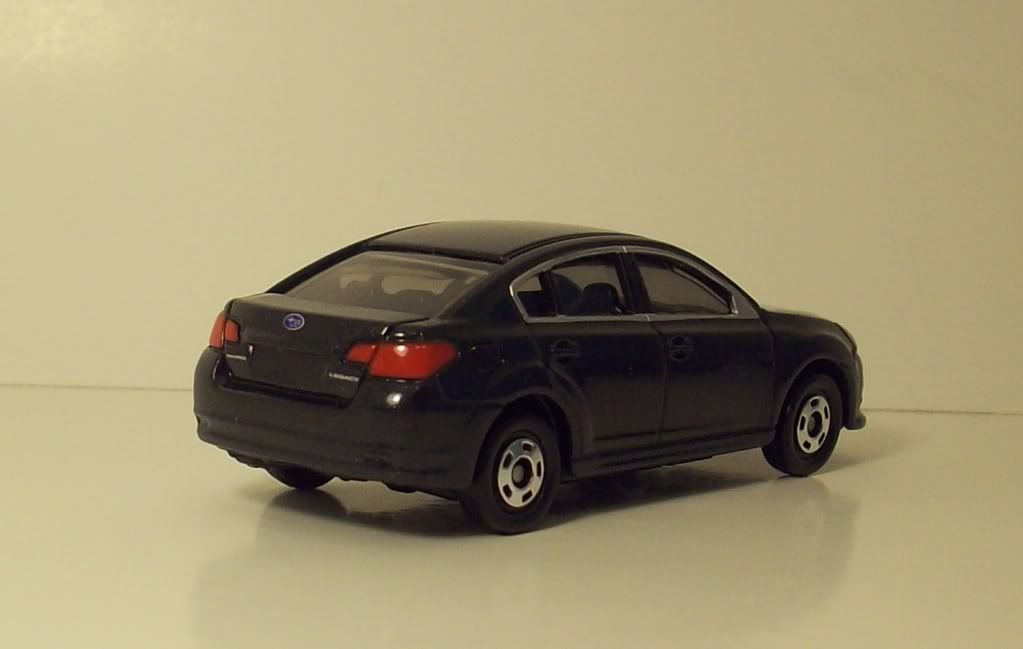
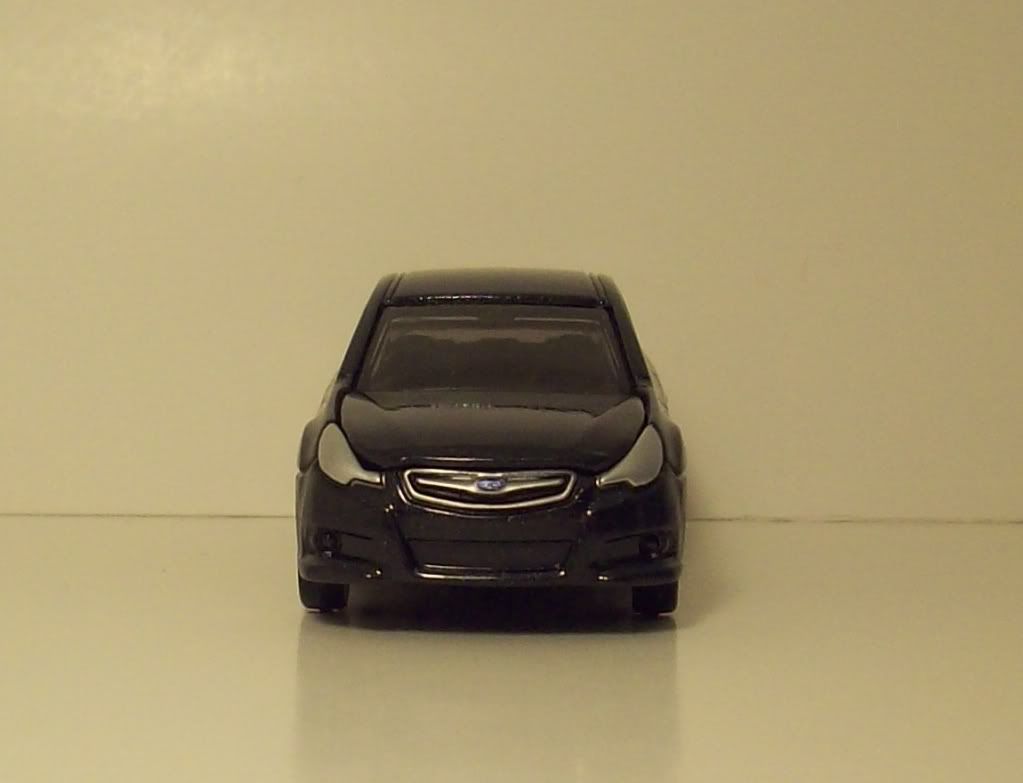
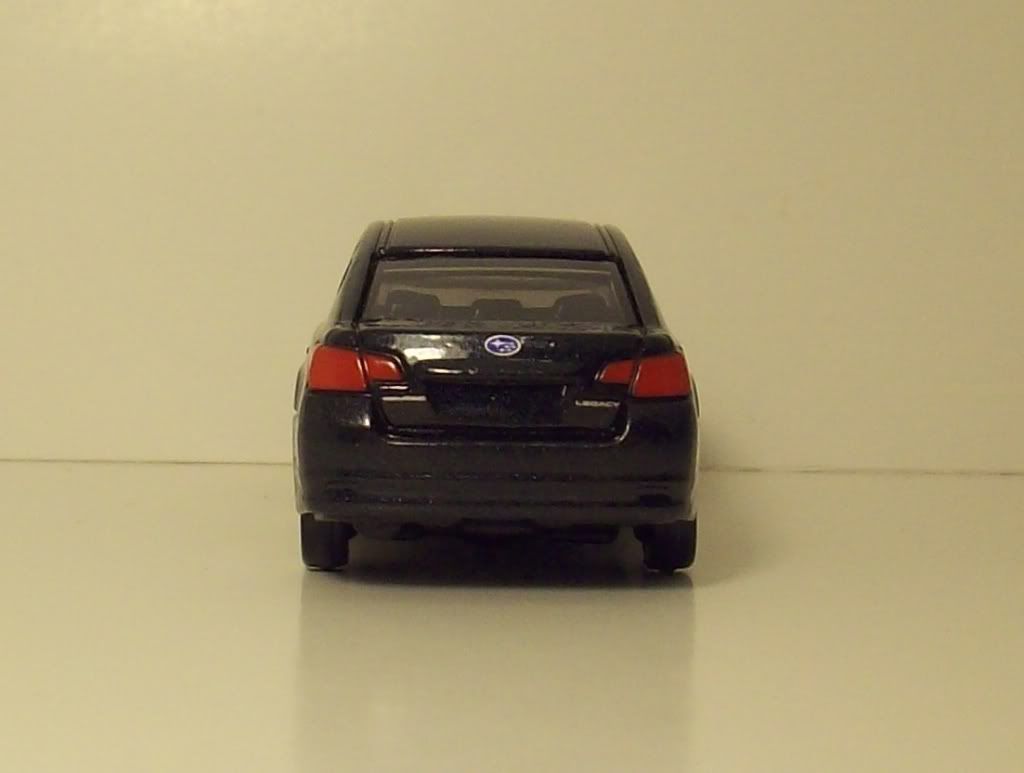
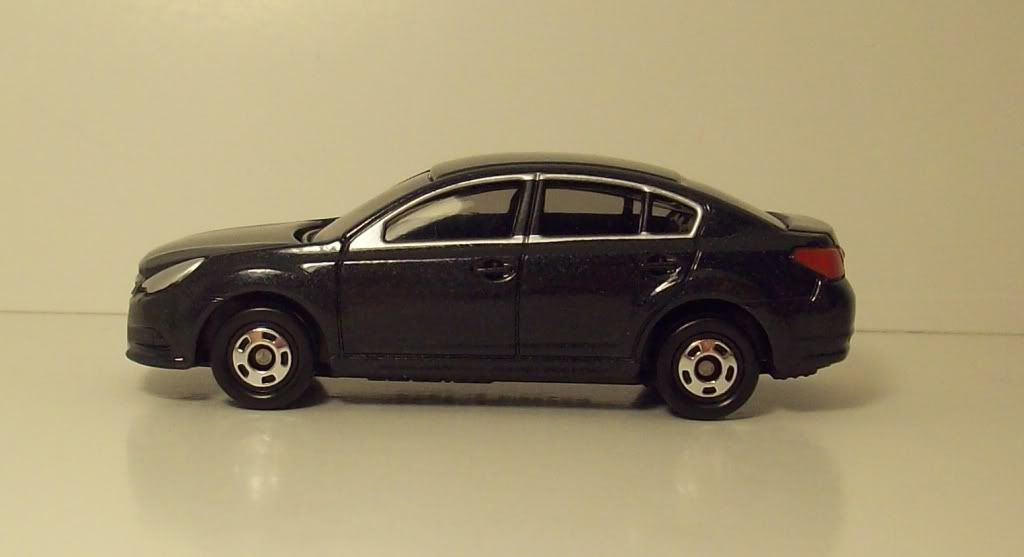
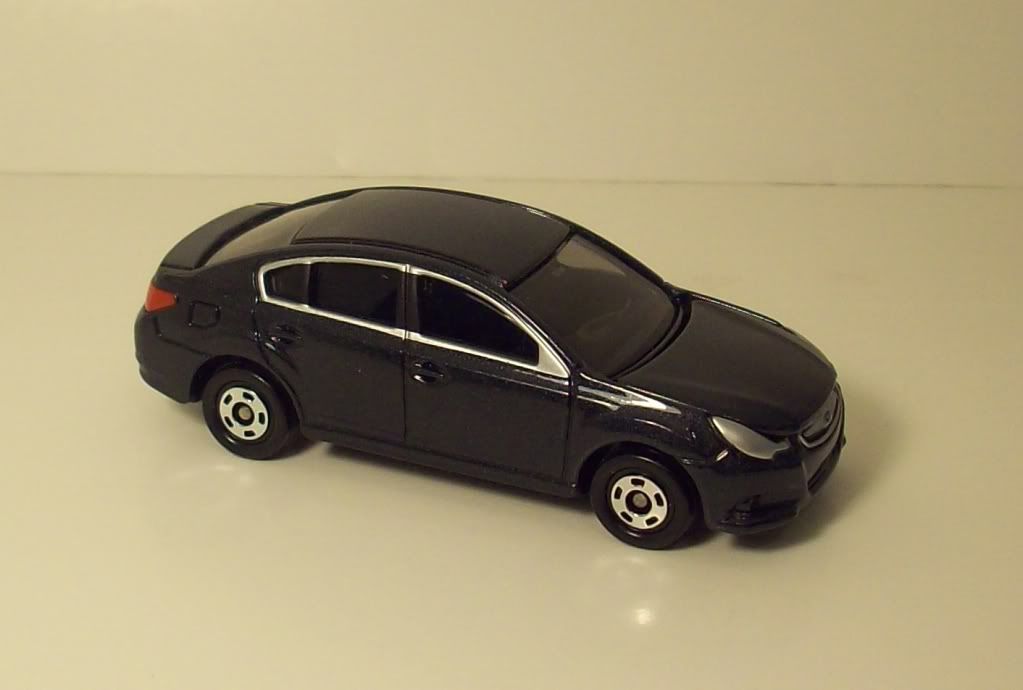
Today's car of the day is a Tomica (Tomy) 2009 Subaru Legacy B4


Wikipedia.com

The fifth-generation Subaru Legacy was originally unveiled as a concept car at the 2009 North American International Auto Show in Detroit to commemorate the 20th anniversary of the model, and the production version was introduced at the 2009 New York International Auto Show. Production of the fifth generation started on 29 May 2009.


For more information on the Subaru Lagacy B4 here is the link: http://en.wikipedia.org/wiki/Subaru_Legacy_(fifth_generation


A number of design traditions have ended with the fifth generation. The side windows are no longer frameless, ending a Subaru tradition started with the first generation Leone in the early 1970s. On wagons, the "D" pillar is no longer covered in glass. The parking light switch traditionally installed on top of the steering wheel column has also been removed, with Subaru using conventional headlight electrics, meaning if the headlights are left on when the engine is turned off, the headlights remain on unless the automatic headlight feature switch position is being used. An engine coolant temperature gauge is no longer offered, replaced by a fuel economy gauge instead that gives estimates in either miles per gallon or kilometers per liter based on regional requirements where the vehicle is sold. When the engine temperature is below normal, an indicator light shines blue and when the engine is overheating, the light turns red. Using the key to unlock the drivers door after locking the vehicle with the remote will set off the security system; the vehicle must be unlocked with the remote, a tradition going back to the second generation when remote keyless access was introduced.


The manual parking brake handle located between the front passenger seats has been replaced with an electric parking brake switch installed on the dashboard next to the driver's door. The term "Hill Holder" has returned but is now integrated with the electric parking brake. VDC is now standard on all models currently offered internationally. The vehicle has also added safety technologies such as Electronic Stability Control, Brake Assist, and Electronic Brakeforce Distribution to the list of standard features. The external "Limited" badge, introduced in 1998, has been retired on North American vehicles, and if the vehicle has the 3.6 L six cylinder engine, the rear of the vehicle has a "3.6R" badge applied on the bottom right side. If the vehicle has the diesel engine, a badge that says "Boxer Diesel" is installed on the middle right rear side of the vehicle. Gasoline turbocharged vehicles can be visually identified with a front hood (bonnet) installed air scoop and symmetrical dual exhaust pipes below the rear bumper.

Subaru introduced improvements to the chassis, that they call Dynamic Chassis Control Concept, which uses high-tensile steel in critical areas to achieve high strength with lighter weight. The front-end structure introduces Cradle Mount that isolates the suspension and engine from the passenger compartment for a smoother and quieter ride using rubber mounts. New for this generation is a double wishbone rear suspension, with all suspension links and the rear differential isolated from the rear subframe with large rubber mounts to minimize noise and vibration intruding into the passenger compartment.
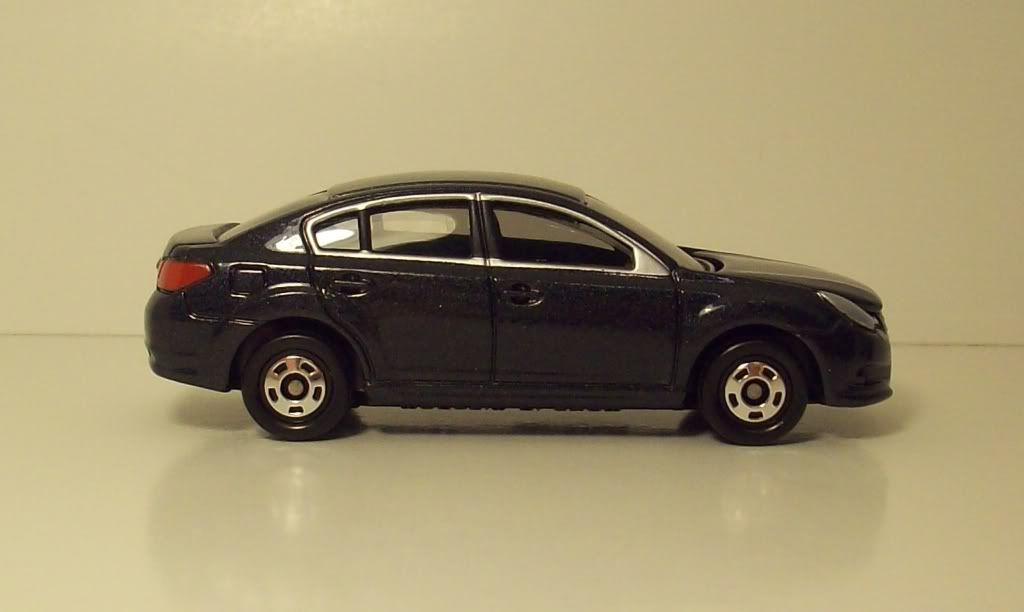


I had at least show off one of my recent Tomys. I have very few Tomicas in my collection and they have been bought here recently with the playsets that they have. Out of the few this particular one has impressed me. Not a big fan of Subaru cars in general or this particular model but Tomica did an excellent job at capturing the look of this car in small diecast. Normally any recent new model cars just appear the same as any other new model car in diecast and sometimes in the 1:1 versions too...LOL My hat is off to them at making this one a unique looking car compared to all the other clones that are out there.
Car of the Day: July 15, 2011


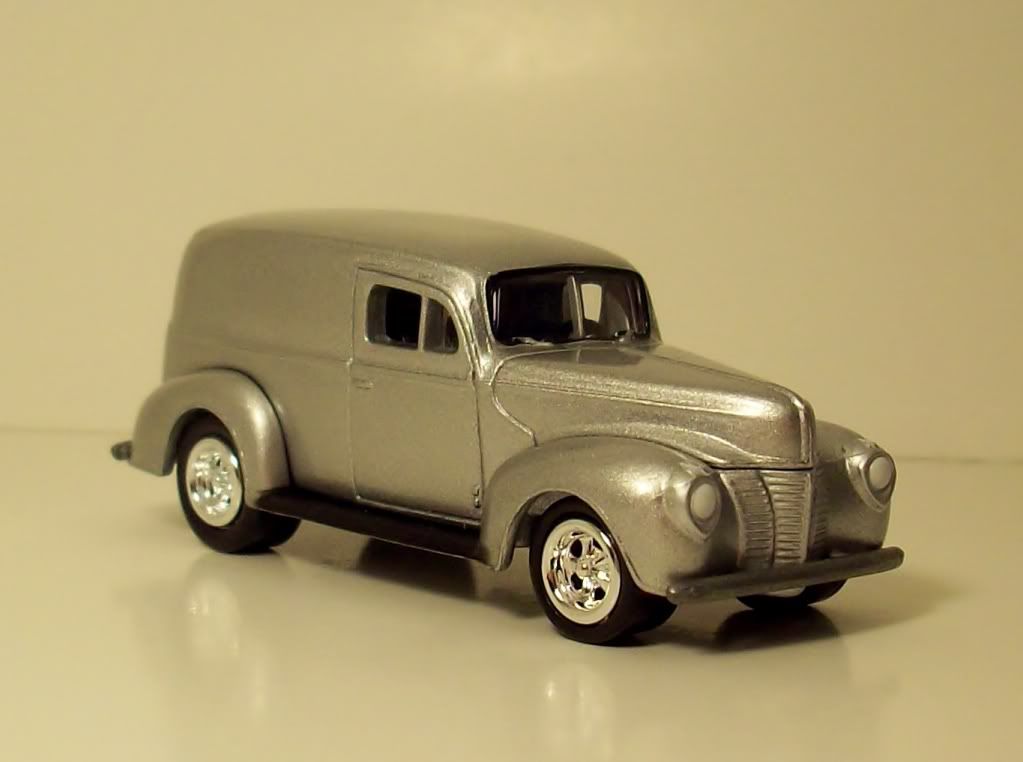
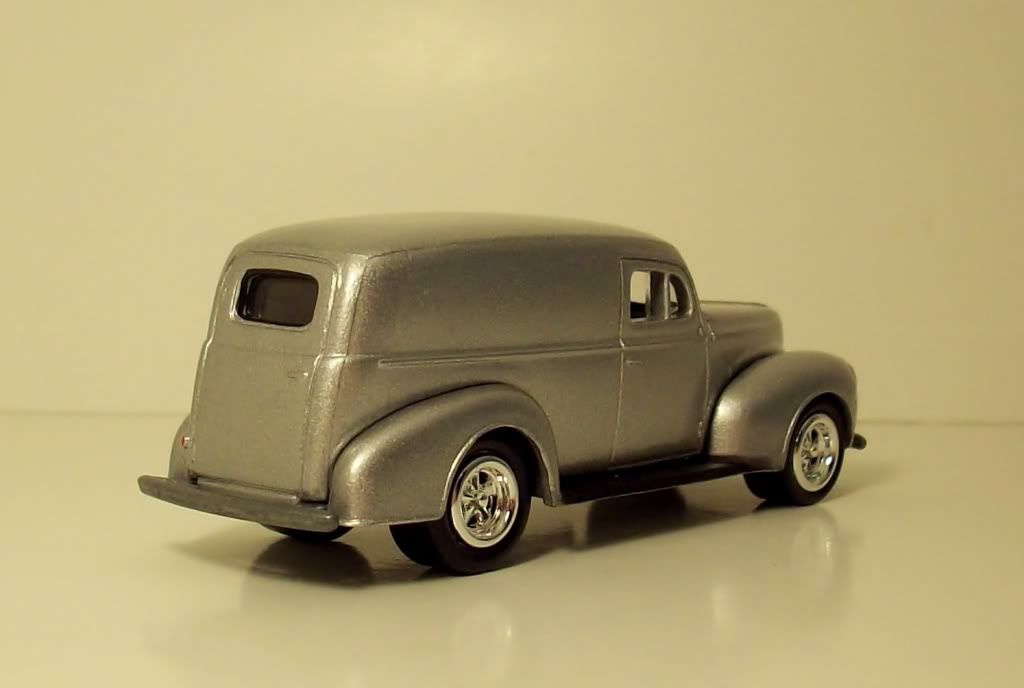
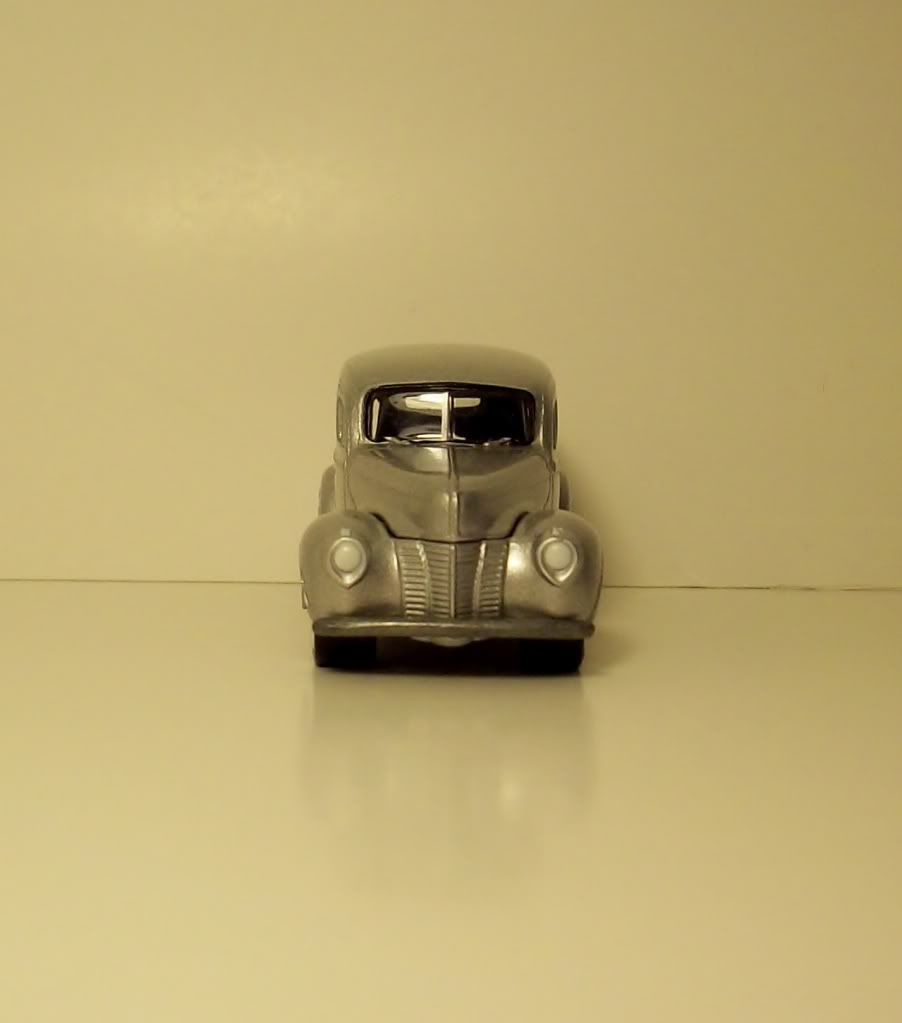
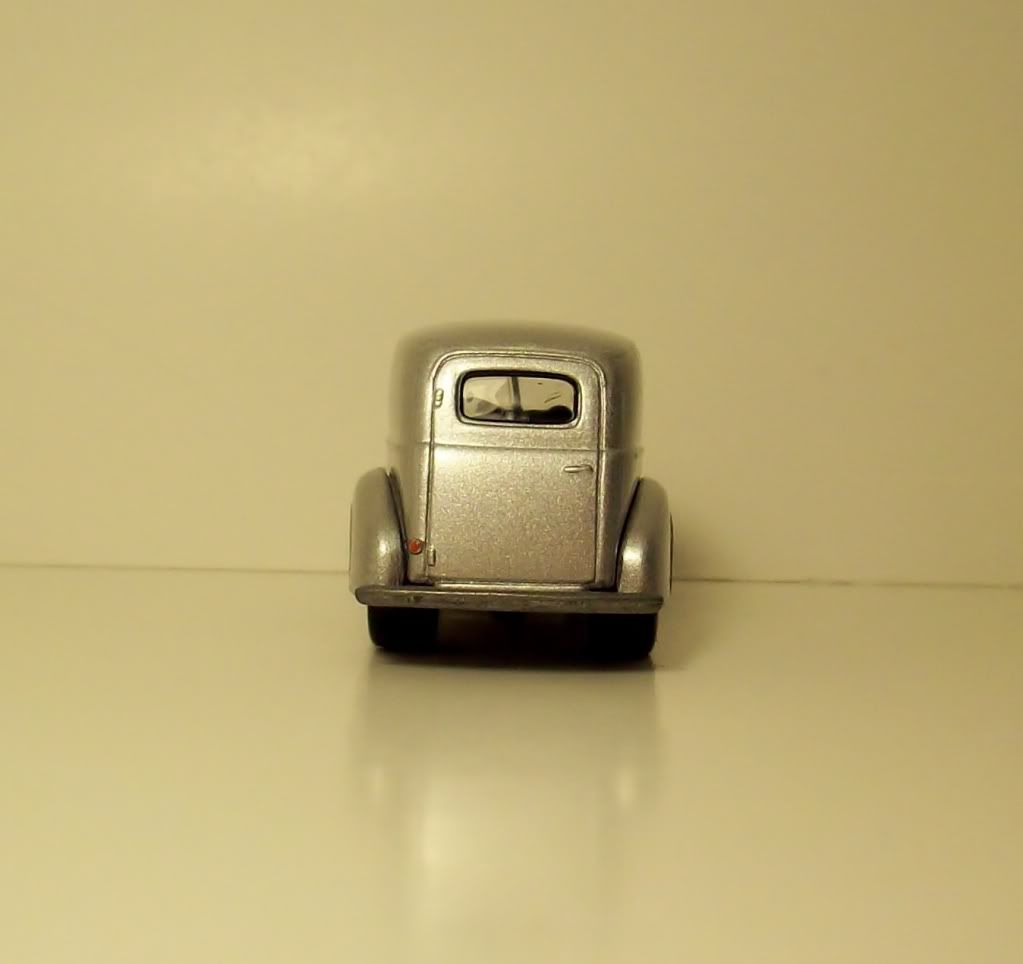
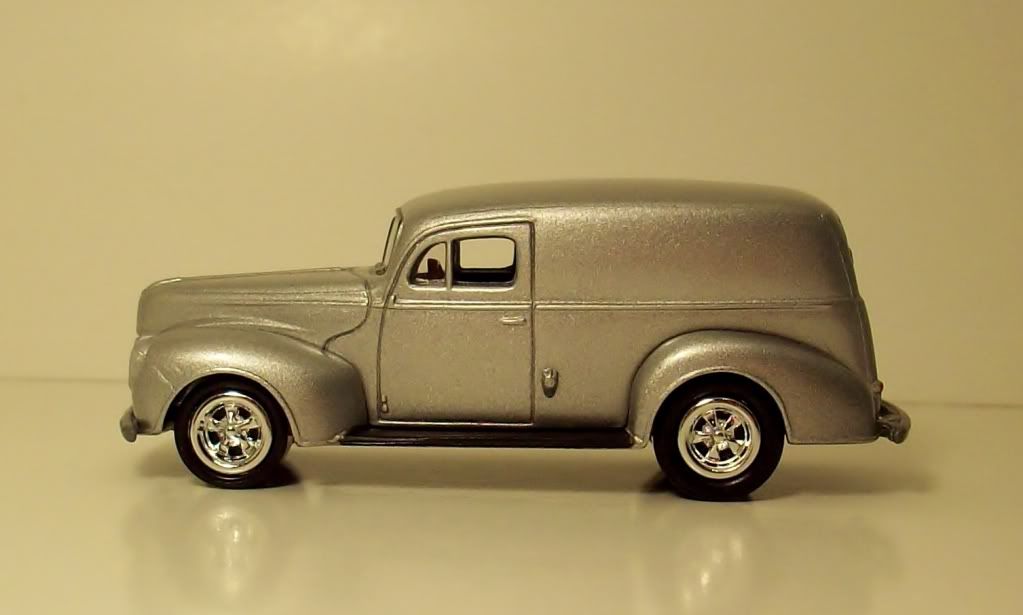
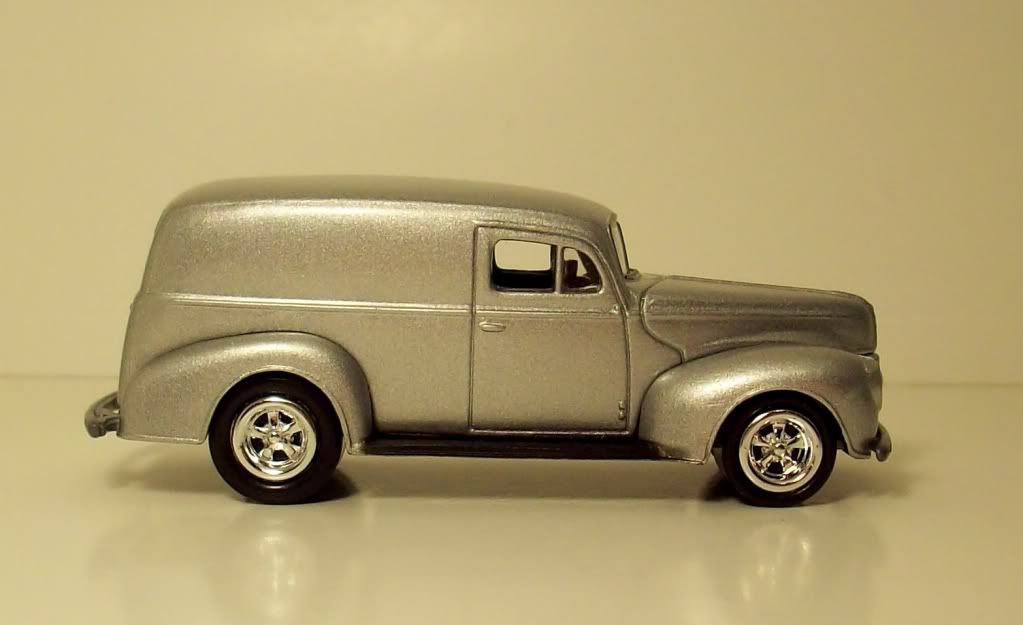
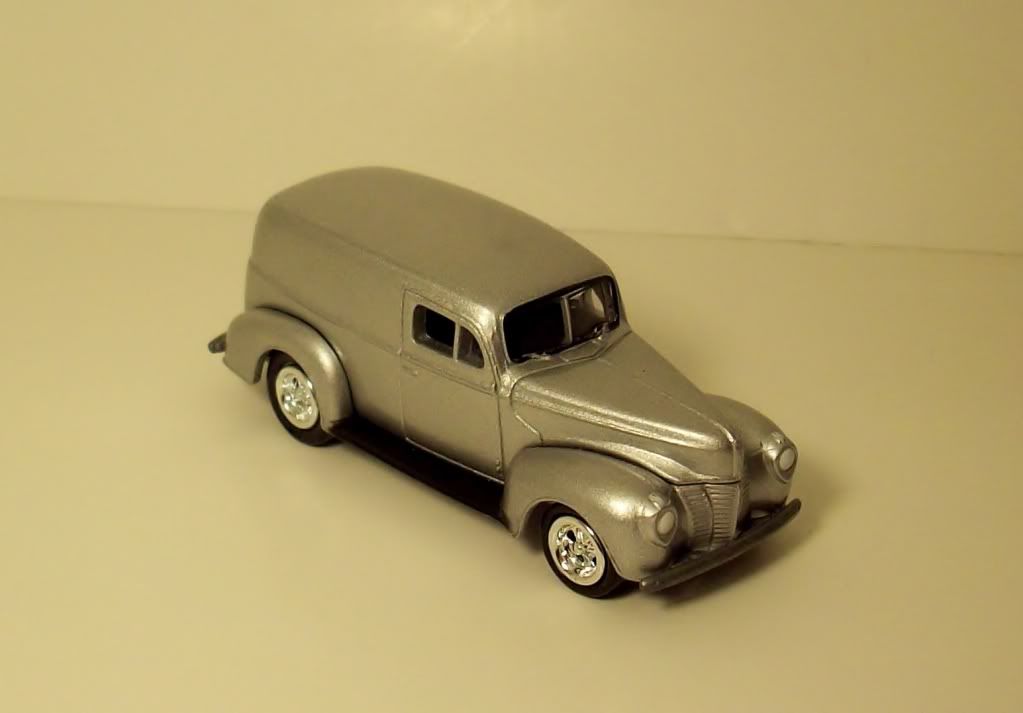
Today's car of the day is a Johnny Lightning 1940 Ford Sedan Delivery


HowStuffWorks:

The 1940 Ford car line was a great styling statement, and so was the 1940 Ford Sedan Delivery derivation. Many connoisseurs of design declare it the best-looking sedan delivery ever, and it's hard to argue with them.


For more information on the Ford Sedan Delivery click on this link: http://www.howstuffworks.com/1940-ford-sedan-delivery.htm


Body contours were smoothly rounded, perfect from every angle. Inside was a beautiful art-deco dashboard, in contrasting colors. Standard equipment included a column gearshift, dual wipers and visors, ashtrays on both sides, full insulation and interior lining -- even a clock.

Riding a 112-inch wheelbase, the 1940 Ford Sedan Delivery measured nearly 180 inches long and 72 inches wide, with Gross Vehicle Weight of 4,300 pounds.

Ford's regular panel delivery truck rode the same wheelbase but was 17 inches longer overall. At a glance, they looked similar from the front, since both models had turned to semi-integral sealed-beam headlamps; but the Ford Sedan Delivery borrowed its front end from the DeLuxe Ford car.

Buyers could specify the customary 85-bhp version of Ford's famed flathead V-8, displacing 221 cubic inches, or the "economy" 60-bhp version of 136 cubic inches.


Cargo space in the 1940 Ford Sedan Delivery was longer and wider than ever, with steel skid strips protecting the hardbound tongue-and-groove floor. A single rear door provided access to that space, whereas regular panel trucks wore a pair of entry doors out back.

New pivoting glass wings in each front door offered improved ventilation. A split, fixed windshield with cowl-mount wipers was standard. Exactly 4,451 Ford Sedan Delivery models out of the 5,325 built had the 85-bhp engine, and a few carried a 95-bhp V-8.


This is by far one of the best examples of the Ford Delivery that I have in my collection. Johnny Lightning did a superb job on capturing the likeness of this vehicle. I also have the black with flames version. It was a toss up on which one I was going to do but the silver one looks so good and better since I changed out the wheels. Thank You Harry for that tidbit of knowledge.


I wish JL would bring this classic back into its casting data base as for new releases. I'm a Chevy guy but not a fan of JLs Chevy Panel Deliverys. I much rather see this Ford Sedan Delivery hanging on the pegs.

Thursday, July 14, 2011

Car of the Day: July 14, 2011


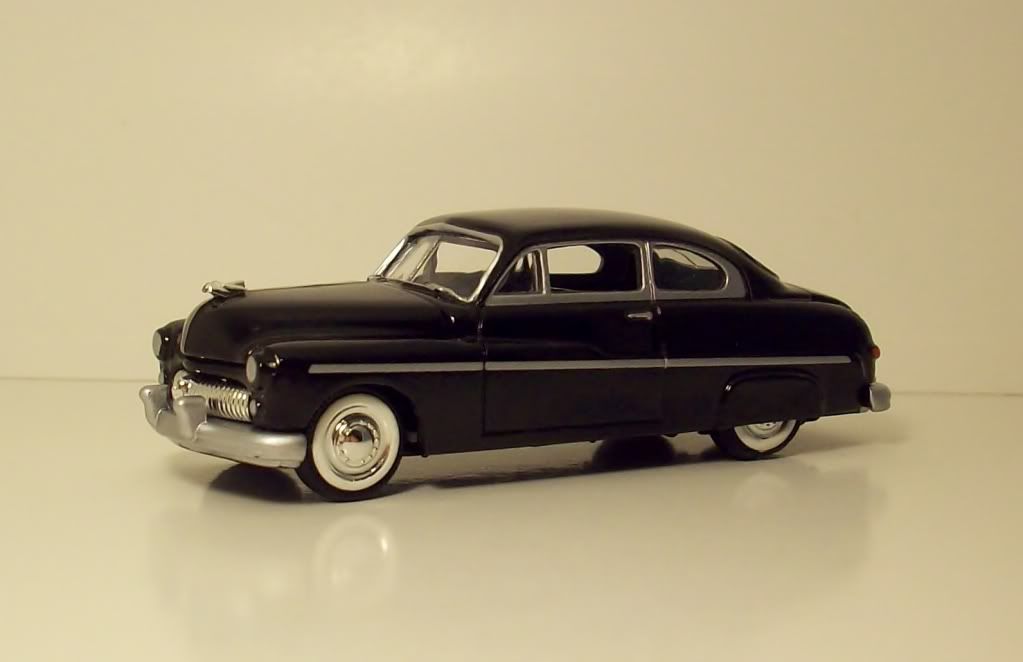
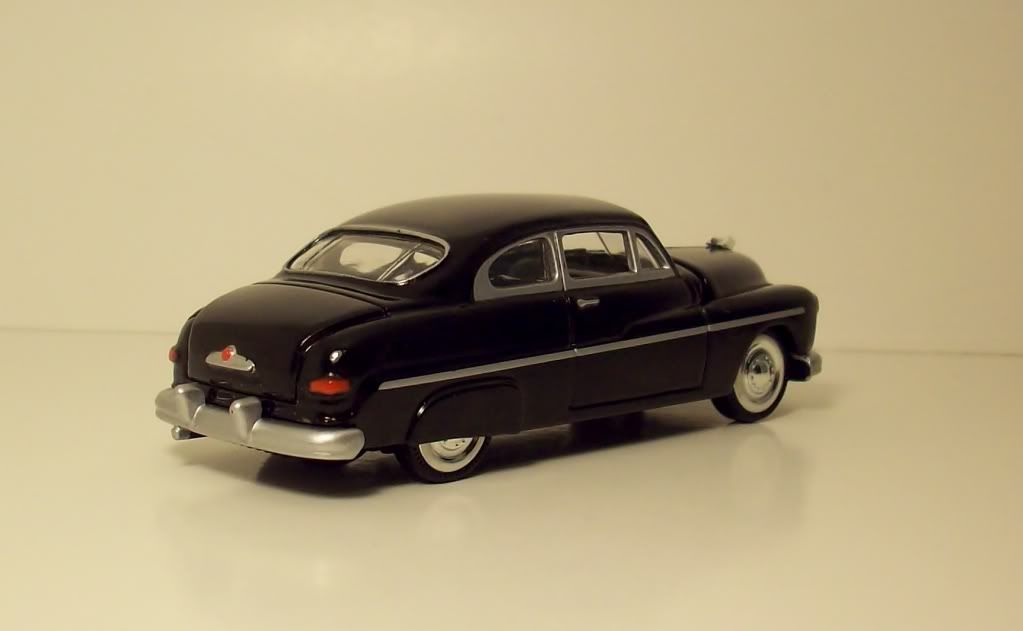
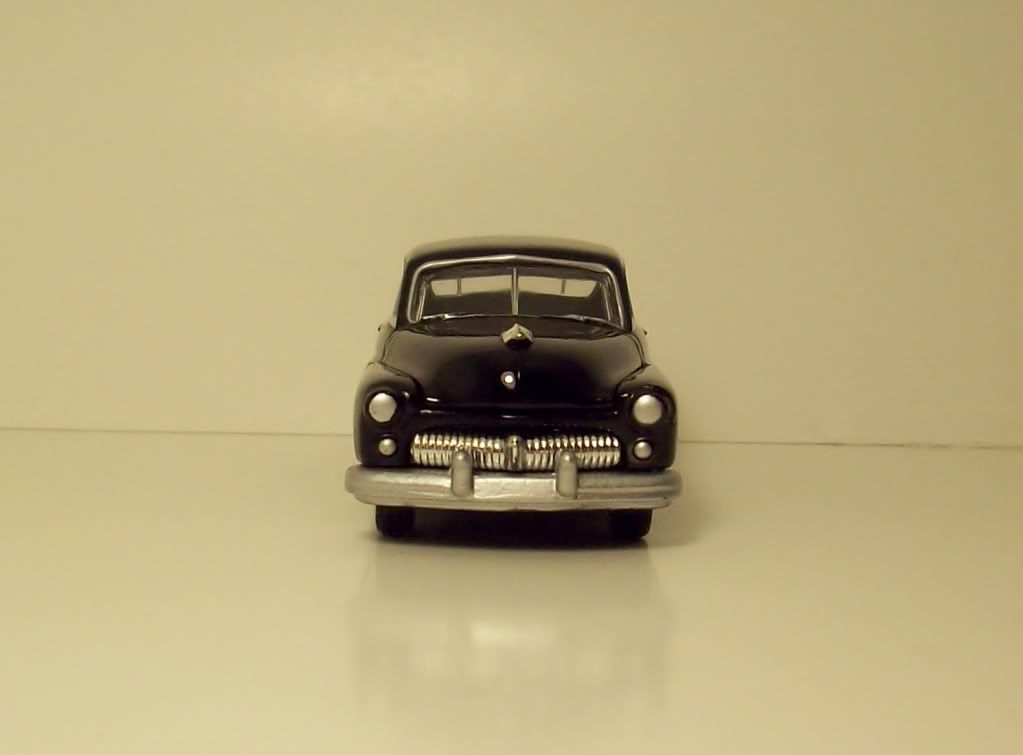
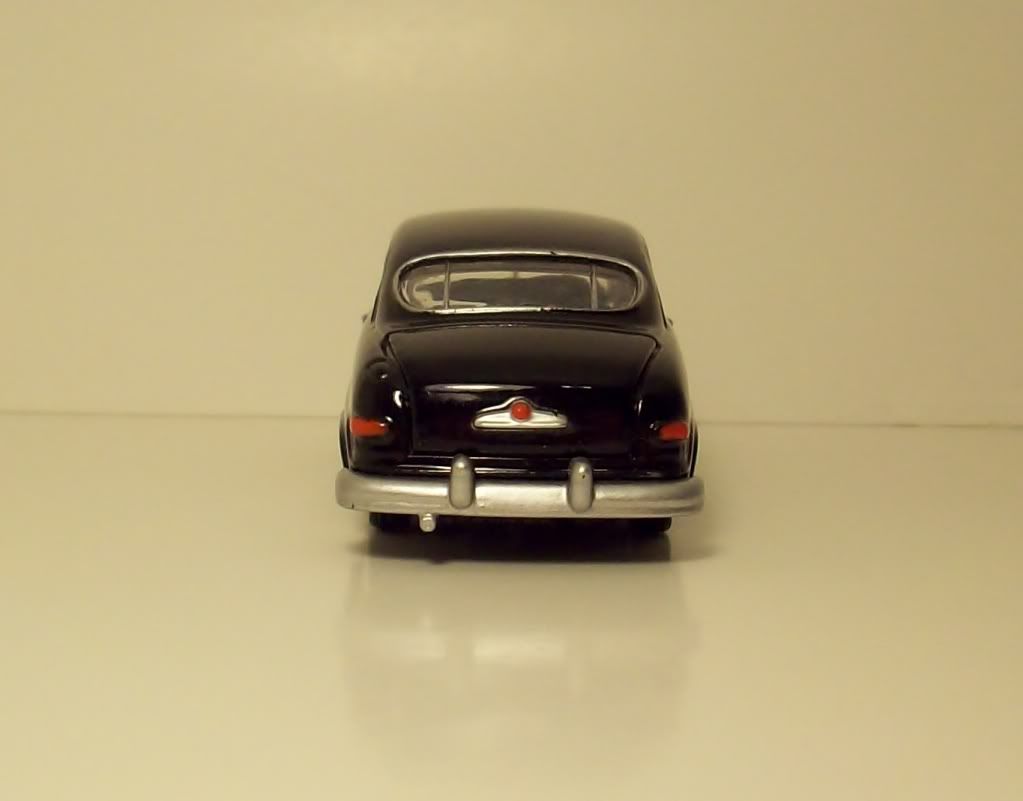
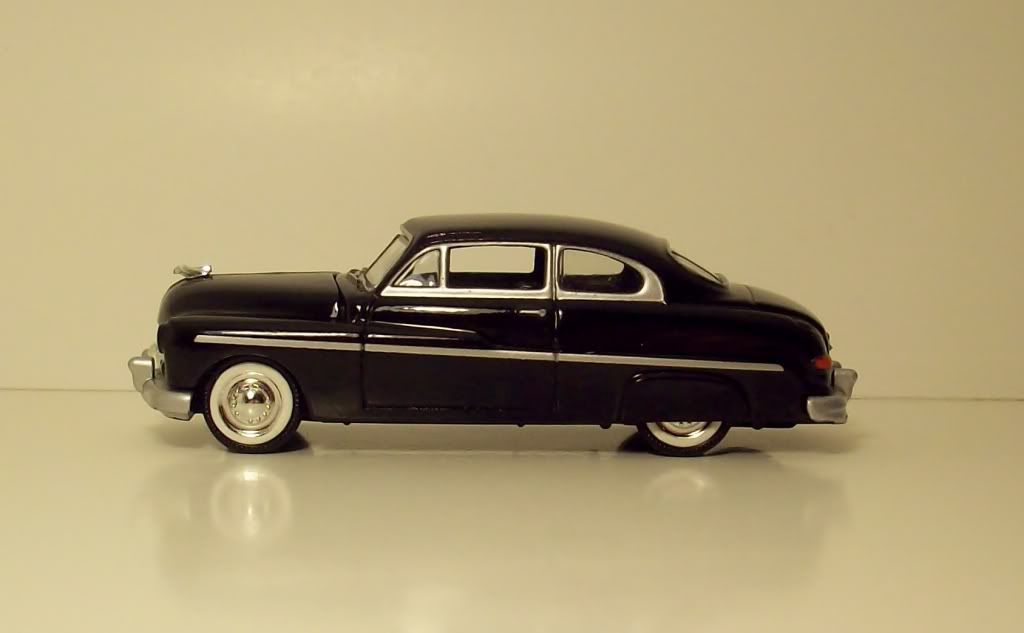
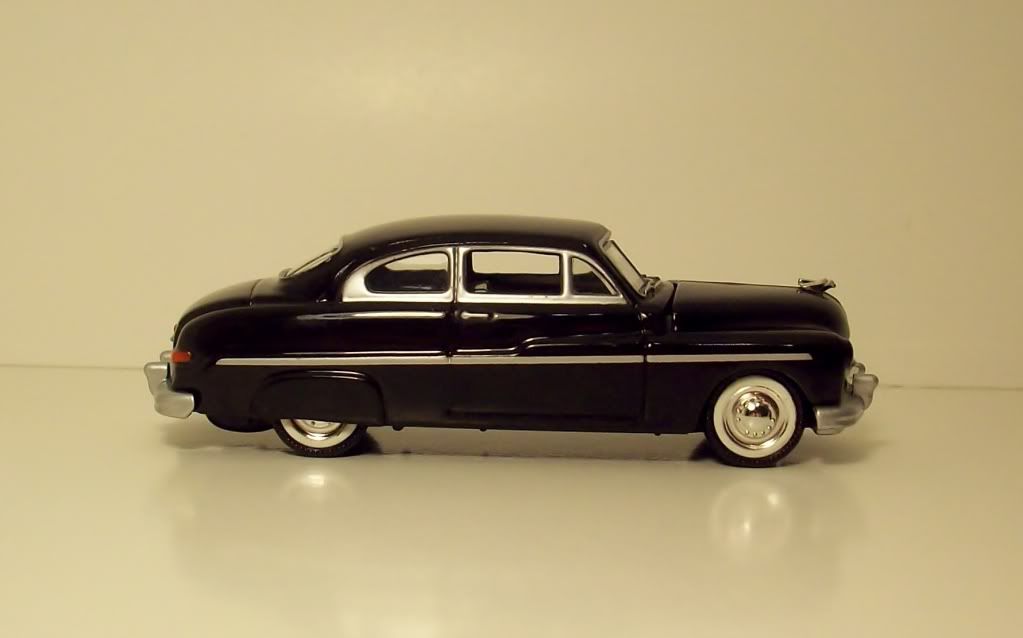
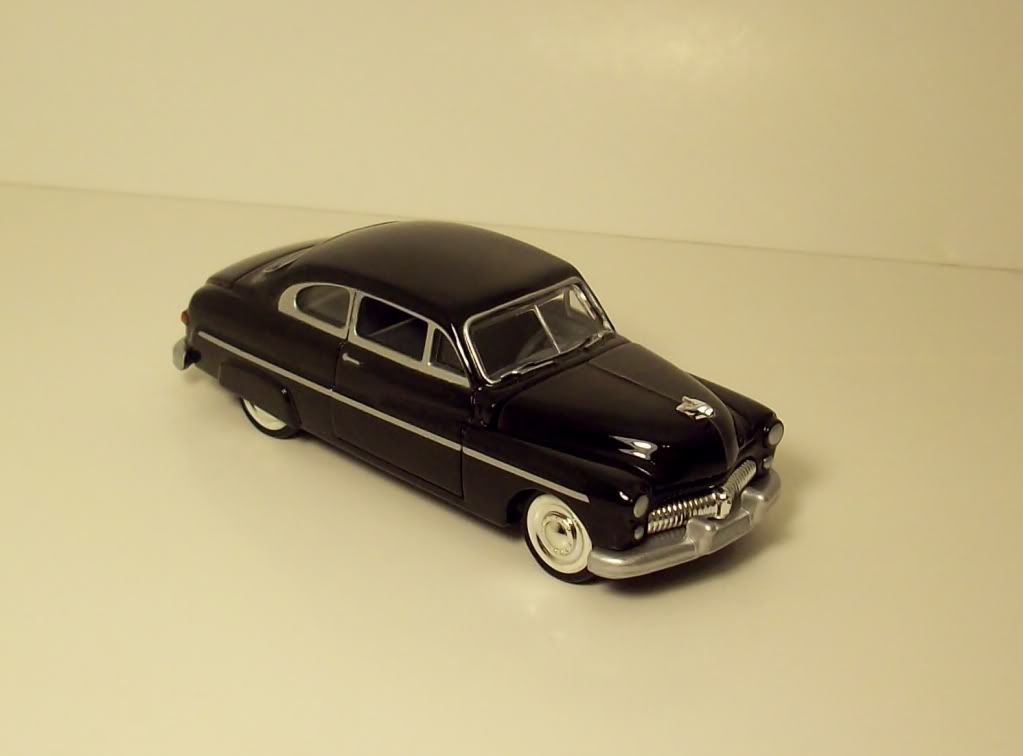
Today's car of the day is a Racing Champions 1949 Mercury Coupe


Wikipedia:
The Mercury Eight was the first Post War Mercury design, and the first named Mercury model (earlier Mercury vehicles had carried only the brand name). The engine was a Flathead V8 that produced slightly more power than the also newly designed 1949 Ford. The styling of the Mercury Eight, when it was released in 1949, was successful in both ending the monotony of warmed-over pre-war style, and differentiating Mercury from its comparable Ford cousin, a trick that spelled sales success. Sales figures for both Ford and Mercury broke records in 1949. The new approach to styling was also evident in the new luxury sedan Lincoln Cosmopolitian also introduced in 1949.


For more information on the 1949 Mercury here is the link: http://en.wikipedia.org/wiki/1949_Mercury


This one is in my movie car collection. Its the car from Rebel without a Cause starring James Dean. '49 Mercs are really not my thing but if the interpretation of the car rolls across my path that I like, I normally pick it up. This one looks really good in hand and its just a stock looking car too.


Within its era and beyond, the Mercury Eight was popular with customizers. In 1949, Sam Barris built the first lead sled from a 1949 Mercury Eight; the Eight became a definitive lead sled, much like the Ford V-8 was becoming the definitive hot rod. The Eights were among the first models to receive an aftermarket OHV engine swap, since Oldsmobile and Cadillac had developed the first high-compression OHV V8 engines in 1949, whereas Ford was still using their sidevalve engine.

Fiberglass replicas of the 49 Mercury, inspired by Sam Barris's car, are still in production and are popular with custom car and hot rod enthusiasts.


I would buy JLs again if they made quality cars like this for $3.00. Ever since they went up in price, I have not step foot in any Wal Marts and TRUs for almost 2 weeks now. I just buy cars like these online. This one was acquired from the TTP.

Wednesday, July 13, 2011

Car of the Day: July 13, 2011


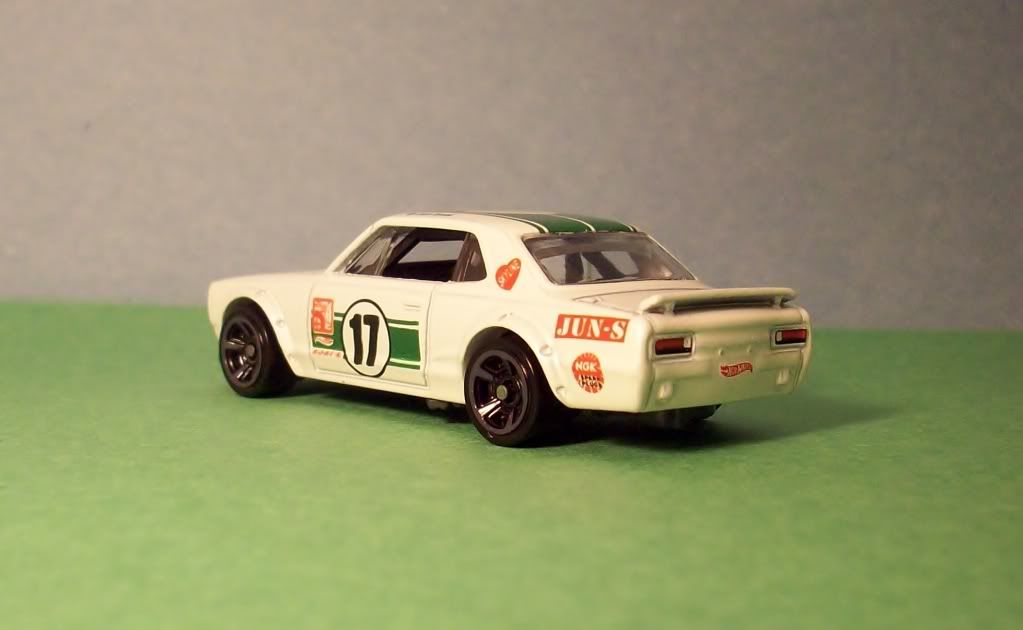
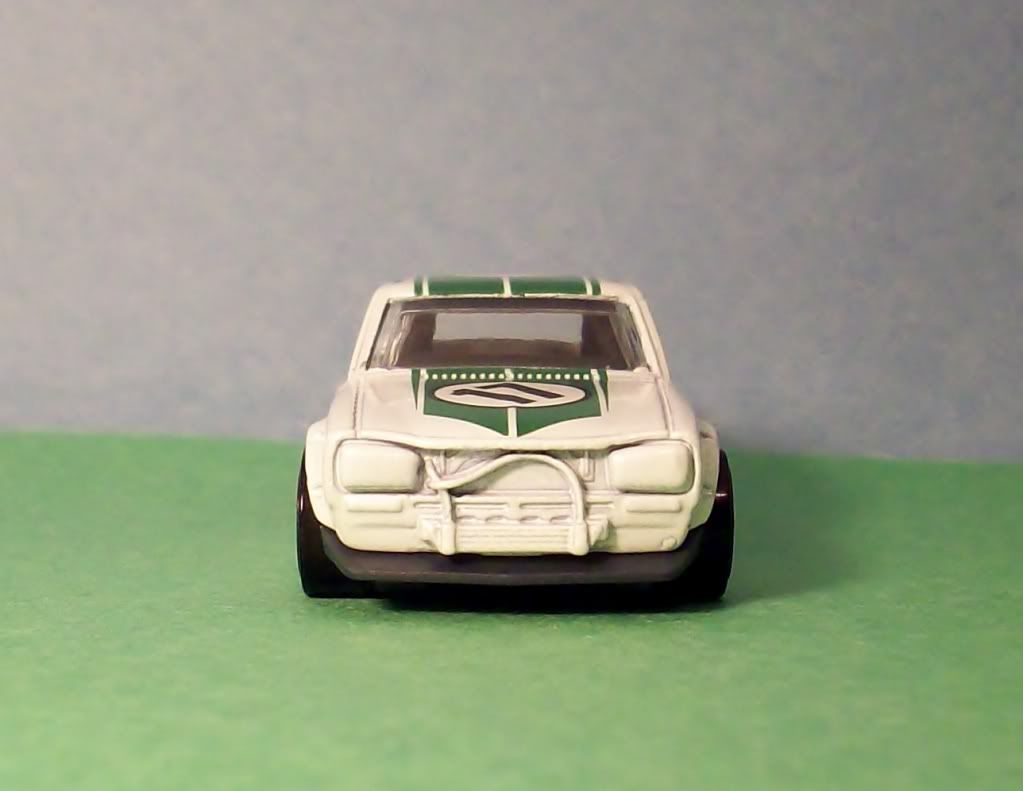
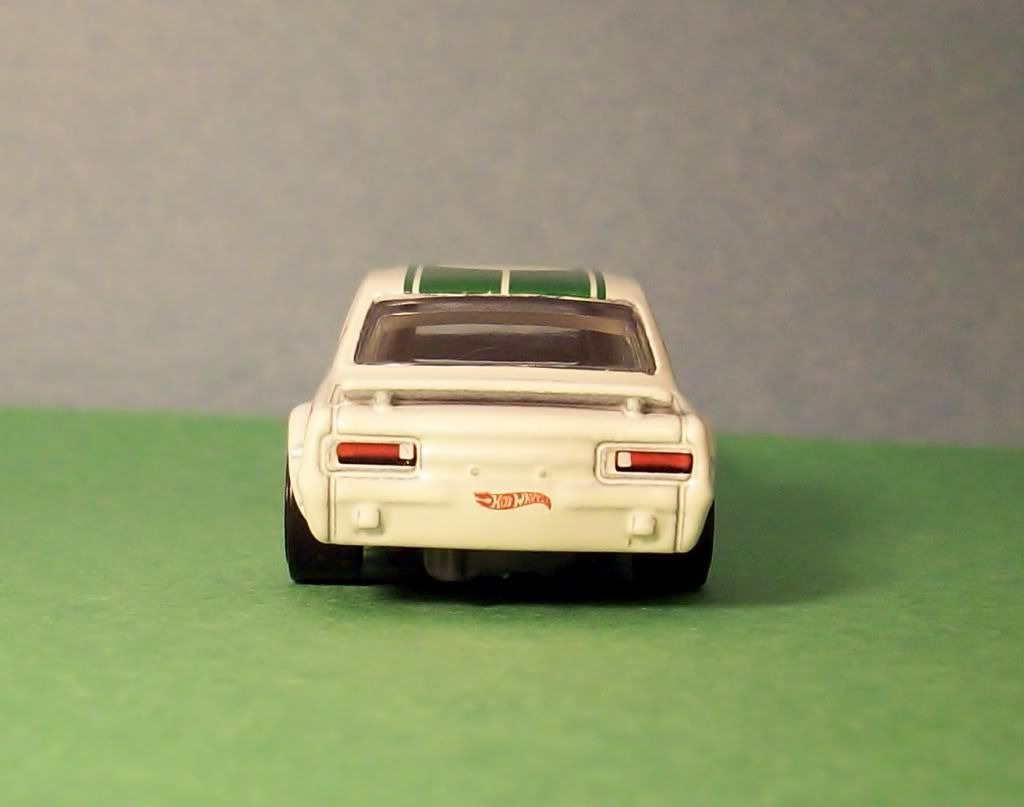
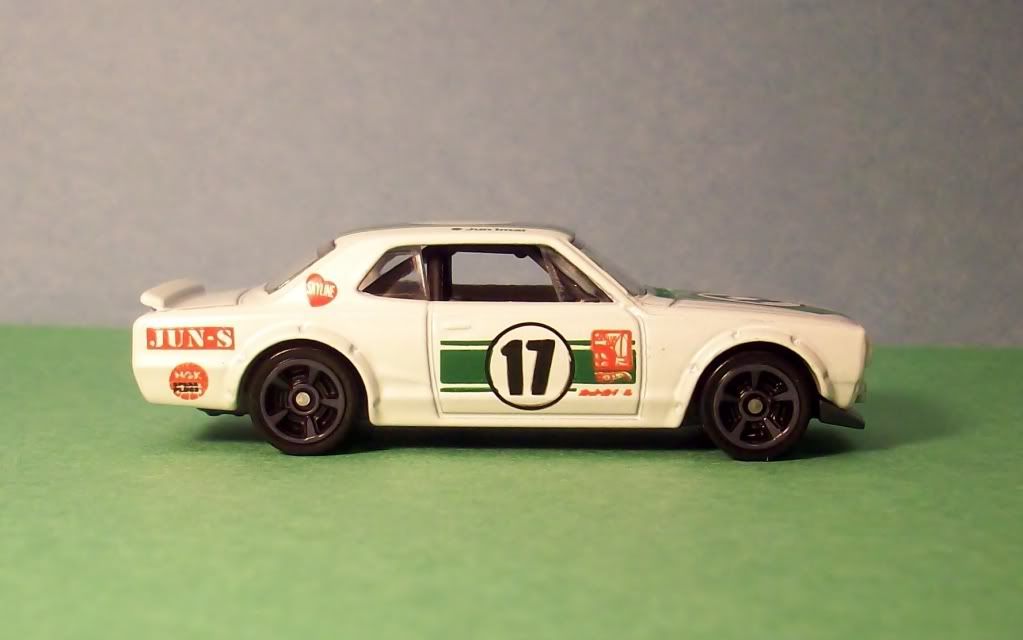
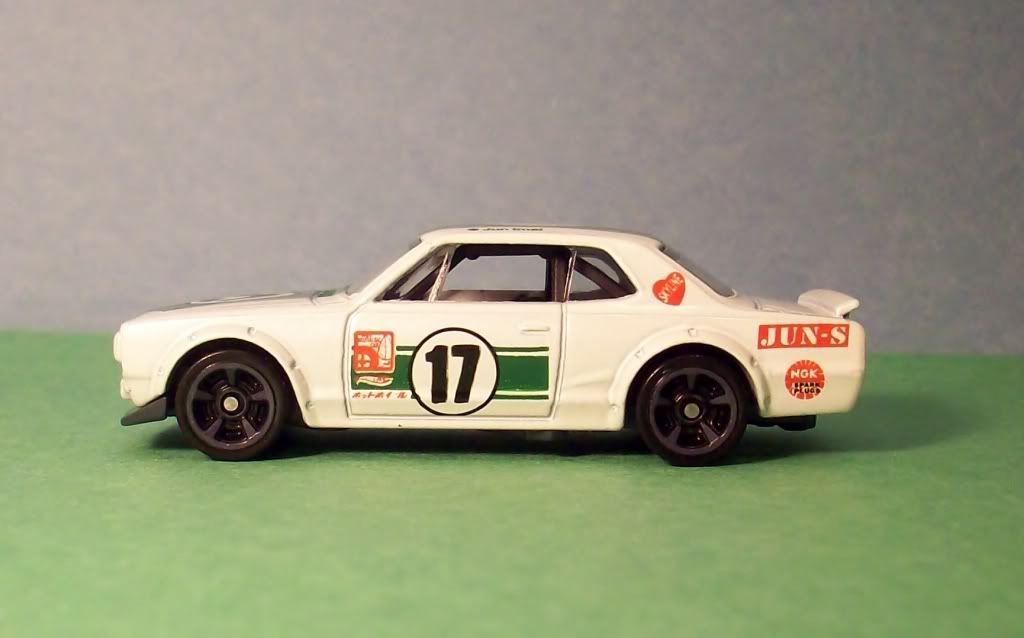
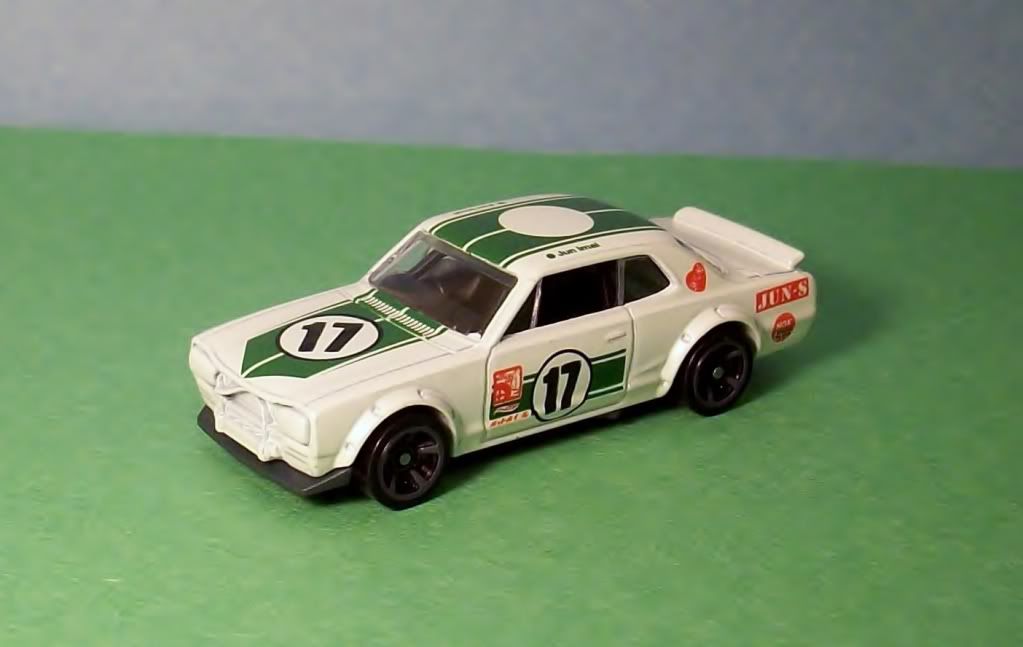
Today's car of the day is a Hot Wheels 1971 Nissan Skyline H/T 2000GT-X


Wikipedia:

The C10 series of 1968, which began its development under Prince at the company's Ogikubo R&D centre in the suburbs of Tokyo, was marketed with a Nissan badge. By the time the C10 went on sale, the Prince nameplate had been completely phased out on cars and trucks. The dealer network selling the cars became the Prince channel of Nissan, and the marketing group stayed at the Prince headquarters in Mita instead of moving to Nissan's headquarters in Ginza. The C10 Skyline was launched with Prince's 1.5 L OHC G15 I4 like the S57. A 1.8 L G18 version was also available.

A station wagon variant, known previously as the Prince Skyway, was offered with this generation. A hardtop coupé was introduced in October 1970.


For more information on the Nissan Skyline here is the link. http://en.wikipedia.org/wiki/Nissan_Skyline


There is not a whole lot of info on the internet for the GT-X compared to the GT-R. I picked this one up about a week and a half ago. I remember seeing it on the poster and knew I had to have one in my collection. I really like the older Import cars especially their racing versions. I'm just surprised this one did not come out in the Vintage racing series first.


In 1971, the KGC10 2000GT-X received a 2.0 L (1998 cc) L20 I6 engine instead of a Prince G-7 engine. The chassis was already designed to receive a straight six, to avoid the S54 extension problem. 120 hp (78 kW) was available from this new engine, in March 1972 Nissan introduced 4 Door Sedan GT-X.


I hope Mattel will continue to offer older Imports in their line up but I would rather have them in the Matchbox series. That way they don't have to screw up a nice looking sports car with having oversized large wheels in the back.

Tuesday, July 12, 2011


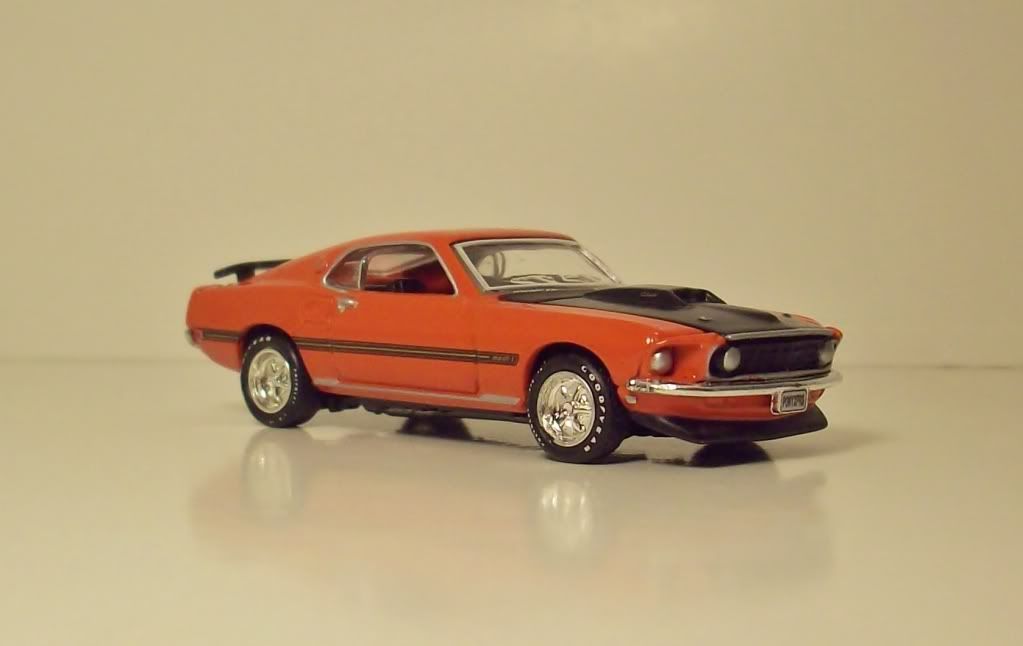
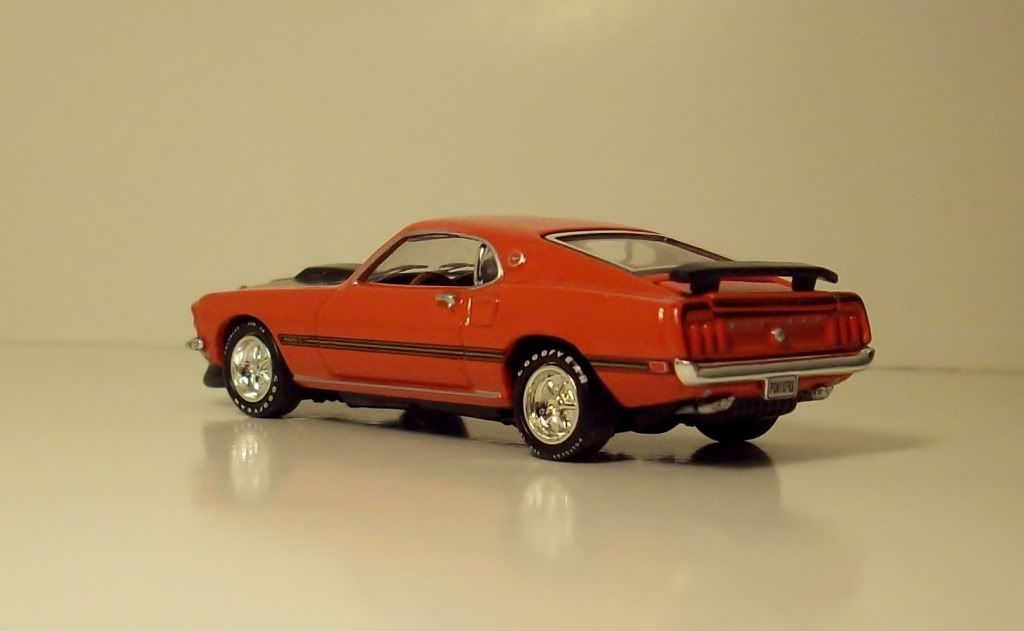
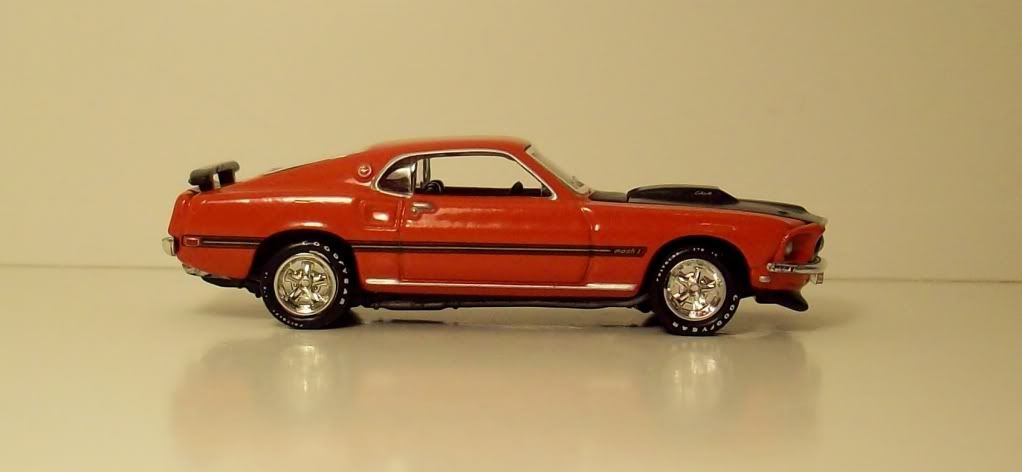
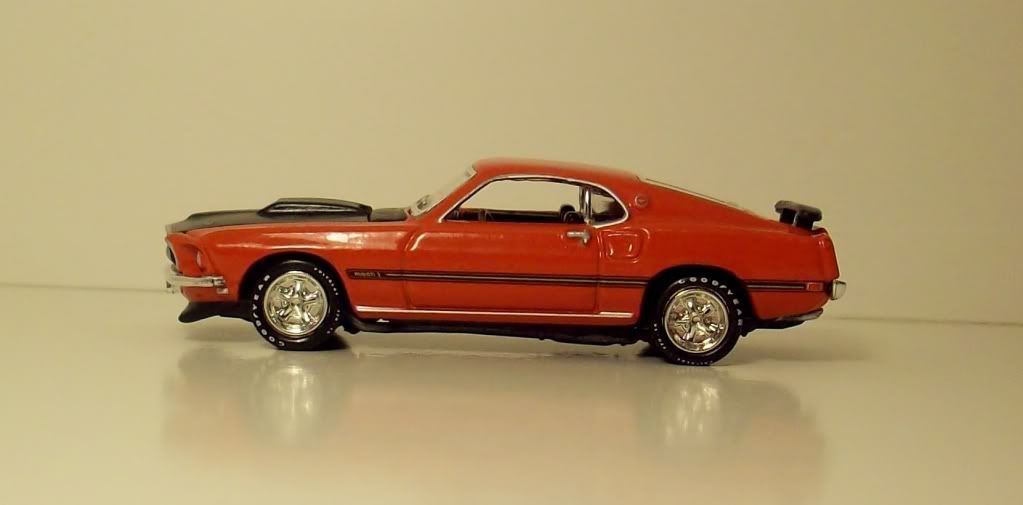
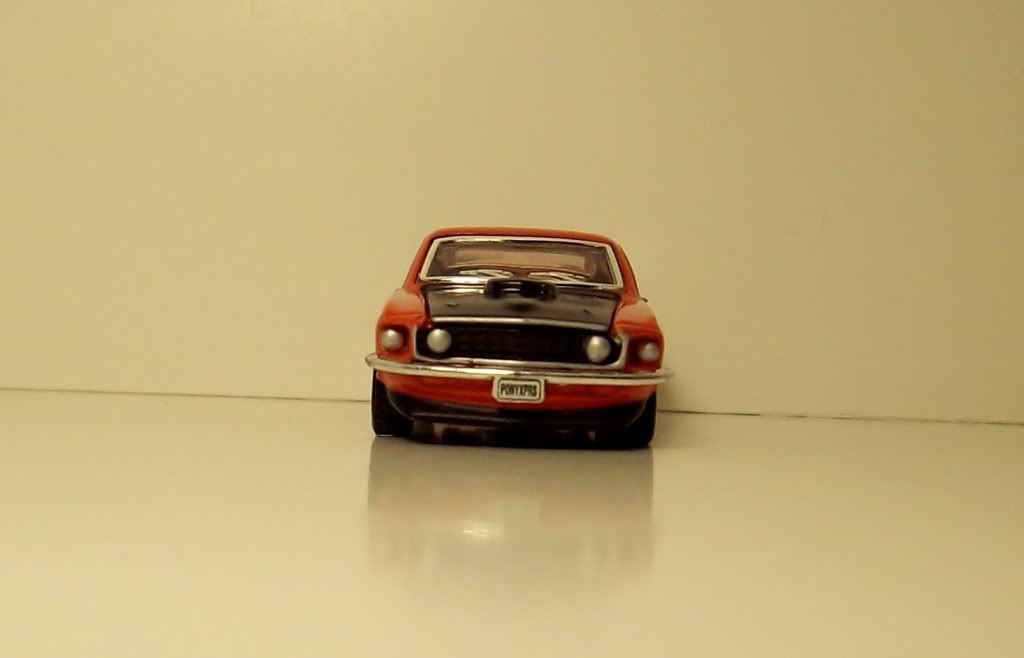
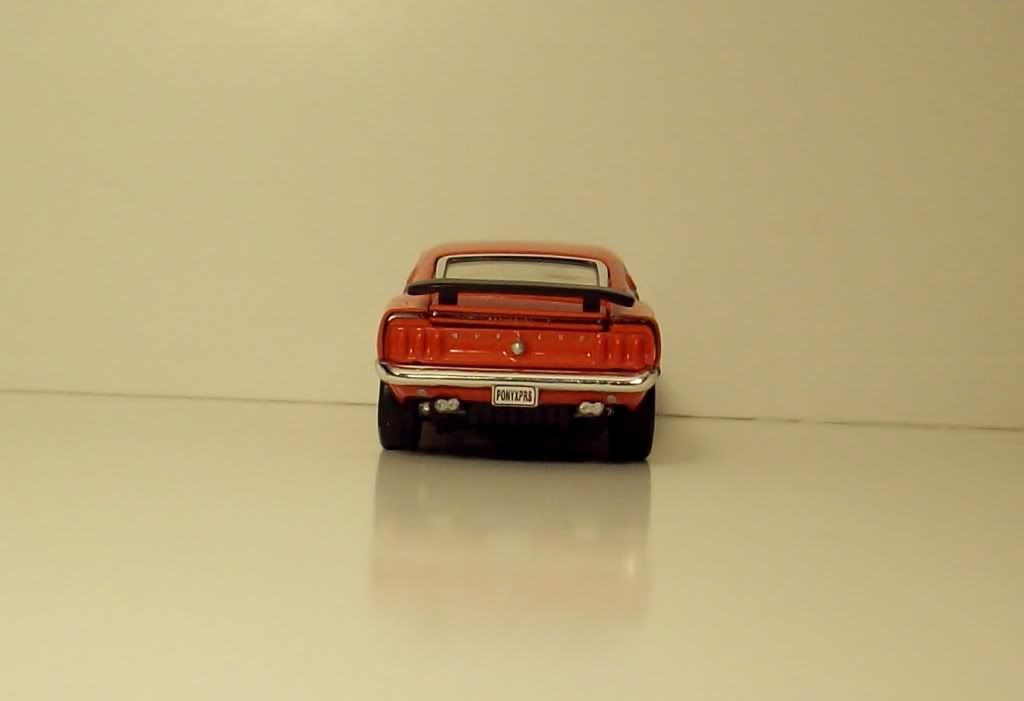
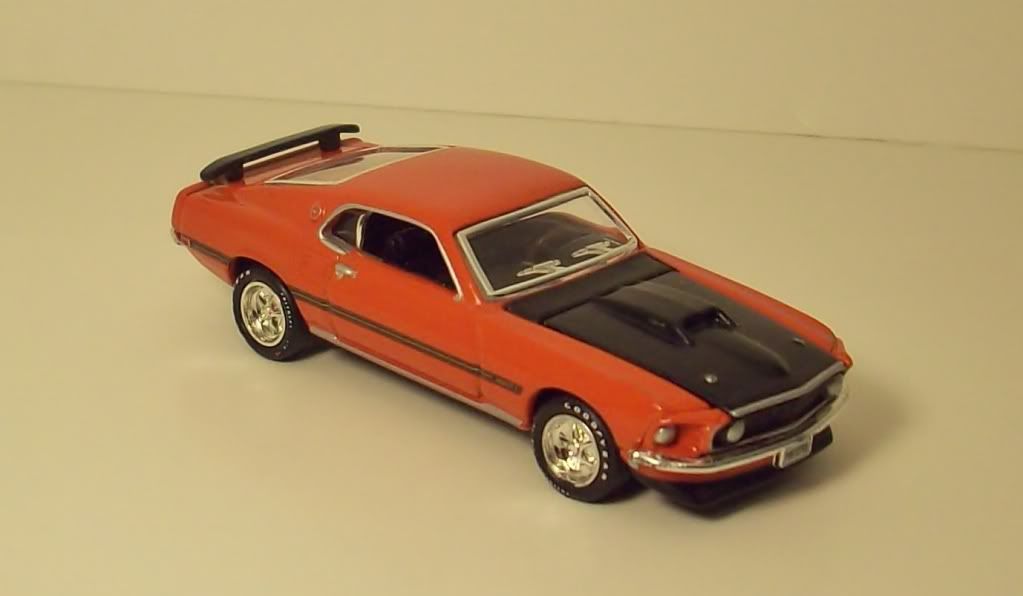
Today's car of the day is a Ertl Collectibles 1969 Ford Mustang Mach 1


Wikipedia

The Ford Mustang was introduced in 1964 as a sporty "pony car" to attract younger buyers into Ford products. After only a few short years of development, Ford saw the need to create performance Mustangs to compete with GM and their release of the Chevrolet Camaro and Pontiac Firebird. While several performance options had existed in the form of factory 289's (from the '65s on) & factory FE engines (new for 1967 with the S-Code Engine), the vast majority of Ford Mustang's performance mantle was carried by cars modified by the legendary Carroll Shelby. 1969 was the benchmark year for Ford Mustang in its proliferation of performance names and engines. No less than 7 factory performance Mustang models were available (Boss 302, Boss 429, Shelby GT350, GT500 and the Mach 1). Additionally, 9 variations of V-8s were available in the '69-'70 cars. The GT model was discontinued after 1969.(1969 GT sales had dropped to 4,973 vs 72,458 1969 Mach 1's sold.) The "GT" Mustang would not be around again until 1982 on the Fox body platform.


For more information here is the link. http://en.wikipedia.org/wiki/Ford_Mustang_Mach_1


I wished I did my COTDS before diecastdingo did his. That way my cars won't look so lame compared to Patricks. Well, here is my shot at it. When I first saw this on one the tables at my HWs club I knew I would bringing this beauty home with me. Ertl collectibles did a very fine job on this one and I do have a soft spot for '69 and '70 Mustangs.


The new Mustang chassis, the last of the 1st generation models, allowed for larger engines than previous generations and could fit even the monstrous 429 for Ford's planned homologation of the engine for NASCAR competition. For Ford, the Mach 1 was introduced as an in-between model, a fit between the lower priced GT and the track oriented Boss 302s and 429s. The Mach 1 started with the fastback "Sports Roof" body and added several visual and performance enhancing items such as matte black hood with hood pins, chrome gas cap and wheels, chrome exhaust tips (except 351W 2V), and dealer optional chin and rear deck spoilers, and louvers. Standard equipment was a 351W 2V Windsor motor with a 3 speed manual transmission, and a 9" 28 spline open rear axle. A 351W 4V was optional as was a 390 4V, and the huge 428 4V Cobra Jet or with the "drag pack" option, the 428 4V Super Cobra Jet. A 4 speed manual or 3 speed FMX (small block)/C6 (big block) automatic transmission was optional, and the 428SCJ added a cast iron tailshaft in place of the regular aluminum one to the C6. A "traction lok" rear axle was optional, and the 428 CJ/SCJ included a "traction lok" with a 3.91 or 4.30 ratio, 31 spline axle shafts and a nodular case. In 1970, the 3.91 ratio was a "traction-lok", while the 4:30 ratio was a Detroit locker.


Mach 1s came with upgraded suspension to varying degrees dependent upon powertrain choices. Big block cars had front shock tower reinforcement, thicker sway bars (no rear bar for 69), and heavier springs and shocks. 428 CJ/SCJ 4 speed cars also came with staggered rear shocks. Standard on Mach 1s was a fierce but cosmetic hood scoop that had integrated turn-signal lights mounted in the back. A more functional option was the signature "Shaker hood", an air scoop mounted directly to the top of the motor, used to collect fresh air and so named for its tendency to "shake" above the rumbling V-8 below. The interior came complete with teak wood grain details, full sound deadening material and high-back sport bucket seats. The name Mach 1 could not have been more appropriate as in 1969, Performance Buyer's Digest put a new Mach 1 through its paces at Bonneville, breaking some 295 USAC speed and endurance records. Ford kept the Mach 1 alive into 1970 and little changed outside the visual. New Mach 1 specific bucket seats, Magnum 500 wheels, recessed taillights on a black honeycomb rear panel as well as new side and rear badging and striping were the main visual differences. Outselling the base GT model, Ford canceled the GT altogether to make the Mach 1 the primary street performance Mustang.

Monday, July 11, 2011

Car of the Day: July 11, 2011


Today's Car of the Day is the Tomica Limited Vintage neo Isuzu Gemini ZZ/R


Wikipedia

The Isuzu Gemini was a compact car built, in several generations, by Isuzu and sold from 1974 to 2000. The same basic product was built and/or sold under several other names, sometimes by other General Motors brands, in various markets around the world. The first Gemini was the Bellett Gemini, first seen in November 1974. It was based on the third-generation Opel Kadett C on the General Motors T-car platform and came in four-door sedan and two-door coupe body styles. The chassis code was PF50, although the later 1.8 liter versions were called PF60 and the diesels PFD60.


The T-car was sold around the world under different names: Chevrolet Chevette, Pontiac T1000, Holden Gemini, Isuzu Piazza, Opel Kadett, Vauxhall Chevette, Bedford Chevanne, Pontiac Acadian and Daewoo Maepsy.


In June 1979, the Gemini received a new slant nose with rectangular headlights and a redesigned rear end. The changes were actually more comprehensive than that, also including a redesigned (longer) engine bay and a wider radiator opening for two new engines added in November (the twin cam G180W and the new 4FB1 diesel) which both required wider radiators for more air for cooling.

In Japan, sports models were available under the names ZZ/R, ZZ/T and ZZ/E. These were equipped with an Isuzu G180W 8-valve DOHC 1.8-liter engine, most commonly fuel injected, producing 97kW at the flywheel. These models also came with a shortened remote throw manual shift lever and optional factory LSD differential.


Here in Australia, we got the Holden Gemini ZZ/Z - which looked pretty much identical, and had all the go-faster body kit, but none of the "go faster' engines. Go figure.

For more information and pictures of the real car please visit: http://en.wikipedia.org/wiki/Isuzu_Gemini


Well, that was my five days - hope you like some of them - and yes, the "theme" was "car brands which don't exist anymore".

Sunday, July 10, 2011

Car of the Day: July 10, 2011


Today's Car of the Day is the Grell Auto Union 1000SP.


Wikipedia

The Auto Union 1000 was a compact front wheel drive saloon manufactured by Auto Union AG between 1958 and 1963. It was the first (and in many markets the last) model branded as an Auto Union by the manufacturer since the 1930s: it replaced the paradoxically named DKW 3=6, although the latter continued in production, reassuringly now branded as the DKW 900, for another year. The two cars were broadly similar, but the new car had its two stroke engine enlarged to 981 cc yielding a 10% - 37% (according to model) power increase.[/quote]


Appearing in 1958 was the Auto Union 1000 Sp, a low slung two seater sports car that was produced for Auto Union by the Stuttgart coach builders, Baur. The fixed head version was joined in 1961 by a cabriolet. Adorned with tail fins, the stylish modern look of the car gave rise to the "baby Thunderbird" (schmalspur Thunderbird) soubriquet in the press, and belied the fact that it was, under the skin, another Auto Union 1000, albeit one with an increased compression ratio and a claimed maximum of 55 bhp (41 kW) to place on the road. The 1000 Sp was lower but not (assuming only two people were in the car) significantly lighter than the standard bodied saloon: a claimed maximum speed of 140 km/h (87 mph) nevertheless put its performance at the top of the range.


The Düsseldorf plant produced 171,008 Auto Union 1000s during the six year model run. The pretty 1000 Sp sports version continued in production for another two years, till 1965, notching up sales of approximately 5,000 for the hard top version and 1,640 for the cabriolet.


The Auto Union and DKW brands were later discontinued after VW bought the company and re-launched the Four Rings under the Audi banner. Grell did a really good job of bringing us the two-stroke wonders of both East and West Germany and as far as I know no other model of this car has been made in small scale.

For more information and pictures of the real car please visit: http://en.wikipedia.org/wiki/Auto_Union_1000

Saturday, July 9, 2011

Car of the Day: July 9, 2011

Someone was getting very close to the theme - as I said, it isn't hard...


Today's Car of the Day is the Konami Prince Skyline Sport.


Wikipedia

The first Skyline was introduced in April 1957, by the Prince Motor Company, and was marketed as a luxury car. It featured a 1.5 L (1482 cc) GA-30 engine producing 44 kW (60 hp) @ 4400 rpm. It used a de Dion tube rear suspension and was capable of 140 km/h (87 mph). The car weighed around 1300 kg. Prince Skylines were produced as four door sedans and five door station wagons.
The Skyline also spawned a pickup truck and a delivery van called the Prince Skyway.


The Skyline Sport featured hand-built Michelotti bodies in stylish coupe and convertible versions. These cars used the 1.9 L (1862 cc/113 in³) GB-30 engine, producing 96 hp (72 kW) and 113.5 ft·lbf (154 N m). While only a few hundred were built, Prince Motors had a very aggressive product placement group and they can be seen (along the company's mainstream models) in many Toho films of the early 1960s.


Prince merged with Nissan in 1966 and the "Prince" name for cars and trucks was phased out by 1968.


And yes, this one was also in Gran Turismo and I raced, but it was no good really. :wacko:


For more information and pictures of the real car please visit: http://en.wikipedia.org/wiki/Nissan_Skyline