A blog focusing on 1/64 diecast from such popular brands as Hot Wheels, Matchbox, Johnny Lightning, M2 Machines, GreenLight, Tomica, Yat Ming, Majorette, MotorMax, Siku, Corgi, Guisval, Playart, Ertl, Zylmex, Racing Champions, & many more. Swifty's Garage features a daily Car Of The Day and news updates from your favorite brands!
Monday, July 25, 2011
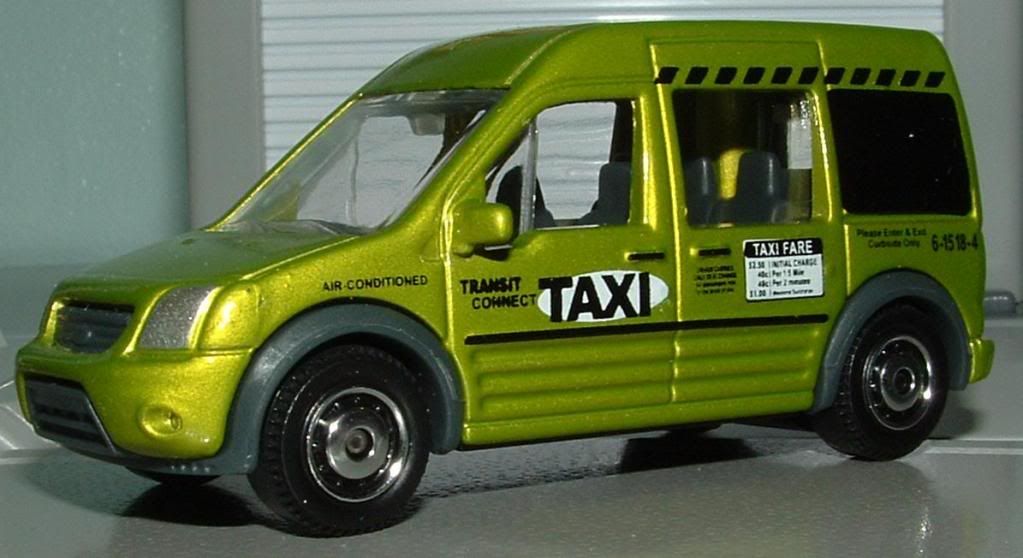
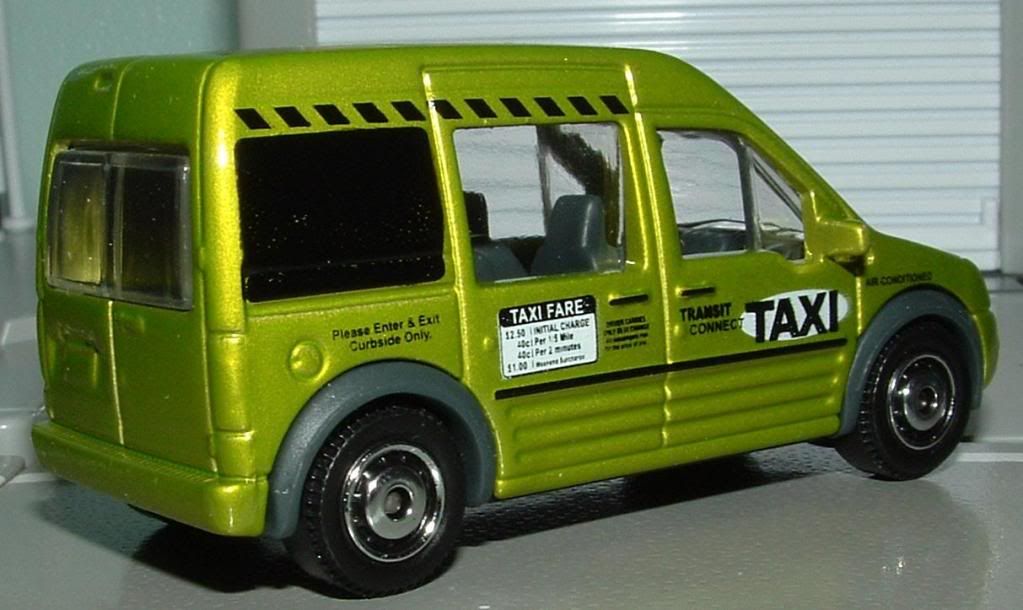
Taxi Of The Day: July 25, 2011
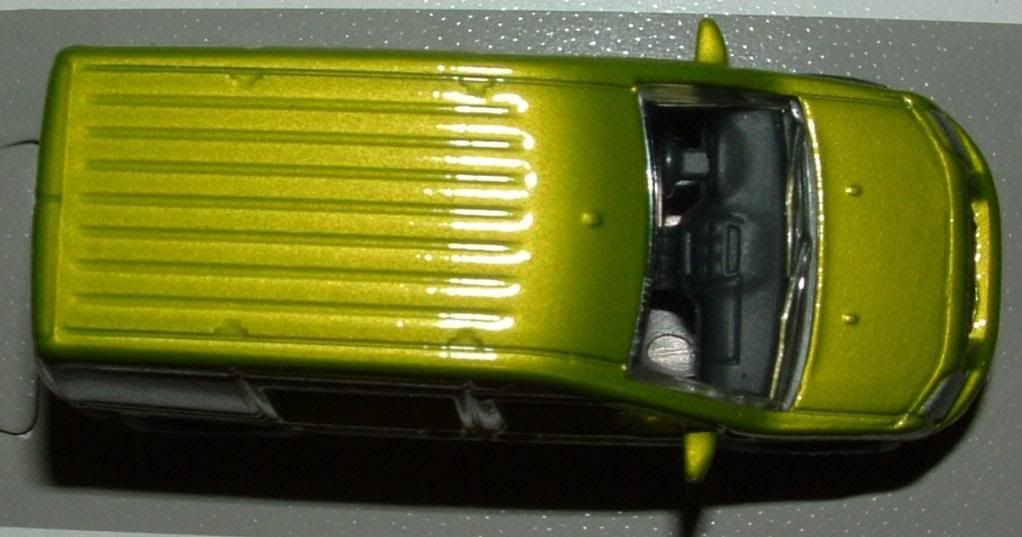
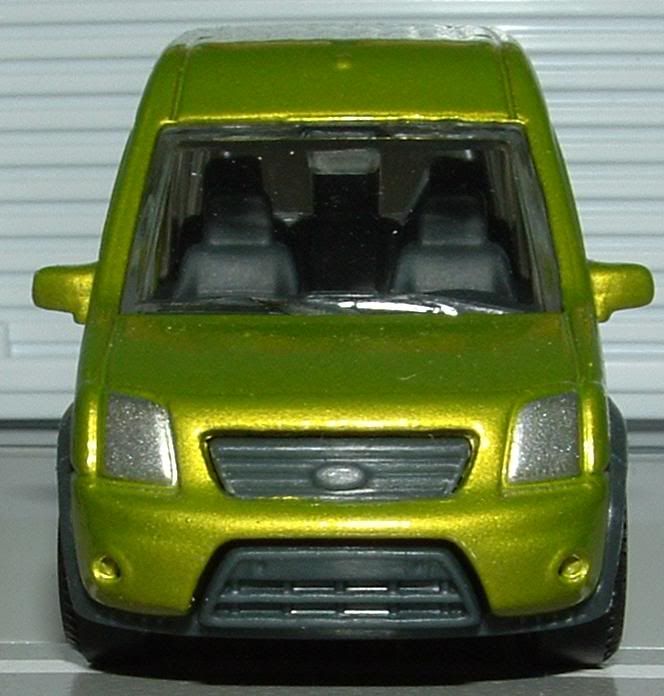
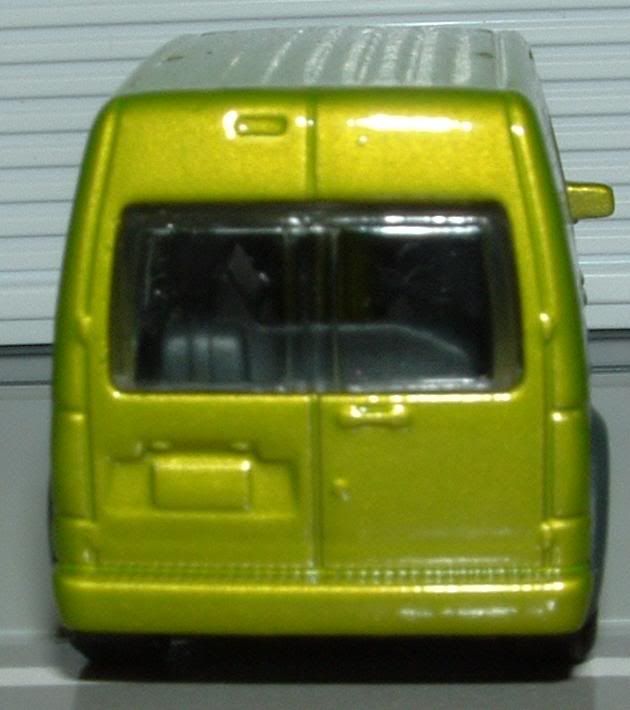
Today's car of the day is Matchbox's 2010 Ford Transit Connect.
The Ford Transit Connect is a compact panel van developed by Ford Europe and designed by Peter Horbury, introduced in 2002 to replace the older Ford Escort and Fiesta-based Courier van ranges, which had ceased production in the same year.
The Ford Tourneo Connect, a leisure activity vehicle, is a Transit Connect with side windows and rear seats. All North American Transit Connects destined for the USA are imported as passenger vehicles to circumvent the 25% "Chicken Tax" on imported light trucks.
The Transit Connect employs the front-wheel drive Ford C170 platform of the original international Ford Focus—the same platform currently used with the North American Ford Focus. Other than the name, it shares few components with the Transit. The Connect is manufactured by Otosan in an all new production plant at Gölcük, near Kocaeli, Turkey, and since September 2009 in Romania by Automobile Craiova.
The Ford Transit Connect was awarded "Van of the Year 2004" by Professional Van and Light Truck Magazine. In its first year on the North American market, the Transit Connect was awarded "North American Truck of the Year 2010" at the North American International Auto Show (NAIAS).
For more information and pictures of the real car please visit: Ford Transit Connect
Here's a nice model from Matchbox in a tasteful color scheme. Something that will likely be a thing of the past with Matchbox's new focus on ugly graphics and bright colors. Since Ford will be selling a civilian version here I hope we get a plain (non-taxi) version eventually.
Since mid-2009, the Transit Connect has been imported to the United States and Canada. It was first shown in the United States at the 2008 Chicago Auto Show and the 2010 production model was introduced at the following year's show on February 11, 2009. The introduction of the North American variant coincided with a mid-cycle facelift which includes a restyled front grille, a deeper front bumper and a new dashboard featuring the switchgear and instrument pod from the C307 Focus.
Initially, only the long-wheelbase version of the van, outfitted with a 2.0L four-cylinder petrol engine and 4 speed automatic transmission, was offered in North America; elsewhere, the 1.8L diesel engine and 5 speed manual transmission was the only available powertrain. An electric version is to follow about a year after launch, converted by Azure Dynamics Corporation at a U.S. facility.
To build up interest and awareness in North America, Transit Connects specifically equipped as "mobile showrooms" were taken to industrial parks and other appropriate venues in 13 U.S. urban areas in May 2009, with the goal of offering 3,000 test drives to small business owners.
Starting in 2011, Ford will offer a Transit Connect XLT Premium Wagon in the USA and Canada, a more stylish and personal version of the utilitarian van. It will include seating for five, rear windows that pop open for ventalation, BLIS blind spot awareness, rear view camera, larger alloy wheels, body-color grille, and front fog lamps. The Transit Connect Wagon will be the first Ford minivan since the 2007 discontinuation of the Freestar; however, it is closer in size to the standard length Ford Aerostar sold from 1986 to 1997.
Sunday, July 24, 2011
Car Of The Day: July 24, 2011
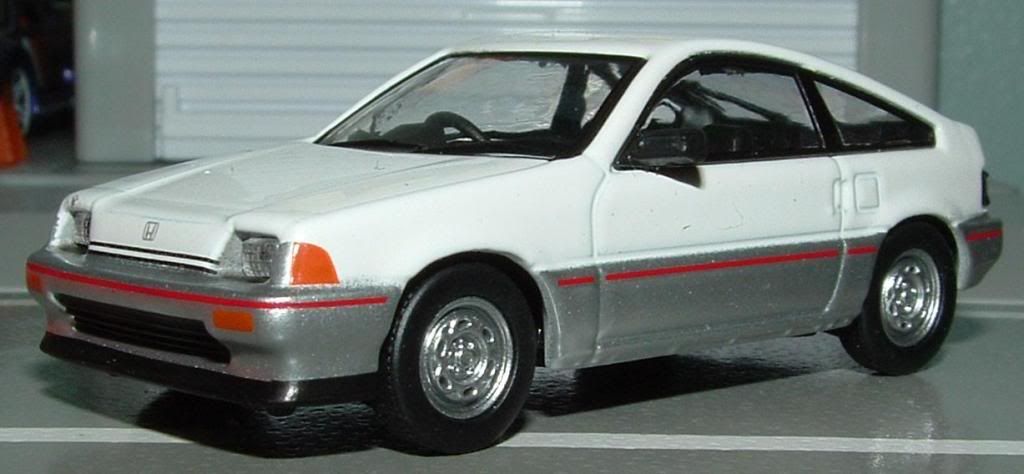
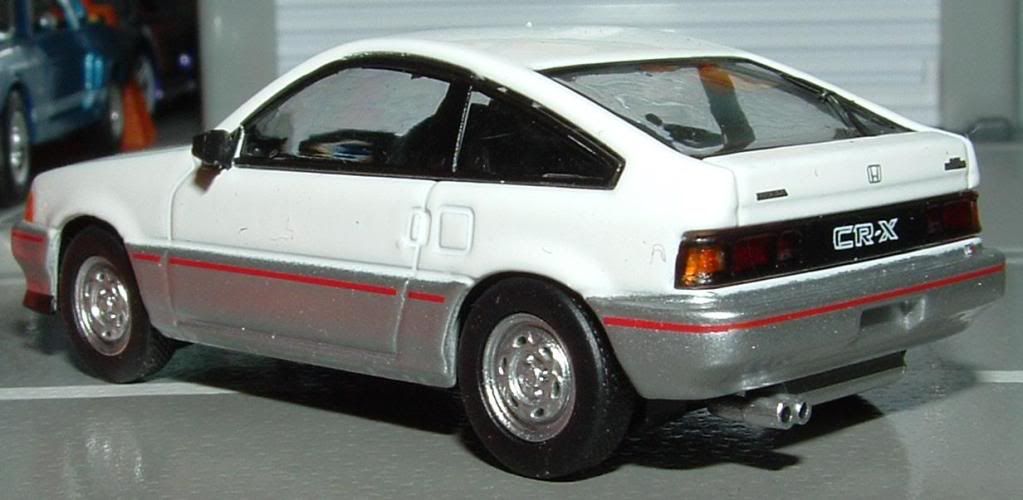
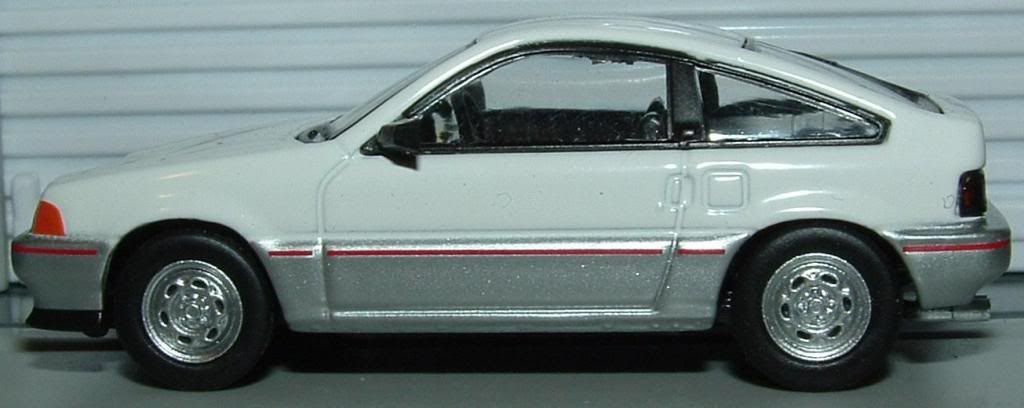
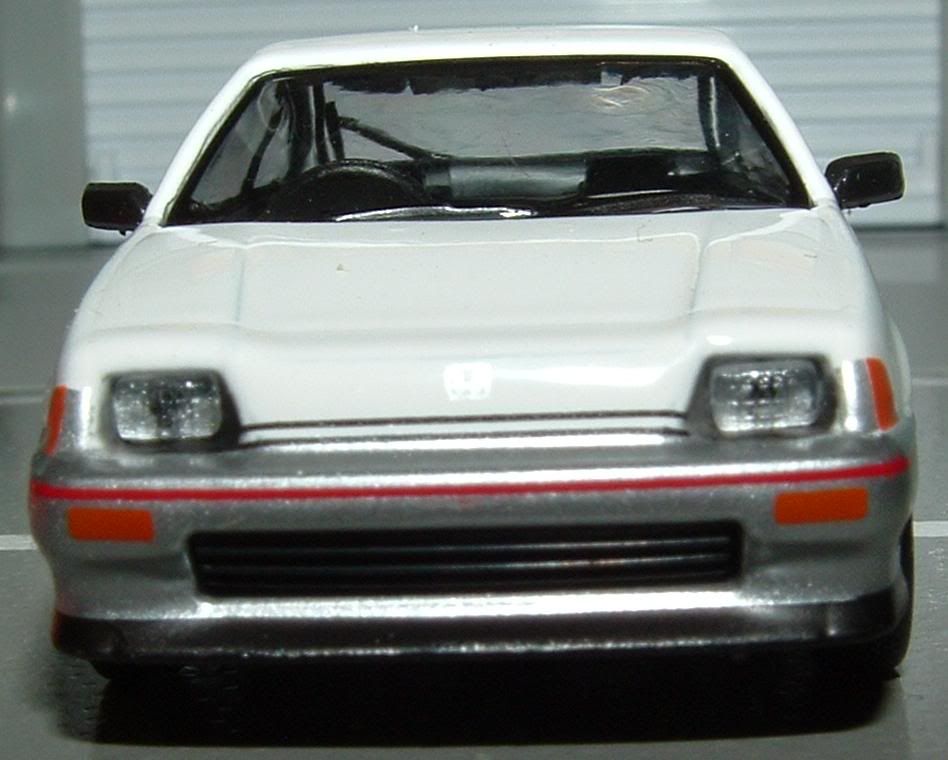
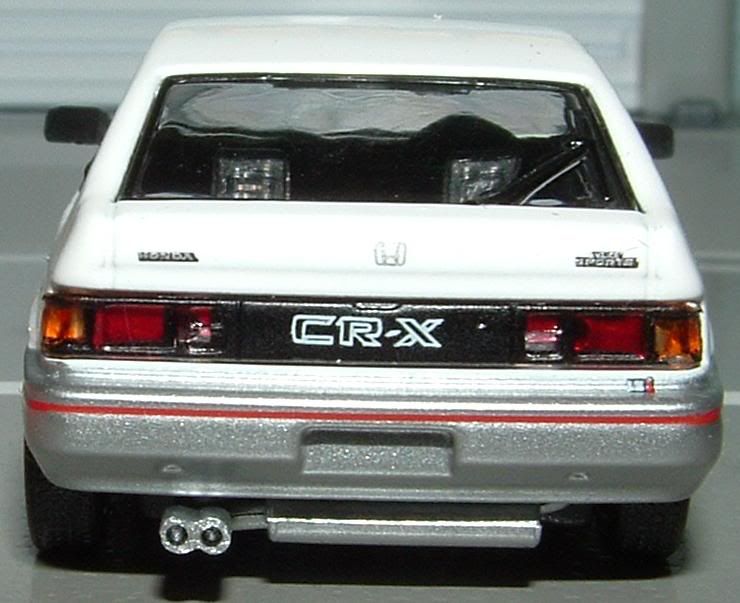
Today's car of the day is Kyosho's 1984 Honda CR-X.
The Honda CR-X, originally launched as the Honda Ballade Sports CR-X in Japan, was a front-wheel-drive sports compact car manufactured by Honda. The first generation CR-X was sold in some regions outside Japan as the Honda Civic CR-X.
In the US-spec, the CR-X was marketed as an economy sport hatchback, having room for just two passengers. EU-spec, however, received a more powerful ZC 130 hp (97 kW) engine and 2+2 seats. Redesigned in 1988 and produced to 1991, the CR-X was popular for its performance, nimble handling, and good fuel economy. In the US its performance model, the Si (with the SOHC (D16A6) not the equally-sized JDM Si 1590cc (ZC) DOHC engine), was a favorite. Honda's 1992 CRX del Sol was marketed as a CR-X in some markets.
The original 1.3 liter car (chassis code AE532) and the later 1.5 liter American-market CR-X HF (High Fuel economy) model (chassis codes EC1 and AF) could reliably achieve very good gas mileage, more than a decade before gas-electric hybrids appeared on the market, and at no price premium over the base model; the 1.5 liter is rated by the U.S. Environmental Protection Agencyý (EPA) (under the new rating system) at 41 miles per U.S. gallon (5.7 l/100 km; 49 mpg-imp) city and 50 miles per U.S. gallon (4.7 l/100 km; 60 mpg-imp) highway. The Japanese Si and European 1.6i-16 models came with a 1590 cc DOHC engine putting out 135 bhp (101 kW; 137 PS) in the UK-spec model and 140 bhp (104 kW; 142 PS) in the JDM model. Though similar versions of the same engine, the Japanese Si engine was stamped ZC, whilst the European engine was stamped D16A9.
The chassis was significantly changed in 1987 from its original torsion bar front and semi-independent rear, to fully independent wishbones all around in line with its sister Civic/Ballade models. Outside of North America, this generation 2 CR-X was available with a 1495 cc sohc or an updated version of the 1590 cc DOHC ZC engine. Many of these were fitted with fuel injection as standard.
In September 1989 Honda also added the 1595 cc B16A VTEC engine to the lineup outside of America. The VTEC engine used Variable Valve Timing to provide increased power in the high rev range, while still allowing low fuel consumption and better idling at low RPMs. The B16A produced 150 bhp (112 kW; 152 PS) in the European 1.6i-VT model (where the engine bore the designation B16A1) and 157 bhp (117 kW; 159 PS) in the JDM SiR model. The CR-X was the second car to receive a VTEC engine, shortly after the Integra, although the CR-X was more popular and common.
The VTEC-equipped models also received a makeover, with updated bumpers, lights, bonnet/hood, brakes, suspension and dashboard design amongst other things. Additionally, some of these design changes were added to the concurrent non-VTEC models.
One of the options for the Japanese Domestic Market (JDM) CR-X was a glass roof, a fixed glass panel which stretched from the top of the windshield to the top of the hatch opening. Relatively common in Japan, these are sought-after models in other markets.
Second-generation CR-Xs in the US could choose between three different trim levels: The standard (unlabeled, sometimes called the "DX") with the 16-valve 1495 cc "D15B2" engine and Dual-Point Fuel Injection (DPFI), the HF ("High Fuel efficiency") model with the 8-valve 1495 cc "D15B6" engine and Multi-Point Fuel Injection (MPFI), or the Si ("Sports injected") model with the 16-valve 1590 cc "D16A6" engine and MPFI. "DX" models were available with an automatic transmission, all others had five-speed manuals. The Si models all came with a power sliding moonroof.
In 1992, Honda replaced the CR-X with a new, Targa topped, Civic-based model called the Honda Civic del Sol, otherwise known as simply the Honda del Sol. The del Sol was also badged as the CR-X del Sol in some markets, and known as simply the CR-X in others. It is because of this that the del Sol is generally considered the "3rd Generation CR-X" among enthusiasts, although it was arguably a very different car and Honda had seemingly quite different design goals when they built it. In the United States, the del Sol came in three trim lines: S (VXi in Japan, later VGi), Si (ESi in Europe), and VTEC (SiR in Japan and VTi in Europe) ; the 1994-1997 models featured a 160 hp (120 kW) DOHC VTEC-engine. Production of the del Sol ended in 1997, and thus, the CR-X line was retired.
Articles on the CR-X have compared its appearance to that of the Honda Insight.
Previous rumours of a CR-X comeback involved the Honda REMIX concept, which was presented at a Los Angeles International Auto Show. Designer Ben Davidson denies that any design elements were taken from the CR-X and Honda also claims there are no production plans for the REMIX; it was simply a design exercise.
For more information and pictures of the real car please visit: Honda CR-X
Here's an example from one of the latest Kyosho releases. As always, Kyosho's attention to detail is second to none.
The CR-X was Motor Trend's Import Car of the Millenium for 1990. It also made Car and Driver magazine's Ten Best list for 1985. The redesigned CR-X was on Car and Driver magazine's Ten Best list for 1988. The CR-X Si was Motor Trend's Import Car of the Year for 1988. The 1988 CR-X Si was named one of Road & Track's 10 Best Cars of All Time.
Saturday, July 23, 2011
Car Of The Day: July 23, 2011
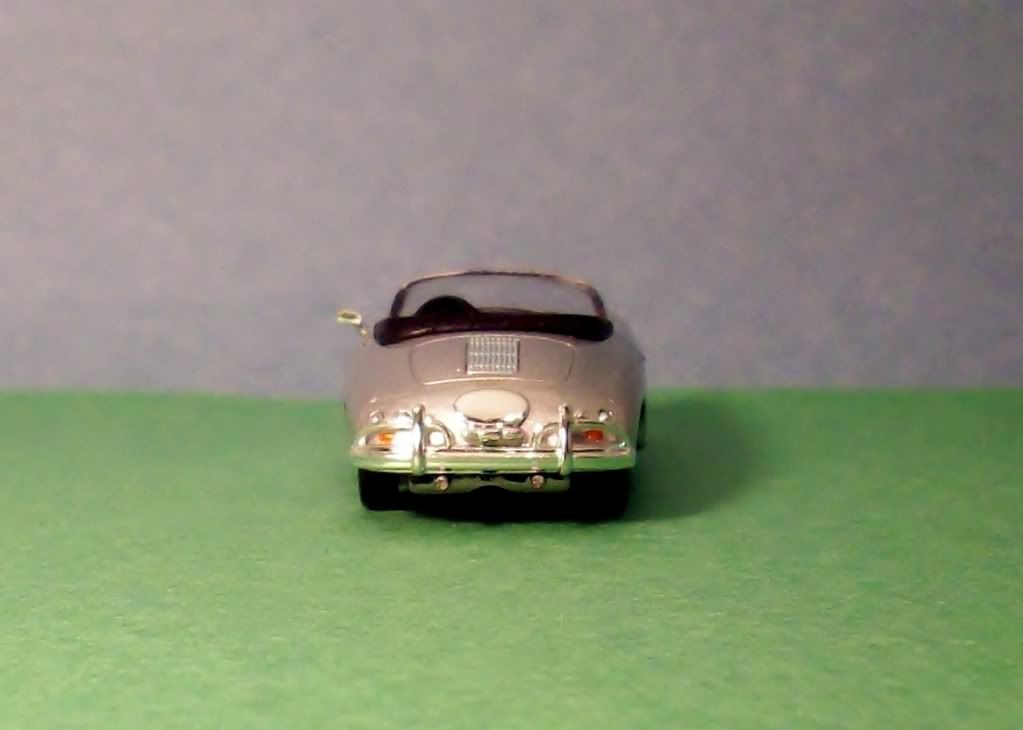
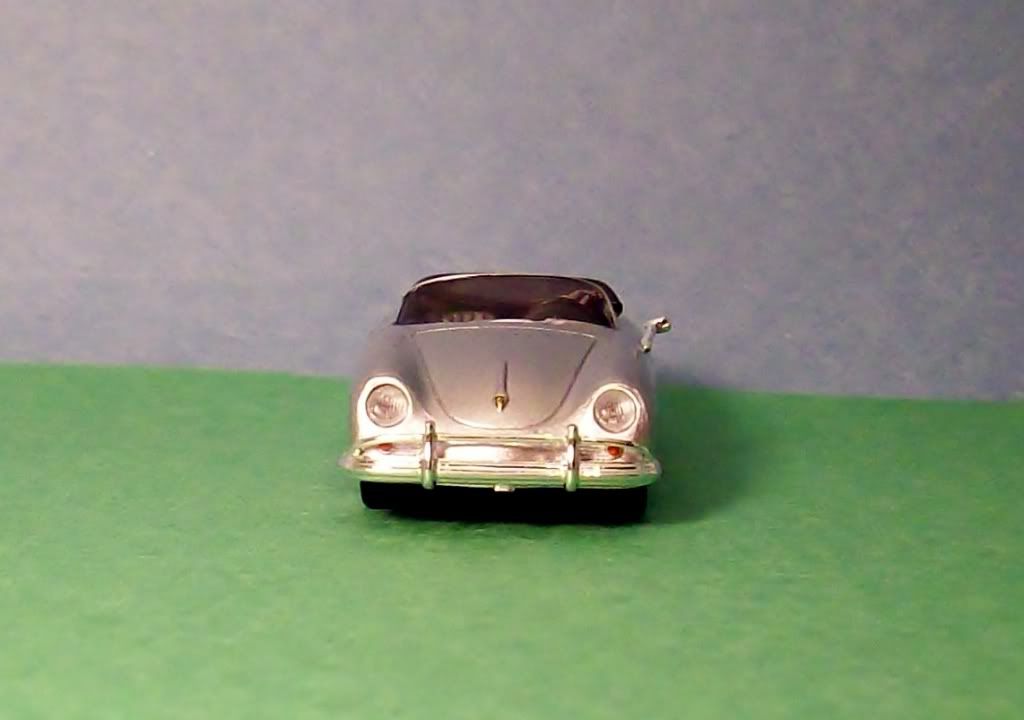
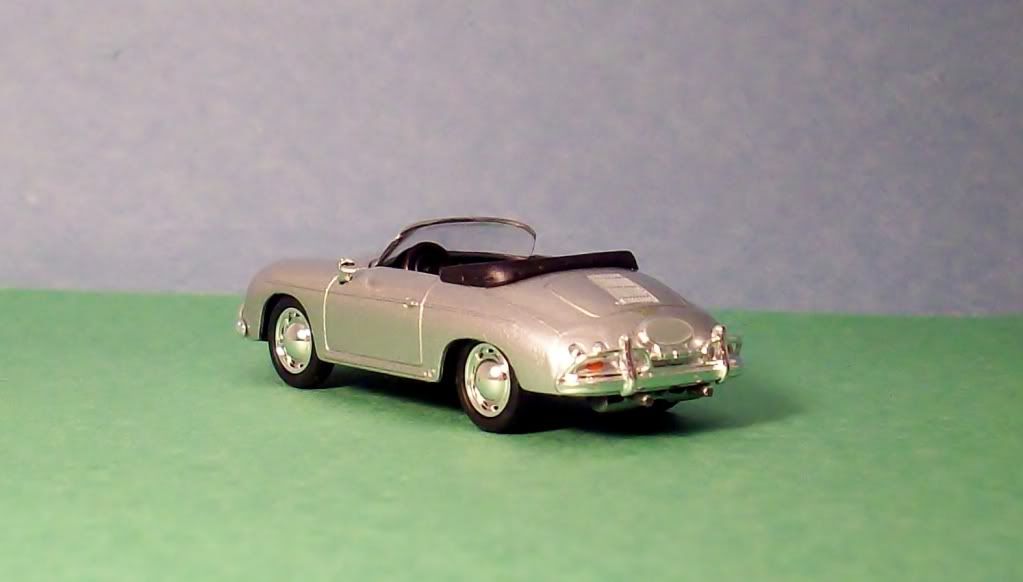
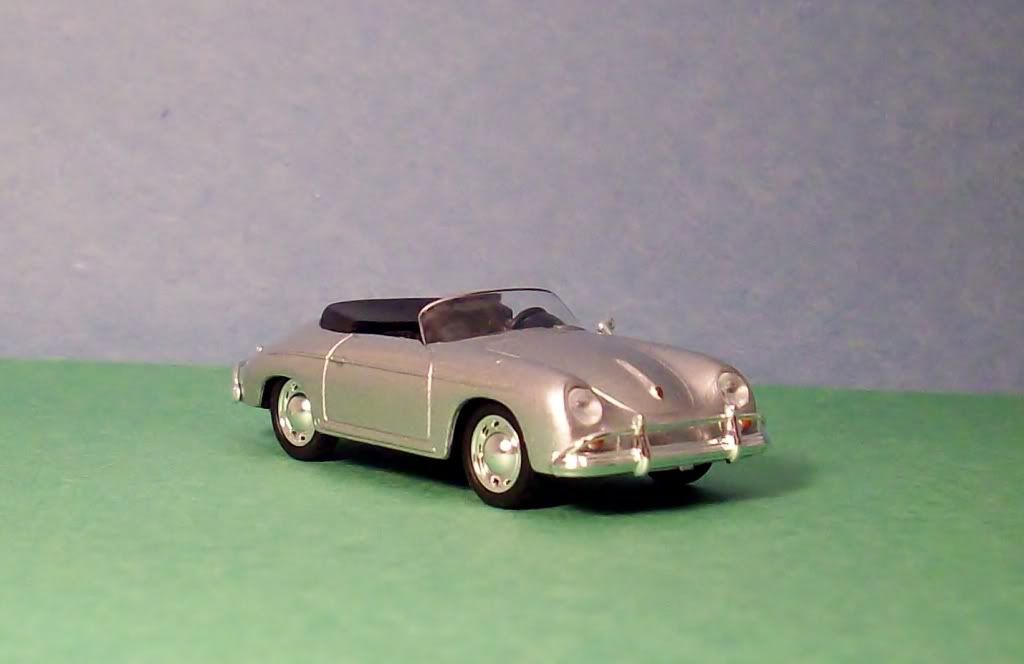
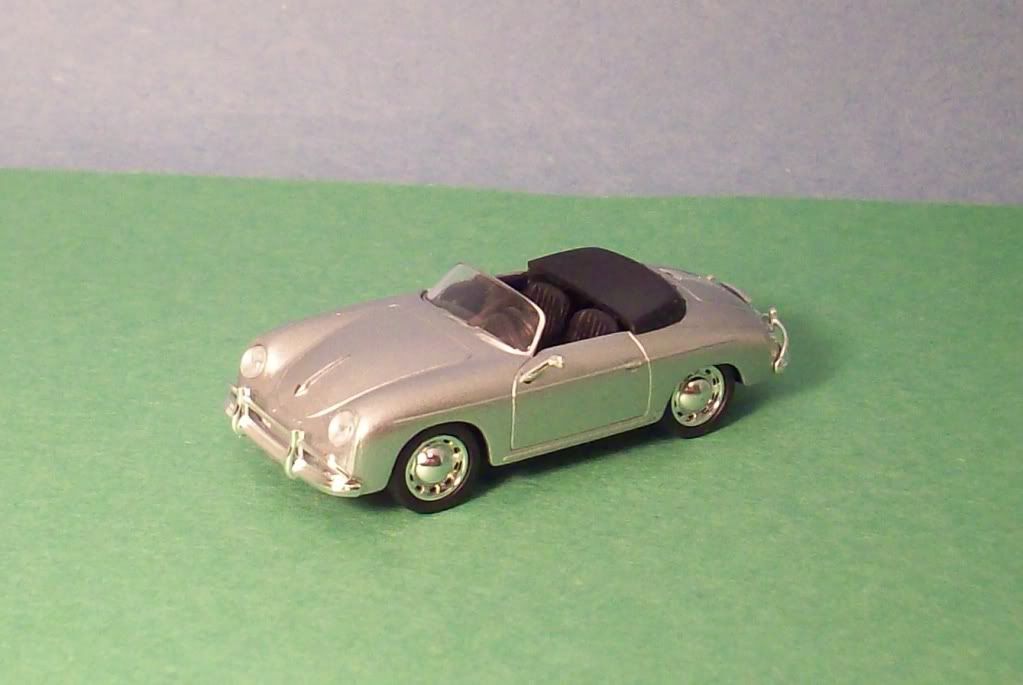
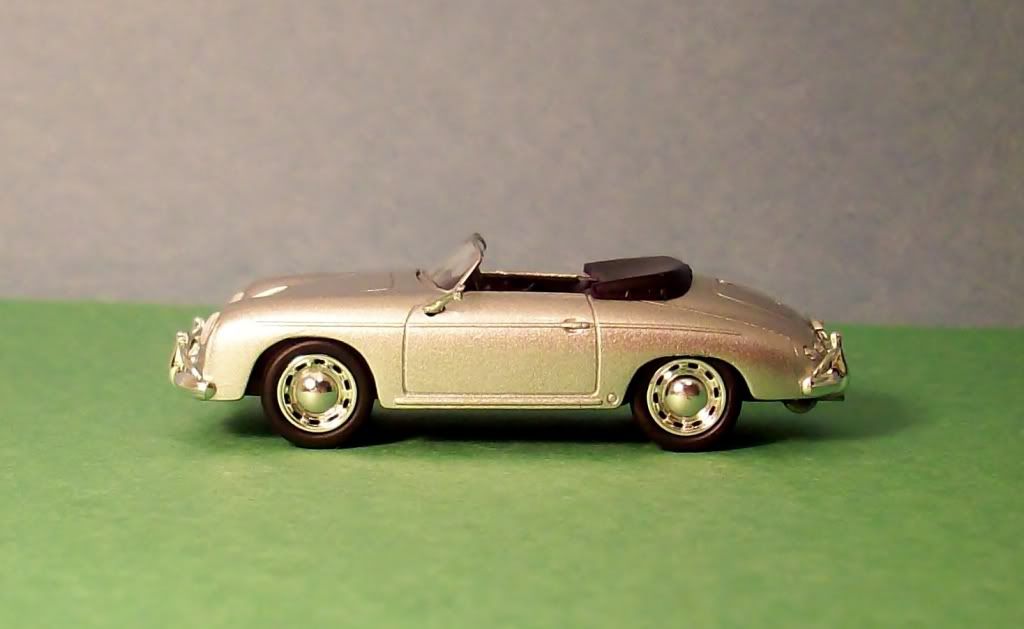
Today's car of the day is from Firehawk73's collection and is GreenLight Motor World's 1955 Porsche 356A Speedster.
The Porsche 356 was the company's first production automobile. It was a lightweight and nimble handling rear-engine rear-wheel-drive 2 door sports car available in hardtop coupe and open configurations. Design innovations continued during the years of manufacture, contributing to its motorsports success and popularity. Production started in 1948 at Gmünd, Austria where approximately 50 cars were built. In 1950 the factory relocated to Zuffenhausen, Germany and general production of the 356 continued until April 1965, well after the replacement model 911 made its autumn 1963 debut. It is estimated approximately half of the total production of 76,000 356s still survive.
For more information and pictures of the real car please visit: Porsche 356A
The Motor World series is entirely comprised of High Speed castings, and this is no exception. It's a great looking car- both the 1/1 and the replica seen here!
Prior to World War II Porsche designed and built three Type 64 cars for a 1939 Berlin to Rome race that was cancelled. In 1948 the mid-engine, tubular chassis 356 prototype called "No. 1" was completed. This led to some debate as to the "first" Porsche automobile, but the 356 is considered by Porsche to be its first production model.
The 356 was created by Ferdinand "Ferry" Porsche (son of Dr. Ing. Ferdinand Porsche, founder of the company). Like its cousin, the Volkswagen Beetle (which Ferdinand Porsche Senior had designed), the 356 was a four-cylinder, air-cooled, rear-engine, rear-wheel-drive car utilizing unitized pan and body construction. While the 356's body was an original design by Porsche employee Erwin Komenda, its mechanicals (including engine, suspension and chassis) were derived from the Volkswagen. The first 356 was road certified in Austria on June 8, 1948, and used many Volkswagen parts for manufacturing economy. Quickly though, Porsche re-engineered and refined the car with a focus on performance. By the late '50s much fewer parts were shared between Volkswagen and Porsche. The early 356 automobile bodies produced at Gmünd were handcrafted in aluminum, but when production moved to Zuffenhausen, Germany in 1950, models produced there were steel-bodied.
Little noticed at its inception, the first 356s sold primarily in Austria and Germany. It took Porsche two years, starting with the first prototype in 1948, to manufacture the first 50 automobiles. By the early 1950s the 356 had gained some renown among enthusiasts on both sides of the Atlantic for its aerodynamics, handling, and excellent build quality. It was common for owners to race the car as well as drive it on the street. Increasing success with its racing and road cars brought Porsche orders for over 10,000 units in 1964, and by the time 356 production ended in 1965 approximately 76,000 had been produced.
The basic design of the 356 remained the same throughout its lifespan, with evolutionary, functional improvements rather than annual superficial styling changes. Nevertheless a variety of models in both coupe and convertible forms were produced from 1948 through 1965.
Cabriolet models (convertibles) were offered from the start, and in the early 1950s sometimes comprised over 50% of total production. One of the most desirable collector models is the 356 "Speedster", introduced in late 1954 after Max Hoffman, the sole US importer of Porsches, advised the company that a lower-cost, somewhat spartan open-top version could sell well in the American market. With its low, raked windscreen (which could be removed for weekend racing), bucket seats and minimal folding top, the Speedster was an instant hit, especially in Southern California. Production of the Speedster peaked at 1,171 cars in 1957 and then started to decline. It was replaced in late 1958 by the "Convertible D" model. It featured a taller, more practical windshield, [allowing improved headroom with the top erected], roll-up glass side-windows and more comfortable seats. The following year the 356B "Roadster" convertible replaced the D model but the sports car market's love affair with top-down motoring was fading; soft-top 356 model sales declined significantly in the early 60s. Today these early four-cylinder models are highly coveted by collectors and enthusiasts worldwide.
To distinguish among the major revisions of the model, 356's are generally classified into a few major groups. 356 coupes and "cabriolets" (soft-top) built through 1954 are readily identifiable by their split (1948 to 1952) or bent (centre-creased, 1953 to 1954) windscreens. In 1955, with numerous small but significant changes, the 356A was introduced. Its internal factory designation, "Type 1," gave rise to its nickname "T1" among enthusiasts. In early 1957 a second revision of the 356A was produced, known as Type 2 (or T2). In late 1959 more significant styling and technical refinements gave rise to the 356B (a T5 body type).
The mid 1962 356B model was changed to the T6 body type (twin engine lid grilles, an external fuel filler in the right front wing/fender and larger windows). A unique "Karmann Hardtop" or "Notchback" 356B model was produced in 1961 and 1962. The 1961 production run was essentially a cabriolet body with the optional steel cabriolet hardtop welded in place. The 1962 line (T6 production) was a very different design in that the new T6 notchback coupe body did not start life as a cabriolet, but with its own production design—In essence, part cabriolet rear end design, part T6 coupe windshield frame, unique hard top. Both years of these unique cars have taken the name “Karmann Notchback”.
The last revision of the 356 was the 356C introduced for the 1964 model year. It featured disc brakes all round, as well as an option for the most powerful pushrod engine Porsche had ever produced, the 95 hp (71 kW) "SC." 356 production peaked at 14,151 cars in 1964, the year that its successor, the new 911, was introduced to the US market (it was introduced slightly earlier in Europe). The company continued to sell the 356C in North America through 1965 as demand for the model remained quite strong in the early days of the heavier and more 'civilized' 911. The last ten 356's (cabriolets) were assembled for the Dutch police force in March 1966 as 1965 models.
The 356's four-cylinder pushrod engine was later re-introduced in Porsche's "entry-level" 912 model, offered between 1965 and 1969 as response to customer complaints that the new 911 (at nearly twice the price of the 356) was too expensive. Although in some ways the 912 did reprise the 356's specifications, it would not be accurate to say the 912 was successor to the 356; when the decision was made to replace the 356, the 911 was the only car intended to carry the Porsche name forward. Rather the 912 was an afterthought intended to supply the lower-priced end of the market, which the expensive, complex but faster and heavier 911 could not do.
Friday, July 22, 2011
Car Of The Day: July 22, 2011
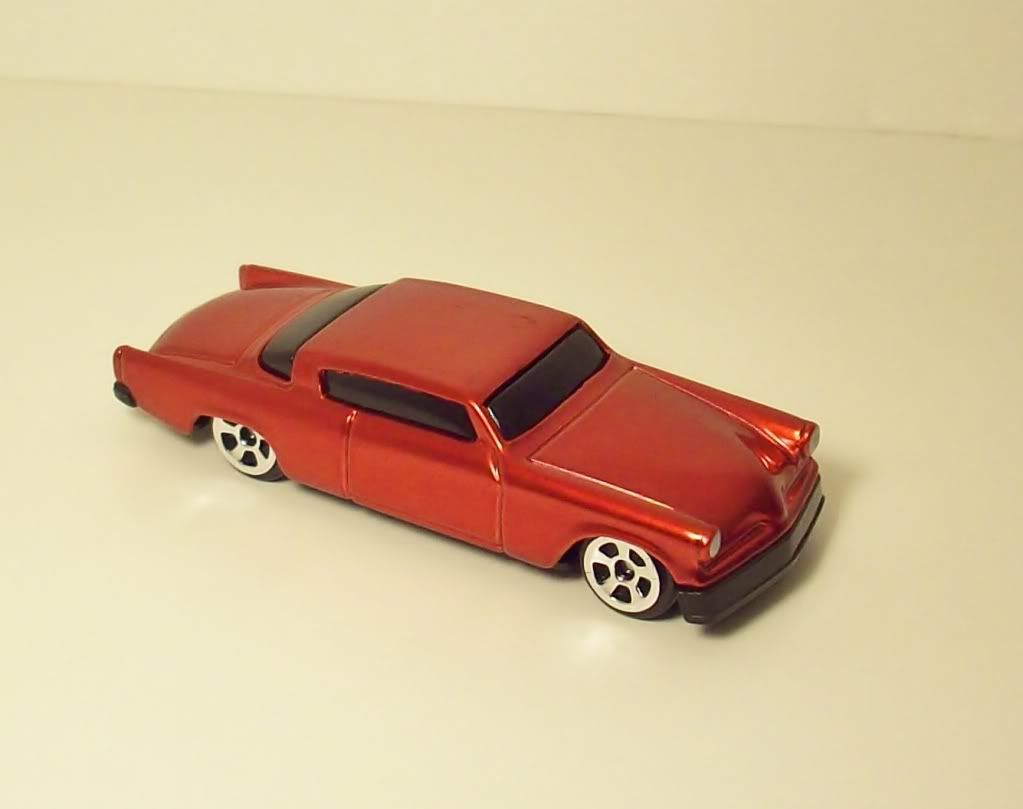
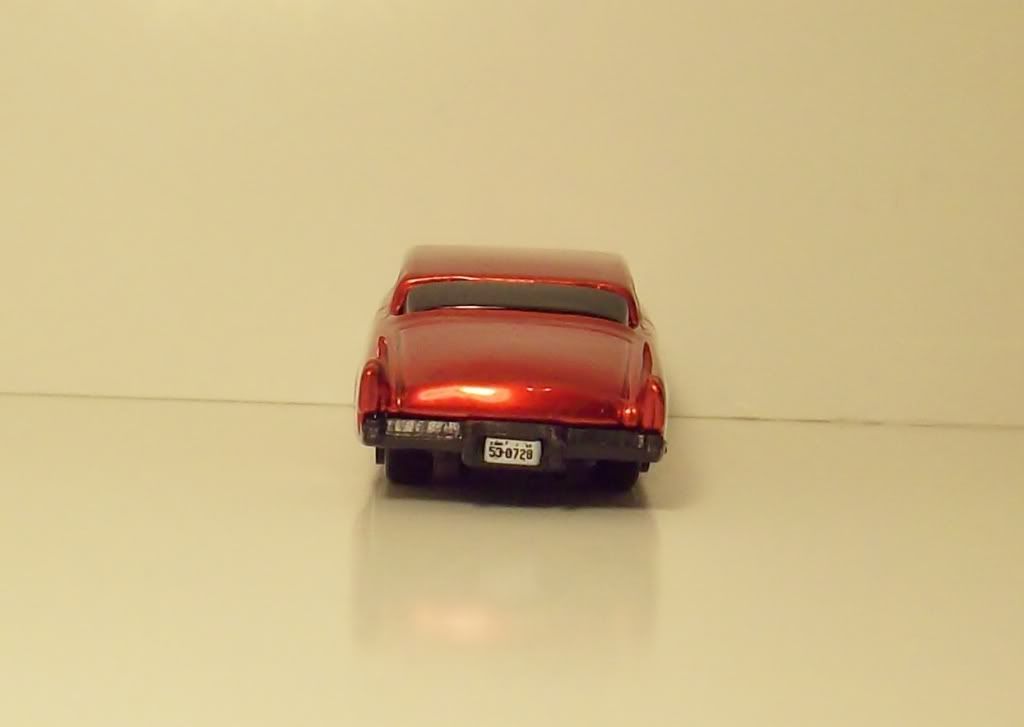
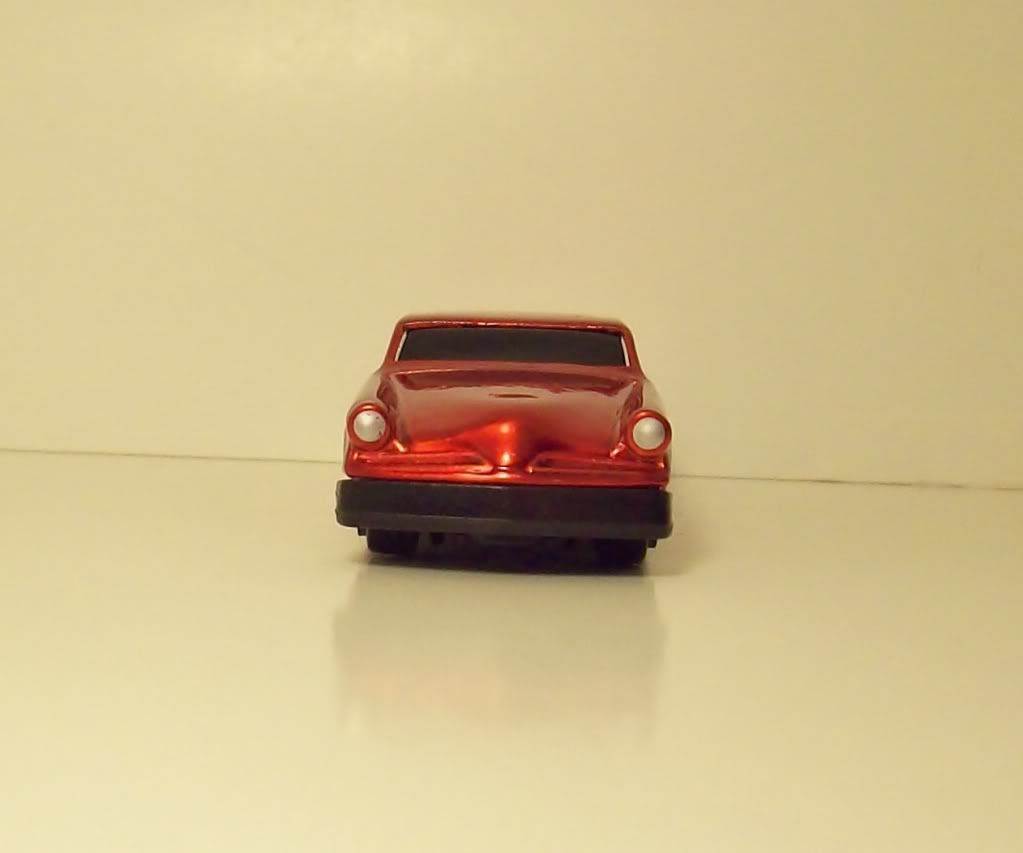
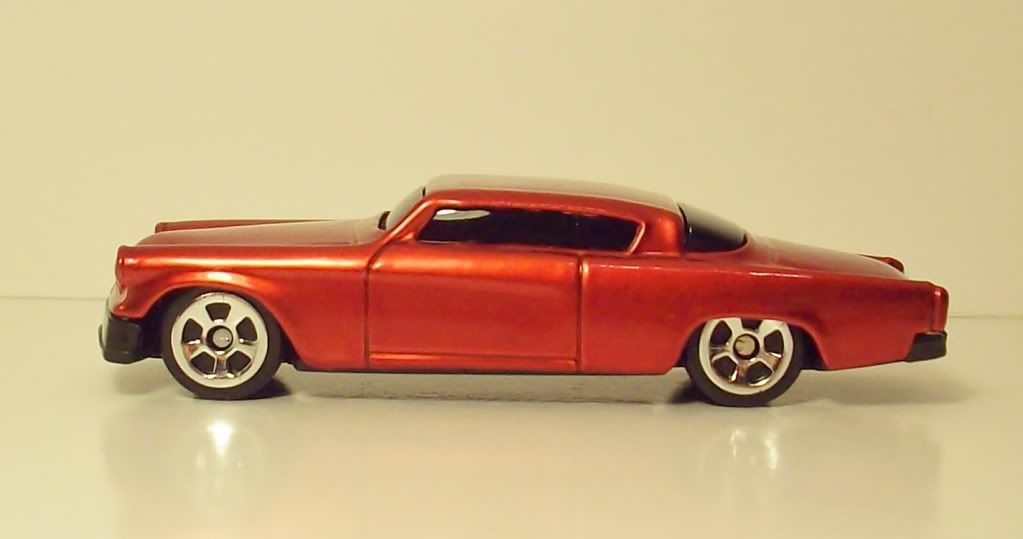
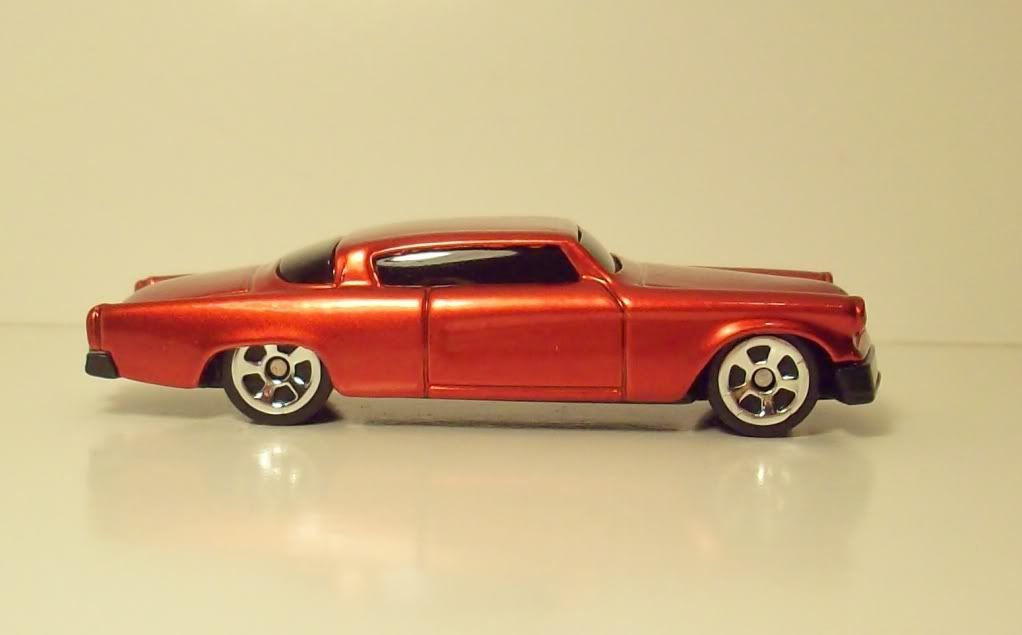
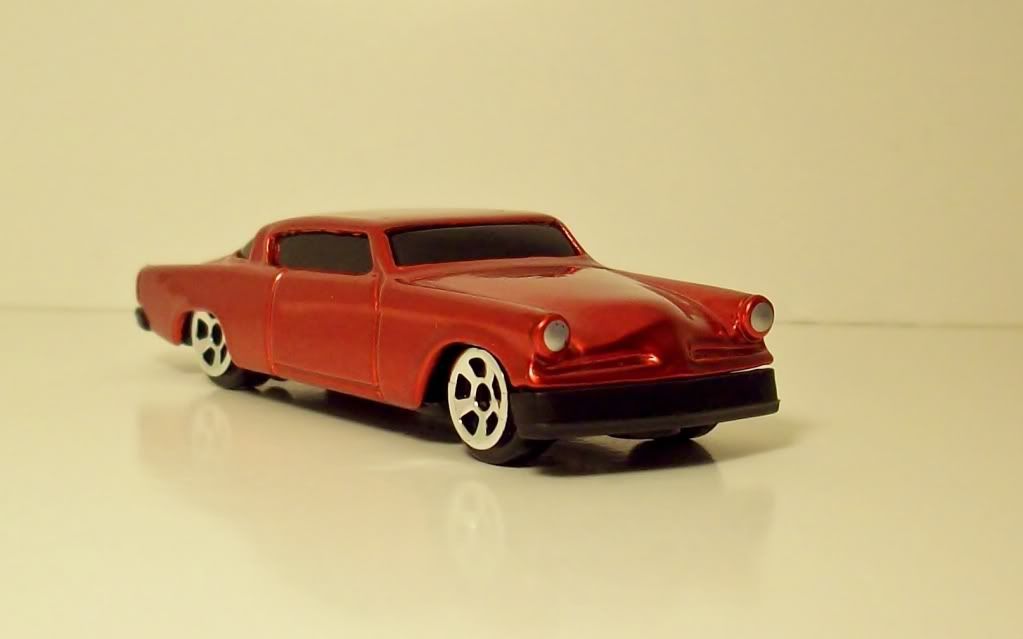
Today's car of the day is from Firehawk73's collection and is Maisto's customized 1953 Studebaker Starliner.
The 1953-1954 Studebaker Commander Regal Starlight/Starliner is the V-8 version of the daring and enduring "Loewy coupe" design, and is similar in most other respects to the six-cylinder 1953-1954 Studebaker Champion models.
The sleek European styling of the 1953-1954 Studebaker Commander Regal Starlight/Starliner was matched by equally nice interiors trimmed mainly in vinyl or (for 1954 only) cloth, both color-keyed. There was also a slightly less posh DeLuxe-trim version of the fixed pillar Starlight offered in both years.
These could have been the cars that would have assured Studebaker's future, but, as the production figures suggest, they didn't. One reason was spotty assembly quality on the '53s, a result of the rush to get the design into production. Another was a flimsy frame on '53s, which was improved for '54. Still another reason was the company's miscalculation about the sales of the coupes versus those of other body styles.
Had Studebaker geared up to build more coupes, more would undoubtedly have been sold. As it was, the company thought the shorter wheelbase sedans and wagons, with scrunched-up lines based on the coupe styling, would sell better. Despite their greater rarity, the '54s seem to trail the '53s in value right now, but that may reverse itself in time.
For more information and pictures of the real car please visit: Studebaker Starliner
We've featured a lot of Studebakers in the past month or so of Car Of The Day, and I for one welcome our new Studebaker overlords...
Pluses of the 1953-1954 Studebaker Commander Regal Starlight/Starliner:
•Landmark American styling
•Still very affordable considering design merit
•Strong appreciation potential
•Both coupe and hardtop are Milestone cars
•Good performance
Minuses of the 1953-1954 Studebaker Commander Regal Starlight/Starliner:
•A serious ruster
•Indifferent brakes
•Only fair construction quality, mainly '53s
•More expensive than 1953-1954 Studebaker Champion models, even though more survive
Thursday, July 21, 2011
Car Of The Day: July 21, 2011
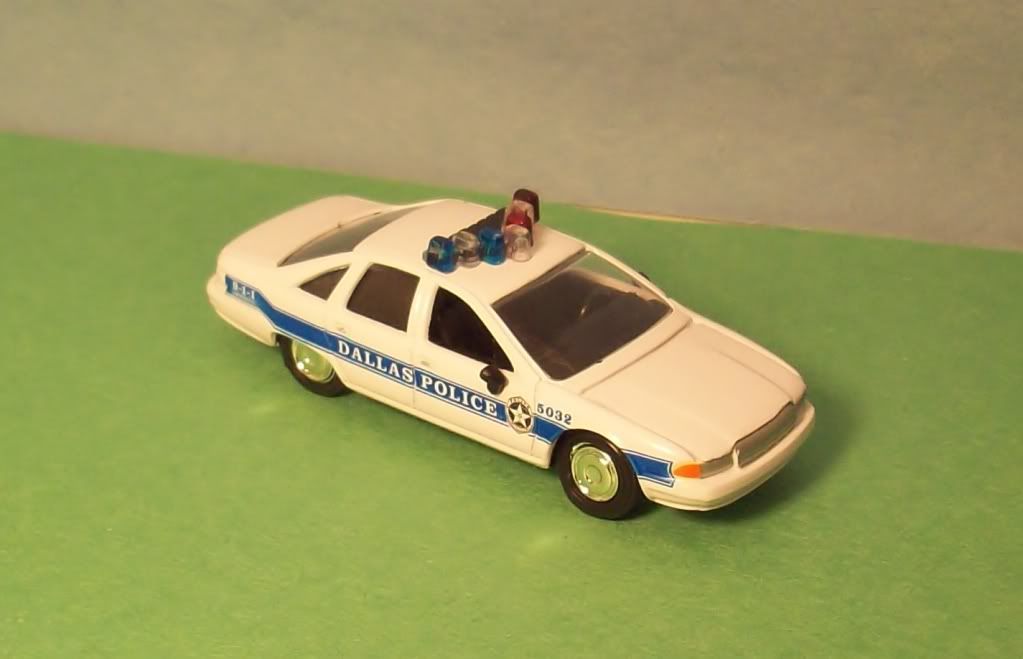
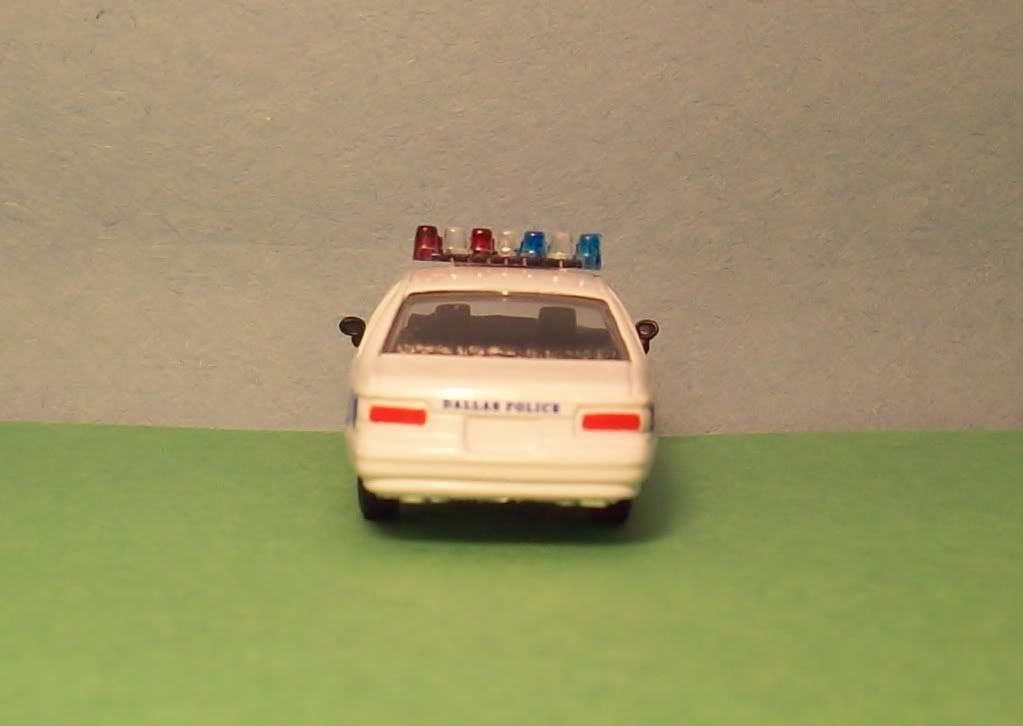
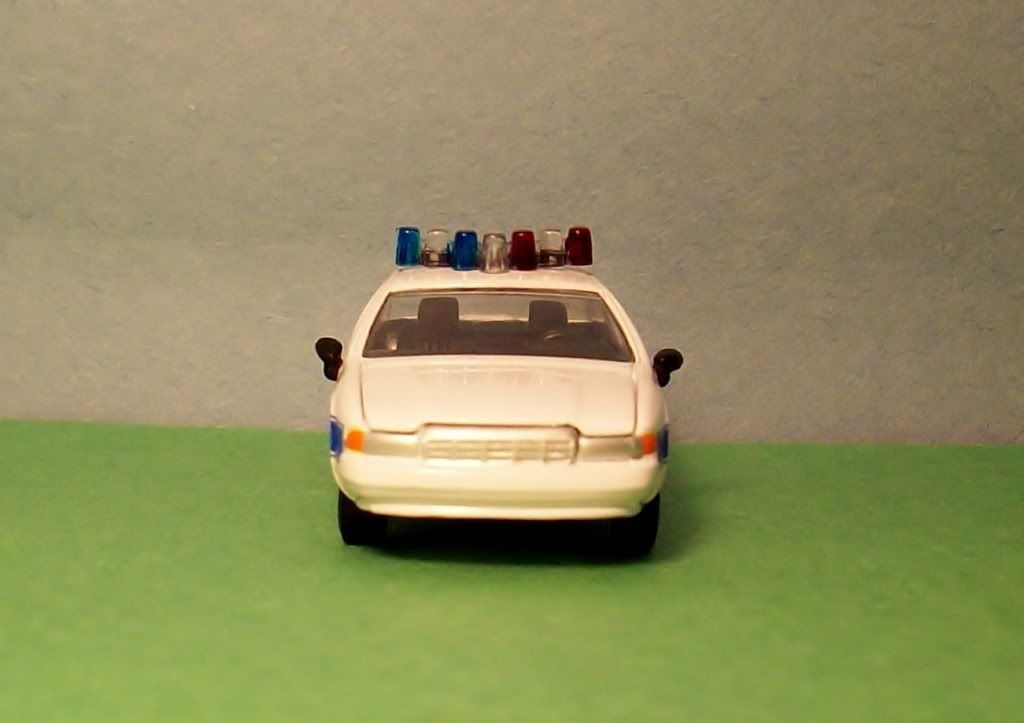
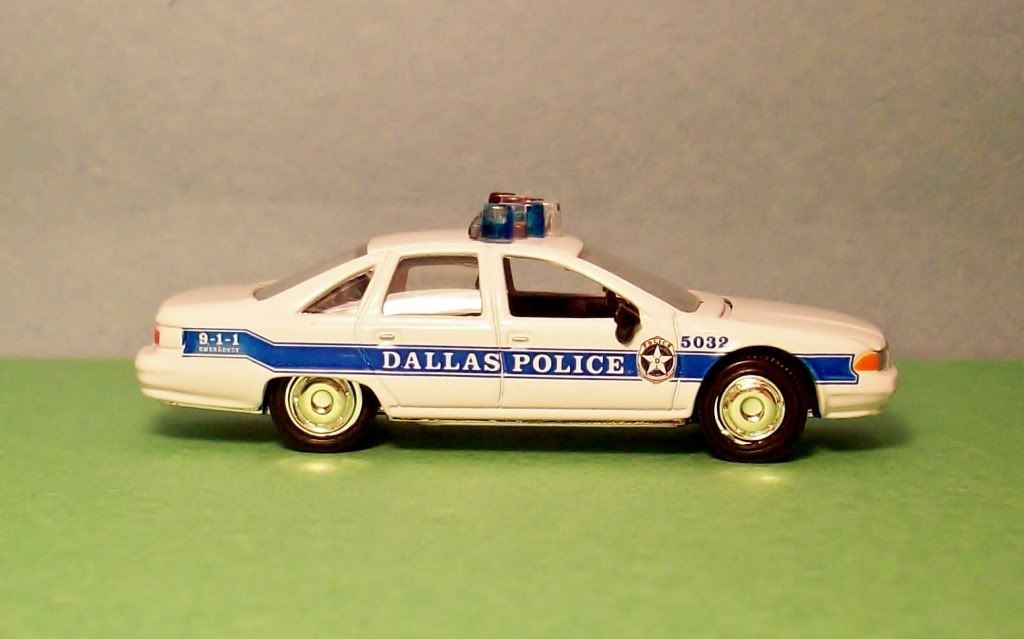
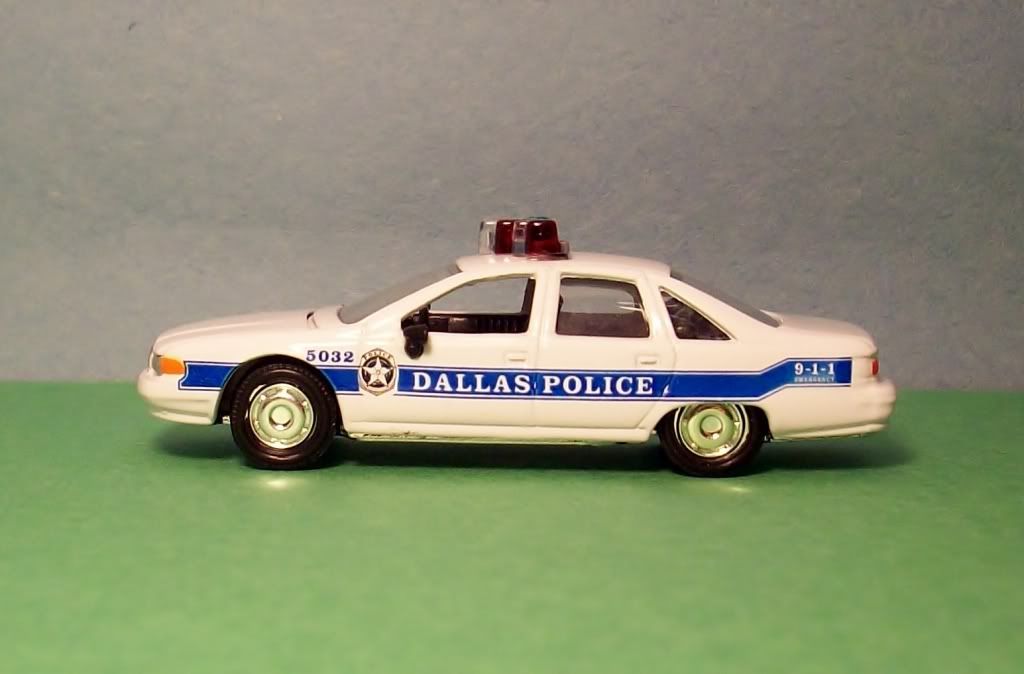
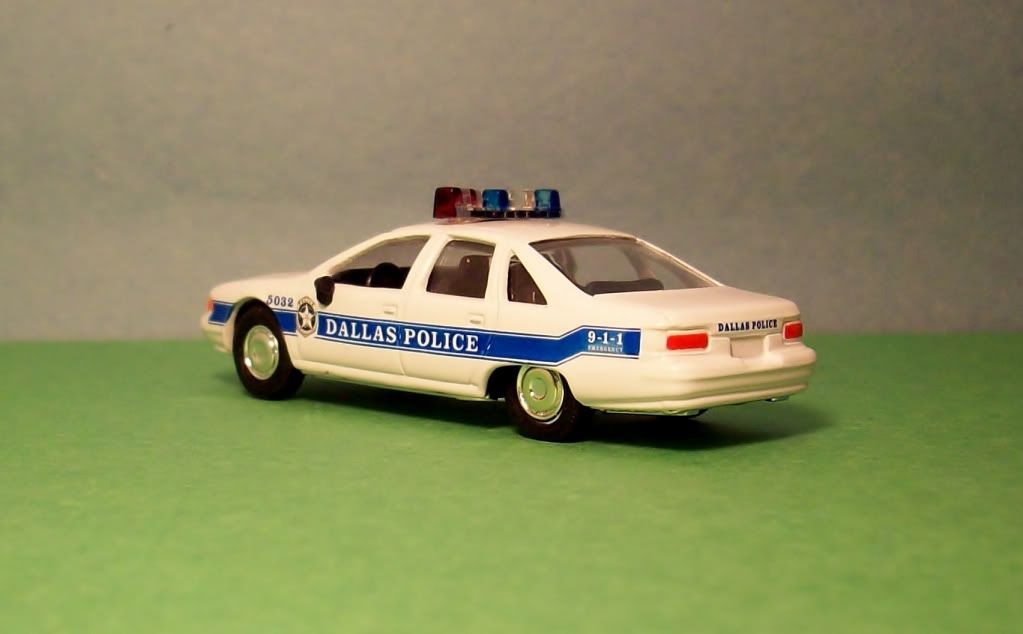
Today's car of the day comes from Firehawk73's collection and is Racing Champions' 1992 Chevrolet Caprice.
The Chevrolet Caprice is a full-sized automobile produced by the Chevrolet Division of General Motors in North America for the 1965 through 1996 model years. Full-size Chevrolet sales peaked in 1965 with over a million sold. It was the most popular American car in the sixties and early seventies. which during its lifetime included the Biscayne, Bel Air and Impala. Introduced in mid-1965 as a luxury trim package for the Impala four-door hardtop, Chevrolet offered a full line of Caprice models for the 1966 and subsequent model years, including a "formal hardtop" coupe and an Estate station wagon. The 1971 to 1976 models are the largest Chevrolets ever built. The Caprice was renamed Caprice Classic for the 1973 model year, but the Caprice nameplate returned—added in 1986 replacing the Impala. The downsized 1977 and restyled 1991 models were awarded Motor Trend Car of the Year. Production ended in 1996.
In 2011, the Caprice nameplate returned to North America as a full-size, rear wheel drive police vehicle, a captive import from Australia built by GM's subsidiary Holden—the police vehicle is a rebadged version of the Holden Caprice. From 1999 to the present imported Holden Statesman/Caprices built by Holden have been marketed as Chevrolet Caprices in Middle Eastern markets.
For more information and pictures of the real car please visit: Chevrolet Caprice
A nice police car offering from Racing Champions.
The 1991 model was completely restyled — It replaced the 1977-based rectilinear design with rounded, more aerodynamic sheetmetal. While the body and interior were all new, excluding the Anti-Lock Braking System — the chassis and powertrain were carried over from 1990. and several major components (including the floor pan) are entirely interchangeable between 1977 and 1996.
Motor Trend awarded the new Caprice Classic Car of the Year. Two trim levels were initially offered - Caprice and Caprice Classic, replacing the previous Classic and Brougham models. General Motors had hoped to regain the top spot as America's favorite automobile with the new aerodynamic styling of their full-size offering.
The last-generation Caprice was not well received by critics[citation needed] and did not hold on to high sales numbers. The car's styling was criticized with car aficionados calling it a "beached whale" and "an upside-down bathtub"). For 1993 there were some revisions, the most obvious being the removal of the skirted rear wheel wells in favor of more conventional, open wheel wells. This applied only to the sedan model; station wagons retained the skirted wheel wells. In 1995 minor modifications were made to the C-pillars
In 1994 the Caprice received the new-generation GM engines, including an optional detuned version of the Corvette's LT1 350 cu in (5.7 L) engine that put out 260 hp (194 kW) and 330 ft·lbf (447 N·m) of torque. The standard engine in all sedans, including the 9C1 police cars, was the 200 hp (150 kW), L99 263 (4.3 L) V8. The LT1 was optional in the 9C1 police-package and standard in the wagon. The LT1 350 was standard in the civilian sedans, with the addition of the B4U towing package. The towing package also gave a heavy duty suspension nearly identical to the 9C1 police car suspension. 2.93 gears, heavy duty cooling, heavy duty rear drum brakes and positraction were standard with the towing package. The 265 (4.3 L) L99, and 350 (5.7 L) LT1 look nearly identical externally. Many 4.3 L99 equipped sedans are passed off as 5.7 LT1 cars. The 8th digit in the VIN number is the Engine code. W: 4.3 L L99, P: 5.7 L LT1. The 1994 Caprice's interior had a redesign which featured a Camaro steering wheel, digital speedometer and a new console.
The Caprice 9C1 with the LT1 engine became one of the fastest and most popular modern day police vehicles. This vehicle established such strong devotion by many police departments that a cottage industry thrived in refurbishing Caprices for continued police service after GM discontinued production of the car.
The car's production was stopped in 1996 from sales pressure from the mid-size Chevrolet Lumina, financial troubles at General Motors and consumer demand shifting from full-sized family sedans to the increasingly popular sport utility vehicles. The Arlington, Texas vehicle assembly plant (used for Caprices, Buick Roadmaster, Oldsmobile Custom Cruiser, and Cadillac Fleetwood) use moved to produce the higher profit margin SUVs GMC Denali and Yukon, Chevrolet Tahoe and Suburban, and Cadillac Escalade and Escalade EXT. In 1997, the Lumina LTZ would take the Caprice's place as Chevrolet's premium passenger car. Total production of 1991-96 models was 689,257 with production ending on December 13, 1996.
With the exit of the Caprice, the Ford Crown Victoria and its corporate siblings (Mercury Grand Marquis and Lincoln Town Car), continued as the sole traditional rear-drive, body-on-frame, V8-powered North American sedans. Thereafter the Crown Vic. dominated police vehicle sales. Chrysler would introduce the unibody Dodge Charger in 2006, the company's first rear-wheel drive sedan since 1989.
The Chevrolet Impala name badge was reintroduced to the American passenger car market in 2000 as the marque's premium offering, albeit in a front wheel drive configuration.
Tuesday, July 19, 2011
Car of the Day: July 19, 2011
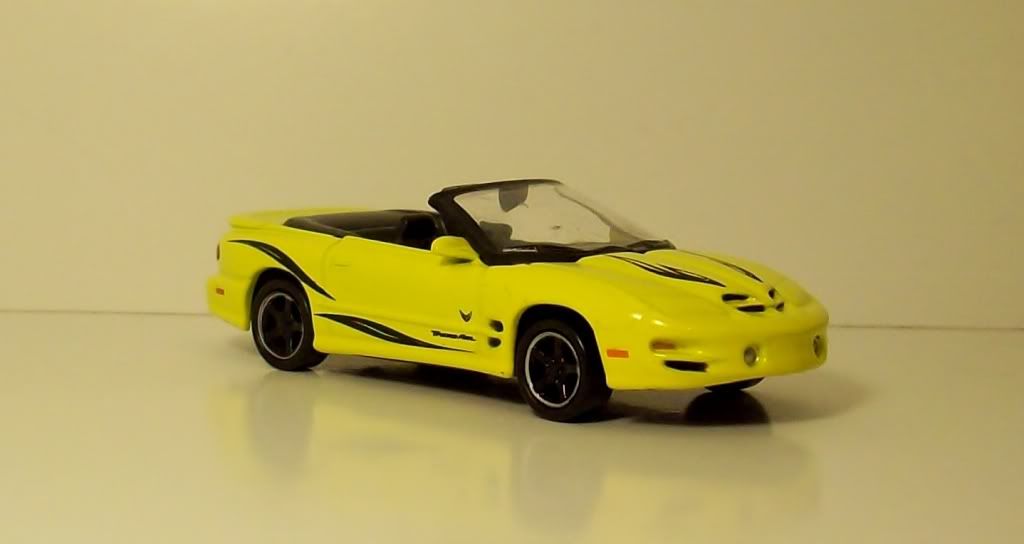
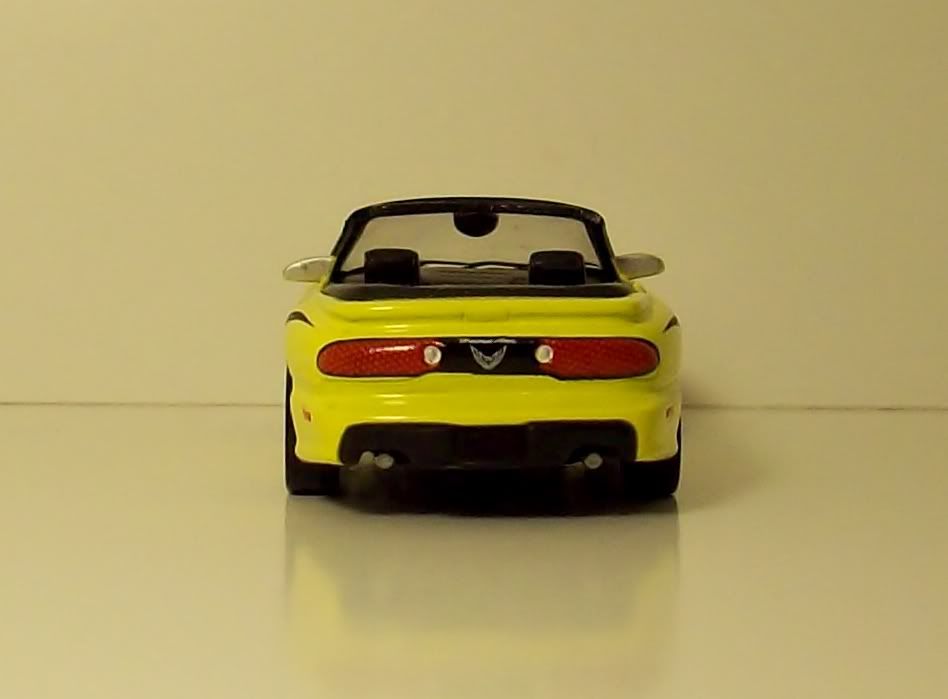
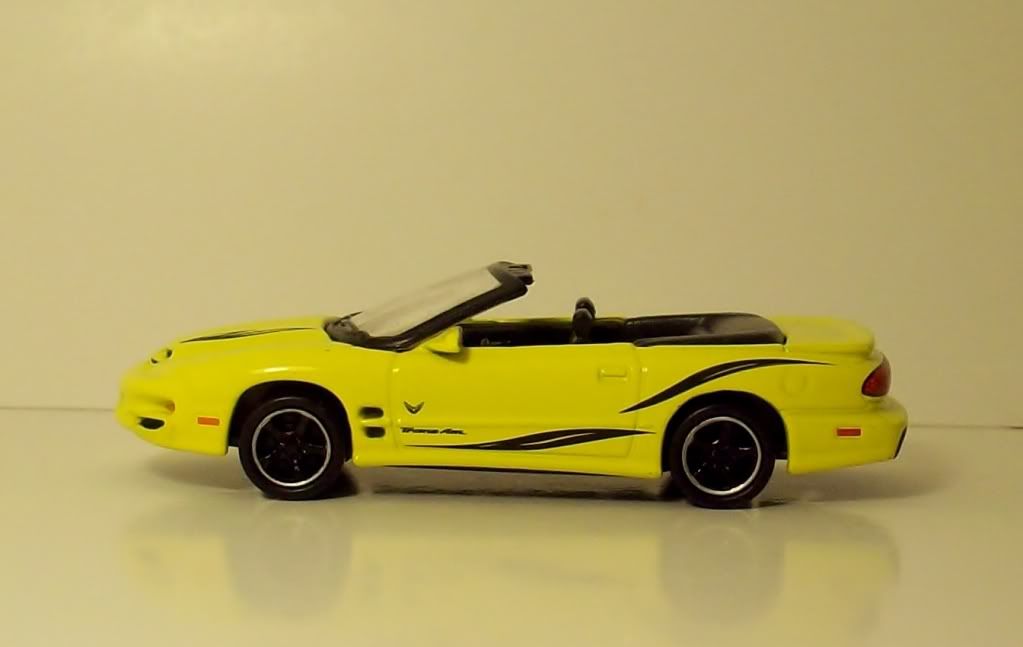
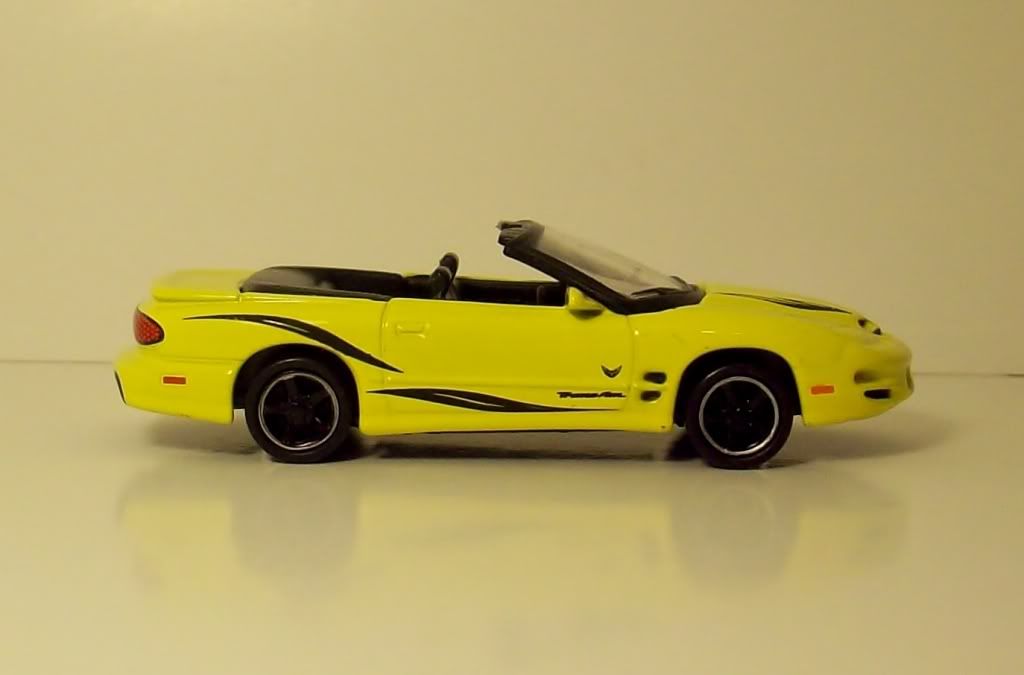
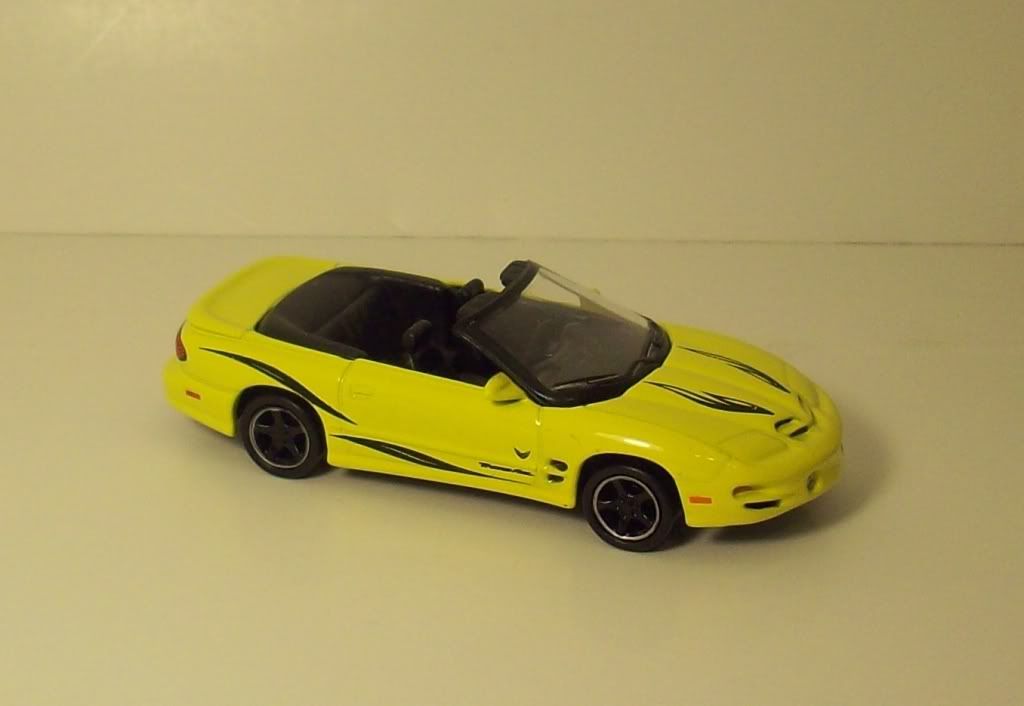
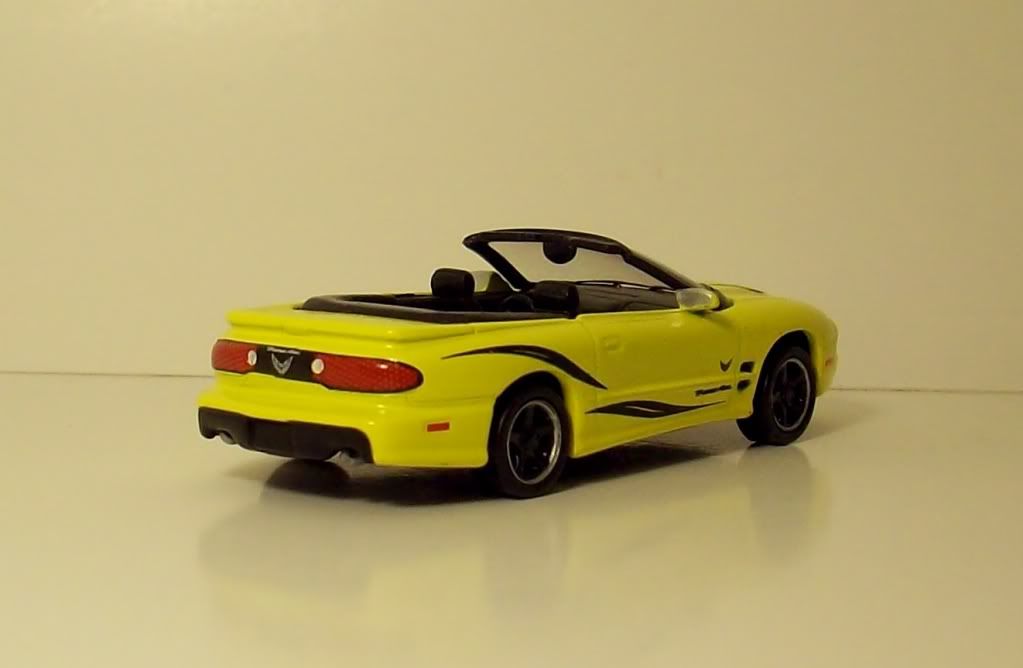
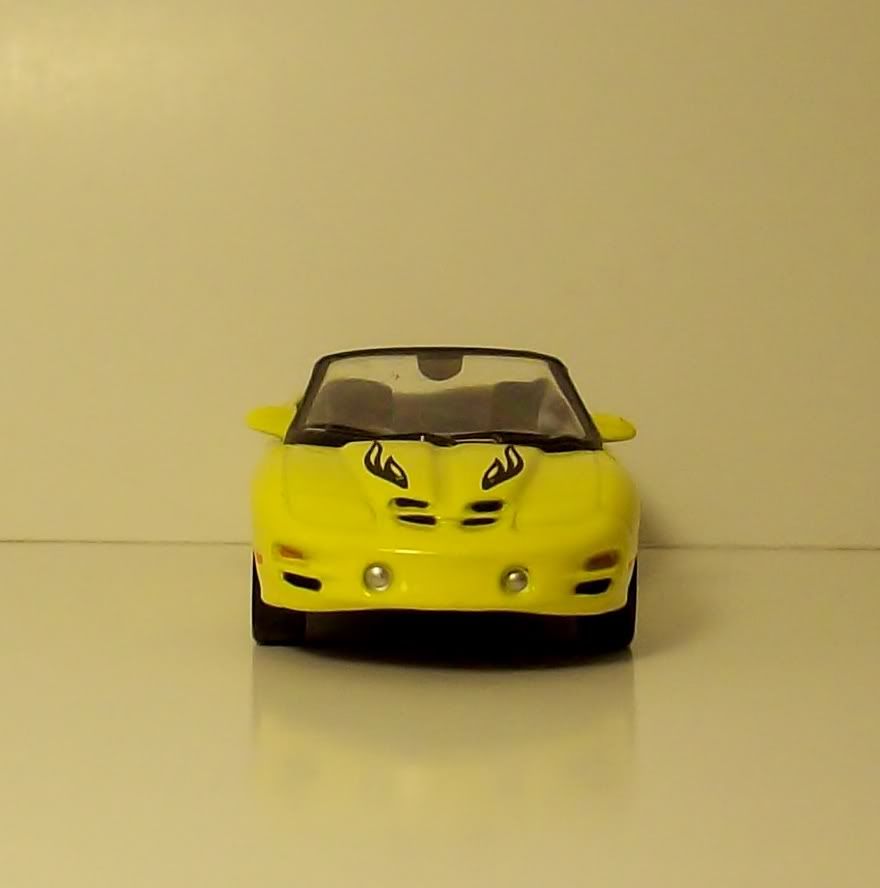
Today's car of the day is a GreenLight 2002 Pontiac Firebird Trans Am
Wikipedia.com
The fourth-generation F-body continued the aerodynamic formula initiated by the previous generation, but saw declining sales. As before, the Camaro kept the exposed headlights and the Firebird its pop-up units, with some minor changes. The overall styling of the Firebird more strongly reflected the "Banshee IV" concept car than the 1991 "face lift" received by the Third Generation model. [/quote]
For more information on the 2002 Pontiac Trans Am here is the link: http://en.wikipedia.org/wiki/Pontiac_Firebird
For 1998–2002 Pontiac used the same heavy duty brakes, steering ratios, fuel pumps and shocks (non-WS6) on both V6 and V8 models.
The all-aluminum 5.7 L V8 engine was sourced from the Corvette C5, and produced 305 hp (227 kW) at 5,200 rpm; 335 ft·lbf (454 N·m) at 4,000 rpm, (310 after 2000) or 320 hp (325 after 2000) in the WS-6 "Ram Air" version. In 2001 and 2002, models equipped with a V8 received the high-flow LS6 intake manifold and a high-performance clutch. A Firehawk model, produced by SLP and sold through Pontiac dealerships, had 330 hp (335 after 2000, 345 in late 2002 models equipped with the optional Blackwing intake. The V6-equipped Firebirds were rated at 205 hp (153 kW)
1999 "The Big 3-0" A new 30th Anniversary Limited Edition Trans Am added a little distinction to the 1999 Firebird offerings. Otherwise, there were only minor changes. Formulas and Trans Ams now had a four-speed automatic transmission as standard equipment. Buyers could choose from it or a six-speed manual, which had a Hurst shifter. Traction control was available on V-6 Firebirds. Specific V-6 Firebirds also got a Torsen II slip-reduction rear axle as standard equipment. An Electronic Brake Force Distribution system and solenoid-based Bosch anti-lock brake system enhanced stopping capabilities. Also new was an upgraded sensing and diagnostic module to improve the passenger-protection system. COLORS 10=Artic White, 11=Pewter Metallic, 13=Silver Metallic, 20=Medium Blue Metallic, 28=Navy Blue Metallic, 31=Bright Green Metallic, 41=Black, 79=Blue-Green Chameleon and 81=Bright Red. FIREBIRD - SERIES F/S - V6 The availability of GM's Traction Control system was extended to the V-6-powered Firebirds this year. All Firebirds with V-8 and some with a V-6 had a Zexel Torsen II slip-reduction rear axle. An Electronic Brakeforce Distribution (EBD) system replaced the old hydraulic proportioning valve for improved brake performance. Also new was a solenoid-based Bosch antilock braking system. An enhanced Sensing and Diagnostic Module (SDM) recorded vehicle speed, engine rpm, throttle position and brake use in the last five seconds prior to airbag deployment. Standard equipment for the Firebird coupe included extensive acoustical insulation, dual front airbags, air conditioning, a black fixed-mast antenna at right rear, a brake/transmission shift interlock safety feature (with automatic transmission), power four-wheel disc brakes with four-wheel ABS, the UPC L36 3800 Series II 200-hp SFI V-6 engine, cruise control, electric rear and side window defoggers, Solar-Ray tinted glass, instrumentation (including electric analog speedometer, tachometer, odometer, coolant temperature indicator, oil pressure gauge, voltmeter and LED trip odometer), sport exterior mirrors (left-hand remote controlled, right-hand manual), a day/night inside rearview mirror with reading lamps, left- and right-hand covered visor-vanity mirrors, a Delco AM/FM stereo ETR radio and cassette (with seven-band graphic equalizer, touch control, search-and-replay, Delco TheftLock, clock, seek up/down, remote CD pre-wiring and four-speaker coaxial sound system), reclining front bucket seats, four-way driver and passenger front seat manual adjusters, a rear two-passenger folding seat, a four-spoke sport tilt steering wheel with adjustable column, the PASS-Key II theft-deterrent system, P215/60R16 touring tires with a high-pressure compact spare, the UPC MM5 five-speed manual transmission, controlled-cycle windshield wipers and bright silver 16-in. five-spoke cast-aluminum wheels. Model Number: F/S; Body/Style Number: 87, 67; Body Type & Seating: 2d hatchback, convertible-4P; Factory Price: $18,700, $25,320; Shipping Weight: 3,340, 3,465 lbs.; Production Total: 17,170, 1,245.
Its not easy to find a Firebird that hasn't been done by the Car Of The Day but I was able to find 2 that have not been done before. This is one of them and I have to say of all the fourth generation birds that have been done by diecast companys this one is the best. It looks right but I do wish they would make one with a diecast roof then the car would be perfect. I am not big on convertible cars but a topless Firebird is still a Firebird....LOL (Sorry for the blurry pics. Yellow still presents a challenge for me. Hopefully when my new camera comes in that it would be a problem solved.)
Monday, July 18, 2011
Car of the Day: July 18, 2011
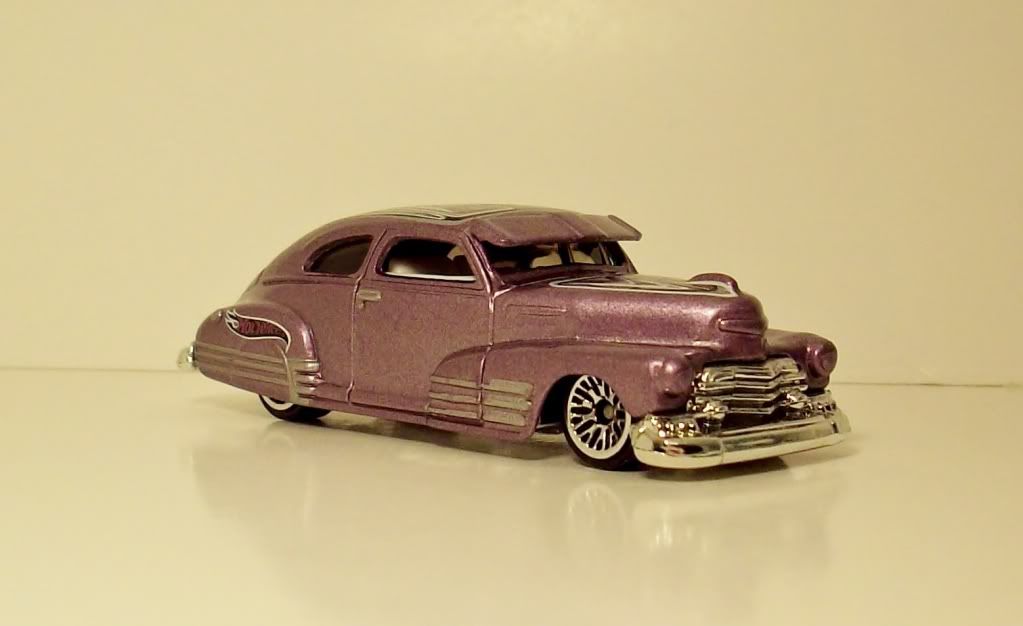
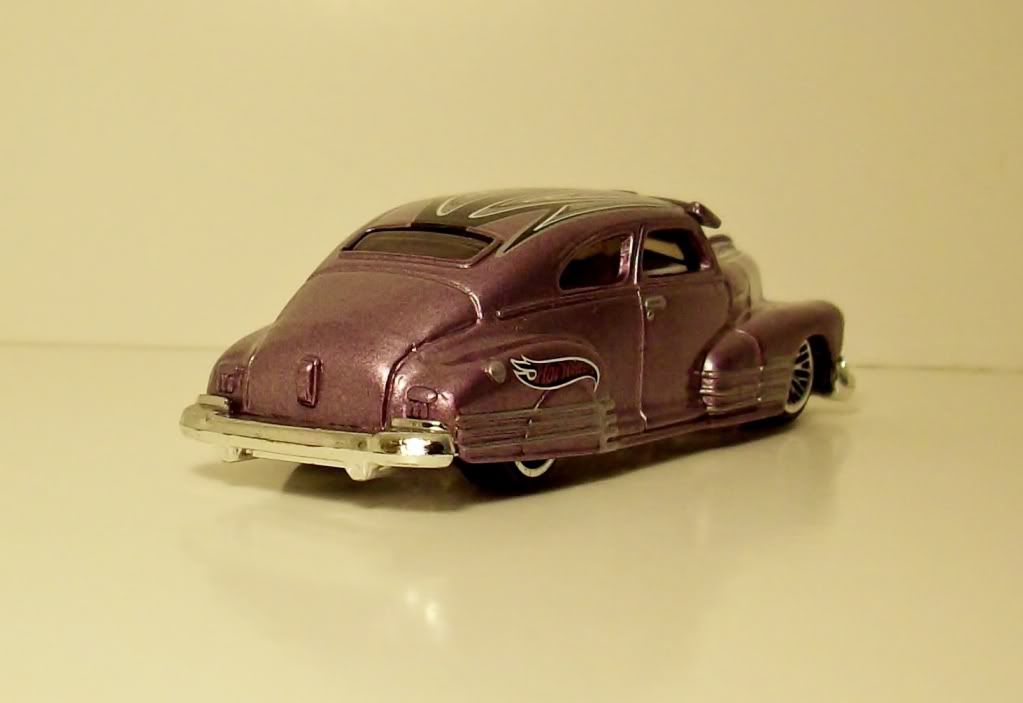
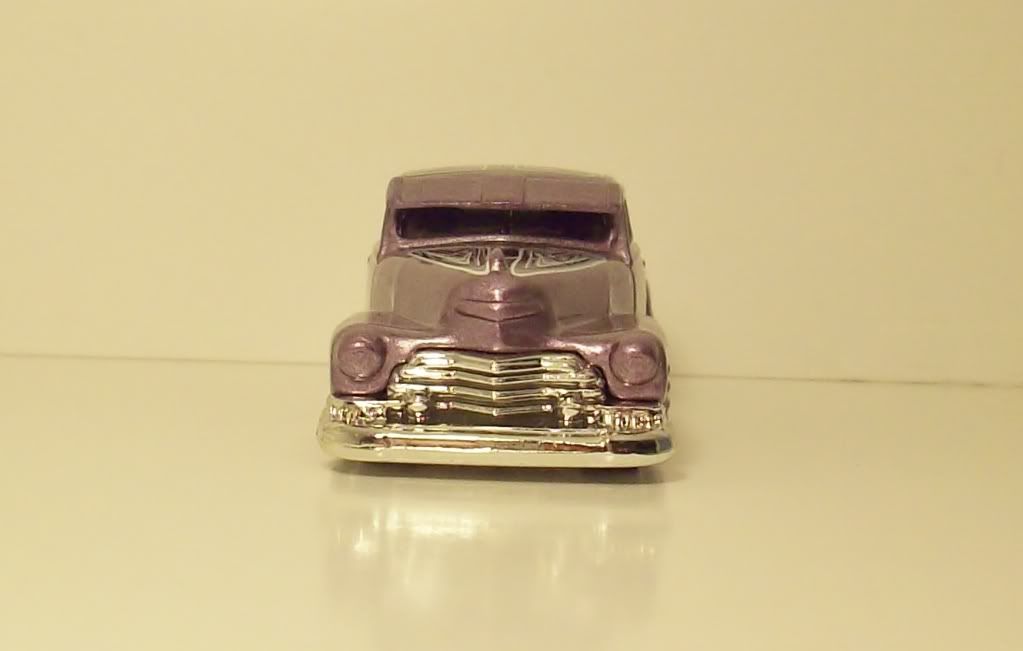
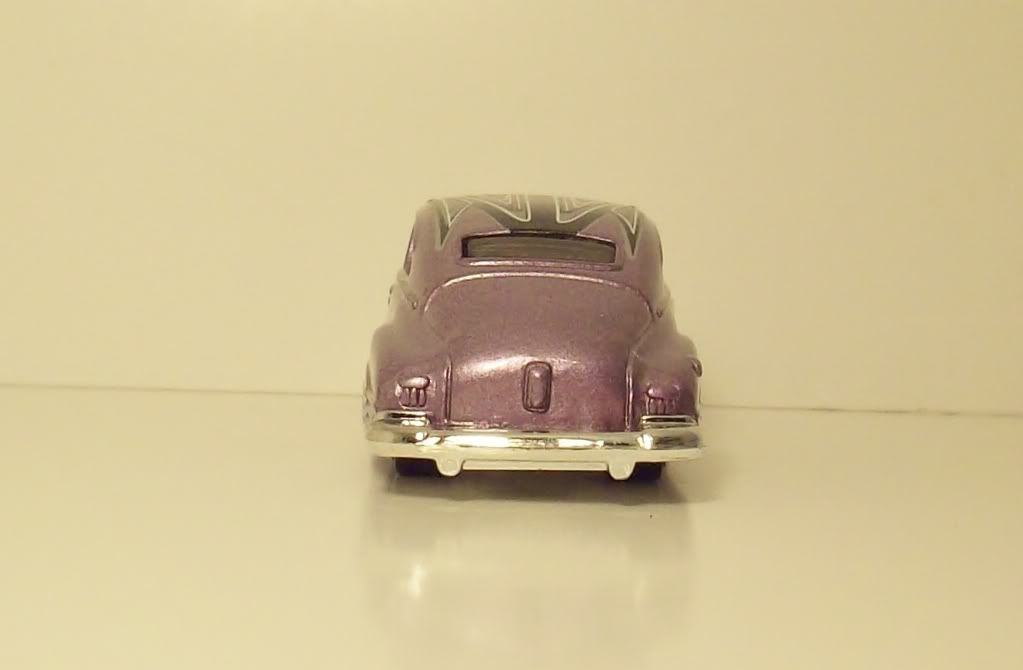
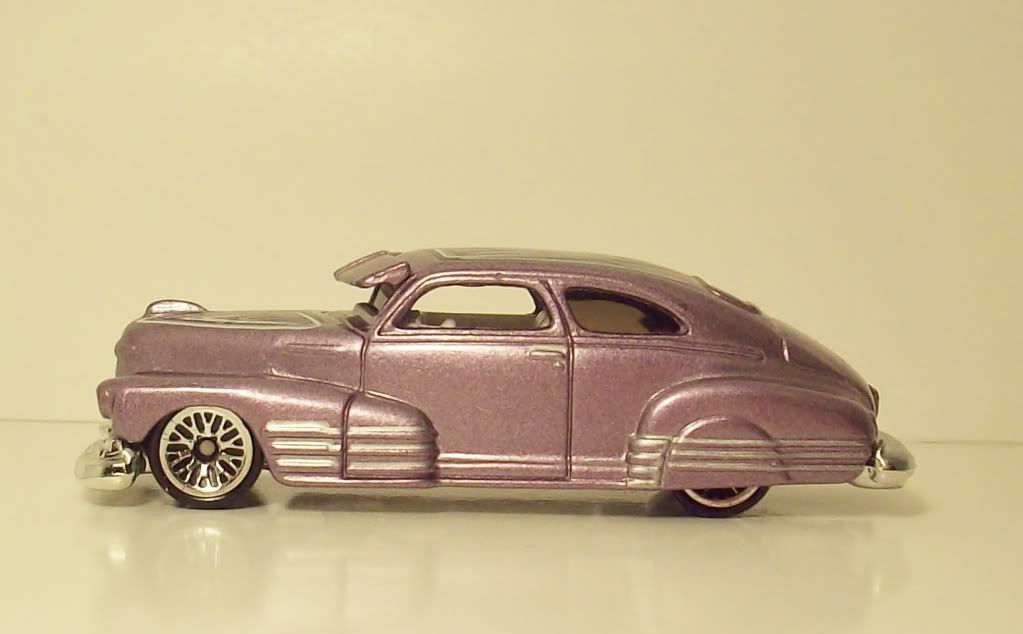
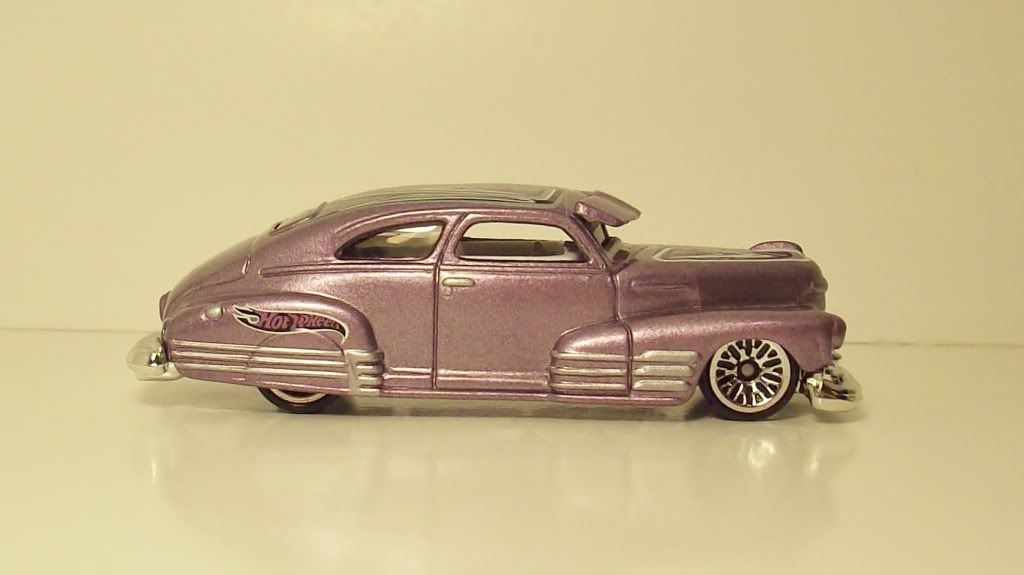
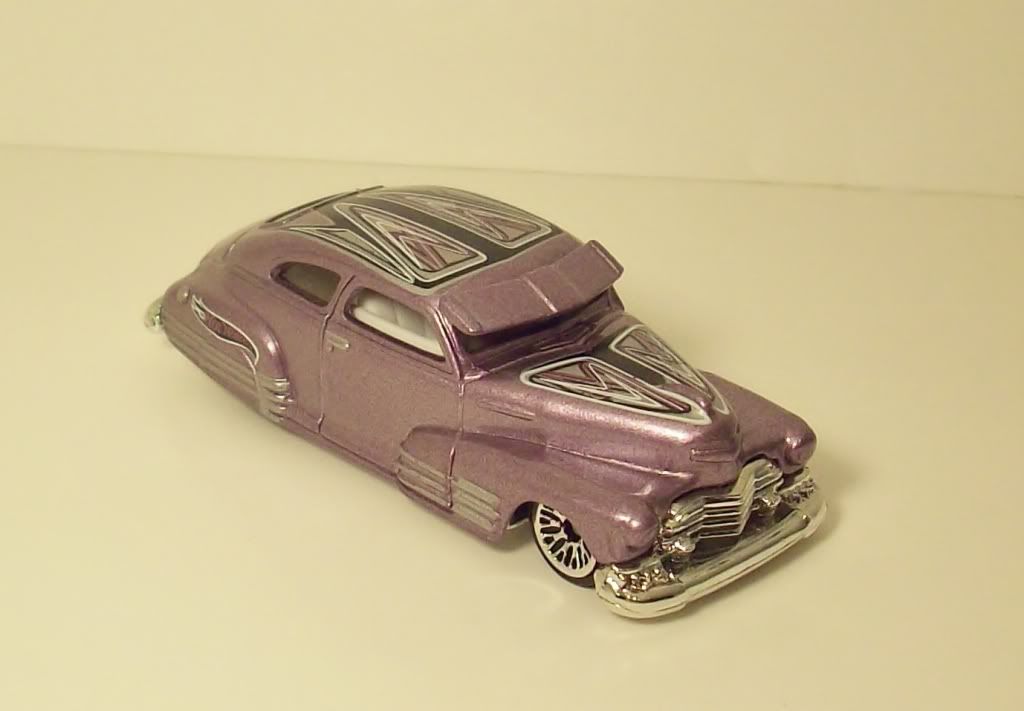
Today's car of the day is a Hot Wheels 1947 Chevrolet Fleetline
Howstuffworks.com
The 1947 Chevrolet Fleetline Aerosedan, despite being the most expensive two-door closed car in the Chevy lineup, was still the most popular model of the best-selling brand in America in 1947. Let's say you're not convinced that appearance is an important factor -- maybe the important factor -- that drives car shoppers to choose one vehicle over another. Then consider the 1947 Chevrolet Fleetline Aerosedan.
For more information on the '47 Chevy Fleetline here is the link: http://www.howstuffworks.com/1947-chevrolet.htm
Why? After all, mechanically, it was the same as any of Chevrolet's other 10 models offered that year. In standard equipment, it varied little from most cars in the Fleetmaster series, out of which the two-car Fleetline subseries was derived. It had to be the looks. Aerosedans had the benefit of fastback styling that was very much in vogue in the Forties. General Motors gave the style a big boost in 1941 when it launched a well-received armada of B-body Pontiac, Oldsmobile, Buick, and Cadillac sedans and coupes.
When a fastback roofline was extended to the A-body program in 1942, Chevrolet jumped on the bandwagon with the Aerosedan. An instant hit, this two-door companion to the notchback Sportmaster four-door sedan (another trendy style introduced in 1941 as the first Fleetline model) topped the Chevy sales charts in war-shortened 1942.
When postwar production resumed for 1946, the Aerosedan slipped back into the pack, but then shot back up into sales leadership the next two years. Our featured car is one of 159,407 Aeros made in 1947. Another 211,861 were made for 1948 before the aging prewar design was finally replaced. Aside from its distinctive roof, the Aerosedan came with a trio of chrome spears on each fender and special "Fleetweave" upholstery fabric that were Fleetline series exclusives. Otherwise, from its 90-bhp ohv 216-cid six to its 4.11:1 rear axle, the Aerosedan was a lot like most Fleetmaster models.
This is a pretty nice casting of the car but not too crazy about the color and tampos that it is plagued with. This would be a nice casting if they had used it in the 100% line with more realistic paint scheme and more detail especially to the chrome this car came with. It would look better without that visor over the front windshield but that Hot Wheels for you...LOL. I know I keep saying this but once I am an expert at doing custom builds, this one is going to get overhauled too. Its the only reason its in my collection otherwise the paint and tampos would definitely keep me from buying this one in the first place. I'm just glad it has clear windows in it.
Sunday, July 17, 2011
Car of the Day: July 17, 2011
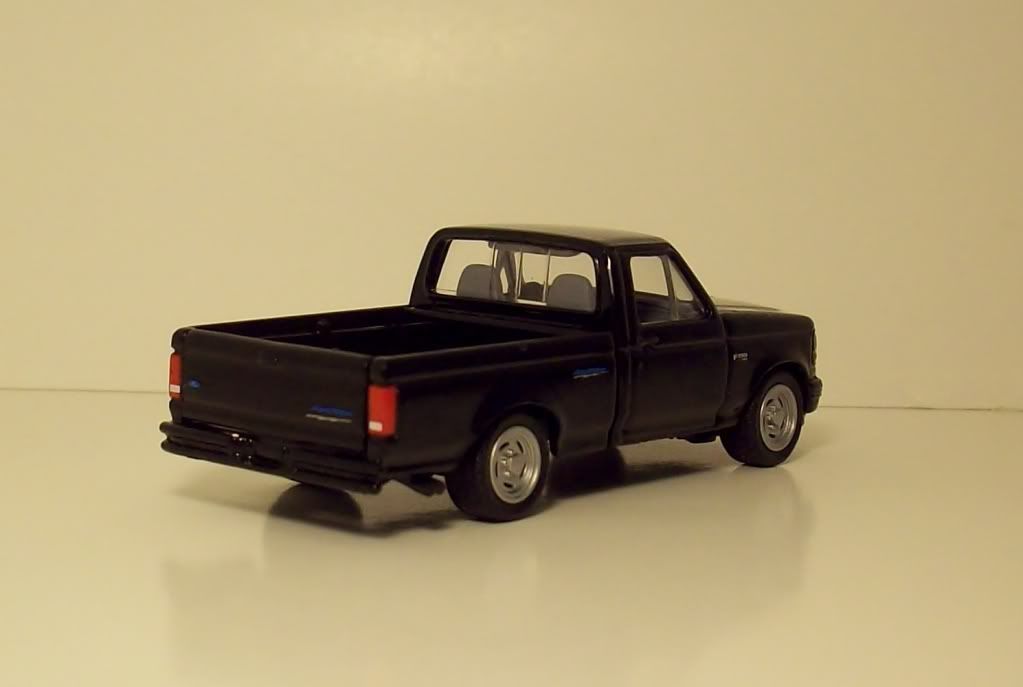
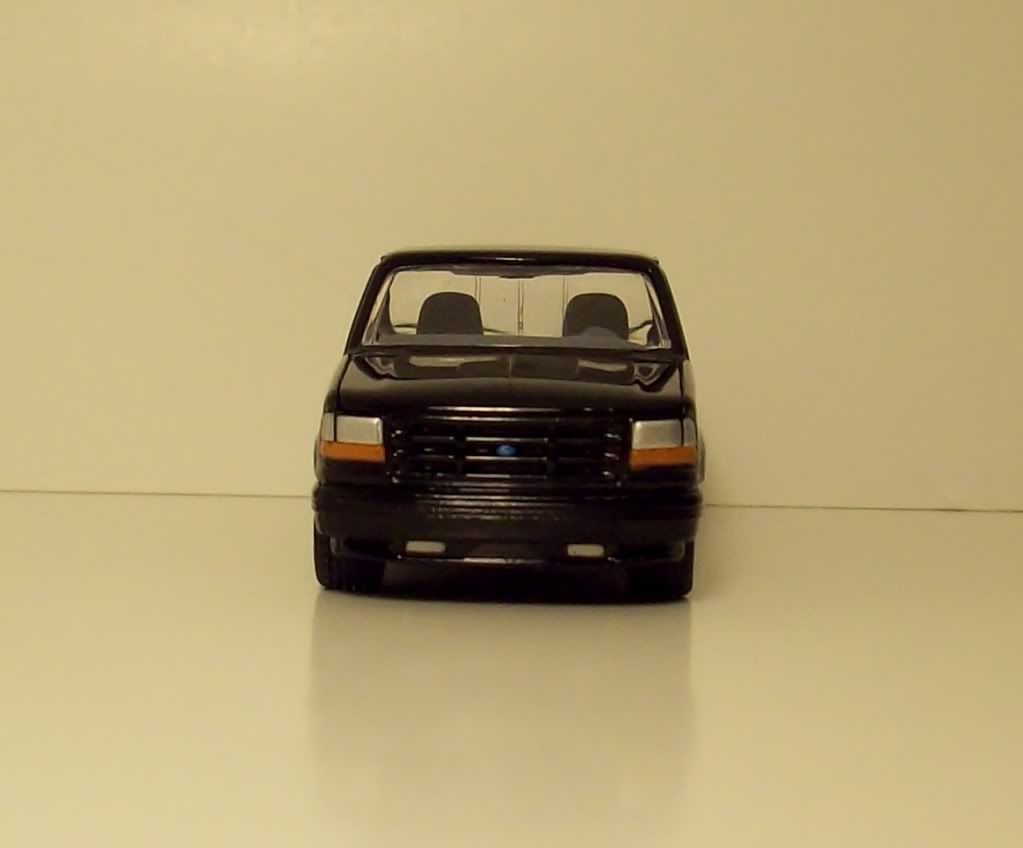
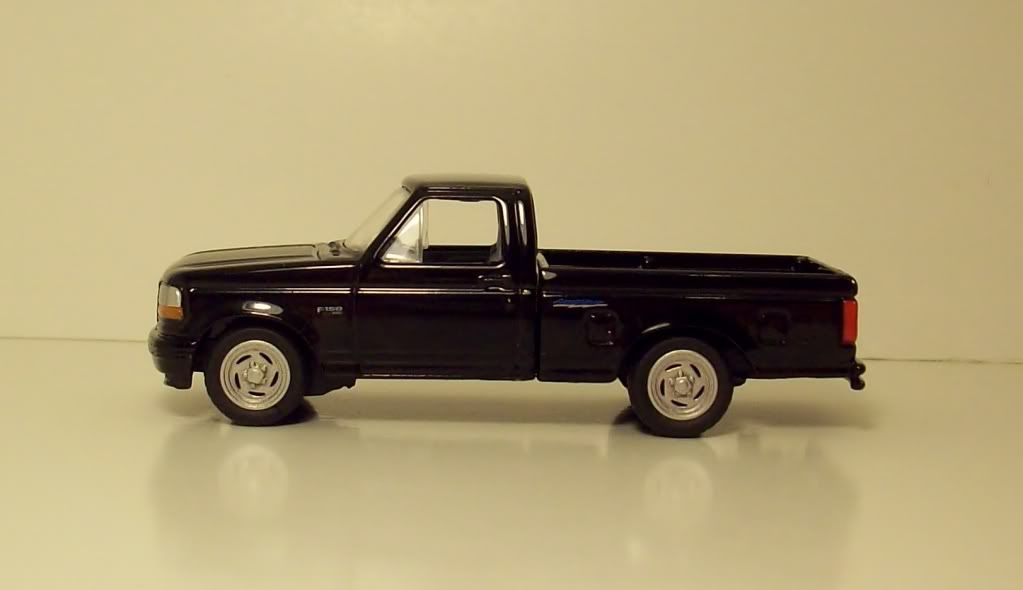
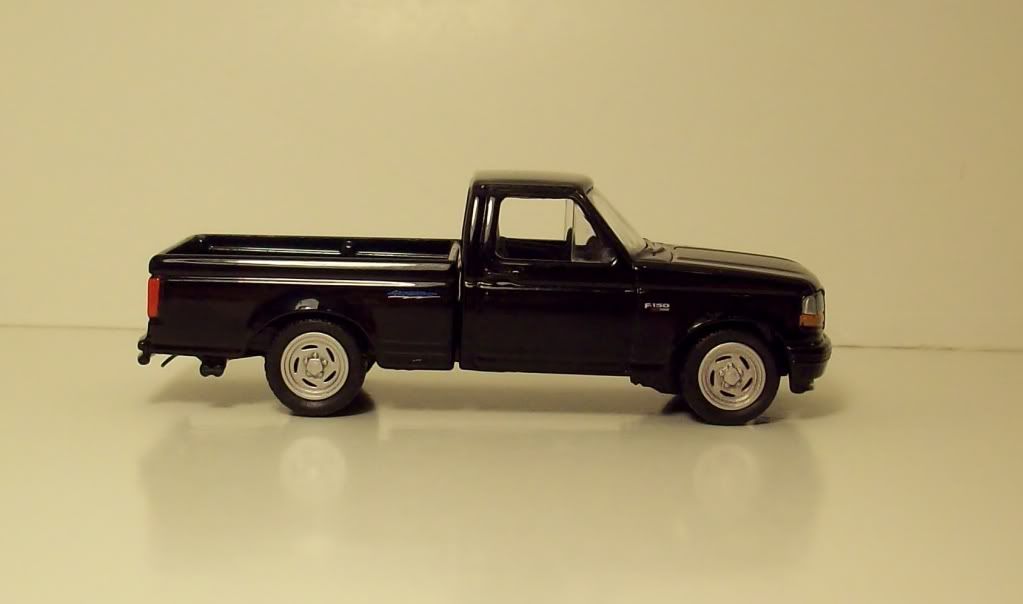
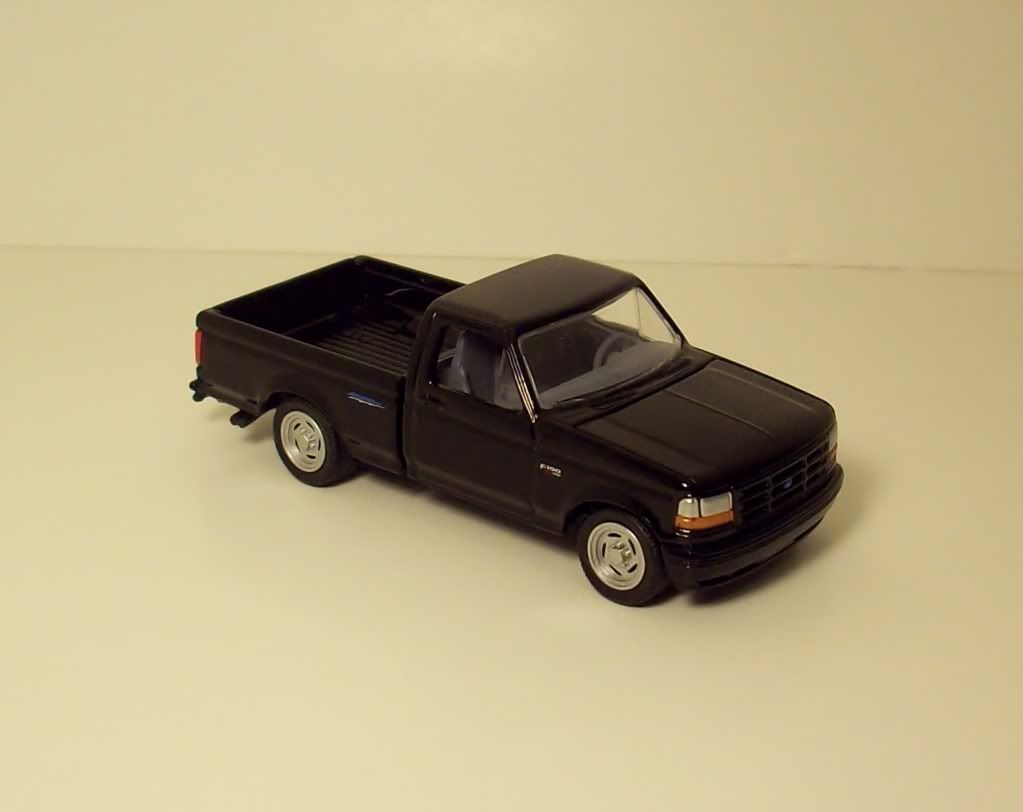
Todays Truck of the day is a Johnny Lightning Ford F-150 Lightning
Wikipedia.com
The Ford SVT Lightning is a sports/performance version of the F-150 Pickup truck designed by Ford's truck-division and eventually released and marketed by the then-new SVT (Special Vehicle Team) division. The F-150 Lightning was conceived as a product focus for the personal-use possibilities of the Ford F-Series pick-up truck, combining outstanding handling, comfortable ride, and spirited acceleration.
For more information on the Ford F-150 Lightning here is the link: http://en.wikipedia.org/wiki/Ford_Lightning
Ford introduced the model in 1993 to compete with primarily the Chevrolet 454 SS, in an effort to enhance the sporty, personal-use image of the Ford F-Series pickup. The Lightning shared its basic platform structure with the regular F-150, but custom modifications were made to many vehicle systems, including enhancing the Lightning chassis to increase rigidity. The stock Lightning was capable of achieving 0.88 g lateral acceleration, yet it was a full-sized American pickup truck with almost all the hauling and trailering capabilities of the parent F-Series. A 351 in³ (5.8 L) Windsor V8 producing 240 hp (179 kW) and 340 ft·lbf (461 N·m) of torque replaced the standard F-150 engine. The engine was based on an existing block, but Ford engineers fitted it with high flow rate "GT40" heads and used hypereutectic pistons to increase response, output and durability.
An upgraded Ford E40D automatic transmission equipped with an aluminum driveshaft was standard and the only available transmission. 4.10:1 ratio rear gears, special 17" aluminum wheels with Firestone Firehawk tires, unique Lightning badging, a custom front air dam with integrated fog lights, a 120 mph (190 km/h) speedometer and unique under hood treatments including a special "Lightning" intake manifold casting all differentiated the Lightning from normal F-150s. Bucket seats with electrically-adjustable side bolsters and lumbar supports were part of the package. Suspension modifications made the truck stiffer and more responsive, and provided a 1 in front and 2.5 in rear drop in ride height, lowering the vehicle's center of gravity and improving handling.
The 1993 Lightning, launched on December 15, 1992, and "christened" by Mr. Ed Hagenlocker, Ford's President, received more than 150 favorable articles in America's newspapers, magazines, and television outlets, and helped Ford regain leadership in the all-important personal-use truck market. Three-time World Champion driver Jackie Stewart was highly involved in fine-tuning of the Lightning's handling prowess, and Mr. Stewart finally announced to the motor press, "I love the Lightning!" Key Ford engineers, managers, and executives involved in developing the original Lightning Performance Truck were Jim Mason, Robert Burnham, Jim Englehart, Terry DeJonckheere, Rory Carpenter, Bob Hommel, Terrell Edgar, Dick Liljestrand, Deb Neill, Adolfo Mejia, and Fred Gregg.
I have to say I really like this casting. It does have its flaws but the overall it is worth the buy. I like that the tailgate comes up and down. I just wish the hood opened too. It is a pretty heavy casting with a plastic base. I'm sure the gravity track guys would love this casting if it had some hard plastic tires. I would still perfer the Chevy 454 SS over this truck in 1:1 scale...LOL
Subscribe to:
Posts (Atom)