Wednesday, August 3, 2011

Car Of The Day: August 3, 2011


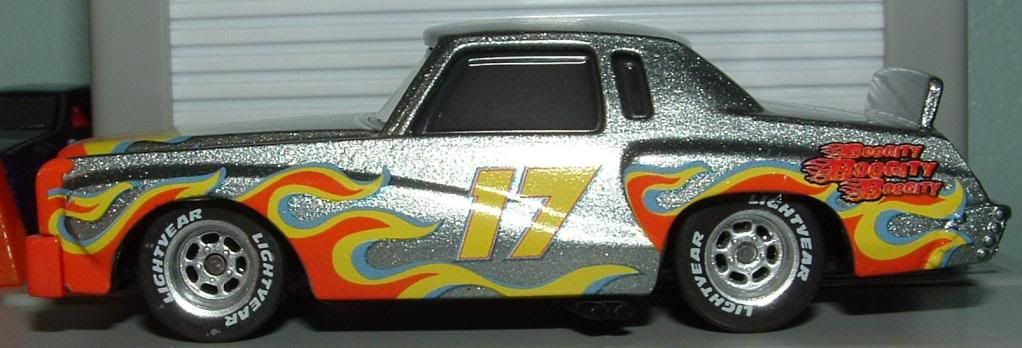
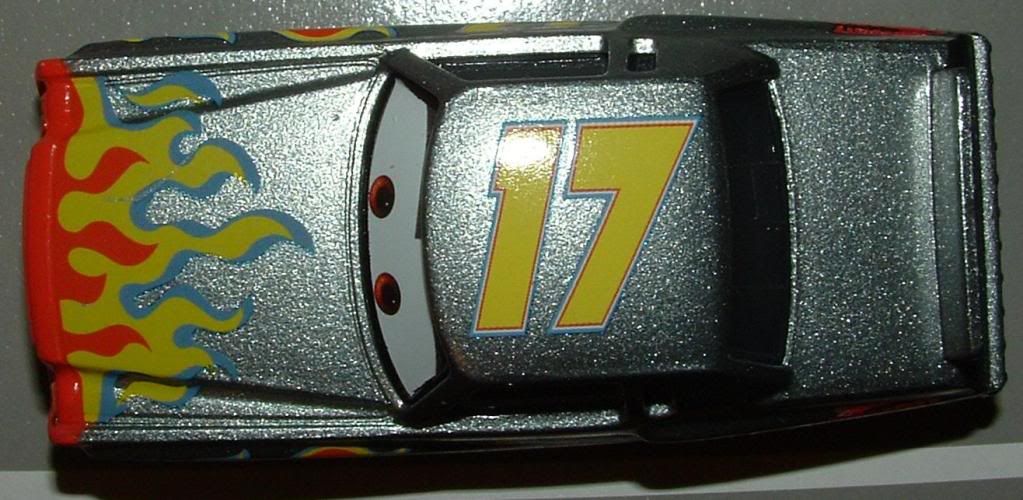
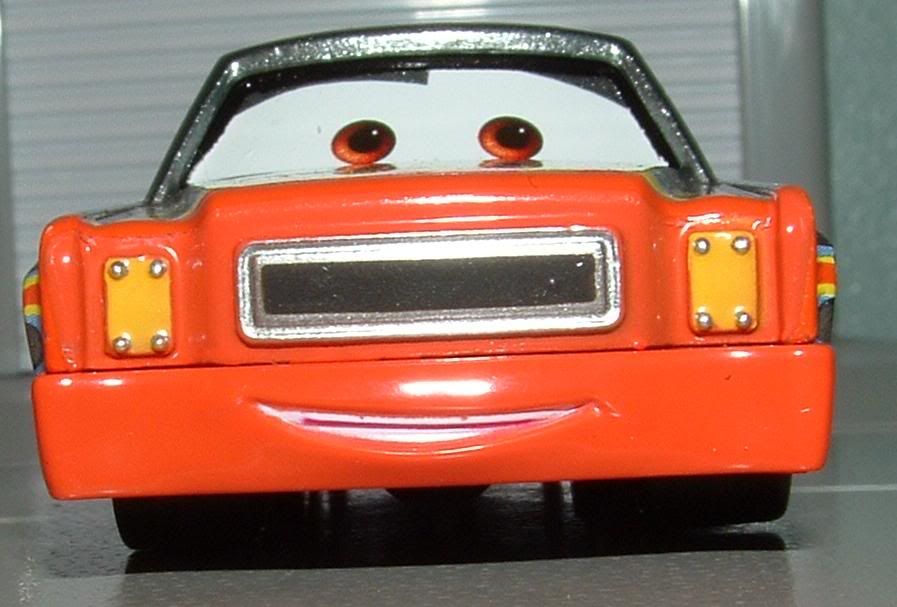
Today's car of the day is Mattel's Disney/Pixar "Cars 2" 1977 Chevrolet Monte Carlo (Darrell Cartrip/Darrell Waltrip).


The Chevrolet Monte Carlo is an American-made two-door coupe introduced for model year 1970, and manufactured over six generations through model year 2007. It was marketed as a personal-luxury coupe through most of its history, with the last model version being classified as a full-sized coupe. When it was discontinued in 2007, it had outlived many competitors that were either discontinued many years earlier or changed in concept to either a four-door sedan or small sport coupe.

The Monte Carlo endured six styling/design generations. The first four (1970–72, 1973–77, 1978–80 and 1981–88) were of a rear-wheel-drive, V8-powered (V6 available beginning in 1978) coupe style, utilizing separate body-on-frame construction. The later rear-wheel-drive generations bucked the trend of unit-body construction, along with smaller engines, that became more prevalent in the early 1980s as automakers downsized their vehicle lines to meet increasing stringent fuel-economy regulations in the aftermath of two energy crises that led to gasoline shortages and skyrocketing pump prices in 1973-74 and 1979-80. Despite those trends, the Monte Carlo remained a popular seller and even regained the SS version (initially offered for 1970-71 with 454 cubic-inch V8) from mid-1983 to 1988 with a high-performance 305 cubic inch V8.
Following a several year hiatus following the discontinuation of the rear-drive Monte Carlo after 1988, the nameplate was revived for 1995 on a front-drive, V6-powered coupe based on the Chevrolet Lumina sedan. It was succeeded by the sixth and final-generation Monte Carlo in 2000 that was built along-side of the Chevrolet Impala, which succeeded the Lumina as Chevy's mid-sized sedan. The Monte Carlo SS was revived from 2000 to 2007, initially powered by 3.8-liter V6 (supercharged in 2004-2005), which was replaced by a 5.3-liter V8 for 2006-2007.


For more information and pictures of the real car please visit: Chevrolet Monte Carlo


Surprisingly, this is the first time we've featured a Darrell Waltrip car.  But in this case, Darrell really is the car!  This one is based on his DiGard Racing Gatorade Chevy from 1977.  Pepsi, however, still owns the rights to the paint scheme hence the generic flamed design seen on this model (and the movie version of the same car).  One thing's for sure, DWstore.com didn't exist in 1977!


A revised grille with the Monte Carlo "Knight's Crest" emblem moved to a stand-up hood ornament and revised taillight lenses marked the 1977 Monte Carlo, which was the last year for the 1973-vintage design before the introduction of a downsized 1978 Monte Carlo. Engine offerings were reduced to two engines for 1977. The base engine for 49 states was the 140 hp (100 kW) 305 CID 2-barrel V8 and the 170 hp (130 kW) 350 4-barrel V8 was optional (standard in California). The 400 cubic inch V8 was dropped as an engine option. The Turbo Hydra-matic transmission was included standard equipment.
Interior trim received only minor revisions this year with upholstery choices including cloth, velour and vinyl in both base and Custom trims.

This model year marks the only time in history when an intermediate model was larger in every dimension than a full-sized model, as the B-body Chevrolet Caprice/Impala had already been redesigned and downsized for 1977.

Tuesday, August 2, 2011

Car Of The Day: August 2, 2011


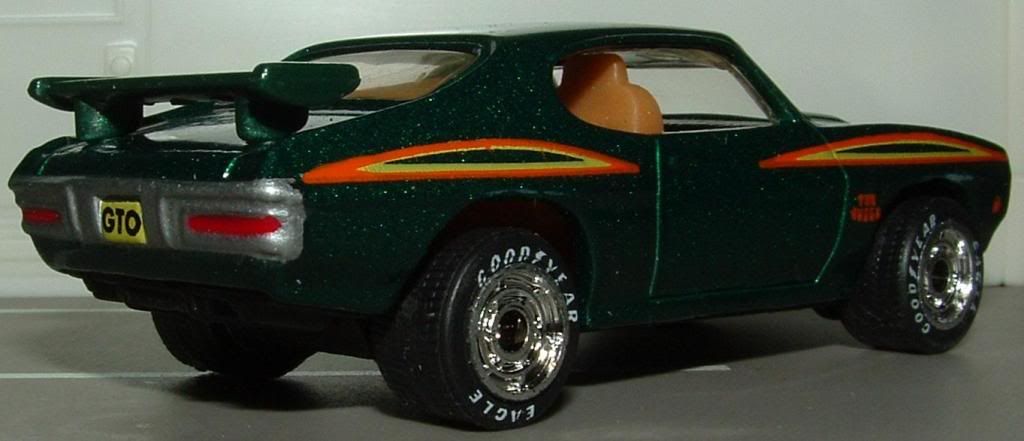
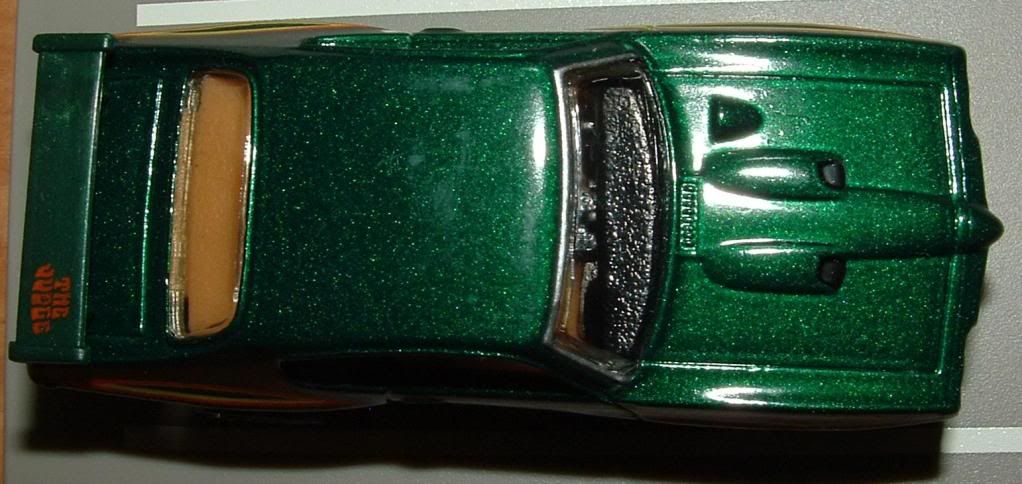
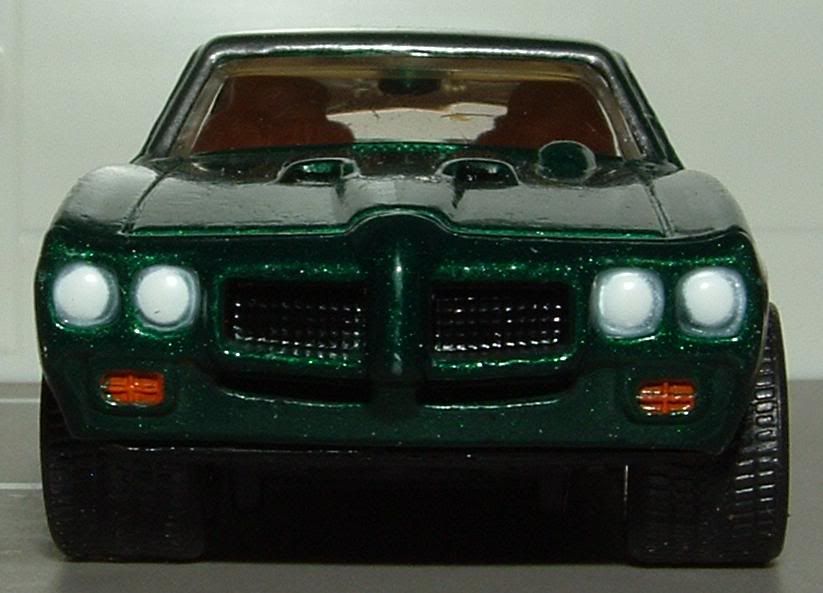
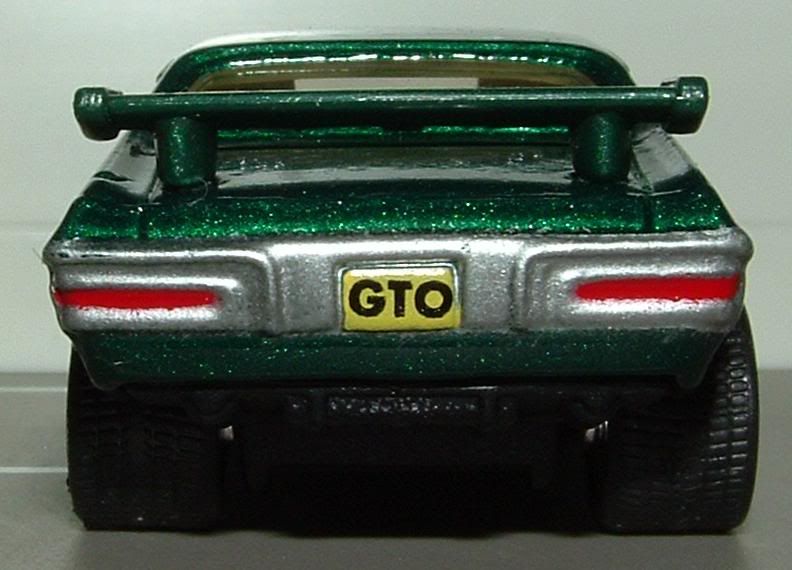
Today's car of the day is Matchbox Premiere's 1970 Pontiac GTO The Judge.


The Pontiac GTO is an automobile built by Pontiac Division of General Motors in the United States from 1964 to 1974, and by GM subsidiary Holden in Australia from 2004 to 2006. It is considered an innovative, and now classic muscle car of the 1960s and 1970s. From 1964 until midway through 1973 it was closely related to the Pontiac Tempest/LeMans and for the 1974 model year it was based on the Pontiac Ventura. The 21st century GTO is essentially a left-hand drive Holden Monaro, itself a coupe variant of the Holden Commodore.


For more information and pictures of the real car please visit: Pontiac GTO


The detail level on this car is excellent and would be considered above average even today.  But in the late 1990s?  This was a nearly unheard of level of detailing.  This one was purchased from Pegers (thanks Dan!) earlier this year.


The Tempest line received another facelift for the 1970 model year. Hidden headlights were deleted in favor of four exposed round headlamps outboard of narrower grille openings. The nose retained the protruding vertical prow theme, although it was less prominent. While the standard Tempest and LeMans had chrome grilles, the GTO retained the Endura urethane cover around the headlamps and grille.
The suspension was upgraded with the addition of a rear anti-roll bar, essentially the same bar as used on the Oldsmobile 442 and Buick Gran Sport. The front anti-roll bar was slightly stiffer. The result was a useful reduction in body lean in turns and a modest reduction of understeer.

Another handling-related improvement was optional variable-ratio power steering. Rather than a fixed ratio of 17.5:1, requiring four turns lock-to-lock, the new system varied its ratio from 14.6:1 to 18.9:1, needing 3.5 turns lock-to-lock. Turning diameter was reduced from 40.9 feet (12.5 m) to 37.4 feet (11.4 m).
The base engine was unchanged for 1970, but the low-compression economy engine was deleted and the Ram Air III and Ram Air IV remained available, although the latter was now a special-order option.
A new option was Pontiac's 455 HO engine (different from the round-port offerings of the 1971-72 cars), available now that GM had rescinded its earlier ban on intermediates with engines larger than 400. The 455, a long-stroke engine also available in the full-size Pontiac line as well as the Grand Prix, was dubiously rated by Pontiac as only moderately stronger than the base 350 HP 400 cu. in. and less powerful than the 366 hp (273 kW) Ram Air III. Curiously, per the Pontiac brochure of the time, the same spec 455 installed in the Grand Prix model was rated at 370 horsepower (280 kW). The camshafts used in the Ram Air III and the GTO 455 HO were the same. For example the manual transmission 455 HO's used the same 288/302 duration cam as the Ram air III. The 455 was rated at 360 hp (270 kW) at 4,300 rpm. Its advantage was torque: 500 lb·ft (678 N·m) at 2,700 rpm. A functional Ram Air scoop was available. Car and Driver tested a heavily optioned 455, with a four-speed transmission and 3.31 axle and recorded a quarter mile time of 15.0 seconds with a trap speed of 96.5 mph (155.3 km/h) . Car Life's Turbo-Hydramatic 455, with a 3.35 rear differential, clocked 14.76 seconds at 95.94 mph (154.40 km/h), with identical 6.6 second 0-60 mph acceleration. Both were about 3 mph (4.8 km/h) slower than a Ram Air III 400 four-speed, although considerably less temperamental: the Ram Air engine idled roughly and was difficult to drive at low speeds. The smaller displacement engine recorded less than 9 mpg-US (26 L/100 km; 11 mpg-imp) of gasoline, compared to 10 mpg-US (24 L/100 km; 12 mpg-imp)-11 mpg-US (21 L/100 km; 13 mpg-imp) for the 455.

A new and short-lived option for 1970 was the Vacuum Operated Exhaust (VOE), which was vacuum actuated via an underdash lever marked "EXHAUST." The VOE was designed to reduce exhaust backpressure to increase power and performance, but it also substantially increased exhaust noise. The VOE option was offered from November 1969 to January 1970. Pontiac management was ordered to cancel the VOE option by GM's upper management following a TV commercial for the GTO that aired during Super Bowl IV on CBS January 11, 1970. In that commercial, entitled "The Humbler," which was broadcast only that one time, a young man pulled up in a new GTO to a drive-in restaurant with dramatic music and exhaust noise in the background, pulling the "EXHAUST" knob to activate the VOE and then left the drive-in to do some street racing. That particular commercial was also cancelled by order of GM management. Approximately 233 1970 GTOs were factory built with this rare option including 212 hardtop coupes and 21 convertbiles, all were "YS" 400ci 350 hp/with either four-speed manual or Turbo Hydra-matic transmissions. This particular GTO in the commercial was Palladium Silver with a Black bucket interior. It was unusual in several respects as it also had the under-dash "RAM AIR" knob just to the right of the VOE knob, and it sported '69 JUDGE stripes, as a few very-early '70 GTOs could be ordered with. It also had a Turbo Hydra-matic transmission, remote mirror, Rally II wheels, A/C, Hood Tach, and a new-for-1970 Formula steering wheel. A few 'VOE' mufflers were "Hand-made" for the remaining cars; this occurred in 2006 and 2007, and they are now available from Waldron Antique Exhaust.

The Judge remained available as an option on GTOs. The Judge came standard with the Ram Air III, while the Ram Air IV was optional. Though the 455 CID was available as an option on the standard GTO throughout the entire model year, the 455 was not offered on The Judge until late in the year. "Orbit Orange" became the new standard color for the '70 Judge, but any GTO color was available on The Judge. Striping was relocated to the upper wheelwell brows.

An Orbit Orange 1970 GTO with the 455 engine and Turbo Hydra-Matic transmission was one of the featured cars in the movie Two-Lane Blacktop, which depicted a cross-country race between the new GTO and a 1955 Chevrolet Bel Air. The car, owned by the studio, was not depicted as a Judge; however, in reality it WAS a RAIV powered Judge. They mentioned the 455 engine as it projected a more powerful offering to the public.

The new styling did little to help declining sales, which were now being hit by sagging buyer interest in all musclecars and by the punitive surcharges levied by automobile insurance companies, which sometimes resulted in insurance payments higher than car payments for some drivers. Sales were down to 40,149, of which 3,797 were The Judge. Of those 3,797 Judges built, only 168 were ordered in the Convertible form: RA III, RA IV and 455HO. The general consensus is that six of the 168 built were ordered with the 1970-only D-Port 455HO 360 hp (270 kW) engine, a no-cost option, which explains the conflicting production figures over the years as to how many were built; 162 vs. 168. The '69/'70 'Round-Port' RA IV engine, a derivative of the '68½ 'Round-Port' RA II engine, was the most exotic high-performance engine ever offered by PMD and factory-installed in a GTO or Firebird. The 1969 version had a slight advantage as the compression ratio was at 10:75:1 as opposed to 10.5:1 in 1970. It is widely known that PMD was losing $1,000 on every RA IV GTO and Firebird built, and the RA IV engine was highly under-rated at 370 hp (280 kW). Overall, only a precious 37 RA IV GTO Convertibles were built in 1970: (24) 4-Speeds and only (13) automatics. Of the (13) '70 GTO RA IV/Auto Convertibles built only a precious six (6) received the Judge option. One of those, a #'s-Matching Atoll Blue/Blue/White top example was bid to $240K @ the May 2009 Mecum Auctions in Marengo, Illinois, and did NOT sell. The low bid was attributed to the stagnant economy, and that particular car is documented back to the original owner in Pewaukee, Wisconsin. The three-speed manual, nor A/C, was not available with the RA IV engine, and the standard axle ratio was 3.90, with the 4.33 being a low-cost option. The GTO remained the third best-selling intermediate muscle car, out-sold only by the Chevrolet Chevelle SS 396/454 and Plymouth Road Runner.

Monday, August 1, 2011

Car Of The Day: August 1, 2011


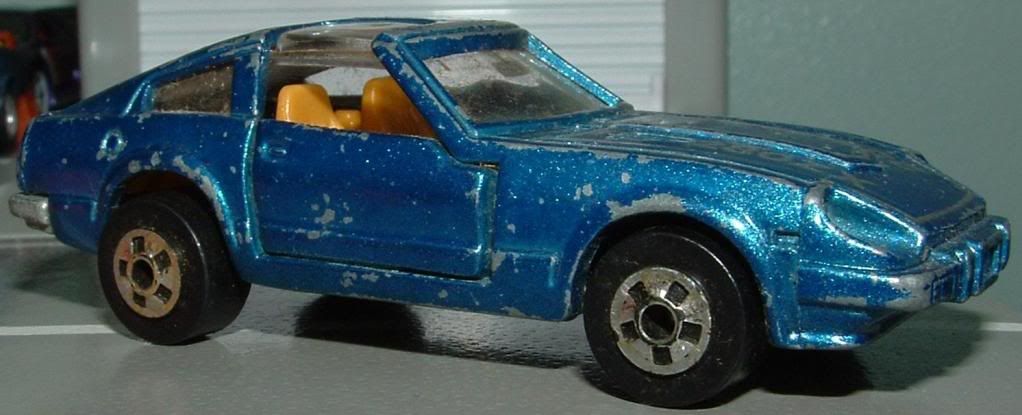
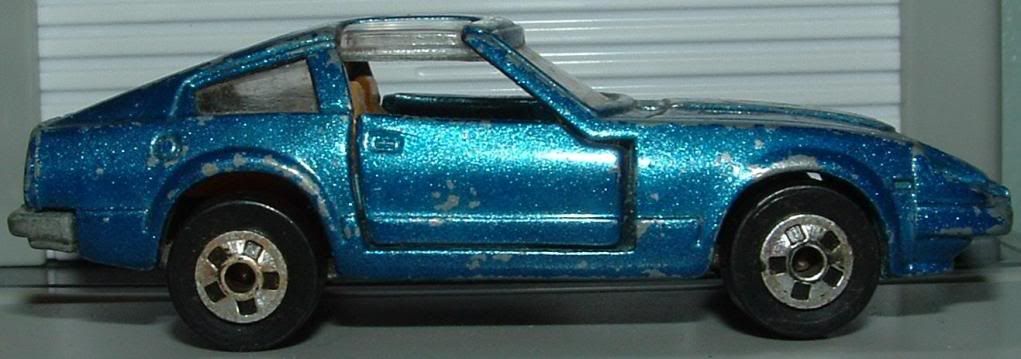
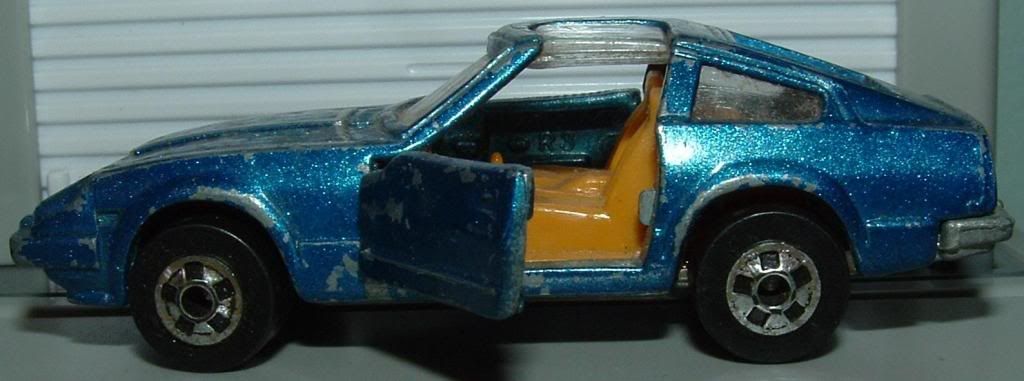
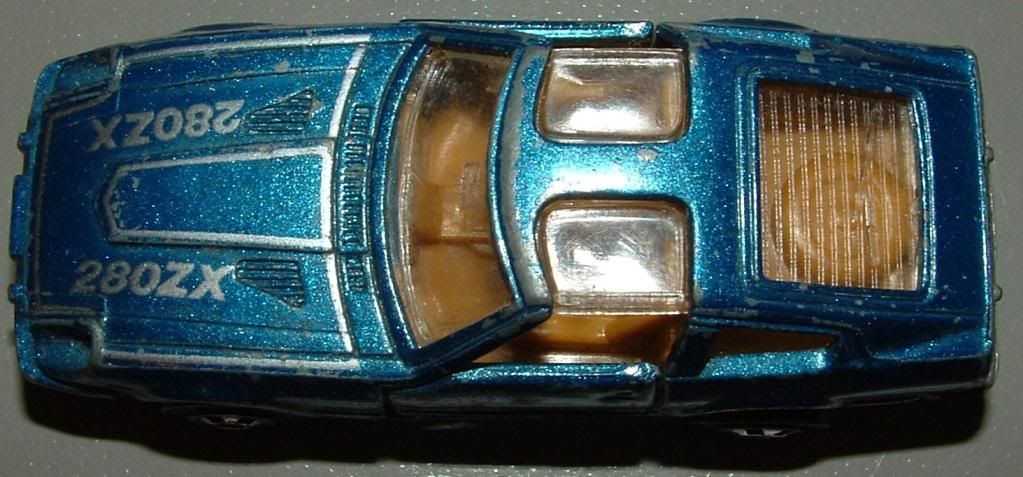
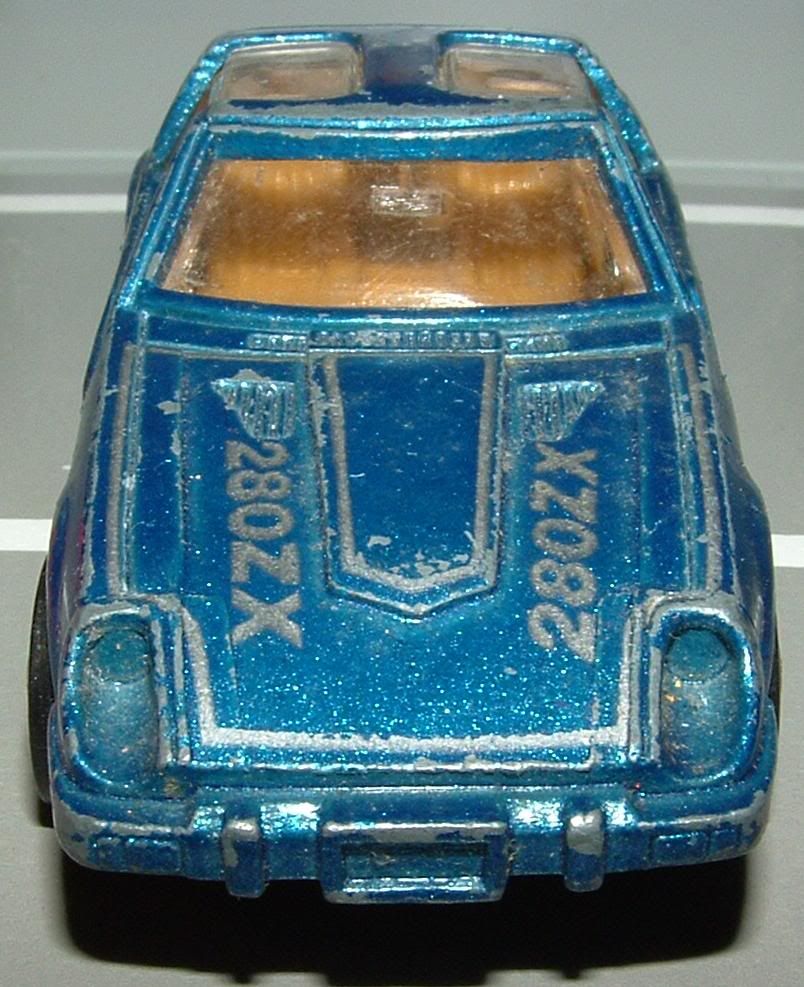
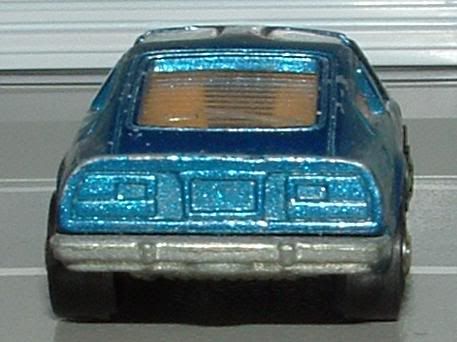
Today's car of the day is Road Champs' 1982 Datsun 280ZX.


The Nissan 280ZX (also known as the Datsun 280ZX and Fairlady Z) was a sports coupe produced from 1978 to 1983. It was the second generation Z-car, replacing the Datsun 280Z in late 1978. The 280ZX was the first time where the "By Nissan" subscript was badged alongside the Datsun logo, along with the Nissan trucks. The 280ZX was Motor Trends Import Car of the Year for 1979. The 280ZX was replaced by the Nissan 300ZX in 1984.


For more information and pictures of the real car please visit: Datsun 280ZX


The Nissan/Datsun Z-Cars are well-represented in small scale, and the 280ZX in particular is probably the single most popular of the bunch.


The 280ZX was branded in the American and Australian markets as the Datsun 280ZX; and in the local Japanese market as the Fairlady Z. In the 1979 model year in the American market, it was co-branded Datsun by Nissan through the 1983 model year. These were considered transition years as Nissan began to phase in their new global brand under the Nissan name.

The Japanese market got both 2.0 L and 2.8 L engines. The 2.0 L-engined Fairlady 280Z used the L20 engine common in Nissan family cars of the same era. Export markets all got the L28-powered version. The preference for 2.0 L engines in the Japanese market was a by-product of taxation laws.

Two trim levels were offered in America, with a no-frills 2-seater and the Grand Luxury (GL) ZX carrying the full equipment list. Leather seats were optional, and an optional digital instrument cluster was introduced in 1982.


Nissan gave the 280ZX a face lift in 1982 with revised NACA ducting in the hood, new alloy wheels (14 in. 6-spoke alloys for non-turbo models, and 15 in. 4-spoke alloys for turbo models), a revised B-pillar garnish, new pin-stripe style tail-lights, and rubber bumper over-riders replaced the earlier model's chrome and rubber items. Interior changes were minor but included new seat trim styling. The 1982 model also was the first to offer the popular voice warning system, which warned the driver when headlights were left on after the vehicle was turned off, if the parking brake was on while the vehicle was in motion, and many other warnings.

This facelifted model has since come to be called the "Series II" 280ZX.

Power steering became standard equipment with a new rack-and-pinion system, rather than recirculating ball. Changes were made to the rear suspension layout, which also meant the exhaust pipe now exited from the left, rather than right-hand side.

As in 1981 both turbo and normally aspirated engines were offered, but non-turbo cars now used the uprated L20E for the Japanese Market or L28E for the export market, which on the 2.8L version, due to increased compression, were rated at 145 hp (108 kW) rather than the earlier engine's 135 hp (101 kW). With these performance modifications the 280ZX still could not keep up with the faster Volvo 240 Turbo Intercooler (8.5s) or the BMW 325 (8.4s) as it boasted a sluggish 9.4 second acceleration time and average 1/4 mile time. The 1983 280ZX Turbo however saw a cylinder head change, as the P90 head was phased out for the P90A, which used hydraulic lash adjusters, rather than the conventional adjustable lash adjusters. This produced a nearly silent-running engine, required no valve clearance adjustment, and eliminated the valve noise that the L series engines are prone to. It has since become a popular modification on 1983 Turbos to remove the P90A head and replace it with the earlier P90, as the hydraulic lash adjusters are no longer available, and have proven unreliable after many years of use.

The (US market only) 280ZX Turbo was offered with a manual transmission; this was a Borg-Warner T-5 5-speed model (this was the first Nissan and Japanese car in general which used a non-Japanese transmission; the T-5 was also used, most notably, in the GM F-bodies and Ford Mustang) in addition to numerous other American domestic vehicles.

Spring rates and sway bars were revised, which largely addressed the handling nervousness of the early 280ZX Turbo, and reviews confirmed that the 1982 280ZX Turbo was the most sporting Z-car since the original 240Z of 1970.

Sunday, July 31, 2011

Car Of The Day: July 31, 2011


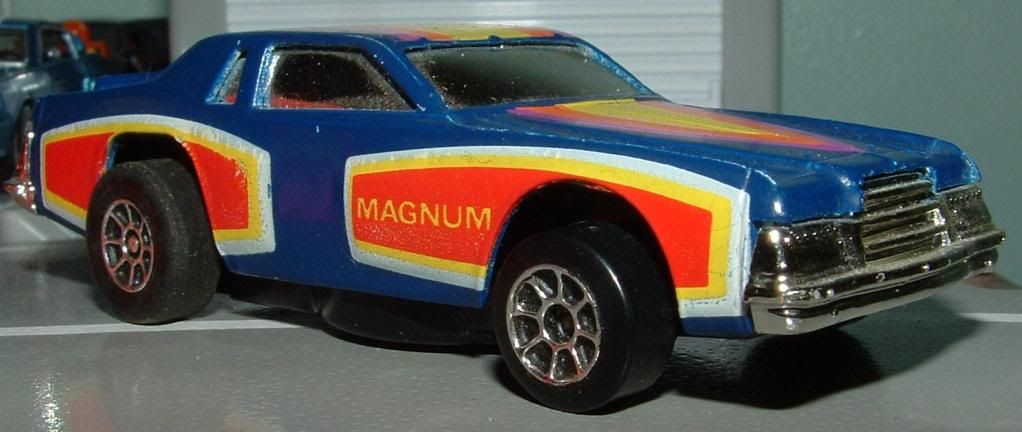
Today's car of the day is Hot Wheels Scorchers' 1979 Dodge Magnum.


The Dodge Magnum name has been used on a number of different automobiles. The most recent is a large rear-wheel drive station wagon introduced in 2004 for the 2005 model year and produced through to 2008. This new Magnum is Dodge's first car to use the new Chrysler LX platform, shared with the Chrysler 300 and the Dodge Charger. The LX Line is assembled at Brampton Assembly Plant, near Toronto, Ontario, Canada.
Historically, the Dodge Magnum model name had been used from 1978 to 1979 for a large coupe in the United States. In Brazil, the Magnum name was a top of the line version of the local Dodge Dart from 1979 to 1981. In Mexico, the Dodge Magnum was a sporty rear-wheel drive two-door car based on Chrysler's M body (American Dodge Diplomat/Plymouth Gran Fury). It had a 360 CID (5.9L) V-8 engine with a single 4 barrel carburetor rated at 300 hp. From 1983 to 1988 it was a sporty two-door K-car with available turbocharger from 1984 on. Four engines were offered for the Mexican Magnum K, a SOHC I-4 2.2L (K-Trans-4), a turbocharged SOHC I-4 2.2L (1983–86) and two other 2.5L SOHC I-4s, with and without turbocharger (1987–88). The Mexican front-wheel drive Magnum was officially called "Dodge Magnum 400" between 1983 and 1984, as it was a sporty Mexican variation of the American Dodge 400 of the early eighties. For 1985, the "400" suffix was dropped. For the 1987 season, the turbocharger received an intercooler and the power from the turbo engine changed from 140 to 150 hp. The K-car based Magnum was replaced by the Mexican Chrysler Shadow GTS for the 1989 model year.


For more information and pictures of the real car please visit: Dodge Magnum


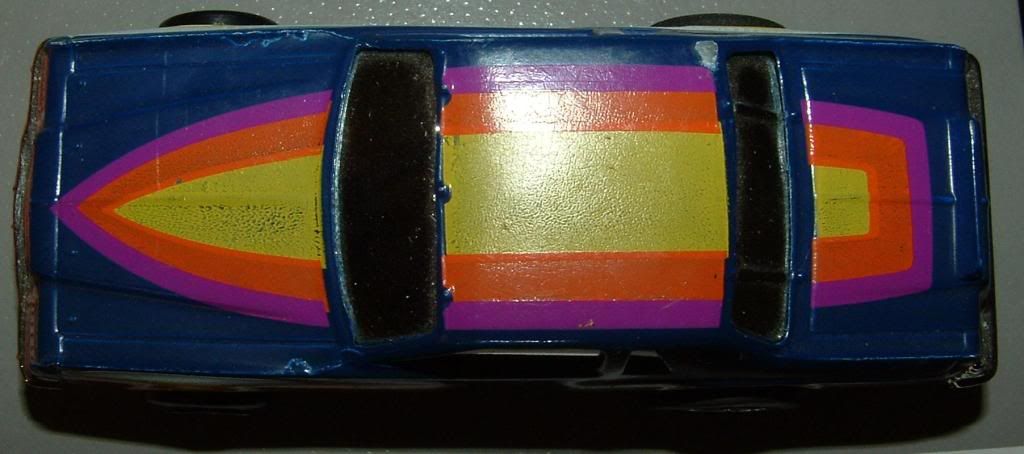
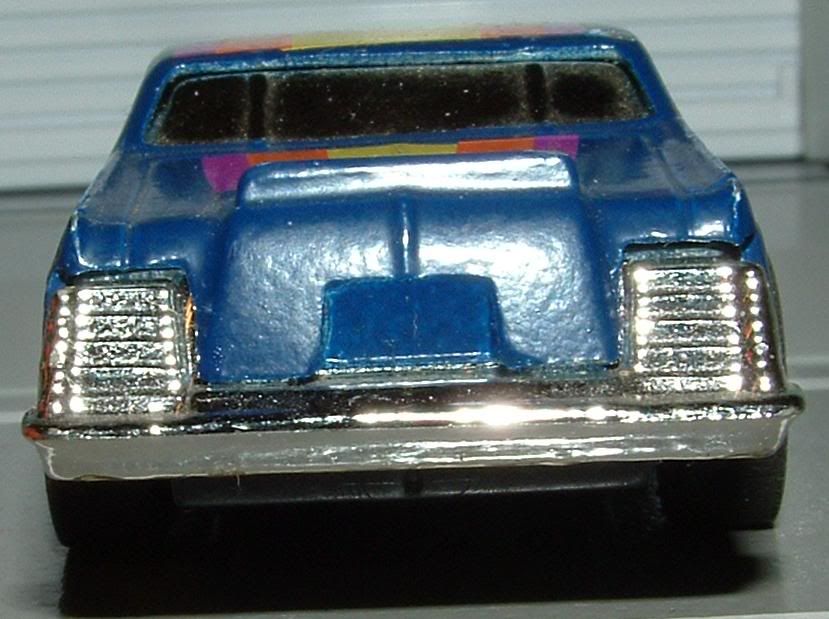
A recent find at a thrift store, I think $1 was an extremely reasonable price for this model.  There are only two 1/64 scale Dodge Magnums of this era, and now I have both.  The other is a Corgi, and is the superior casting with opening hood and engine detail.  Unfortunately both examples lack an interior and this Scorchers version is a NASCAR stocker as seen by the window bars, lack of door lines, and riveted headlights.  Sadly, the real car never won a Winston Cup race and ended up being the car that made Richard Petty switch to General Motors halfway through the 1978 season.


The 1978 and 1979 Dodge Magnum in the United States and Canada was an addition to the Chrysler line up that allowed Richard Petty to continue racing with a Mopar. The Magnum replaced the Charger SE in Dodge's lineup in two forms; the "XE" and the "GT". It was the last vehicle to use the long running Chrysler B platform. The appearance was somewhat of a rounded off Charger, and was in response to getting a car that would be eligible for NASCAR that would be more aerodynamic, something the 1975-78 Charger was not. Styling features included four rectangular headlights behind retractable clear covers, with narrow opera windows, and an optional T-bar or power sunroof. The Magnum was well-featured with power steering, brakes and seats; the suspension included Chrysler's standard adjustable, longitudinal torsion bars, lower trailing links, and front and rear anti-sway bars. The base engine was the 318 in³ V8 with Lean Burn, while two and four-barrel carbureted 360 and 400 V8s were also available; weight was nearly 3,900 lb (1,800 kg). The 400 was dropped from the option list in 1979 as Chrysler stopped production of big-block V-8's in production cars at the end of 1978. A performance model, the "GT" was available with the 400 V8 in 1978 and the "E58" police interceptor (360 V8-195 HP) engine in 1979 along with HD suspension, special axle, special "GT" badging and a "turned metal" dash applique. Technology was advanced for the time with an onboard spark control computer from inception, electronic ignition, and a lockup torque converter. The Magnum name was discarded quickly in favor of the Mirada, a smaller car that was also a rebadged Chrysler Cordoba. The Magnum has something of a cult following today, with several clubs and enthusiasts who are dedicated to the recognition and preservation of Chrysler's "last B-body". In 1979, they made 3,704 Dodge Magnums with the T-Top.

For the 1978 NASCAR season, the 1974 Charger that Chrysler teams had continued to use was no longer eligible for competition. Chrysler worked on several car designs to smooth out the current 1975 bodied Charger into something that would be reasonably aerodynamic for the big racetracks and the Magnum design was settled on early in 1977 for use in the 1978 racing season. While not as aerodynamic as the previous 1974 Charger body, the shape of the Magnum showed promise, and the Petty built test cars easily reached 190 mph (310 km/h) on test runs. Once out on the tracks the cars ran well with Richard Petty almost winning his Daytona 125 (finishing 2nd), and lead 30+ laps of the Daytona 500 until a blown front tire caused him to wreck. However, the lack of factory support of continued development of the small-block Chrysler 360 V8 as a race engine was becoming more of a problem, and in high speed racing traffic the Magnum did not handle well. Richard Petty was particularly harsh in his criticism of the car. By the latter half of the 1978 season, Petty and Neil Bonnett (the two top Mopar teams) gave up on the cars inconsistent performance and switched to Chevrolets, leaving independent drivers Buddy Arrington (who bought a few of Petty's Magnums, along with some parts) and Frank Warren to soldier on without any substantial (Chrysler did provide sheetmetal and some engine parts to teams driving Magnums) factory support. From August 1978, 2-5 independent teams showed up with Magnums in NASCAR races until January 1981, when NASCAR switched to smaller bodied cars. The Magnum never enjoyed the racing heritage of its predecessors, but it was not without its own glorious moments. Petty scored 7 top five finishes in his 17 races with the car, and Neil Bonnett won three poles and scored 5 top five finishes with his. Richard Petty recognized the Magnum with a commemorative decal, depicting his famous number 43 emblazoned on a Magnum for his 1992 Fan Appreciation Tour. Though Richard never won a race in a Magnum, Petty's son, Kyle Petty drove one of his father's year old Dodge Magnums in his first race (1979 Daytona ARCA 200), and won! Kyle raced in 5 NASCAR races using the left-over Magnums in 1979, but by the end of that year wrecked them beyond reasonable repair. As of now (JUL 2008) only two NASCAR Magnums still exist; one (an ex-Petty car) resides in the Talledega NASCAR museum, and the other; (Marty Robbins' 1978 Magnum #42) has been superbly restored and is owned by a private party in southern CA. The owner plans on racing it in the vintage NASCAR series.

Saturday, July 30, 2011

Car Of The Day: July 30, 2011


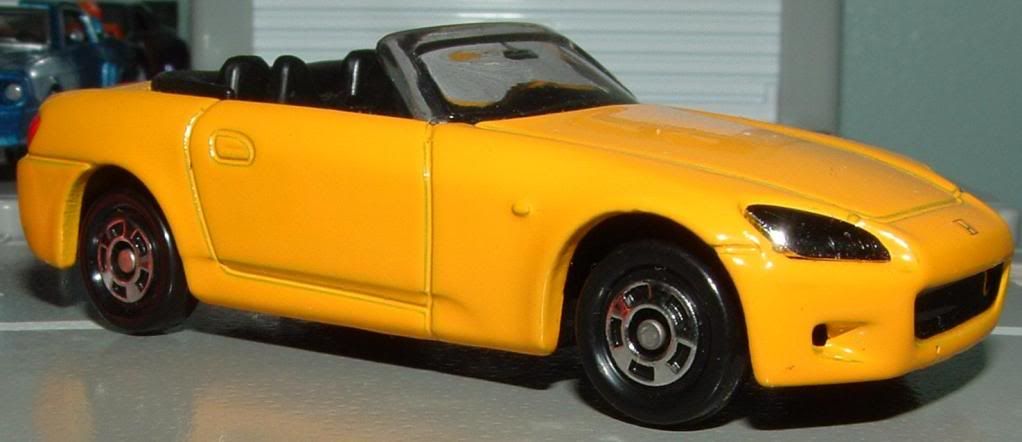
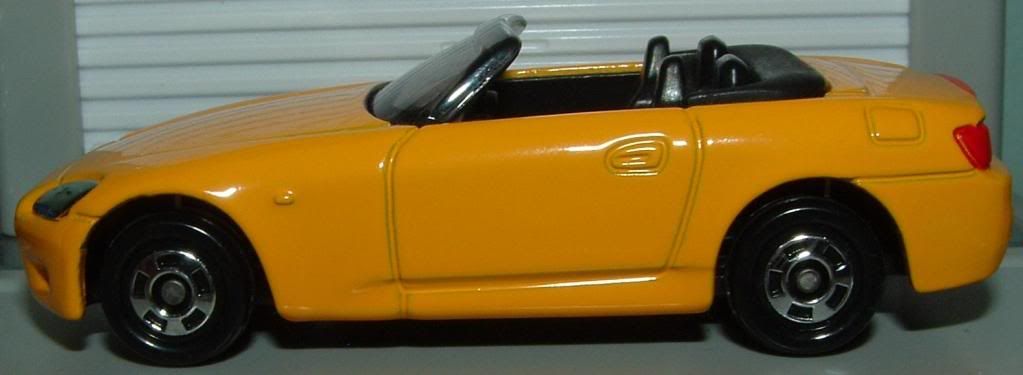
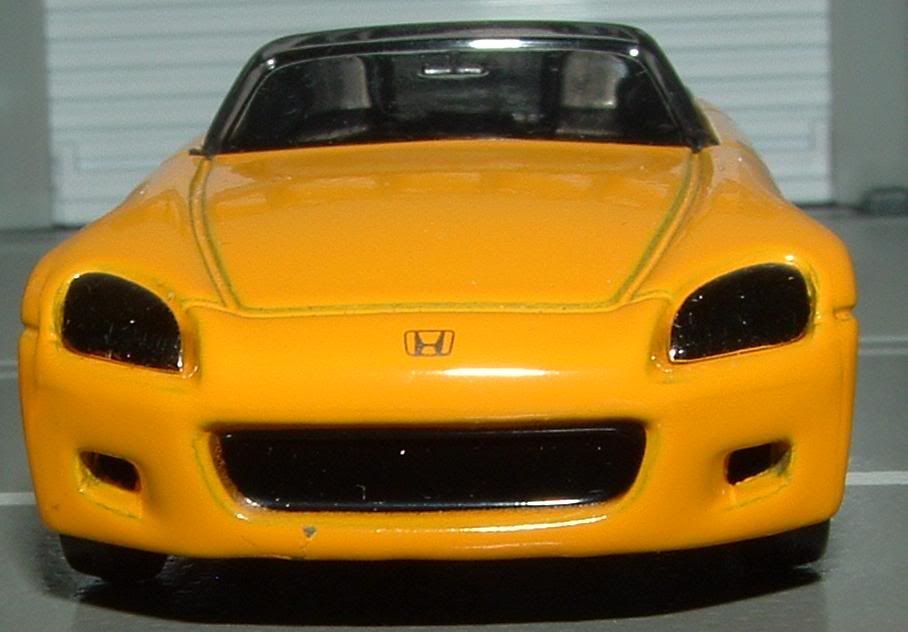
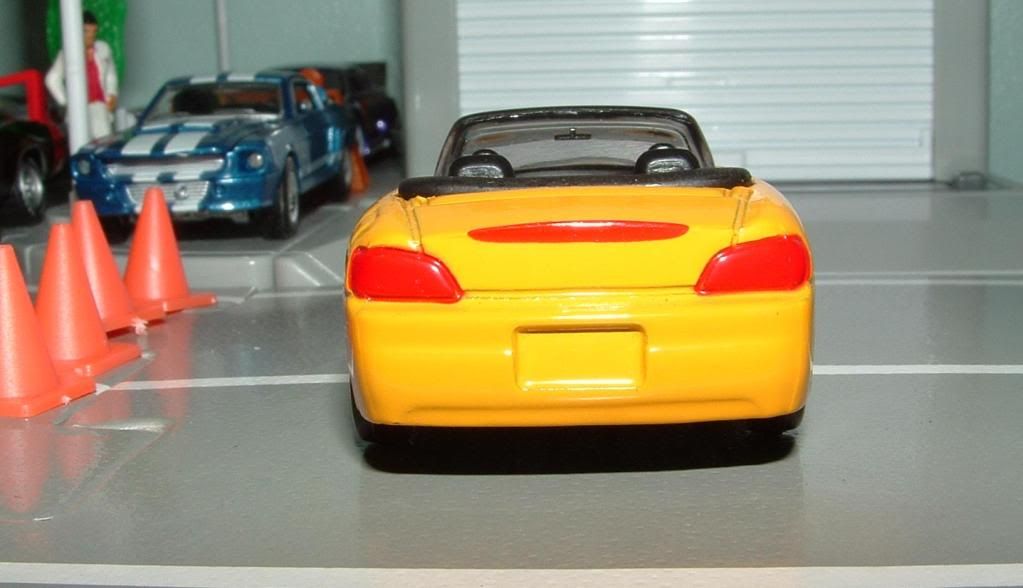
Today's car of the day is Tomica's 1999 Honda S2000.


The Honda S2000 is a roadster that was manufactured by the Japanese automaker Honda Motor Company. It was launched in April 1999 and was created to celebrate the company's 50th anniversary. The car was first shown as a concept at the Tokyo Motor Show in 1995, following which it was launched in world markets in 1999. The S2000 is named for its engine displacement of 2 L, carrying on in the tradition of the S500, S600, and S800 roadsters of the 1960s. Several revisions were made throughout the car's lifetime, including changes to the engine, gearbox, suspension and interior and exterior. Officially two variants exist: the initial launch model was given the chassis code AP1, while the AP2 designation was given to vehicles produced from mid-2003 onwards. Though cosmetically similar, the AP2 incorporated significant changes to the drivetrain and suspension. Production of the S2000 ceased in June 2009.


For more information and pictures of the real car please visit: Honda S2000


A recent RAOK from bangerkid45 (thanks Jon!) this one joined my collection less than a week ago.  As most Tomicas are, this is a good representation of the model it replicates.


The S2000 was introduced in 1999 for the 2000 model year and was given the chassis designation of AP1. It featured a front mid-engine, rear-wheel drive layout with power being delivered by a 1,997 cc (122 cu in) F20C inline 4 cylinder DOHC-VTEC engine producing from 237 hp (177 kW) to 250 PS (184 kW), and from 153 lbf·ft (207 N·m) to 22.2 kg·m (218 N·m) of torque depending on the target market. The engine is mated to a six-speed manual transmission and Torsen limited slip differential. The S2000 achieved what Honda claimed as the "top level performance in the world" for a 2-liter naturally aspirated engine.

Features include independent double wishbone suspension, electrically-assisted steering and integrated roll hoops. 16 in (41 cm) wheels with Bridgestone Potenza S-02 tires were standard equipment. The compact and lightweight engine, mounted entirely behind the front axle, allows the S2000 to obtain a 50:50 front/rear weight distribution and lower rotational inertia. An electrically powered vinyl top with internal cloth lining was standard. Honda made available an aluminum hardtop for additional cost.

The 2001 model was largely unchanged, but Honda upgraded the radio and added a digital clock to the dashboard display. For the 2002 model year, suspension settings were revised and the plastic rear window was replaced by a glass unit incorporating an electric defroster. Other updates included slightly revised tail lamps, an upgraded radio, and a revised engine control unit.

The AP1 was manufactured up to 2003 at Honda's Takanezawa plant, alongside the Honda NSX and Honda Insight hybrid. In 2004 production moved to the Suzuka plant.

Friday, July 29, 2011

Car Of The Day: July 29, 2011


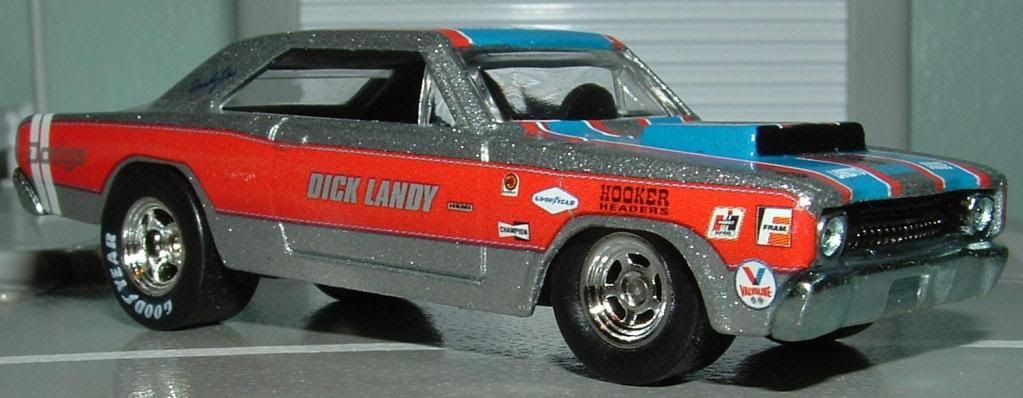
Today's car of the day is Hot Wheels' 1968 Dodge Dart Hemi.


The Dodge Dart is an automobile built by the Dodge division of the Chrysler Corporation from 1960-1976 in North America, with production extended to later years in various other markets. The Dart was introduced as a lower-priced, shorter wheelbase, full-size Dodge in 1960 and 1961, became a mid-size car for 1962, and finally was a compact from 1963-1976. Chrysler had previously applied the "Dart" name to a Ghia-built show car in 1956.

The project planners proposed the name Dart, only to have executives demand an expensive research program which produced the name Zipp. This was promptly rejected in favor of Dart. The name found favor as the market had been recently introduced to a new military aircraft called the Convair F-106 Delta Dart, commonly known as the "Delta Dart", in a marketing attempt to appeal to the excitement surrounding the Space Race during the early 1960s.


For more information and pictures of the real car please visit: Dodge Dart


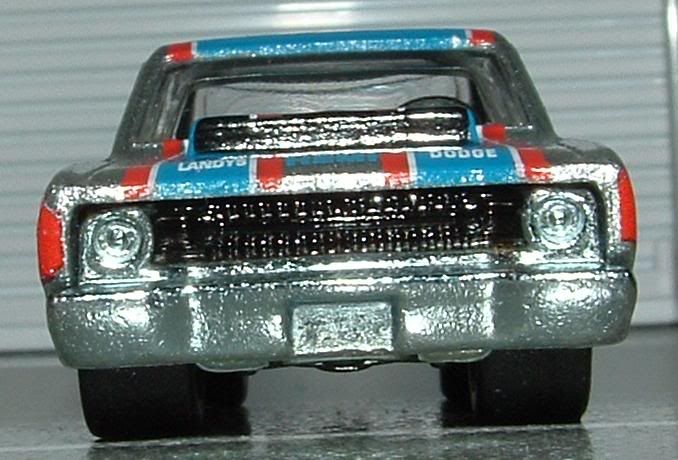
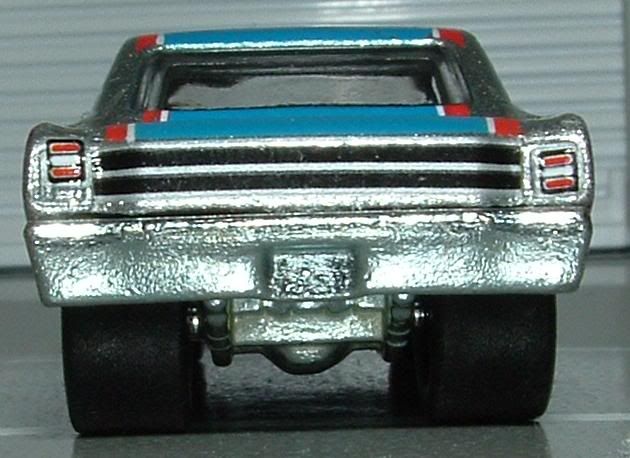
A great model from Hot Wheels, and the authentic racing graphics really make it stand out!


In 1967, the Dart entered the Sports Car Club of America's (SCCA) new Sedan Class racing series. For racing in this series, the compact cars, which included Ford Falcons and Plymouth Barracudas as well as foreign makes, were prepared like stock cars on the NASCAR Grand National circuit. "Baby Grands" was the nickname coined for these cars. Darts were powered by the 4-barrel 273 V-8 and were equipped with roll cages and 15 in (381 mm) wheels with fat tires. Bob Tullius, widely known for his Quaker State Group 44-marked cars, was one of the first to drive the Dodge Dart in the sedan class, and with notable success.

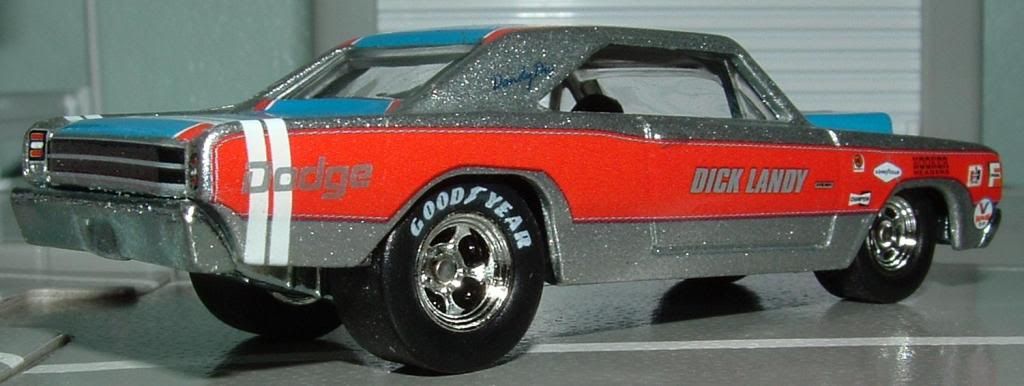
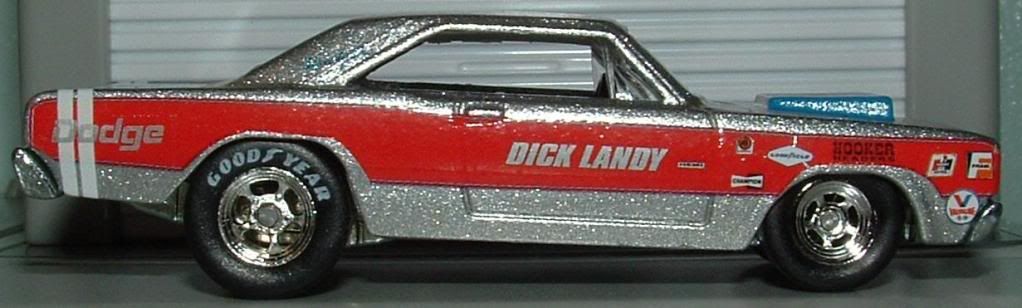
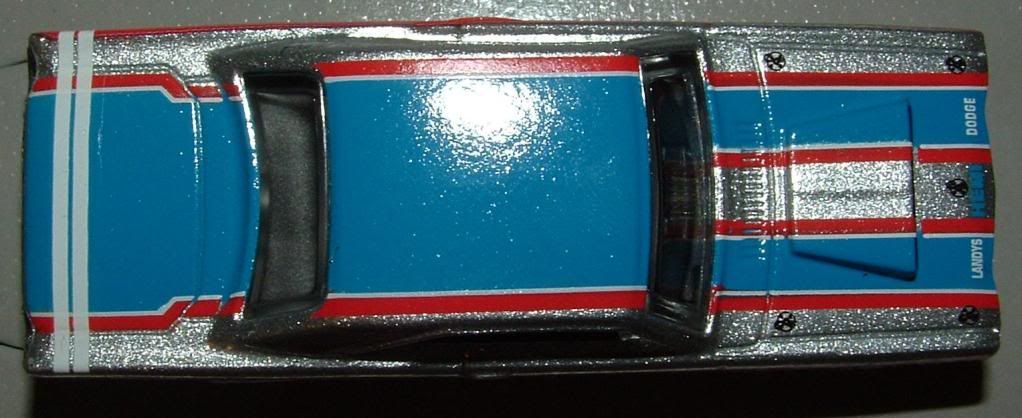
Although racers like Dick Landy and Don Garlits had modified Darts in the mid-60s to run in the NHRA Funny Car class using the 426 Hemi, Super Stock class racing of the Dart was almost non-existent due to the small V-8s available. In 1968, Dodge contracted Hurst Performance to build a limited number of 440 in³ V8-wedge and 426 Hemi-powered Darts to compete in the SS/B class as the LO23 Hurst Hemi Dart. Dart body shells were shipped to Hurst who would install a magnesium cross ram-inducted 426 Hemi into the engine bay, facilitated by sledge hammer hits to the fender wells to make room for the Hemi's installation. The rear wheel well arches were also modified in the same manner the shock towers were modified up front. Features included a fiberglass nose, fenders and hood, lightened bumpers, no side view mirrors, radio and heater delete, no soundproofing in the floor and firewall, no back seat, a trunk-mounted battery, acid dipped doors, belt straps for window cranks, Lexan windows, and Dodge A100 van seats mounted on drilled seat rails for decreased weight. These Darts rode on 7 x 14" steel wheels and came in two shades of gray primer with the nose a darker shade than the rest of the body. When shipped to a dealership, a Hemi Dart had a disclaimer on the window stating "Warning: this Super Stock vehicle is to be shipped on the bottom level only of all rail and truck transportation"; this was to ensure that the Hemi's low-hanging oil pan would not get damaged and keep the fiberglass nose from being damaged on any low-hanging obstacles. The Plymouth version was the Hurst Hemi Barracuda.

These cars would successfully cover the quarter mile with elapsed times in the ten second range. According to Chrysler staff engineer Larry Shepard, the majority of these Darts were Hemi powered, all though a small pilot run of fifty 440-powered Darts were also built in 1968. "In 1969," said Shepard, "we built over 600 440-powered Darts-basically the same as the 383 GTS, except for the engine."

Thursday, July 28, 2011

Car Of The Day: July 28, 2011


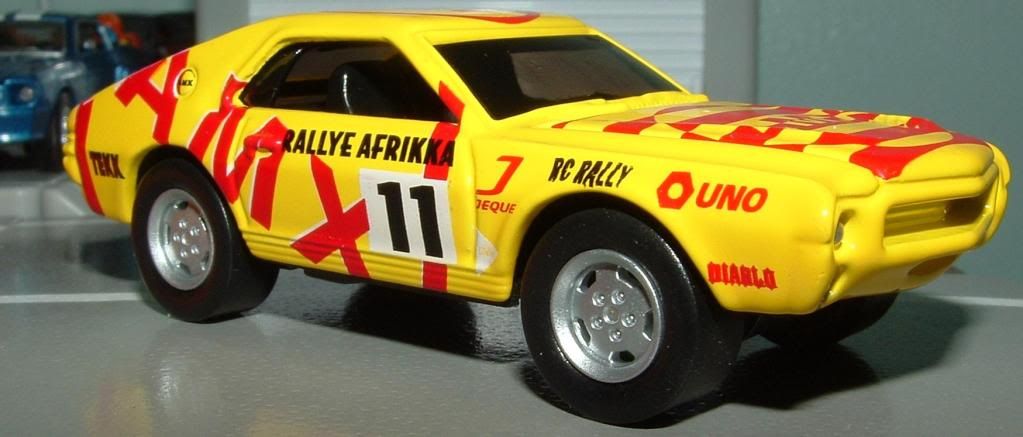
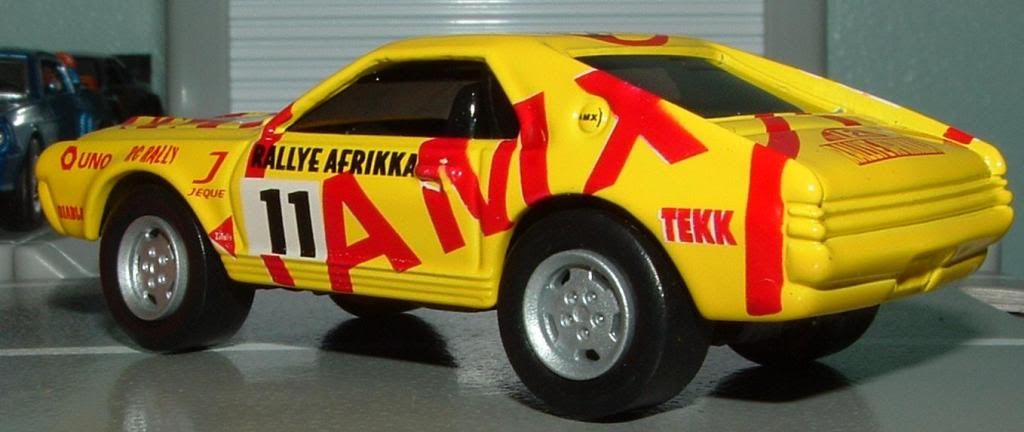
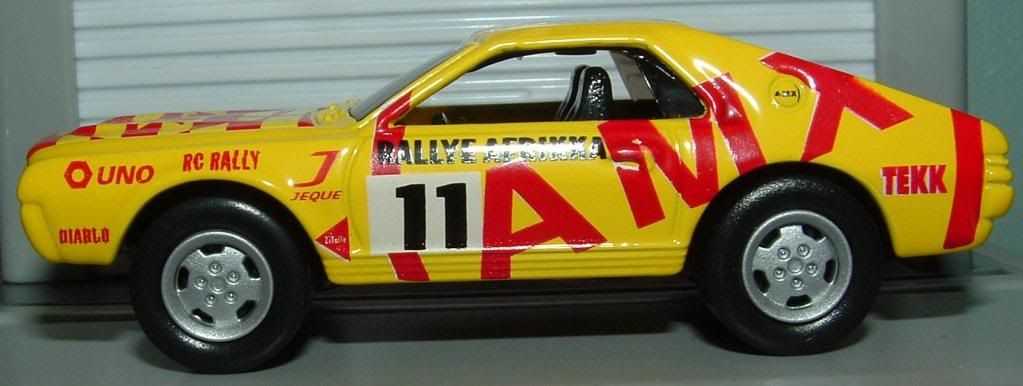
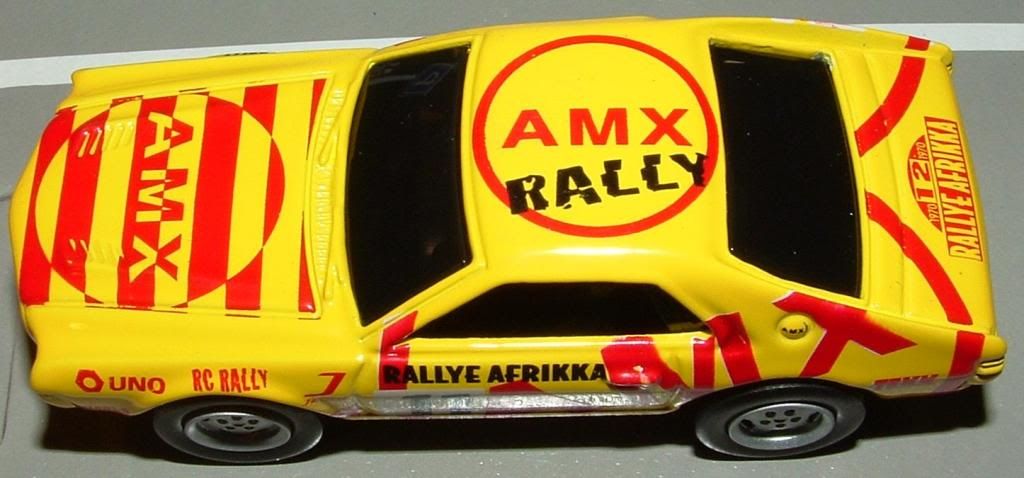
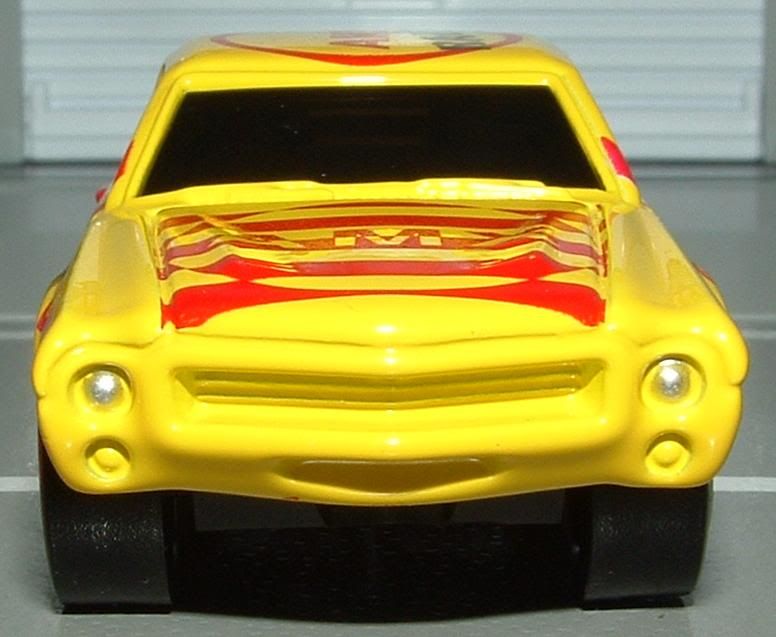
Today's car of the day is Racing Champions Street Wheels' 1969 AMC AMX.


The AMC AMX is a two-seat GT in style and approach sports car that was produced by American Motors Corporation for the 1968 through 1970 model years. The AMX was also classified as a muscle car, but "unique among other American cars at the time due its short wheelbase". The AMX was also the only American-built steel-bodied two-seater of its time, with the 1955-1957 Ford Thunderbirds being the last ones. To a degree, the AMX was a competitor with America's only other two-seater of the era, the Chevrolet Corvette for substantially less money. With a one-inch (2.5 cm) shorter wheelbase than the Chevrolet's 2-seater, "the AMX was often seen by the press as a Corvette competitor."

Fitted with the optional high-compression medium block 390 cu in (6.4 L) AMC V8, the AMX offered top-notch performance at an affordable price. In spite of this value and enthusiastic initial reception by automotive media and enthusiasts, sales never thrived. However, the automaker's larger objectives to refocus AMC's image on performance and to bring younger customers into its dealer showrooms was achieved. After three model years, the two-seat version was discontinued, and the AMX's now signature badging was transferred to a high-performance version of its 4-seat sibling, the Javelin, from 1971-1974.

American Motors capitalized the respected reputation of the original AMXs by reviving the model designation for performance equipped versions of the Hornet in 1977, Concord in 1978, and Spirit in 1979 and 1980.


For more information and pictures of the real car please visit: AMC AMX


This is a car that retailed for approximately $.50 when new.  Street Wheels was a budget line from Racing Champions, and many were the same cars (but not the same castings) that had previously been in the Mint line.  Towards the end of the Street Wheels era, they came out with a set of rally cars that I saw posted on Tales Of Toy Cars.  Like so many cars I saw on Doug's site back in the day, these never materialized locally.  I've never seen them offered for sale anywhere and I had given up hope of ever finding any of them.  And then while at one of the antique stores in Dyersville, Iowa a few weeks (while in town for Lightning Fest) I found some of them.  Only a very small selection but it included some of the cars I wanted most, so I was happy.  The rally Pacer from this line is still positioned highly on my want list, but for now just having found four of them makes me happy.


The AMX name originates from the "American Motors eXperimental" code used on a concept vehicle and then on two prototypes shown on the company's "Project IV" automobile show tour in 1966. One was a fiberglass two-seat "AMX", and the other was a four-seat "AMX II". Both of these radically styled offerings reflected the company's strategy to shed its "economy car" image and appeal to a more youthful, performance-oriented market.

The original AMX full-scale models were developed in 1965 by AMC's advanced styling studios under the direction of Charles Mashigan. The two-seat AMX was "big hit on the auto show circuit in 1966" and featured a rumble seat that opened out from the rear decklid for extra passengers called a "Ramble" seat. AMC executives saw the opportunity to change the consumers' perception of the automaker from Romney's economy car image, to the realities of the new marketplace interested in sporty, performance oriented vehicles. Robert B. Evans requested a car like the AMX to be put into production quickly.

Two simultaneous development programs emerged for a production car: (1) a modified Javelin and (2) a completely new car bodied in fiberglass. The first approach was selected allowing AMC to use its existing technology and unibody manufacturing expertise to make fairly inexpensive modifications to the Javelin approximating the prototype's styling and proportions. The automaker did not want develop plastic bodies that are intended for low-production models. The first fully operational unit debuted as part of AMC's AMX project in 1966. The "once-frumpy" automaker jumped on the "pony car bandwagon" with its "attractive Javelin" and soon introduced the "unique" AMX featuring a design where "hoods didn't come any longer, nor decks any shorter".

Vic Raviolo, previously responsible for the Lincolns that raced in the Carrera Panamericana during the 1950s was involved with engineering AMC's new sports-car-type coupe. The AMX was the first steel-bodied, two-seat American performance car since the 1957 Thunderbird, Ford's original two-seater having long since evolved into a four-seat personal luxury car. With a short 97 in (2,464 mm) wheelbase, the AMX's direct competition was the one-inch longer (98 inches (2,489 mm) Chevrolet Corvette. The AMX's manufacturer's suggested retail price (MSRP) was US$3,245 (US$20,485 in 2011 dollars), nearly 25% below and over $1,000 less than the Corvette's price tag.

The AMX was introduced to the press at the Daytona International Speedway on 15 February 1968, just over four months after the Javelin went on sale. In the demonstrations on the race track, the new AMXs ran at speeds up to 130 mph (209 km/h). American Motors' Group Vice President, Vic Raviolo, described the AMX as "the Walter Mitty Ferrari." The AMX was designed to "appeal to both muscle car and sports car enthusiasts, two camps that rarely acknowledged each other's existences." The problem was the "tire-melting" acceleration of the 2-seater made it "a quick car that handled like a sports car, confusing the buying public." Automotive journalist Tom McCahill summed up, "the AMX is the hottest thing to ever come out of Wisconsin and ... you can whip through corners and real hard bends better than with many out-and-out sports cars."

Wednesday, July 27, 2011

Car Of The Day: July 27, 2011


Today's car of the day is Yat Ming's 1990 Toyota Celica.


The Toyota Celica name has been applied to a series of coupes made by the Japanese company Toyota. The name is ultimately derived from the Latin word coelica meaning "heavenly" or "celestial".

Throughout its life span the Celica has been powered by various four cylinder engines. The most significant change occurred in August 1985, when the car's drive layout was changed from rear wheel drive to front wheel drive. During the first three generations, American market Celicas were powered by various versions of Toyota's R series engines. The four-wheel drive turbocharged model (designated All-trac in the United States or GT-Four elsewhere) was produced from 1986 to 1999. Variable Valve Timing came in late 1997 Japanese models, and became standard in all models from 2000 on. Through seven generations, the model has gone through many revisions and design forks, including the Toyota Celica Supra (later known as the Toyota Supra). The Celica was available as notchback and liftback coupes, as well as a convertible.


For more information and pictures of the real car please visit: Toyota Celica


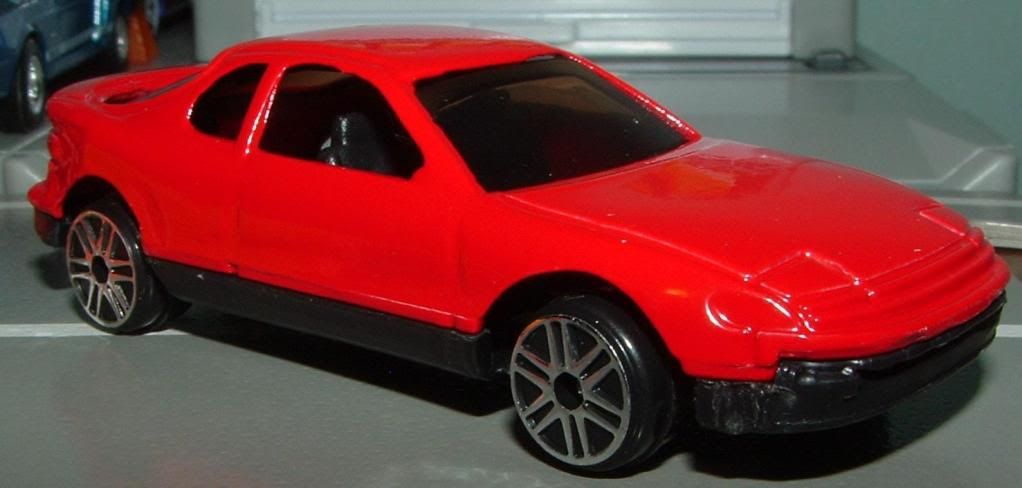
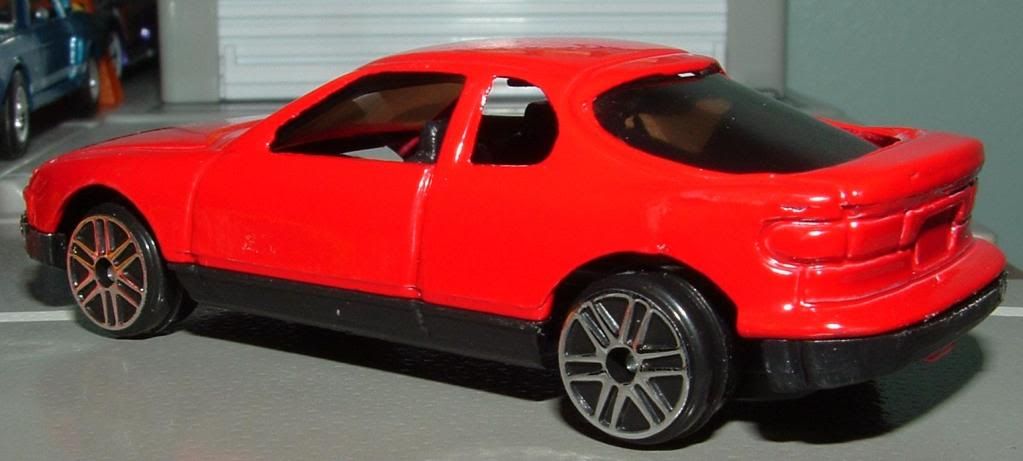
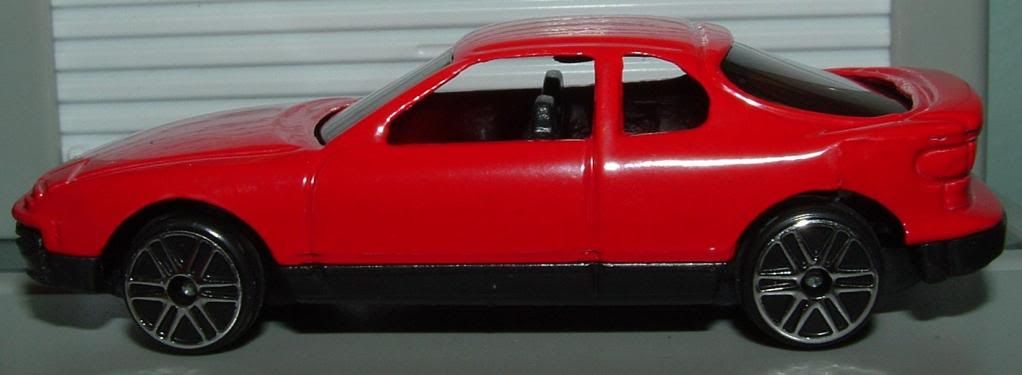
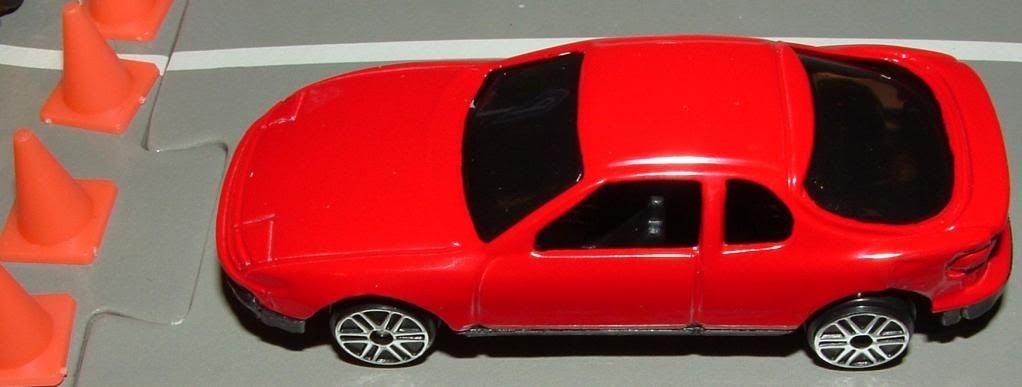
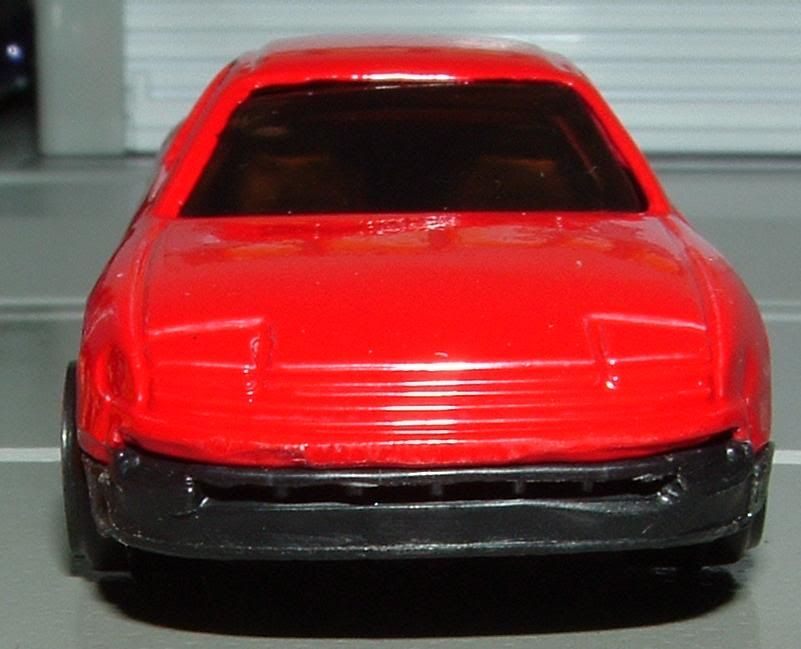
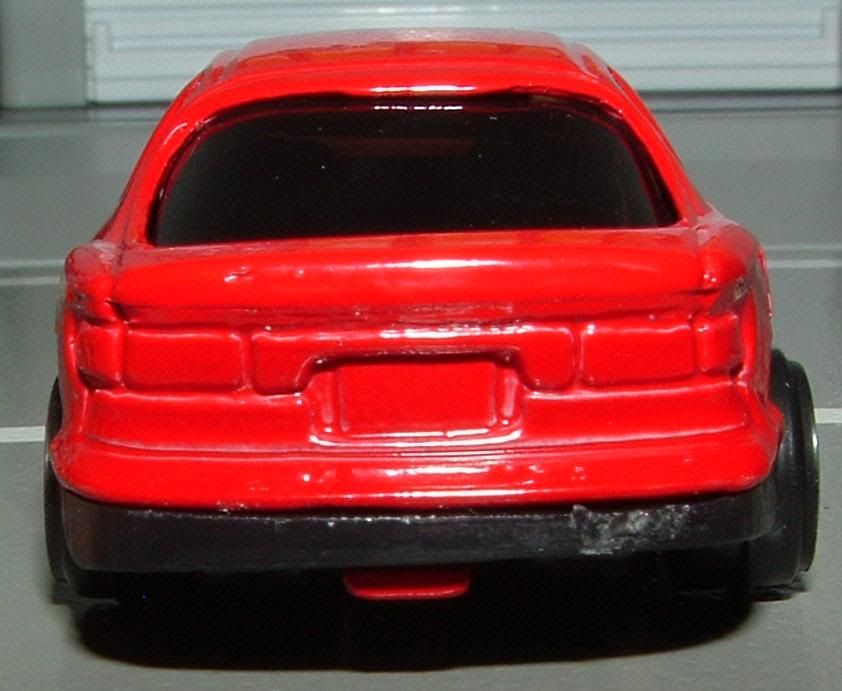
This casting dates to when the real car was still in showrooms.  I think we need to reflect on that for a moment- how many generations of Celicas have there been since this one?  And just how long has the real Celica been discontinued?  And yet this Yat Ming soldiers on year after year.  It looks good in plain red with no ugly tampos, but the tooling itself has seen better days.  The rear quarter panels look like this car has seen time on a local short track and been "repaired" one too many times (with a sledgehammer).  This example came from a ten pack at a Meijer's in Indiana on my way back from Lightning Fest.  $5.00 got ten cars and a playmat, so it's hard to really criticize a car that retails for under $.50 when Hot Wheels and Matchbox both have now broken the $1.00 barrier, probably for good.  The big surprise in this ten pack was discovering the Nissan 240SX has been modified into a generic with odd looking headlights and taillights.


The fifth generation Celica was introduced in September 1989 for the 1990 model year. The Celica received new Super Round organic styling, upgraded wheels and tires, and a more powerful GT-Four (US: All-Trac). Toyota engineers claimed that the round styling and lack of straight edges increased strength without adding weight. The styling was later copied by other manufacturers. Japanese domestic market (JDM) models were now S-R, Z-R, GT-R, Active Sports (with active suspension), and GT-Four. The S-R and Z-R were powered by a 3S-FE engine, while the GT-R and Active Sports came with a 3S-GE. The 3S-GTE in the GT-Four features an air-to-air intercooler and CT26 twin entry turbo to eliminate exhaust gas interference. The JDM GT-Four has 165 kW (221 hp) and 304 N·m (224 lb·ft) of torque, a result of more aggressive ignition advance and ceramic turbine. The Full-time 4WD system in the GT-Four has viscous coupling limited slip center differential and Torsen rear differential. Eddie Murphy made television commercials in Japan for the fifth-generation Celica, promoting the styling and the Super Live Sound System.
The North American Celica had fixed door mirrors and amber front corner lights. All other models had folding mirrors and clear corner lights. Driver's side SRS Airbag is standard on all US models. The base model ST has 1.6 L 4A-FE, the GT and GT-S were powered by the 2.2 L 5S-FE. The 1.6L was similar to the one used in the Corolla. The GT-S was rated 5 hp (4 kW) more than the GT at 135 bhp (101 kW; 137 PS). The 2.2 L was designed for more low-end torque, which appealled to U.S buyers' preferences as opposed to the high revving engines of the past. This engine was similar to the Camry's engine except for the balance shafts. The All-Trac Turbo was available with the improved 2.0 L 3S-GTE engine. It was rated at 200 bhp (149 kW; 203 PS) and 200 lb·ft (271 N·m) torque; an increase of 10 each from the previous model. The GT-S and all export market GT-Four are wide-body Liftbacks with flared fenders. The JDM GT-Four was also offered as normal body.

Trim levels for the European Celica were 1.6 ST-i, 2.0 GT-i 16, and GT-Four. The 2.0 GT-i 16 Cabriolet was offered only in certain European countries. Only the 2.0 GT-i 16 Liftback and GT-Four were officially sold in the UK. For 1992, the wide body 2.0 GT-i 16 was offered in the Netherlands and Belgium. This is basically a GT-S with 3S-GE engine.

Models for Australia were SX Coupe, SX Liftback, GT-Four, and also 150 units limited edition GT-Four Group A Rallye. The Australian cars are less luxurious than JDM and North American models. Initially, the GT-Four did not come with ABS and fog lamps, which became standard few months after the introduction. In 1993, the Limited Edition WRC Trophy model was offered in Australia. This is basically the SX with sport front seats from the GT-Four, cruise control, rear window shade / spoiler, and special decals.
In August 1990, the wide body GT-Four A and Convertible were added into the Japanese Celica line up. Super Live Sound System with 10 speakers became standard on the GT-Four A and optional in other models except the S-R. The 20th Anniversary GT-R came in December 1990 to celebrate 20 years of Celica production. The Celica Convertible was built by American Sunroof Corporation (ASC) in California. It was offered as GT in US with 5S-FE engine, or as Type G in Japan, and 2.0 GT-i 16 Cabriolet in Europe with 3S-GE engine. The JDM Convertible also has 4WS. The European Celica Cabriolet retained the old style front bumper for 1992, and received the facelift in 1993.

There are three different gearboxes for ST185 GT-Four. The E150F gearbox with 4.285 final gear ratio was installed in the JDM and All-trac. European and Australian models, as well as the RC/Carlos Sainz/Group A models, come with the E151F gearbox with 3.933 ratio. The JDM only GT-Four Rally, a limited edition lightweight rally version sold only in Japan (not to be confused with the Australian GT-Four Grp A Rallye model), has the E152F gearbox with close ratio on the 1st through 4th gear and 4.285 final ratio. It also comes with steel wheels and without air conditioning, power windows, or a power antenna. The early model is based on the normal body, and the facelift model is wide body with round fog lights. Also sold in Japan only was the GT-Four V. This is an economy version of normal body without alloy wheels, leather, or System 10, but still comes with fog lights, power windows, and optional sunroof. This was not sold in Australia.

Anti-lock brakes (ABS) were available on the GT-S all four years and was available on the GT from 1992 to 1993. ABS, Leather interior, Sunroof, and System 10 Premium Sound System are optional on the GT-S and '90–'92 All-Trac, and standard on '93 All-Trac. With its sport-style interior, power-operated driver's seat, auto tilt-away steering wheel, and cruise control as standard equipment, the All-Trac (known as the GT-Four outside of the US) was the most expensive Celica yet. With a 2.0 L turbocharged 3S-GTE producing 149 kW (200 hp), it was the most powerful Celica ever sold in the USA.

Tuesday, July 26, 2011

Car Of The Day: July 26, 2011


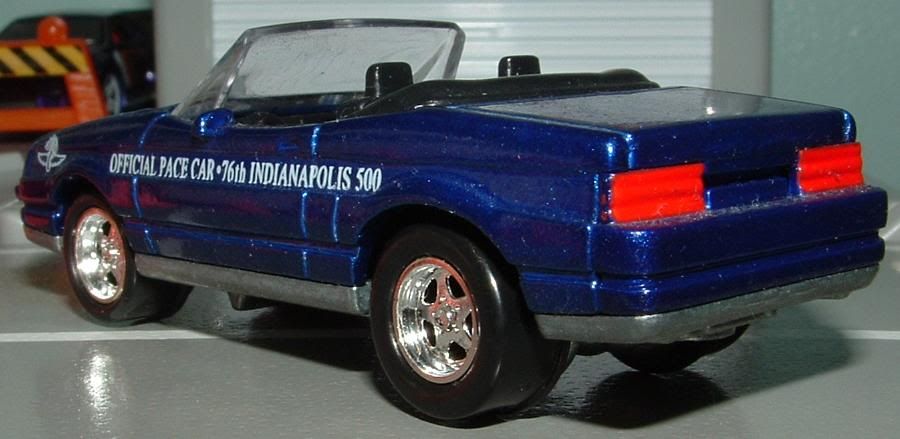
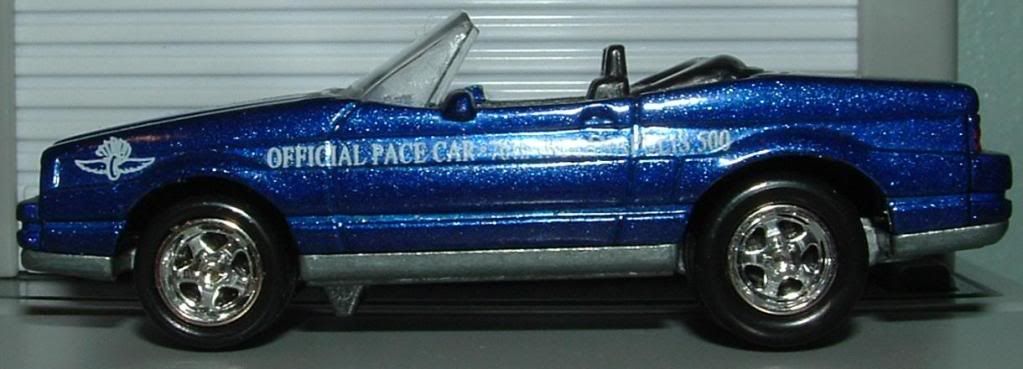
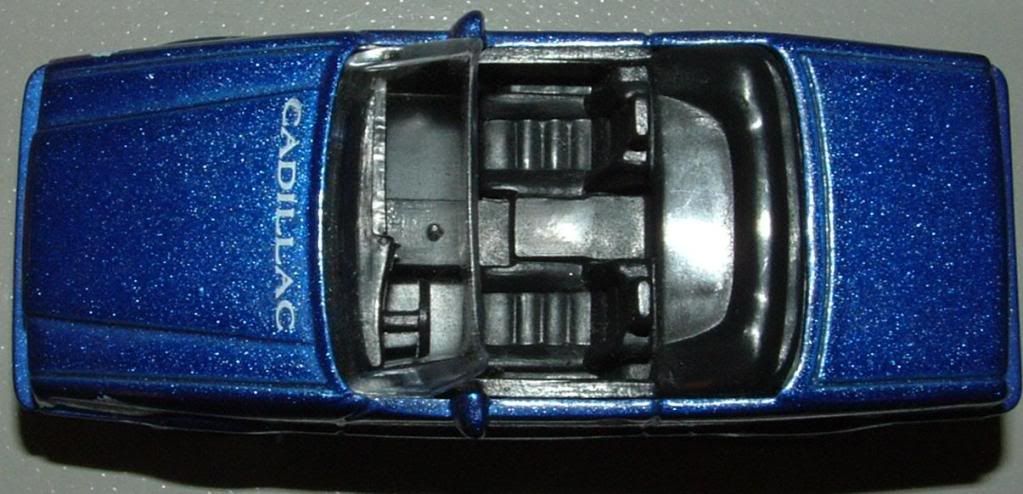
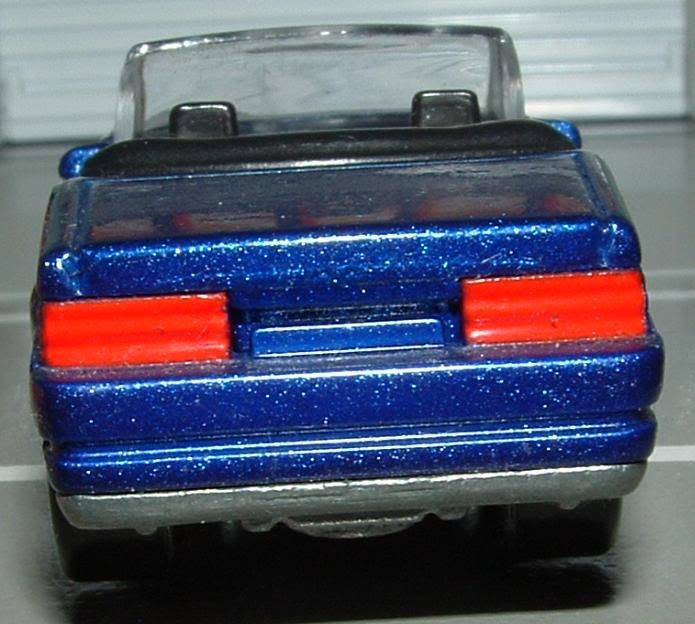
Today's car of the day is Johnny Lightning's 1992 Cadillac Allanté.


The Allanté was Cadillac's first venture into the ultra-luxury roadster market. The vehicle was sold from 1987 until 1993, with roughly 21,000 models built over its 7-year production run. The Allanté's production was planned at 6,000 units per year; sales figures, however, show that Cadillac only built about half as many.


For more information and pictures of the real car please visit: Cadillac Allanté


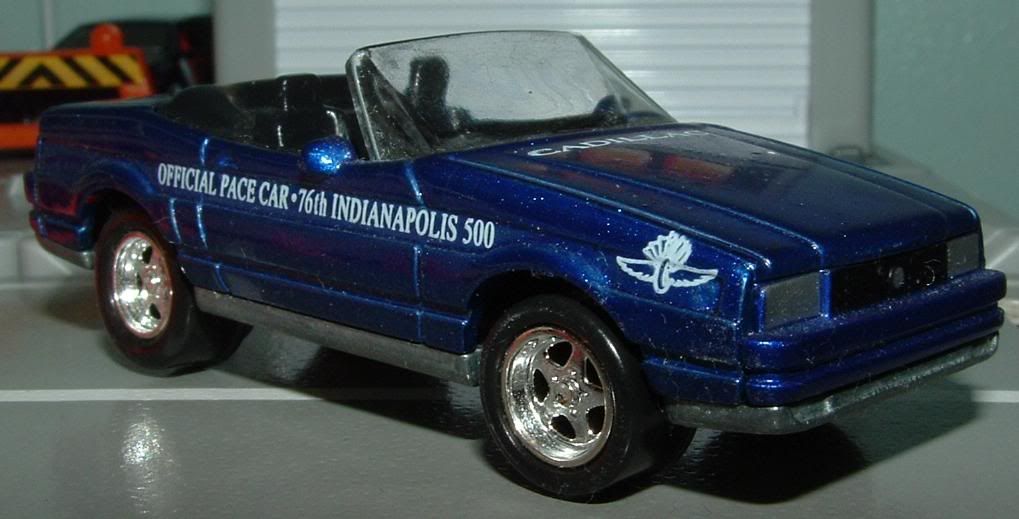
This casting had a grand total of one release that wasn't wearing the "Official Pace Car" graphics seen on this example.  While only one color (burgundy) was accurate to the real pace car, JL put out a rainbow of colors all with the pace car graphics.


Originally designed under the code name "Callisto", the Allanté was intended to restore Cadillac to its position as a premium luxury automobile builder. Allanté's direct competitor was the very successful Mercedes-Benz SL, and to a smaller degree, the Jaguar XJS. Allanté's 4.1 liter V8 was shared with other Cadillacs across the line, but when specified to the Allanté, several changes were made. Unlike Buick's Reatta, which shared powertrain and underpinnings from the Riviera and the Oldsmobile Toronado, Cadillac borrowed very little from the Eldorado and Seville for Allanté.

The body of the Allanté was designed and built in Italy by Pininfarina (of Ferrari fame). The completed bodies were shipped 3,300 miles (5,300 km) from Italy in specially equipped Boeing 747s, 56 at a time, to Cadillac's Detroit/Hamtramck Assembly plant. The bodies were then mated to the chassis. This led to a few interesting nicknames, such as "The Flying Italian Cadillac" and "The world's longest assembly line."
The car's front-wheel drive (FWD) powertrain was unique in its class, and brought the car in for serious criticism. FWD is rare among high-priced sports and touring cars, as the configuration's frequent tendency toward understeer under heavy cornering, torque steer under heavy acceleration, and a poor front-rear weight balance is not desirable. The Mercedes 560SL — along with the rest of the Allanté's competitors — was rear-wheel drive. Many car magazines and auto enthusiasts argued that no sports car, let alone one at the Allanté's price, should have been FWD. Early reviews cited Pininfarina and not Cadillac as the source of this decision, saying they felt it would make the car more versatile. Additionally, poor power-to-weight ratio in the early years also made the car perform sedately. This led the target market to conclude that by offering an underpowered car for US$54,700 (far costlier than contemporary Cadillac models) with no engine upgrade option, Cadillac was not serious in competing in the performance roadster market. This initial impression gave the Allanté an image ("all show, no go") from which it was never able to recover.