A blog focusing on 1/64 diecast from such popular brands as Hot Wheels, Matchbox, Johnny Lightning, M2 Machines, GreenLight, Tomica, Yat Ming, Majorette, MotorMax, Siku, Corgi, Guisval, Playart, Ertl, Zylmex, Racing Champions, & many more. Swifty's Garage features a daily Car Of The Day and news updates from your favorite brands!
Tuesday, August 23, 2011
Car Of The Day: August 23, 2011
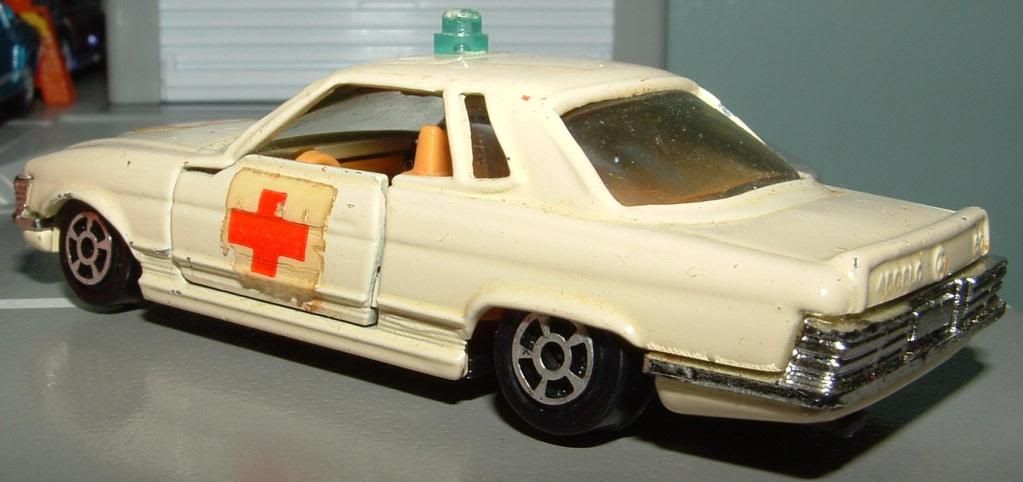
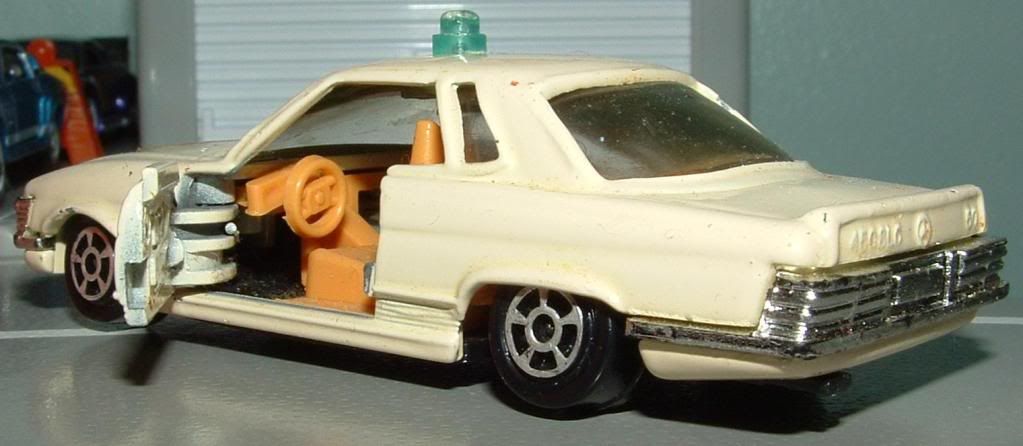
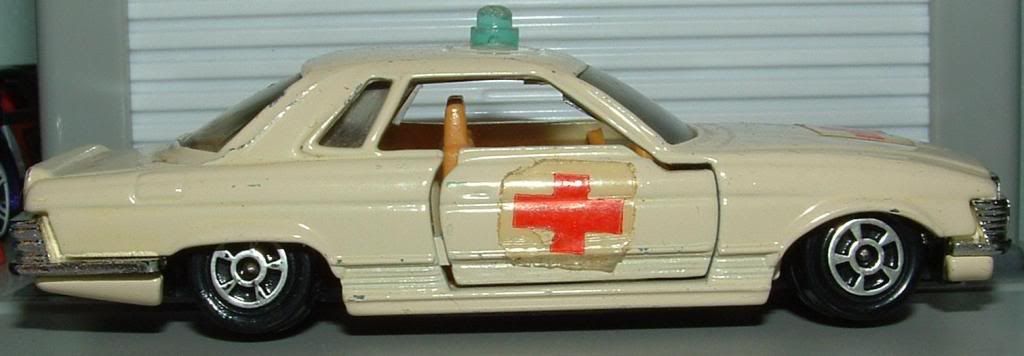
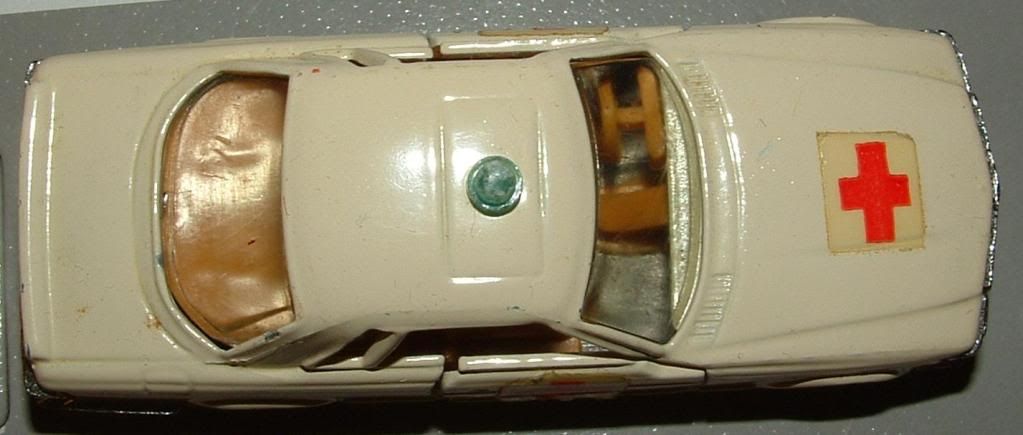
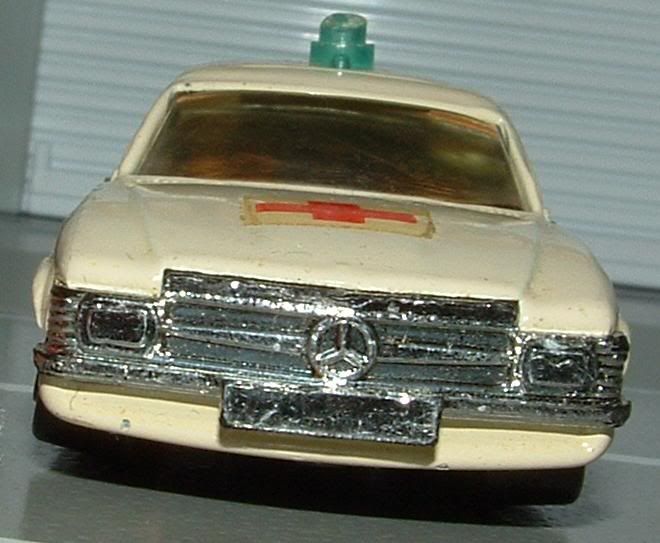
Today's car of the day is King Star's 1977 Mercedes-Benz 450 SLC 5.0.
The Mercedes-Benz R107 and C107 automobiles were produced from 1971 through 1989, being the second longest single series ever produced by the Mercedes, after the G-Class. They were sold under the SL (R107) and SLC (C107) model names. The R107 replaced the W113 SL-Class in 1972 and was replaced by the R129 SL-Class in 1989. The SLC replaced the W111 Coupé in 1971 and was replaced by the C126 S-class coupe in 1981.
For more information and pictures of the real car please visit: Mercedes-Benz 450 SLC 5.0
This is the car that inspired Ford's Granada coupe (the American Granada coupe that is, from 1975-80). They used to compare the Granada to this in ads too. Talk about delusional!
The R107 took the chassis components of the mid size Mercedes-Benz W114 model and mated them to the larger engines from the S-Class (W116).
The SL variant was a 2-seat convertible/roadster with standard soft top and hardtop and optional folding seats for the rear bench. The SLC (C107) derivative was a 2 door hardtop coupe with normal rear seats. The SLC is commonly referred to as an 'SL coupe', but in reality it was an S-class coupe, replacing the former saloon-based 280/300 SE coupé in Mercedes lineup. The SLC was replaced earlier than the SL, in 1981, with a much larger model, the 380 SEC based on the new S class.
Volume production of the first R107 car, the 350 SL, started in April, 1971 alongside the last of the W113 cars; the 350 SLC followed in October. Sales in North America began in 1972, and cars wore the name 350 SL, but had a larger 4.5L V8 (and were renamed 450 SL/SLC for model year 1973); the big V8 became available on other markets with the official introduction of the 450 SL/SLC on non-North American markets in March, 1973. US cars sold from 1972 through 1975 used the Bosch D Jetronic fuel injection system, an early electronic engine management system.
From July, 1974 both SL and SLC could also be ordered with a fuel-injected 2.8L straight-6 as 280 SL and SLC. US models sold from 1976 through 1979 used the Bosch K Jetronic system, an entirely mechanical fuel injection system. All US models used the 4.5 liter engine, and were called 450 SL/SLC.
In September, 1977 the 450 SLC 5.0 joined the line. This was a special version of the big coupé featuring a new all-aluminum five-liter V8, aluminum alloy doors, hood and trunk lid - and a black rubber rear spoiler.
Starting in 1980, US cars were equipped with lambda control, which varied the air/fuel mixture based on feedback from an oxygen sensor. The 350, 450 and 450 SLC 5.0 models (like the 350 and 450 SL) were discontinued in 1980 with the introduction of the 380 and 500 SLC in March, 1980. At the same time, the cars received a very mild make-over; the 3-speed automatic was replaced by a four-speed unit, the 280 models came with a standard 5-speed (formerly a 4-speed) manual and all five-liter cars gained a black rear spoiler lip.
The 280, 380 and 500 SLC were discontinued in 1981 with the introduction of the 126 series 380 and 500 SEC coupes. A total of 62,888 SLCs had been manufactured over a ten year period of which just 1,636 were the 450 SLC-5.0 and 1,133 were the 500 SLC. Both these models are sought by collectors today. With the exception of the SL65 AMG Black Series, the SLC remains the only fixed roof Mercedes-Benz coupe based on a roadster rather than a sedan.
The King Star is quite a nice casting, and you have to give them props for not only the opening doors, but also casting the model name into the trunk of the car like the chrome badging that would be there on the real car. They lose points for turning a coupe into an ambulance.
Monday, August 22, 2011
Car Of The Day: August 22, 2011
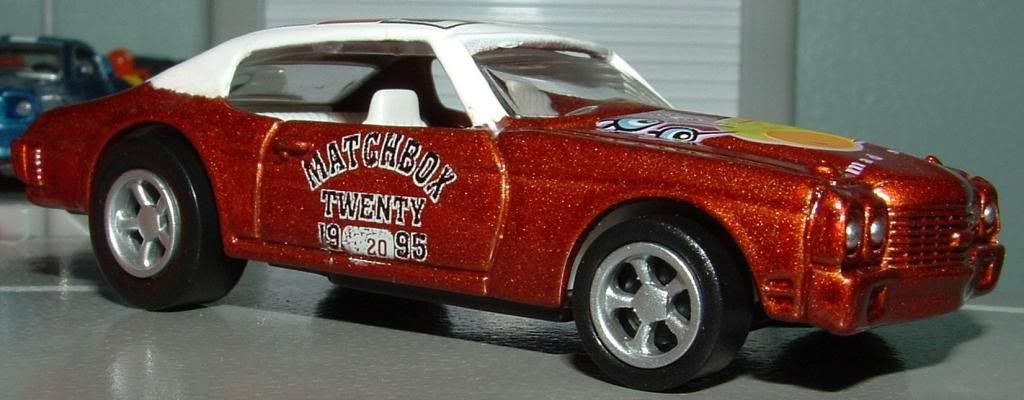
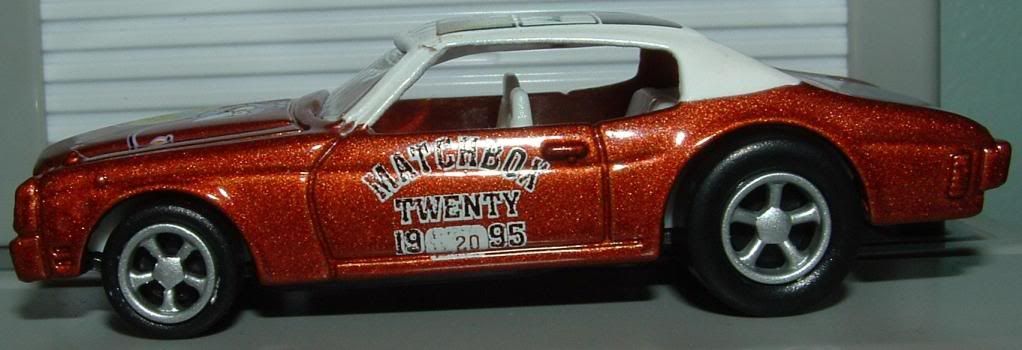
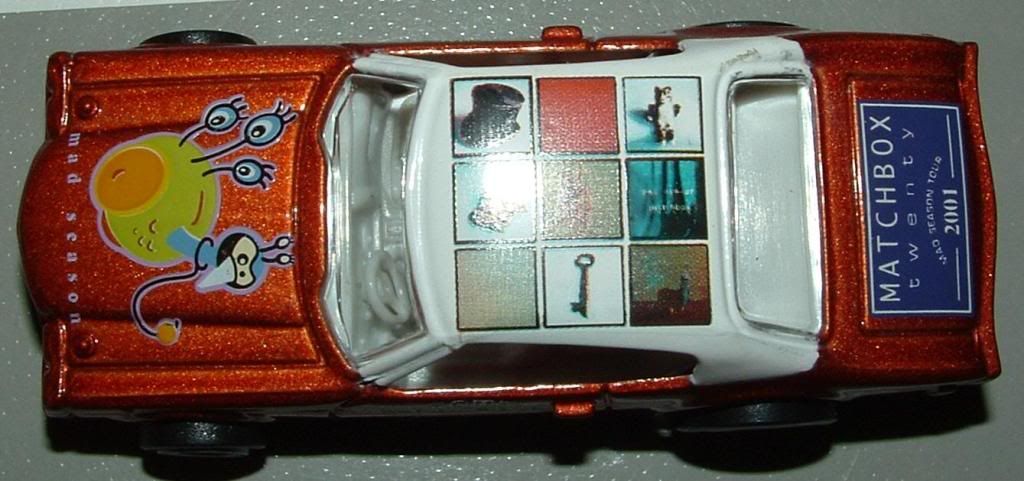
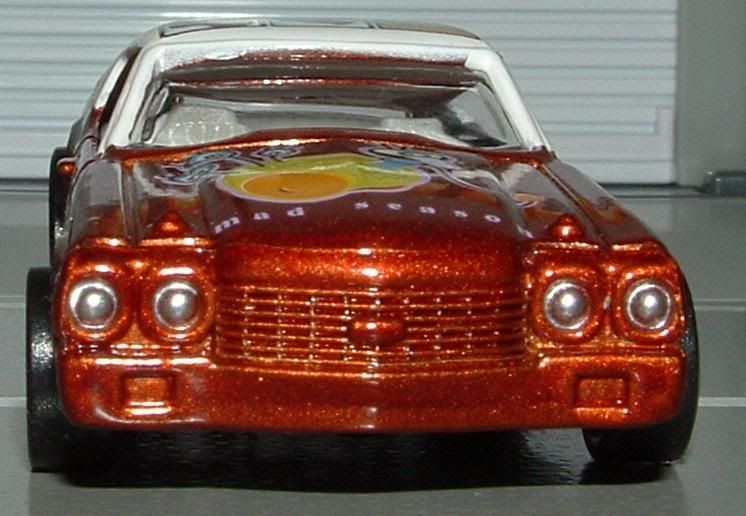
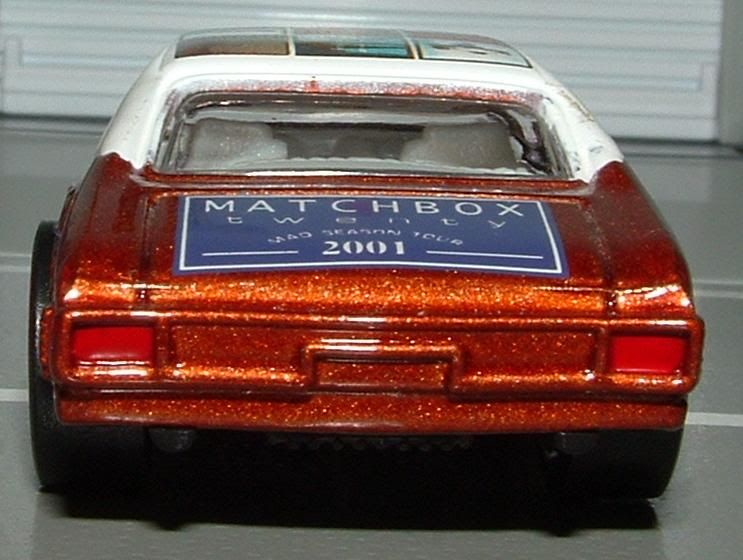
Today's car of the day is Racing Champions Speed Wheels' 1970 Chevrolet Chevelle SS.
The Chevrolet Chevelle is a mid-sized automobile produced by the Chevrolet division of General Motors in three generations for the 1964 through 1977 model years. Part of the GM A-Body platform, the Chevelle was one of Chevrolet's most successful nameplates. Body styles include coupes, sedans, convertibles and station wagons. Super Sport versions were produced through the 1973 model year, and Lagunas from 1973 through 1976. After a three year absence, the El Camino was reintroduced as part of the new Chevelle lineup. The Chevelle also provided the platform for the Monte Carlo introduced in 1970. The Malibu, the top of the line model through 1972, replaced the Chevelle nameplate for the redesigned, downsized 1978 models.
For more information and pictures of the real car please visit: Chevrolet Chevelle
This one is from the same ill-fated series that brought us *N Sync tampos on an Olds 442. To give you an idea of how poorly this sold, I bought this car new at Kiddie Kar about a month ago. It came out about a decade ago. That should say everything right there...
The 1968 Chevelle got an all-new distinctly sculpted body with tapered front fenders and a rounded beltline. The car adopted a long-hood/short-deck profile with a high rear-quarter "kick-up". While all 1967 Chevelle models rode a 115-inch (2,900 mm) wheelbase, the 1968 coupes and convertibles now rode a sporty 112-inch (2,800 mm) wheelbase. The sedans and wagons turned to a 116-inch (2,900 mm) span. Tread width grew an inch front and rear. Hardtop coupes featured a semi-fastback, flowing roofline. Top-trim models (including the SS 396 and new luxury Concours) featured GM's new Hide-A-Way wiper system. Lesser Chevelles would get that change later. The Super Sport (SS 396 coupe and convertible) became series on its own. Chevrolet produced 60,499 SS 396 hardtops but only 2,286 convertibles. Black-accented Super Sports rode F70x14 red-stripe tires and carried a standard 325-horsepower 396-cubic-inch Turbo-Jet V-8 engine below the special twin-domed hood. 350 and 375-horsepower 396 engines could be substituted. The SS 396 Sport Coupe started at $2,899 - or $236 more than a comparable Malibu with its 307-cubic-inch V-8. All-vinyl bucket seats and a console were optional. The new Concours Sport Sedan focused on luxury, with special sound insulation, and a deep-padded instrument panel with simulated woodgrain accents and all-vinyl color-keyed interiors. Malibu gained a new Sport Sedan body style this year. The Concours Estate Wagon was one of four distinct Chevelle wagon models. A one year Nomad, Nomad Custom was offered. Regular Chevelle engines started with a 140 horsepower (100 kW) Turbo-Thrift six or the new 200 horsepower (150 kW) Turbo-Fire 307 V-8, but stretched to a 325 horsepower (242 kW) version of the 327-cubic-inch V-8. Manual transmission cars got GM's "Air Injection Reactor (A.I.R)" smog pump, which added complexity under the hood. New Federal safety-mandated equipment included side marker lights, as well as shoulder belts for outboard front seat occupants on cars built after December 1, 1967.
1969 Chevelles were billed as "America's most popular mid-size car." They showed only minor changes for 1969, led by revised front-end styling. A single chrome bar connected quad headlights, and a slotted bumper held the parking lights. Taillight lenses were larger and more vertical, flowing into the quarter panels. Front vent windows began to fade away now that Astro Ventilation was sending outside air into several Chevelle models. The Chevelle lineup slimmed down to two series: 300 Deluxe and Malibu. No longer a series of its own, the SS 396 turned into a $347.60 option package for any two-door model. That meant not just a convertible or hardtop Sport Coupe, but even the pillared coupe in the lower-rent 300 Deluxe series. A very few 300 Deluxe SS396-optioned pillared coupes were built, and they are solid gold for collectors. The Super Sport included a 325-horsepower 396-cubic-inch V-8 beneath a double-domed hood, along with a black-out grille displaying an SS emblem and a black rear panel. More potent editions of the 396 engine also made the options list, developing 350 or 375 horsepower (280 kW). A few hundred Chevelles even managed to acquire a 427-cubic-inch V-8, ordinarily installed only in full-size models. Chevelle station wagons came in three levels: Concours, Nomad, and Greenbrier—the last a badge formerly used on the Corvair van. A new dual-action tailgate operated either in the traditional manner or as a panel-type door. Wagons stretched 208 inches (5,300 mm) overall versus 197 inches (5,000 mm) for coupes. New round instrument pods replaced the former linear layout. Chevelle options included headlight washers, power windows and locks, and a rear defroster. Chevy's midsize production rose this year, with Malibus far more popular than their less-costly mates. Fewer than seven percent of Malibus had a six-cylinder engine, while more than 86,000 got an SS 396 option. All '69 Chevelles got a new locking steering column one year ahead of the Federal requirement, and headrests required for all cars sold in the U.S. after January 1, 1969.
In 1970, sheetmetal revisions gave the bodies a more squared-up stance, and interiors were redesigned, too. The 1970 Chevelles came in Sport Coupe, Sport Sedan, convertible, and four-door sedan—along with a pair of Super Sport upgrades. The SS option was now limited to the Malibu 2-door Sport Coupe and convertible. Later in the model year came a basic model, essentially a revival of the former 300 Deluxe; it was offered only as a Sport Coupe and sedan. New options included power door locks and a stalk-mounted wiper control. Engine choices ranged from the standard 155 horsepower (116 kW) six-cylinder and 200-horsepower 307-cubic-inch V-8, to a pair of 350 V-8s and a pair of 402 ( 396 ). Bigger engines became available as regular production options, resulting in the addition of an SS454 option.
The SS 396 Chevelle included a 350 horsepower (260 kW) Turbo-Jet 396 V-8, special suspension, "power dome" hood, black-accented grille, resilient rear-bumper insert, and wide-oval tires on sport wheels. Though a 375 horsepower (280 kW) upgrade was available, few were sold—primarily because the added cost brought the total too close to the SS 454. The 454-cubic-inch V-8, offering 360 horsepower (270 kW) in standard form but a whopping 450 horses in solid-lifter, high-compression, LS-6 guise. The latter made a Chevelle one of the quickest muscle cars ever built. "You can make our tough one even tougher," the brochure explained, by adding Cowl Induction to either SS model. Step on the gas, and a scoop opened "to shoot an extra breath of cool air into the engine air intake....like second wind to a distance runner." Functional hood lock pins completed the SS package. The 454 cu in (7.4 L) LS5 V8 was rated at 360 hp (270 kW). The LS6, with 450 hp (340 kW) and 500 ft·lbf (680 N·m) of torque, would provide 1⁄4 mi (400 m) strip performances in the low to mid-13 second range at 105–108 mph (169–174 km/h) and a 0-60 time of 6.1 seconds. The ZL1 and L88 427s both were rated at 430 hp (320 kW), but actually produced well over 500 hp (373 kW) in stock configurations. They were "race only" engines and very very few were ever installed in production cars. Most were ordered by racers who had factory connections or sold over the counter parts.
The 1971 Chevelles got fresh front-end styling that included large Power-Beam single-unit headlights, a reworked grille and bumper, and integral park/signal/marker lights. New dual round taillights were integral with the back bumper. Because SS models suffered heavy insurance surcharges, Chevrolet introduced the "Heavy Chevy" at midyear available with any V-8 engine except the 454, which was exclusive to SS models. For 1971, the base Chevelle SS engine was a two-barrel 350-cubic-inch V8 rated at 245 gross (165 net) horsepower. Optionally available was a four-barrel carbureted version of the 350 V8 rated at 275 gross (200 net) horsepower. The big block engines of previous years were now optional, including the 402 V8 rated at 300 gross (270 net) horsepower; and LS-5 454 V8 with 365 gross and 285 net horsepower. Chevrolet specifications for 1971 included both "gross" and "net" horsepower figures for all engines. The SS option could be ordered with any optional V8 and became more of a dress-up option than a performance option. GM mandated all divisions design their engines to run on lower-octane regular, low-lead or unleaded gasoline. To permit usage of the lower-octane fuels, all engines featured low compression ratios (9:1 and lower; well below the 10.25-11.25:1 range on high-performance engines of 1970 and earlier). This move reduced horsepower ratings on the big-block engines to 300 for the 402 cubic-inch V8 but surprisingly, the LS-5 454 option got an "advertised" five-horsepower increase to 365. The LS-6 454 option, which was originally announced as a regular production option on the Chevelle SS for 1971, was dropped early in the model year and no official records indicate that any 1971 Chevelles were assembled with the LS-6 engine.
1972 Chevelles wore single-unit parking/side marker lights on their front fenders, outside of a revised twin-bar grille. All Malibus had concealed wipers. Super Sport equipment could now be ordered with any V-8 engine, including the base 307-cubic-inch version. The 1972 Chevelle series had wide enough appeal to qualify as America's second-best-selling car. Base versions again included a four-model wagon series. Upscale versions were Malibus including the convertible models. More than 24,000 Malibu Sport Sedans were built, with a standard 307-cubic-inch V-8 rated at 130 (net) horsepower. With that V-8, the Malibu Sport Coupe was the top seller by far starting at $2,923. The six-cylinder version ran $90 less. Powertrain options included the 175-horsepower 350-cubic-inch V-8 and 240-horsepower 402-cubic-inch (still known as a 396), as well as a 454 that managed to put out 270 horsepower (200 kW) under the net rating system. Chevelles sold in California could not get the 307 V-8 but carried a 350-cubic-inch engine instead. Through the 1970s, California cars often had different powertrains than those marketed in states with less-stringent emissions regulations. 1972 is the last year popular for Chevelle car collectors.
Super Sport equipment could now be ordered with any V-8 engine, including the base 307-cubic-inch version. The 1972 Chevelle SS had a top engine rated at 270 net hp (201 kW) conforming with GM's decree that all engines were to be rated at their net engine ratings. Despite the lower rating there was no evidence that power had actually changed on production cars of that year. All other engines on the SS roster were unchanged from 1971. Chevelle wagons measured 10 inches (250 mm) shorter than full-size wagons and weighed about half a ton less, but sold much slower. Model-year output totaled 49,352 Chevelles and 290,008 Malibus—plus 54,335 station wagons.
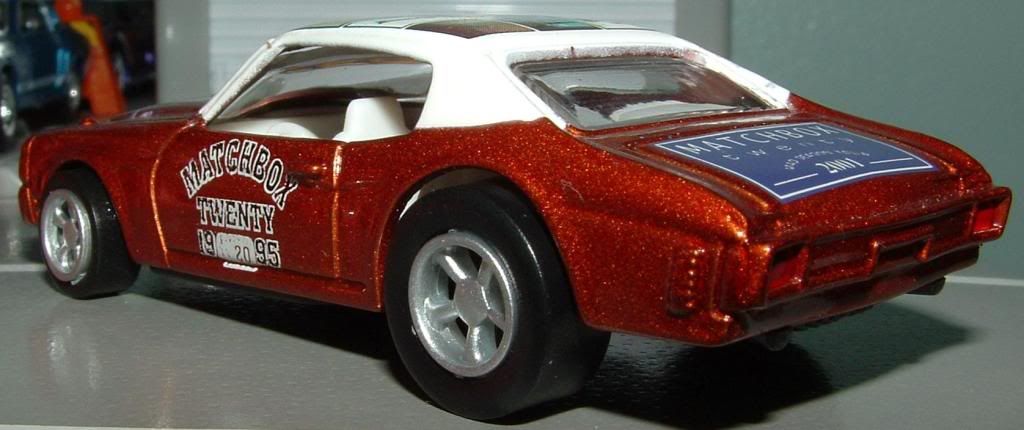
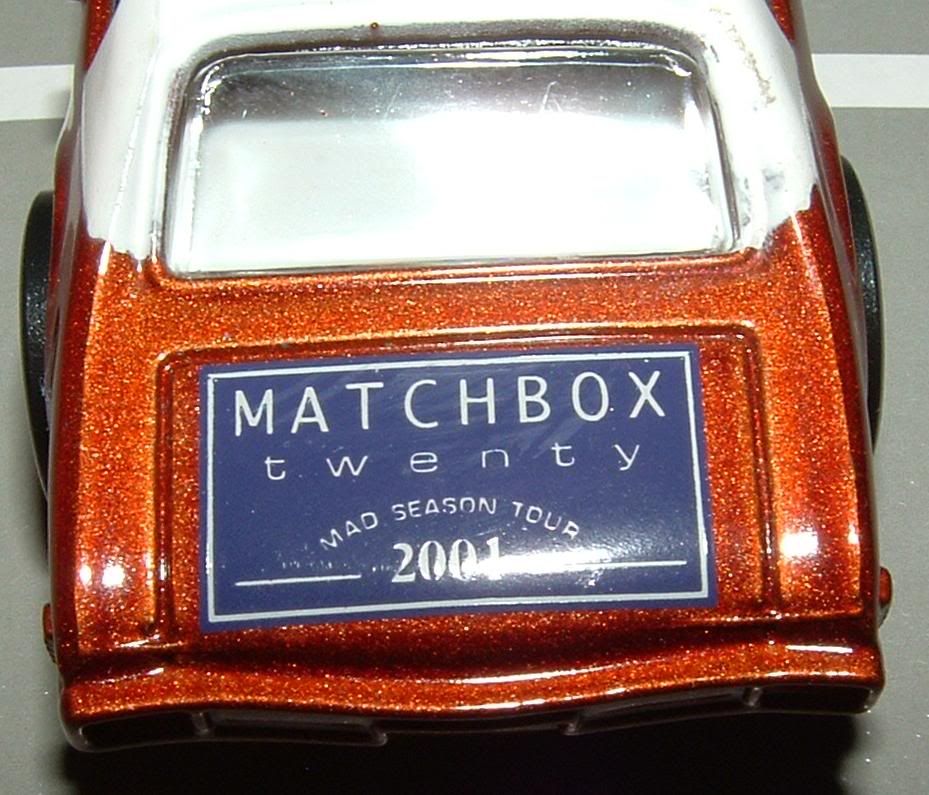
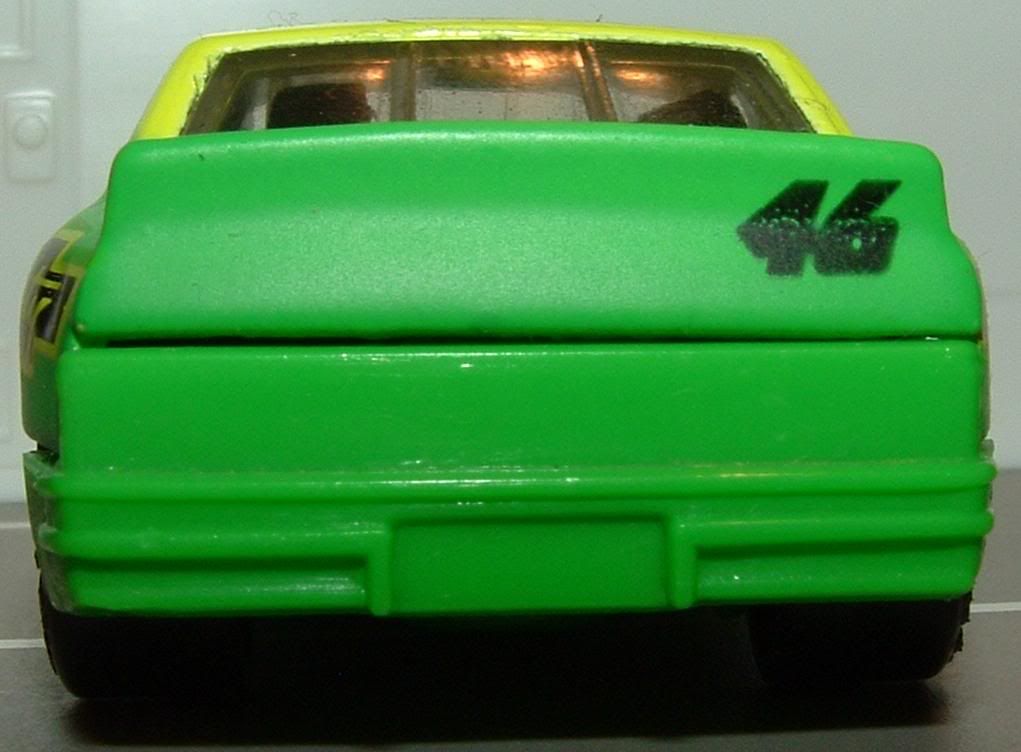
And for the sheer irony factor of seeing "Matchbox" tampoed on the back of a Racing Champions casting, here's a closeup of the 2001 tour logo on the trunk.
Sunday, August 21, 2011
Car Of The Day: August 21, 2011
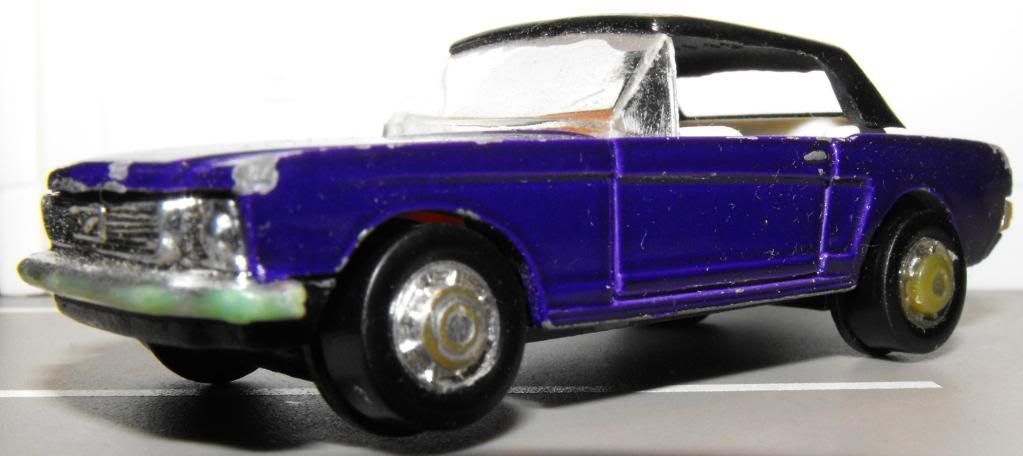
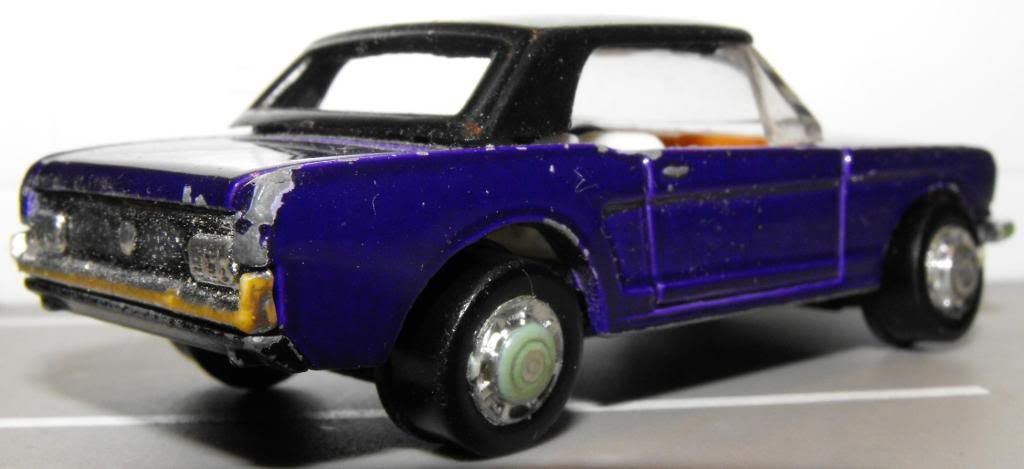
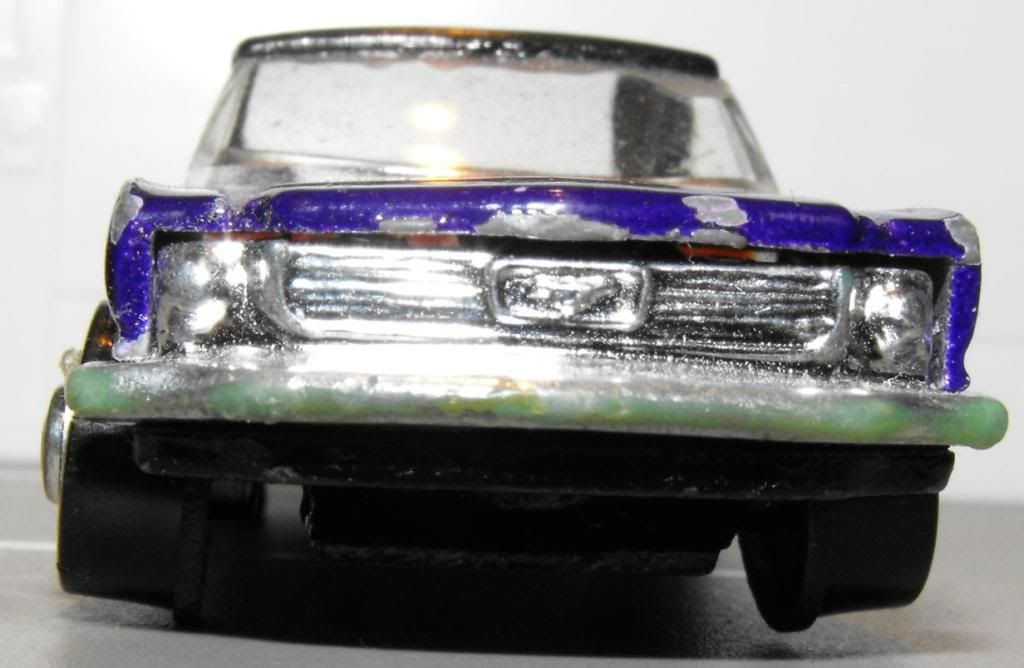
Today's car of the day is Playart's 1966 Ford Mustang.
The first-generation Ford Mustang is the original pony car, manufactured by Ford Motor Company from 1964 until 1973.
Initially introduced as a hardtop and convertible, with the fastback version put on sale following year. At the time of its introduction the Mustang, sharing its underpinnings with Falcon, was slotted into a compact car segment.
With each revision the Mustang saw an increase in overall dimensions and in engine power. As a result, by 1971 the Mustang had entered the muscle car segment. After an initial surge, sales were steadily declining and Ford began working on a new generation Mustang. When the oil crisis hit in 1973 Ford was prepared, having already designed the smaller Mustang II. This car had no common components with preceding models.
For more information and pictures of the real car please visit: Ford Mustang
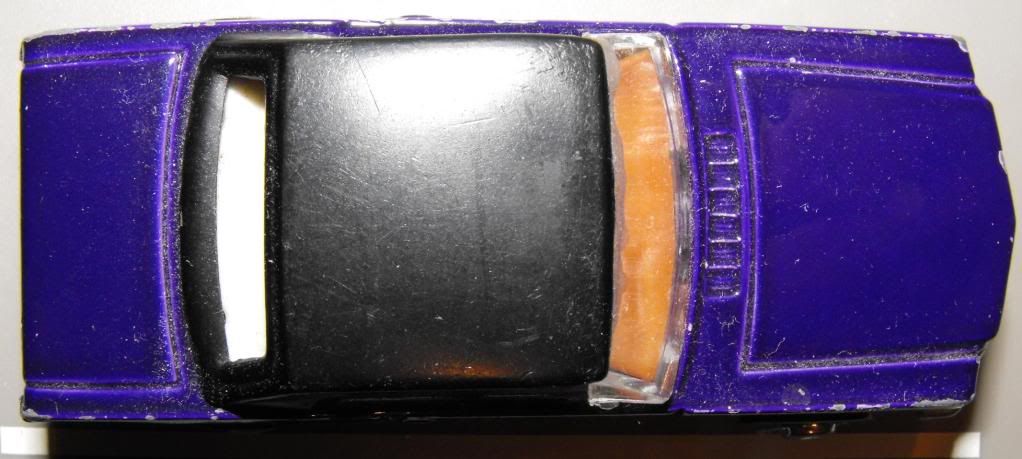
This casting is more frequently seen as a convertible with the top down, but here's a very nice hardtop variation. I picked this one up in a bag (three for a dollar!) at a flea market some years back. Considering I liked the other two cars as well (Kidco Dodge Monaco coupe & Zylmex Ferrari 308) it was an easy purchase.
Since it was introduced five months before the normal start of the production year and manufactured among 1964 Ford Falcons and 1964 Mercury Comets, the earliest Mustangs are widely referred to as the 1964½ model. A more accurate description is the "early 1965" model because it underwent significant changes at the beginning of the regular model year. All the early cars, however, were marketed by Ford as 1965 models. The low-end model hardtop used a "V-code" 170 cu in (2.8 L) straight-6 engine and three-speed manual transmission and retailed for US$2,368.
Several changes to the Mustang occurred at the start of the normal 1965 model year production, five months after its introduction. These cars are known as "late 65's," and were built after factory retooling in August 1964. The engine lineup was changed, with a 200 cu in (3.3 L) "T-code" engine that produced 120 hp (89 kW). Production of the "L-code" 260 cu in (4.3 L) engine ceased when the 1964 model year ended. It was replaced with a new 200 hp (150 kW) "C-code" 289 cu in (4.7 L) engine with a two-barrel carburetor as the base V8. An "A-code" 225 hp (168 kW) four-barrel carbureted version was next in line, followed by the unchanged "Hi-Po" "K-code" 271 hp (202 kW) 289. The DC electrical generator was replaced by a new AC alternator on all Fords (the quickest way to distinguish a 1964 from a 1965 is to see if the alternator light on the dash says "GEN" or "ALT"). The now-famous Mustang GT (Gran - Touring) was introduced as the "GT Equipment Package" and included a V8 engine (most often the 225 hp (168 kW) 289), grille-mounted fog lamps, rocker panel stripes, and disc brakes. A four-barrel carbureted engine was now available with any body style. Additionally, reverse lights were an option added to the car in 1965. The Mustang was originally available as either a hardtop or convertible, but during the car's early design phases a fastback model was strongly considered. Also in 1965 Shelby Mustang was born, it was available only in newly introduced fastback body version with its swept-back rear glass and distinctive ventilation louvers.
The standard interior features of the 1965 Mustang included adjustable driver and passenger bucket seats, an AM radio, and a floor mounted shifter in a variety of color options. Ford added additional interior options during the 1965 model year. The Interior Decor Group was popularly known as "Pony Interior" due to the addition of embossed running ponies on the seat fronts, and also included integral armrests, woodgrain appliqué accents, and a round gauge cluster that would replace the standard Falcon instrumentation. Also available were sun visors, a (mechanical) remote-operated mirror, a floor console, and a bench seat. Ford later offered an under-dash air-conditioning unit, and discontinued the vinyl with cloth insert seat option, offered only in early 1965 models. One option designed strictly for fun was the Rally-Pac. Introduced in 1963 after Ford's success at that year's Monte Carlo Rally and available on other Ford and Mercury compacts and intermediates, the Rally-Pac was a combination clock and tachometer mounted to the steering column. It was available as a factory ordered item for US$69.30. Installed by a dealer, the Rally-Pac cost US$75.95. Reproductions are presently available from any number of Mustang restoration parts sources.
The 1966 Mustang debuted with moderate trim changes including a new grille, side ornamentation, wheel covers and gas cap. A cruisematic three-speed auto transmission became available for the 225-hp V8. The 289 "hipo" K code engine was offered with an automatic c4 transmission, it had stronger internals and a hipo automatic transmission can be identified by the outer casing of the servo is marked with a 'C'. The long duration solid-lifter camshaft that allowed the high revving 289 to make the horsepower it was known for, was not friendly for a non stall speed automatic torque converter. The "HiPo" could be spotted very easily by the 1-inch-thick (25 mm) vibration damper, (as compared to 1/2 inch on the 225-hp version) the absence of a vacuum advance unit on the dual point distributor. With the valve covers off, there is a large letter "K" stamped between the valve springs, that along with screw in studs (vs. a pressed in stud for other 289's) for the adjustable rocker arms. A large number of new paint and interior color options, an AM/eight-track sound system, and one of the first AM/FM mono automobile radios was also offered. It also removed the Falcon instrument cluster; the previously optional features, including the round gauges and padded sun visors, became standard equipment. The Mustang convertible would be the best-selling in 1966, with 72,119 sold, beating the number two Impala by almost 2:1.
The 1965 and 1966 Mustangs are differentiated by variations in the exterior, despite similar design. These variations include the emblem on the quarter-panels behind the doors. In 1965 the emblem was a single vertical piece of chrome, while in 1966 the emblem was smaller in height and had three horizontal bars extending from the design, resembling an "E". The front intake grilles and ornaments were also different. The 1965 front grille used a "honeycomb" pattern, while the 1966 version was a "slotted" style. While both model years used the "Horse and Corral" emblem on the grille, the 1965 had four bars extending from each side of the corral, while on the 1966, these bars were removed. 1966 saw introduction of 'High Country Special' limited edition, 333 of them were sold in Colorado, Wyoming, and Nebraska.
When Ford wanted to introduce the Mustang in Germany, they discovered that Krupp company had already registered the name. The German company offered to sell the rights for US$10,000. Ford refused and removed the Mustang badge, instead naming it as T-5 (pre-production Mustang project name) for the German market until 1979 when Krupp copyrights expired.
Saturday, August 20, 2011
Car Of The Day: August 20, 2011
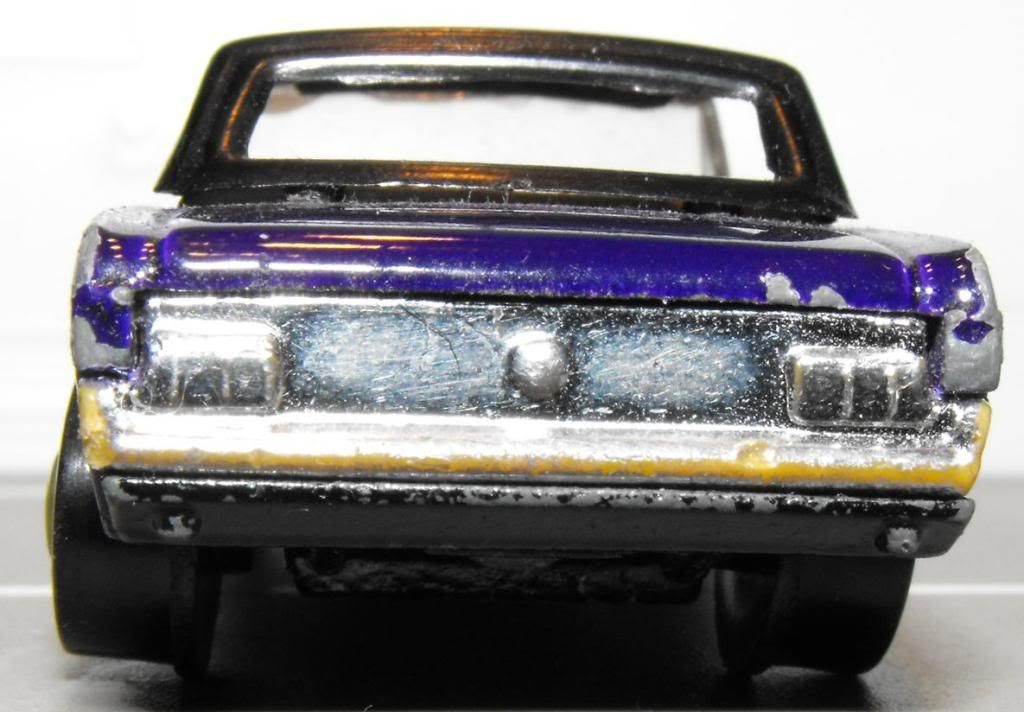
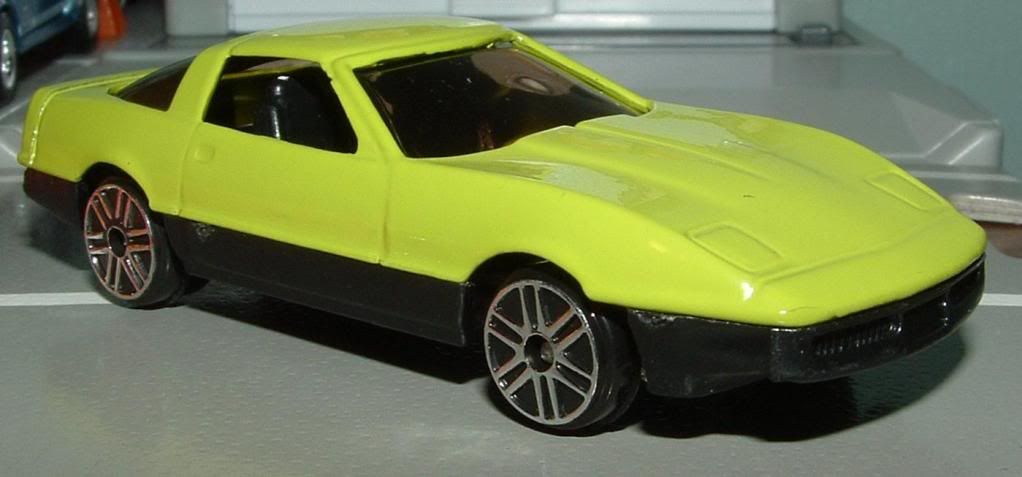
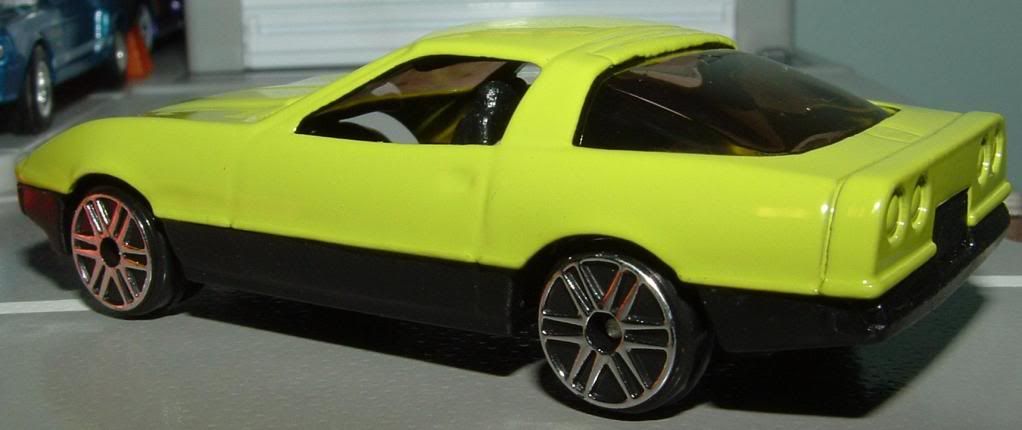
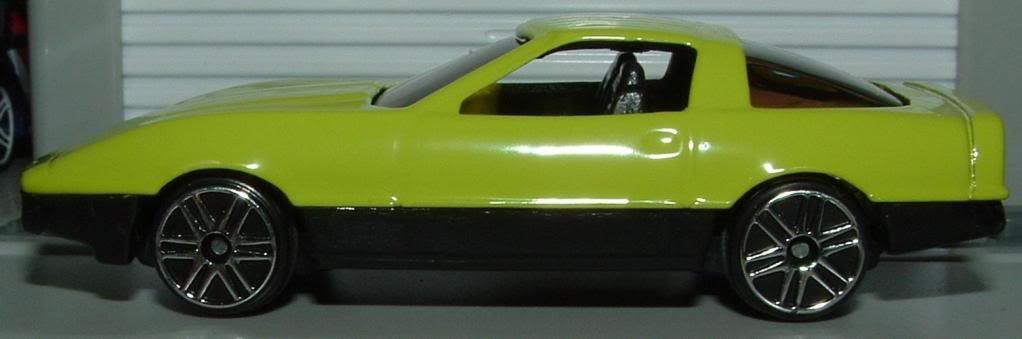
Today's car of the day is Yat Ming's 1984 Chevrolet Corvette.
The Chevrolet Corvette (C4) is a sports car produced by the Chevrolet division of General Motors for the 1984 through 1996 model years. The editors of Consumer Guide stated: "The first fully redesigned Corvette in 15 years was more sophisticated and more practical than the beloved Shark. And like previous generations, the new C4 only got better in time." The convertible returned, as did higher performing engines, exemplified by the 405 hp (302 kW) LT5 found in the ZR-1. In early March 1990, The ZR-1 would set a new record for the highest 24 hour-5,000 mile land-speed by going over 175 mph (282 km/h). Though prices rose even as sales declined, the fourth generation Corvette won its own loyal following as one of the world's most desirable sports cars. The last C4 was produced on June 20, 1996.
For more information and pictures of the real car please visit: Chevrolet Corvette
Yesterday we featured a concept car that influenced the next generation Corvette, and today we feature a production Corvette. Sorry for running two Vettes back to back. This is another from the recent ten pack of Yat Mings I picked up at Meijer.
The C4 Corvette was known for its evolved, sleek and modern look. In a departure from the fiberglass builds of its forebearers, it was made from reaction injected molding plastics, a sheet molding compound. The C4 coupe was the first general production Corvette to have a glass hatchback (the limited edition 1982 Collector Edition being the first Corvette equipped with this feature) for better storage access. It also had all new brakes with aluminum calipers. The Corvette C4 came standard with an electronic dashboard with a digital liquid crystal display dash, with graphics for speed and RPM and digital displays for other important engine functions.
The C4 represented a clean break with the previous generation of Corvette. Since emissions regulations were still changing and electronic engine management was in its infancy, horsepower was, compared to earlier generations, comparatively low. Therefore the primary design emphasis, at least for the launch, was on handling. The price of this no-holds-barred emphasis on handling was ride comfort, especially with the Z51 performance handling package. The unit-body frame used in the C4 was prone to rattles and squeaks due to minimal sound deadening. Also due to the external unit-body frame, the door sills were quite deep, with entry and exit likened by contemporary auto journals to a "fall in and climb out" experience. The emergency brake, located between the door sill and the drivers seat, was moved lower and toward the rear of the car in 1988 for easier entry and exit.
From 1984 through 1988, the Corvette was available with a Doug Nash "4+3" transmission - a 4-speed manual coupled to an automatic overdrive on the top three gears. This unusual transmission was a synergy that allowed Corvette to keep a stout 4 speed, but add an overdrive. As technology progressed, it was replaced by a modern ZF 6-speed manual. However, the C4 performance was hampered by its L98 250 hp (186 kW) engine until 1992, when the second-generation Chevy small block, LT1, was introduced, markedly improving the C4s performance. 1996 was a high point of small block Chevrolet development and the 330 hp (246 kW) LT4 was introduced in all manual transmission cars.
The 1986 Corvette saw the reintroduction of the convertible and was named as the Pace Car for the Indianapolis 500. GM had created the Pass Key I, wherein each key contained a special pellet that could be detected and identified by the car's computer system by detecting electrical resistance. Being early in the rollout of this new technology, there were only 15 different resistance values available, which, once thieves discovered this weakness, markedly reduced the value of this early system.
44 Corvettes were manufactured with a 1983 Vehicle Identification Number (VIN), but none were released to the public as official production vehicles. All were destroyed except one, VIN 1G1AY0783D5100023 (white with medium blue interior), L83 350 cu in (5.7 L), 250 hp (186 kW) V8, 4-speed automatic transmission and was retired to the National Corvette Museum in Bowling Green, Kentucky. (MY1984 Corvettes were produced for 17 months.)
Friday, August 19, 2011
Car Of The Day: August 19, 2011
Today's car of the day is Topper Johnny Lightning's 1965 Chevrolet Mako Shark II.
The XP-755 Mako Shark concept car was designed by Larry Shinoda under the direction of General Motors Styling and Design head Bill Mitchell in 1961, as a concept for future Chevrolet Corvette production cars. In keeping with the name, the streamlining, pointed snout, and other detailing was partly inspired by the sleek, fast-moving shortfin mako shark. The '61 Corvette tail was given two additional tail lights (six total) for the concept car. The concept inspired the 1963 Corvette Sting-Ray.
For more information and pictures of the real car please visit: Chevrolet Corvette Mako Shark
This one joined my collection as a RAOK from bunkerjim (thanks Jim!). Topper's version of the Mako Shark is even more over the top than Chevrolet's original.
A widespread story has it that Mitchell had an actual mako shark mounted on the wall in his office, and ordered his team to paint the car to match the distinctive blue-gray upper surface gently blending into white underside of the fish. After numerous attempts to match the fish's color scheme failed, the team hit upon the idea of kidnapping the fish one night, painting it to match their best efforts on the car, and returning it to the office. Mitchell never realized the difference and pronounced himself pleased with the team's duplication on the car of nature's handiwork.
After a period, he removed the original body and redesigned it as the Mako Shark II in 1965. This concept influenced the redesigned C3 Corvette of 1968. The Mako Shark II debuted in 1965 as a show car. Chevrolet actually created two of them - only one of which was fully functional. The non-running show car (gallery) sported some interesting, futuristic details, such as square section side pipes and a squared-off steering wheel. While the functioning version didn't have these features, it did have a retractable rear spoiler, and a square section bumper that could be extended for added protection. The Mako Shark II was powered by a 427 Mark IV engine, which became available on production Corvette models. The paint scheme continued the Shark I tradition, with blue/gray on top and silver/white along the rocker panels. The original Mako Shark was then retroactively called the "Mako Shark I".
In 1969 the Mako Shark II was returned to GM design studios and transformed into the Manta Ray. Modifications include a front spoiler and redesigned grille and external exhaust pipes. Modifications were also made to the rear that included a buttress style rear window and a longer more horizontal end section. The Firestone tires were replaced with Goodyear tires. Both Mako I and Manta Ray are currently part of the GM Heritage Center Collection.
Thursday, August 18, 2011
Car Of The Day: August 18, 2011
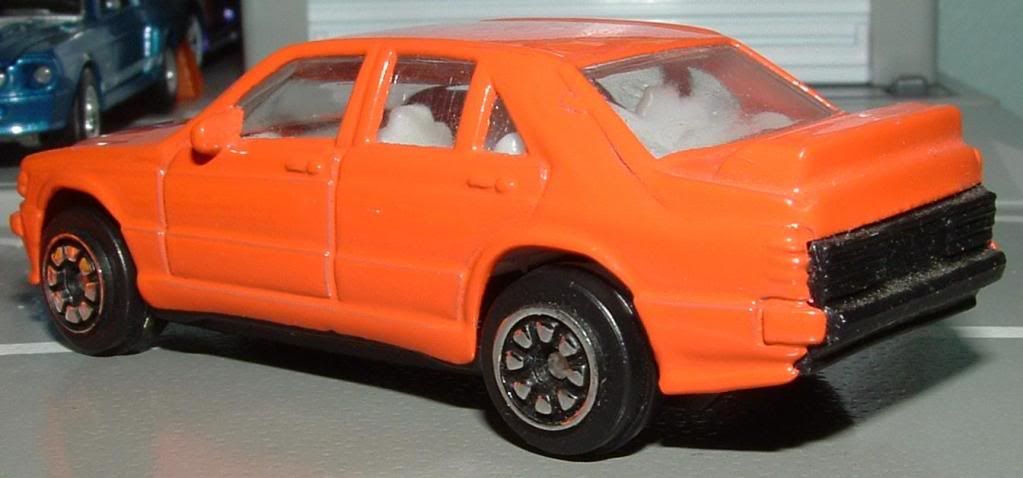
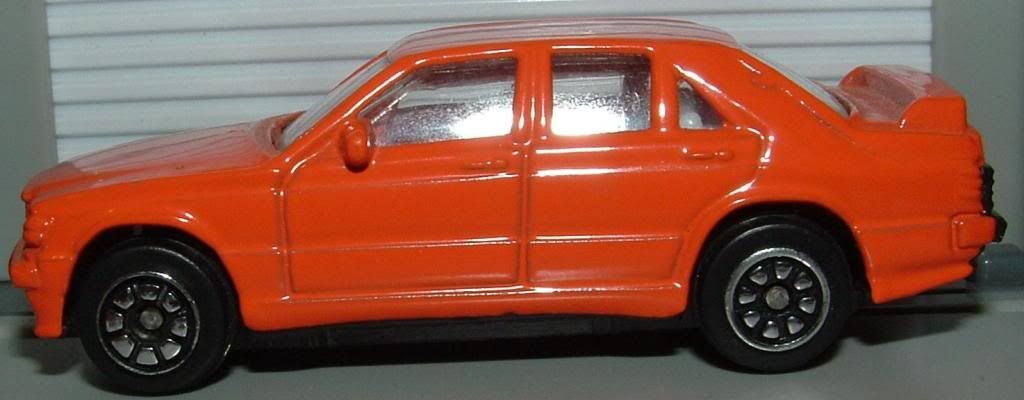
Today's car of the day is Welly's 1984 Mercedes-Benz 190E.
The Mercedes-Benz W201 was a sports sedan/compact executive car manufactured by Mercedes-Benz from 1982–1993, positioned below the Mercedes-Benz E-Class and S-Class — and marketed under variants of the Mercedes 190 nameplate.
The W201 featured a patented rear 5-link suspension, subsequently used in E and C class models, front and rear anti-roll bars, anti-dive and anti-squat geometry — as well as available airbags, ABS brakes and seatbelt pretensioners.
The W201 enjoyed strong sales in Europe but fared poorly in the United States. Series production ended April 13, 1993 after the manufacture of approximately 1.8 million examples. The 190 and its variants were succeeded in the compact executive car segment by the C-Class, a newly created nameplate.
For more information and pictures of the real car please visit: Mercedes-Benz 190E
Another recent RAOK from bangerkid45 (thanks Jon!) this Mercedes-Benz is probably inspired by someone else's casting, as most Wellys of the era were. Unfortunately, I'm not sure exactly what the inspiration for this model was. I was thinking the Corgi, but that casting's far too wide and chunky to have inspired this one. I don't know of a Tomica Mercedes of this generation, so I'm open to suggestions.
Back in the late 1970s, Mercedes competed in rallying with the big V8-powered Coupés of the R107 Series, mainly the light-weight Mercedes 450 SLC 5.0. Mercedes wished to take the 190 E rallying, and asked British race car engineering company Cosworth to develop an engine with 320 bhp (239 kW) for the rally car. This project was known as project "WAA" by Cosworth". During this time, the Audi Quattro with its all wheel drive and turbocharger was launched, making the 2.3-16v appear over-matched. With a continued desire to compete in high-profile motor sport with the 190, and also now an engine to do it with, Mercedes turned to the Deutsche Tourenwagen Meisterschaft (DTM) (German Touring Car Championship) motor sport series instead. Cars racing in this championship, however, had to be based on a roadgoing model. Mercedes therefore had to put into series production a 190 fitted with a detuned version of the Cosworth engine. This high performance model was known as the 190 E 2.3-16, and debuted at the Frankfurt Auto Show in September 1983, after its reputation had already been established. Three cars, only slightly cosmetically altered, had set three world records in August at the Nardo testing facility in Italy, recording a combined average speed of 154.06 mph (247.94 km/h) over the 50,000 km endurance test, and establishing twelve international endurance records. The Mercedes 190-E Cosworth was also featured on the second episode in season fifteen of the extremely popular car show Top Gear.
Wednesday, August 17, 2011
Car Of The Day: August 17, 2011
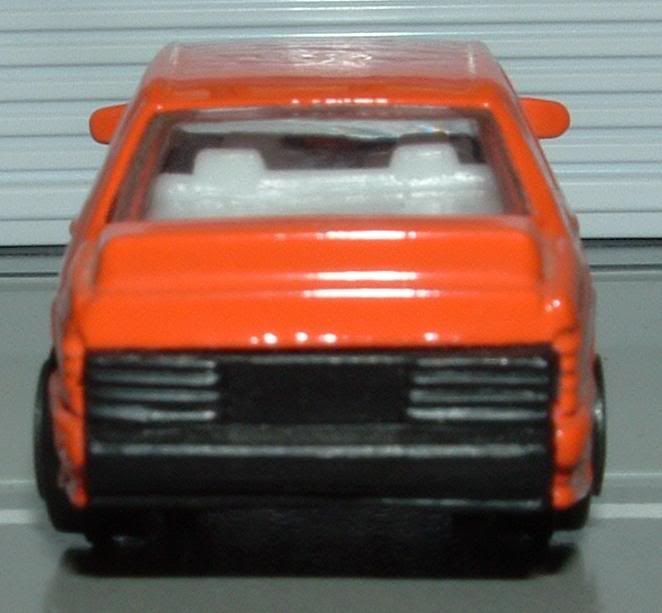
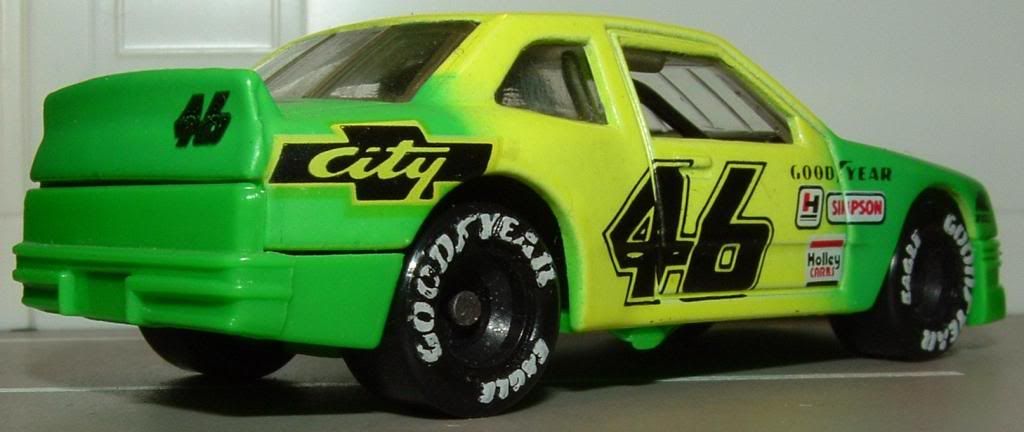
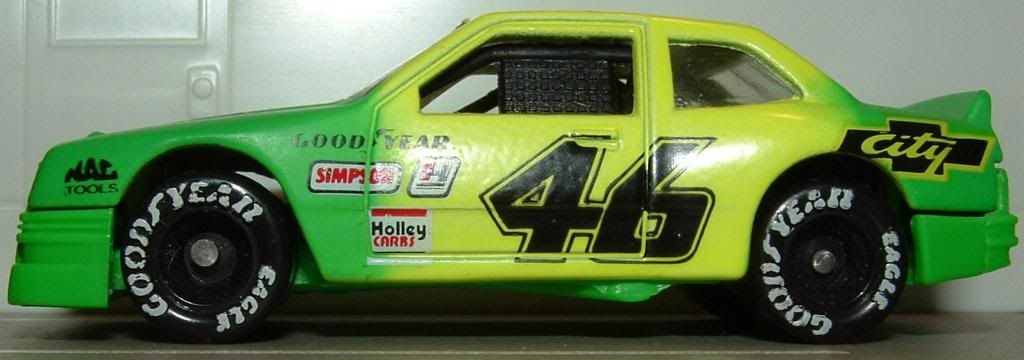
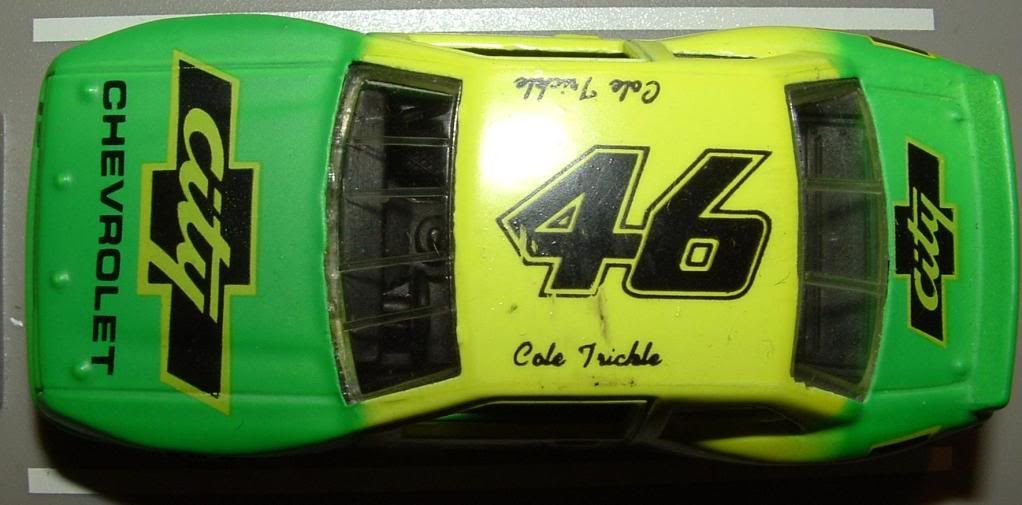
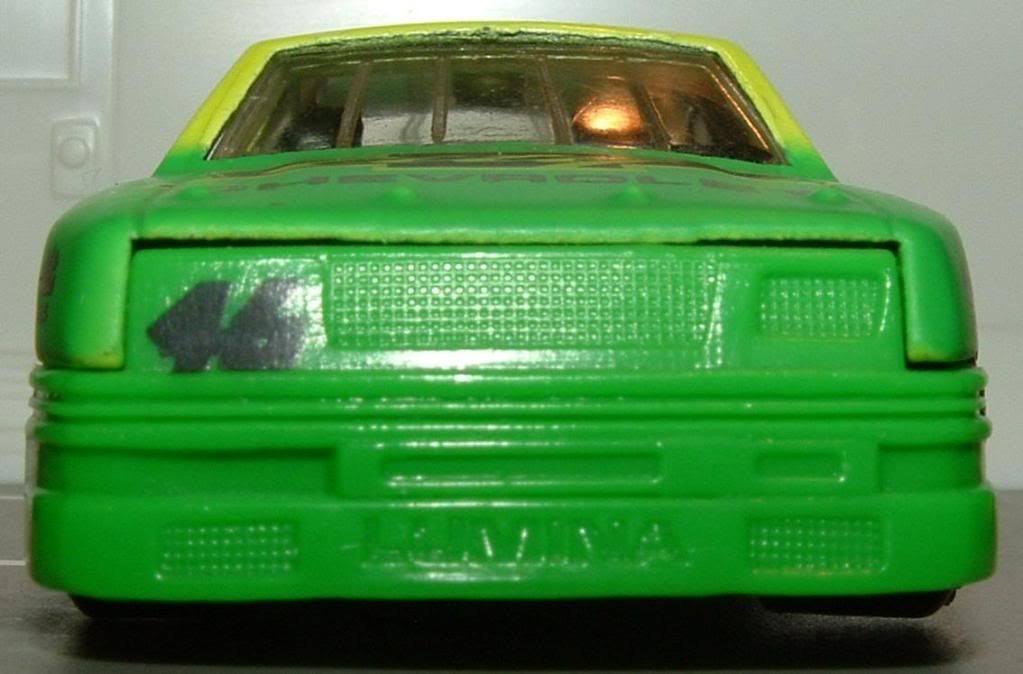
Today's car of the day is Matchbox's 1989 Chevrolet Lumina.
The North American Chevrolet Lumina sedan , coupe and minivan were first introduced in 1989 for the 1990 model year as a new range of vehicles from the Chevrolet brand of General Motors to replace both the Chevrolet Celebrity sedan, and the Monte Carlo coupe. The Lumina was an answer from General Motors to the Ford Taurus. All Luminas were built at the Oshawa Car Assembly plant, in Ontario, Canada. The Chevrolet Lumina had the longest length from any other W-body car at the time.
Consumers were ultimately confused by having two different vehicles (the Lumina sedan and the Lumina APV minivan) share the same name, and the concept was eventually dropped when the Lumina APV was replaced by the Chevrolet Venture in 1997.
The namebadge is also used on a variety of vehicles in the Holden Commodore family sold in the Middle East and South Africa.
For more information and pictures of the real car please visit: Chevrolet Lumina
Because the NASCAR model debuted well before the street model, I'm calling this a 1989 model as opposed to a 1990. The "Days of Thunder" cars actually raced in select 1989 races. Matchbox put a lot of effort into merchandising this movie, but apparently lacked either the time to prepare a new casting from scratch or the tooling money to create one. Believe it or not, this is the 1986 Buick LeSabre stock car with a modified roofline and new front and rear fascias.
The North American Chevrolet Lumina was based on the mid-size GM W platform, which was shared with the Pontiac Grand Prix, Oldsmobile Cutlass Supreme, Oldsmobile Intrigue, Buick Regal and Buick Century (after 1996). Although the Lumina became a popular seller, GM was widely criticized in the motoring press for being late to the game in introducing a direct aero-designed competitor to the Ford Taurus. The Chevrolet Lumina's first generation ended production in 1994, making this the shortest-lived generation of the first-generation GM W-body cars.
In 1989, the Lumina became the nameplate under which Chevrolets were raced in NASCAR, more than a year before the model was available to the public. Irate fans bombarded NASCAR with letters protesting the unfairness of Chevrolet being allowed to race an aluminum car.
Tuesday, August 16, 2011
Car Of The Day: August 16, 2011
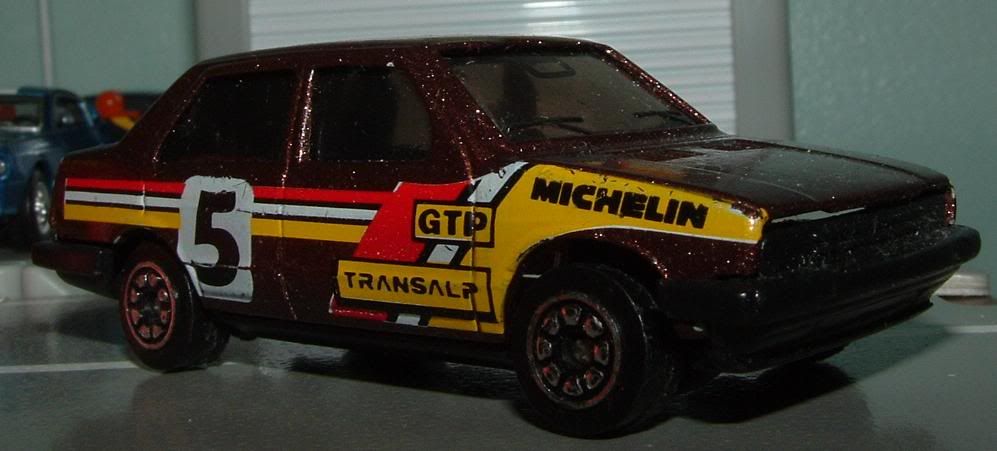
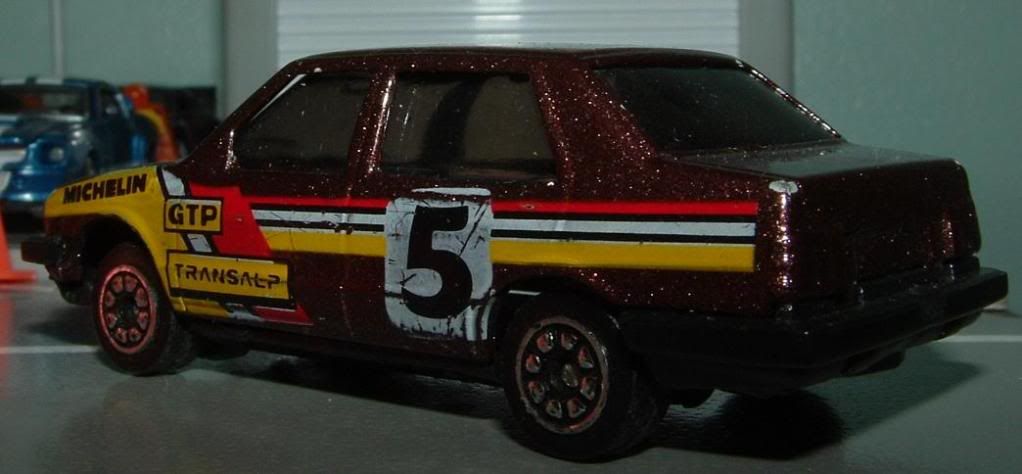
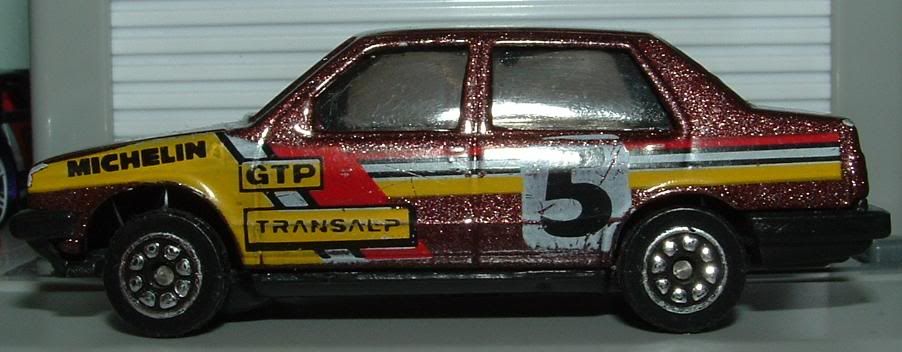
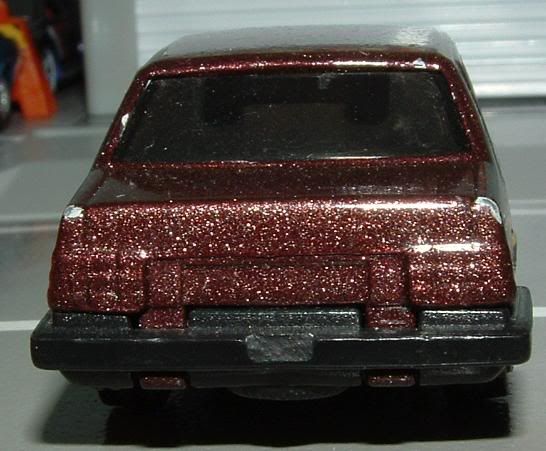
Today's car of the day is Guisval's 1985 SEAT Málaga.
The SEAT Málaga (codenamed 023A) is a four-door saloon produced by the Spanish automaker SEAT from 1985 to 1992, named after the city of Málaga in Andalucía, southern Spain.
It can be considered a saloon variant of the SEAT Ronda hatchback,[dubious – discuss] which had been launched three years earlier before the Málaga. The underpinnings of the Málaga were indeed based upon those of the SEAT Ronda, a restyled version of the SEAT Ritmo which in its turn was a rebadged version of the Fiat Ritmo. In this sense the Málaga most closely resembled the Fiat Regata, Fiat's own saloon version of the Fiat Ritmo hatchback. However the development of the SEAT Málaga and the Fiat Regata saloon cars from SEAT and Fiat respectively had been separate, as the two manufacturers had already ended their partnership by the time of the launch of their two saloon models.
For more information and pictures of the real car please visit: SEAT Málaga
You never know what's going to pop out of my collection next. Guisval, Mira, and Gisima managed to cover a lot of Spanish automobiles of the '70s & '80s, many of which were run of the mill sedans and hatchbacks like this one. All three manufacturers resorted to dressing up these plain Jane family cars with rally graphics and stickers...
The SEAT Málaga production ended in 1992 well after the Volkswagen Group took over SEAT, to be replaced from its successor, the SEAT Córdoba, which was launched at the end of 1993. The Málaga sold relatively well in Spain, but did poorly in export markets, despite sharing the same System Porsche powertrain with the SEAT Ibiza.
In the UK, Daily Telegraph journalist Neil Lyndon ran a Málaga as a long term test car for 12 months. He praised its versatility and actually drove it to Málaga and back, dubbing it the "spiritual successor to the SEAT Ritmo".
The Málaga was marketed in Greece as the SEAT Gredos, after the Spanish mountain range Sierra de Gredos, because the word Málaga was considered very similar to a ubiquitous Greek swear word.
Subscribe to:
Posts (Atom)