Tuesday, November 22, 2011

Car Of The Day: November 22, 2011


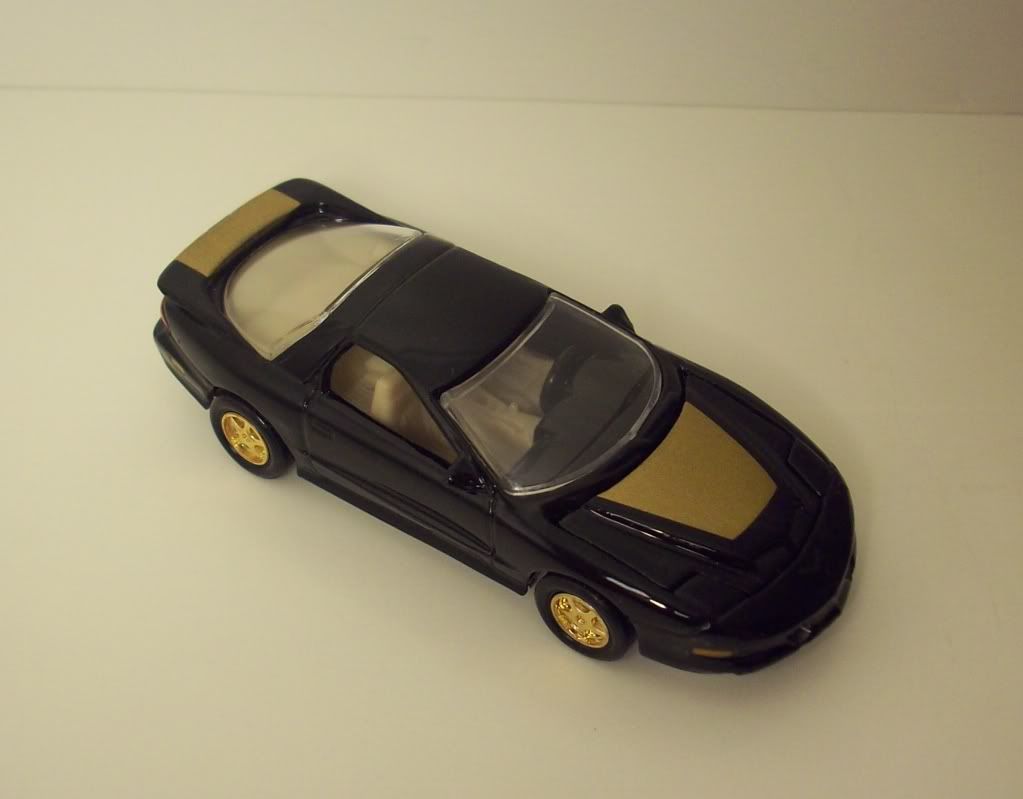
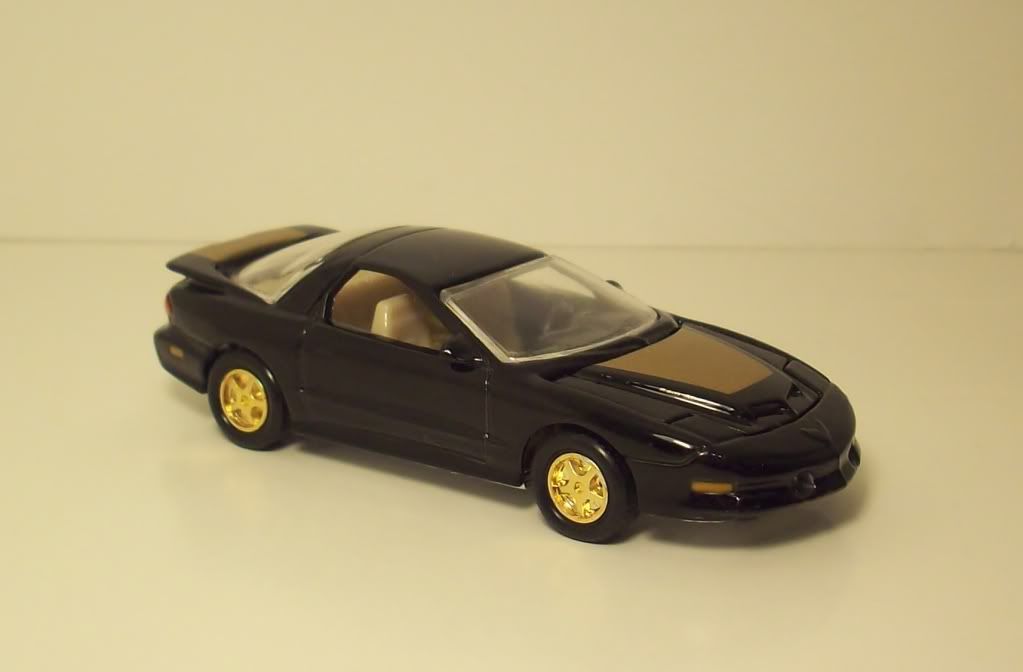
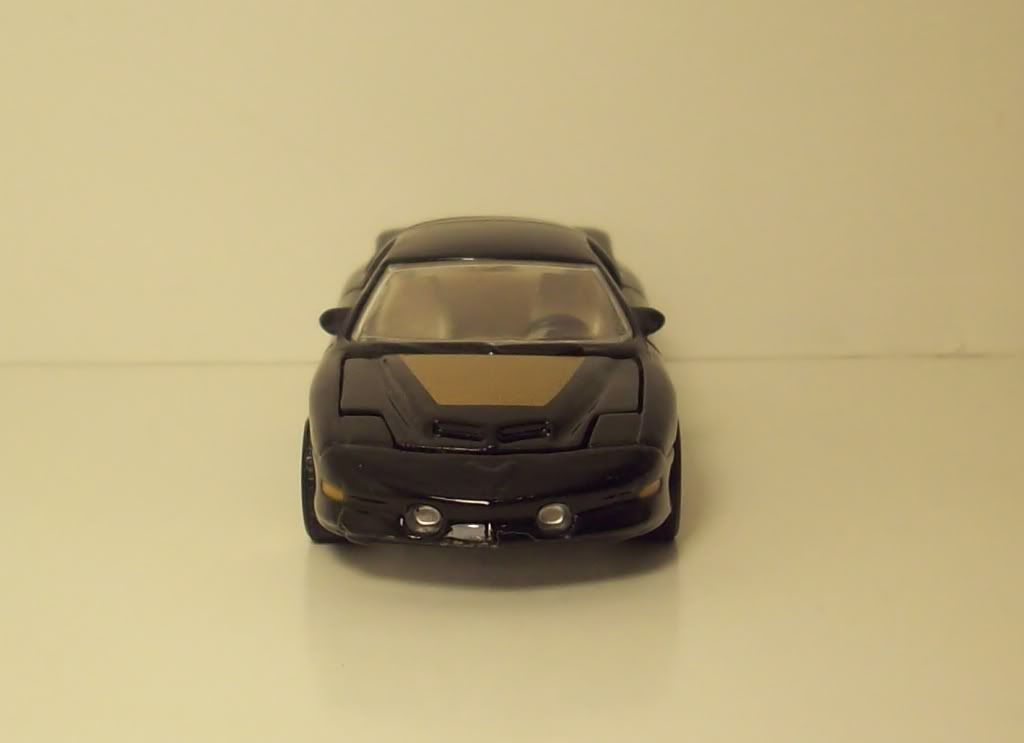
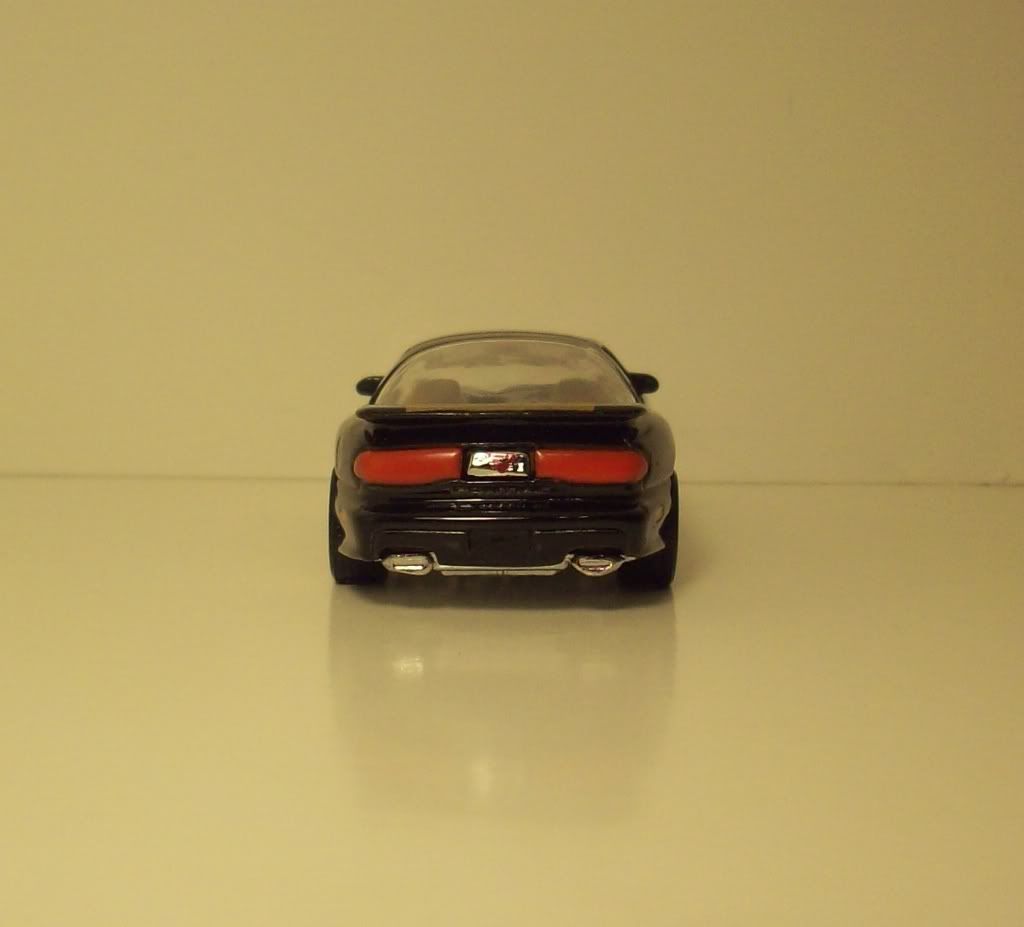
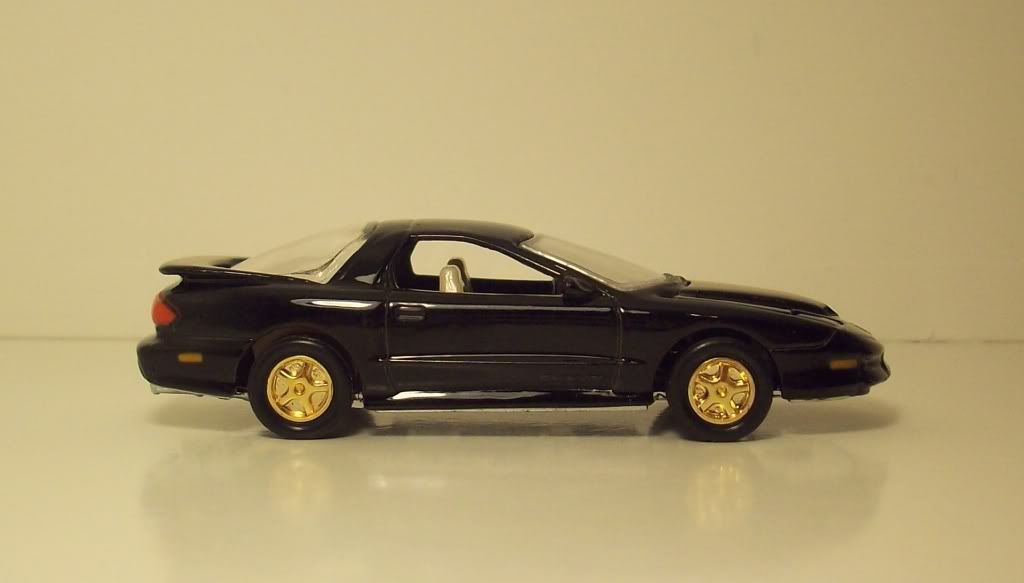
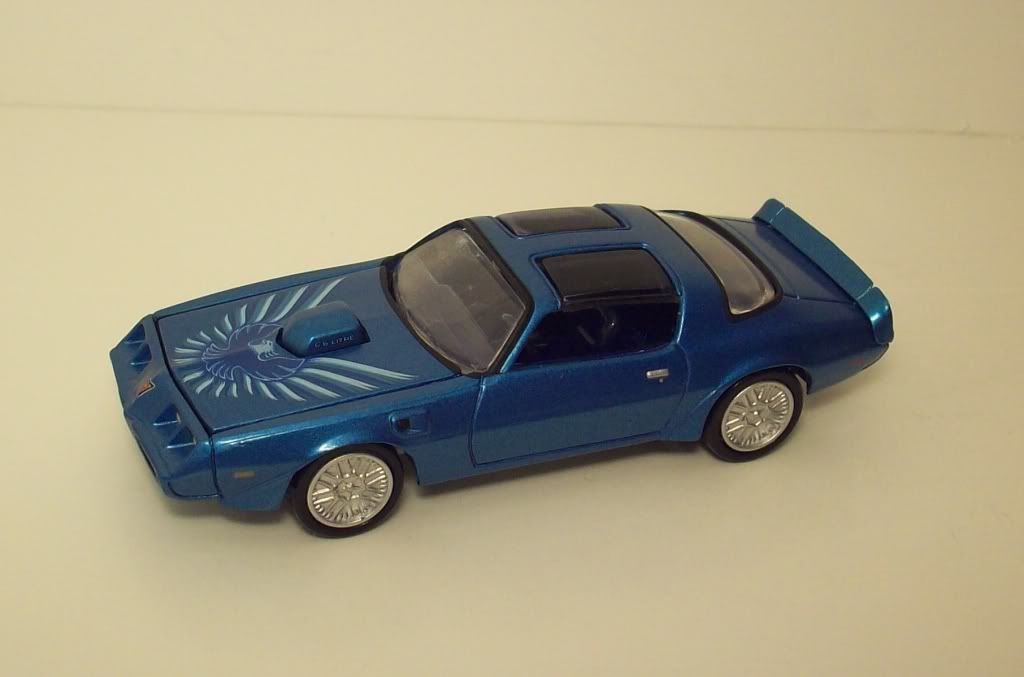
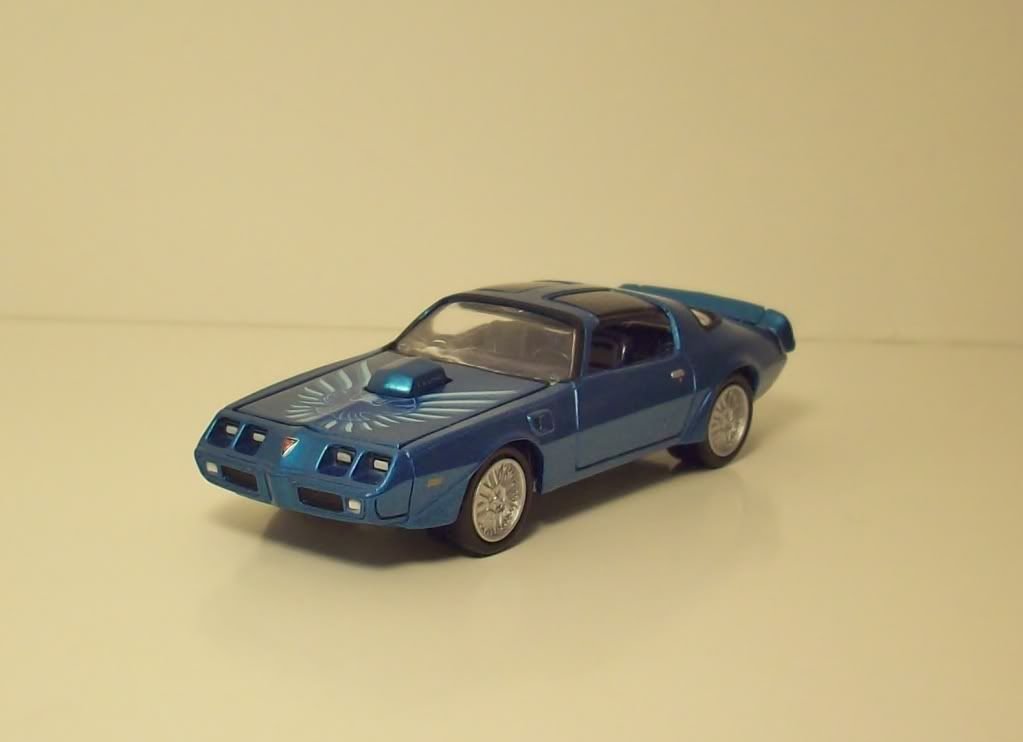
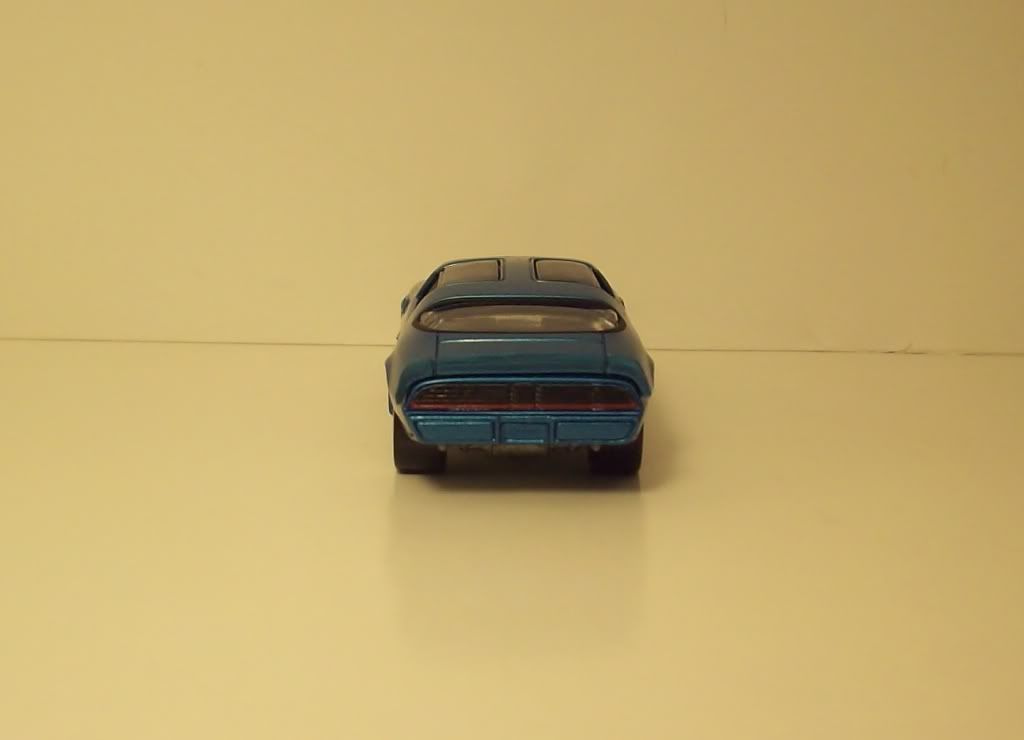
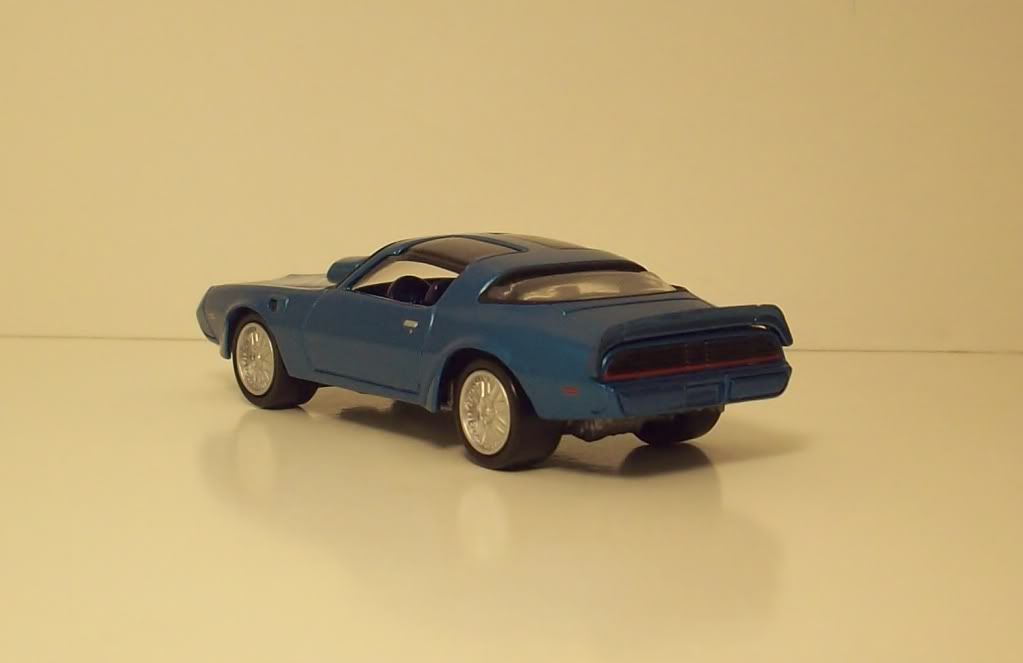
Today's car of the day comes from Firehawk73's collection and is Johnny Lightning's 1979 Pontiac Firebird Trans Am.


The Pontiac Firebird was built by the Pontiac division of General Motors between 1967 and 2002. The Firebird was introduced the same year as the automaker's platform-sharing model, the Chevrolet Camaro. This coincided with the release of the 1968 Mercury Cougar, which shared its platform with another pony car, the Ford Mustang.

The vehicles were powered by various four-cylinder, six-cylinder, and V8 engines sourced from several GM divisions. While primarily Pontiac-powered until 1977, Firebirds were built with several different engines from nearly every GM division until 1982 when GM began to discontinue engines it felt were unneeded and either spread successful designs from individual divisions among all divisions or use new engines of corporate architecture.


For more information and pictures of the real car please visit: Pontiac Firebird


We're celebrating Thanksgiving week with A Flock Of Seagulls Firebirds.  If I had a photograph of you, it's something to remind me.  I wouldnt spend my life just wishing.  While the odds are still good that I run out of A Flock Of Seagulls songs to reference before Paul runs out of Firebirds... today isn't the day either.
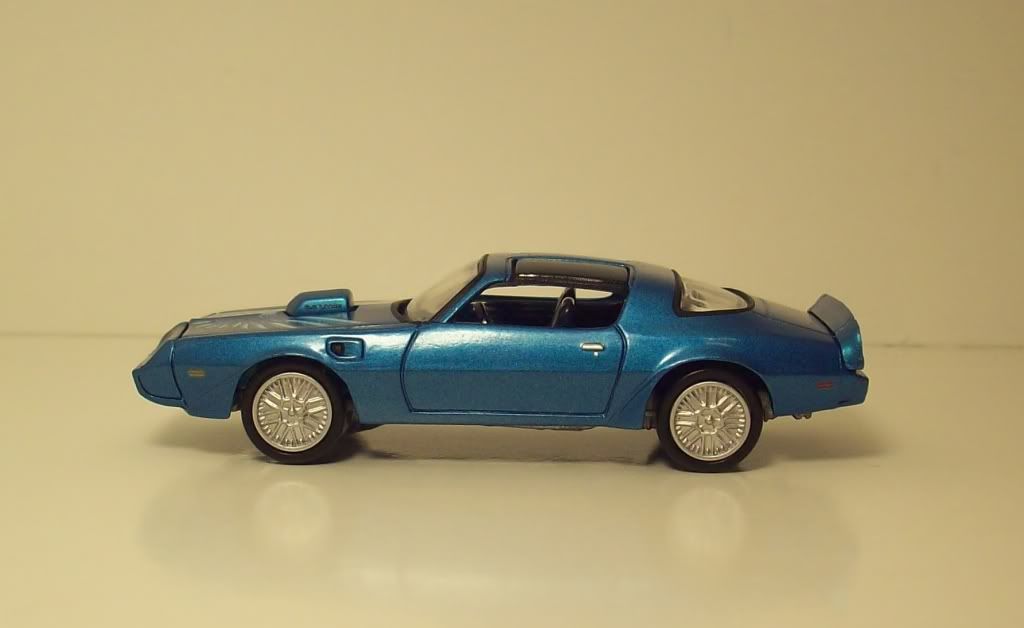


Beginning in 1978, Pontiac engineers reversed years of declining power by raising the compression ratio in the Pontiac 400 through the installation of different cylinder heads with smaller combustion chambers (1977 Pontiac 400 engines also had the 350 heads bolted to the 400 blocks, these heads were known as the 6x-4 heads)(taken from the Pontiac 350). This increased power by 10% for a total of 220 during the 1978–79 model years. The 400/403 options remained available until 1979, when the 400 CID engines were only available in the 4-speed transmission Trans Ams and Formulas (the engines had actually been stockpiled from 1978, when PMD had cut production of the engine). 1979 marked the 10th Anniversary of the Trans Am, and a special anniversary package was made available: silver paint with a silver leather interior. The 10th Anniversary cars also featured a special Firebird hood decal, which extended off of the hood and onto the front fenders. In 1979 Pontiac sold 116,535 Trans Ams which still holds the record to this day.

Up until the 1979 models, the performance of 400-equipped Firebirds could still be brought up to pre-1970 levels by disabling emissions equipment- removing the catalytic converter and blocking off the exhaust gas recirculation system- and opening up the block off plate to make the hood scoop functional. Howver, in 1980, due to ever-increasing emissions restrictions, Pontiac dropped all of its large displacement engines.
1980 therefore saw the biggest engine changes for the Trans Am. The 301, offered in 1979 as a credit option, was now the standard engine. Options included a turbocharged 301 or the Chevrolet 305 small block.

In the final year of the Second Generation Firebirds (1981), Trans Am still used the same engines as it had in the previous model year, with the only change being the addition of a new electronic carburetion system.
Monday, November 21, 2011

Car Of The Day: November 21, 2011


Today's car of the day comes from Firehawk73's collection and is Racing Champions' 1996 Pontiac Firebird Trans Am.


The Pontiac Firebird was built by the Pontiac division of General Motors between 1967 and 2002. The Firebird was introduced the same year as the automaker's platform-sharing model, the Chevrolet Camaro. This coincided with the release of the 1968 Mercury Cougar, which shared its platform with another pony car, the Ford Mustang.

The vehicles were powered by various four-cylinder, six-cylinder, and V8 engines sourced from several GM divisions. While primarily Pontiac-powered until 1977, Firebirds were built with several different engines from nearly every GM division until 1982 when GM began to discontinue engines it felt were unneeded and either spread successful designs from individual divisions among all divisions or use new engines of corporate architecture.


For more information and pictures of the real car please visit: Pontiac Firebird


We're celebrating Thanksgiving week with A Flock Of Seagulls Firebirds.  I saw your eyes, and you touched my mind.  Although it took a while, I was falling in love.  Odds are good I run out of A Flock Of Seagulls songs to reference before Paul runs out of Firebirds... but not yet.


The fourth-generation F-body continued the aerodynamic formula initiated by the previous generation, but saw declining sales. As before, the Camaro kept the exposed headlights and the Firebird its pop-up units, with some minor changes. The overall styling of the Firebird more strongly reflected the "Banshee IV" concept car than the 1991 "face lift" received by the Third Generation model.

Sunday, November 20, 2011

Car Of The Day: November 20, 2011


Today's car of the day comes from Firehawk73's collection and is Johnny Lightning's 1985 Pontiac Firebird Trans Am.


The third generation F-body weighed less than its predecessor and offered sleek, aerodynamic styling that was particularly reflected by the Firebird. GM's CCC (Computer Command Control) engine control system also continued to evolve, simultaneously increasing engine performance, raising fuel economy, and lowering emissions. This combination of factors helped the Third Generation Firebird to re-energize its fading pony car image. By the end of the 1980s, thanks to world class aerodynamics and state of the art computerized engine management, a Firebird would average around mid to high 16 seconds in the quarter mile.


For more information and pictures of the real car please visit: Pontiac Firebird


We're celebrating Thanksgiving week with A Flock Of Seagulls Firebirds.  And I ran....so far away.  Couldn't get away.  Odds are good I run out of A Flock Of Seagulls songs to reference before Paul runs out of Firebirds...which is probably a good thing.


All Firebird models underwent redevelopment to boost sales as a number of power train improvements were introduced. The Firebird received a restyled nose with Black wrap-around inserts known as "bumperettes" to replace the grille inserts; wrap-around "bumperettes" were also added to the rear bumper. The tail lights remained unchanged from the previous "louvered" style design. The carbureted V6 was replaced with a new, multi-port fuel-injected 2.8L V6 making 135 hp. The interior evolved with a new dash design containing redesigned gauges that used an graph-patterned background, a slightly refined dashpad, new T-handle shifter for automatics; a padded and more ergonomic center console design, updated stereo and HVAC faceplates, and an optional version of the previous year's more ergonomic 15th Anniversary's steering wheel.

The Firebird S/E underwent some changes as well. It too used the new for '85 nose and rear bumper, but it now included some new items to set it apart. It received a new special hood, similar to the new Trans Am hood except with only the front vents, the new Trans Am tail light design, color coded Firebird logo medallions on the sail panels, (similar to the '83/'84 Recaro version), and a color coded rear Firebird logo on the center section of the tail lights. Cloth Recaro seats were also now available.

The Recaro T/A was no longer available, but cloth Recaro seats were optional on the Trans Am.
The Trans Am also underwent changes. The LG4 & L69 continued on, but a new fuel injected 305ci was now available in the Trans Am. The LB9 Tuned Port Injection (TPI) 305 was released, using a tuned runner design. The LB9 produced 210 hp, which brought it suitable attention from buyers despite being unavailable with a manual transmission. The "Turbo Bulge" hood was discontinued in favor of a new flat hood with twin louvered vents or "nostrils" that were slightly functional, with heat exhaust vents on the rear edges. The Trans Am also received a restyled nose, integral fog lights, and newly redesigned ground effects. It utilized new "low density" taillight lenses with a grid-style pattern rather than the "louvered" pattern in use since 1982. The Trans Am came standard with the "High Tech" 15-inch concave aluminum wheels from the previous year, but it was also now available with the a version of the 15th Anniversary's WS6 suspension and its "Aero Tech" 16-inch aluminum wheels, but in finished Natural Silver. A Borg-Warner 9-bolt differential was made available for the first time, and was said to be stronger than the standard corporate 10 bolt axle. Further attempts to put the Trans Am into higher regard included overhead console from the Camaro lineup, which included several manually adjusted reminder wheels, a positionable map light, a removable flashlight with "FIREBIRD" script, and a small pocket for a garage door opener or sunglasses. The standard rear spoiler from previous years was still standard, but an optional wrap-around "Aero Spoiler" was now available in black and gave the car a new more modern look, (it is unique for 1985 & 1986 as it had a texture). The Trans Am drag coefficient was measured at 0.32 but was as low as 0.29 with the standard Aero wheels instead of the High-Tech turbo aluminum wheels. At the time, it was the most aerodynamically-efficient car GM ever produced.

Saturday, November 19, 2011

Car Of The Day: November 19, 2011


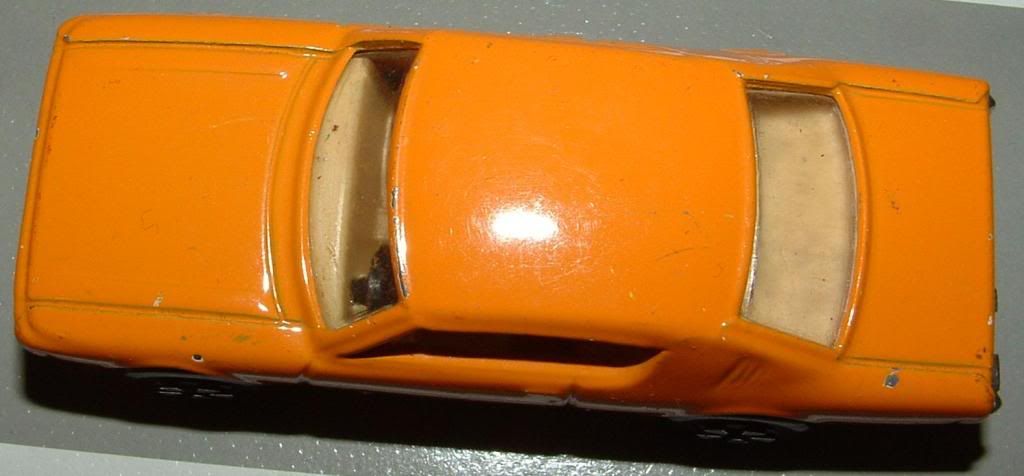
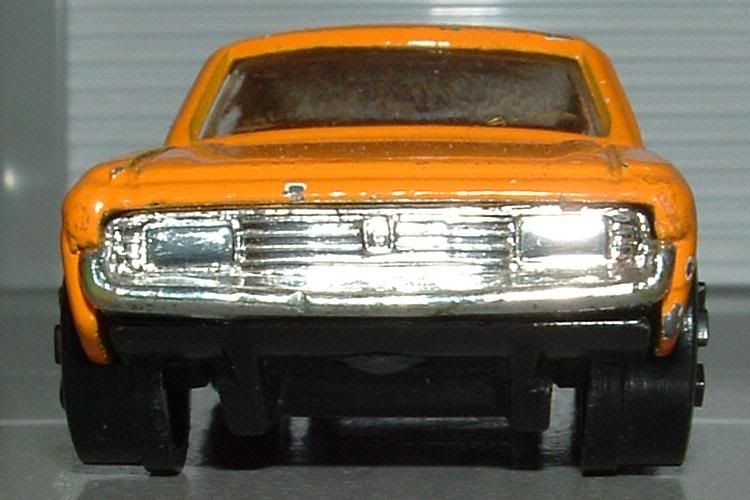
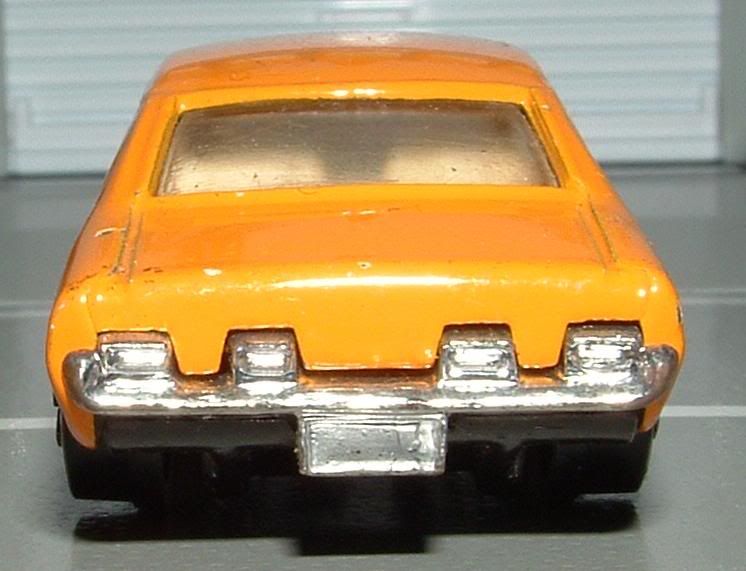
Today's car of the day is Playart's 1971 Toyota Crown.


The Toyota Crown is a line of full-size luxury sedans by Toyota. The range was primarily available in Japan and some other Asian countries, originally designed to serve as a taxi. Throughout the Crown's production, there has always been available a minimal content Crown in the sedan bodystyle platform used as a taxi, and in the mid 1990s, Toyota created an offshoot of the Crown sedan to serve specifically as a taxi, called the Toyota Comfort. The Crown also serves as a police car nationally, as well as transporting government officials at all levels.

In Japan, it is only available at Toyota Store dealership retail channels.The Crown is Toyota's oldest sedan still in production. It is outranked only by the Century and the Majesta in social status. The Crown is used by many Japanese companies as the company limousine. In many markets the Crown had become very expensive and was replaced by the Cressida in some international markets when it became available for export in the early 1980s. Most models are distinguishable by a unique "Crown" badge on the front grille, in place of the normal stylized 'T', but the normal Toyota badge is usually used on the rear.

It was sold in the United States during the late 1950s and up until 1971. Exports to Europe began in 1964 with the first cars going to Finland. Other European countries which saw imports of the Crown included the Netherlands and Belgium. The United Kingdom was another market until the early 1980s. It was also exported to Canada for a few years—1965–68. Australia was another important export market for the Crown—to the extent that it was manufactured there from the mid-1960s until the late 1980s using many local components. Trinidad and Tobago was also another country where the Toyota market had a successful run, which saw some productions between 1960-1980.

The Crown has existed in some form post World War II, and Toyota uses the "Crown" name as inspiration for their primary sedans, the Corolla which is Latin for "small crown", the Camry a phonetic transcription of the Japanese word kanmuri that means crown, and the Corona which is Spanish for crown.


For more information and pictures of the real car please visit: Toyota Crown


I actually saw one of these a year ago.  Very rare car in the USA- I was thrilled to spot one!


Launched in Feb 1971, the 4M 2600 engine was introduced with this generation, as was the luxurious Super Saloon trim level, followed by the Super Deluxe and Deluxe. The top of the line Royal Saloon was first introduced in the face-lifted Crown from 1973. The 2.0 liter 5R engine and the 2.0 liter M engine were also available in certain markets.

The Sedan and Wagon are coded MS60/MS65 and MS62/MS63. The Hardtop Coupe is MS70 (2.0 liter), or MS75 (2.6 liter). This generation was the first Crown marketed as a Toyota in Japan, as previous models were marketed as Toyopets. Also, in Japan, this model was known as the "blue whale" or "kujira" Crown. While the domestic market Hardtop has rectangular headlights, all export models come with twin round headlights. This model sold very badly in the US, possibly related to the futuristic styling with flush bumpers that was a bit ahead of its time. Only the first 2 years were exported. This is the last Crown to be sold in the USA. The Corona Mark II, replaced the Crown in North America.

The trunk could be opened remotely by turning the ignition key to the far left, and a button on the floor caused the radio to engage the signal seeking feature. A separate signal seeking feature was installed for rear seat passengers, installed behind the front seat facing the rear seat compartment.

Friday, November 18, 2011

SUV Of The Day: November 18, 2011


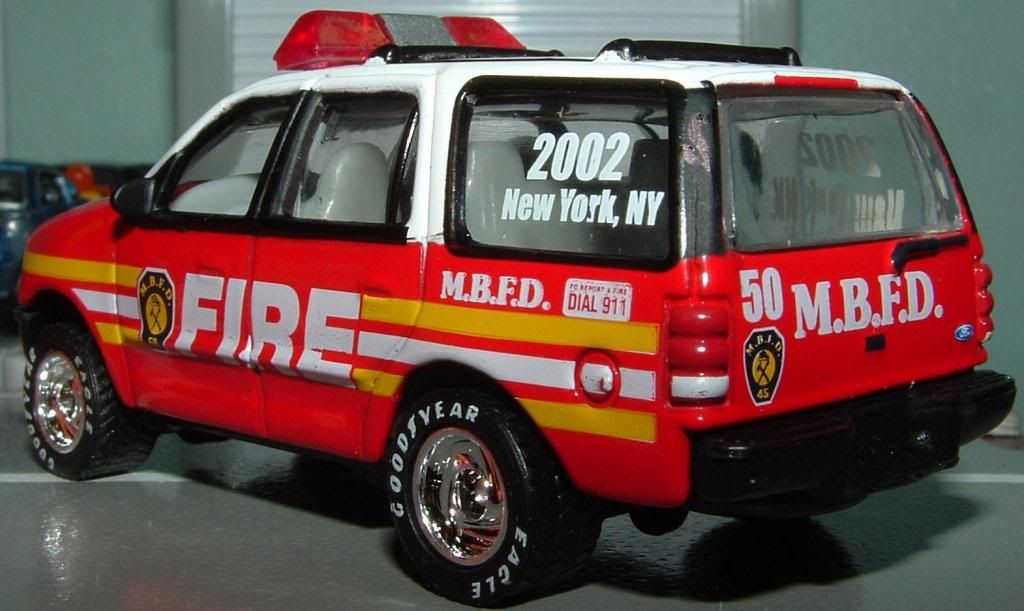
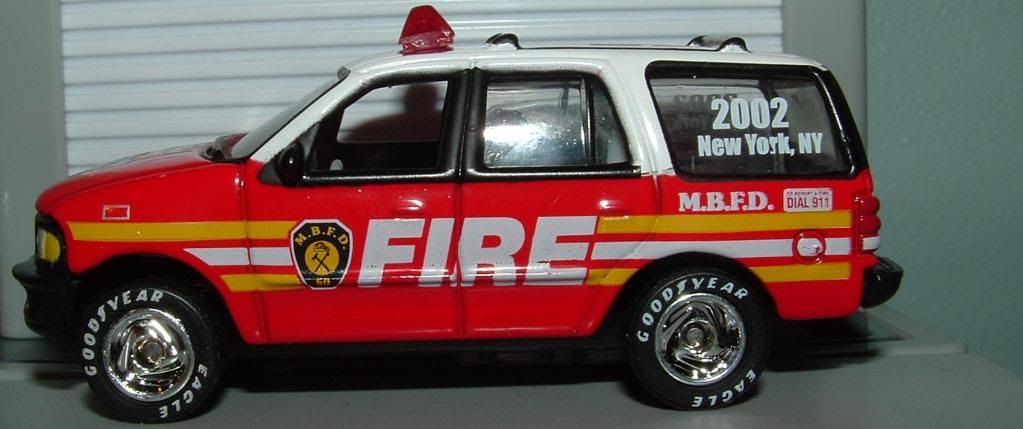
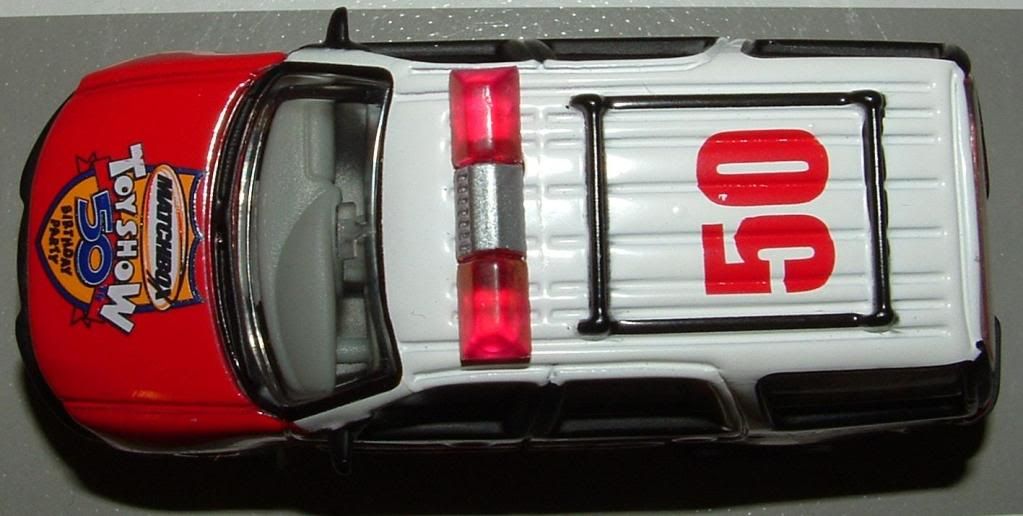
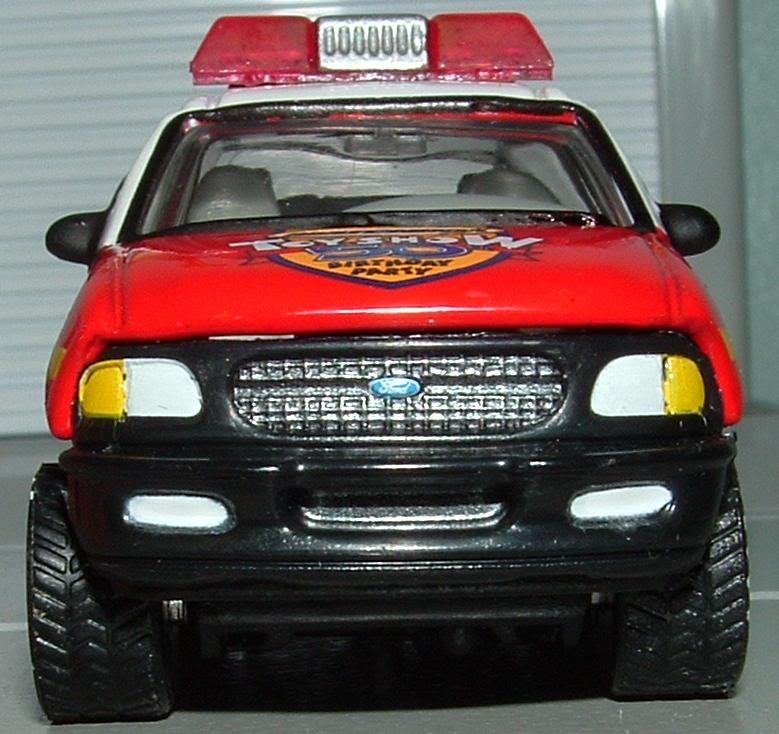
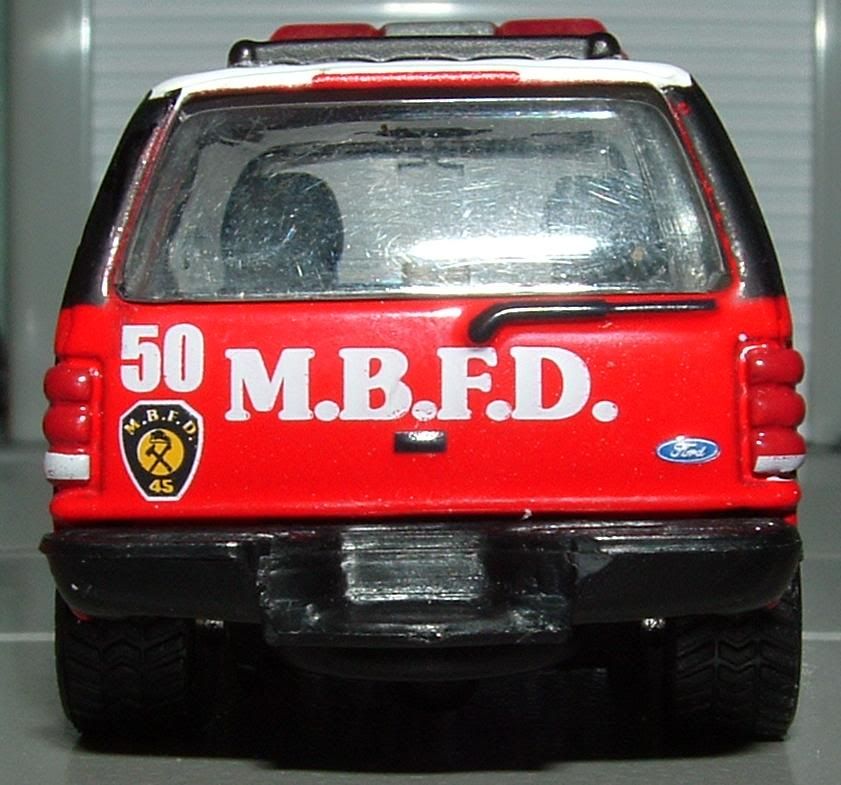
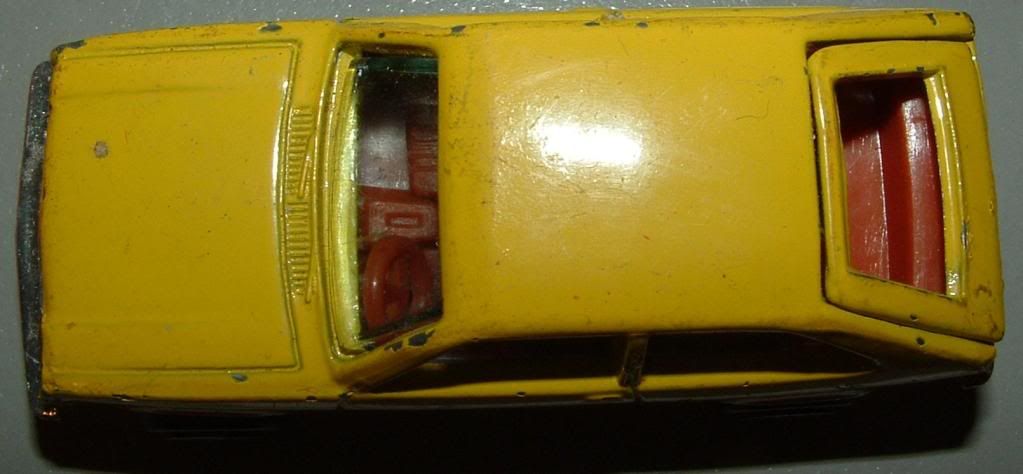
Today's car of the day is Matchbox's 1998 Ford Expedition.


The Ford Expedition is a full-size SUV built by the Ford Motor Company. Introduced in 1997 as a replacement to the Ford Bronco, it was previously slotted between the smaller Ford Explorer and the larger Ford Excursion, but as of the 2005 model year, it is Ford's largest and last truck-based, off-road and tow capable SUV. Ford currently offers the standard regular-sized model and the larger EL/Max model, succeeding the Excursion which was discontinued in 2005. It is the second Ford vehicle to use the Expedition name, as it was part of the Explorer Sport's trim models during the 1995 model year. All Expeditions were originally built in Wayne, Michigan. In 2009, Ford shifted its current third generation (2007–present) model production to Louisville, Kentucky when Ford converted the Wayne assembly plant to begin further production of the Focus.


For more information and pictures of the real car please visit: Ford Expedition


This Ford Excursion is from the 2002 New York Toy Show.


Known internally at Ford as the UN93, the first generation Ford Expedition was developed under the UN93 program. The all-new full-size SUV was introduced in late 1996 as a 1997 model, replacing the aging two-door Ford Bronco in Ford’s vehicle lineup. Expedition featured optional three row seating, first row captains chair luxury seating, available second row captains chair luxury seating, genuine premium leather seating surfaces (imitation leather was not available for Expeditions) illuminated running boards, heated side view mirrors, power moon roof, dual zone climate control and Ford’s premium Mach audio sound system with rear subwoofer. Many of these features were standard on the top-of-the-line Expedition Eddie Bauer. Expedition XLT served as the entry level model.

The Expedition’s mechanicals consisted of a short & long arm (SLA) independent front suspension, multi-link rear live axle and speed sensitive power assisted steering. Optional equipment included off road under body skid plate protection, heavy-duty rear limited-slip differential and a heavy-duty trailer tow package.
Expedition was also available with an adaptive electronically controlled pneumatic suspension system that would raise and lower the vehicle depending on road and load conditions. The system also included a kneel down mode which would lower the Expedition down to allow easier ingress and egress as well as loading cargo. Similar to how a camel kneels down to allow a rider to climb aboard.

Selectable part-time/full-time ControlTrac 4-wheel-drive which had been introduced on the 1995 Ford Explorer was introduced for the Expedition, albeit a much heavier-duty version with Expedition receiving its own heavy-duty transfer case unit (BorgWarner model: 4406) designed for high torque output. The system included four modes: 2 High, Auto, 4 High (lock) and 4 Low (lock). 2 High mode and Auto mode with auto-lock wasn’t available on the Explorer’s system.
Engine choices consisted of a standard 4.6 liter Triton V8 or an optional 5.4 liter Triton V8. The first generation Expedition was rated as a Low Emission Vehicle (LEV). The latter engine combined with the heavy-duty trailer tow package and appropriate axle ratio can achieve a towing capacity of 8,100 lbs (3,674 kg).

Thursday, November 17, 2011

Car Of The Day: November 17, 2011


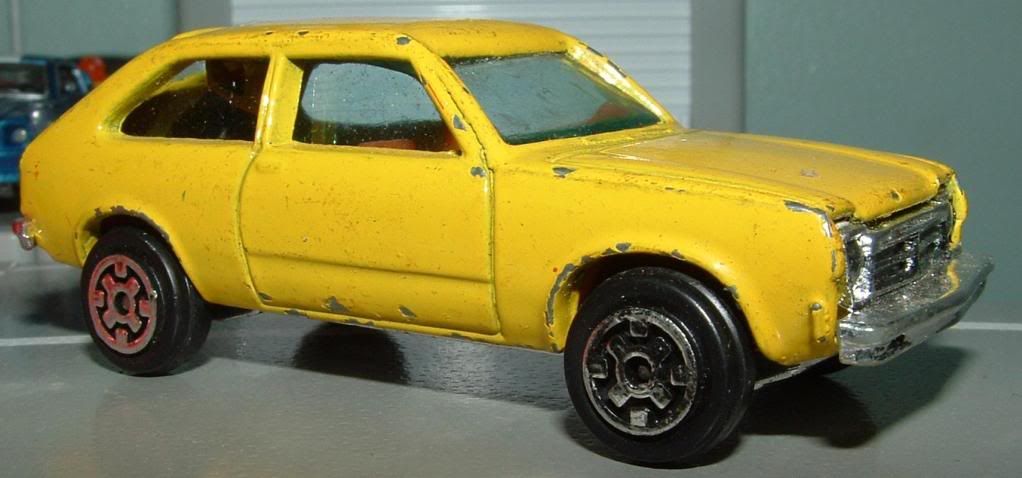
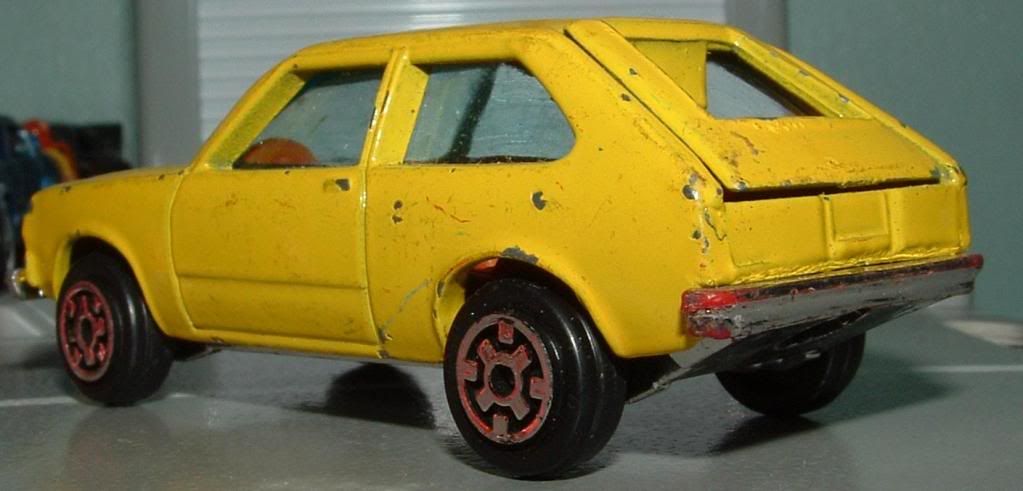
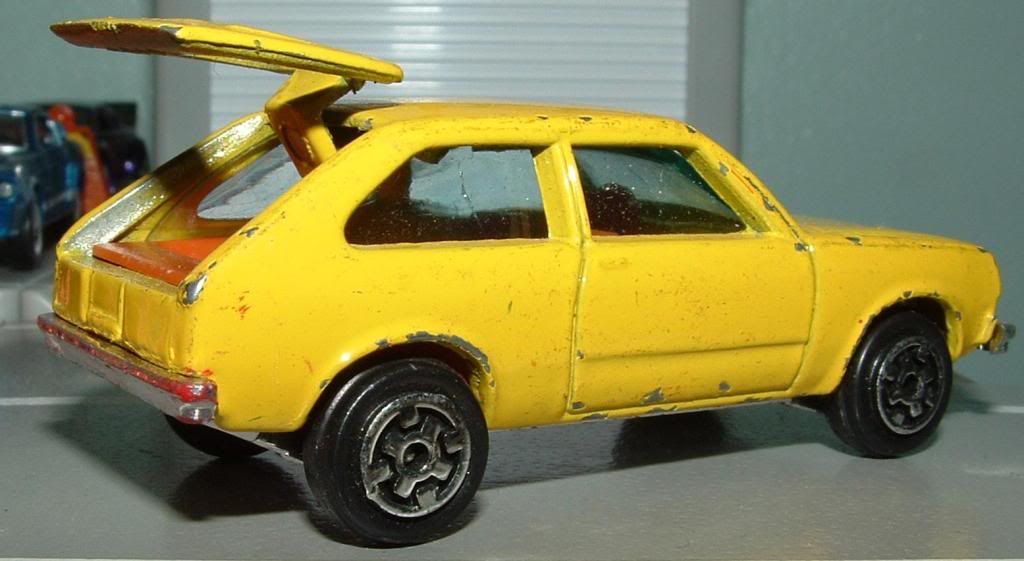
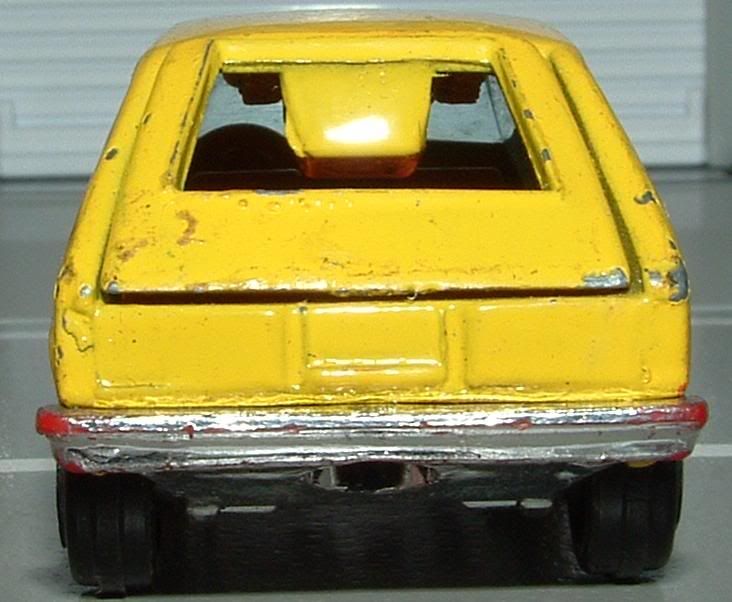
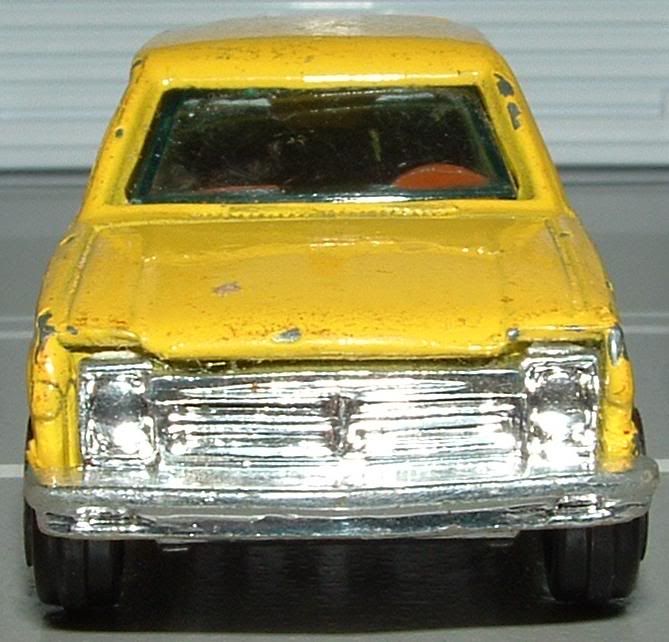
Today's car of the day is Kidco's 1979 Chevrolet Chevette.


The Chevrolet Chevette was introduced in September, 1975 and manufactured for model years 1976-1987 based on GM's worldwide T platform and superseding the Vega as Chevrolet's entry-level subcompact. The Chevette was the best-selling small car in America for 1979 and 1980, and was popular in South America as well.


For more information and pictures of the real car please visit: Chevrolet Chevette


The way the chrome bumpers have lost their plating in places makes it look like the car has some rust...a common affliction of the real cars.


The T-car was first launched in Brazil under the Chevette name in 1973, as a two-door sedan; the Brazilian Chevette line eventually included a four-door sedan, a two-door hatchback, and a two-door station wagon (named Marajó), as well as a pickup (named the Chevy 500), and was produced until 1994. Chevettes are also a car used in racing in Dirt Track Racing. It has its own series. The Chevette was probably the last rear-wheel drive FR subcompact built in the world (produced until 1998 in Colombia; the VW Beetle was built in Mexico until 2003 but it had a different layout, namely rear-wheel drive, rear engine) until BMW launched its 1 Series in 2004.

Initially available only as a two-door hatchback with 1.4 or 1.6 L OHC gasoline inline-four engines, the Chevette engines produced from 53 to 70 horsepower (40 to 52 kW) at the rear wheel. A four-speed manual transmission was standard; a three-speed automatic transmission was optional. Rally and Woody packages were optional, as well as a loss-leader Scooter, a two-seater (rear seat optional) with painted rather than chromed bumpers, an open glove box, black carpeting, and door pull straps in lieu of arm rests. The Canadian market also had a Pontiac version of Chevette named Acadian. As the smallest, most fuel-efficient car marketed by Chevrolet, it was the lightest American car at the time being offered, weighing in at under a ton. The EPA rated the base 1.4-liter engine at 28 miles per US gallon (8.4 L/100 km; 34 mpg-imp) city and 40 miles per US gallon (5.9 L/100 km; 48 mpg-imp) highway—figures unheard of in past domestic models. Chevrolet claimed that a Chevette's turning circle (30.2 feet) was one of the smallest in the world and that it was essentially a "metric" car, "international in design and heritage."1976-1978 Chevettes can be identified by round headlights and a chrome-rimmed, tri-color taillights.


The Chevette Rally 1.6, included a 1.6-liter (98 cu in) engine in lieu of the 1.4-liter (85 cu in) overhead-cam four-cylinder, rated at 60 hp (45 kW) instead of 52 hp (39 kW). The Rally also featured a suspension with rear stabilizer, along with special body graphics. Through model year 1976, the Chevette Woodie carried wood simulating sheet-vinyl trim and upgraded interior/exterior trim. The Woody model has become quite scarce, especially in higher condition grades. Chevrolet marketed the Chevette Scooter model with a MSRP of $2,899, without a rear seat or glovebox door. 9,810 Scooters were built, versus 178,007 regular hatchbacks. Buyers could choose either a fully synchronized floor-shifted four-speed manual transmission or optional Turbo-Hydramatic. Chevettes had rack-and-pinion steering, front disc brakes, a front stabilizer bar, 13-inch tires, tri-color taillights, front bucket seats, and an onboard diagnostic system. Swing-out rear quarter windows were optional.
The 1977 Chevrolet Chevette's engines offered 57 hp (43 kW) or 63 hp (47 kW). The Scooter hatchback included a rear seat. The Sandpiper trim package included “reef” patterned interior, deluxe door trim, cream gold or antique white exterior colors and an exterior Sandpiper logo just behind each door.

1978 models had a revised grille with a grid design, grille and headlight frames chromed for standard models, a four-door hatchback riding a 97.3 inches (2,470 mm) wheelbase was added — two inches longer than the two-door — and this version accounted for more than half of Chevette's nearly 300,000 sales. The 1.4 L engine and Woody were dropped. Fuel door added. TH-180 Automatic Transmission added to replace THM-200 series automatic. "HO" High Output version available in addition to the standard 1.6 L featuring a modified head and larger valves/cam profile. "HO" package also includes dual outlet exhaust manifold. Prices dropped and more standard equipment was added for 1978.

In 1979, the Holley two-barrel carburetor was now standard on all models. The front fascia was face-lifted with a flat hood, no longer wrapping down to bumper. New for 1979 was a large chrome grille with Chevrolet "Bow-Tie" emblem and square headlights. P.A.I.R. air injection system was introduced to improve catalytic converter function at idle. Active Passenger Restraint system was introduced in small numbers as an option which featured lower hanging dashboard, automatic seatbelts and a center dash console. Chevette sales totaled more than 451,000 units — a figure that would rank it second only to Chevy's new Citation, which had a much longer model run (sales had started in April 1979). Consumer Guide testers managed "an honest 29 mpg in the city and 39 mpg on the highway." The 1980 rear fascia was revised with a squared-off hatch, wraparound taillights with combined, single colored turn signals and a round gas filler door.

Wednesday, November 16, 2011

Car Of The Day: November 16, 2011


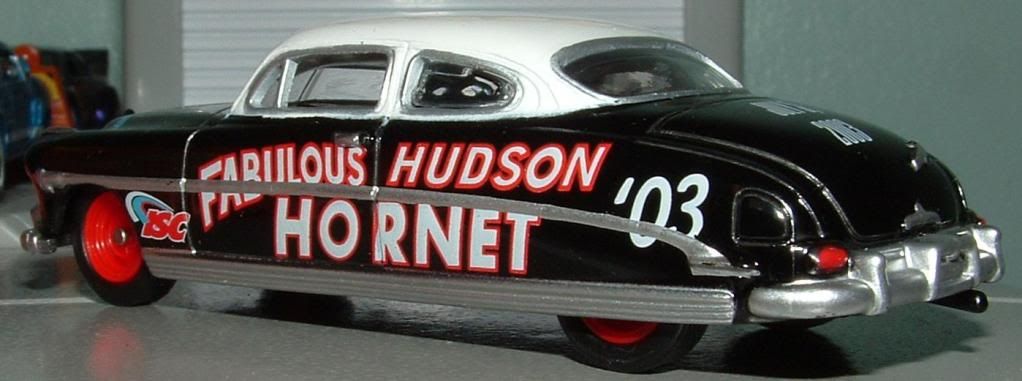
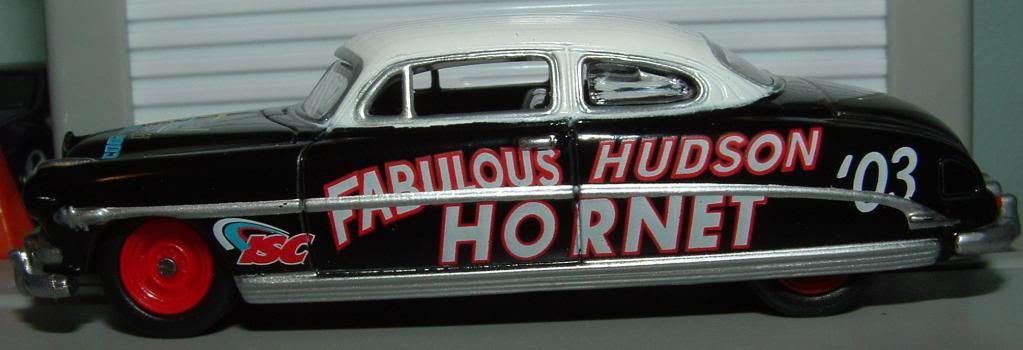
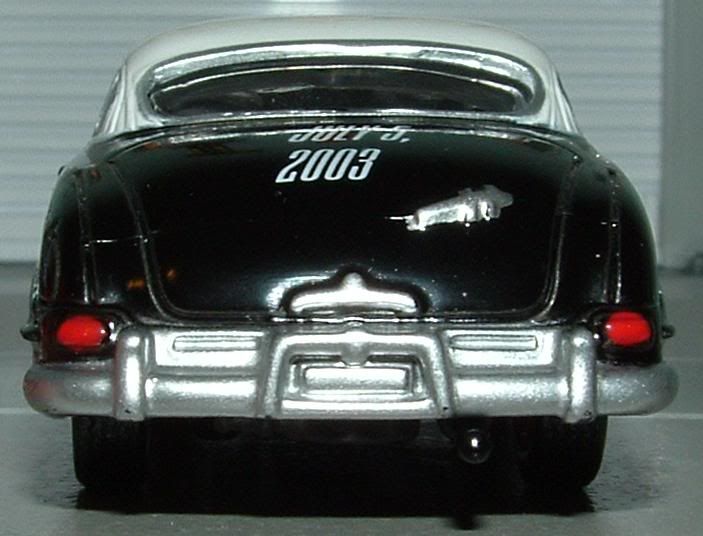
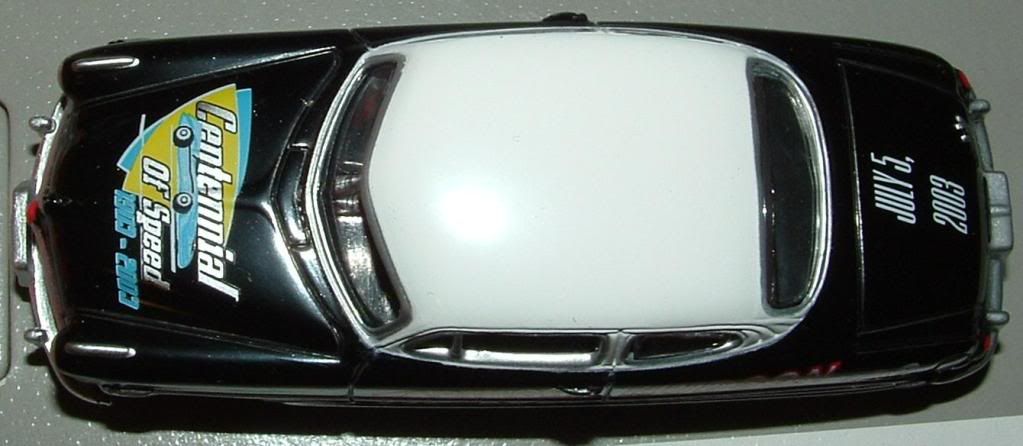
Today's car of the day is Team Caliber's 1951 Hudson Hornet.


The Hudson Hornet is an automobile that was produced by the Hudson Motor Car Company of Detroit, Michigan between 1951 and 1954. The Hornet was also built by American Motors Corporation (AMC) in Kenosha, Wisconsin and marketed under the Hudson brand between 1955 and 1957.

The first-generation Hudson Hornets featured a functional "step-down" design with dropped floorpan and a chassis with a lower center of gravity than contemporary vehicles that helped the car handle well – a bonus for racing. The Hornet's lower and sleeker look was accented by streamlined styling. The car's "unique, low slung appearance and silky handling earned Hudson an image that – for many buyers – eclipsed luxury marques like Cadillac's."

The second-generation Hudson Hornets became a restyled Nash that was badge engineered as a Hudson.


For more information and pictures of the real car please visit: Hudson Hornet


As my Grandpa had a Bali Blue '51 Hornet back in the 1950s, I've made collecting Hornets a subfocus in my collection, and until a few weeks ago this was the only one I was aware of in small scale that I was missing.  Thanks to an RAOK from Billy Kingsley (thanks Billy!) I now have this one!   Hindsight is always a pain, but one can't help to think that had the following chain of events happened, Hudson would still be with us to this day: Hudson and Nash convince Packard to merge with them instead of Studebaker (the original plan was to have Hudson and Nash merge and Studebaker and Packard merge, and then they would merge together, but this fell through).  Considering Studebaker's dire finacial condition in 1954, Packard's cash reserves would have had far more impact at AMC.  Nash (specifically Rambler) as a low-cost car competing with Chevy and Ford.  Packard would be the top end of the spectrum competing against Cadillac and Lincoln, and that would leave Hudson in the territory occupied by Mercury, Dodge, and Oldsmobile.  Considering AMC managed to make it until the late '80s with what little they had.... you never know.  But speculation is just that and we'll never know for sure.


The Hornet, introduced for the 1951 model year, was based on Hudson's "step-down" design that was first seen in the 1948 model year on the Commodore. The design merged body and frame into a single structure, with the floor pan recessed between the car's frame rails instead of sitting on top of the frame. Thus one "stepped down" into a Hudson. The step-down chassis's "lower center of gravity...was both functional and stylish. The car not only handled well, but treated its six passengers to a sumptuous ride. The low-slung look also had a sleekness about it that was accentuated by the nearly enclosed rear wheels."
Hudson Hornets were available as a two-door coupe, four-door sedan, a convertible and a hardtop coupe. The models were priced the same as Commodore Eight, which was priced from US$2,543 to $3,099.
All Hornets were powered by Hudson's high-compression straight-six "H-145" engine. An L-head (flathead or sidevalve) design, at 308 cu in (5.0 L) it was the "largest [displacement] six-cylinder engine in the world" at the time. It had a two-barrel carburetor and produced 145 hp (108 kW) at 3800 rpm and 275 lb·ft (373 N·m) of torque. The engine was capable of far more power in the hands of precision tuners, including Marshall Teague, who claimed he could get 112 miles per hour (180.2 km/h) from an AAA- or NASCAR-certified stock Hornet, as well as Hudson engineers who developed "severe usage" options (thinly disguised racing parts). The combination of the Hudson engine with overall road-ability of the Hornets, plus the fact these cars were over engineered and over built, made them unbeatable in competition on the dirt and the very few paved tracks of the 1950s. The newly introduced "Twin H-Power" was available in November 1951 as a Dealer installed option at the cost of $85.60. An electric clock was standard.

Hudson Hornet 1951 model year production totaled 43,656 units.

Tuesday, November 15, 2011

Car Of The Day: November, 15, 2011


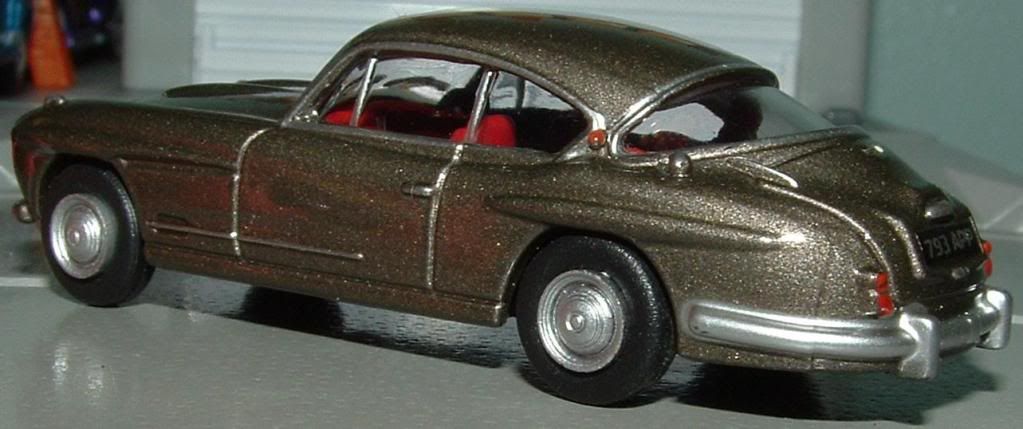
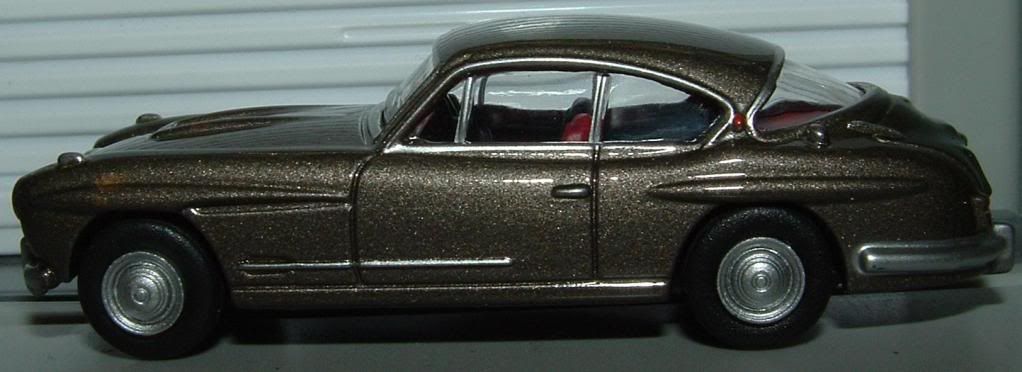
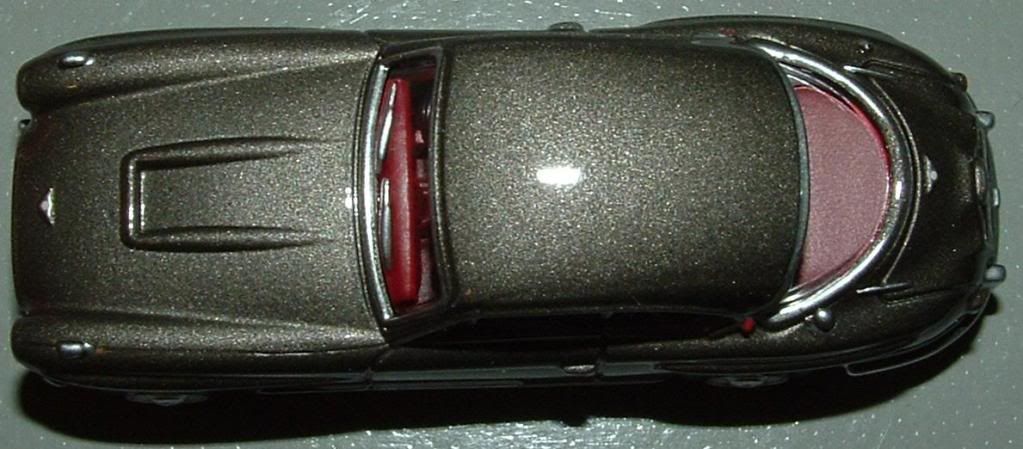
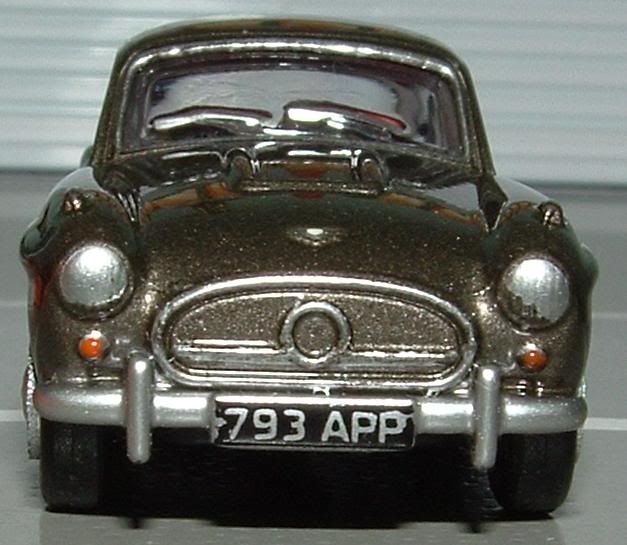
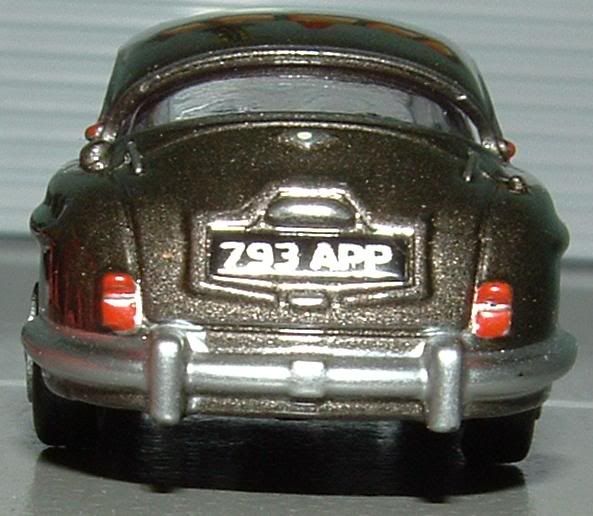
Today's car of the day is Oxford's 1957 Jensen 541R.


The Jensen 541 was first exhibited at the London Motor Show in October 1953: production started in 1954. In October 1954 a cabriolet version was introduced.
The 541 used fibreglass bodywork mounted on a steel chassis and was fitted with a six cylinder, three SU carburettor version of the 4 litre Austin engine and four speed transmission with optional Laycock de Normanville overdrive.

The body consisted of three major mouldings and the entire front was rear hinged and could be raised for engine access. The doors were aluminium. Suspension was independent at the front using coil springs with a Panhard rod located rigid axle and leaf springs at the rear. A choice of wire spoked or steel disc wheels with centre lock fitting was offered. At first the car had servo assisted 11 in (279 mm) drum brakes but from 1956, when the deluxe version was introduced, it featured Dunlop disc brakes both in front and rear - the first British four seater thus equipped.
It was also a luxurious car with the well equipped interior featuring leather seats as standard. The individual seats in front separated by a high transmission tunnel and the rear seats had a small centre armrest and could also be tilted forwards to increase luggage space. Standard colours (1955) were black, ivory, imperial crimson, moonbeam grey, Boticelli blue, deep green and Tampico beige.

By employing light weight materials, Jensen managed to make the car significantly lighter than their contemporary Interceptor model, with a dry weight of 1,220 kg (2,690 lb) as against the older design's 1,370 kg (3,020 lb). Performance benefitted.

In 1957 the 541 R was introduced, and in 1960 the 541 S arrived with wider bodywork and revised grill styling. Production of the Jensen 541 ended in 1959 and the 541 S early 1963 when the range was replaced by the C-V8.


For more information and pictures of the real car please visit: Jensen 541R


Here's a model that was completely unexpected in small scale.  But that's what I love about Oxfords- the subject matter!  What I hate is that they're 1/76 to fit on OO guage train layouts...


The Jensen 541R is a closed four-seater GT-class car built in the United Kingdom by Jensen between 1957 to 1960.

The original aluminium prototype appeared in 1953 as the 541 at the London Motor Show, although this changed to glassfibre for all production cars. Within a year, the new 541 had already earned rave reviews from magazines, notably Autocar, whose testers drove the grand tourer to a top speed of over 125 mph (200 km/h). It was the fastest four-seater the magazine had ever tested at the time.

The 541R employed a low-revving four-litre straight-six from the Austin Sheerline. The suspension system came from the Austin A70 with independent suspension by coil springs at the front and a live axle with half-elliptic springs at the rear. The 541R, introduced in 1957, differed from the 541 by using rack & pinion steering instead of a cam-and-roller system, and large disc brakes were used on all four wheels.

The car's styling was by Jensen's designer Eric Neale, and was not only considered attractive, but was aerodynamically efficient too; a Cd figure of only 0.39 was recorded, which became the lowest figure at Jensen. The body covered a chassis built by bracing 5-inch (12.7 cm) tubes with a mixture of steel pressings and cross-members to create a platform.

The 1957 model carried the DS7 version of the Austin Sheerline's four-litre motor equipped with twin carburetors on its right side. The cylinder head was reworked for the lifted compression ratio of 7.6:1 and a "long dwell". The engine had a raised output to 150 hp (112 kW) at 4100 rpm and 210 lb·ft (285 N·m). Only 53 cars were built with the engine.

In total Jensen built 193 541Rs before it was succeeded in 1961 by the Jensen 541S. This was similar to the 541R, but with a larger body and a GM-licensed Rolls-Royce hydramatic gearbox, and only 127 cars were built before the model was discontinued to be replaced by the CV8.

Monday, November 14, 2011

Car Of The Day: November 14, 2011


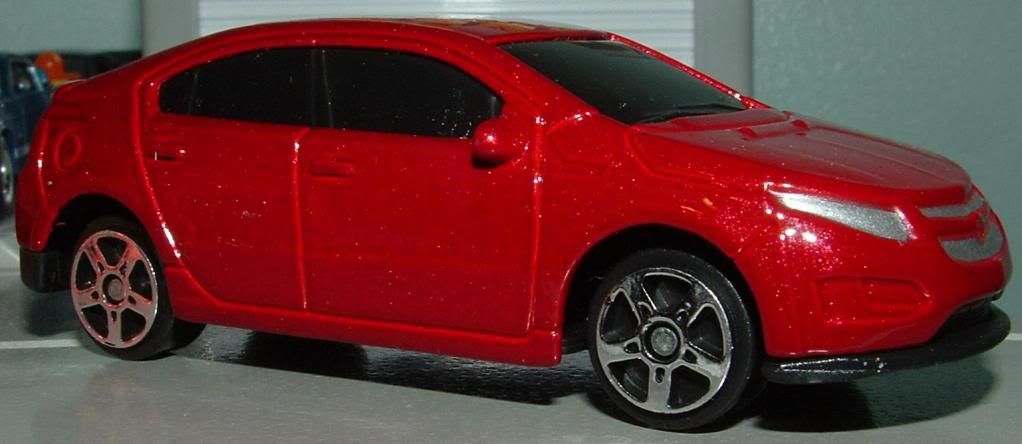
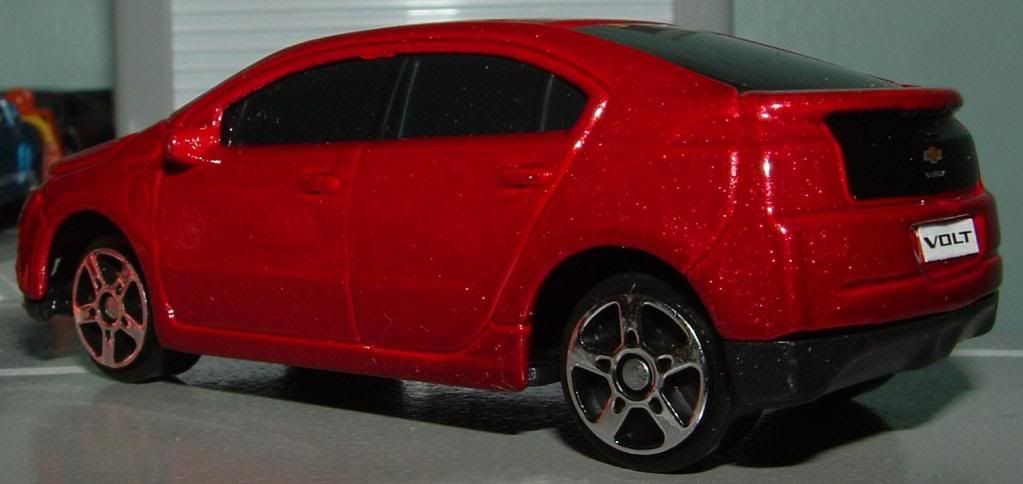
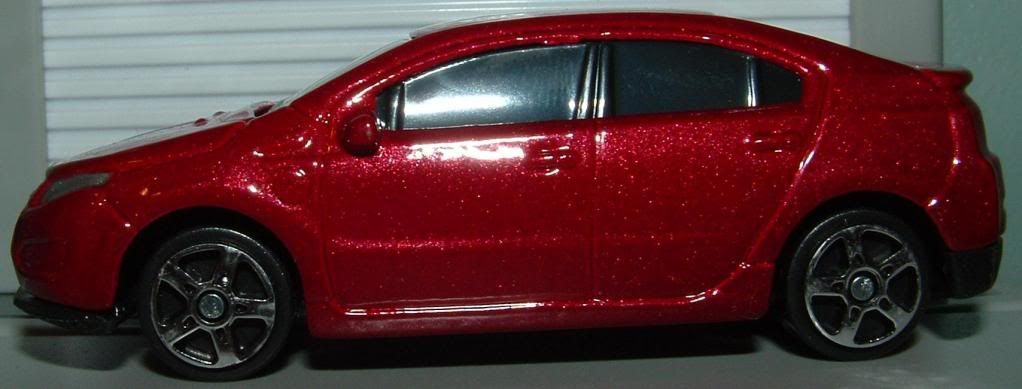
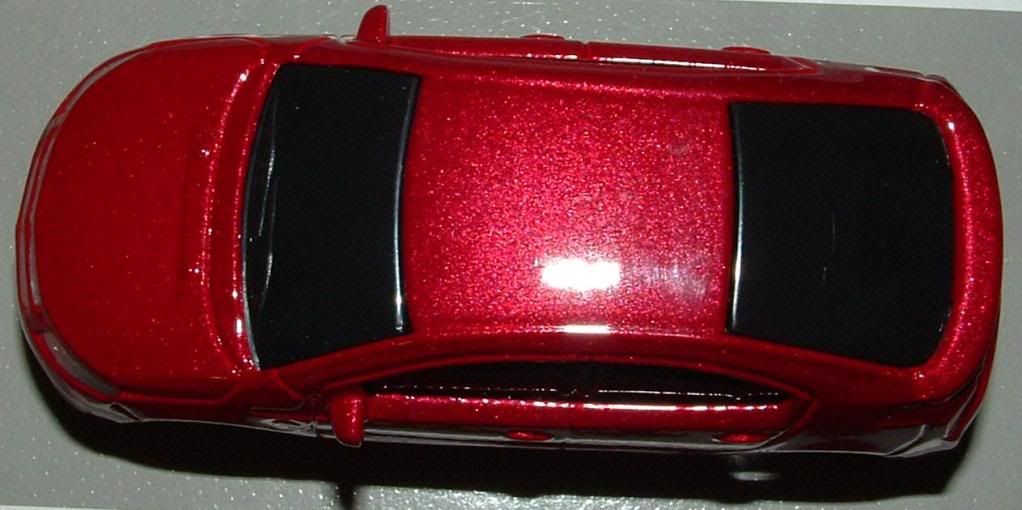
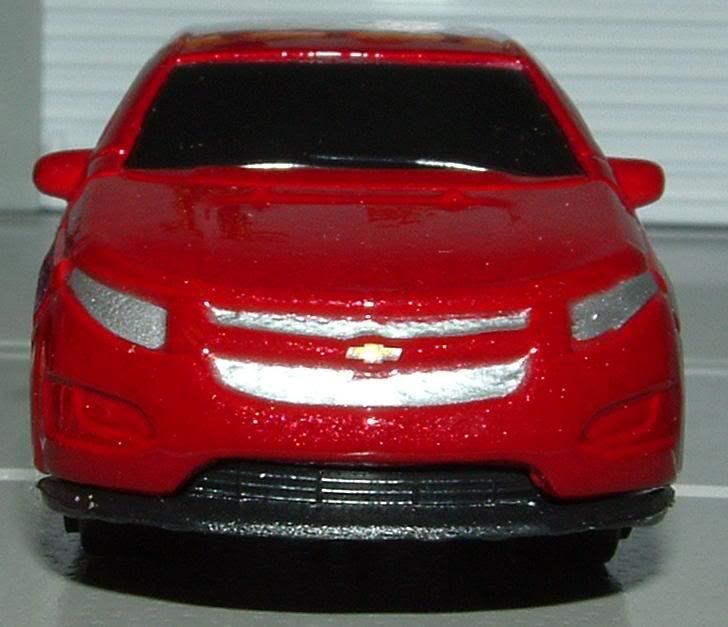
Today's car of the day is Maisto's 2011 Chevrolet Volt.


The Chevrolet Volt is a plug-in hybrid electric vehicle manufactured by General Motors. The Volt has been on sale in the U.S. market since mid-December 2010, and is the most fuel-efficient compact car sold in the United States, as rated by the United States Environmental Protection Agency (EPA).

According to General Motors the Volt can travel 25 to 50 miles (40 to 80 km) on its lithium-ion battery alone. The EPA official all-electric range is 35 miles (56 km), and the total range is 379 miles (610 km). The EPA rated 2011 model year Volt's combined city/highway fuel economy at 93 mpg-US (2.5 L/100 km; 112 mpg-imp) equivalent (MPG-e) in all-electric mode, and at 37 mpg-US (6.4 L/100 km; 44 mpg-imp) in gasoline-only mode, for an overall combined gasoline-electric fuel economy rating of 60 mpg-US (3.9 L/100 km; 72 mpg-imp) equivalent. The 2012 model year Volt received a revised EPA rating, increasing the combined city/highway fuel economy in all-electric mode to 94 MPG-e. The Volt operates as a pure battery electric vehicle until its plug-in battery capacity is depleted; at which point its gasoline engine powers an electric generator to extend the vehicle's range. The Volt's regenerative braking also contributes to the on-board electricity generation. In order to improve performance, the internal combustion engine may at times be engaged mechanically to assist both electric motors to propel the Volt.

The suggested retail price for the 2011 Chevrolet Volt in the U.S. starts at US$40,280 before the US$7,500 U.S. federal tax credit and additional incentives are available in some locations. The 2012 Volt base price will be US$1,005 less than the 2011 model, as the base configuration has been defeatured. The 2011 Volt is being sold only in selected U.S. markets and nationwide availability of the 2012 model year is expected by November 2011. Deliveries of the 2012 Volt began in Canada in September 2011, and the suggested retail price starts at CAD 41,545 (US$43,568) before any available rebates. The initial Canadian launch is also limited to selected markets and availability in the rest of Canada is expected before the end of 2012. In the Eurozone the Volt platform will be sold as the Opel/Vauxhall Ampera, and is expected to be sold for about €42,900 (US$58,000) including VAT before any government incentives. In the United Kingdom the Vauxhall Ampera is expected to be priced at GB£33,995. Exports to Europe and China are scheduled for late 2011.

Among other awards and recognition, the Chevrolet Volt won the 2009 Green Car Vision Award, 2011 Motor Trend Car of the Year, 2011 Green Car of the Year, 2011 North American Car of the Year, and 2011 World Green Car. Despite the awards earned and the positive reception from many automotive critics, there has been some controversy and concerns in the media. These include the extent of the federal government participation in the Volt development during General Motors' 2009 government-led bankruptcy; concerns about the Volt's relatively high sales price; and complaints about price markups due to the Volt's initial limited supply.


For more information and pictures of the real car please visit: Chevrolet Volt


The Volt is a polarizing car in automotive circles.  Love it or hate it, this is the car GM has banked their image on for the near future.


The production design model officially unveiled on September 16, 2008, as part of General Motors centennial celebration at the Wintergarden headquarters in Detroit. The production model differed greatly in design from the original concept car. The carmaker cited necessary aerodynamic changes needed to extend the Volt's initial full-charge range by reducing the concept cars's drag coefficient (Cd). Another reason was to use of General Motors' new Delta II platform to keep costs reasonable. The global compact vehicle architecture chosen is shared by the planned 2010 Chevrolet Cruze and the 2012 Saab 9-3. Another significant difference with the concept car is the seating, as the production Volt seats four rather than five passengers. This change was due the higher-than-usual central tunnel that runs from the front console to the rear seat. This tunnel houses the car's T-shaped battery pack.

General Motors found that due to its angular shape, the Volt's concept car had a high drag coefficient of 0.43, "roughly the same aerodynamic efficiency as a Chevrolet Silverado pickup", which would put a burden on the electric range, and as a result General Motors' designers and engineers spent more than 1,000 hours in the wind tunnel reworking the exterior shape of the Volt. According to General Motors engineers, the Volt's drag coefficient is the carmaker's second best only to the GM EV1 (Cd=0.19 ). General Motors initially claimed that the production model's drag coefficient would be lower than the Toyota Prius (Cd=0.25), but the production vehicle has a drag coefficient of 0.29.