A blog focusing on 1/64 diecast from such popular brands as Hot Wheels, Matchbox, Johnny Lightning, M2 Machines, GreenLight, Tomica, Yat Ming, Majorette, MotorMax, Siku, Corgi, Guisval, Playart, Ertl, Zylmex, Racing Champions, & many more. Swifty's Garage features a daily Car Of The Day and news updates from your favorite brands!
Saturday, March 24, 2012
Truck Of The Day: March 24, 2012
Today's car of the day is M2 Machines' 1954 Studebaker 3R.
The 2R Series was the most produced Studebaker truck. This all new post-war design was created by Robert Bourke, Raymond Loewy's styling chief. During it's four year run, the 2R styling stayed basically the same with few minor changes. The hood ornament came from the Studebaker Champion car. This cab style is known as the C cab and was manufactured until 1964 for the heavy duty trucks and until 1959 for the light duty trucks. Many of these trucks have survived through the years and are commonly seen at Studebaker shows.
For more information and pictures of the real car please visit: Studebaker 3R
I love project cars and trucks, so this series from M2 was snapped up as quickly as humanly possible. Unfortunately, judging from as many as I've seen on the pegs, this series may not have sold quite to Castline's expectations.
Several changes to the 2R / C cab evolved Studebaker's trucks into the 3R Series for 1954. The most noticeable changes are the grille and windshield. Two horizontal rows of openings are in the front grille and the windshield became curved and one-piece. A V-8 engine was offered and the outside mirror is square instead of round.
Friday, March 23, 2012
Race Car Of The Day: March 23, 2012
Today's car of the day is Johnny Lightning's 2011 Dirt Modified (Tim Gilson).
Modified stock car racing, also known as Modified racing or simply Modified, is one of the oldest types of racing in the United States, dating back to the days of the post-World War II coupes. The name for modified racing cars come from the fact that they are not stock but, rather, modified passenger cars. This differentiated them from Stock cars, that were based on production vehicles, in the early history of NASCAR. There are as many different sanctioning bodies for modifieds with each sanctioning body having different body styles and engine sizes.
For more information and pictures of the real car please visit: Modified stock car racing
This is an accurate model of a real race car. Looks very good to me! I think this casting was formely part of the Ertl Nutmeg Collectibles line.
Modified racing began as race drivers modified their cars to gain a competitive advantage over their fellow competitors. What started out as minor modifications to the cars has now grown to the point that some modified classes are no longer based on any current production vehicles. NASCAR was instrumental in modified racing's beginnings. Some of NASCAR's pioneers were veteran modified racers long before NASCAR's inception in 1949. As time progressed, modifieds grew away from "Strictly Stock" or "Stock Cars", and became akin to both stock cars, and open-wheel cars. Today's SuperModifieds have more in common with Indy cars than they do stock cars.
Thursday, March 22, 2012
Car Of The Day: March 22, 2012
Today's car of the day is Kidco Lock-Ups' 1982 Chevrolet Camaro.
The third-generation Chevrolet Camaro was introduced for the 1982 model year. It continued to use General Motors's F-body platform and would produce a "20th Anniversary Commemorative Edition" for 1987 and "25th Anniversary Heritage Edition" for 1992. These were also the first Camaros with factory fuel injection, four-speed automatic transmissions, five-speed manual transmissions, four-cylinder engines, 16-inch wheels, and hatchback bodies. The third-generation Camaro continued through the 1992 model year.
For more information and pictures of the real car please visit: Chevrolet Camaro
This Camaro has seen better days. Despite that, it's still in better shape than the vast majority of third generation Camaros left on the road. Most of the ones I've seen have been used and abused quite hard.
The Third-Generation Camaro was released for sale in January 1982. The 1982 model introduced the first Camaros with factory fuel injection, a hatchback body style, and a four-cylinder engine (due to fuel economy concerns in the wake of the 1979 energy crisis). The Camaro Z28 was Motor Trend magazine's Car of the Year for 1982. Three models were available: Sport Coupe, Berlinetta, and Z28. Third generation Camaros also had a suspension system that was much more capable in corners than the previous generation.
The Sport Coupe came standard with the 2.5 L 151 cid LQ9 four-cylinder engine. The 2.8 L 173 LC1 V6 and 5.0 L 305 LG4 V8 were optional. Dog dish-style hubcaps were standard; full wheel covers were optional as were steel, five-spoke 14x7-inch body-colored rally wheels.
The Berlinetta came with the standard 2.8 LC1 V6 or the optional 5.0 LG4 V8. The Berlinetta came standard with its own unique 14x7-inch finned aluminum wheel with gold accenting and 'Berlinetta' center cap. Its own lower body pin striping, gold 'Berlinetta' badging, and headlamp pockets were painted in an accent color. The taillights got a gold and black horizontal divider bar. The interior came standard with custom cloth interior, a rear storage well cover and additional carpeting on rear wheelhouses. It also came standard with additional body insulation and full instrumentation.
The Z28 came standard with the 5.0 L LG4 4bbl V8 or the optional LU5 twin TBI 'Cross Fire Injection' 5.0 L. The carbureted engine was available with either a four-speed manual or three-speed automatic transmission and put out a 145 hp (108 kW), while the optional Cross Fire Injection 305 was rated at 165 hp (123 kW). Performance enthusiasts of the day gave the new Camaro positive reviews for its styling and handling, but also made critical remarks about the relatively low power ratings for both the Camaro Z28 and Ford's Mustang GT, with the 302 cu in (4.9 L) V8 producing 157 hp (117 kW) SROD four-speed manual transmission.
All Z28s came with lightweight fiberglass SMC hoods with functional hood air induction flaps on RPO LU5 cars. The Z28 had a different nose, a three-piece rear spoiler and front, side, and rear lower body valances in silver or gold. Just above the valance was a two-color lower body stripe that encircled the car. Headlamp pockets on the Z28 were black. Standard were new 15x7-inch cast-aluminum five-spoke wheels accented with silver or gold. Z28 badges appeared on the right rear bumper, and on the side valances.
The Camaro Z28 paced the Indianapolis 500 in 1982, and over 6,000 replicas were sold through Chevy dealers. The pace car edition featured special two-tone silver/blue paint and special striping, orange pin-striping on 15-inch (380 mm) Z28 wheels, and a silver/blue interior with six-way Lear-Seigler manually adjustable seating. Engine choices in the pace cars were the same as the regular Z28. However, the car that actually paced the event was equipped with a highly modified all aluminum 5.7 L V8 not offered on the pace car replicas.
The Camaro had a significant change in the Z28 engine lineup: the LU5 Crossfire 305 V8 was supplemented in April 1983 by an all-new 5.0 L L69 4 bbl 190 hp (142 kW) High-Output (HO) V8. This engine was only available with a manual transmission in 1983. Due to its late introduction, only 3,223 L69 V8s were sold for the 1983 model year.
Transmissions were upgraded for 1983. A Borg-Warner 5-speed manual transmission replaced the previous 4-speed. A 4-speed automatic transmission with overdrive replaced the 3-speed automatic transmission in the Z28. The TH700-R4 automatic overdrive was also available on the base coupe and Berlinetta, but was not available with the L69 H.O. engine in the Z28 for 1983. Aside from the new transmissions, base coupe and Berlinetta carried on as in 1982 with very little change other than newly available colors.
The new dashboard and controls were smaller with better quality and appearance. In the Berlinetta, the standard instrument cluster was replaced by electronic readouts, including a bar-graph tachometer and digital speedometer. The new dash came with an overhead console and pod-mounted controls for turn signals, cruise-control, HVAC, windshield wiper, and headlights. The radio was mounted inside a pod on the console that could swivel toward the driver or passenger.
Drivetrain changes included the discontinuation of the LU5 305 Cross Fire V8, and the addition of a hydraulic clutch linkage on manual transmission cars. The L69 H.O. Z28 became available with an automatic transmission for the first time.
The Z28's body and features remained mostly unchanged, except the fiberglass SMC hood was replaced with a steel version.
Road & Track selected the 1984 Camaro/Firebird as one of twelve best cars in the world and in the Best Sports GT category in the $11,000 to $14,000 range. Car and Driver picked the 1984 Camaro Z28 as the best handling car built in the United States.
For 1985, Chevrolet introduced a new Camaro model — the famous IROC-Z, named after the popular competition International Race of Champions. Offered as an option package on the Z28, the Camaro IROC-Z featured an upgraded suspension, lowered ride height, specially valved Delco - Bilstein shocks, larger diameter sway bars, a steering/frame brace known as the "wonder bar", a special decal package, and an optional Tuned Port Injection system taken from the Corvette. It also shared the Corvette's Goodyear "Gatorback" unidirectional tires in a 245/50/VR16 size vs. the Corvette's 255/50/VR16 size, and received unique new aluminum 5-spoke 16 by 8 inch wheels. The new wheels were designed with different offsets front and rear, resulting in the words "Front" or "Rear" cast into the face of the wheels to distinguish which wheel went where.
The Camaro IROC-Z was on Car and Driver magazine's Ten Best list for 1985. The 305 c.i. 5.0-liter TPI LB9 was rated at 215 hp (160 kW) with the 4 bbl 305 LG4 at 155 hp and the 4 bbl High Output 305 L69 at 190 hp (142 kW). Only 2,497 L69 IROC-Z models were made for 1985. The LB9 was available only on the Z28 and the IROC-Z model with the TH700-R4 automatic transmission. 205 1985 IROC-Zs equipped with the LB9 305 were made with the G92 (Performance Axle Ratio) option. The G92 option upgraded the rear axle gear ratio from 3.23 to 3.42.
Also new for 1985, all Camaros featured refreshed noses, and new deeper valances and front spoiler for the Z28 and the newly introduced IROC-Z. The speedometers no longer had the unique double-pointed needle that simultaneously read mph and km/h: they were replaced by conventional single-pointer 85 mph (137 km/h) units. The 2.8 L V6 became fuel-injected, raising power from 112 hp (84 kW) to 135 hp (101 kW). This would also be the final year for the less popular base-model 151 cu in (2.5 L) 4-cylinder engine.
For 1985 a (1C5) RPO California IROC-Z was also made, Chevrolet's California Marketing Group came up with the idea and it was for sale in California only. A total of (100) black and (400) red examples were produced. They were all equipped with the 5.0 TPI LB9 engine and TH700-R4 automatic transmission. They all came equipped with the usual IROC-Z fog lights, wheels and ground effects, but with the base Camaro's hood (no louvers), rear decklid (no spoiler), and no exterior decals.
The third-generation Camaro was produced from 1982 to 1992. These were the first Camaros to offer modern fuel injection, Turbo-Hydramatic 700R4 four-speed automatic transmissions, five speed manual transmissions, 16 inch wheels, a standard 4-cylinder engine, and hatchback bodies. The cars were nearly 500 pounds (227 kg) lighter than the second generation model.
The IROC-Z (the IROC stands for International Race of Champions) was introduced in 1985 and continued through 1990. National Highway Traffic Safety Administration (NHTSA) Regulations required a CHMSL (Center High Mounted Stop Lamp) starting with the 1986 model year. For 1986, the new brake light was located on the exterior of the upper center area of the back hatch glass. For 1987 and later, the CHMSL was either mounted inside the upper hatch glass, or integrated into a rear spoiler (if equipped). In January 1987, the L98 5.7L 350" V8 engine became a regular option on the IROC-Z, paired with an automatic transmission only, although a limited run of 1,000 late 1986 350" Camaros had been produced. The "20th Anniversary Commemorative Edition" was offered in 1987, as well as a "25th Anniversary Heritage Package" in 1992 that included a 305 cu in (5.0 L) High Output engine. Beginning in 1988, the 1LE performance package was introduced, optional on street models and for showroom stock racing in the U.S. and Canada. The B4C or "police" package was made available beginning in 1991. This basically created a Z28 in more subtle RS styling.
Wednesday, March 21, 2012
Car Of The Day: March 21, 2012
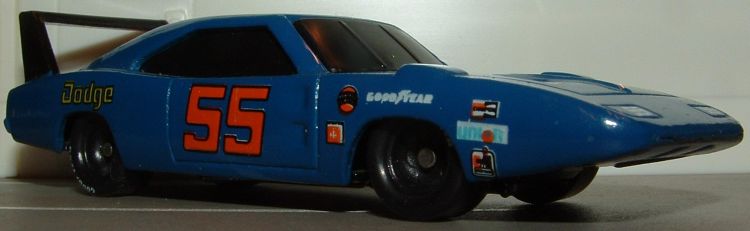
Today's car of the day is Racing Champions' 1969 Dodge Charger Daytona NASCAR stock car (Tiny Lund).
Dodge, an American automobile brand, has produced three separate vehicles with the name Dodge Charger Daytona, all of which were modified Dodge Chargers. The name is taken from Daytona Beach, Florida, which was an early center for auto racing and still hosts the Daytona 500, one of NASCAR's premier events. The first use of the Daytona name on a car was on a version of the Studebaker Lark. The Daytona was the performance model of the compact Lark and it was produced from 1963-1966.
With the failure of the 1969 Dodge Charger 500 on the highbanks of the superspeedways (tracks of a mile, or more in length), the 1969 Dodge Charger Daytona was created. It was intended to be a high performance, limited edition version of the Dodge Charger produced in the summer of 1969 for the sole purpose of winning high profile NASCAR races. It won its first race out, the inaugural Talladega 500 in the fall, although it was a rather hollow victory as all of the top names had left the track on Saturday in a boycott of the 1969 Talladega race. Buddy Baker in the #88 Chrysler Engineering Dodge Charger Daytona was the first driver in NASCAR history to break the 200 mph mark on March 24, 1970 at Talladega. The 1969 Dodge Daytona managed to win 2 races in 1969 and another 4 in 1970 for a total of 6. It's successor, the 1970 Plymouth Superbird managed to win 8 races - all in 1970. (In a bit of irony, in 1969 a Daytona won at Talladega, and a Ford Torino Talladega won at Daytona.) These compare with 29 NASCAR victories for the 1969 Ford Torino Talladega, and 8 for the 1969 Mercury Cyclone Spoiler II. Ironically, the 1969 Dodge Charger 500 managed to win 22 NASCAR races over the 1969 and 1970 seasons; however, all but one of those victories came on the short tracks - several of which were still being run on dirt at the time.
One of the five famous aero-cars, the Dodge Daytona featured special body modifications that included a 23 in (584 mm) tall stabilizer wing on the rear deck, a special sheetmetal "nose cone" that replaced the traditional upright front grille, a flush rear backlight (rear window area), a 'window cap' to cover the original Charger's recessed rear window, specific front fenders and hood that were modeled after the upcoming 1970 Charger, stainless steel A-pillar covers and fender mounted tire clearance/brake cooling scoops. The Daytona was built on the 1969 Charger's 500 trim specifications, meaning that it carried a heavy-duty suspension and brake setup and was equipped with a 440 CID Magnum engine as standard. Of special note to collectors is the optional 426 CID Hemi V8 engine, which only 70 of the 503 Daytonas carried. It had a corporate cousin in the "one year only" 1970 Plymouth Superbird.
The "Winged Warriors", as they were affectionately known, did not compete for long in NASCAR's top Cup series. Because of their exceptional speed and performance, NASCAR subsequently changed the rule book, effectively banning all five of the Aero Cars from Dodge, Ford, Mercury, and Plymouth from competition by the end of 1970. See also Plymouth Superbird, Ford Torino Talladega and Mercury Cyclone Spoiler II for additional information about the aero cars.
For more information and pictures of the real car please visit: Dodge Charger Daytona & Tiny Lund
This may not be a very highly detailed replica, but as far as I know it's the only one available of this car. I wish that Racing Champions had offered these with an interior and clear glass.
DeWayne Louis "Tiny" Lund (November 14, 1929–August 17, 1975) was a NASCAR driver. He was ironically nicknamed "Tiny" due to his rather large and imposing size.
Lund started racing at a young age on a motorcycle, then moved up to midget cars and sprint cars. He served in the Korean War in the United States Air Force, and in 1955 decided to try stock car racing.
It is also noted that as an adult, Lund stood 6-feet-5-inches-tall and weighed about 270-lbs.
Lund went south with a 1955 Chevrolet and competed in the Lehi, Arkansas, event, with sponsorship from Carl Rupert and his safety belt company. The race was dominated by Speedy Thompson and his Pete DePaolo-owned Ford. Lund qualified mid-pack but his event ended in an accident on lap 65. Lund's flipped end over end and his safety belt broke. He was bruised and had a broken arm.
For 1956, Lund teamed up with Gus Holzmueller, and their best result was a fourth-place finish at Columbia, South Carolina. Lund also ran a few events for A.L. Bumgarner. In 1957 Lund split between Bumgarner's Pontiacs and a Petty Enterprises Oldsmobile. With Bumgarner Lund nearly won an event at the Cleveland County Fairgrounds. He won the pole position, and was leading until a right rear axle gave out. Lund had two other poles on the season. Lund left Bumgarner and became a journeyman for 1958. He won a pair of pole positions at Gastonia and Hillsboro. In 1959 he fielded self-owned Chevrolets. Lund did not have major success, and he was rideless by 1963.
In February 1963, Lund went down to Daytona shopping around for any ride. Lund's friend Marvin Panch, the driver for the Wood Brothers racing team, had an accident while testing an experimental Ford-powered Maserati sports car for the second Daytona Continental three-hour sportscar race (a precursor to the Rolex 24). Panch's car swerved out of control, flipped over and burst into flames. Lund ran into the inferno and managed to pull Panch out of the wreckage. For his actions, Lund was awarded the Carnegie Medal of Honor.
Panch, in hospital, asked Lund to race his car and Glen Wood agreed. He timed in fourth in individual qualifying trials, and finished sixth in the second qualifying race. Lund took the green flag from 12th on the grid.
The start of the race was delayed due to heavy rains, and then the first 10 laps were run under caution. As the green flag waved on the Great American Race, it was Fireball Roberts on pole and "Flying" Fred Lorenzen outside of him. Lorenzen led the race. Lund worked his way through the field. The Wood Brothers team had an ace up their sleeve - they planned to complete the race on one stop less than the field. Lund managed to take the lead very late in the race. Lorenzen passed Lund with 10 laps left to go, but Lorenzen ran out of gas and had to dive down pit road out of contention. Then Ned Jarrett made the pass on Lund for the top spot but with three to go he also ran out of gas. Lund's car ran out of fuel on the final lap, but he managed to coast home to win the 1963 Daytona 500.
Lund's victory jumpstarted what had been a dead career. Lund stayed in the Wood Brothers Ford for several races after Daytona, and came close to another victory in the Southeastern 500 before his motor gave out. Marvin Panch returned and Lund was without a ride. Holman-Moody gave him a car for several big races at Atlanta, Daytona and Charlotte without success. For 1964 he was back to journeyman status. He hooked up with a series of lesser known owners before vaulting into the lead in the Columbia 200 before overheating. Late in the year, he settled in with Lyle Stelter and despite little success they continued their partnership into the 1965 season. With Stelter Lund got his second career victory in that year's Columbia 200, qualifying in fourth and taking the lead from Ned Jarrett before rains came and washed out the second half of the event. In 1966, he continued his partnership with Stelter. Lund was leading at Spartanburg before a differential failed and at Manassas before his engine blew up. Lund did win at Beltsville Speedway. Lund had 21 Did Not Finish (DNFs) that season.
For 1967, he teamed once again with Stelter for the majority of the year but it was with Petty Enterprises in the #42 Plymouth with which he had most of his success. Lund finished fourth in the Daytona 500 despite running out of fuel with a lap to go behind the Ford factory contingent of USAC star Mario Andretti and Fred Lorenzen, handing third to perennial independent James Hylton. Lund finished fifth in the World 600 in that same ride. He struggled in Stelter's Fords despite a promising run in Fonda, New York, where he qualified second and lead some before an axle broke. Lund and Stelter parted at season's end.
For 1968, he teamed with Big Bud Moore and his Mercury's. Lund also ran Moore's cars in the new NASCAR Grand American division designed for pony cars like Mustangs and Camaros. Lund finished fifth in the Firecracker 400 and a fourth in Rockingham highlighted his short Grand National season, but he won the Grand American championship. In 1969, he continued to race in the Grand American division and ran one Grand National race, guesting for Bill France, Sr. in the inaugural Talladega 500. The race was known for a driver's boycott over tire safety protests. Lund drove into the lead but his clutch packed in and he was classified ninth.
In 1968, Lund appeared as one of the race drivers in the racing scene of the MGM movie 'Speedway' which starred Elvis Presley and Nancy Sinatra.
After 1971, Lund began to fade from the Grand National limelight and moved to the new Grand National East Division (the replacement for the Grand American Series) and short track Late Model Sportsman (now Nationwide Series). Lund won the Sportsman season opener at Daytona twice and continued to rack up victories on short tracks that he had raced on as a youth. In 1975, he entered an A.J. King Dodge in the Talladega 500 as first alternate; when Grant Adcox's car was withdrawn from the event, Lund was in and after a short track event that Saturday was flown down in Bobby Allison's private airplane. The race was delayed a week by heavy rains but on August 17 the green flag was waved by Juan Manuel Fangio.
On the seventh lap, Lund and J. D. McDuffie collided on the backstretch; Lund and McDuffie spun down the track as it turned into chaos behind them. Rookie Terry Link was spun straight into the drivers' door of Lund's Dodge and Link's Pontiac exploded in flames. Two spectators in the infield climbed over the catch fence, and with help from driver Walter Ballard, pulled Link from his car and managed to revive him. Lund, however, was pronounced dead at the scene. Drivers in race were not informed of the tragedy.
Tuesday, March 20, 2012
Car Of The Day: March 20, 2012
Today's car of the day is Schuco's 1970 Ford Capri RS.
Ford Capri was a name used by the Ford Motor Company for three different automobile models. The Ford Consul Capri coupé was produced by Ford of Britain between 1961 and 1964. The Ford Capri coupé was produced by Ford of Europe from 1969 to 1986. The Ford/Mercury Capri convertible was produced by the Ford Motor Company of Australia from 1989 to 1994.
The Capri name was also used by Ford's Lincoln-Mercury Division on six different models which did not bear the Ford name. The Lincoln Cosmopolitan Capri from 1950 to 1951; the Lincoln Capri from 1952 to 1959; the Mercury Comet Capri in 1966-1967; and three different generations of Mercury Capris from 1970 to 1994.
For more information and pictures of the real car please visit: Ford Capri
Schuco is another brand that doesn't get nearly as much attention here as it should. Beautiful castings, opening features, and all of them were done to a true 1/66 scale.
The first Ford Capri to bear that precise name was introduced in January 1969 at the Brussels Motor Show, with sales starting the following month. The intention was to reproduce in Europe the success Ford had had with the North American Ford Mustang; to produce a European pony car. It was mechanically based on the Cortina and built in Europe at the Dagenham and Halewood plants in the United Kingdom, the Genk plant in Belgium, and the Saarlouis and Cologne plants in Germany. The car was named Colt during development stage, but Ford were unable to use the name, as it was trademarked by Mitsubishi.
Although a fastback coupé, Ford wanted the Capri Mk I to be affordable for a broad spectrum of potential buyers. To help achieve that, it was available with a variety of engines. The British and German factories produced different line-ups. The continental model used the Ford Taunus V4 engine in 1.3, 1.5 and 1.7 L engine displacement, while the British versions were powered by the Ford Kent straight-4 in 1.3 and 1.6 L form. The Ford Essex V4 engine 2.0 L (British built) & Cologne V6 2.0 L (German built) served as initial range-toppers. At the end of the year, new sports versions were added: the 2300 GT in Germany, using a double-barrel carburettor with 125 PS (92 kW), and in September 1969 the 3000 GT in the UK, with the Essex V6, capable of 138 hp (103 kW).
Under the new body, the running gear would have been familiar to anyone used to working on the underside of a 1966 Cortina. Rear suspension employed a live axle supported on leaf springs with short radius rods. MacPherson struts featured at the front in combination with rack and pinion steering which employed a steering column that would collapse in response to a collision.
The initial reception of the car was broadly favourable. In the June 1970 edition of the Monthly Driver's Gazette, tester Archie Vicar wrote of the gearchange that it was "...in Ford fashion easy to operate but not very jolly". In the same review Vicar summed up the car as follows: "Perhaps with a bit of work it can be given road-holding and performance less like an American car and more like a European one".
The range continued be broadened, with another 3.0 variant, the Capri 3000E introduced from the British plant in March 1970, offering "more luxurious interior trim".
In April 1970, Ford began selling the Capri outside Europe, in the North American, South African and Australian markets. These versions were all powered by the underpowered Kent 1.6 engine although a Pinto straight-4 2.0 L replaced it in 1971. All North American versions featured the "power dome" hood and four round 5 3/4" US-spec headlights. They carried no "Ford" badging, as the Capri was sold by only Mercury dealers and promoted to US drivers as "the sexy European".
A new 2637 cc version of the Cologne V6 engine assembled by Weslake and featuring their special all alloy cylinder heads appeared in September 1971, powering the Capri RS2600. This model used Kugelfischer fuel injection to raise power to 150 PS (110 kW) and was the basis for the Group 2 RS2600 used in the European Touring Car Championship. The RS2600 also received modified suspension, a close ratio gearbox, lightened bodywork panels, ventilated disc brakes and aluminium wheels. It could hit 100kph from a standstill in 7.7 seconds. The 2.6 L engine was detuned in September for the deluxe version 2600 GT, with 2550 cc and a double-barrel Solex carburettor. Germany's Dieter Glemser won the Drivers' title in the 1971 European Touring Car Championship at the wheel of a Ford Köln entered RS2600 and fellow German Jochen Mass did likewise in 1972.
The very first Ford Special, was the Capri Vista Orange Special. The Capri Special was launched in November 1971 and was based on the 1600 GT, and 2000 GT models. It was only available in Vista orange and was optional fitted with a boot mounted spoiler and rear window slats - a direct link to the Mustang. The Special also had some additional standard extras such as a push-button radio, fabric seat upholstery, inertia reel seat belts, heated rear screen and black vinyl roof. There were only 1200 Vista Orange Capri specials made. One of the last limited editions of the original Mk I, was a version that came in either Metallic Green or black with Red interior and featured some additional extras, such as cloth inserts in the seats, hazard lights, map reading light, opening rear windows, vinyl roof and for the first time a bonnet bulge was fitted to the sub-3.0-litre models. This special edition was only available with a 1.6 or 2.0 engines and had the full title of GTXLR Special.
From 1970 to 1978, the Capri was sold in North America through Ford's Lincoln-Mercury Division. All were German-produced. Headlamps were four round sealed-beams, and turn signal lamps were grill-mounted on all U.S.-spec 1971–74 Capris and 1976–78 Capri IIs. Ford hood letters were replaced with Capri letters, and a trunk-mounted Mercury script was added.[13] Full instrumentation wasn't available on 1971-72 four-cylinder models but was made standard equipment from 1973 on. An optional interior decor package, changed by name to the "Ghia" package for the Capri II, featured deluxe interior trim and features. 1973 Ford Capris were the Mk I face-lift models featuring the new grill, larger taillights and new interior and dash. The 1973 model had the federally mandated 5 mph front bumper for '73. The bumper was extended, the gap closed with a silver filler panel. 1974 models had larger bumpers front and rear with wraparound urethane, body-color bumper covers to meet the revised Federal front and rear 5 mph standard. 1976-78 models were the re-designed hatchback models offered worldwide since 1974, fitted with the grill-mounted turn signal lamps and the required round sealed-beam headlamps, 5 mph body-color bumpers and catalytic converter, requiring no-lead fuel. In 1976, an 'S' (JPS) special edition featured black or white paint with gold-colored wheels, gold pin-striping, and upgraded two-tone interior in beige and black. Due to late production of Capri IIs, there were no 1975 models sold in the USA.
Originally, Cologne-built Capris imported to North America were fitted only with the British 1600 OHV (1.6 L), 64 hp (48 kW) Kent engine with the four-speed manual transmission. The 1971 Capri offered the Kent-built 1600 I4 and the optional, Cologne-built OHC 2000 (2.0 L) I4 engine for improved performance with 101 hp (75 kW). An optional three-speed automatic transmission was made available with the 2000 I4 engine. In 1972-73, the 2000 I4 became the standard engine, and an OHV 2600 (2.6 L) Cologne V6 was optional, which produced 120 hp (89 kW). The 1600 I4 was dropped. For 1974, new engines were used—the OHC 2300 (2.3 L) I4 and OHV 2800 (2.8 L) Cologne V6; producing 88 hp (66 kW) and 105 hp (78 kW) respectively.[14] The engines were carried over for the 1976-77 Capri ll hatchback models, although the V6's power had crept up to 109 hp (81 kW) at 4,800 rpm.[15] The last Capris were brought in in 1977 although sales of leftovers continued into 1978. Capri sales had slid considerably by the time of the introduction of the Capri II, and the high price contributed to ending sales of German-built Capris in the US.
In 1979, no longer importing the Ford Capri, but capitalizing on the model's positive image, Mercury dealers began selling a new Capri that was a re-styled Ford Mustang. It was initially available with an 88 hp (66 kW), 2.3 L 4, 2.8 L V6 and 302 (5.0 L) V8. The 2.8 L V6 was phased out very early in the 1980 model year and the 3.3 L (200 cu in) V6 replaced it. The 3.3 L V6 would be phased out in 1983 for a 3.8 L V6 with a carburetor and then CFI fuel injection in 1984. In 1984, the Capri was available with a 175 hp (130 kW) turbocharged 2.3 L four-cylinder engine or a 175 hp (130 kW) 302 V8. While lighter than the V8 model, the Capri Turbo lacked the torque of the V8 and suffered from turbo lag, making it slower. Next year, the V8 was rated at 210 hp (157 kW) and the turbo model was dropped. After 1986, the US-built Mercury Capri was dropped.
In 1991, a new Mercury Capri was introduced, this model being fully imported from Australia (see below). It was a convertible with four seats, front-wheel drive and a 100 hp (75 kW) four-cylinder 1.6 L engine. It was also available with a 132 hp (98 kW) 1.6 turbo engine. Both versions were dropped after 1994.
Monday, March 19, 2012
Car Of The Day: March 19, 2012
Today's car of the day is Hot Wheels' 1968 BMW 2002.
The BMW New Class (German: Neue Klasse) was a line of compact sedans and coupes produced by German automaker BMW starting with the 1962 1500 and continuing through the last 2002s in 1977.
Powered by BMW's celebrated four-cylinder M10 engine, the New Class models featured a fully independent suspension, MacPherson struts in front, and front disc brakes. Initially a family of four-door sedans and two-door coupes, the New Class line was broadened to two-door sports sedans with the addition of the 02 Series 1600 and 2002 in 1966.
Sharing little in common with the rest of the line beyond the power train, the sporty siblings caught auto enthusiasts' attention and established BMW as an international brand. Precursors to the famed BMW 3 Series, the two-doors' success cemented the firm's future as an upper tier performance car maker.
New Class four-doors with numbers ending in "0" were replaced by the larger BMW 5 Series in 1972. The upscale 2000C and 2000CS coupes were replaced by the six-cylinder BMW E9, introduced in 1969 with the 2800CS. The 1600 two-door was discontinued in 1975, the 2002 replaced by the 320i in 1975.
For more information and pictures of the real car please visit: BMW 2002
The 2002 is one of BMW's most famous automobile models. Its popularity cemented the company's reputation for compact sporting sedans and served as both forerunner of the BMW 3 Series and inspiration for the new 1 Series Coupe.
With its 1990 cc engine, it produced 108 bhp (81 kW; 109 PS) in the 2002, and 130 bhp (97 kW; 132 PS) in the high-performance 2002tii, offering a top speed of 185 km/h (115 mph). The 2002tii was based on the 2002ti that was never sold in the United States. Although almost exactly the same in appearance as a regular 2002, the tii had slightly wider wheels, larger front brakes, and a number of other mechanical modifications that made the car more fun and more desirable as a collector car. The 2002ti (touring Internationale) is very rare, even more so than the 2002 turbo, as very few of these cars still survive. The 2002ti had two solex phh 40 side-draft carburettors and higher compression pistons resulting in 120 bhp (89 kW; 122 PS) and was made 68-71. The 2002ti was also very successful in racing and Hans Stuck won the Nurburgring 24-hour race in 1970, but the car also won many hill-climbs and rallies. This made the 2002 the cult car it is today. The 2002 Turbo was launched at the 1973 Frankfurt Motor Show. BMW's, and Europe's first production turbo, it produced 170 hp (127 kW) at 5,800 rpm, with 240 N·m (180 lb·ft) of torque.
A three-door 2002, the Touring, was also available. The Touring was not a full station wagon, resembling a modern hatchback. BMW would not offer a Touring model again until the late 1980s, with the 3 Series. A cabriolet version was produced in small numbers by Baur of Germany, which to this day as IVM Automotive, continues to convert BMWs. This version was never sold in the United States although a number were brought in by diplomatic staff, and recently they can be imported so more have come over.
Sunday, March 18, 2012
Police Car Of The Day: March 18, 2012
The Ford Taurus is an automobile manufactured by the Ford Motor Company in the United States. Originally introduced in the 1986 model year, it has remained in near-continuous production for more than two decades, making it the fourth oldest nameplate that is currently sold in the North American Ford lineup. It has had a more upscale Mercury branded version entitled the Sable (1986–2005; 2008–2009), as well as a performance variant, the Ford Taurus SHO (1989–1999 and 2010–); in addition, it served as the basis for the first-ever front-wheel drive Lincoln Continental (1988–1994). It was a front-wheel drive mid-size car until 1999, and has been a full-size car since 2000, and available in front- or all-wheel drive since 2008. It has been built on the D3 platform since 2008.
The original Taurus was a milestone design for Ford and the entire American automotive industry, as well as a very influential vehicle that brought many new features and innovations to the marketplace. Since its launch in 1986, Ford had built 7,519,919 Tauruses through the 2007 model year, making it the fifth best selling North American nameplate in Ford's history; only the F-150, Escort, Model T, and Mustang have sold more units. Between 1992 and 1996, the Taurus was the best-selling car in the United States, eventually losing the title to the Toyota Camry in 1997. The 1986–1995 Taurus was built on the DN-5 platform, 1996-1999 Taurus was built on the DN101 platform. The 2000-2007 Tauruses were built on the D186 which was a modified DN 101 platform.
In the late 1990s and early 2000s, sales of the Taurus declined as it lost market share to Japanese midsize sedans and as Ford shifted resources towards developing SUVs. It was discontinued in 2006, with production initially ending on October 27, 2006, and 2007 being the last model year. Ford had decided to replace the Taurus with the fullsize Five Hundred and midsize Fusion sedans, as well as replacing the Taurus wagon with the Freestyle crossover SUV. However, Ford revived the Taurus name during the 2007 Chicago Auto Show a few months later by renaming two new models that had been intended to be updated versions of the Five Hundred and the Freestyle, the "2008 Taurus" and "2008 Taurus X", respectively. A new model of Taurus was then released for the 2010 model year. This generation is currently in production. The 2013 model was unveiled at the New York Auto Show and will receive minor exterior changes, and interior technology options.
For more information and pictures of the real car please visit: Ford Taurus
This is a great casting from Matchbox. The new lightbar is gorgeous, the casting is sharp and nicely done. The only negative is the lack of front and rear detailing.
When the Ford Crown Victoria Police Interceptor (CVPI) ended production in late 2011, a variant of the sixth-generation Taurus will be offered to police forces. Ford is referring to the new police car simply as the "Police Interceptor", rather than a Taurus, although production models will likely be named "Taurus Police Interceptor". It will be available with both engines of the civilian Taurus: the 3.5 L Cyclone V6 producing 196 kW (266 PS; 263 hp), and the 3.5 L EcoBoost V6 from the SHO rated at 272 kW (370 PS; 365 hp). The EcoBoost version will feature all-wheel drive, like the SHO. The Police Interceptor will include much of Ford's latest safety technology, such as Blind Spot Information System, rear view camera, reverse sensing system, Ford SYNC, and electronic stability control. Ford states the Taurus Police Interceptor will match the safety record of the CVPI, and have desirable CVPI features unavailable on the Taurus like a column-shifted automatic added back in. Police officers have criticized the lack of room in the Taurus PI compared to the Crown Victoria.
Saturday, March 17, 2012
Truck Of The Day: March 17, 2012
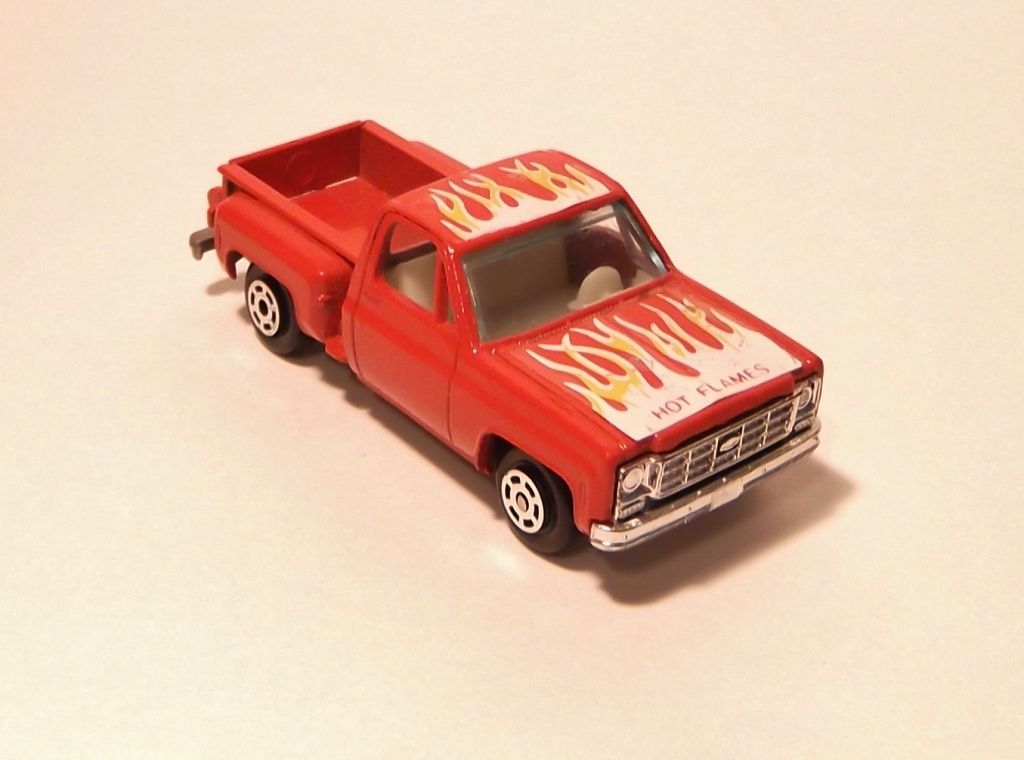
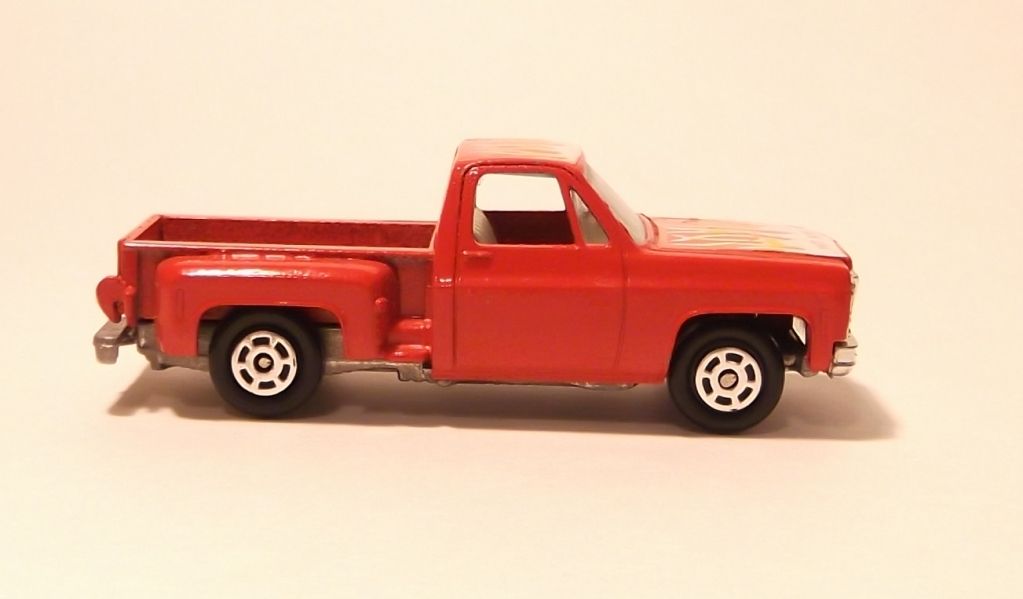
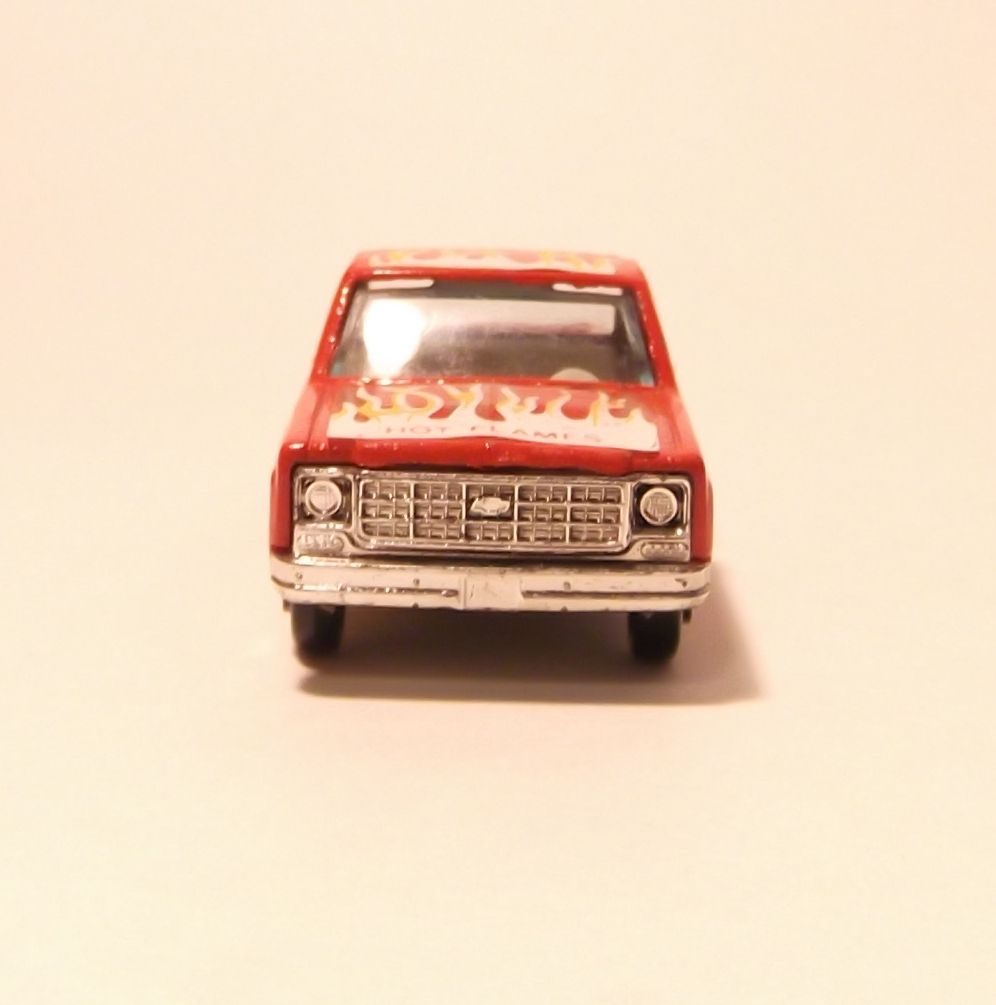
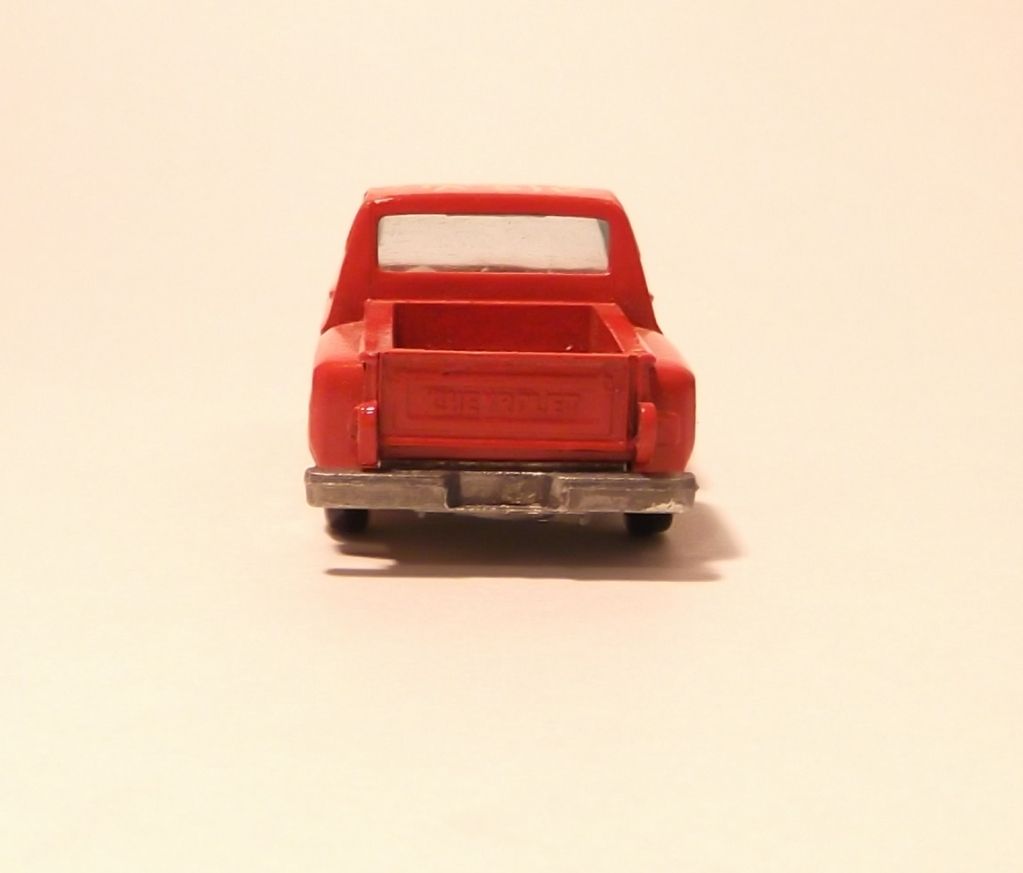
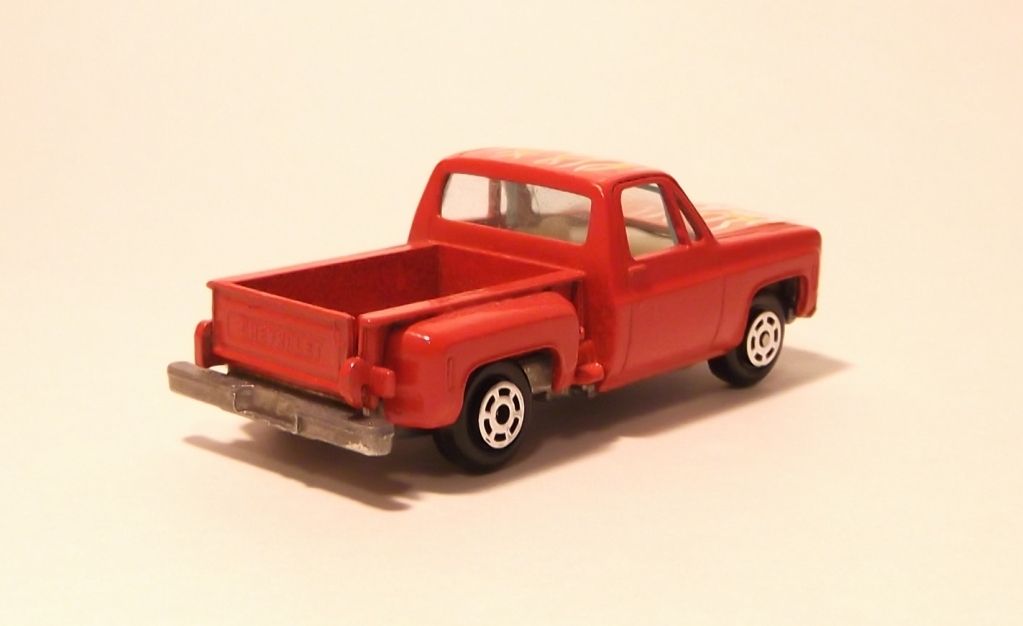
Today's car of the day comes from Firehawk73's collection and is Yat Ming's 1979 Chevrolet Stepside.
The C/K is the name for Chevrolet and GMC's full-size pickup truck line from 1960 until 1999 in the United States, from 1965 to 1999 Canada, from 1964 through 2001 in Brazil, and from 1975 to 1982 in Chile. The first Chevrolet pickup truck appeared in 1924, though in-house designs did not appear until 1930. "C" indicated two-wheel drive and "K" indicated four-wheel drive. The aging C/K light-duty pickup truck was replaced with the Chevrolet Silverado and GMC Sierra in 1999 in the US and Canada, and 2001 in Brazil; the Chevrolet Silverado HD and GMC Sierra HD heavy-duty pickup trucks followed in 2001.
For more information and pictures of the real car please visit: Chevrolet C/K
An all-new clean sheet redesign of General Motors' Chevrolet and GMC brand C/K-Series pickups débuted in 1972 for the 1973 model year. Development of the new third generation trucks began in 1968, four years prior to production in 1972, with vehicle components undergoing simulated testing on computers, before the first prototype pickups were even built for real world testing. The redesign was revolutionary in appearance at the time, particularly the cab, departing from typical American pickup truck designs of the era. As a result, the third generation quickly became known as the "rounded-line" generation; although some people refer to them as "square bodys", given that the trucks appear square-like by more modern standards.
GM's design engineers fashioned the "rounded-line" exterior in an effort to improve aerodynamics and fuel efficiency, using wind tunnel technology to help them sculpt the body. Third generation design traits include "double-wall" construction, sleek sculpted body work, flared secondary beltline and a aerodynamic cab which featured rounded doors cutting high into the roof and steeply raked windshield featuring an available hidden radio antenna embedded into the glass.
There were two types of pickup boxes to choose from. The first type, called "Fleetside" by Chevrolet and "Wideside" by GMC, was a "double-wall" constructed full width pickup box and featured a flared secondary beltline to complement the cab in addition to new wraparound tail lamps. Both steel and wood floors were available. The second type, called "Stepside" by Chevrolet and "Fenderside" by GMC, was a narrow width pickup box featuring steps and exposed fenders with standalone tail lamps. Initially, only wood floors were available.
The wheelbase length was extended to 117.5 in (2985 mm) for the short wheelbase pickups, and 131.5 in (3340 mm) for the long wheelbase pickups. A new dual rear wheel option called "Big Dooley" was introduced on 1-ton pickups, along with a new Crew Cab option on the 164.5 in (4,178 mm) wheelbase. Crew Cabs were available in two versions: a "3+3" which seated up to six occupants and "bonus cab" which deleted the rear seat and added rear lockable storage in its place. The fuel tank was moved from the cab to the outside of the frame, and a dual tank option was available which brought fuel capacity to 40 US gallons. 1980 was the first year that a cassette tape could be purchased, along with a CB radio.
The rounded-line generation ultimately ran for a lengthy 15 model years (1973–1987) with the exception of the Crew-Cab, Blazer, Jimmy, and Suburban versions, which continued up until the 1991 model year.
Friday, March 16, 2012
Car Of The Day: March 16, 2012
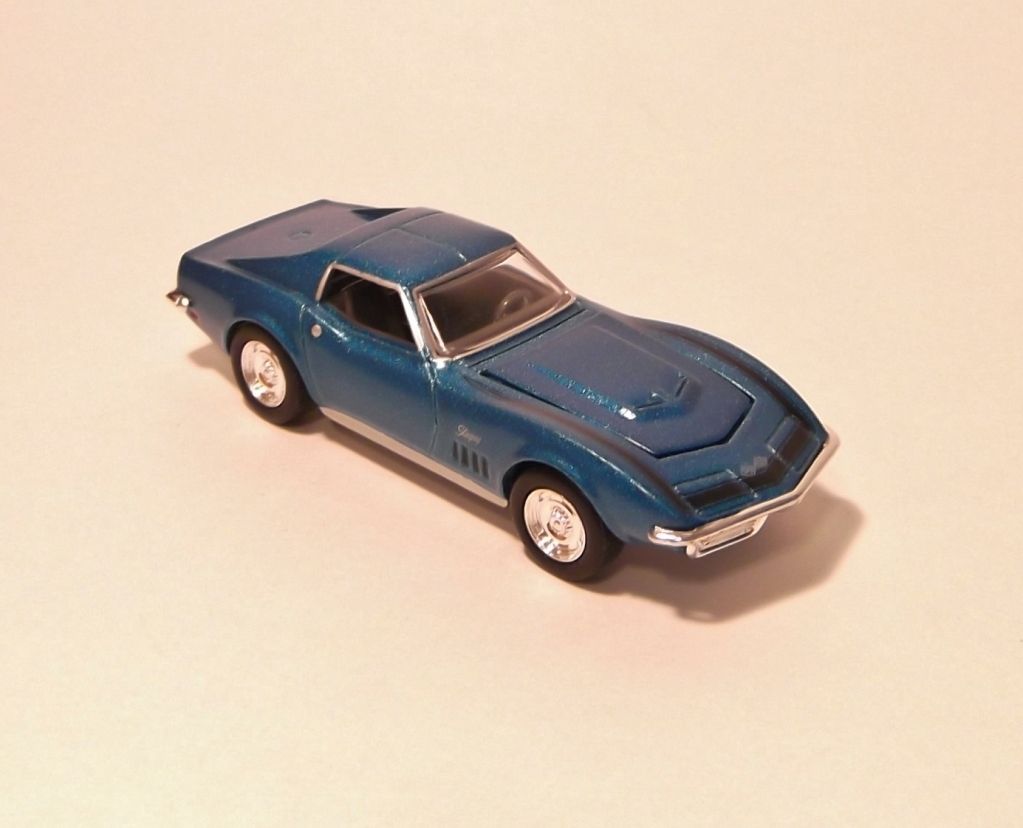
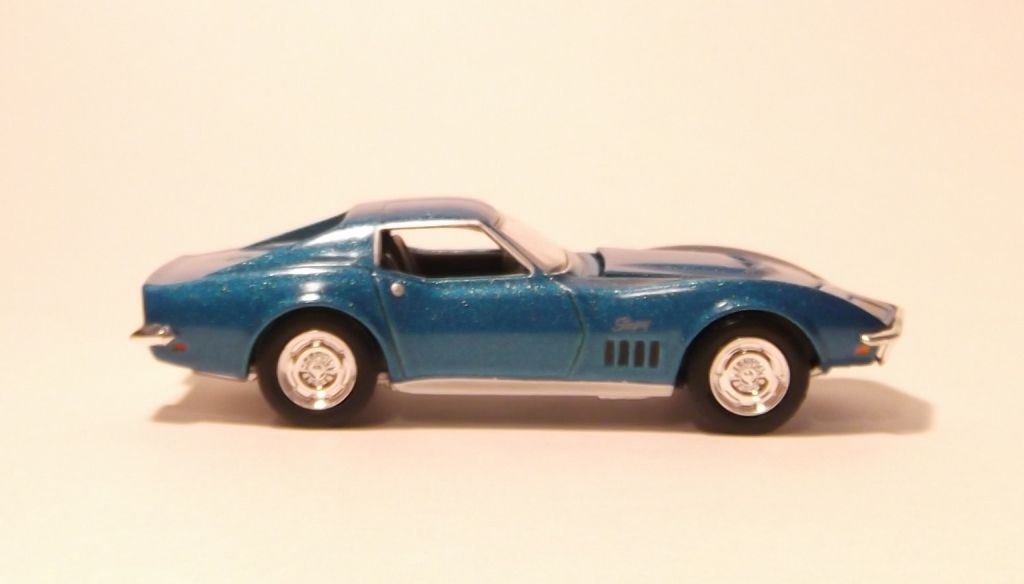
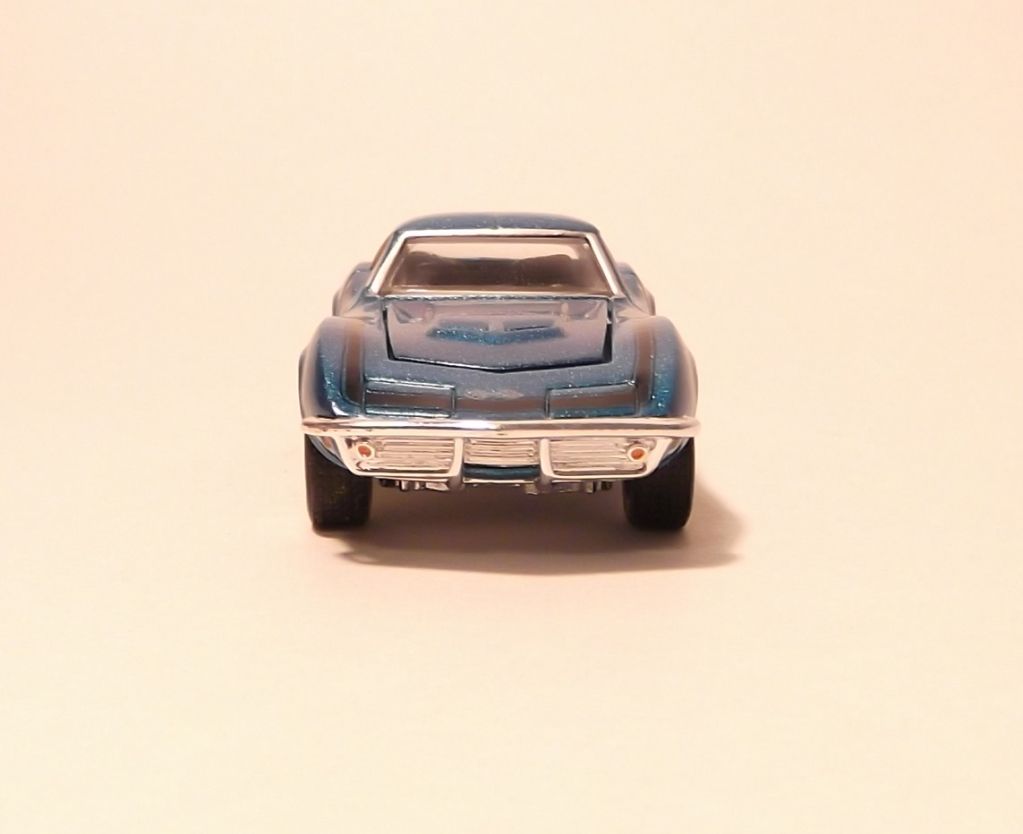
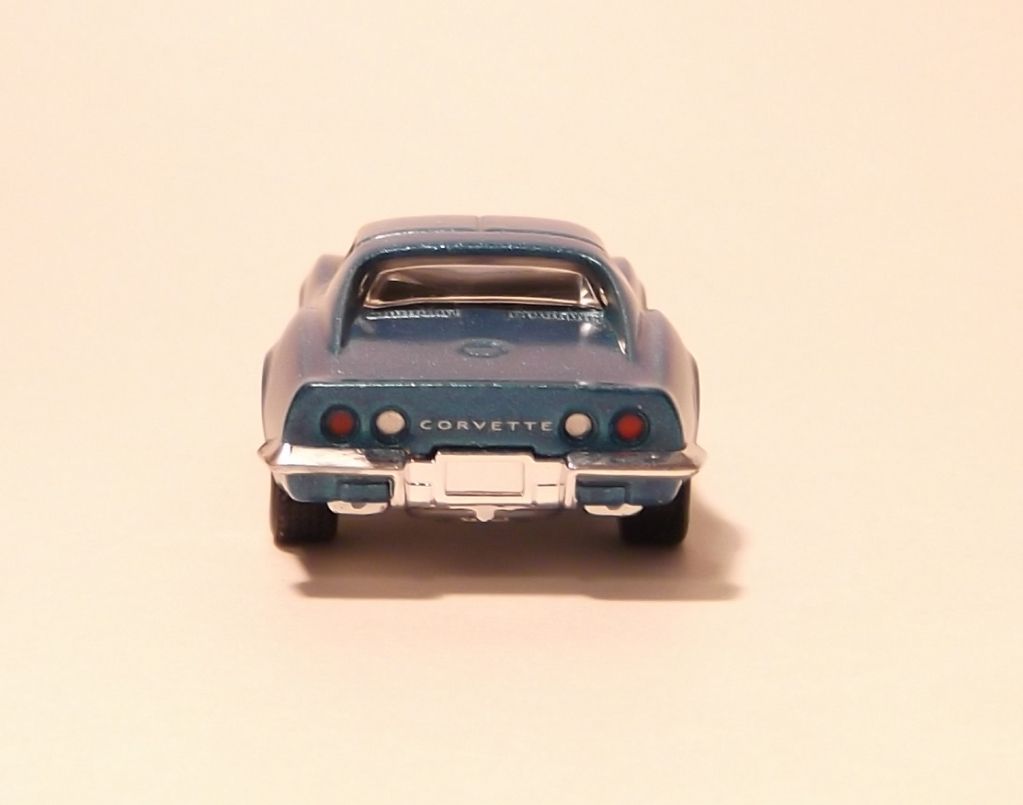
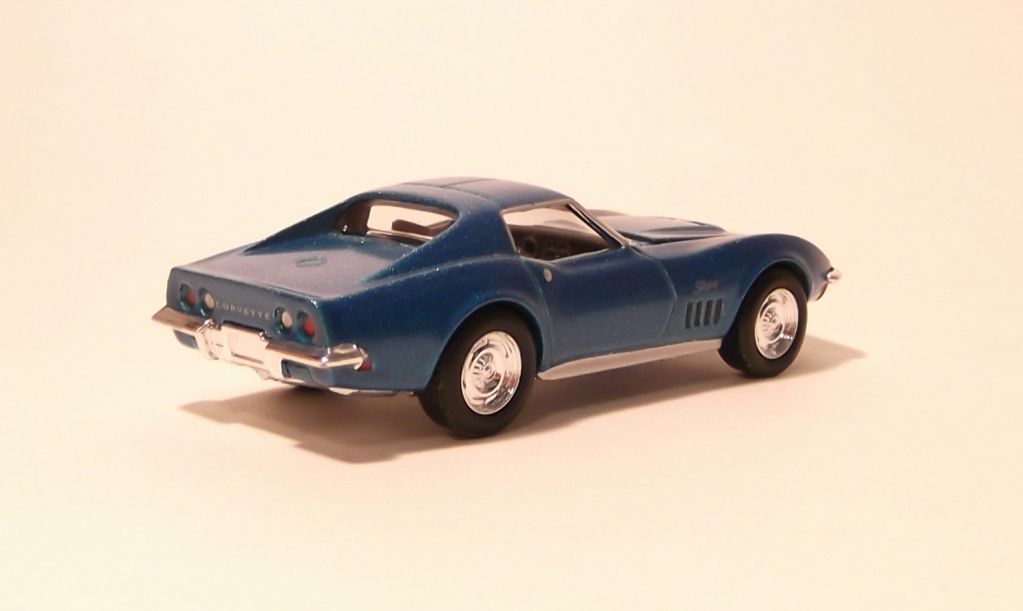
Today's car of the day comes from Firehawk73's collection and is Racing Champions' 1969 Chevrolet Corvette.
The Chevrolet Corvette (C3) is a sports car produced by the Chevrolet division of General Motors for the 1968 through 1982 model years. Corvette chief Zora Arkus-Duntov wanted a striking new Corvette; although engines and chassis components were mostly carried over from the previous generation, its body and interior were new. "Though initially flawed, the 1968 like the 1958, would improve and mature into a car precisely right for its time." The so-called Shark was produced during one of the most troubled periods in America: civil unrest, burgeoning federal guidelines, fuel economy and pollution regulations, oil embargoes, rising fuel and insurance costs, runaway inflation, and a lingering recession. Through it all the third generation Corvette continued to set new sales records with an all-time high of 53,807 produced for the 1979 model year.
For more information and pictures of the real car please visit: Chevrolet Corvette
For 1968, both the Corvette body and interior were completely redesigned. As before, the car was available in either coupe or convertible models, but coupes had new removable roof panels (T-tops) and a removable rear window. A soft folding top was included with convertibles, while an auxiliary hardtop with a glass rear window was offered at additional cost. Included with coupes were hold down straps and a pair of vinyl bags to store the roof panels, and above the luggage area was a rear window stowage tray. The enduring new body's concealed headlights moved into position via a vacuum operated system rather than electrically as on the previous generation, and the new hide-away windshield wipers utilized a problematic vacuum door. The door handles were flush with the top of the doors with a separate release button. "Sting Ray" nameplates were absent on the new 1968 body, but Chevrolet still advertised the car as a Sting Ray. Front fenders had functional engine cooling vents. Side vent windows were eliminated from all models, replaced with "Astro Ventilation", a fresh air circulation system. In the cabin, a large round speedometer and matching tachometer were positioned in front of the driver. Auxiliary gauges were clustered above the forward end of the console and included oil pressure, water temperature, ammeter, fuel gauge, and an analog clock. A fiber-optic system appeared on the console that monitored exterior lights and there was no glove box. The battery was relocated from the engine area to one of three compartments behind the seats to improve weight distribution. New options included a rear window defroster, anti-theft alarm system, bright metal wheel covers, and an AM-FM Stereo radio. All cars ordered with a radio, like the C2 cars, continued to be fitted with chrome-plated ignition shielding covering the distributor to reduce interference.
The chassis was carried over from the second generation models, retaining the fully independent suspension (with minor revisions) and the four-wheel disc brake system. The engine line-up and horsepower ratings were also carried over from the previous year as were the 3 and 4-speed manual transmissions. The new optional Turbo Hydramatic 3-speed automatic transmission (RPO M40) replaced the two-speed Powerglide. The L30, a 327 cu in (5.4 L) small-block V8 engine rated at 300 hp (224 kW) and a 3-speed manual transmission were standard, but only a few hundred 3-speed manual equipped cars were sold. The 4-speed manual was available in M20 wide-ratio or M21 close-ratio transmission versions. The M22 “Rock Crusher”, a heavy duty, close-ratio 4-speed gearbox, was also available for certain applications. The engine line-up included the L79, a 350 hp (261 kW) high performance version of the 327 cu in (5.4 L) small-block. Also available were several variants of the 427 cu in (7.0 L) big-block V8, that taken together made up nearly half the cars. There was the L36, a 390 hp (291 kW) version with a Rochester 4-barrel carburetor; The L68, a 400 hp (298 kW) motor with a Holley triple 2-barrel carb set up (3 X 2 tri-power); The L71, generating 435 hp (324 kW) with a tri-power; The L89 option was the L71 engine but with much lighter aluminum cylinder heads rather than the standard cast iron. Then there was the L88 engine that Chevrolet designed strictly for off-road use (racing), with a published rating of 430 hp (321 kW), but featured a high-capacity 4-barrel carb, aluminum heads, a unique air induction system, and an ultra-high compression ratio (12.5:1). All small block cars had low-profile hoods. All big block cars had domed hoods for additional engine clearance with twin simulated vents and “427” emblems on either side of the dome. The new seven-inch wide steel wheels had F70x15 nylon bias-ply tires standard with either white or red stripe tires optional. Rare options were: L88 engine (80), J56 heavy-duty brakes (81), UA6 alarm system (388), L89 aluminum heads (624).
In 1969, small block engine displacement increased from 327 cu in (5.4 L) to 350 cu in (5.7 L), though output remained the same. All other engines and transmission choices remained unchanged from the previous year, though the L30 base engine was now the ZQ3 and the L79 motor was redesignated the L46. All cars featured 8-inch-wide (200 mm) steel wheels (increased from 7 inches). Tire size remained the same, although this was the first year for optional white lettered tires and the last for red striped tires. Carried over from the previous year were seven available rear axle ratios ranging from 2.73 to 4.56. Standard ratio remained 3.08 with automatic and 3.36 with manual transmission. The optional Positraction rear axle, mandated on many engine/gearbox combinations, was installed on more than 95% of the cars. "Stingray" script nameplates appeared on front fenders, now one word, in contrast to the “Sting Ray” name used previously. Exterior door handles were redesigned so the finger plate would actuate the door, eliminating the separate release button. Backup lights were integrated into the inboard tail lights, headlight washers were added, and front grilles were made all black. Side mounted exhausts and front fender vent trim were options for this year only. On the inside, revised door panels provided additional shoulder room in the C3's tighter cabin and headrests became standard. Steering wheel diameter was reduced from 16 to 15 inches to permit easier entry and exit, the ignition switch was moved from the dash to the steering column, and map pockets were added to the dash area in front of the passenger seat. Accounting for 57% of the cars, coupes with their removable roof panels, began a trend of outselling roadsters. An extended production cycle due to a labor dispute increased '69 volume. This was the last year for the L88 engine and the only year for the ZL1 option, which offered an all aluminum 427 cu in (7.0 L) big-block engine listed at 430 hp (321 kW). Rare options: ZL1 aluminum block (2), J56 heavy-duty brakes (115), L88 engine (116), L89 aluminum heads (390).
Car and Driver magazine wrote in October 1968, “The small-engine Corvettes are marginally faster and extraordinarily civilized. The large-engine Corvettes are extraordinarily fast and marginally civilized.”
Subscribe to:
Posts (Atom)